💥Join UPSC 2027,2028 Mentorship (July Batch) + XFactor Notes & Microthemes PDF

Distribution: yearly

  • On reforms in merchant shipping

    Why in the News?

    The government is set to introduce the Merchant Shipping Bill, 2024, and the Coastal Shipping Bill, of 2024, aiming to drive critical reforms and deliver transformative changes to strengthen and revitalize the shipping industry.

    Have the Merchant Shipping Act, of 1958, and the Coasting Vessels Act, of 1838 failed? 

    The Merchant Shipping Act, 1958, and the Coasting Vessels Act, 1838, do not meet contemporary maritime needs and regulatory requirements as follows:

    • Regulatory Gaps: Significant gaps exist for offshore vessels, which account for nearly 50% of Indian-flagged vessels. The current framework fails to regulate these vessels adequately.
    • Seafarer Welfare Limitations: Welfare provisions are restricted to Indian-flagged ships, neglecting the majority of Indian seafarers (85%) who work on foreign-flagged vessels.
    • Lack of Legal Framework: There is no effective legal framework to regulate private sector participation in maritime training, leading to unauthorized institutions operating without oversight.
    • Inadequate Implementation of International Conventions: The existing laws lack provisions to implement various international conventions that India has signed or plans to ratify.


    What are the key features of the New Merchant Shipping Bill 2024?

    • Ease of Registration: The Bill allows for reduced ownership thresholds (from 100% to 51%) for Indian entities and permits foreign entities to hold shares in Indian vessels while ensuring majority ownership remains with Indians.
    • Expanded Scope of Vessels: It broadens the definition of ‘vessels’ to include a variety of crafts (e.g., submersibles, barges), ensuring comprehensive regulatory oversight.
    • Temporary Registration for Ship Recycling: Introduces provisions for temporary registration of vessels destined for demolition, facilitating operations in ship recycling hubs like Alang.
    • Strengthened Coastal Security: Empowers authorities to issue instructions across all vessel categories to enhance coastal security.
    • Integration with International Standards: Aligns with global best practices from leading maritime jurisdictions like the U.K., Norway, and Singapore.

    What are some of the international maritime conventions that India has ratified? 

    • International Convention for the Safety of Life at Sea (SOLAS): Establishes minimum safety standards in the construction and operation of ships.
    • International Convention on Standards of Training, Certification and Watchkeeping for Seafarers (STCW): Sets standards for training and certification of seafarers.
    • Maritime Labour Convention (MLC): Focuses on the rights and welfare of seafarers, ensuring decent working conditions.
    • International Convention on Civil Liability for Oil Pollution Damage (CLC): Addresses liability for oil pollution damage from ships.
    • International Convention for the Prevention of Pollution from Ships (MARPOL): Aims to minimize pollution from ships, covering various aspects of marine pollution.
    • Convention on Limitation of Liability for Maritime Claims (LLMC): Limits the liability of shipowners in case of maritime claims.
    • Wreck Removal Convention: Provides a legal framework for the removal of wrecks to prevent marine pollution.

    Will the new Bills address maritime training and education as well? 

    Yes, the new Merchant Shipping Bill, of 2024, specifically addresses maritime training and education, aiming to fill regulatory gaps and ensure standardization.

    • Establishment of a Legal Framework: The new Merchant Shipping Bill introduces clear legal provisions to regulate maritime training institutes, addressing the absence of such a framework in the existing law.
    • Elimination of Unauthorised Institutes: It empowers the government to act against unauthorised maritime training institutes, ensuring only approved institutions operate and deliver high-quality, standardised education.
    • Alignment with Global Standards: The Bill ensures maritime training aligns with international best practices, enhancing the employability and skills of Indian seafarers in the global maritime sector.

    Way forward: 

    • Robust Implementation and Monitoring: Ensure effective enforcement of the new Bills by establishing transparent regulatory mechanisms, leveraging technology for compliance, and regular monitoring to address gaps swiftly.
    • Stakeholder Engagement and Capacity Building: Foster collaboration between the government, private sector, and international maritime bodies to enhance infrastructure, promote innovation, and build capacity for sustainable growth in the maritime sector.

    Mains PYQ:

    Q What are the maritime security challenges in India? Discuss the organisational, technical and procedural initiatives taken to improve maritime security. (UPSC IAS/2022)
  • [pib] New National Manuscripts Mission

    Why in the News?

    The Union Ministry of Culture is planning to revive and relaunch the National Mission for Manuscripts (NMM) and is considering the formation of an autonomous body to help preserve India’s ancient texts.

    Why Center is re-evolving this scheme?

    • Currently, the NMM operates as part of the Indira Gandhi National Centre for the Arts.
    • The new entity, expected to be named the National Manuscripts Authority, will likely function as an autonomous body under the Ministry of Tourism and Culture.

    About the National Mission for Manuscripts (NMM):

    Aims and Objectives
    • To document, conserve, digitize, and disseminate India’s manuscript heritage.
    • Set up over 100 Manuscripts Resource Centres and Manuscripts Conservation Centres across India.
    • Manuscripts are often on materials like paper, bark, cloth, metal, or palm leaf, and are at least 75 years old, with significant scientific, historical, or aesthetic value.
    • India has an estimated 10 million manuscripts covering various themes, languages, scripts, and illustrations.
    • Manuscripts primarily contain knowledge content, unlike historical records.
    • 80% of manuscripts are privately owned, limiting public availability.
    Structural Mandate
    • Formed in 2003 by the Ministry of Tourism and Culture.
    • Managed by the National Archives of India.
    • Currently operates as part of the Indira Gandhi National Centre for the Arts.
    Features and Programs under the Mission
    • Documented metadata for 5.2 million manuscripts and digitized 300,000 titles, though only a third of them have been uploaded.
    • Only 70,000 of the 130,000 manuscripts uploaded are accessible for viewing due to the absence of an access policy.
    • Preventive and curative conservation of 9 crore folios has been conducted over 21 years.


    PYQ:

    [2008] Recently, the manuscripts of which one of the following have been included in the UNESCO’s Memory of World Register?

    (a) Abhidhamma Pitaka

    (b) Mahabharata

    (c) Ramayana

    (d) Rig-Veda

  • National Food Security Act, 2013

    Why in the News?

    The Supreme Court remarked that a long-term solution to food security issues is generating employment, while advocate Prashant Bhushan pointed out that the National Food Security Act (NFSA) still relies on 2011 census data.

    About National Food Security Act, 2013:

    Details
    Launch 
    • NFSA was signed into law on 12th September 2013, with retroactive effect from 5th July 2013.
    • It aims to provide subsidized food grains to approximately 2/3rd of India’s population.
    Aims and Objectives
    • Provide subsidized food grains to 2/3rd of India’s population, covering about 75% of rural and 50% of urban areas.
    • Converts food security programs into legal entitlements.
    • Recognizes maternity entitlements for pregnant women, lactating mothers, and children.
    Structural Mandate
    • Central Government directs states to implement the provisions of the Act (Section 38).
    • Mandates that the subsidized prices remain fixed for 3 years (with no revision yet).
    • Ensures that eligible households have a legal right to food grains at subsidized rates under the Targeted Public Distribution System (TPDS).
    Features and Programs
    • PDS provides 5 kg/person/month: Rice (₹3/kg), Wheat (₹2/kg), Coarse grains (₹1/kg).
    • Eldest woman (18 years or above) in the household is considered the head of the family for issuing ration cards.
    • Provides free meals to pregnant women, lactating mothers, and children aged 6 months to 14 years under ICDS and mid-day meal schemes.
      • Ensures pregnant and lactating women receive a ₹6,000 cash benefit, payable in installments.
    • Midday Meal and ICDS are universal, and PDS reaches 75% of rural and 50% of urban populations.
    • Priority Households get 5 kg of food grains per person per month, and Antyodaya Anna Yojana (AAY) households get 35 kg per month.

    Why figures from 2011 Census still drive it?

    • Data Discrepancy: The 2021 census is getting extensions indiscriminately. It would have identified additional beneficiaries, possibly up to 10 crore more people.
    • Ration Card Issue: Many migrant workers had still not received ration cards, despite several court orders.
    • Logistical and Administrative Constraints: Updating census-based allocations requires substantial administrative coordination and a shift in policy across the Centre and States.

    PYQ:

    [2018] With reference to the provisions made under the National Food Security Act, 2013, consider the following statements:

    1. The families coming under the category of ‘below poverty line (BPL)’ only are eligible to receive subsidised food grains.
    2. The eldest woman in a household, of age 18 years or above, shall be the head of the household for the purpose of issuance of a ration card.
    3. Pregnant women and lactating mothers are entitled to a ‘take-home ration’ of 1600 calories per day during pregnancy and for six months thereafter.

    Which of the statements given above is/are correct?

    (a) 1 and 2 only
    (b) 2 only
    (c) 1 and 3 only
    (d) 3 only

  • Egyptian Cotton Leafworm (A Moth Species)

    Why in the News?

    A moth species called Egyptian cotton leafworm can hear sounds emitted by stressed plants, a study confirmed.

    About the Egyptian Cotton Leafworm

    Details
    • Scientific name: Spodoptera littoralis.
    • Polyphagous pest affecting crops like cotton, tomatoes, maize, tobacco, and peppers.
    • Found across tropical and subtropical regions in Africa, Middle East, and South Asia.
    • The moth has been spreading to new areas due to climate change.
    • Larvae damage crops by feeding on leaves, stems, and flowers, reducing crop yield and quality.
    Findings of the Study
    • Female moths use plant acoustic emissions (sound clicks) to decide where to lay eggs.
    • These sounds, undetectable to humans, help the moths identify healthier, hydrated plants for egg-laying.
    • Moths avoid stressed, dehydrated plants that produce stress-related sounds.
    Impact on Agriculture
    • Harmful in cotton-growing regions.
    • Larvae cause significant damage to a variety of crops, particularly cotton, tomatoes, and tobacco, impacting the quality and quantity of the produce.

    PYQ:

    [2014] Which of the following statements is / are correct regarding vegetative propagation of plants?

    1. Vegetative propagation produces clonal population.

    2. Vegetative propagation helps in eliminating the virus.

    3. Vegetative propagation can be practiced most of the year.

    Select the correct answer using the code given below:

    (a) 1 only

    (b) 2 and 3 only

    (c) 1 and 3 only

    (d) 1, 2 and 3

  • [pib] India-Australia CCEA Stocktake

    Why in the News?

    A stocktake visit for the India-Australia Comprehensive Economic Cooperation Agreement (CECA) recently concluded in New Delhi.

    Key Takeaways from the Meet

    • The discussions covered a wide range of critical aspects of the CECA, including:
      • Trade in goods and services
      • Mobility and agri-tech cooperation
      • Market access modalities that align with India’s food security objectives.
    • Both sides emphasized their shared commitment to ensuring that the CECA produces meaningful benefits and delivers a balanced outcome for both nations.
    • The discussions have opened up pathways for enhanced collaboration in areas such as agricultural innovation, market access, and supply chain resilience.

    About India-Australia CCEA Negotiations:

    • CECA is a comprehensive trade agreement between India and Australia.
      • More comprehensive than the earlier India-Australia Economic Cooperation and Trade Agreement (ECTA) , which is a limited trade agreement in force since December 2022.
    • Negotiations for CECA began in May 2011, suspended in 2016, and re-launched in 2021 after concluding the ECTA.
    • So far 10 rounds of negotiations have taken place.

    Key Features of CECA:

    • Covers goods, services, digital trade, government procurement, and Rules of Origin/Product-Specific Rules Schedule.
    • New areas: competition policy, MSMEs, innovation, agri-tech, critical minerals, sports.

    India-AU Trade Statistics:

    • 2023-24:
      • India’s imports from Australia fell by 15% to USD 16.15 billion.
      • India’s exports to Australia rose by 14.23% to USD 7.94 billion.

    Australia is India’s 13th largest export destination and 14th largest import source.


    PYQ:

    [2017] ‘Broad-based Trade and Investment Agreement (BTIA)’ is sometimes seen in the news in the context of negotiations held between India and:

    (a) European Union
    (b) Gulf Cooperation Council
    (c) Organization for Economic Cooperation and Development
    (d) Shanghai Cooperation Organization

  • [9th December 2024] The Hindu Op-ed: A good beginning but China negotiations must continue

    PYQ Relevance:
    Q) The West is fostering India as an alternative to reduce dependence on China’s supply chain and as a strategically to counter China’s political and economic dominance.” Explain this statement with examples. (UPSC CSE 2024)

    Mentor’s Comment: UPSC Mains is recently focusing on growing Chinese dominance in West and Central Asia (2024) and the power play struggle between the USA and China (2022).

    China has been using its ‘slicing strategy’ of debt trap to evolve as a global power by countering the USA and its ‘String of Pearls’ theory to circle out Indian activities.

    Today’s editorial explores the implications of the China-Nepal-India trio, the ongoing negotiations, and the need for a sustained dialogue. This content can be used to represent Chinese dominance in regional geopolitics and the challenges arising due to it.

    _

    Let’s learn!

    Why in the News?

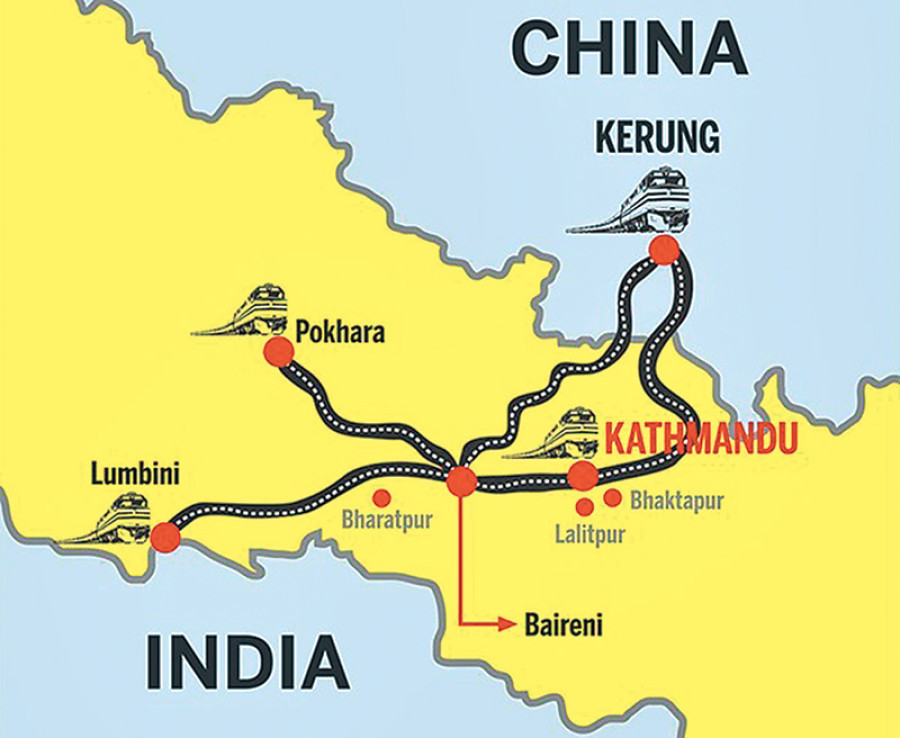
    The recent agreements between Nepal and China mark a significant step in the regional geopolitics of South Asia, particularly under the framework of China’s Belt and Road Initiative (BRI).

    • While the signing of these agreements is a positive development, India must continue negotiations to ensure effective implementation and address potential challenges due to Chinese dominance in the region.
    Recent Developments in Nepal-China Relations: 
    In December 2024, Nepal’s Prime Minister KP Sharma Oli concluded a four-day official visit to China, during which several key agreements were signed, including a framework cooperation agreement related to the BRI.


    Key Points of the Nepal-China Agreements:
    • Framework Cooperation Agreement: This agreement lays the groundwork for various infrastructure projects, including:
    – Tokha-Chhahare Tunnel;
    – Hilsa Simkot Road Project;
    – Kathmandu-Khandbari Road;
    – Kimathanka Bridge;
    – Cross-border railway project from Rasuwagadhi to Kathmandu;
    – Amargadhi City Hall.

    • Focus on Implementation: The Nepali government emphasized the importance of not just signing agreements but also effectively implementing them. Past experiences have shown that while many agreements were signed, tangible progress on the ground has been limited.
    Investment Modalities: The negotiations included discussions on financing modalities, with a shift from strictly “grants” to more flexible terms such as “aid.”This change aims to facilitate broader investment opportunities from various sources, including private sectors and international financial institutions. 

    Challenges Ahead for Nepal-China Relationship:

    • Implementation Gaps: Historical precedents indicate that many signed agreements have not translated into actionable projects. There is a pressing need for both governments to focus on practical steps that will lead to real-world outcomes.
    • Project-Specific Negotiations: Future negotiations are expected to be project-specific, which may complicate the overarching framework if not managed effectively. Clear communication and defined objectives will be essential in these discussions.
    • Geopolitical Considerations: As Nepal navigates its relationships with neighboring countries like India and global powers such as the United States, balancing these interests while engaging with China will require careful diplomacy.

    What were the substantive statements in Parliament on India-China relations?

    • Troop Disengagement and Temporary Measures: The External Affairs Minister highlighted the successful disengagement of troops following China’s military buildup and India’s counter-deployment, mentioning that temporary and limited measures were implemented at certain friction points to prevent further clashes.
      • However, he noted that these measures could be revisited as needed, indicating that while disengagement is a priority, the situation remains fluid.
    • Ongoing De-escalation Efforts: The Minister reiterated India’s stance that maintaining peace in border areas is essential for developing bilateral relations, suggesting that current troop deployments indicate that normalcy has not yet been restored.
    • Cautious Optimism in Bilateral Relations: The Minister indicated that while there has been some improvement in India-China relations following recent developments between Nepal-China, significantly remains a challenge.
      • He cautioned against expecting a major reset in relations until the border situation stabilizes and structural issues are addressed, particularly regarding economic security concerns with China.

    What are the several key questions that remain unanswered?

    • Unclear Disengagement Terms: While disengagement is declared complete, India lacks clarity on its specifics.
      • Questions remain about access to traditional patrolling points in Depsang and Demchok, the concept of “coordinated patrolling,” and the implications of “temporary steps” that limit patrols and grazing rights for Indian troops.
    • Status Quo Concerns: The Minister stated that India will not accept unilateral changes to the status quo, yet China has altered it since April 2020.
    • Discussions with military officials suggest restricted access to traditional patrol points, highlighting a shift in how both countries view the Line of Actual Control (LAC).
    • India should prioritize restoring the previous status quo in patrolling and grazing activities.
    • Chinese Patrols in Arunachal Pradesh: Reports indicate that Chinese troops are attempting to patrol areas like the Yangtse, despite previous assertions that such demands were unreasonable. If no quid pro quo exists in this sector, it should be firmly denied.
    • Call for Restoration of Status Quo: The Army Chief emphasized returning to the status quo of April 2020, while the Ministry of External Affairs has shifted its language away from this goal. Accepting changed ground realities would play into China’s strategy of gradual territorial gains without provoking outright conflict.

    What strategies can both countries employ to bridge this political divide?

    • Diplomatic Engagement: Regular high-level meetings and dialogues, such as those initiated between Prime Minister Modi and President Xi Jinping, can help rebuild trust.
      • Both nations should prioritize discussions on strategic issues beyond border conflicts, including economic cooperation, climate change, and technology.
    • Cultural and Economic Exchanges: Resuming direct flights, easing visa restrictions for citizens and diplomats, and promoting cultural exchanges (like film screenings) can enhance people-to-people connections.
      • This approach can foster goodwill and mutual understanding, essential for improving bilateral relations.
    • Institutional Frameworks: Establishing mechanisms for coordinated patrolling and joint military exercises can help manage tensions along the Line of Actual Control (LAC).
      • Additionally, creating platforms for multilateral discussions involving other regional players can facilitate broader cooperation and address shared security concerns.
  • Emissions Gap Report 2024

    Why in the News?

    According to the recently released ‘Emission Gap Report 2024’ presented by UNEP, Global Greenhouse Gas (GHG) emissions have reached a new high of 57.1 billion tonnes of CO2 equivalent in 2023, a 1.3% rise compared to 2022.

    What are the key points of Emissions Gap Report 2024?

    • Urgent Emission Reduction Targets: To align with the 1.5°C goal of the Paris Agreement, global greenhouse gas emissions must decrease by 42% by 2030 and 57% by 2035 compared to 2019 levels.
      • For a 2°C target, reductions of 28% by 2030 and 37% by 2035 are necessary. Current commitments and policies are insufficient, putting the world on track for a temperature rise of 2.6-3.1°C, which would lead to severe climate impacts.
    • Potential for Significant Reductions: The report highlights that it is still technically feasible to achieve the 1.5°C pathway through aggressive action, including increased deployment of renewable energy sources like solar and wind, which could contribute 27% of the necessary reductions by 2030 and 38% by 2035.
      • Additionally, actions related to forests could provide around 20% of the potential reductions in both years. A comprehensive approach involving government action, investment in mitigation strategies, and international cooperation is essential to realize these opportunities.

    What are the Global Emission trends?

    • Global greenhouse gas (GHG) emissions have continued to rise, reaching a record high of 57.1 gigatons of carbon dioxide equivalent in 2023. This marks an increase from previous years, with fossil fuel CO₂ emissions projected at 37.4 billion tonnes, up 0.8% from 2023, and total CO₂ emissions—including land-use changes—projected to be 41.6 billion tonnes in 2024.
    • The increase is attributed primarily to rising emissions from major economies such as China and India, with India experiencing the largest relative increase at 6.1% and China contributing the most in absolute terms.
    • The overall trend indicates that despite some positive developments in renewable energy adoption, there is no sign that global fossil fuel emissions have peaked, necessitating immediate and substantial reductions to meet climate targets.


    What is the progress of G20 countries towards NDCs?

    • Mixed Progress on NDCs: Among G20 countries, six members (China, India, Indonesia, Japan, Russia, and Turkey) are projected to meet their unconditional Nationally Determined Contribution (NDC) targets with current policies.
      • However, eight members (Argentina, Australia, Canada, the EU, South Korea, South Africa, and the United States) require further action to achieve their targets.
      • This indicates a significant disparity in progress across different G20 nations, with many needing to be on track to meet their commitments under the Paris Agreement.
    • Need for Enhanced Ambition: The G20 must significantly ramp up its climate ambitions in the next round of NDCs to align with the goals of limiting global warming to 1.5°C. This includes committing to substantial emissions reductions—42% by 2030 and 57% by 2035.

    What is the NCD target? 

    • Collective Emission Reduction Goals: G20 countries have pledged to reduce greenhouse gas emissions through Nationally Determined Contributions (NDCs), targeting a 42% reduction by 2030 and 57% by 2035, aligned with the Paris Agreement to limit warming below 2°C.
    • Diverse Member Targets and Progress: G20 members have varied NDC targets, such as China aiming to peak CO2 emissions by 2030 with a 60-65% reduction in carbon intensity, while Argentina caps net emissions at 483 million tons of CO2 equivalent.

    What is needed to bridge the gap between 2030 and 2035 goals? (Way forward)

    • Significant Annual Emission Reductions: A reduction of 7.5% per year until 2035 is necessary to align with the 1.5°C pathway, while a 4% annual reduction is needed for the 2°C target.
    • Investment in Renewable Energy: The increased deployment of solar and wind technologies could deliver approximately 27% of the total emission reduction potential by 2030 and 38% by 2035.
    • Action on Forests: Protecting and restoring forests could provide around 20% of the required reductions in both years.
    • Comprehensive Policy Measures: A whole-of-government approach is essential, maximizing socioeconomic and environmental co-benefits while minimizing trade-offs.
    • Increased Mitigation Investment: A minimum six-fold increase in investments for climate mitigation is critical, necessitating reforms in global financial systems and strong private sector involvement.

    Mains PYQ:

    Q Discuss global warming and mention its effects on the global climate. Explain the control measures to bring down the level of greenhouse gases that cause global warming, in the light of the Kyoto Protocol, 1997. (UPSC IAS/2022)

  • [pib] 4th Good Governance Week, 2024

    Why in the News?

    Prashasan Gaon Ki Ore” a nationwide campaign is launched by the Government of India, from December 19–24, 2024, as part of the 4th Good Governance Week.

    About the Nationwide Campaign ‘Prashasan Gaon Ki Ore’

    • It is a nationwide campaign to address public grievances and improve service delivery across rural and urban areas.
    • It aims to strengthen governance at the grassroots level and bring effective solutions to the common people.
    • It will be conducted in all districts, states, and union territories of India, with a focus on delivering timely solutions and improving the quality of services provided to citizens.
    • Key objectives of the campaign include:
      • Redressing Public Grievances: Ensuring that citizens’ complaints related to government services are resolved swiftly.
      • Improving Service Delivery: Enhancing the efficiency of government services at the local level.
      • Creating Awareness: Spreading knowledge about good governance practices and encouraging citizens to be proactive in using available services.

    Key Observations from the Good Governance Index (GGI) 2022

    • The GGI, 2022 evaluates 58 indicators across 10 governance sectors, such as agriculture and allied sectors, human resource development, public health, and law and order, among others. The key observations are as follows:
      1. Top Performers: Kerala, Tamil Nadu, and Maharashtra ranked highest for good governance, excelling in public health, human resources, and economic governance.
      2. Service Delivery: States like Tamil Nadu and Kerala were praised for transparency, accountability, and citizen-focused policies, leading in service delivery.
      3. Agriculture & Rural Development: Uttar Pradesh and Bihar showed improvements in agriculture and rural development, aligning with the goals of Prashasan Gaon Ki Ore.
      4. Health & Education: Kerala and Tamil Nadu excelled in healthcare and education, with significant investments in infrastructure and public schemes.
      5. Sustainable Development: States like Sikkim emphasized environmental governance and sustainable development practices.

    PYQ:

    [2016] What do you understand by the terms ‘governance’, ‘good governance’ and ‘ethical governance’? (150 words)

  • Eurasian Little Gull spotted in Delhi for first time

    Why in the News?

    For the first time, the Eurasian Little Gull was spotted in the National Capital Region (NCR) near Sultanpur National Park at Chandu.

    About the Eurasian Little Gull:

    Details
    Overview and Physical Characteristics
    • Scientific Name: Larus minutus
    • Common Name: Eurasian Little Gull
    • Size: 30-33 cm in length, wingspan 75-85 cm; Weight: 70–150 grams
    Habitat and Features
    • Breeding Habitat: Marshy wetlands, shallow freshwater lakes, and estuaries in Northern Eurasia (Russia, Eastern Europe).
    • Winter Migration: Offshore waters, coastal areas, and estuaries around the Mediterranean Sea, Black Sea, and Caspian Sea.
    • Migratory Pattern: Migrations from northern breeding grounds to warmer regions in winter.
    Conservation Status
    • Conservation Status: Classified as Least Concern by the IUCN Red List.
    • Rare sightings of the species in India, particularly inland regions like NCR.


    PYQ:

    [2020] With reference to India’s biodiversity Ceylon frogmouth, Coppersmith barbet, Gray-chinned minivet and White-throated redstart are-

    (a) Birds

    (b) Primates

    (c) Reptiles

    (d) Amphibians

  • UNGA declares December 21 as World Meditation Day

    Why in the News?

    India has played a leading role in co-sponsoring and guiding the unanimous adoption of a UN General Assembly draft resolution to declare December 21 as World Meditation Day.

    • The theme for 2024 is- “Inner Peace, Global Harmony”.

    About the World Meditation Day

    • It is a global observance that was officially recognized following the adoption of a UN General Assembly resolution on December 6, 2024. However, the 21st of December has been designated as the date for this annual observance.
    • It is also symbolic, of falling on the Winter Solstice (December 21), which is associated with new beginnings, reflection, and spiritual growth in Indian tradition.
      • The date is also exactly six months after the International Day of Yoga on June 21, which marks the Summer Solstice.

    The objective behind this Decision

    • Promote Well-Being: To globally encourage meditation for enhancing mental health and overall wellness.
    • Encourage Inner Reflection: Recognizing December 21 as a time for self-reflection and meditation, especially during Uttarayana in Indian tradition.
    • India’s Global Leadership: Reinforces India’s commitment to global wellness, following its leadership in declaring International Day of Yoga.

    PYQ:

    [2012] With reference to the religious history of medieval India, the Sufi mystics were known to pursue which of the following practices?

    1. Meditation and control of breath

    2. Severe ascetic exercises in a lonely place

    3. Recitation of holy songs to arouse a state of ecstasy in their audience

    Which of the statements given above is/are correct?

    (a) 1 and 2 only

    (b) 2 and 3 only

    (c) 3 only

    (d) 1, 2 and 3