💥Join UPSC 2027,2028 Mentorship (July Batch) + XFactor Notes & Microthemes PDF

Distribution: yearly

  • How PM Modi’s visit to Austria sends a message both to Moscow and the West

    Why in the news? 

    Prime Minister Narendra Modi selected Vienna as a neutral location to convey a message to both Moscow and the Western countries.

    What message it sent?

    • India’s Diplomatic Signal: Modi’s visit to Vienna after meeting Putin in Moscow underscored India’s commitment to global peace and non-violence.Statements emphasized India’s concern over civilian casualties in conflict zones and the futility of war as a solution.
    • Historical Context: Referencing Austria’s historical neutrality and diplomatic role during the Cold War, Modi’s visit reaffirmed India’s stance on maintaining strategic autonomy. Highlighted India’s support for negotiated settlements and dialogue in international disputes.

    Similarity in ideologies between both countries

    • Neutrality and Non-Alignment: Both India and Austria historically maintained neutrality in global conflicts. Shared values in promoting peace, diplomacy, and non-intervention in internal affairs of other nations.
    • Historical Ties: Nehru’s role in supporting Austria’s sovereignty post-World War II reflected shared principles of neutrality and independence. Both countries value multilateralism and respect for international law.

    Evolution of bilateral relations between India and Austria

    • Establishment of Diplomatic Relations: Diplomatic ties between India and Austria were established in 1949, celebrating 75 years of engagement in 2024.Historical visits by leaders from both countries have strengthened political and economic cooperation.
    • Modern Partnerships: Focus on future-oriented collaborations in infrastructure, renewable energy, technology, and trade. Continuation of bilateral engagements despite global geopolitical shifts, maintaining a balanced approach in international relations.

    Key dimension related to relation between Austria and India: 

    • Political Relations: India intervened in Austria’s favor during negotiations with the Soviet Union on the Austrian State Treaty in 1953.India supported Austria on the UN-South Tyrol conventions. Austria expressed support for India’s bid for a permanent seat on a reformed United Nations Security Council.
    • Economic Relations: As of 2019, there are over 200 collaborations, including 100 technical collaborations and 60 joint ventures between Indian and Austrian firms.Bilateral trade between Austria and India was EUR 2.93 billion in 2023. Austria has received a cumulative foreign direct investment of EUR 1.159 billion from India as of 2023.
    • Cultural Relations: The Indo-Austrian cultural relations date back to the 16th century. The Austrian tradition of Indology began in the 19th century.Rabindranath Tagore visited Vienna in 1921 and 1926, fostering cultural exchange.

    Way forward: 

    • Enhanced Political Dialogue: Increase high-level visits and diplomatic exchanges to deepen understanding and cooperation on global issues like climate change, terrorism, and global health.
    • Support for Multilateral Initiatives: Collaborate in multilateral forums such as the United Nations to promote shared values of peace, neutrality, and respect for international law. Work towards common positions on global challenges.

    Mains PYQ: 

    Q What introduces friction into the ties between India and the United States is that Washington is still unable to find for India a position in its global strategy, which would satisfy India’s National self-esteem. (UPSC IAS/2019)

  • Release of SDG India Index 2023-24- NITI Aayog     

    Why in the news?

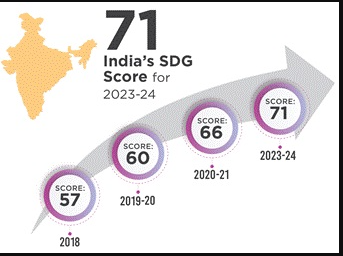
    Overall SDG score for the country is 71 for 2023-24, significant improvement from 66 in 2020-21 and 57 in 2018 (Baseline report).

    About SDG India Index:

    • The SDG India Index is a comprehensive tool developed by NITI Aayog to measure the progress of India and its states/UTs towards achieving the Sustainable Development Goals (SDGs).
    • The index tracks the progress on 113 indicators aligned with the National Indicator Framework of the Ministry of Statistics and Programme Implementation (MoSPI).

    Key highlights and results from the fourth edition of the SDG India Index:     

    • Top Performers: Uttarakhand and Kerala secured the top spots with a score of 79 out of 100, showcasing strong performance across Sustainable Development Goals (SDGs) such as poverty eradication, health, education, and environmental sustainability.
    • National Improvement: India’s overall SDG score improved from 66 points in 2020-21 to 71 points in 2023-24, indicating significant progress in achieving the SDGs nationwide. This improvement reflects efforts in poverty reduction, economic growth, and environmental conservation.
    • State-wise Variations: Bihar ranked lowest with 57 points, indicating areas needing more attention and development. States like Punjab, Manipur, West Bengal, and Assam showed notable improvements, with Punjab leading the pack with an increase of 8 points to reach 76 points.
    • Goal-specific Insights: Goals such as “No Poverty,” “Decent Work and Economic Growth,” and “Life on Land” saw the highest increases in scores, reflecting advancements in income equality, employment opportunities, and biodiversity conservation efforts.
    • Challenges and Focus Areas: Gender Equality received the lowest score at 49 points, highlighting persistent challenges in achieving parity in workforce participation, education access, and political representation. Addressing issues related to hunger and nutrition remains a priority, with the “Zero Hunger” goal scoring 52 points, emphasizing the need for nutritious food access and combating malnutrition.

    How did States and UT performed?    

    • Score Ranges: States’ scores range from 57 to 79, while UTs score between 65 and 77. This indicates an improvement compared to the 2020-21 scores, where the range was 52 to 75 for States and 62 to 79 for UTs.
    • Front Runner Category: There has been a significant increase in the number of States and UTs achieving Front Runner status. In the latest edition, 32 States/UTs scored between 65 and 99, up from 22 in the previous edition. Notably, 10 new States and UTs entered the Front Runner category, including Arunachal Pradesh, Assam, Chhattisgarh, Madhya Pradesh, Manipur, Odisha, Rajasthan, Uttar Pradesh, West Bengal, and Dadra and Nagar Haveli and Daman and Diu.
    • Score Improvements: Across all States and UTs, there has been improvement in composite scores ranging from 1 to 8 points since the 2020-21 edition. Leading in score improvements are Assam, Manipur, Punjab, West Bengal, and Jammu and Kashmir, each showing an increase of 8 points.
    • Methodology: The methodology involves compiling raw data for indicators, setting 2030 targets, normalizing data to a 0-100 score, and calculating Goal scores as means of relevant indicators. The composite score represents an average of all Goal scores, excluding Goal 14 focused solely on coastal States.

    Way forward: 

    • Targeted Interventions for Lagging States: Implement customized, data-driven interventions in States with lower scores, such as Bihar, to address specific challenges in poverty, health, and education.
    • Enhance Focus on Gender Equality and Nutrition: Strengthen policies and programs aimed at improving gender equality and combating malnutrition, particularly by increasing female workforce participation and ensuring access to nutritious food.
  • Zoological Survey of India’s Report on Animal Discoveries 2023

    Why in the News?

    A report titled “Animal Discoveries 2023” by the Zoological Survey of India (ZSI) highlights significant new species findings in Maharashtra and across India.

    New Species in Maharashtra:

    • Maharashtra recorded 14 new animal species in 2023, with two species reported for the first time in India.
    • Notably, among the 25 Arachnid species reported for the first time in India, two belong to Maharashtra—Steatoda Erigoniformis and Myrmarachne Spissa.
    1. Steatoda Erigoniformis: It is a species of spider known for its resemblance to the more dangerous black widow spiders. They are commonly referred to as “false widow spiders.”
    2. Myrmarachne Spissa: It is part of a group of spiders that mimic ants in appearance and behaviour, a trait known as myrmecomorphy. Previously reported in Sri Lanka, Myrmarachne Spissa’s discovery in Pune marks its first report from India, highlighting the region’s biodiversity significance.

    Key Findings from the ZSI Report:

    • National Discoveries:
      • In 2023, Indian scientists reported a total of 641 new discoveries, including 442 new species and 199 new records for India.
      • This includes the discovery of 19 new genera. As of January 1, 2024, India’s faunal diversity stands at 104,561 species, with the additions in 2023 constituting 6.65% of the global faunal diversity.
    • Categories of Discoveries:
      • Invertebrates accounted for the majority of new discoveries with 564 species, while vertebrates contributed 77 species.
      • Among invertebrates, insects led with 369 new species, while vertebrates were dominated by fish with 47 species, followed by reptiles, amphibians, and mammals.
    • Regional Distribution:
      • Kerala reported the highest number of new discoveries (101), followed by West Bengal (72), Tamil Nadu (64), Arunachal Pradesh (45), Karnataka (45), and the Andaman and Nicobar Islands (36).
      • Southern India consistently reports the highest number of species.


    Back2Basics: Zoological Survey of India

    • The ZSI was set up by British zoologist Thomas Nelson Annandale, in 1916.
    • It is the premier taxonomic research organisation in India based in Kolkata.
    • It was established to promote surveys, exploration and research leading to the advancement of our knowledge of various aspects of the exceptionally rich animal life of India.
    • The ZSI had its genesis as the Zoological Section of the Indian Museum at Calcutta in 1875.
    • Since its inception, the ZSI has been documenting the diversity and distribution of the fauna of India towards carrying out its mandate of conducting exploration-cum-taxonomic-research programmes.
    • The ZSI has published an extremely large amount of information on all animal taxa, from Protozoa to Mammalia.


    PYQ:

    [2020] With reference to India’s Biodiversity, Ceylon frogmouth, Coppersmith barbet, Gray-chinned minivet and White-throated redstart are:

    (a) Birds

    (b) Primates

    (c) Reptiles

    (d) Amphibians

  • Upper Siang Hydropower Project in Arunachal Pradesh

    Why in the News?

    Activists are protesting against the Upper Siang Hydropower Project in Arunachal.

    About Upper Siang Multipurpose Storage Project

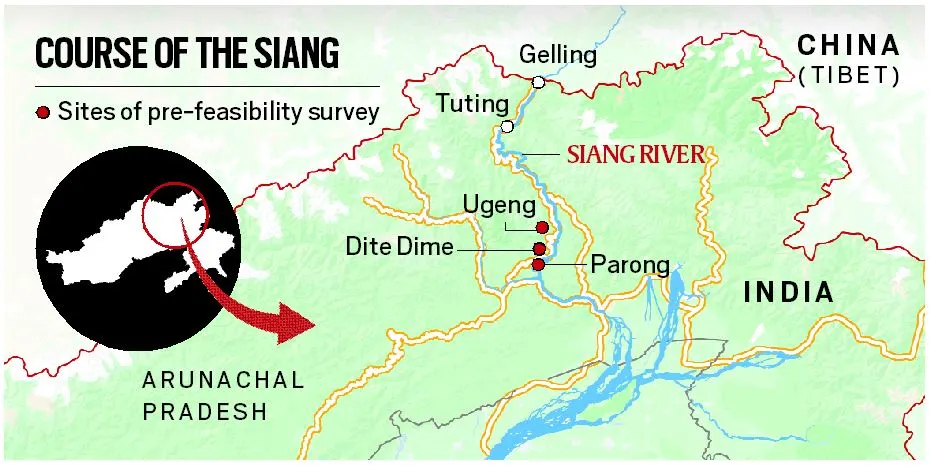
    • The Upper Siang project is a proposed 11,000 MW hydropower project on the Siang River in Arunachal Pradesh.
      • The Siang, originating near Mount Kailash in Tibet (Tsangpo), flows over 1,000 km eastward, enters Arunachal Pradesh as the Siang, and later becomes the Brahmaputra in Assam.
    • Initially proposed as two separate projects, it was consolidated into one larger project in 2017, to be built by the National Hydroelectric Power Corporation (NHPC), featuring a 300-metre high dam.

    Strategic Importance:

    • The Upper Siang project is seen as a strategic move to counter China’s hydel projects on the Tsangpo, particularly a 60,000 MW ‘super dam’ in Tibet’s Medog county.
    • This super dam’s capacity is nearly 3x that of the Three Gorges Dam in China and is intended to divert water to northern China.

    Environmental and Social Concerns

    • Anti-dam organizations express concerns about the project’s environmental and social impact in their memorandum.
    • The memorandum highlights the threat to delicate ecosystems, wildlife habitats, and biodiversity in Arunachal Pradesh, which already hosts numerous dams.
    • The activists are particularly worried about the displacement of communities, as the project could submerge over 300 villages of the Adi tribe, including the district headquarters of Yingkiong.
    • Activists are also wary of the project’s portrayal as a national interest endeavor and are troubled by a provision in the Forest (Conservation) Amendment Act, which exempts strategic projects within 100 km from India’s borders from clearance requirements.

    Back2Basics: Forest (Conservation) Amendment Act, 2023

    Details
    Land Under the Purview of the Act Defines two categories of land under its purview:

    1. Land declared as forest under the Indian Forest Act or any other law, or notified as a forest after 25th October 1980.
    2. Land converted from forest to non-forest use before 12th December 1996.
    Exemptions from the Act Allows exemptions for:

    • Up to 0.10 hectares of forest land for connectivity purposes along roads and railways. 
    • Up to 10 hectares for security-related infrastructure.
    • Up to 5 hectares in Left Wing Extremism Affected Districts for public utility projects.
    • Additionally, strategic projects within 100 km of international borders, LAC, and LoC are also exempted.
    Permitted Activities in Forest Land
    • Includes conservation, management, and development efforts.
    • Activities like zoos, ecotourism facilities, silvi-cultural operations, and specified surveys are exempted from non-forest purposes.
    Assignment/Leasing of Forest Land
    • Extends the prerequisite for obtaining prior approval from the central government for the assignment of forest land to any entity, broadening the scope beyond private entities.
    • It also grants the central government the authority to stipulate the terms and conditions governing such assignments.


    PYQ:

    [2011] The Brahmaputra, Irrawady and Mekong rivers originate in Tibet and flow it through narrow and parallel mountain ranges in their upper reaches. Of these rivers, Brahmaputra makes a “U” turn in its course to flow into India. This “U” turn is due to:

    (a) Uplift of folded Himalayan series

    (b) Syntaxial bending of geologically young Himalayas

    (c) Geo-tectonic disturbance in the tertiary folded mountain chains

    (d) Both (A) and (B) above

  • Impose ‘Robot Tax’ for AI-induced Job Loss: RSS

    Why in the News?

    The Swadeshi Jagran Manch (SJM), affiliated with the Rashtriya Swayamsevak Sangh (RSS), wants a ‘robot tax’ to help employees who lose their jobs because companies are using Artificial Intelligence (AI).

    SJM’s Proposals and Suggestions

    • Robot Tax Proposal: SJM proposes a ‘robot tax’ to create a fund supporting workers displaced by AI adoption to upskill and adapt to new technologies.
    • Tax Incentives for Job Creation: Suggestions include tax incentives for industries based on their employment-output ratio to encourage job creation.
    • Fund for Worker Upskilling: Emphasizes the need for economic measures to cope with the human cost of AI. SJM suggests using a ‘robot tax’ to fund worker upskilling programs.

    Additional Budgetary Recommendations

    • Incentivise job creation: SJM suggests tax incentives for industries generating more employment, based on an employment-output ratio.
    • Subsidies for Small Farmers: SJM proposes subsidies for micro irrigation projects to boost productivity among small farmers.
      • SJM recommends that micro-irrigation projects be made eligible for funding via CSR by adding them to Schedule VII of the Companies Act, 2013.
    • Wealth tax on Vacant Lands: SJM suggests a wealth tax on “vacant land” to discourage unnecessary landholding for future requirements.

    What is a Robot Tax?

    • A robot tax is a proposed tax on companies that use automation and artificial intelligence (AI) technologies to replace human workers.
    • The idea behind this tax is to generate revenue that can be used to support workers who lose their jobs due to automation.
      • This can include retraining programs, unemployment benefits, and other forms of social support.

    Need for a Robot Tax

    • Job Displacement:
      • Automation Impact: AI and automation can lead to significant job losses in various industries as machines and software perform tasks previously done by humans.
      • Worker Support: A robot tax can provide financial resources to support displaced workers, helping them transition to new roles or acquire new skills.
    • Economic Inequality:
      • Wealth Distribution: Automation tends to concentrate wealth among those who own the technology, leading to increased economic inequality.
      • Redistribution: Taxing companies that benefit from automation can help redistribute wealth more fairly across society.
    • Funding for Public Programs:
      • Social Safety Nets: Revenue from a robot tax can fund social safety nets such as unemployment benefits, retraining programs, and other social services.
      • Infrastructure: It can also support public infrastructure projects and other initiatives that benefit society as a whole.
    • Incentivising Human Employment:
      • Employment Decisions: By imposing a tax on automation, companies might be more inclined to consider human workers over robots for certain tasks.
      • Balanced Approach: This can help maintain a balance between technological advancement and human employment.

    Examples and Proposals

    • Bill Gates’ Proposal: Bill Gates in 2022 advocated for a robot tax, suggesting that the revenue could fund job retraining and other social benefits.
    • European Parliament: In 2017, the European Parliament considered a robot tax as part of broader regulations on AI and robotics, though it was ultimately not implemented.

    Criticisms and Challenges

    • Implementation: Determining how to effectively implement and enforce a robot tax can be challenging.
    • Innovation Stifling: Critics argue that a robot tax could hinder innovation and technological progress.
    • Global Competition: There are concerns that companies might relocate to countries without such a tax, affecting global competitiveness.

    Conclusion

    • A robot tax is a controversial yet potentially beneficial approach to addressing the economic and social impacts of AI and automation.
    • It aims to provide support for displaced workers, reduce economic inequality, and ensure that the benefits of technological advancements are shared more broadly across society.

    PYQ:

    [2013] Disguised unemployment generally means:

    (a) large number of people remain unemployed

    (b) alternative employment is not available

    (c) marginal productivity of labour is zero

    (d) productivity of workers is low

  • Future investments in India’s EV space  

    Why in the news? 

    The government plans to expand its EV policy to include retrospective benefits, incentivizing entities that have already invested, with a formal announcement expected in August.

    Why is the government considering extending the EV policy?

    • Retrospective Effect: To include a retrospective effect, extending benefits to entities that have already made investments, aiming to reward and encourage early movers in the EV sector.
    • Encouraging Global Players: The policy seeks to prompt global players to localize production and invest in the domestic ecosystem.
    • Inclusive Incentives: Earlier, entities were eligible for incentives only if they set up local facilities within three years of receiving approval. The extension aims to make these incentives more inclusive.

    EV Policy of India: 

    • FAME Scheme: The Faster Adoption and Manufacturing of (Hybrid &) Electric Vehicles (FAME) scheme is India’s flagship program to incentivize EV adoption. FAME-II, the current phase, provides incentives of:
      • ₹15,000 per kWh for 2-wheelers, up to 40% of the vehicle cost
      • ₹10,000 per kWh for 3-wheelers and 4-wheelers
      • ₹20,000 per kWh for electric buses
    • Phased Manufacturing Program (PMP): To boost local manufacturing, the government has implemented a Phased Manufacturing Program that gradually increases import duties on EV components over time, incentivizing domestic production.

    About the New EV Policy 2024:

    The key highlights of the new EV policy announced in 2024 include:

    • Reduced customs duty of 15% on imported EVs with a minimum CIF value of $35,000
    • A cap of 8,000 imported EVs per year
    • Requirement for manufacturers to invest at least ₹4,150 crore (~$500 million) and achieve 25% domestic value addition within 3 years, escalating to 50% in 5 years
    • Duty waiver capped at the investment made or ₹6,484 crore (equal to the PLI scheme incentive), whichever is lower.

    How does the revised policy align with India’s goals of enhancing local manufacturing and technology adoption in the EV industry?

    • Domestic Value Addition: The policy mandates that half of the value addition in manufacturing be done domestically within five years, boosting local manufacturing.
    • Import Duty Reduction: Reducing import duty on EVs with a minimum CIF value of $35,000 from 70%-100% to 15% to make the transition commercially viable.
    • Strengthening EV Ecosystem: By encouraging local production and investment, the policy aims to strengthen the entire EV ecosystem in India.
    • Global Leadership: Positioning India as a leader in the global transition from internal combustion engines to electric vehicles by fostering a sustainable and technologically advanced manufacturing environment.

    In what ways can the policy’s focus on localization and production volume increase competition and lower costs?

    • Economies of Scale: Higher volumes of production can lead to economies of scale, reducing the per-unit cost of EVs.
    • Healthy Competition: Encouraging competition among EV players to innovate and improve efficiency, thereby lowering production costs and prices for consumers.
    • Cost Reduction: Achieving higher production volumes and localized manufacturing will contribute to a significant decline in production costs, making EVs more affordable for Indian consumers.
    • Comprehensive Ecosystem: The focus on localization ensures the development of a robust supply chain and after-sales service network, further enhancing the viability and attractiveness of EVs in India.

    Way forward: 

    • Support Local Manufacturers: Provide incentives and support for domestic manufacturers to produce critical EV components such as batteries, motors, and controllers. This will reduce dependency on imports and enhance self-reliance.
    • R&D Investment: Increase investment in research and development to drive innovation in EV technology, ensuring that India remains at the forefront of advancements in the industry.

    Mains PYQ: 

    Q ‘Clean energy is the order of the day.’ Describe briefly India’s changing policy towards climate change in various international fora in the context of geopolitics. (UPSC IAS/2022)

  • India hosts BIMSTEC Foreign Ministers amid raging Myanmar crisis

    Why in the News? 

    At the first BIMSTEC Foreign Ministers’ retreat, External Affairs Minister S. Jaishankar emphasized that BIMSTEC must address regional challenges internally, fostering collaboration among member nations.

    About BIMSTEC Countries  

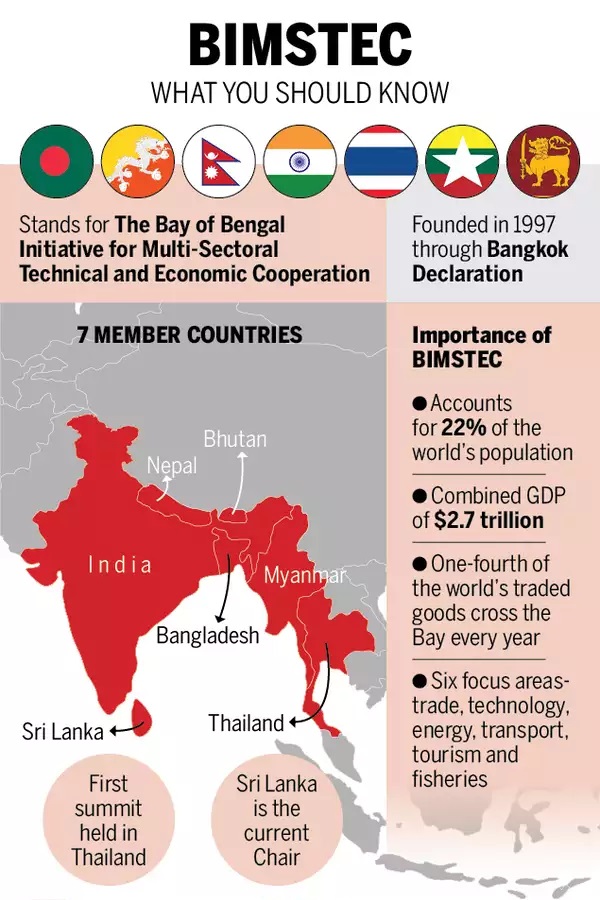
    BIMSTEC (Bay of Bengal Initiative for Multi-Sectoral Technical and Economic Cooperation) is a regional organization comprising seven member countries lying in the littoral and adjacent areas of the Bay of Bengal. These countries are Bangladesh, Bhutan, India, Myanmar, Nepal, Sri Lanka, and Thailand.

    Significance of BIMSTEC:

    • Economic Cooperation: Facilitates trade and investment among member countries.
    • Connectivity Projects: Enhances regional connectivity through road, rail, and maritime links.
    • Technical and Technological Collaboration: Promotes capacity building and technology sharing.
    • Security Cooperation: Addresses transnational crimes, terrorism, and humanitarian assistance.
    • Cultural Exchange: Strengthens cultural ties and people-to-people contacts.

    India’s Stand on Myanmar Crisis

    India has adopted a cautious and balanced approach to the crisis in Myanmar, emphasizing the following points:

    • Connectivity Projects: India focuses on the importance of ongoing connectivity projects for the future of BIMSTEC, which are crucial for regional integration.
    • Humanitarian Assistance: Discussions on humanitarian assistance remain limited to displaced populations and some military personnel seeking refuge in Mizoram, reflecting India’s cautious humanitarian stance.
    • Border Stability: India emphasizes maintaining stability along its border with Myanmar, considering the volatile situation and the control of trade routes by Ethnic Armed Organizations (EAOs).
    • Security Cooperation: Countering transnational crimes, including cyber, narcotics, and illegal arms, remains a priority, reflecting India’s security concerns.

    India Pushes to Link South Asia with Southeast Asia via BIMSTEC

    • Enhanced Connectivity: Promoting infrastructure projects such as road and rail links, and port development to improve trade routes.
      • Encouraging cultural exchanges, tourism, and academic collaborations to strengthen regional bonds
    • Economic Integration: Facilitating trade agreements and economic cooperation to boost regional trade and investment.
    • Energy Cooperation: Exploring opportunities for energy trade and development, including renewable energy projects.
    • Security Collaboration: Addressing common security challenges, including terrorism, human trafficking, and maritime security.

    Way forward: 

    • Establish a Permanent Secretariat: Enhance coordination and efficiency by establishing a fully functional permanent secretariat for BIMSTEC with adequate resources and authority to implement and monitor projects.
    • Promoting Sustainable Development Goals (SDGs): Launch joint initiatives to combat climate change, focusing on disaster risk reduction, sustainable management of natural resources, and renewable energy projects, leveraging the diverse ecological systems within the member states.

    Mains PYQ: 

    Q Do you think that BIMSTEC is a parallel organisation like the SAARC? Waht are the similarities and dissimilarities between the two? How are Indian foreign policy objectives realized by forming this new organisation? (UPSC IAS/2022)

  • MSMEs need funds for tech upgrades, green transition

    Why in the news? 

    Union Minister for MSMEs Jitan Ram Manjhi outlined six strategic pillars identified to foster the growth of the MSME sector.

    What are the 6 pillars for the growth of the MSME Sector   

    • Formalisation and Access to Credit: Promoting formalization of MSMEs to enhance their credibility and access to formal financial institutions.Improving access to credit through schemes like Credit Guarantee Fund Trust for Micro and Small Enterprises (CGTMSE).
    • Increased Access to Market and E-commerce Adoption: Facilitating MSMEs’ access to domestic and international markets through initiatives like market linkages and export promotion schemes.
    • Higher Productivity Through Modern Technology: Encouraging MSMEs to adopt modern technologies and digital tools to improve productivity and efficiency.
    • Enhanced Skill Levels and Digitalisation in the Service Sector: Focusing on skill development and training programs to enhance the capabilities of the MSME workforce.
    • Support to Khadi, Village, and Coir Industry for Globalisation: Promoting traditional industries like Khadi and Coir by providing marketing support and international exposure.
    • Empowerment of Women and Artisans Through Enterprise Creation: Encouraging entrepreneurship among women and artisans through skill development and financial support.

    How can Employment be raised?   

    • Promoting MSME Growth: Support MSMEs with policies for credit access, market expansion, tech modernization, and encourage startups for job creation.
    • Skill Development and Training: Invest in industry-aligned skill development, collaborating with educational institutions and industry partners for vocational training.
    • Infrastructure Development: Invest in infrastructure projects for job creation; develop industrial clusters and economic zones for manufacturing jobs.
    • Supporting Employment-intensive Sectors: Promote high-employment sectors like tourism, agriculture, healthcare, renewable energy; prioritize job creation in rural areas.

    Indian Government steps taken for MSME 

    • Prime Minister Employment Generation Programme (PMEGP): It aims to create employment opportunities through the setting up of new micro-enterprises.
    • Credit Guarantee Scheme for Micro & Small Enterprises (CGTMSE): Provides collateral-free loans of up to ₹1 crore to individual Micro and Small Enterprises (MSEs).
    • Financial Support to MSMEs in ZED Certification Scheme: Provides up to 80% subsidy to MSMEs to inculcate Zero Defect and Zero Effect (ZED) practices in manufacturing.
    • A Scheme for Promoting Innovation, Rural Industry & Entrepreneurship (ASPIRE): Facilitates innovative business solutions, promotes entrepreneurship, and creates new jobs at the grassroots level.

    Way to Green Transition and R&D (Way forward)

    • Financial Incentives and Soft Funds: Offer MSMEs financial incentives, subsidies, and soft loans for green tech and support R&D with grants and tax incentives.
    • Policy Support and Regulatory Framework: Develop supportive policies and regulatory frameworks that encourage MSMEs to integrate environmental sustainability into their operations.
    • Capacity Building and Technical Assistance: Offer capacity-building programs and technical assistance to MSMEs to enhance their knowledge and capabilities in green technologies.
    • Promotion of Green Products and Market Access:Promote green products via marketing campaigns, certification programs, and platforms for showcasing and selling.

    Mains PYQ: 

    Q Economic growth in the recent past has been led by an increase in labour productivity.” Explain this statement. Suggest the growth pattern that will lead to the creation of more jobs without compromising labour productivity. (UPSC IAS/2022)

  • Central India’s land-use patterns, roads fragmenting gaur & sambar populations, threatening genetic diversity   

    Why in the news? 

    A recent study by the National Centre for Biological Sciences (NCBS) found that land-use alterations and road construction in central India affect the genetic connectivity of two prominent herbivores: the gaur and the sambar.

    What is Genetic diversity?

    • Genetic diversity refers to the variety and variability of genetic material within a species or population, essential for adaptation, resilience to environmental changes, and long-term survival of organisms.

    About National Centre for Biological Sciences (NCBS)   

    • NCBS is a premier research institute located in Bangalore, India that is part of the Tata Institute of Fundamental Research (TIFR) under the Department of Atomic Energy of the Government of India.
    • The mandate of NCBS is to conduct fundamental research in the frontier areas of biology, ranging from the study of single molecules to ecology and evolution.

    Observations made by the National Centre for Biological Sciences (NCBS)   

    • Impact of Habitat Modification: The NCBS study underscores the significant impact of habitat loss and fragmentation on wildlife populations, particularly highlighting how expanding linear infrastructure like highways and railway lines disrupts animal movement and genetic connectivity.
    • Genetic Connectivity of Herbivores: It is the first study in India to investigate the genetic connectivity of large herbivores, specifically the gaur and sambar, at a landscape scale. The research reveals how these species are affected differently by landscape features and human activities, influencing their genetic diversity and ability to adapt to environmental changes.
    • Conservation Urgency: The study emphasizes the urgent need for conservation measures in fragmented habitats, such as Umred Karhandla Wildlife Sanctuary in Maharashtra, where small and genetically isolated populations of herbivores require targeted interventions to ensure their survival and genetic health.
    • Methodological Advances: Using advanced genetic techniques like next-generation sequencing (NGS) and landscape genetics, the NCBS researchers demonstrated how these tools can provide crucial insights into population dynamics, genetic diversity, and the impacts of human-induced changes on wildlife populations.

    Present Issues from Tiger reserves and Wildlife sanctuaries in MP and MH

    • Habitat Fragmentation and Connectivity: Both states face significant challenges related to habitat fragmentation due to expanding linear infrastructure like highways and railway lines. These developments disrupt wildlife corridors essential for the movement of animals, leading to isolated populations and reduced genetic connectivity, as observed in the NCBS study.
    • Human-Wildlife Conflict: Increasing instances of human-wildlife conflict pose a threat to both animals and human communities living near tiger reserves and wildlife sanctuaries. Encroachment of habitat for agriculture and settlements often results in conflicts over resources and occasionally leads to casualties among both wildlife and humans.
    • Poaching and Illegal Wildlife Trade: Despite conservation efforts, tiger reserves and sanctuaries in MP and MH continue to face challenges related to poaching and illegal wildlife trade. Tigers and other endangered species are targeted for their skins, bones, and other body parts, driven by demand in illegal markets.
    • Resource Extraction and Mining: Mining activities and resource extraction near protected areas pose significant environmental threats. These activities not only lead to habitat destruction but also contribute to pollution and disturbance, affecting the overall ecosystem health and biodiversity of these regions.
    • Climate Change Impacts: The effects of climate change, such as erratic weather patterns and changing rainfall regimes, also impact tiger reserves and wildlife sanctuaries in MP and MH. These changes can alter habitat suitability for wildlife species, affecting their distribution, migration patterns, and ability to adapt to new environmental conditions.

    Way forward: 

    • Enhanced Habitat Connectivity and Protection: Implement measures to mitigate habitat fragmentation caused by linear infrastructure. This includes creating wildlife corridors over or under highways and railways to facilitate safe animal movement
    • Integrated Conservation and Community Engagement: Foster collaboration between local communities, conservation organizations, and government agencies to address human-wildlife conflict and illegal activities like poaching.

    Mains PYQ: 

    Q How does biodiversity vary in India? How is the Biological Diversity Act,2002 helpful in the conservation of flora and fauna? (UPSC IAS/2018)

  • Muslim Women entitled to seek Alimony, says SC

    PC: Hindustan Times

    Why in the News?

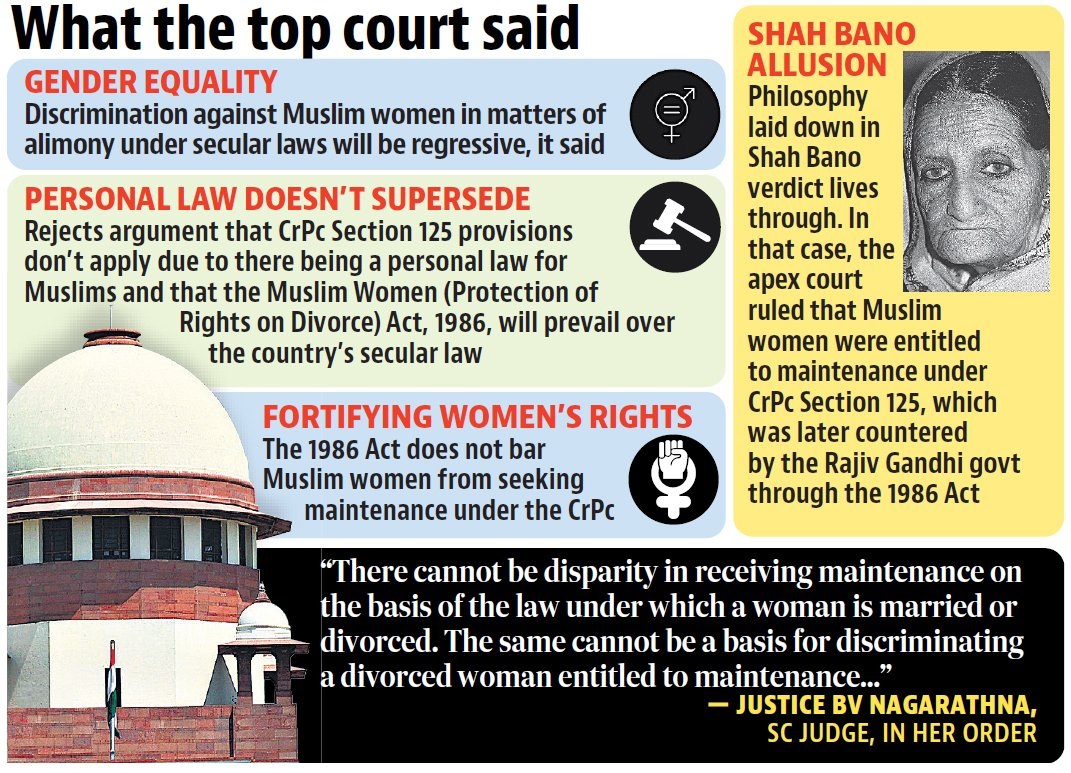
    • The Supreme Court has ruled that a divorced Muslim woman is entitled to seek maintenance from her husband under Section 125 of the Criminal Procedure Code (CrPC).
      • The court asserted that any discrimination against Muslim women in matters of alimony under the secular laws of the country would be regressive and against gender justice, equality.

    Story so far:

    • The Supreme Court bench rejected the argument that Section 125 of the CrPC does not apply to Muslims because they have their own personal law.
    • The court ruled that the Muslim Women (Protection of Rights on Divorce) Act, 1986, does not override the secular law.

    Key Points of the Judgment

    • Legal Standing: “There cannot be the disparity in receiving maintenance on the basis of the law under which a woman is married or divorced.”
    • Application of Section 125: Justice Nagarathna emphasized, “Section 125 of the CrPC cannot be excluded from its application to a divorced Muslim woman irrespective of the law under which she is divorced.”
    • Role of the 1986 Act: The judgment underscored that rights granted under the 1986 Act to receive maintenance during ‘iddat’ are in addition to, not in derogation of, those under Section 125 of the CrPC.

    Muslim Women (Protection of Rights on Divorce) Act, 1986:

    Purpose:

    • To protect the rights of Muslim women who have been divorced by, or have obtained a divorce from, their husbands.
    • To provide for matters connected with or incidental to their divorce.

    Key Provisions:

    • Maintenance:
      • During Iddat Period: A Muslim woman is entitled to a reasonable and fair provision and maintenance from her husband during the iddat period (a waiting period after divorce).
      • Post-Iddat Maintenance: If she cannot maintain herself after the iddat period, she can claim maintenance from her relatives who would inherit her property on her death. If no relatives are available, the State Wakf Board is responsible for her maintenance.
    • Mehr (Dower): The woman is entitled to the payment of mehr (dower) that was agreed upon at the time of marriage.
    • Return of Property: The woman is entitled to all the properties given to her before or at the time of marriage or after the marriage by her relatives, friends, husband, or any other person.
    • Rights of Children: The Act also provides for the maintenance of children born out of the marriage until they reach the age of two years.
    • Application to Magistrate:
      • A divorced woman, or someone acting on her behalf, can apply to a Magistrate for an order under the Act.
      • The Magistrate has the authority to make orders for payment of maintenance, mehr, and return of property.

    Criticisms and Issues:

    • Limited Scope: Critics argue that the Act’s provisions are limited to the iddat period and do not ensure long-term maintenance.
    • Dependence on Relatives: Post-iddat maintenance depends on relatives, which might not always be practical or feasible.
    • Role of Wakf Board: The effectiveness of the Wakf Board in providing maintenance has been questioned due to administrative and financial constraints.
    • Violation of Right to Equality: The MWPRD Act has been criticized for creating discriminatory practices by limiting the maintenance period for Muslim women compared to women of other communities, thus violating the Right to Equality under Article 14 of the Constitution.

    Context and Historical Perspective:

    • Shah Bano Case (1985): The court referenced the landmark Shah Bano case, which affirmed Muslim women’s right to maintenance under Section 125 of the CrPC.
    • Danial Latifi Case (2001): It highlighted subsequent interpretations ensuring that the 1986 Act does not deprive Muslim women of rights under Section 125.
    • Rejection of Restrictions: The court rejected restrictive interpretations that could hinder gender justice and emphasized the importance of providing adequate maintenance, not minimal amounts, to destitute Muslim women.
    • Continuation of Section 144: The judgment noted that the Bharatiya Nagarik Suraksha Sanhita, 2023, which has replaced the CrPC, retains the older provision on alimony under Section 144.

    Section 125 of the Criminal Procedure Code (CrPC)

    Purpose:

    • Maintenance Orders: Section 125 of the CrPC provides for the maintenance of wives, children, and parents who are unable to maintain themselves.

    Key Provisions:

    • Eligible Persons:
      • Wife: Includes a divorced wife who has not remarried.
      • Legitimate and illegitimate minor children.
      • Adult children are unable to maintain themselves due to physical or mental abnormalities.
      • Parents: Includes both father and mother who are unable to maintain themselves.
    • Conditions:
      • The person liable to pay maintenance has sufficient means.
      • The person liable has neglected or refused to maintain the eligible person.
    • Order: The Magistrate can order a monthly allowance for the maintenance of the eligible person.
    • Maximum Amount: There is no fixed maximum amount; it is determined by the Magistrate based on the circumstances.

    Significance:

    • Social Justice: It aims to prevent vagrancy and destitution by ensuring that dependents are provided for.
    • Secular Applicability: It applies to all religions and is not specific to any particular religion.

    Implications and Legal Precedent

    • Equality under Law: The judgment reinforces the principle that Muslim women have the same legal recourse as women of other faiths under Section 125 of the CrPC.
    • Additional Remedies: It affirmed that provisions like the Muslim Women (Protection of Rights on Marriage) Act, 2019, do not exclude rights under Section 125.


    PYQ:

    [2020] Customs and traditions suppress reason leading to obscurantism. Do you agree?

    [2019] Which Article of the Constitution of India safeguards one’s right to marry the person of one’s choice?

    (a) Article 19
    (b) Article 21
    (c) Article 25
    (d) Article 29