💥Join UPSC 2027,2028 Mentorship (July Batch) + XFactor Notes & Microthemes PDF

Distribution: yearly

  • ISRO successful in key test for Chandrayaan-3 Mission

    chandrayaan

    The Indian Space Research Organisation (ISRO) has successfully conducted a crucial test for its upcoming Chandrayaan-3 mission.

    What was the test?

    • The test involved the high-thrust cryogenic engine, which will be used to power the rocket that carries the Chandrayaan-3 spacecraft.
    • The engine was tested for its endurance and performance under various conditions.

    About Chandrayaan-3 Mission

    • The Chandrayaan-3 mission is the third lunar exploration mission by the Indian Space Research Organisation.
    • The mission follows the successful Chandrayaan-1 and Chandrayaan-2 missions, which were launched in 2008 and 2019 respectively.
    • The Chandrayaan-3 mission is designed to further explore the Moon’s South Pole region and conduct various scientific experiments, including studying the lunar surface, mineralogy, and the presence of water.

    Significance of the recent test

    • With the successful test of the high-thrust cryogenic engine, ISRO is now one step closer to launching the Chandrayaan-3 mission.
    • The mission is expected to be a significant step forward in India’s space exploration efforts and will further our understanding of the Moon and its potential for future exploration and exploitation.

    Chandrayaan-2: A quick recap

    • Chandrayaan-2 consisted of an Orbiter, Lander and Rover, all equipped with scientific instruments to study the moon.
    • The Orbiter would watch the moon from a 100-km orbit, while the Lander and Rover modules were to be separated to make a soft landing on the moon’s surface.
    • ISRO had named the Lander module as Vikram, after Vikram Sarabhai, the pioneer of India’s space programme, and the Rover module as Pragyaan, which crash-landed.

    Inception of Chandrayaan 3

    • The subsequent failure of the Vikram lander led to the pursuit of another mission to demonstrate the landing capabilities needed for the Lunar Polar Exploration Mission proposed in partnership with Japan for 2024.

    Its design

    • The lander for Chandrayaan-3 will have only four throttle-able engines.
    • Unlike Vikram on Chandrayaan-2 which had five 800N engines with a fifth one being centrally mounted with a fixed thrust.
    • Additionally, the Chandrayaan-3 lander will be equipped with a Laser Doppler Velocimeter (LDV).

    Back2Basics: Chandrayaan-1 Mission

    • The Chandrayaan-1 mission was launched in October 2008 was ISRO’s first exploratory mission to the moon, in fact to any heavenly body in space.
    • The mission was designed to just orbit around the moon and make observations with the help of the instruments onboard.
    • The closest that the Chandrayaan-1 spacecraft came to the moon was in an orbit 100 km from its surface.


    Attempt UPSC 2024 Smash Scholarship Test | FLAT* 100% OFF on UPSC Foundation & Mentorship programs

    Get your Rs 10,000 worth of UPSC Strategic Package for FREE | PDFs, Zoom session, Tests, & Mentorship


  • Windsor Framework: The deal between UK and EU

    windsor

    The ‘Windsor Framework’ will replace the Northern Ireland Protocol, which had proved to be among the thorniest of Brexit fall-outs, creating problems both economic and political.

    You must know!

    England is a country in its own right and forms part of Great Britain, along with Scotland and Wales. Great Britain is a geographical term that refers to the island that contains England, Scotland, and Wales.

    On the other hand, the United Kingdom (UK) is a sovereign state that includes England, Scotland, Wales, and Northern Ireland.

    Hence, England is a part of Great Britain, and Great Britain is a part of the UK.

    What is the Northern Ireland Protocol?

    • After the UK left the European Union, Northern Ireland remained its only constituent that shared a land border with an EU-member, the Republic of Ireland.
    • Since the EU and the UK have different product standards, border checks would be necessary before goods could move from Northern Ireland to Ireland.
    • However, the two Irelands have had a long history of conflict, with a hard-fought peace secured only in 1998 under the Belfast Agreement, also called the Good Friday agreement.
    • Fiddling with this border was thus considered too dangerous, and it was decided the checks would be conducted between Great Britain and Northern Ireland.
    • This was called the Northern Ireland Protocol.

    Why was it contentious?

    • Under the protocol, Northern Ireland remained in the EU single market, and trade-and-customs inspections of goods coming from Great Britain took place at its ports along the Irish Sea.
    • The checks made trade between Great Britain and Northern Ireland cumbersome, with food products, especially, losing out on shelf life while they waited for clearance.
    • Some taxation and spending policies of the UK government could not be implemented in Northern Ireland because of EU rules.
    • The sale of medicines, too, was caught between different British and EU rules.

    What does the Windsor Framework proposes?

    • The Windsor Framework Deal proposes two crucial aspects. The first aspect is the introduction of a green lane and red lane system for goods.
    1. The green lane system will be for goods that will stay in Northern Ireland.
    2. The red lane system will be for goods that will go to the EU.
    • The second aspect is the ‘Stormont Brake’.
    1. It allows Northern Ireland lawmakers and London to veto any EU regulation.
    2. The veto is applicable if they believe that the regulation affects the region adversely.


    Attempt UPSC 2024 Smash Scholarship Test | FLAT* 100% OFF on UPSC Foundation & Mentorship programs

    Get your Rs 10,000 worth of UPSC Strategic Package for FREE | PDFs, Zoom session, Tests, & Mentorship

  • [pib] Exercise Cobra Warrior

    IAF contingent comprising to participate in Exercise Cobra Warrior at the Waddington Air Force Base of the Royal Air Force in the United Kingdom.

    Exercise Cobra Warrior

    • Cobra Warrior is a multinational military exercise that takes place annually in the United Kingdom.
    • It is designed to improve the readiness and interoperability of the Royal Air Force and allied air forces for joint combat operations.
    • The exercise brings together military units from different countries, including NATO allies and partner nations, to practice and enhance their air combat capabilities.
    • During the exercise, the participating air forces conduct a series of realistic training scenarios that simulate air-to-air combat, air-to-ground attacks, and other mission types.
    • The aim is to provide pilots and ground crews with realistic training experiences to help prepare them for real-world combat situations.


    Attempt UPSC 2024 Smash Scholarship Test | FLAT* 100% OFF on UPSC Foundation & Mentorship programs

    Get your Rs 10,000 worth of UPSC Strategic Package for FREE | PDFs, Zoom sessions, Tests, & Mentorship

  • SC raps govt on plea on ED chief’s term

    ed

    The Supreme Court has sharply reacted over tenure extensions granted to Enforcement Directorate Director by the government to subvert ongoing investigations against their leaders.

    What is Enforcement Directorate (ED)?

    • ED was formed in 1957 to look into cases of foreign exchange-related violations, a civil provision.
    • It goes back to May 1, 1956, when an ‘Enforcement Unit’ was formed in the Department of Economic Affairs.
    • Now, the ED falls under the finance ministry’s Department of Revenue.
    • But in 2002, after the introduction of the PMLA, it started taking up cases of financial fraud and money laundering, which were of criminal nature.
    • It was then tasked for handling Exchange Control Laws violations under the Foreign Exchange Regulation Act (FERA).
    • Today, it is a multi-dimensional organisation investigating economic offences under the:
    1. Prevention of Money Laundering Act (PMLA)
    2. Fugitive Economic Offenders Act
    3. Foreign Exchange Management Act
    4. Foreign Exchange Regulation Act (FERA)

    Its establishment

    • When proceeds of crime (property/money) are generated, the best way to save that money is by parking it somewhere, so one is not answerable to anyone in the country.
    • Therefore, there was a need to control and prevent the laundering of money.
    • The PMLA was brought in for this exact reason in 2002, but was enacted only in 2005.
    • The objective was to prevent parking of the money outside India and to trace out the layering and the trail of money.
    • So as per the Act, the ED got its power to investigate under Sections 48 (authorities under act) and 49 (appointment and powers of authorities and other officers).

    At what stage does the ED step in when a crime is committed?

    • Whenever any offence is registered by a local police station, which has generated proceeds of crime over and above ₹1 crore, the investigating police officer forwards the details to the ED.
    • Alternately, if the offence comes under the knowledge of the Central agency, they can then call for the First Information Report (FIR) or the chargesheet if it has been filed directly by police officials.
    • This will be done to find out if any laundering has taken place.

    What differentiates the probe between the local police and officers of the ED?

    Case study:

    • If a theft has been committed in a nationalised bank, the local police station will first investigate the crime.
    • If it is learnt that the founder of the bank took all the money and kept it in his house, without being spent or used, then the crime is only theft and the ED won’t interfere because the amount has already been seized.
    • But if the amount which has been stolen is used after four years to purchase some properties, then the ill-gotten money is brought back in the market.
    • Or if the money is given to someone else to buy properties in different parts of the country, then there is ‘laundering’ of money.
    • Hence the ED will need to step in and look into the layering and attachment of properties to recover the money.
    • If jewellery costing ₹1 crore is stolen, police officers will investigate the theft. The ED, however, will attach assets of the accused to recover the amount of ₹1 crore.

    Roles and functions of the ED

    • Summon, Search and seizure: The ED carries out search (property) and seizure (money/documents) after it has decided that the money has been laundered, under Section 16 (power of survey) and Section 17 (search and seizure) of the PMLA.
    • Arrest and detentions: On the basis of that, the authorities will decide if an arrest is needed as per Section 19 (power of arrest).
    • Attachment of property: Under Section 50, the ED can also directly carry out search and seizure without calling the person for questioning. It is not necessary to summon the person first and then start with the search and seizure.
    • Filing of chargesheet: If the person is arrested, the ED gets 60 days to file the prosecution complaint (chargesheet) as the punishment under PMLA doesn’t go beyond seven years.

    Centrestage of our debate: Over-reach by Investigation Agencies

    Why is ED comes to pictures frequently?

    Ans. Money laundering

    • Money laundering is the process of making significant amounts of money obtained through criminal activities, such as drug trafficking or terrorist funding, appear to have come from a legitimate source.
    • As a result, it provides an incentive for money launderers to “legitimize” their ill-gotten gains through money laundering.
    • The money generated is referred to as ‘dirty money,’ and money laundering is the act of converting ‘dirty money’ into ‘legitimate’ money.

    Why ED mostly grips Politicians?

    • Exposing rampant corruption: It is not always ironic to say that most politicians are never corrupt. We have a very inglorious past of political corruption.
    • Selective witch-hunt: The ED has often been attacked for initiating investigations, raiding and questioning leaders of opposition parties, be it under the current regime or under past governments.

    Issues with PMLA

    • Misuse of central agencies: PMLA is being pulled into the investigation of even ordinary crimes by the Enforcement Directorate.
    • Seizing of assets: Assets of genuine victims have been attached. The ED could just walk into anybody’s house.
    • Politically motivated raids: In all this, the fundamental purpose of PMLA to investigate the conversion of “illegitimate money into legitimate money” was lost.
    • Opacity of charges: Petitioners pointed out that even the Enforcement Case Information Report (ECIR) – an equivalent of the FIR – is considered an “internal document” and not given to the accused.
    • Vagueness over evidence: The accused is called upon to make statements that are treated as admissible in evidence.
    • Harassment: The ED begins to summon accused persons and seeks details of all their financial transactions and of their family members.
    • Against individual liberty: The initiation of an investigation by the ED has consequences that have the potential of curtailing the liberty of an individual.

    Allegations against ED

    • Huge discretions: The ED is the only Central agency in the country that does not require permission from the government to summon or prosecute politicians or government functionaries for committing economic offences like money laundering.
    • Used for petty crimes: PMLA is pulled into the investigation of even “ordinary” crimes and assets of genuine victims have been attached.
    • Actual purpose denigrated: PMLA was a comprehensive penal statute to counter the threat of money laundering, specifically stemming from the trade in narcotics.
    • Violations of Rights: PMLA was enacted in response to India’s global commitment to combat the menace of money laundering. Instead, rights have been “cribbed, cabined and confined”.
    • Functional opacity: There is also a lack of clarity about ED’s selection of cases to investigate. We often see ED raiding houses of opposition parties suddenly.
    • Poor rate of conviction: We have hardly read the conclusion of cases by ED. Meantime media-trial tears off the accused person’s credibility which is the most desired intent.
    • Under-trials and slower prosecution: ED has been focusing on keeping the accused in custody rather than actually proving the charges against them.

    Challenges to ED

    • ED being dragged to court: The petitions against the ED had the effect of slowing down the investigations, as officers have to defend themselves in court.
    • Foul crying politicians: There are attempts to cover up unexplained, high-value transactions that fall within the PMLA’s ambit
    • Investigation of foreign transactions: Getting information on accounts and money stashed abroad to establish a trail is the biggest challenge they face.

    Way forward

    • The fight against corruption is intimately linked with the reform of the investigations.
    • Therefore the adjudicating authorities must work in cooperation and ensure the highest standards of transparency and fairness.
    • ED has been walking a tightrope to safeguard its integrity by speeding up investigations and court procedures.
    • The need of the hour could be systemic fixes—and not shrill calls to throw the baby out with the bathwater.
    • It is unlikely that corruption can be substantially reduced without modifying the way government agencies operate.


    Attempt UPSC 2024 Smash Scholarship Test | FLAT* 100% OFF on UPSC Foundation & Mentorship programs

    Get your Rs 10,000 worth of UPSC Strategic Package for FREE | PDFs, Zoom session, Tests, & Mentorship

  • Ethical Animal Research: Prospects and Challenges

    animal

    A proposed measure in Switzerland would have made that country the first to ban medical and scientific experimentation on animals.

    What counts as ‘Ethical’ animal research?

    • There is no single standard definition of ethical animal research.
    • Ethical animal research refers to the use of animals in scientific studies while ensuring that the animals are treated humanely and their welfare is protected.
    • It involves balancing the benefits of the research with the potential harm to the animals and minimizing any harm or suffering that the animals may experience.

    Issues involved in animal research

    • Inhumane treatment: Animals are often not treated humanely and are mishandled throughout the research process, including during transport, housing, and experimental procedures.
    • Animal rights ignored: Animal rights advocates argue that animals have inherent rights and should not be used for human purposes. They argue that animals have the right to life, liberty, and freedom from suffering, and that using animals in research violates these rights.
    • Animal distress: We should consider animals’ distress. If something is known to be painful in humans, it is assumed to be painful in animals as well.

    The 4 R’s of animal research

    The 3 R’s encourage scientists to develop new techniques that allow them to replace animals with appropriate alternatives.  The principles are summarized as:

    1. Reduction
    2. Refinement
    3. Replacement
    4. Rehabilitation

    Guidelines for animal research

    Federal research agencies follow guiding principles in evaluating the use and care of animals in research.

    • Empathy for all: One is that the research must increase knowledge and, either directly or indirectly, have the potential to benefit the health and welfare of humans and other animals.
    • Minimal use: Another is that only the minimum number of animals required to obtain valid results should be included.
    • Minimise pain and distress: Researchers must use procedures that minimize pain and distress and maximise the animals’ welfare.
    • Using IT tools: They are also asked to consider whether they could use non-animal alternatives instead, such as mathematical models or computer simulations.

    Significance of such guidelines

    Ans. Defined protocol

    • They have made sure that scientists create protocols that describe the purpose of their research and why animals are necessary to answer meaningful question.
    • The protocol must outline how animals will be housed and cared for, and who will care for and work with the animals, to ensure that they are trained to treat animals humanely.

    Why is animal research essential?

    • Non-invasive study: Animal research benefits both humans and animals. Numerous medical advances exist because they were initially studied in animals.
    • Benefits entire wildlife: Animal research has allowed for the eradication of certain diseases in cattle, for example, leading not only to reduced farm cattle deaths and human famine, but also to improved health for wild cattle.
    • Veterinarian care: Health care advances for pets – including cancer treatments, effective vaccines, nutritional prescription diets and flea and tick treatments – are also available thanks to animal research.

    Way forward

    • Specific guidelines for ethical animal research are typically established by national governments.
    • Independent organisations also provide research standards.
    • Create Institutional Animal Care and Use Committee.


    Attempt UPSC 2024 Smash Scholarship Test | FLAT* 100% OFF on UPSC Foundation & Mentorship programs

    Get your Rs 10,000 worth of UPSC Strategic Package for FREE | PDFs, Zoom session, Tests, & Mentorship

  • Organ on a chip: New setup for lab testing

    organ

    Central idea: Organ-on-a-chip technology has emerged as a new laboratory setup that scientists are using instead of animals to test new drugs.

    What is Organ-on-a-Chip?

    • Organ-on-a-chip is a microfluidic device that aims to mimic the structure and function of specific human organs or tissues in vitro.
    • It is a small, transparent chip made of biocompatible materials such as silicon, glass, or polymers, and contains tiny channels lined with living cells.
    • The living cells are derived from human tissues and can be cultured to replicate the microenvironment of the specific organ being modelled.

    How does Organ-on-a-Chip work?

    • Microfluidic channels simulation: Each organ-on-a-chip contains a complex network of microfluidic channels and chambers that can simulate the mechanical and chemical environment of a specific organ.
    • Mimics the blood flow: The microfluidic channels can mimic the flow of blood and air, while the living cells provide a realistic environment for drug testing and disease modelling.

    Potential applications of organ-on-a-chip

    • Organ-on-a-chip technology has numerous potential applications, including drug development, disease modelling, and toxicity testing.
    • By replicating the structure and function of human organs, researchers can study how organs interact with drugs and other compounds.
    • This could lead to the development of more effective and personalized treatments for a variety of diseases.
    • Additionally, organ-on-a-chip technology provides a more ethical and effective approach to testing drugs and other compounds, reducing the reliance on animal testing.

    Examples of Organ-on-a-Chip

    Several examples of organ-on-a-chip technology have been developed, including-

    • Lung-on-a-chip mimics the air-blood interface in the lungs
    • Heart-on-a-chip mimics the mechanical and electrical properties of the heart
    • Liver-on-a-chip replicates the metabolic activity of the liver
    • Brain-on-a-chip models the blood-brain barrier and neural activity in the brain

    Future prospects

    • Organ-on-a-chip technology is a promising and rapidly evolving field that offers numerous advantages over traditional drug development and testing methods.
    • It provides a more ethical and effective approach to testing drugs and other compounds, reducing the reliance on animal testing.
    • Furthermore, it has the potential to revolutionize the field of drug development by enabling more personalized and effective treatments for a variety of diseases.


    Attempt UPSC 2024 Smash Scholarship Test | FLAT* 100% OFF on UPSC Foundation & Mentorship programs

    Get your Rs 10,000 worth of UPSC Strategic Package for FREE | PDFs, Zoom session, Tests, & Mentorship

  • National Science Day and CV Raman

    raman

    National Science Day is commemorated on Feb 28 every year to commemorate the bird anniversary of Sir CV Raman.

    National Science Day

    • In 1986, the Government of India, under then PM Rajiv Gandhi, designated February 28 as National Science Day to commemorate the announcement of the discovery of the “Raman Effect”.
    • The Raman Effect was the discovery which won physicist Sir CV Raman his Nobel Prize in 1930.

    Who was CV Raman?

    • Raman conducted his Nobel-prize-winning research at IACS, Calcutta.
    • While he was educated entirely in India, Raman travelled to London for the first time in 1921, where his reputation in the study of optics and acoustics was known to physicists such as JJ Thomson and Lord Rutherford.
    • The Raman Effect won scientist Sir CV Raman the Nobel Prize for physics in 1930.
    • It was also designated as an International Historic Chemical Landmark jointly by the American Chemical Society (ACS) and the Indian Association for the Cultivation of Science (IACS).
    • His speciality was the study of vibrations and sounds of stringed instruments such as the Indian veena and tambura, and Indian percussion instruments such as the tabla and mridangam.

    The Raman Effect

    • In 1928, Raman discovered that when a stream of light passes through a liquid, a fraction of the light scattered by the liquid is of a different colour.
    • While Raman was returning from London in a 15-day voyage, he started thinking about the colour of the deep blue Mediterranean.
    • He wasn’t convinced by the explanation that the colour of the sea was blue due to the reflection of the sky.
    • As the ship docked in Bombay, he sent a letter to the editor of the journal Nature, in which he penned down his thoughts on this.
    • Subsequently, Raman was able to show that the blue colour of the water was due to the scattering of the sunlight by water molecules.
    • By this time he was obsessed with the phenomenon of light scattering.

    Observing the effect

    raman

    • The Raman Effect is when the change in the energy of the light is affected by the vibrations of the molecule or material under observation, leading to a change in its wavelength.
    • Significantly, it notes that the Raman effect is “very weak” — this is because when the object in question is small (smaller than a few nanometres), the light will pass through it undisturbed.
    • But a few times in a billion, light waves may interact with the particle. This could also explain why it was not discovered before.
    • In general, when light interacts with an object, it can either be reflected, refracted or transmitted.
    • One of the things that scientists look at when light is scattered is if the particle it interacts with is able to change its energy.

    Real-life applications

    • Raman spectroscopy is used in many varied fields – in fact, any application where non-destructive, microscopic, chemical analysis and imaging is required.
    • Whether the goal is qualitative or quantitative data, Raman analysis can provide key information easily and quickly.
    • It can be used to rapidly characterize the chemical composition and structure of a sample, whether solid, liquid, gas, gel, slurry or powder.


    Attempt UPSC 2024 Smash Scholarship Test | FLAT* 100% OFF on UPSC Foundation & Mentorship programs

    Get your Rs 10,000 worth of UPSC Strategic Package for FREE | PDFs, Zoom session, Tests, & Mentorship

  • ASI finds 1,300-yr-old Buddhist Stupa in Odisha

    stupa

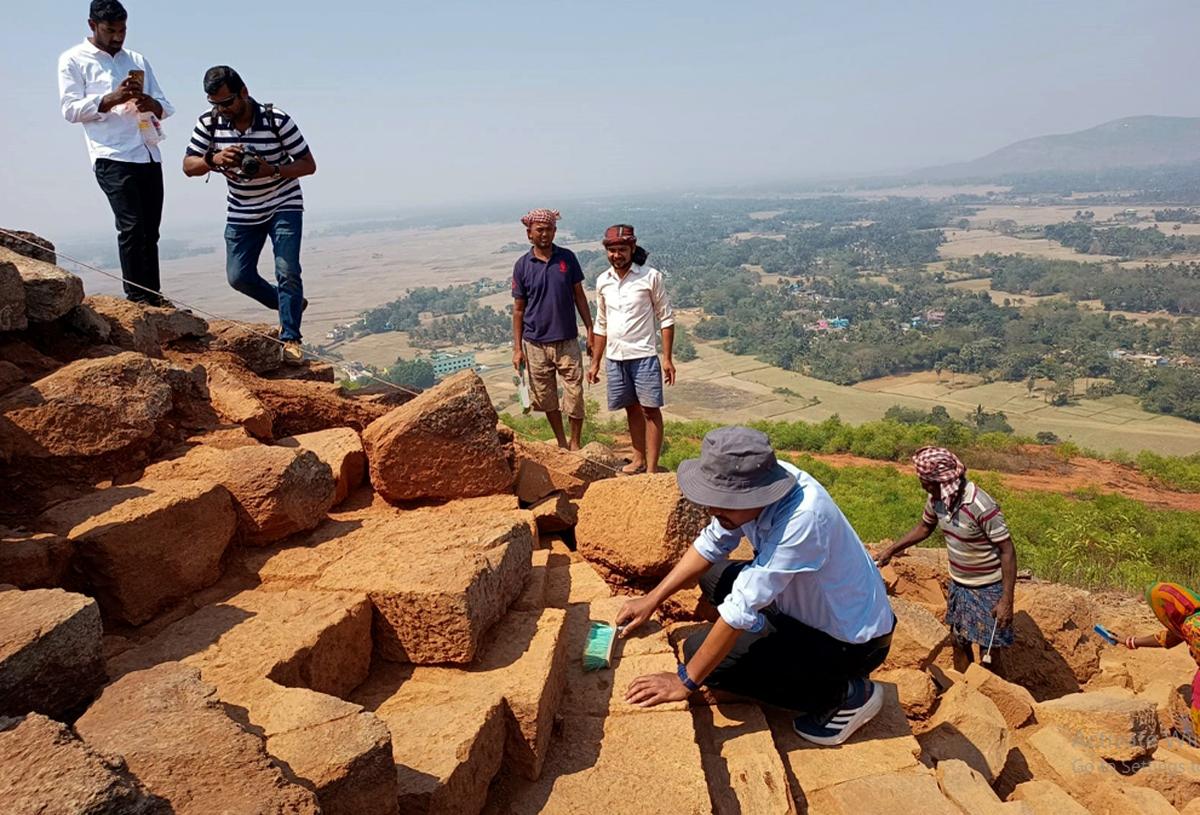
    The Archaeological Survey of India (ASI) stumbled upon a 1,300-year-old stupa right in the middle of a Khondalite mining site in Odisha’s Jajpur district.

    About the Stupa

    • The stupa could be 4.5-meter tall and initial assessment showed it may belong to the 7th or 8th
    • It was found at Parabhadi which is situated near Lalitagiri, a major Buddhist complex, having a large number of stupas and monasteries.
    • The newly discovered stupa was possibly disfigured in an earlier period.

    Khondalite

    stupa

    • Khondalite is a foliated metamorphic rock.
    • It is also called Bezwada Gneiss and Kailasa Gneiss.
    • It was named after the Khond tribe of Odisha and Andhra Pradesh because well-formed examples of the rock were found in the inhabited hills of these regions of eastern India.


    Back2Basics: Lalitagiri Buddhist Complex

    stupa

    • Lalitagiri is a major Buddhist complex in the state of Odisha.
    • The complex is home to stupas, ‘esoteric’ Buddha images, and monasteries (viharas), which is the oldest site in the region.
    • Significant finds at this complex include Buddha’s relics. Tantric Buddhism was practiced at this site.
    • Together with the Ratnagiri and Udayagiri sites a short distance away, Lalitagiri is part of the “Diamond Triangle”.
    • It used to be thought that one or all of these were the large Pushpagiri Vihara known from ancient records, but this has now convincingly located at a different site.

    Stupa Architecture

    stupa

    In the most basic sense, as an architectural representation of a sacred burial site, a stupa — no matter where it is located in the world or when it was built — has three fundamental features.

    • A hemispherical mound (anda) The anda’s domed shape (green highlights) recalls a mound of dirt that was used to cover the Buddha’s remains. As you might expect, it has a solid core and cannot be entered. Consistent with their symbolic associations, the earliest stupas contained actual relics of the Buddha; the relic chamber, buried deep inside the anda, is called the tabena. Over time, this hemispherical mound has taken on an even grander symbolic association: the mountain home of the gods at the center of the universe.
    • A square railing (harmika) The harmika (red highlights) is inspired by a square railing or fence that surrounded the mound of dirt, marking it as a sacred burial site.
    • A central pillar supporting a triple-umbrella form (chattra) The chattra, in turn, was derived from umbrellas that were placed over the mound to protect it from the elements (purple highlights). Just as the anda’s symbolic value expanded over time, the central pillar that holds the umbrellas has come to represent the pivot of the universe, the axis along which the divine descends from heaven and becomes accessible to humanity. And the three circular umbrella-like disks represent the three Jewels, or Triantha, of Buddhism, which are the keys to a true understanding of the faith: (a) Buddha; (b) dharma (Buddhist teachings or religious law); and (c) sangha (monastic community).

    Around these three core building blocks were added secondary features.

    • Enclosure wall with decorated gateways (toranas) at the cardinal directions The wall — with its trademark three horizontal stone bars (in the top image) — surrounds the entire structure. The wall is marked in light blue highlights and the toranas in yellow.
    • A circular terrace (medhi) The terrace — surrounded by a similar three-bar railing — supports the anda and raises it off the ground (black highlights); it likely served as a platform for ritual circumambulation.


    Attempt UPSC 2024 Smash Scholarship Test | FLAT* 100% OFF on UPSC Foundation & Mentorship programs

    Get your Rs 10,000 worth of UPSC Strategic Package for FREE | PDFs, Zoom session, Tests, & Mentorship

  • Menstrual Leave and its Global Standing

    menstrual

    Recently, the Supreme Court refused to entertain a PIL about menstrual leave for workers and students across the country, calling it a policy matter.

    Menstrual Leave: Explained

    • Menstrual leave refers to a policy that allows women to take paid or unpaid leave from work when experiencing painful menstrual symptoms.
    • This means that female employees who are experiencing discomfort, pain, or other symptoms related to their menstrual cycle can take time off from work without having to worry about losing pay or facing disciplinary action.
    • It is a relatively new concept and is not yet widely available, but it has gained attention in recent years as more countries and companies consider its implementation.

    Recent debate

    • The concept of menstrual leave for workers and students has swirled around for a couple of centuries.
    • Such policies are uneven and subject to much debate, even among feminist circles.

    How prominent is the idea?

    • Menstruating women were given leave from paid labour in Soviet Russia in the 1920s.
    • A historian even claims that a school in Kerala granted period leave as early as 1912.
    • In light of this, we explore the global framework for menstrual leave and which countries currently have them.

    Need for menstrual leave

    • Pain and discomfort: Menstrual leave is needed because menstruation can cause a range of symptoms that can be painful and debilitating, making it difficult for women to perform their jobs.
    • Ensure job security: Such leave allows women to take time off when they need it, without having to worry about losing pay or facing disciplinary action.
    • Ensure productivity: This helps ensure that women are able to fully participate in the workforce and can perform to the best of their abilities.
    • Detaches stigma and discrimination: Additionally, menstrual leave can help reduce the stigma surrounding menstruation and promote a culture of openness and support for women.

    Issues if policy measures are enforced

    Not everyone— not even all those who menstruate— are in favour of menstrual leave.

    • Create employer discrimination: Some believe either that it is not required or that it will backfire and lead to employer discrimination against women.
    • Obligation may backfire: If govt policy compels employers to grant menstrual pain leave, it may operate as a de facto disincentive for employers to engage women in their establishments.

    Arguments against menstrual leaves

    • Potential for discrimination against women: If women are given additional leave days, they may be viewed as less capable or less committed to their jobs compared to their male counterparts.
    • Concerns about decreased productivity: Opponents of menstrual leave policies argue that allowing women to take time off work during their menstrual cycle could result in decreased productivity, and ultimately harm businesses.
    • Challenges in implementation: Enforcement of such policies could be challenging for businesses, particularly small and medium-sized enterprises. These businesses may struggle to manage their workforce effectively if employees are taking additional leave days throughout the year.

    What kind of menstrual leave policies are in place globally?

    • Spain: Recently, Spain became the first European country to grant paid menstrual leave to workers, among a host of other sexual health rights. Workers now have the right to three days of menstrual leave— expandable to five days— a month.
    • Japan: It introduced menstrual leave as part of labour law in 1947, after the idea became popular with labor unions in the 1920s. At present, under Article 68, employers cannot ask women who experience difficult periods to work during that time.
    • Indonesia: It introduced a policy in 1948, amended in 2003, saying that workers experiencing menstrual pain are not obliged to work on the first two days of their cycle.
    • Philippines: In the Philippines, workers are permitted two days of menstrual leave a month.
    • Taiwan: It has an Act of Gender Equality in Employment in place. Employees have the right to request a day off as period leave every month, at half their regular wage. Three such leaves are permitted per year— extra leaves are counted as sick leave.
    • Zambia: Among the African nations, Zambia introduced one day of leave a month without needing a reason or a medical certificate, calling it Mother’s Day.
    • Others: The petition also mentioned that the United Kingdom, China and Wales have menstrual leave provisions.

    Thus we can say that almost every alternate country has provisions for menstrual leave.

    What attempts are being made in India?

    • In India, too, certain companies have brought in menstrual leave policies— the most famous example being Zomato in 2020, which announced a 10-day paid period leave per year.
    • Time reported that 621 employees have taken more than 2,000 days of leave after the policy was introduced.
    • Other such as Swiggy and Byjus have also followed suit.
    • Among State governments, Bihar and Kerala are the only ones to introduce menstrual leave to women, as noted in the petition before the Supreme Court.

    Parliamentary measures

    Parliament has seen certain measures in this direction, with no success.

    • In 2017, MP Ninong Ering from Arunachal Pradesh introduced ‘The Menstruation Benefits Bill, 2017’ in Parliament.
    • It was represented in 2022 on the first day of the Budget Session in the Lok Sabha, but was disregarded as an “unclean topic,” the petition says.
    • Shashi Tharoor also introduced the Women’s Sexual, Reproductive and Menstrual Rights Bill in 2018, which proposed that sanitary pads should be made freely available for women by public authorities in their premises.

    Way forward

    • Education and Awareness: Education and awareness campaigns can be conducted to educate employers, employees, and policymakers about the importance of menstrual health and the need for menstrual leave policies.
    • Flexible Work Arrangements: In lieu of specific menstrual leave policies, companies can offer flexible work arrangements, such as remote work or flexible scheduling, to accommodate employees who are experiencing menstrual discomfort.
    • Consultation with Experts: Policymakers can consult with health experts, labor organizations, and other stakeholders to develop comprehensive menstrual leave policies that meet the needs of both employees and businesses.
    • Pilot Programs: Pilot programs can be implemented to test the effectiveness of menstrual leave policies and evaluate their impact on businesses and employees.
    • Workplace Culture: Companies can work to create a workplace culture that supports menstrual health and normalizes conversations around menstruation. This can help to reduce the stigma associated with menstruation and promote gender equity in the workplace.


    Attempt UPSC 2024 Smash Scholarship Test | FLAT* 100% OFF on UPSC Foundation & Mentorship programs

    Get your Rs 10,000 worth of UPSC Strategic Package for FREE | PDFs, Zoom session, Tests, & Mentorship

  • What is the ‘Right to be Forgotten’?

    forgotten

    A doctor has requested the Delhi High Court to enforce his ‘Right to Be Forgotten,’ which includes removing news articles and other content related to his “wrongful arrest.”

    What is the “Right to Be Forgotten” Law?

    • The “Right to Be Forgotten” law is a legal concept that allows individuals to request the removal of their personal information from the internet.
    • It is based on the idea that individuals have a right to privacy and control over their personal data.
    • The law has been implemented in various forms in different countries, including the European Union, Argentina, and South Korea.

    What are the origins of this Right?

    • The Right to be Forgotten was first established by the European Court of Justice in 2014 in the case of “Google Spain SL, Google Inc v Agencia Española de Protección de Datos, Mario Costeja González”.
    • The case was about a Spanish man who wanted to remove a 1998 advertisement about his home being repossessed.
    • The Right to be Forgotten was later included in the EU’s General Data Protection Regulation (GDPR), along with the right to erasure.
    • Article 17 of the GDPR outlines the right to erasure and provides certain conditions when the right can be restricted.

    How does it work?

    • The “Right to Be Forgotten” law allows individuals to request the removal of their personal information from search engine results, social media platforms, and other websites.
    • The request must be made to the data controller, who is responsible for managing the personal data.
    • The data controller then evaluates the request and decides whether to remove the information or not.
    • If the request is denied, the individual can appeal the decision to the relevant regulatory authority.

    Criticisms of the law

    • Critics argue that the law undermines freedom of expression and the public’s right to access information.
    • They also claim that the law is difficult to enforce and can lead to the censorship of legitimate information.
    • Others argue that the law is too narrow in scope and does not provide adequate protection for individuals’ privacy.

    Future of the law

    • The “Right to Be Forgotten” law is still a relatively new legal concept, and its future is uncertain.
    • It is likely that the law will continue to evolve as courts and regulators grapple with its complexities.
    • In the meantime, individuals should be aware of their rights and take steps to protect their personal data online.

    What is the law on the Right to be Forgotten?

    • Section 43A of the IT Act, 2000 says that organizations who possess sensitive personal data and fail to maintain appropriate security to safeguard such data, resulting in wrongful loss or wrongful gain to anyone, may be obligated to pay damages to the affected person.
    • IT Rules, 2021 do not include this right, they do however, lay down the procedure for filing complaints with the designated Grievance Officer so as to have content exposing personal information about a complainant removed from the internet.

    Judicial precursor to the issue

    • The Right to be Forgotten is not explicitly recognized by Indian law, but it has been considered part of an individual’s Right to Privacy under Article 21 by Indian courts since the 2017 ruling in “K.S.Puttaswamy vs Union of India“.
    • The court acknowledged that this right may be restricted by the right to freedom of expression and information or legal obligations.
    • In 2021, the Delhi High Court directed online platforms to remove publicly available records of a case against an American citizen under the Narcotics Drugs and Psychotropic Substances Act, 1985, who argued that it was affecting his employment prospects.


    Attempt UPSC 2024 Smash Scholarship Test | FLAT* 100% OFF on UPSC Foundation & Mentorship programs

    Get your Rs 10,000 worth of UPSC Strategic Package for FREE | PDFs, Zoom session, Tests, & Mentorship