💥Join UPSC 2027,2028 Mentorship (July Batch) + XFactor Notes & Microthemes PDF

Distribution: yearly

  • African Union (AU) and the Mercator Map Debate

    Why in the News?

    The African Union (AU) has endorsed the Correct the Map campaign to replace the 16th-century Mercator projection with more accurate maps.

    African Union (AU) and the Mercator Map Debate

    About the African Union (AU):

    • Establishment: Formed in 2002, replacing the Organisation of African Unity (1963).
    • Membership: 55 African countries.
    • Headquarters: Addis Ababa, Ethiopia.
    • Vision: “An Integrated, Prosperous, and Peaceful Africa, driven by its own citizens.”
    • Agenda 2063: Blueprint for socio-economic growth and continental unity.
    • Main Organs: Assembly, Executive Council, AU Commission, Peace and Security Council.

    What is a Mercator Map?

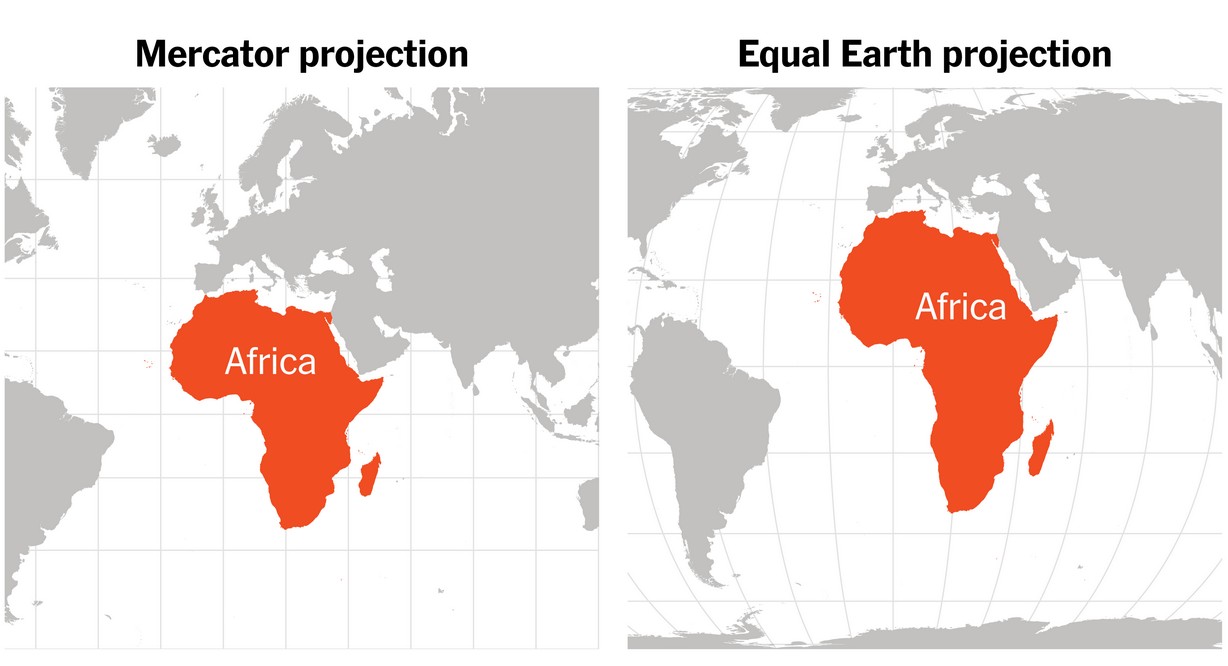
    • Creation: Designed in 1569 by Gerardus Mercator.
    • Projection: Cylindrical map with straight longitude and latitude lines intersecting at 90°.
    • Purpose: Enabled sailors to plot straight-line courses for compass navigation.
    • Adoption: Became the standard map in schools, atlases, and wall charts by the 19th century.

    Issues with the Mercator Map:

    • Distortion: Enlarges high-latitude regions (Europe, Russia, North America) while shrinking Africa and South America.
    • Example: Greenland appears equal to Africa, though Africa is ~14 times larger.
    • Colonial Bias: Reinforced Western dominance narratives and downplayed Africa’s size and importance.
    • Impact: Supported marginalisation and exploitation during colonialism.
    • Alternatives: Gall-Peters (1970s) and Equal Earth (2018) projections show continents in correct proportion.
    • AU Stand: Advocates replacing Mercator maps to restore Africa’s rightful global image.
    [UPSC 2024] The longest border between any two countries in the world is between:

    Options: (a) Canada and the USA * (b) Chile and Argentina (c) China and India (d) Kazakhstan and Russian Federation


  • Xinjiang-Xizang Railway Line

    Why in the News?

    China has launched the Xinjiang–Xizang Railway Line, a strategic, economic, and engineering milestone, connecting Xinjiang with Tibet.

    Xinjiang-Xizang Railway Line

    About the Xinjiang–Xizang Railway Line:

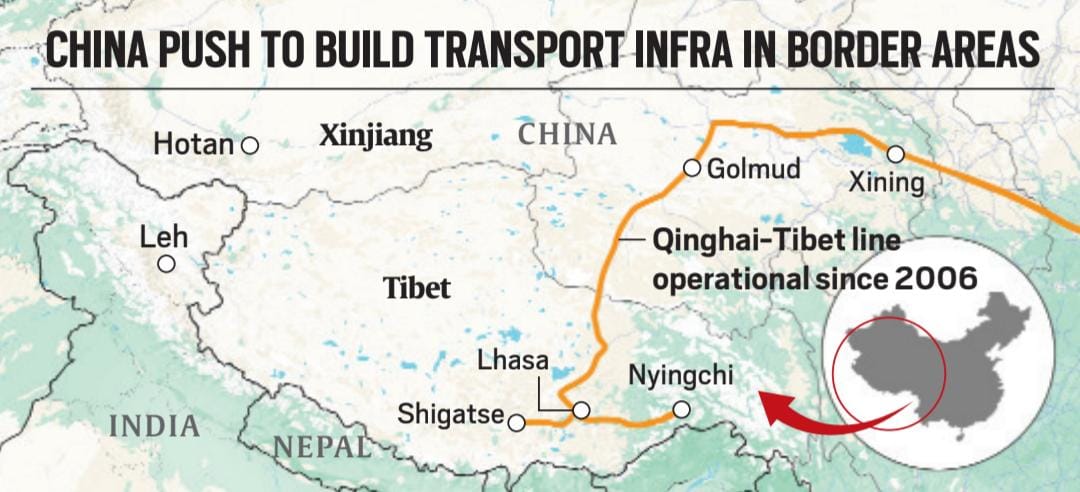
    • Overview: A major high-altitude railway project connecting Hotan in Xinjiang to Shigatse and Lhasa in Tibet (Xizang).
    • Total length planned: ~2,000 km, part of China’s larger 5,000 km rail grid in Tibet by 2035.
    • Construction is phased:
      • Shigatse–Pakhuktso section (by 2025)
      • Pakhuktso–Hotan section (by 2035).
    • Terrain: Himalayas, Karakoram, Kunlun ranges, deserts, glaciers, and permafrost — average altitude above 4,500m.
    • Significance: Seen as one of China’s most advanced and difficult transport projects, comparable to the Qinghai–Tibet Railway (2006).

    Strategic Implications of the Project:

    • Military Mobility: Proximity to Aksai Chin and Line of Actual Control (LAC) enhances Chinese troop deployment and logistics capabilities.
    • Regional Integration: Links Xinjiang (Uyghur region) and Tibet (Buddhist region) with mainland China, supporting Sinicisation and demographic shifts.
    • Economic Role: Opens remote high-altitude areas to trade, energy transport, and tourism, reducing isolation of minority regions.
    • Political Control: Strengthens Beijing’s hold over restive border provinces and suppresses separatist tendencies.
    • India Factor: Raises security concerns as India is also upgrading border infrastructure post-2020 Galwan clash.
    • Part of “Go West Strategy” (2000): Long-term plan to develop western provinces with infrastructure and integrate them into China’s national economy.
    [UPSC 2023] With reference to India’s projects on connectivity, consider the following statements :

    1. East-West Corridor under Golden Quadrilateral Project connects Dibrugarh and Surat.

    2. Trilateral Highway connects Moreh in Manipur and Chiang Mai in Thailand via Myanmar.

    3. Bangladesh-China -India -Myanmar Economic Corridor connects Varanasi in Uttar Pradesh with Kunming in China. How many of the above statements are correct?

    Options: (a) Only one (b) Only two (c) All three (d) None*


  • Agni-5 Intermediate-Range Ballistic Missile

    Why in the News?

    India has successfully test-fired the Agni-5 Intermediate-Range Ballistic Missile (IRBM) from the Integrated Test Range, Chandipur (Odisha).

    Agni-5 Intermediate-Range Ballistic Missile

    What are Ballistic Missiles?

    • Powered by: Solid propellant rocket motors; thrust generated by exhaust gases forces missile upward.
    • Three phases:
      • Boost Phase – missile consumes propellant; trajectory fixed.
      • Midcourse Phase – missile coasts in space on momentum.
      • Terminal Phase – warheads re-enter atmosphere and strike target.

    About Agni-5:

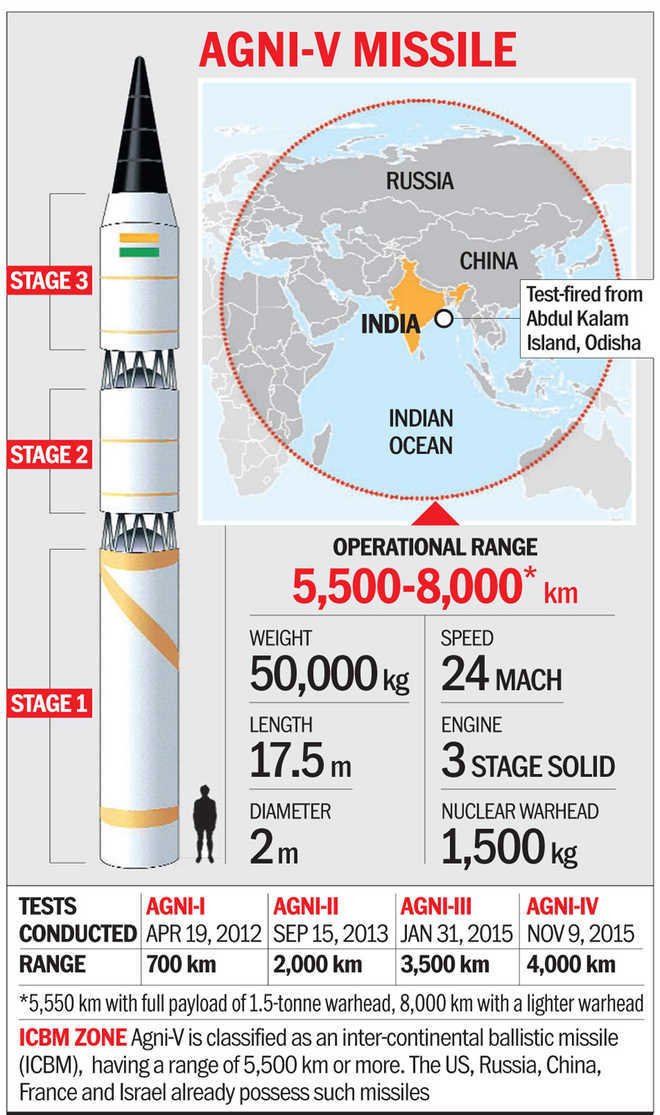
    • Type: Intercontinental Ballistic Missile (ICBM) developed by DRDO.
    • Range: 5,000–5,500 km (upgrade under development up to 7,500 km).
    • Propulsion: Three-stage, solid-fuel rocket motors.
    • Payload: ~1.5 tonnes, nuclear-capable.
    • Multiple Independently Targetable Re-entry Vehicle (MIRV) Technology: Can carry multiple nuclear warheads that target different locations.
    • Features: Fire-and-forget system, advanced navigation, guidance and propulsion technologies.
    • First Test: 2012 from Wheeler Island (Odisha).
    • Strategic Role: Strengthens India’s nuclear deterrence posture, especially vis-à-vis China.

    Back2Basics: Agni Series and its Development

    • Origins: Began in 1983 under the Integrated Guided Missile Development Programme (IGMDP) led by A.P.J. Abdul Kalam.
    • Evolution: Started as technology demonstrators for re-entry vehicles; later developed into full-fledged strategic missiles.
    • Variants:
      • Agni-I: 700–1,200 km range, inducted 2007.
      • Agni-II: 2,000–3,000 km range, inducted 2010.
      • Agni-III: 3,500 km range, highly accurate, tested 2007.
      • Agni-IV: 4,000 km range, advanced avionics, tested 2011.
      • Agni-V: 5,000+ km range, ICBM, MIRV capable.
      • Agni Prime (Agni-P): 1,000–2,000 km, lighter, tested 2021.
      • Agni-VI: Under development, 6,000–10,000 km, MIRV + submarine launch capable.
    • Significance: Backbone of India’s nuclear triad, enhancing deterrence against regional and global adversaries.
    [UPSC 2023] Consider the following statements:

    1. Ballistic missiles are jet-propelled at subsonic speeds throughout their fights, while cruise missiles are rocket-powered only in the initial phase of flight.

    2. Agni-V is a medium-range supersonic cruise missile, while BrahMos is a solid-fuelled intercontinental ballistic missile.

    Which of the statements given above is/are correct?

    Options: (a) 1 only (b) 2 only (c) Both 1 and 2 (d) Neither 1 nor 2*


  • Bistability in Pseudomonas aeruginosa and the glpD Gene 

    Why in the News?

    German researchers found that P. aeruginosa bacteria can switch a key gene (glpD) on or off, even though the bacteria are genetically identical — a survival trick called epigenetic bistability.

    Bistability in Pseudomonas aeruginosa and the glpD Gene 

    About Pseudomonas aeruginosa:

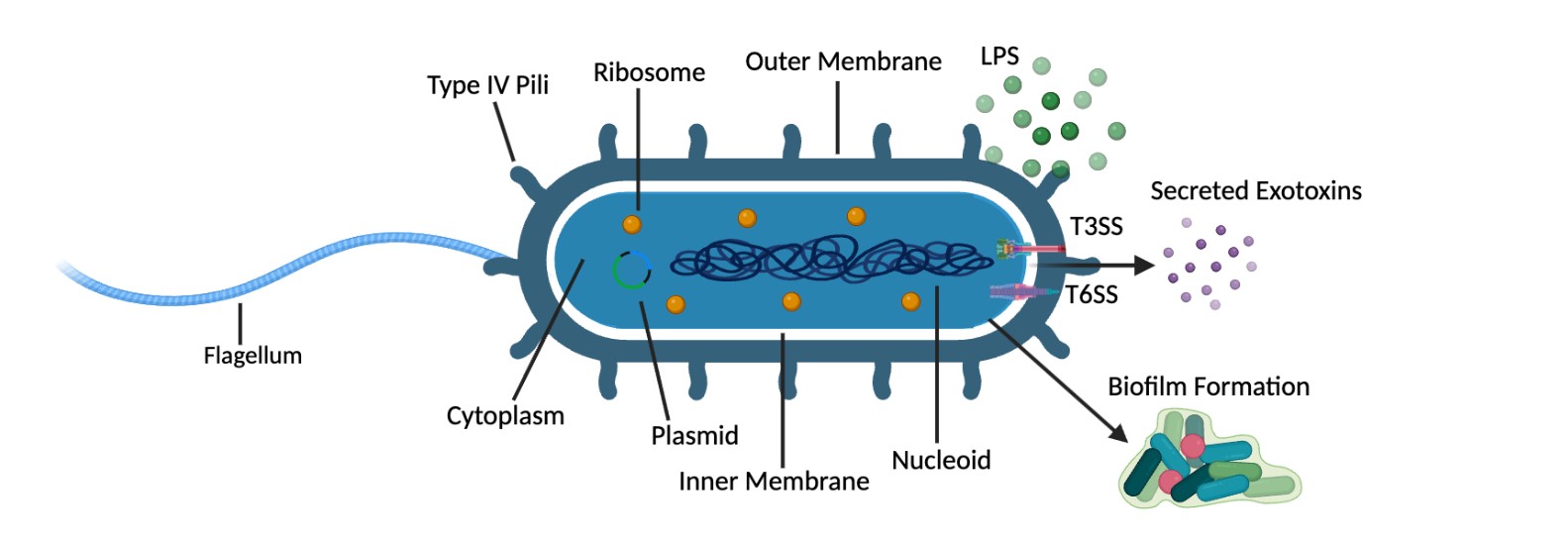
    • Nature: Rod-shaped bacterium found in soil, water, and hospital environments.
    • Pathogen Type: Opportunistic; infects mainly those with weakened immunity.
    • Resistance: Forms biofilms (protective layers), making it highly resistant to antibiotics.
    • Genetic Flexibility: Large genome (~6,000 genes) allows adaptation to diverse environments.

    Impact on Humans:

    • Hospital Infections: Leading cause of hospital-acquired infections.
    • Vulnerable Groups: Burn patients, catheter users, cystic fibrosis patients.
    • Diseases Caused: Keratitis (eye infection), urinary tract infections, pneumonia, bloodstream infections.
    • Mortality: Strong antibiotic resistance makes treatment difficult, leading to high hospital deaths.

    Recent Research Findings:

    • Discovery: German researchers identified bistable expression of the glpD gene (active in some cells, inactive in others).
    • Survival Advantage: This variability helps bacteria survive hostile conditions and trigger infections even from small populations.
    • Experiments:
      • Cells with glpD active were more lethal in moth larvae and mouse immune models.
      • Cells without glpD showed reduced infection ability.
    • Significance: On–off switching of glpD is a survival and infection strategy; targeting this mechanism may lead to new treatments for resistant infections.
    [UPSC 2010] Which bacterial strain, developed from natural isolated by genetic manipulations, can be used for treating oil spills?

    Options: (a) Agrodbacterium (b) Clostridium (c) Nitrosomonas (d) Pseudomonas*


  • In news: International Criminal Court (ICC) 

    Why in the News?

    The Trump administration sanctioned judges and prosecutors of the International Criminal Court (ICC) over arrest cases involving Israeli leaders and past probes into U.S. officials.

    About the International Criminal Court (ICC):

    • Established: 2002 under the Rome Statute (1998); headquartered at The Hague, Netherlands.
    • Nature: First permanent international court to try individuals for grave crimes.
    • Jurisdiction over 4 core crimes:
      1. Genocide
      2. Crimes against humanity
      3. War crimes
      4. Crime of aggression
    • Members: 124 States Parties
      • NON-members: India, China, USA, Russia, Israel, Ukraine
    • Structure:
      • Office of the Prosecutor – investigates and prosecutes cases.
      • 18 Judges – elected for 9 years.
      • Assembly of States Parties – governs ICC administration.
      • Trust Fund for Victims, Detention Centre
    • Languages: English, French, Arabic, Chinese, Russian, Spanish
    • Funding: Annual budget (2025) ~ €195 million (mostly from member states)

    Jurisdiction and Reach of an ICC Warrant:

    • Applicability:
      • Crimes by nationals of member states
      • Crimes committed on member state territory
      • UNSC referrals can extend jurisdiction to non-member states (e.g., Libya, Darfur)
    • Obligations on States:
      • Member states must execute arrest warrants and cooperate fully.
      • Non-compliance can be reported to Assembly of States Parties or UN Security Council (for UNSC referrals)
    • Challenges:
      • ICC lacks an independent enforcement mechanism
      • Non-members (e.g., US, Russia) are not bound to cooperate
      • Political and diplomatic constraints hinder the execution of warrants
    • Special Mechanisms: ICC established an Arrest Working Group (2016) to enhance warrant enforcement through better intelligence-sharing.
    [UPSC 2022] Which one of the following statements best reflects the issue with Senkaku Islands, sometimes mentioned in the news ?

    Options:

    (a) It is generally believed that they are artificial islands made by a country around South China Sea.

    (b) China and Japan engage in maritime disputes over these islands in East China Sea. *

    (c) A permanent American military base has been set up there to help Taiwan to increase its defence capabilities.

    (d) Though International Court of Justice declared them as no man’s land, some South-East Asian countries claim them.


  • [20th August 2025] The Hindu Op-ed: Making India’s climate taxonomy framework work

    PYQ Relevance

    [UPSC 2022] Discuss global warming and mention its effects on the global climate. Explain the control measures to bring down the level of greenhouse gases which cause global warming, in the light of the Kyoto Protocol, 1997.

    Linkage: If such a theme on international climate governance and mechanisms can be asked, then India’s Climate Finance Taxonomy also becomes a significant area. It connects global agreements like the Paris Agreement (Article 6.4) with India’s domestic instruments such as the Carbon Credit Trading Scheme and green bonds.

    Mentors Comment

    In May 2025, the Ministry of Finance released the draft Climate Finance Taxonomy, India’s first attempt to formally define what counts as climate-aligned investment. The framework seeks to mobilise green finance, prevent greenwashing, and give clarity to investors. Its success, however, depends on strong review systems, accountability, and stakeholder engagement.

    Introduction

    The draft taxonomy marks a turning point in India’s climate governance. This is India’s first unified framework for climate finance, introduced amid rising greenwashing risks and investor uncertainty. Arriving alongside the operationalisation of the Carbon Credit Trading Scheme and the rise of green bonds, it comes at a moment of growing pressure to align finance with net-zero goals. As a “living framework,” it promises adaptability to evolving national and global priorities. But without transparency, legal coherence, and institutional accountability, the taxonomy risks undermining India’s climate finance ecosystem instead of strengthening it.

    The Review Architecture for a Living Framework

    1. Two-tier review system: Suggestion of annual reviews for short-term corrections and five-year reviews for deep reassessment.
    2. Annual reviews: Triggered by implementation gaps, international obligations, or stakeholder feedback, with structured timelines, documentation protocols, and public consultation.
    3. Five-year reviews: Linked with India’s NDC cycle and global stocktake under the UNFCCC; ensures long-term resilience in a changing climate finance ecosystem.

    Key aspects of the Substantive Review

    1. Legal coherence: Taxonomy must align with Energy Conservation Act, SEBI norms, Carbon Credit Trading Scheme, and India’s international commitments.
    2. Harmonisation: Review should remove overlaps, clarify redundancies, and integrate with green bonds, blended finance, and environmental risk disclosures.
    3. Content clarity: Definitions must remain readable, coherent, and technically precise. Quantitative thresholds (e.g., emissions reduction, energy efficiency benchmarks) must be regularly updated with empirical data.
    4. Inclusivity: Framework must remain accessible to MSMEs, informal sector, agriculture, and small manufacturing with staggered compliance timelines and proportionate expectations.

    Strengthening Governance through Accountability Structures

    1. Standing unit in the Ministry of Finance: Dedicated body within the Department of Economic Affairs or an expert committee involving financial regulators, climate science institutions, civil society.
    2. Public dashboards: Mechanisms to receive inputs, document experiences, and publish reports.
    3. Transparency: Annual review summaries and five-year revision proposals should be made public in consolidated formats to enhance investor trust and policy coherence.

    Significance of the Climate Finance Taxonomy for India’s Green Transition

    1. Carbon Credit Trading Scheme: Soon to be fully operational, requiring clear rules for market credibility.
    2. Green bonds: Entering mainstream portfolios and stock exchanges, need alignment with taxonomy standards.
    3. Public investment flows: Rising pressure to align fiscal spending with long-term climate goals.
    4. Risk of failure: A weak or opaque taxonomy could undermine India’s net-zero transition by encouraging greenwashing and eroding investor trust.

    Conclusion

    India’s climate taxonomy is more than a definitional exercise, it is a governance tool that can determine the credibility of India’s climate finance system. A “living document” is meaningful only if it is kept alive through active review, structured revision, and transparent engagement. By embedding legal coherence, inclusivity, and accountability, India can ensure the taxonomy becomes a reliable foundation for mobilising investments, reducing greenwashing, and achieving its climate goals.

    Value Addition

    • Article 6.4 of the Paris Agreement: Provides a framework for carbon market instruments with legal and editorial review mechanisms; offers a model for India’s taxonomy to ensure transparency, credibility, and alignment with global norms.
    • Carbon Market Types:
      • Compliance Markets: Mandated by law (e.g., EU ETS, upcoming India’s Carbon Credit Trading Scheme).
      • Voluntary Markets: Corporate/individual offsetting of emissions beyond legal requirements.
    • Green Bonds in India:
      • First Sovereign Green Bonds issued in 2023 worth ₹16,000 crore.
      • Used for renewable energy, clean transport, and climate adaptation projects.
      • Support India’s target of net-zero by 2070 and deepen climate finance flows.

    Mapping Microthemes

    • GS Paper II: Governance, public consultation, accountability mechanisms.
    • GS Paper III: Climate finance, carbon markets, sustainable development, green bonds, energy efficiency.
    • GS Paper IV: Ethical finance, transparency, preventing greenwashing.
  • Sedition Redux: On trampling on press freedom

    Why in the News?

    On August 12, 2025, The Wire’s editors Siddharth Varadarajan and Karan Thapar were summoned by the Assam Police under Section 152 of the BNS, even as the Supreme Court had that very day issued protection while examining the constitutional validity of the new sedition law. This open defiance of judicial authority and the use of procedurally defective summons marks a serious blow to press freedom. What makes this moment significant is that the law being challenged is wider and harsher than colonial sedition provisions, despite India claiming to have moved away from such colonial baggage.

    Introduction

    The sedition debate in India has returned in a new form. While Section 124A IPC was suspended in 2022, the government introduced Section 152 of the BNS, which critics say is “sedition by another name.” The law widens state powers and lowers the threshold for prosecution, making legitimate criticism vulnerable to criminalisation. Recent cases against journalists show how easily this provision can be misused.

    Section 152 and Its Differences from the Old Sedition Law

    • Expanded scope: Goes beyond “disaffection” against government, criminalising acts deemed to endanger sovereignty, unity, and integrity.
    • Lower bar for prosecution: Words like “knowingly” dilute intent requirements; mere criticism can be dragged into criminality.
    • Colonial continuity: Despite being marketed as decolonisation, Section 152 retains the same suppressive essence as 124A IPC.

    The Wire Case and Procedural Violations

    • Summons despite SC protection: Assam Police issued notices on the very day of SC’s order, reflecting executive defiance.
    • Lack of transparency: Summons omitted FIR dates, details of offence, and copies of FIR, violating BNSS safeguards.
    • Political overtones: Linked to The Wire’s report on Operation Sindoor, raising concerns of vendetta-driven policing.

    Threats to Press Freedom

    • Chilling effect: Journalists may self-censor for fear of harassment.
    • Vague definitions: Broad terms like “unity” and “sovereignty” give unchecked power to authorities.
    • Targeting dissent: Questioning government policy risks being equated with undermining national integrity.

    Judicial Response and Challenges

    • Supreme Court scrutiny: SC is examining the constitutional validity of Section 152.
    • Precedent of 2022: Earlier suspension of sedition cases showed judicial recognition of misuse.
    • Executive overreach: Assam Police’s defiance underlines the need for stronger judicial safeguards and guidelines.

    Broader Democratic Implications

    • Freedom of expression at stake: Democracy thrives on criticism; silencing it weakens accountability.
    • Comparative perspective: UK repealed sedition in 2009; US limits it only to violent overthrow.
    • Governance paradox: Instead of transparency, India risks sliding into a majoritarian security state.

    Way Forward

    • Clear legislative safeguards: Narrow the scope of Section 152 with precise definitions of terms like “unity” and “sovereignty” to prevent misuse.
    • Judicial guidelines: The Supreme Court can lay down binding principles (on the lines of Kedar Nath Singh and Shreya Singhal) that limit sedition to cases of direct incitement to violence or armed rebellion
    • Independent oversight: A judicial or quasi-judicial body should vet sedition cases before FIR registration, reducing frivolous prosecutions.
    • Strengthening press freedom: Institutional mechanisms like a Media Commission or independent ombudsman can address grievances without criminalisation.
    • Comparative best practices: India can draw from the UK model of repeal and the US model of narrow application, balancing national security with democratic freedoms.
    • Civic education: Promoting awareness among citizens, journalists, and law enforcement about constitutional morality and reasonable restrictions can ensure a culture of restraint and accountability.

    Conclusion

    Section 152 represents the persistence of colonial-style suppression under a new name. Unless the judiciary firmly strikes it down or introduces robust safeguards, it will continue to erode press freedom and democratic dissent, pillars without which India’s constitutional promise cannot stand strong.

    Value Addition

    Constitutional Angle

    • Article 19(1)(a): Freedom of speech.
    • Article 19(2): Reasonable restrictions (sovereignty, unity, public order, etc.).
    • Basic Structure Doctrine: Democracy, liberty, and rule of law as inviolable.

    Judicial Precedents

    • Kedar Nath Singh vs State of Bihar (1962): Sedition valid only when incitement to violence/public disorder is proven.
    • Shreya Singhal vs Union of India (2015): Vague terms in laws (like IT Act Section 66A) struck down for chilling free speech.
    • SC Order 2022: Suspended all 124A cases, acknowledging misuse.

    Reports & Perspectives

    • Law Commission of India (2018): Recommended clearer safeguards; questioned necessity of sedition.
    • Global practices: UK repealed sedition; US restricts it narrowly.
    • BNSS debate: Marketed as decolonisation but seen as repackaging colonial control.

    Mapping Microthemes

    • GS Paper II: Freedom of speech, judiciary, Centre-State federalism
    • GS Paper III: Internal security vs. dissent.
    • GS Paper IV: Misuse of power, ethics in public life, constitutional morality.

    PYQ Relevance

    [UPSC 2014] What do you understand by the concept “freedom of speech and expression”? Does it cover hate speech also? Why do the films in India stand on a slightly different plane from other forms of expression? Discuss.

    Linkage: The 2014 question on freedom of speech, hate speech, and films mirrors today’s debate on Section 152. Just as films face stricter scrutiny due to mass impact, the new sedition law risks wrongly placing legitimate criticism and dissent in the same bracket as hate speech or violent incitement. This makes the boundary of free expression a central issue in both contexts.


  • Office of the Chief Election Commissioner (CEC)

    Why in the News?

    The Opposition (INDI Alliance bloc) is considering moving a motion of removal of the Chief Election Commissioner (CEC) in Parliament.

    About Election Commission of India (ECI):

    • Establishment: Permanent constitutional body set up on 25 January 1950 (National Voters Day).
    • Constitutional Basis: Articles 324–329, Part XV of the Constitution.
    • Mandate: Conducts elections to Lok Sabha, Rajya Sabha, State Legislative Assemblies, and the offices of President and Vice President.
    • Structure: Since 1993, functions as a three-member body with Chief Election Commissioner (CEC) and two Election Commissioners.
    • Status of CEC: Same salary, status, and perks as a judge of the Supreme Court of India.

    Appointment to ECI:

    • Law: Chief Election Commissioner and Other Election Commissioners (Appointment, Conditions of Service and Term of Office) Act, 2023 (replaced 1991 Act).
    • Appointing Authority: President of India.
    • Selection Committee: Prime Minister (Chairperson), Leader of Opposition in Lok Sabha, and a Union Cabinet Minister nominated by the Prime Minister.
    • Eligibility: Must have served as a Secretary-level officer in Government of India with proven integrity and election management experience.
    • Tenure: 6 years or until 65 years of age, whichever is earlier.

    Removal:

    • CEC: Removed like a Supreme Court judge (Article 324(5)) on grounds of proved misbehaviour or incapacity. Requires a motion passed by two-thirds majority in both Houses of Parliament and Presidential order.
    • Other Election Commissioners: Removed only on recommendation of the Chief Election Commissioner.
    [UPSC 2012] Consider the following statements with reference to India:

    1. The Chief Election Commissioner and other Election Commissioners enjoy equal powers but receive unequal salaries

    2. The Chief Election Commissioner is entitled to the same salary as in provided to a judge of the Supreme Court

    3. The Chief Election Commissioner shall not be removed from his office except in like manner and on like grounds as a judge of the Supreme Court

    4. The term of office of the Election Commissioner is five years from the date he assumes his office or till the day he attains the age of 62 years, whichever is earlier

    Which of these statements are correct?

    Options: (a) 1 and 2 (b) 2 and 3* (c) 1 and 4 (d) 2 and 4


  • [pib] “Anna-Chakra” Supply Chain Optimisation Tool for PDS 

    Why in the News?

    The Union Minister of State for the Ministry of Consumer Affairs, Food and Public Distribution has provided crucial information regarding the Anna-Chakra Tool to the Parliament.

    About Anna-Chakra:

    • Purpose: Digital tool to optimise supply chain of the Public Distribution System (PDS).
    • Developed by: World Food Programme (WFP) and Foundation for Innovation and Technology Transfer (IIT-Delhi).
    • Implementation: Adopted in 30 States/UTs, except Manipur.
    • Coverage: Supports 4.37 lakh Fair Price Shops and 6,700 warehouses.
    • Savings: Reduces logistics/fuel costs, saving about ₹250 crore annually.
    • Environmental Impact: Route optimisation reduces travel distance by 15–50%, cutting CO emissions.

    Back2Basics: Public Distribution System (PDS) in India:

    • Objective: Provides subsidised food grains to poor households, ensuring food security.
    • History: Originated in inter-war years; expanded after 1960s food shortages.
    • Reforms: Revamped PDS (1992) extended coverage to rural and poverty-prone areas.
    • Structure:
      • Centre (FCI) – procurement, storage, transportation, bulk allocation.
      • States – distribute food grains to families via Fair Price Shops.
    • Coverage: Serves ~800 million people through 5 lakh+ Fair Price Shops.
    • Items Distributed: Wheat, rice, sugar, kerosene; some states add pulses and oils.
    • Significance: Shields poor households from food price shocks and economic distress.


    [UPSC 2008] Consider the following statements:

    1. Regarding the procurement of food grains, Government of India follows a procurement target rather than an open-ended procurement policy.

    2. Government of India announces minimum support prices only for cereals.

    3. For distribution under Targeted Public Distribution System (TPDS), wheat and rice are issued by the Government of India at uniform Central issue prices to the States/Union Territories.

    Which of the statements given above is/are correct?”

    Options: (a) 1 and 2 (b) 2 only (c) 1 and 3* (d) 3 only


  • Minimum Public Shareholding (MPS)

    Why in the News?

    SEBI has released a consultation paper proposing changes in Minimum Public Shareholding (MPS) and Minimum Public Offer (MPO) norms for listed companies.

    What is Minimum Public Offer (MPO)?

    • Meaning: When a company launches an Initial Public Offer (IPO), it must sell a minimum number of shares to the public.
    • Analogy: Like a new shop ensuring enough goods are displayed for customers — otherwise trading is thin and controlled by a few.

    What is Minimum Public Shareholding (MPS)?

    • Concept: A company is like a cake. Promoters (founders/owners) usually keep most of it, but SEBI mandates at least 25% must be shared/sold with the public.
    • Purpose:
      • Broader ownership and participation.
      • Fairer prices by reducing manipulation.
      • Greater accountability of companies.

    What SEBI is proposing?

    • Flexibility: Large companies find it difficult to release big chunks of shares at once; rules will be eased.
    • Extended Timelines:
      • Companies valued at ₹50,000–1,00,000 crore now get up to 10 years (instead of 5) to meet 25% MPS.
      • They must reach 15% in 5 years first, then 25% in 10 years.
    • Reduced Burden: For very large companies, the initial Minimum Public Offer (MPO) will be lowered.

    Significance of the Move:

    • Market Stability: Selling too many shares too quickly is like flooding the market — prices may fall even if the company is strong.
    • Benefits:
      • More big companies will list in India.
      • Investors can enter gradually without sudden shocks.
      • Encourages fund-raising while maintaining fair trading.
    [UPSC 2024] Consider the following statements:

    I. India accounts for a very large portion of all equity option contracts traded globally, thus exhibiting a great boom.

    II. India’s stock market has grown rapidly in the recent past, even overtaking Hong Kong’s at some point in time.

    III. There is no regulatory body either to warn small investors about the risks of options trading or to act on unregistered financial advisors in this regard.

    Which of the statements given above are correct?”

    Options: (a) I and II only * (b) II and III only (c) I and III only (d) I, II and III