💥Join UPSC 2027,2028 Mentorship (July Batch) + XFactor Notes & Microthemes PDF

Distribution: yearly

  • Bird Deaths in Thar Desert

    Why in the News?

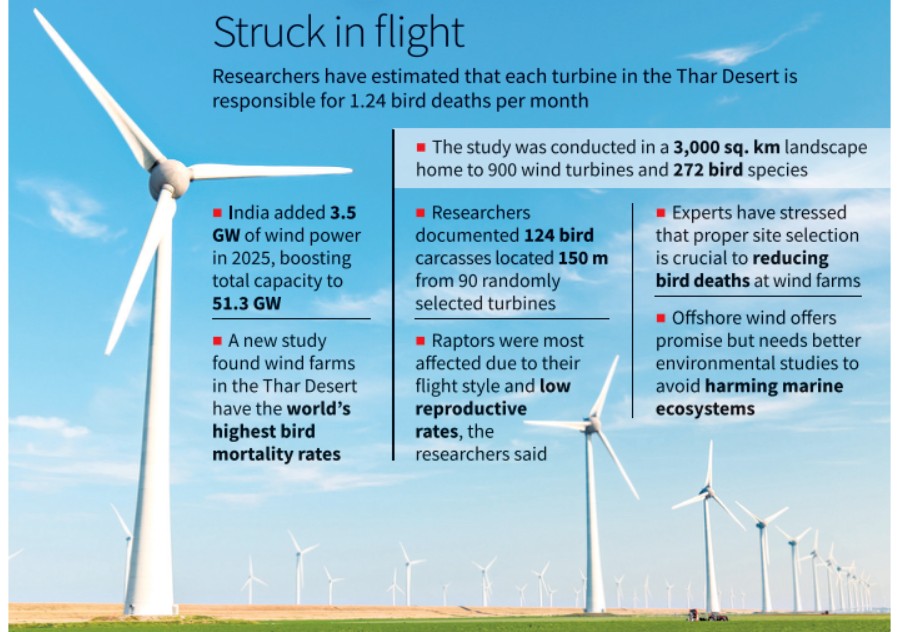
    A new study by the Wildlife Institute of India (WII) reveals that wind farms in the Thar Desert, Rajasthan, have the highest recorded bird mortality rates globally.

    Bird Deaths in Thar Desert

    Bird Mortality at Wind Farms: Key Findings

    • Study Details: Conducted across 3,000 sq. km in Jaisalmer, Rajasthan, covering 90 wind turbines and 272 bird species, including the critically endangered Great Indian Bustard.
    • Carcass Count: 124 bird carcasses found within 150m radius of turbines.
    • Annual Mortality Estimate: 4,464 birds per 1,000 sq. km, after corrections for detection gaps and scavenger interference.
    • Control Sites: 28 sites (500–2,000m from turbines) found zero carcasses — indicating turbines as the direct cause.
    • Reasons:
      • Policy Gap: Onshore wind projects in India do not require Environmental Impact Assessments (EIAs), which weakens ecological safeguards.

    India’s Wind Energy Growth:

    • Current Status: India added 3.5 GW of wind power in the first half of 2025 — an 82% YoY increase.
    • Total Installed Capacity: Now stands at 51.3 GW.
    • Untapped Potential: Estimated at 1163.9 GW at 150 meters above ground level (National Institute of Wind Energy).

    Comparison with Past Studies:

    • 2019 Studies: Recorded just 0.47 bird deaths per turbine/year in Kutch and Davangere.
    • Thar Desert Rate: 1.24 bird deaths per turbine/month — significantly higher.
    • Contributing Factors:
      • High bird density in Thar.
      • Location along Central Asian Flyway.
      • Collisions with turbine-linked power lines included in this study.

    Proposed Mitigation Measures:

    • Technological:
      • Paint one turbine blade for visibility.
      • Shut down turbines during peak migration or high-risk periods.
    • Planning-Based:
      • Careful Site Selection seen as most critical step.
      • Use of tools like AVISTEP (Avian Sensitivity Tool for Energy Planning), which maps avian sensitivity across India.
      • AVISTEP ranks zones as low to very high sensitivity — intended as a guide for site avoidance.
    [UPSC 2012] Vultures which used to be very common in Indian countryside some years ago are rarely seen nowadays. This is attributed to:

    Options: (a) the destruction of their nesting sites by new invasive species disease among them

    (b) a drug used by cattle owners for treating their diseased cattle persistent and fatal *

    (c) scarcity of food available to them

    (d) a widespread, persistent and fatal disease among them


  • Species in news: Alpine Musk Deer

    Why in the News?

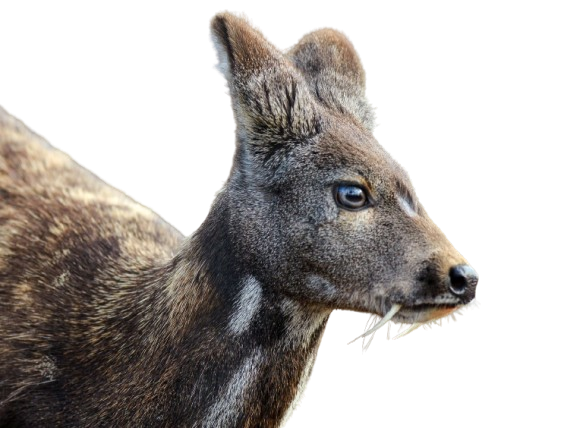
    A Central Zoo Authority (CZA) report reveals a major conservation error — the critically endangered Alpine musk deer was wrongly replaced by the Himalayan musk deer in India’s breeding programmes.

    Species in news: Alpine Musk Deer

    Back2Basics: Central Zoo Authority (CZA):

    • Establishment: Formed in 1992 under Wildlife (Protection) Act, 1972.
    • Mandate: Captive breeding, zoo oversight, and assigning species to zoos.
    • Expanded Scope (2022): Includes rescue centres, off-display facilities, and conservation breeding centres.

    About Alpine Musk Deer (Moschus chrysogaster):

    • Not a true Deer: closer to goats and antelopes (Bovidae).
    • Musk Sac: Males have a visible musk sac between the testes.
    • Canines: Grows fang-like canines during the mating season.
    • Habitat: Found at 3,000–5,000 m in forests of the Himalayas.
    • Range: India (J&K, HP, Uttarakhand, Sikkim, Arunachal), Nepal, Bhutan, China.
    • Diet: Eats grasses, leaves, lichens, mosses, and twigs.
    • Behaviour: Solitary and crepuscular (active at dawn/dusk).
    • Legal Protection:  IUCN Status Critically Endangered (2014), CITES Appendix I; Indian Wildlife Act- Schedule I.
    • Threats: Poaching for musk and habitat loss.
    • Key Habitats: Askot, Gangotri & Kedarnath Wildlife Sanctuaries (Uttarakhand).
    [UPSC 2020] Which of the following are the most likely places to find the musk deer in its natural habitat?

    1. Askot Wildlife Sanctuary 2. Gangotri National Park

    3. Kishanpur Wildlife Sanctuary 4. Manas National Park

    Options: (a) 1 and 2 only * (b) 2 and 3 only (c) 3 and 4 only (d) 1 and 4 only


  • Who are Denotified, Semi-Nomadic and Nomadic Tribes (DNTs)?

    Why in the News?

    At an event in New Delhi, Denotified, Semi-Nomadic and Nomadic Tribes (DNTs) strongly demanded a permanent National Commission to address their long-standing marginalisation.

    Who are Denotified, Nomadic, and Semi-Nomadic Tribes (DNTs)?

    • Denotified Tribes (DNTs):
      • Colonial Tag: Branded “criminal by birth” under the Criminal Tribes Act, 1871.
      • Legal Reversal: Act repealed in 1949; tribes de-notified in 1952.
      • Persistent Stigma: Continue to face police profiling and social exclusion.
    • Nomadic Tribes (NTs):
      • Lifestyle: No fixed habitation; move cyclically for livelihood.
      • Occupations: Animal herding, salt trading, performing arts, traditional healing.
    • Semi-Nomadic Tribes (SNTs):
      • Hybrid Living: Alternate between mobile and semi-settled life.
      • Movement: Shift seasonally but often retain a base settlement.

    Current Status in India:

    • Population Share: Around 10% of India’s population.
    • Communities: ~150+ Denotified, 500+ Nomadic tribes.
    • Major States: Maharashtra, Rajasthan, Gujarat, Karnataka, Andhra Pradesh, Uttar Pradesh, Uttarakhand, Bihar, Madhya Pradesh.
    • Examples of Communities (not exhaustive):
      • Denotified: Bedia, Pardhi, Sansi, Kanjar, Lodha, Nat, Chhara, Bhantu
      • Nomadic: Banjara, Gadia Lohar, Rabari, Madari, Kalbelia, Nat
      • Semi-Nomadic: Abor, Adi, Aka, Apatani, Dafla, Galo, Nishi, Tagin

    Major Committees & Commissions:

    Year Contribution
    Criminal Tribes Inquiry Committee 1947 Criticized criminal branding
    Ayyangar Committee 1949 Led to repeal of Criminal Tribes Act
    Kaka Kalelkar Commission 1953 Recognized DNTs, no full classification
    B.P. Mandal Commission 1980 Suggested NTs for OBC list
    Constitution Review Commission 2002 Urged protective measures for DNTs
    Renke Commission 2008 Listed 500+ communities, lacked implementation resources
    Idate Commission 2017–2018 Listed 1,200+, proposed permanent commission


    [UPSC 2019] Consider the following statements about Particularly Vulnerable Tribal Groups (PVTGs) in India:

    1. PVTGs reside in 18 States and one Union Territory. 2. A stagnant or declining population is one of the criteria for determining PVTG status.

    3. There are 95 PVTGs officially notified in the country so far. 4. Irular and Konda Reddi tribes are included in the list of PVTGs.

    Which of the statements given above are correct?

    Options: (a) 1, 2 and 3 (b) 2, 3 and 4 (c) 1, 2 and 4* (d) 1, 3 and 4


  • Human Outer Planet Exploration (HOPE)

    Why in the News?

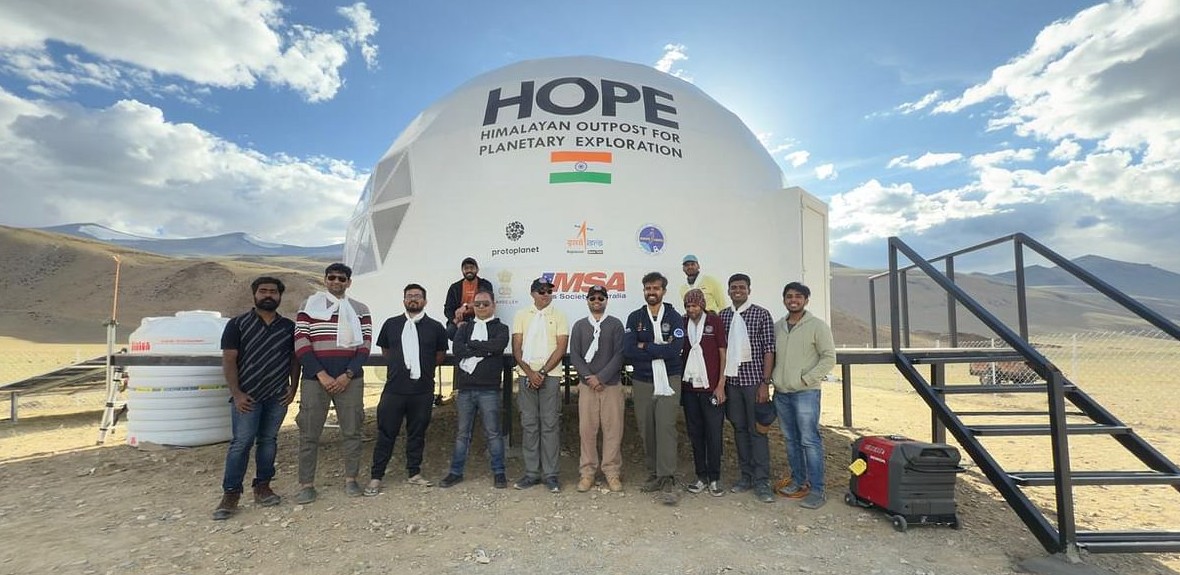
    India has taken a significant step towards interplanetary human missions with the launch of the Human Outer Planet Exploration (HOPE) analogue station at Tso Kar, Ladakh.

    hope

    About HOPE (Human Outer Planet Exploration):

    • Purpose: Simulates Moon and Mars conditions to prepare for future human missions.
    • Developer: Built by Protoplanet (Bengaluru); partially funded by ISRO.
    • Location: Tso Kar, Ladakh (14,500 ft) — chosen for its lunar/Martian-like terrain.
    • Features: Enables isolation research, tech trials, and crew training; 1 of 33 such stations globally.
    • First Mission (2025): Two scientists (Rahul Mogalapalli, Yaman Akot) conducted a 10-day simulation focusing on resilience and mental health.
    • Significance:
      • Boosts India’s human spaceflight readiness.
      • Supports goals like Bharatiya Antariksh Station (2035) and Moon mission (2040).

    India’s Astronomical Assets in Ladakh:

    • Location: Indian Astronomical Observatory (IAO), at Mt. Saraswati (4,500 m), Hanle; run by Indian Institute of Astrophysics.
    • Key Instruments:
      • Himalayan Chandra Telescope (optical/infrared)
      • HAGAR (gamma rays, with Tata Institute of Fundamental Research)
      • MACE (Cherenkov telescope, with Bhabha Atomic Research Centre)
    • Stargazing hubs: Hanle, Nubra Valley, Pangong, Tso Moriri.
    • Advantages & Recognition:
      • 270+ clear nights; low humidity; dark skies.
      • Declared India’s 1st Dark-Sky Reserve (2022) to curb light pollution.
    [UPSC 2012] The world’s highest ground based telescopic observatory is located in

    Options: (a) Colombia (b) India* (c) Nepal (d) Switzerland


  • Biologics & Biosimilars: The next frontier in Affordable Medicines

    Why in the News?

    While most medicines are small molecule drugs with simple structures, a newer class—biologics and biosimilars—is reshaping modern medicine with their complex, targeted action.

    What are Small Molecule Drugs?

    • Definition: Chemically synthesised, low molecular weight compounds.
    • Features: Fixed structure, chemically stable, easy to replicate, patent-protected.
    • Cost Dynamics: Expensive while under patent; affordable generics post-expiry (e.g., Sovaldi dropped from $84,000 to $1,000).

    About Biologics & Biosimilars:

    • Biologics-
      • Overview: Large, complex drugs made from living cells or organisms.
      • Examples: Insulin (~5,800 daltons), Remicade (~150,000 daltons).
      • Nature: Slight structural variations possible; used for cancer, autoimmune diseases, hormone therapy.
    • Biosimilars-
      • Overview: Near-identical versions of biologics, made after patent expiry.
      • Not Generics: Due to complex cell-based production, they’re similar but not identical.
      • Use: Offer lower-cost alternatives to high-end biologics.

    Regulation and Reform:

    • Current Barriers: Biosimilars need costly trials (animal + clinical), unlike generics.
    • Global Moves: UK and USA are easing animal trial norms (organ-on-chip, human models).
    • India: Still follows older norms; waivers under review, but clinical trials still mandatory.

    Significance for India:

    • Access: Generic small molecules transformed Indian healthcare.
    • Opportunity: Affordable biosimilars can do the same for chronic and rare diseases.
    • Urgency: Regulatory reform is key to reduce costs, speed up access, and widen healthcare coverage.
    [UPSC 2020] What is the importance of using Pneumococcal Conjugate Vaccines in India?

    (1) These vaccines are effective against pneumonia as well as meningitis and sepsis. (2) Dependence on antibiotics that are not effective against drug-resistant bacteria can be reduced. (3) These vaccines have no side effects and cause no allergic reactions.

    Options: (a) 1 only (b) 1 and 2 only* (c) 1 and 3 only (d) 1, 2 and 3


  • [2nd August 2025] The Hindu Op-ed: What has been missed is India’s digital sovereignty

    PYQ Relevance:

    [UPSC 2024] Right to privacy is intrinsic to life and personal liberty and is inherently protected under Article 21 of the Constitution. Explain. In this reference discuss the law relating to D.N.A. testing of a child in the womb to establish its paternity.

    Linkage: The article highlights that data is the “digital era’s most valuable resource” and that compromising its control, including individual data, poses “serious security risks” and affects national competitive advantage. Safeguarding personal data is a crucial component of asserting digital sovereignty.


    Mentor’s Comment:  The India–UK FTA, recently finalised, is hailed as a “gold standard” but raises concerns over digital sovereignty. India conceded access to source code and government data, weakening regulatory control and AI innovation leverage. The deal also marks a shift from India’s previous global stand on data localisation, contrasting positions taken even by countries like the US.

    Today’s editorial analyses the concerns over digital sovereignty in the India-UK FTA. This topic is important for GS Paper II (International Relations) in the UPSC mains exam.

    _

    Let’s learn!

    Why in the News?

    The India–United Kingdom Free Trade Agreement (FTA), officially called the Comprehensive Economic and Trade Agreement (CETA), is in the news because of a significant debate over its provisions for the digital sector and digital sovereignty.

    What digital issues arise from the India-UK FTA?

    • Unrestricted Use of Public Data: UK firms gain equal access to Indian public datasets, affecting domestic innovation potential. Eg: British companies can commercially exploit Indian transport or agricultural data.
    • Weakened Data Localization Autonomy: India must engage in consultations before enacting data rules, reducing flexibility.  
    • No Safeguards for Critical Infrastructure: The deal doesn’t exempt sensitive sectors from source code restrictions. Eg: India can’t review software running in strategic areas like nuclear power plants.
    • Lack of Coherent Digital Trade Policy: Commitments were made without a clear digital governance framework. Eg: Digital clauses went unchallenged, unlike the agricultural sector, which had strong negotiation backing.
    • Restricted Source Code Access: India is barred from demanding source code or algorithms, limiting oversight.

    What is Source Code?

    Source code is the original set of instructions written by a programmer in a human-readable programming language (like Python, Java, or C++) that defines how a software program works.

    How does source code access loss affect India’s digital control?

    • Weakens Cyber Sovereignty: Without access to source code, India cannot verify or modify software behavior, increasing reliance on foreign tech. Foreign telecom equipment may have backdoors compromising national security.
    •  Inhibits Regulatory Oversight: Lack of access hinders the ability of Indian regulators to audit algorithms or ensure compliance with local laws. Eg: India can’t fully inspect e-commerce platforms’ pricing algorithms for anti-competitive behavior.
    • Compromises Data Privacy & Security: Source code opacity prevents India from detecting data leaks or unauthorized data transfers.

    Why is a digital policy crucial for India’s trade interests?

    • Ensures Data Sovereignty: A strong policy helps India control how data is stored and used globally. Eg: Prevents sensitive health data from being transferred without oversight.
    • Protects Domestic Industry: Clear rules support Indian startups against unfair access by global players. Eg: Limits foreign firms from exploiting local e-commerce data.
    • Strengthens Negotiation Power: Defined digital laws give India leverage in FTA talks. Eg: Helps resist pressure to allow free cross-border data flow in trade deals.
    • Secures National Interests: Policy enables checks on cybersecurity threats and foreign surveillance. Eg: Restricts flow of defence-related digital information.
    • Boosts Digital Economy: Promotes data-driven innovation and economic growth through regulation. Eg: Encourages investment in Indian cloud services by assuring legal clarity.

    Way forward: 

    • Reassess Digital Commitments: Review FTA clauses that compromise digital sovereignty and seek renegotiation if needed.
    • Strengthen Data Protection Laws: Enforce robust data localisation and privacy regulations to safeguard national interest.
    • Ensure Source Code Access: Mandate conditional access to critical software for security audits and public interest.
    • Promote Indigenous Tech: Invest in local AI and digital infrastructure to reduce foreign dependency.
    • Align Trade with Policy: Harmonise trade agreements with India’s long-term digital and strategic goals.
  • 71st National Film Awards announced

    Why in the News?

    The Ministry of Information and Broadcasting has announced the 71st National Film Awards.

    About National Film Awards:

    • Establishment: Instituted in 1954, administered by the Directorate of Film Festivals (DoFF) under the Ministry of Information and Broadcasting, Government of India.
    • Purpose:
      • To encourage the production of films of aesthetic and technical excellence.
      • Promote films that reflect the cultural and social fabric of India.
      • Recognize and reward cinematic achievements across languages and formats.
    • Award Components:
      • Swarna Kamal (Golden Lotus): Includes medallion, certificate, and cash prize. Given in top categories.
      • Rajat Kamal (Silver Lotus): Awarded in various other categories.
    • Main Categories:
      • Feature Films: For artistic and technical excellence across Indian languages.
      • Non-Feature Films: For documentaries, shorts, and socially relevant content.
      • Best Writing on Cinema: For books and critics advancing understanding of cinema.
    • Eligibility Criteria:
      • Films must be produced in India.
      • Makers must be Indian nationals.
      • Must be certified by CBFC between Jan 1 and Dec 31.
      • Foreign co-productions have specific eligibility conditions.
    • Jury and Selection:
      • Independent juries for each category.
      • No governmental or commercial influence in the selection process.

    About Dadasaheb Phalke Award:

    • Part of NFA.
    • India’s highest cinematic honour.
    • Instituted in 1969 to commemorate Dhundiraj Govind Phalke, India’s first filmmaker.
    • Consists of:
      • Swarna Kamal
      • ₹10 lakh cash prize
      • Certificate, silk roll, and shawl
    • First recipient: Devika Rani Roerich


  • Age Cap for Surrogacy in India

    Why in the News?

    The Supreme Court of India has reserved its judgment (i.e. final decision is pending) in a set of petitions challenging the age-related eligibility criteria under the Surrogacy (Regulation) Act, 2021.

    These cases involve couples who had initiated the surrogacy process prior to the enactment of the law on January 25, 2022, but are now disqualified due to the new age limits.

    About the Surrogacy (Regulation) Act, 2021

    • Objective: To regulate surrogacy in India, prohibit commercial surrogacy, and promote ethical, altruistic surrogacy based on medical necessity.
    • Scope:

    Key Provisions:

    • Type Permitted: Only altruistic surrogacy (unpaid surrogate mother) is allowed; commercial surrogacy is banned.
    • Eligibility Criteria for Intending Couples:
      • Legally married for at least 5 years.
      • Woman must be 23–50 years of age; man must be 26–55 years.
      • Must not have any living biological, adopted, or surrogate child.
    • Eligibility for Single Women:
      • Only widows or divorcees between 35–45 years are eligible.
      • Unmarried women are not eligible (currently under challenge).
    • Surrogate Mother Criteria:
      • Must be a close relative, married, and have at least one biological child.
      • Age: 25–35 years.
    • Certification Requirement: A Certificate of Essentiality is required, including:
      • Proof of infertility
      • Court order for parentage and custody
      • Insurance for the surrogate mother
    • Penalties: Commercial surrogacy invites imprisonment (up to 10 years) and fines (up to ₹10 lakh).
    • Regulatory Structure:
      • National Surrogacy Board at the central level.
      • State Surrogacy Boards at the state level.

    Issues Highlighted by the Supreme Court:

    • No Transitional Provision: The Act lacks a grandfather clause to protect couples who began the surrogacy process (e.g., embryo freezing) before the law came into effect in January 2022.
    • Rigid Age Limits: The court questioned the fairness of disqualifying couples solely on age grounds, especially when natural pregnancies at older ages are not prohibited.
    • Violation of Fundamental Rights: Petitioners argued the age restrictions violate Article 14 (equality before law) and Article 21 (right to reproductive autonomy and personal liberty).
    • Exclusion of Unmarried Women: The law permits only widows or divorcees (35–45 years) to pursue surrogacy, which the court noted may be arbitrary and discriminatory.
    • Law’s Intent vs. Impact: The court stressed that while the law aims to prevent commercial surrogacy, it should not unreasonably prevent genuine intending parents from having children.
    [UPSC 2020] In the context of recent advances in human reproductive technology, “Pronuclear Transfer” is used for:

    Options: (a) fertilization of egg in vitro by the donor sperm (b) genetic modification of sperm producing cells (c) development of stem cells into functional embryos (d) prevention of mitochondrial diseases in offspring*


  • What is Darwin Tree of Life (DToL) Project?

    Why in the News?

    Researchers in Britain & Ireland are aiming to sequence all animals, fungi and plants under the Darwin Tree of Life (DToL) Project.

    About Darwin Tree of Life (DToL) Project:

    • Objective: To sequence the genomes of all ~70,000 known eukaryotic species (whose cells contain a nucleus and other membrane-bound organelles) found in Britain and Ireland.
    • Initiated: In 2019 as a UK–Ireland contribution to the Earth BioGenome Project.
    • Geographic Focus: Great Britain and Ireland, chosen for their well-documented and accessible biodiversity.

    Key Features:

    • Phases:
      • Pilot Phase (2019–2022): Focused on collecting 8,000 species; targeted 2,000 genome assemblies.
      • As of 2025: ~8,000 species collected; over 2,000 genomes sequenced.
    • Approach:
      • Systematic specimen collection and species verification.
      • High-quality genome sequencing using advanced tools and curated pipelines.
    • Public Access: All genome data is released openly via the DToL portal and public archives.
    • Scientific Significance:
      • Enhances understanding of evolution, adaptation, and species relationships.
      • Supports conservation efforts amid growing biodiversity threats.
    • Applications: Informs conservation biology, medicine, agriculture, and climate adaptation.
    [UPSC 2011] At present, scientists can determine the arrangement or relative positions of genes or DNA sequences on a chromosome. How does this knowledge benefit us?

    1. It is possible to know the pedigree of livestock.

    2. It is possible to understand the causes of all human diseases.

    3. It is possible to develop disease-resistant animal breeds.

    Options: (a) 1 and 2 only (b) 2 only (c) 1 and 3 only* (d) 1, 2 and 3


  • Patalpani-Kalakund Heritage Railway

    Why in the News?

    The 155-year-old Patalpani–Kalakund heritage train services has resumed after a temporary halt.

    About the Patalpani–Kalakund Heritage Line:

    • Route: 9.5 km metre-gauge section between Patalpani and Kalakund in Madhya Pradesh.
    • Section: Part of the Dr. Ambedkar Nagar (Mhow)–Khandwa route.
    • Restoration Year: Revived in 2018 as a heritage line after being excluded from gauge conversion due to difficult terrain.
    • Operational Details:
      • Average speed: 5–10 km/h.
      • Features scenic gorges, tunnels, embankments, Patalpani waterfall, and natural springs.
    • Historical Origins:
      • Proposed by Maharaja Tukoji Rao Holkar II in 1870.
      • First constructed as part of Holkar State Railways, completed in 1878.
      • Became part of Rajputana–Malwa Railway in 1881–82.
    • Cultural Significance:
      • Patalpani station named after Tantia Bhil, a tribal revolutionary.
      • Kalakund station named after a local sweet delicacy.

    Other Heritage Railways of India:

    Name & Route Details
    Darjeeling Himalayan Railway
    • Location: West Bengal
    • UNESCO Status: World Heritage Site (1999)
    • Built: 1879–81
    • Highlights: Batasia Loop, zigzags, colonial-era steam engines
    • Route: New Jalpaiguri to Darjeeling (88 km, narrow gauge)
    Nilgiri Mountain Railway
    • Location: Tamil Nadu
    • UNESCO Status: World Heritage Site (2005)
    • Highlights: Only rack-and-pinion railway in India, steep climbs, vintage locomotives
    • Route: Mettupalayam to Ooty (46 km, metre gauge)
    Kalka–Shimla Railway
    • Location: Himachal Pradesh
    • UNESCO Status: World Heritage Site (2008)
    • Built: 1898–1903
    • Highlights: 102 tunnels, 800+ bridges; access to British summer capital
    • Route: Kalka to Shimla (96 km, narrow gauge)
    Matheran Hill Railway
    • Location: Maharashtra
    • UNESCO Status: Tentative World Heritage Site
    • Built: 1907
    • Highlights: Zigzags, tight curves, eco-sensitive, vehicle-free destination
    • Route: Neral to Matheran (21 km, narrow gauge)
    Kangra Valley Railway
    • Location: Himachal Pradesh
    • UNESCO Status: Tentative World Heritage Site
    • Highlights: 971 bridges, 2 tunnels; scenic Dhauladhar views, access to ancient temples
    • Route: Pathankot to Joginder Nagar (163 km, narrow gauge)


    [UPSC 2009] Recently, which one of the following was included in the UNESCO’s World Heritage list?

    Options: (a) Dilwara Temple (b) Kalka-Shimla Railway* (c) Bhiterkanika Mangrove Area (d) Vishakhapatnam to Araku Valley railway line