💥Join UPSC 2027,2028 Mentorship (July Batch) + XFactor Notes & Microthemes PDF

Distribution: yearly

  • Internal Complaints Committee (ICC) under POSH Act

    Why in the News?

    A student in Odisha, died by suicide after her sexual harassment complaint was rejected by her college’s Internal Complaints Committee (ICC), showing the urgent need for stronger grievance systems.

    About Internal Complaints Committee (ICC):

    • Legal Basis: Mandated under the Sexual Harassment of Women at Workplace (Prevention, Prohibition and Redressal) Act, 2013 (POSH Act).
    • Applicability: Mandatory in all organizations with 10 or more employees.
    • Purpose: Provides a redressal mechanism to ensure a safe and dignified workplace for women.
    • Composition:
      • A Presiding Officer who is a senior woman employee.
      • At least two internal members with legal or social expertise.
      • One external member from an NGO or with knowledge of sexual harassment issues.
      • Minimum 50% of ICC members must be women.

    Powers and Functions:

    • Complaint Handling:
      • Accepts complaints within 3 months of the incident.
      • Offers conciliation (on request) or initiates a formal inquiry.
    • Inquiry Process:
      • Holds powers similar to a civil court (summon, evidence collection, sworn statements).
      • Must complete inquiry within 90 days.
    • Confidentiality: Identity of complainant, respondent, witnesses, and proceedings must be kept confidential.
    • Post-Inquiry Actions:
      • Recommends disciplinary action or closure.
      • Employer must act on recommendations within 60 days.
      • Assists in filing FIRs if the complainant seeks criminal action.

    Back2Basics: POSH Act, 2013

    • Full Form: The Sexual Harassment of Women at Workplace (Prevention, Prohibition and Redressal) Act, 2013.
    • Background:
      • Originated from the Vishaka Guidelines (1997) issued by the Supreme Court.
      • Inspired by the Bhanwari Devi case and public pressure after the Nirbhaya case (2012).
    • Constitutional and Global Basis:
      • Upholds gender justice under Article 15.
      • Based on India’s commitment to CEDAW (Convention on the Elimination of All Forms of Discrimination Against Women, 1979) (ratified in 1993).
    • Key Provisions
      • Workplace Scope: Includes private and public sectors, government offices, NGOs, informal sectors, and domestic work.
      • Definition of Harassment: Covers physical contact, unwelcome advances, sexually coloured remarks, explicit content, and verbal or non-verbal conduct.
      • Mandatory ICC: All organizations with 10+ employees must set up an Internal Complaints Committee.
      • Local Committee: District-level Local Committees must be set up for smaller workplaces or domestic workers.
    • Employer Responsibilities:
      • Conduct awareness sessions and training.
      • Ensure safety and publish the organization’s POSH policy.
    • Timelines:
      • Complaints must be filed within 3 months.
      • Inquiries must be completed within 90 days.
    • Penalties:
      • Fine of up to ₹50,000 for non-compliance.
      • Repeat violations can lead to license cancellation.


    [UPSC 2007] Consider the following statements:

    1. The Judge (Inquiry) Bill 2006 contemplates establishing a Judicial Council which will receive complaints against Judges of the Supreme Court, Chief Justices, and Judges.

    2. Under the Protection of Women from Domestic Violence Act, 2005, a woman can file a petition before a 1st Class Judicial Magistrate.

    Which of the statements given above is/are correct?

    Options: (a) 1 only (b) 2 only (c) Both 1 and 2* (d) Neither 1 nor 2


  • Artform in News: Soharai Mural Paintings

    Why in the News?

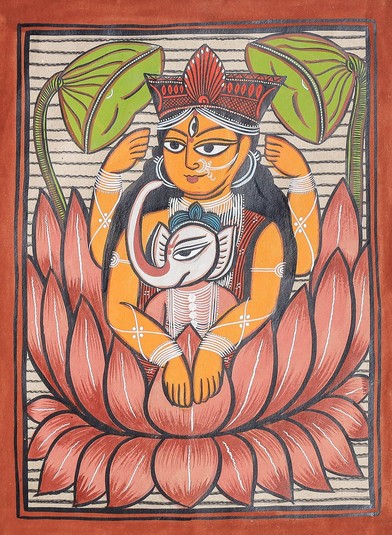
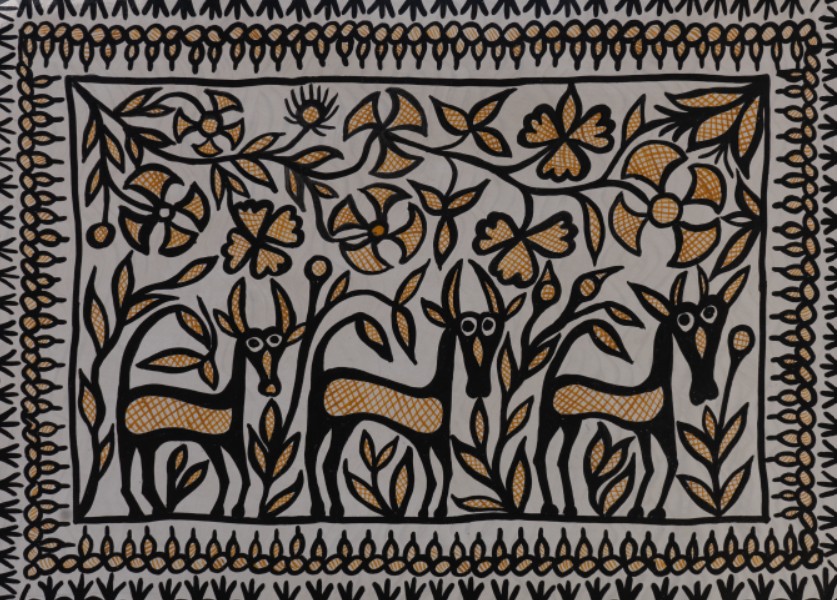
    The second Kala Utsav 2025 at Rashtrapati Bhavan celebrated India’s tribal art, with artists from Jharkhand, Odisha, and West Bengal showcasing Sohrai, Pattachitra, and Patua paintings.

    Artform in News: Soharai Mural Paintings

    About Sohrai Paintings:

    • Origin: Indigenous to Jharkhand, especially the Hazaribagh region.
    • Etymology: Derived from ‘Soro’ meaning “to drive away with a stick.”
    • Historical Roots: Traces back to the Meso-chalcolithic period (9000–5000 BC).
    • Archaeological Evidence: Similar rock paintings found at Isko Rock Shelter in Barkagaon.
    • Key Features of Sohrai Art:
      • Practiced By: Women of Kurmi, Santhal, Munda, Oraon, Agaria, and Ghatwal tribes.
      • Geographical Spread: Found in Jharkhand, Bihar, Odisha, and West Bengal.
      • Materials Used: Natural substances like charcoal, clay, and soil.
      • Themes: Celebrates nature—forests, rivers, animals—along with harvest and fertility.
      • Festival Link: Painted during the Sohrai festival, marking the harvest season and winter.
      • Ritual Role: Rice-gruel mandalas drawn to welcome cattle into homes.
      • GI Tag: Awarded in 2020 for Sohrai Khovar Painting.

    Back2Basics:

    Pattachitra Painting:

    Artform in News: Soharai Mural Paintings

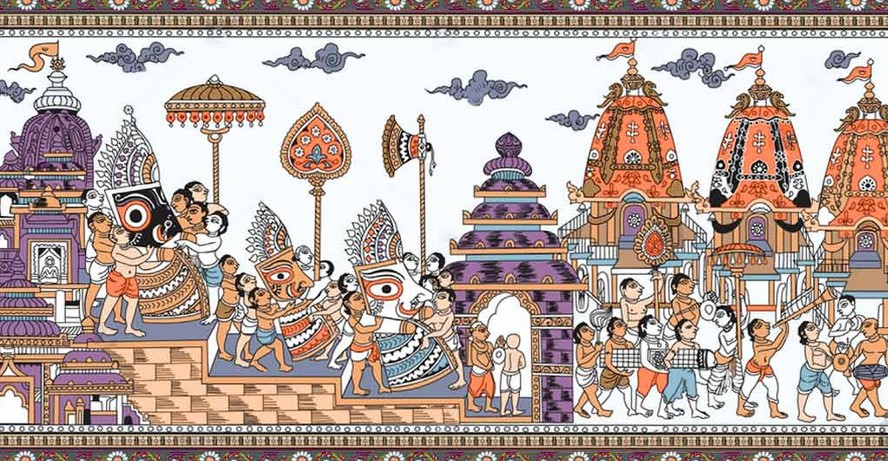
    • Origin: Odisha, associated with the Jagannath Temple, Puri.
    • Material: Painted on cloth (Pata) coated with chalk powder and tamarind seed glue.
    • Colors Used: Made from vegetables, minerals, and earth sources.
    • Artistic Method:
      • No pencil outlines.
      • Borders are painted first.
      • Sketching is done with light red and yellow brushes.
      • Finished with lacquer coating for shine and durability.
    • Themes: Centered on Krishna Leela, Jagannath tales, and other mythological stories.

    Patua Painting:

    • Origin: West Bengal, practiced by the Patua (Chitrakar) community.
    • Spread: Also found in Bihar, Jharkhand, Odisha, and Bangladesh.
    • Format: Painted on scrolls (pati or patta) backed with old sari fabric.
    • Tools & Colors: Uses bamboo-goat hair brushes and vegetable dyes, fixed with gum.
    • Usage:
      • Scrolls used to narrate folk tales.
      • Focuses on Mangal Katha, especially in Kalighat and Kumartuli.
      • Practiced by both Hindu and Muslim Patuas.


    [UPSC 2015] Kalamkari painting refers to:

    Options: (a) a hand-painted cotton textile in South India* (b) a handmade drawing on bamboo handicrafts in North-East India (c) a block-painted woollen cloth in Western Himalayan region of India (d)  a hand-painted decorative silk cloth in North-Western India


  • Novel Microscope observes Molecular Motion

    Why in the News?

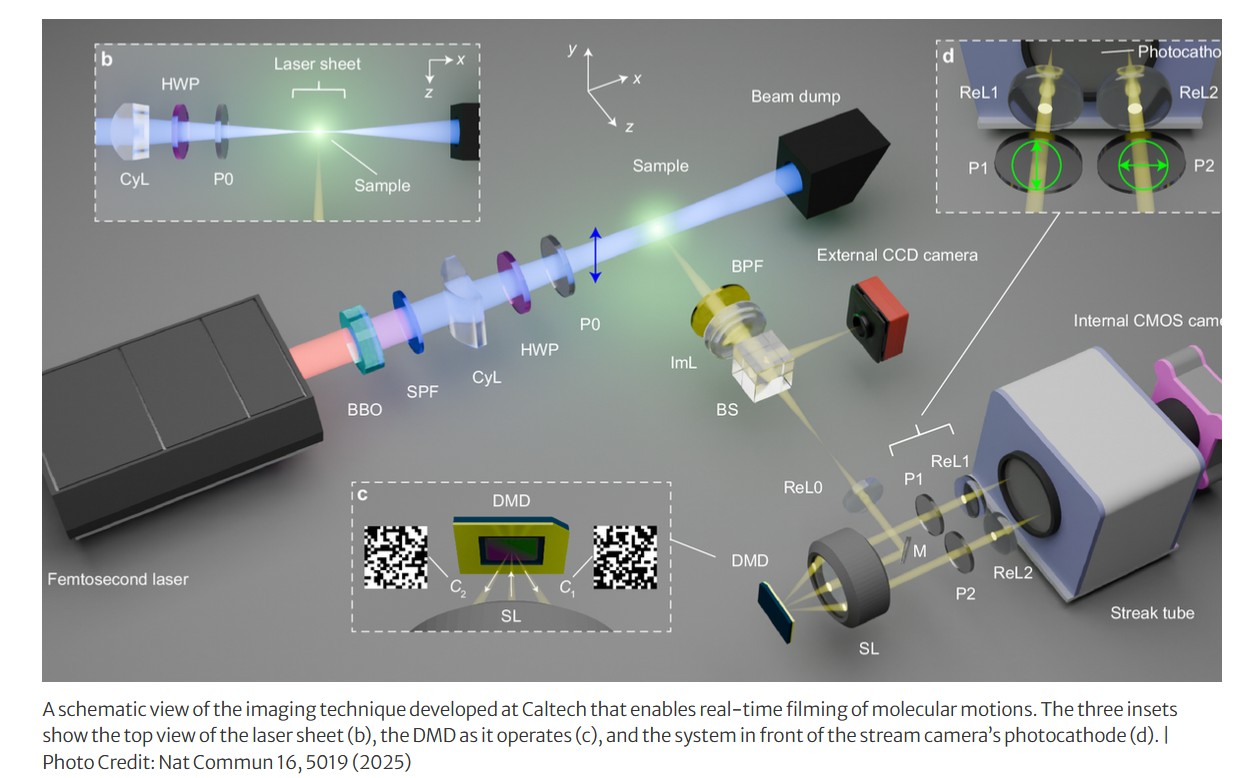
    Over a century after Einstein explained Brownian motion, California Institute of Technology (Caltech) scientists have created a powerful microscope that shows molecules moving in real time at an extremely tiny scale.

    Novel Microscope observes Molecular Motion

    What is Brownian Motion?

    • Definition: Random movement of tiny particles in a fluid due to constant collisions with surrounding molecules.
    • Significance: Validated the existence of atoms and molecules; explained by Albert Einstein in 1905.
    • Particle Behavior: Smaller particles move faster and more erratically; larger ones move slower.

    About Caltech Microscope:  

    • Resolution: Angstrom-level (1 Å = 0.0000000001 m).
    • Speed: Captures hundreds of billions of frames per second.
    • Advantage: Wide-field, single-shot imaging with no sample damage.
    • How It Works?
      • Setup: Fluorescent molecules in water illuminated by ultrafast lasers.
      • Light Capture: Scattered light directed via Digital Micromirror Device.
      • Streak Imaging: Light converted to electron patterns revealing molecular size.
      • Reading Size: Faster changes = smaller molecules; slower = larger.
    [UPSC 2000] Which one of the following can be used to confirm whether drinking water contains a gamma emitting isotope or not?

    Options: (a) Microscope (b) Lead plate (c) Scintillation counter* (d) Spectrophotometer


  • The scientist who made ‘mangroves’ a buzzword

    Why in the News?

    World Mangrove Day was observed on July 26. The occasion also recalled the pioneering role of M.S. Swaminathan in promoting mangrove conservation through initiatives like the International Society for Mangrove Ecosystems (ISME), GLOMIS, and the fishbone canal method of restoration.

    Role of M.S. Swaminathan in mangrove conservation

    • As early as 1989, he advocated using mangroves for climate resilience in coastal areas.
    • Proposed developing salinity-tolerant crops (e.g., rice) using mangrove genes.
    • Played a key role in founding the International Society for Mangrove Ecosystems (ISME) in 1990, promoting global knowledge exchange.
    • Co-authored the Charter for Mangroves, which was later included in the World Charter for Nature (1992) by the UN.
    • Led Community-Based Restoration in India through the M.S. Swaminathan Research Foundation (MSSRF).

    What is the ‘fishbone canal’ method? What are its advantages?

    The method mimics the natural branching pattern of rivers. It allows tidal waters to penetrate deep into degraded mangrove areas. Eg: In Tamil Nadu’s Pichavaram, fishbone canals revived previously stagnant mangrove zones, promoting natural seed dispersal.

    Advantages of the method

    1. Facilitates Natural Regeneration: By improving hydrology, it creates conditions suitable for natural mangrove seedling establishment without extensive manual planting. Eg: In Odisha’s Bhitarkanika, the method led to spontaneous growth of native mangrove species.
    2. Cost-Effective: Compared to large-scale planting, this method is less resource-intensive 
    3. It preserves ecosystem integrity.

    How have global and national initiatives reshaped mangrove management?

    • Shift Towards Community-Based Conservation: Focus has moved from government-led to community-driven models, recognising local knowledge and stakeholder participation. Eg: Eg: Sundarbans’ Joint Forest Committees empower villagers in conservation.
    • Integration with Climate Resilience Strategies: Mangroves are now seen as vital for disaster risk reduction and carbon sequestration. Eg: Indonesia’s “Mangroves for Coastal Resilience” project links mangrove conservation with coastal protection and blue carbon goals.
    • Technological Interventions and Scientific Planning: Use of GIS mapping, remote sensing, and hydrological modelling has made restoration more precise and scalable. Eg: In Andhra Pradesh, the Integrated Coastal Zone Management Project used satellite data to identify degraded mangrove areas for targeted restoration.

    How did India’s mangrove policy evolve post-1980 ?

    • CRZ Inclusion (1991): Mangroves declared ecologically sensitive under CRZ Rules, restricting commercial activity.
    • Post-Tsunami Shift (2004): Indian Ocean Tsunami highlighted mangroves as bio-shields, leading to their inclusion in disaster risk and coastal zone policies.
    • Boost in Support (Post-2005): Initiatives like the National Coastal Mission and remote sensing-based mapping promoted monitoring and restoration.

    What are ISME and GLOMIS?

    • ISME (International Society for Mangrove Ecosystems) is a global non-profit organization founded in 1990 to promote the conservation, restoration, and sustainable use of mangrove ecosystems through research, training, and international cooperation. It also offers technical support and capacity building for sustainable mangrove management.
    • GLOMIS (Global Mangrove Database and Information System), developed by ISME, is a centralized database that provides scientific data, GIS mapping, and case studies to support effective mangrove management and policymaking worldwide. GLOMIS serves as a database for mangrove species, restoration efforts, and GIS data.

    Way forward: 

    • Strengthen Community-Based Restoration: Empower local communities through training, sustainable livelihood support, and participation in restoration using techniques like the ‘fishbone canal’ method for greater ecological success.
    • Leverage Technology and Global Networks: Use remote sensing, GIS, and platforms like GLOMIS for monitoring mangrove health, while collaborating with international bodies like ISME to adopt best global practices.

    Mains PYQ:

    [UPSC 2019] Discuss the causes of depletion of mangroves and explain their importance in maintaining coastal ecology.

    Linkage: This question is directly and explicitly about mangroves, focusing on two key aspects: their depletion and their importance in maintaining coastal ecology. The fact that such a detailed question appeared in the examination signifies the recognized environmental importance and public awareness surrounding mangroves. A scientist’s work to popularize mangroves would logically contribute to this level of public and academic interest.
  • [pib] Lokpal of India

    Why in the News?

    The Lokpal of India, India’s central anti-corruption ombudsman, is moving forward to fill 81 approved posts on a deputation basis.

    Historical Context of the Lokpal:

    • Initial Proposal (1966): First proposed by the First Administrative Reforms Commission to tackle high-level corruption.
    • Legislative Failures (1971–2008): Multiple Lokpal Bills introduced in Parliament but none were passed.
    • Jan Lokpal Movement (2011): Nationwide agitation led by Anna Hazare demanded a powerful and independent anti-corruption body, catalyzing public and political support.
    • Enactment of Law (2013): The Lokpal and Lokayuktas Act was passed in 2013, providing for:
      • A Lokpal at the central level.
      • Lokayuktas in states.
    • Formal Establishment (2014): Lokpal of India was notified on January 16, 2014 under Section 3 of the Act.
    • Initial Functioning: Operated with encadred staff (mostly Central Secretariat Service); became functionally active only in 2019.
    • Organisational Restructuring (2024):
      • Due to rising complaints and staffing gaps, a new Organogram was approved in August–September 2024.
      • The Full Bench of Lokpal, using powers under Section 34, sanctioned 81 deputation posts.
      • These are stop-gap until regular recruitment begins under the upcoming Service Regulations, 2024.

    About Lokpal [vs. Lokayukta, A Comparative Overview]:

    Lokpal (Central) Lokayukta (State)
    Legal Basis Established under the Lokpal and Lokayuktas Act, 2013 Also mandated under the Lokpal and Lokayuktas Act, 2013 (Section 63); specifics vary by state
    Jurisdiction Covers central public servants, including the Prime Minister (with some exceptions), Ministers, MPs, and officials in Groups A–D Handles cases involving state public servants, such as Chief Ministers, Ministers, MLAs, and state officials
    Appointment Appointed by the President based on recommendations of a Selection Committee (PM, LoP, CJI, jurist) Appointed by the Governor; appointment process defined by state legislation
    Composition Chairperson (former CJI/SC judge/eminent person) + up to 8 members (50% from SC/ST/OBC/Women/Minorities) Composition varies by state; usually includes a Chairperson and members with similar qualifications
    Tenure 5 years or until the age of 70, whichever is earlier Defined by respective state laws
    Salary & Removal Chairperson = salary of CJI;

    Members = salary of SC Judges;

    Removal by President after SC inquiry

    Modelled on Lokpal Act; removal by Governor based on state-specific processes
    Powers
    • Investigates corruption under Prevention of Corruption Act
    • Can confiscate illegal assets
    • Can refer cases to CBI
    • Jurisdiction over NGOs receiving significant foreign or govt. funds
    • Submits reports to President, tabled in Parliament
    • Investigates under state anti-corruption laws
    • Can recommend prosecution/disciplinary actions
    • Handles complaints related to state schemes, contracts
    • Submits reports to Governor, tabled in State Legislature
    Recent Institutional Reform
    • In 2024, Lokpal approved a new Organogram and framed Service Regulations, 2024 for structured staffing.
    • As a stopgap, 81 posts are being filled via deputation.
    Varies across states; no uniform push for staff standardization as seen at the central level.


    [UPSC 2025] Consider the following statements about Lokpal:

    I. The power of Lokpal applies to public servants of India, but not to the Indian public servants posted outside India. II. The Chairperson or a Member shall not be a Member of the Parliament or a Member of the Legislature of any State or Union Territory, and only the Chief Justice of India, whether incumbent or retired, has to be its Chairperson. III. The Chairperson or a Member shall not be a person of less than forty-five years of age on the date of assuming office. IV. Lokpal cannot inquire into the allegations of corruption against a sitting Prime Minister of India.

    Which of the statements given above is/are correct?

    Options: (a) III only* (b) II and III (c) I and IV (d) None of the above statements is correct

    [2013] ‘A national Lokpal, however strong it may be, cannot resolve the problems of immorality in public affairs’. Discuss.


  • [pib] PM Viksit Bharat Rozgar Yojana (PM-VBRY)

    Why in the News?

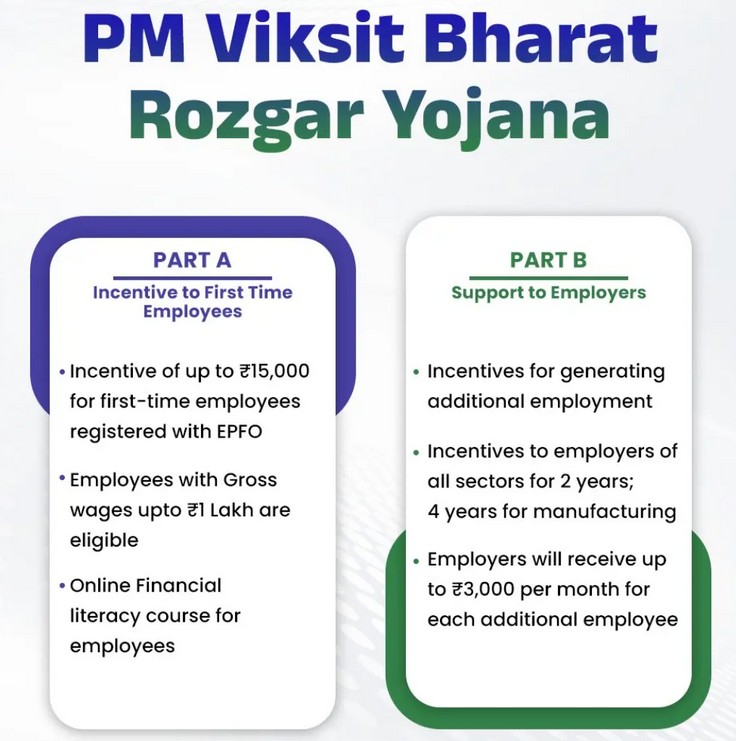
    The Employment Linked Incentive (ELI) Scheme has been officially launched as the PM Viksit Bharat Rozgar Yojana (PM-VBRY), effective from 1st August 2025.

    About PM Viksit Bharat Rozgar Yojana (PM-VBRY):

    • Objective: Promote formal employment and inclusive job creation.
    • Outlay: ₹99,446 crore (Aug 2025 – July 2027).
    • Aim:  3.5 crore new jobs, including 1.92 crore first-time entrants into the workforce.
    • Focus: Expanding EPFO coverage and supporting Viksit Bharat vision.
    • Sectoral Coverage: Open to all sectors, with special focus on manufacturing for long-term growth.

    PM Viksit Bharat Rozgar Yojana (PM-VBRY)

    Key Features:

    1. Incentives for Employees
      • Eligible: First-time EPFO-registered workers earning ≤ ₹1 lakh/month.
      • Benefit: 1-month EPF wage (max ₹15,000) in two parts — after 6 and 12 months.
      • Condition: Completion of a financial literacy programme; Part of the amount is locked in a savings scheme.
    1. Incentives for Employers
      • Applies to: New hires with salary ≤ ₹1 lakh/month.
      • Minimum hires: 2 (if firm <50 employees), 5 (if ≥50).
    • Incentive per employee/month:
      • ₹1,000 (wages ≤ ₹10,000)
      • ₹2,000 (₹10,001–₹20,000)
      • ₹3,000 (₹20,001–₹1 lakh)
    • Manufacturing sector: Extended benefits for 3rd & 4th years.
    1. Payment Mechanism
    • To employees: Direct Benefit Transfer via Aadhaar-based system.
    • To employers: Paid to PAN-linked bank accounts.
    [UPSC 2024] With reference to the Pradhan Mantri Shram Yogi Maan-dhan (PM-SYM) Yojana, consider the following statements:

    1. The entry age group for enrolment in the scheme is 21 to 40 years

    2. Age specific contribution shall be made by the beneficiary

    3. Each subscriber under the scheme shall receive a minimum pension of ₹ 3,000 per month after attaining the age of 60 years

    4. Family pension is applicable to the spouse and unmarried daughters

    Options: (a) 1 and 4 (b) 2 and 3* (c) 2 only (d) 1,2 and 4


  • Ramsar COP15 opens in Zimbabwe

    Why in the News?

    Delegates from 172 countries convened in Victoria Falls, Zimbabwe, for the 15th Meeting of the Conference of the Contracting Parties (COP15) to the Ramsar Convention on Wetlands.

    Highlights of Ramsar COP15

    • Theme: Protecting Wetlands for Our Common Future
    • Host Nation: Zimbabwe (holds presidency of the Ramsar Convention for 3 years)
    • Expected Outcome: Adoption of the Victoria Falls Declaration, a global framework to protect wetlands

    About the Ramsar Convention:

    • Adopted on: 2 February 1971, in Ramsar, Iran.
    • Objective: Conserve and ensure the wise use of wetlands globally.
    • Key Functions:
      • Identify wetlands of international importance.
      • Promote sustainable management practices.
      • Foster international cooperation in wetland conservation.
    • Governing Body:
      • Conference of the Contracting Parties (COP) meets every 3 years.
      • Reviews implementation, adopts site designations, budgets, and policy actions.
      • Includes member + non-member states, IGOs, and NGOs as observers.

    Criteria for Ramsar Site Designation:

    A wetland must meet at least one of the following 9 criteria:

    1. Unique or rare wetland type.
    2. Habitat for endangered, vulnerable, or endemic species.
    3. Crucial for migratory waterbirds.
    4. High ecological, hydrological, or biodiversity value.
    5. Supports ecosystem services (e.g., flood control, water purification).
    6. Provides cultural or spiritual value.
    7. Serves sustainable community livelihoods.
    8. Holds scientific or educational importance.
    9. Requires global cooperation due to threats.

    India and the Ramsar Convention:

    • Joined on: 1 February 1982.
    • First Ramsar Site: Chilika Lake (Odisha), 1981.
    • As of July 2025:
      • Total sites: 91
      • Total area: ~13.58 lakh hectares
      • % of India’s wetland area under Ramsar: ~10%
    • Top States: Tamil Nadu: 20 sites (highest); Uttar Pradesh: 10 sites
    • Note: India has never chaired a Ramsar COP session.

    Global Snapshot and Other Facts:

    • Total Members: 171 countries.
    • Leading Countries:
      • United Kingdom: 175 sites (most)
      • Mexico: 142 sites
      • Bolivia: Largest area (~1.48 lakh sq. km under protection)
    • World Wetlands Day: Celebrated on 2 February annually.
    • Montreux Record: Register for Ramsar sites under serious threat needing urgent conservation.
    [UPSC 2019] Consider the following statements:

    1. Under Ramsar Convention, it is mandatory on the part of the Government of India to protect and conserve all the wetlands in the territory of India.

    2. The Wetlands (Conservation and Management) Rules, 2010 were framed by the Government of India based on the recommendations of Ramsar Convention.

    3. These Rules also encompass the drainage area or catchment regions of the wetlands as determined by the authority.

    Which of the statements given above is / are correct?

    Options: (a) 1 and 2 only (b) 2 and 3 only (c) 3 only* (d) 1, 2 and 3


  • UAV Launched Precision Guided Missile (ULPGM)-V3

    Why in the News?

    DRDO has successfully test-fired the UAV-Launched Precision Guided Missile (ULPGM)-V3.

    UAV Launched Precision Guided Missile (ULPGM)-V3

    About ULPGM-V3:

    • Overview: It is a fire-and-forget air-to-surface missile developed by Defence Research and Development Organisation (DRDO).
    • Variants: It is an upgraded version of V1 and V2, with improved range, autonomy, and targeting precision.
    • Development: Collaboration by Adani Defence, Bharat Dynamics, Newspace Research Technologies, and over 30 Indian MSMEs/startups.

    Key Features:

    • Weight: 12.5 kg
    • Range: 10 km (day), 2.5 km (night)
    • Accuracy: Passive homing infrared with HD dual-channel accuracy (~10 cm)
    • Warhead Options: Anti-armour, penetration-cum-blast, pre-fragmentation
    • Guidance: Fully autonomous with two-way datalink for mid-course updates
    • Environment: Operates in plains and high-altitude regions, day and night
    [UPSC 2025] With reference to Unmanned Aerial Vehicles (UAVs), consider the following statements:

    I. All types of UAVs can do vertical landing. II. All types of UAVs can do automated hovering. III. All types of UAVs can use battery only as a source of power supply.

    Which of the statements given above are correct?

    (a) Only one (b) Only two (c) All the three (d) None *


  • Clean house: On India’s septic tank desludging

    Why in the News?

    Recently, a social audit tabled in Parliament revealed 150 hazardous cleaning deaths in 2022–23, exposing unsafe outsourcing, poor implementation of safety laws, and inadequate funding under schemes like NAMASTE. Despite Supreme Court orders and successful models in states like Odisha and Tamil Nadu, enforcement and mechanisation remain critically lacking nationwide.

    Why has manual scavenging persisted despite laws and schemes like NAMASTE?

    • Weak Enforcement of Legal Provisions and Court Orders: Despite the Prohibition of Employment as Manual Scavengers and their Rehabilitation Act, 2013 and Supreme Court directions to cancel offending contracts and penalise principal employers, enforcement remains minimal. Eg: In 2024, Parliament revealed that 150 workers died in 2022–23 due to hazardous cleaning.
    • Poor Implementation and Underfunding of Schemes: Schemes like NAMASTE are hindered by insufficient financial support, poor outreach, and lack of protective equipment or training. Eg: Of the 57,758 workers involved in hazardous cleaning, only 16,791 received PPE kits, and a mere ₹14 crore had been released under NAMASTE—inadequate for mechanisation in even one major city.
    • Obscured Employer Liability through Subcontracting: The use of contractual and ‘loaned’ labour allows government and private employers to avoid responsibility for worker safety. Eg: A social audit tabled in Parliament found that out of 54 hazardous cleaning deaths, only five workers were on government payroll, while others were ‘loaned’ to private contractors, making accountability unclear.

    How have Odisha and Tamil Nadu offered viable alternatives to manual scavenging?

    • Odisha has ensured identified sanitation workers are equipped with PPE kits and have access to mechanised desludging vehicles, reducing the need for manual entry.
      Eg: Workers now use vacuum trucks for sewer cleaning instead of entering toxic manholes, improving safety and dignity.
    • Tamil Nadu has piloted robotic interventions to eliminate manual scavenging in urban areas.
      Eg: In Chennai, sewer robots have been deployed to clean over 5,000 manholes, showcasing how technology and political will can prevent hazardous practices.

    How does the lack of rural data hinder sanitation worker reforms?

    • Exclusion from Mechanisation Schemes: Without reliable data on rural sanitation workers, schemes like NAMASTE do not extend their benefits (e.g. robotic cleaning or desludging machines) to villages. Eg: In many gram panchayats of Bihar, manual pit cleaning is still done without equipment as workers remain unregistered and thus unaccounted for in policy rollouts.
    • No Health or Safety Monitoring: The lack of worker enumeration means occupational health risks go unnoticed, and safety training or PPE kitsare not distributed in rural regions. Eg: In Chhattisgarh’s rural blocks, no health cards or protective equipment have been distributed to sanitation workers, exposing them to toxic gases and infections.
    • Obstructs Legal Accountability and Compensation: If workers are not documented, accidental deaths are often unreported or misclassified, preventing compensation to families and accountability for employers. Eg: In a 2023 case in Madhya Pradesh, a worker died while cleaning a septic tank, but due to lack of registration, the case was recorded as a general accident, not as a violation of the Manual Scavenging Act.

    What are the steps taken by the Indian Government?

    • Legislation and Legal Ban: The Prohibition of Employment as Manual Scavengers and their Rehabilitation Act, 2013 bans manual scavenging and mandates identification and rehabilitation of affected workers.
    • NAMASTE Scheme (2023): The National Action for Mechanised Sanitation Ecosystem (NAMASTE) scheme promotes mechanised cleaning, provides training, PPE kits, and financial support to sanitation workers.
    • Welfare and Skill Development Initiatives: The government has launched surveys, provided one-time cash assistance, health insurance under Ayushman Bharat, and livelihood loans to support entrepreneurship among workers.

    What reforms can ensure safety and rehabilitation for workers?

    • Mandatory Mechanisation and Licensing: Urban local bodies should mandate mechanised sewer cleaning, make it a licensed profession, and classify manual cleaning without valid certification as a cognisable offence. This will ensure accountability and eliminate unsafe practices.
    • Rehabilitation Through Financial and Social Support: Provide sanitation workers with housing, education scholarships, health cards, and loans to operate mechanised equipment. These should be linked to guaranteed municipal contracts, enabling long-term economic and social upliftment.

    Mains PYQ:

    [UPSC 2024] Poverty and malnutrition create a vicious cycle, adversely affecting human capital formation. What steps can be taken to break the cycle?

    Linkage: Manual scavenging represents an extreme form of poverty and human capital degradation. This article mentions that “Two-thirds of validated workers are also Dalits, yet rehabilitation packages rarely include housing or scholarships that might help families exit contemptible occupations”. This question allows for a discussion of how ending such hazardous labor and providing meaningful rehabilitation can break this vicious cycle.

  • AdFalciVax Vaccine for Malaria

    Why in the News?

    The Indian Council of Medical Research (ICMR) has introduced AdFalciVax, a new malaria vaccine candidate targeting Plasmodium falciparum.

    About AdFalciVax

    • Developer: Indian Council of Medical Research (ICMR); private partners will handle trials and manufacturing.
    • Vaccine Type: Chimeric recombinant vaccine targeting Plasmodium falciparum, the deadliest malaria parasite.
    • Technology:
      • Circumsporozoite Protein (CSP): Offers direct protection to the vaccinated individual.
      • Pro6C Protein: A hybrid of Pfs230 and Pfs48/45 that blocks transmission via mosquitoes.
    • Key Advantages
      • Dual Benefit: Provides personal protection and reduces community transmission.
      • Full-length CSP: Promotes a stronger and longer immune response compared to current vaccines.
      • High Efficacy in Animals: Over 90% protection in animal models (human trials pending).
      • Stability: Contains alum as an adjuvant — safe, effective, and stable at room temperature for 9 months.

    Malaria Control in India:

    • Progress:
      • Malaria deaths reduced from 1,151 in 1995 to 83 in 2022 (National Vector Borne Disease Control Programme).
      • World Health Organization estimates are higher (5,511 deaths in 2022).
    • Current Limitation: India’s dominant malaria strain is Plasmodium vivax, which AdFalciVax does not target.


    [UPSC 2010] Widespread resistance of malarial parasite to drugs like chloroquine has prompted attempts to develop a malarial vaccine to combat malaria. Why is it difficult to develop an effective malaria vaccine ?

    (a) Malaria is caused by several species of Plasmodium*

    (b) Man does not develop, immunity to malaria during natural infection

    (c) Vaccines can be developed only against bacteria

    (d) Man is only an intermediate host not the definitive host.