AWE Program is gaining popularity and seeing a lot of participation.
We request all students to renew their subscription for the upcoming months. Let’s keep the momentum going.
The accuracy and fairness of exams can be impacted by some candidate’s fear or anxiety around the exam process. Taking a test in Civilsdaily’s Daily Answer Writing Enhancement (AWE) Program doesn’t just measure how much you know, it helps reinforce the learning and make it more likely that you can retrieve the same information later.
It’s a fact that taking an AWE test can actually be more beneficial to learning than spending the same amount of time studying. Answer writing practise through Civilsdaily’s Daily AWE program can reduce test anxiety and helps you ace the GS Mains answer writing. And what is a better way to practice for UPSC Mains Examinations than attempting the UPSC Mains Questions asked in the actual examinations?The more you are accustomed to sitting for a period of time, answering real examination questions, and pacing yourself, the more comfortable you will feel when you actually sit down to take the real UPSC Mains examinations yourself.
Therefore, in the month of February, we would be taking up the questions of UPSC Civil Services Mains, 2019.It will give you the proper experience of the level of questions asked in the examinations. At the same time, you will understand the expected demands of the questions and judge yourself better with the outcome in your answers.
There will be a break in the AWE program after February for Prelims Preparations. The program will reconvene in the month of June. The details of study plans for the month of June will be shared in the last week of May.
Prime TS, being our legacy product always gets the best from us. Our oldest & most loved offering takes a giant leap this year with 6 key differentiators and 3 ‘exclusive’ features.
We started way back in 2015 with Dr. Vipin Garg (then an AIIMS graduate, member of the founding team @Civilsdaily and now an IAS officer in Gujarat) working hand in hand with us on defining the key features of our Prelims Test Series. Over the years, Prime TS has evolved into a comprehensive learning & assessment companion for aspirants of all stages and preparation style.
Mastering Prelims by Guided yet Flexible Goal Setting
Here’s the question we have always challenged ourselves with:
What good is a test series if all it does is give you a set of 100 questions and backs them up with explanations? As good as the xerox version of the same, right?
Why do most of us find it hard to make a cut at UPSC Prelims (in spite of the abundance of pirated versions of high-quality test series)?
Short Answer: Lack of a goal based mentoring to ensure that you tie up your loose ends in a time-bound manner before going to the next mock
Long Answer: The misconception that reverse engineering (learning theory from solutions) & recursive learning (solving the wrong questions again & again till you get them right) alone is enough for a rewarding mock practice is LETHAL. What you need is a way to correct your fundamental learning errors. You need to analyse what went wrong in the learning process (which can potentially wreck 5 similar questions in the future). You need someone to motivate you and take you back to the basics to correct the identified gaps. Right about that very moment. Not after the whole subject is done. Not after the prelims is lost!
This answer defines the very foundation of our Prime Prelims Test series and here’s how we solve this problem for YOU:
Evidence-based question making: The 3600 questions you face in our mocks have their relevance established in UPSC’s trend analysis. We focus on themes that are important as per UPSC so that we maximise your chances of questions overlap with the actual UPSC Prelims.
Standardising & Tagging those evidence backed questions: Even for the most serious student, judging the quality of any TS is a difficult proposition. To ensure that we hold the end of our bargain, we have introduced 3 layers of tagging:
Difficulty Level Tags: Level 1, 2, 3
Subject/ sub-subject Tags: To ensure that your revision is focussed, we tag questions at deeper layers so that you discover your subject specific blindspots and rectify them
Question Type Tags: Helps you understand the mix of questions and equip yourself in multifaceted question forming. Eg: Consolidation Questions, Comparative Questions, Interactive Questions*
Tikdams for mastering the art of intelligent guesstimates: Think of तिकड़म as a more refined version of the oft-quoted word Jugaad. UPSC is an intelligent test taker. It not only wants to test your comprehension (of syllabus) but also your ability to perform under pressure (& lack of information). How would you solve a “factual” question which gives an illusion of the necessity of “rote-learning”? By ensuring that your core fundamentals are strong and then using the Art of Tikdams to go for the best approximation among the answer choices! We are the only test series which trains you on that!*
SAMANVAYA – 1<>1 Mentoring for Goal Setting: SAMANVAYA adds the much-needed layer of mentor intervention to help you with personalised mini-goals to fortify the defenses in a time-bound manner. It takes help from point #1 & #2 to understand your preparation timeline and then works with you.
CD’s Monthly Magazines: We walk the extra mile with Monthly Magazine Combo (12 months of all good content at CD). These magazines are a brand in themselves and have been a preference of Toppers for years. The monthly package contains curated information from these 6 areas :
News + PIB (without oped),
Op-eds
SC Judgements
Govt. Schemes in News
Intl Org + Domestic Org
Prelims Daily Compilations
Advanced Lecture Series: PRIME TS, being our legacy product gets the best of us. While we leave no stones unturned to build your assessment profile, we also provide you with this crucial & independent module as a part of the package.
ALS is yet another nifty way of revisiting the tricky, factual and sometimes technical aspects of the static syllabus. 60+ hours of videos – most helpful when you advance to the L2 & L3 tests and very rewarding for senior UPSC students.
We have kept our pricing similar to previous year’s. The idea is to make it affordable for every single aspirant without compromising the quality & promise which comes with our name.
It doesn’t matter if you plan to join an offline coaching institute or go on the self-study route, Prime Prelims is an investment worth making to ensure that your learning curve gets shortened and your test-taking skills delight you with a positive result 🙂
PS: We are in the process of preparing an updated dossier on the Art of Tikdams and will make it available for a free download soon. If you wish to download an older version of the document, pls click here.
PS2: Once you join the programme, you will get a detailed time table on how to go about the reading material and how to space your assessment routine. Everything is planned out for you!
If you wish to do a direct bank transfer, here are the details.
NOTE #1: BEFORE MAKING A DIRECT BANK TRANSFER, PLS CHECK THE FULL AMOUNT (INCLUSIVE OF TAXES). ONCE THE PAYMENT IS DONE, DROP A MAIL TO HELLO@CIVILSDAILY WITH YOUR TRANSACTION ID AND COURSE JOINED NOTE #2: CIVILSDAILY’S PARENT COMPANY NAME IS APEIROGON TECHNOLOGIES. DON’T PANIC!
In this short video, Zeeshan sir (Mentor @Civilsdaily UPSC IAS ) will discuss a few Tikdam (Logical solving) techniques with the Aspirants. This technique has helped various aspirants to clear the Prelims exam without much effort. Zeeshan sir has given 5 mains and has consistently scored above 120 marks in Prelims.
AWE Program is gaining popularity and seeing a lot of participation.
We request all students to renew their subscription for the upcoming months. Let’s keep the momentum going.
Many students do see a value in practising questions every day. It keeps the momentum going and incrementally builds a database of questions and answers that can be used for Mains. So we have created a truly effective program.
We have come up with a 90 days plan through which you will be able to cover your GS mains syllabus twice while giving proper time to GS paper 4 as well, along with more than 30 case studies. Like before, we will ask 4 questions every day covering the GS 1,2,3,4. Questions will cover both contemporary and static parts.
The program will operate on the Weekdays. This was requested by the students themselves. We believe being regular for 5 days is a decent enough challenge. Moreover, Saturdays and Sundays off allowing students to contribute to other programs.
The above system leads to questions being submitted in the last week of every month and we require time to wrap those up. Hence, we will not be posting any questions from the 27th of each month. The last few days will be exclusively reserved for clearing the backlog of reviews.
Question number 1 will cover your static parts of papers 1.
Question numbers 2 and 3 will cover your GS papers 2 and 3 with a focus on current affairs, linking it to the static portions.
Question number 4 will cover Paper 4, i.e. ethics. One week we will cover static portions from that paper while subsequent week, it will be solely focusing on case studies. The same process will follow every alternate week for question number 4.
We are working hard to make the program more featureful, highlight the best answers, show the competency levels of students.
Here is the schedule for the Month of December for topics being covered in GS Paper 1 and Paper 4
December, 2019
Date
Question 1
Question 4
2nd December, Monday
The Freedom Struggle – its various stages and important contributors /contributions from different parts of the country.
Concept of public service; Philosophical basis of governance and probity.
3rd December, Tuesday
Post-independence consolidation and reorganization within the country.
Information sharing and transparency in government, Right to Information.
4th December, Wednesday
History of the world including events from the 18th century.
Codes of Ethics, Codes of Conduct, Citizen’s Charters.
5th December, Thursday
Political philosophies like communism, capitalism, socialism, etc.- their forms and effect on the society.
Work culture, Quality of service delivery.
6th December, Friday
Indian Society and Diversity of India.
Utilization of public funds, challenges of corruption.
9th December, Monday
Role of women and women’s organization.
Case Studies
10th December, Tuesday
Population and associated issues, poverty, and developmental issues.
Case Studies
11th December, Wednesday
Urbanization, their problems, and their remedies.
Case Studies
12th December, Thursday
Effects of globalization on Indian society.
Case Studies
13th December, Friday
Social empowerment, communalism, regionalism & secularism.
Case Studies
16th December, Monday
Salient features of the world’s physical geography.
Essence, determinants, and consequences of Ethics in human actions; dimensions of ethics; ethics in private and public relationships.
17th December, Tuesday
Distribution of key natural resources across the world.
Human Values
18th December, Wednesday
Factors responsible for the location of primary, secondary, and tertiary sector industries.
Attitude
19th December, Thursday
Important Geophysical phenomena such as earthquakes, Tsunami, Volcanic activity, cyclone, etc.
Aptitude and foundational values for Civil Service, integrity, impartiality and non-partisanship, objectivity, dedication to public service, empathy, tolerance and compassion towards the weaker sections.
20th December, Friday
Changes in critical geographical features (including water-bodies and ice-caps) and in flora and fauna and the effects of such changes.
Emotional intelligence concepts.
23rd December, Monday
Indian culture covering the salient aspects of Art Forms, Literature, and Architecture.
Contributions of moral thinkers and philosophers from India and the world.
24th December, Tuesday
Modern Indian history from about the middle of the eighteenth century until the present.
Case Studies
25th December, Wednesday
The Freedom Struggle – its various stages and important contributors /contributions from different parts of the country.
Case Studies
26th December, Thursday
Post-independence consolidation and reorganization within the country.
Case Studies
27th December, Friday
History of the world including events from the 18th century.
*THIS COURSE COVERS PHASE 2 – December 2019 to May 2020 *
We are delighted to launch Samachar Manthan for 2019-2020 covering from December 2019 to May 2020. The course is designed to help you develop a solid command on your newspaper reading and current affairs analyzing skills. Since it builds your core, it is important for both prelims and mains.
Our students have benefited a lot from the classes and many have done well in 2018 prelims despite the paper being tricky. We are in the process of compiling their reviews.
What are we offering and how is it unique?
1. Mentorship and guidance have taken to a whole new level
Once you enroll, you’ll be assigned a Telegram group headed by Sajal Sir and rankers like Dr. Vipin Garg AIR 20, Swapnil Pawar AIR 525 and others. Our past students have found this immensely beneficial.
A convenient way to resolve your doubts and queries.
You’ll be provided with value-added material which is very important.
You’ll have an ecosystem to study and learn from.
Above all, it will help you stay focused every day.
Here’s what some of our students had to say about our mentorship.
2. Four stage structure of Video->Notes->testing->review to perfect your preparation The sequence of video->Notes->testing->review is the best way to ensure maximum retention and a rock solid preparation. Each component of the program has been meticulously crafted.
3. Our video lectures and notes on weekly CA are brief but comprehensive
Packed 3 – 3.5 hours Weekly videos will focus on news and its importance from both prelims and mains perspective. Sajal Sir will take care of the topics such as Economy, Polity, International Relations, etc. Rakesh Sir will help you cover topics related to Science & Technology, Geography, Environment.
We understand that the UPSC exam is a generalist exam. It’s more important to cover more issues than to cover one issue in more depth. Hence, we maintain a fine balance of covering cover many important news items and have a detailed discussion on selected topics which require the same.
This program will also help you understand how to utilize current affairs in all your prelims and mains papers.
This ideology makes this course the best utilization of your time.
4. Current Affairs Monthly Prelims Test package This was the feedback we received from many students. They wanted to focus on the current affairs program.
5.Wide coverage of topics: As per the latest trends, UPSC had been asking questions from varied sources so we have covered topics not only from Hindu and Indian Express but also from various other sources such as Yojna, Kurukshetra, Live Mint, India Year Book, PIB, Down to Earth, etc.
6. Guest Lectures on specific issues by ranker holders like Swapnil Sir, Parth Sir, etc
Besides the above, you will have access to our monthly magazines and weekly notes/links to important news/external material. You will have access to all modules included in our Mentorship program – Study-plan, strategy discussion, specific weaknesses, overall guidance. Since our mentors will have information about your performance
7. Weekly Mains Test and Evaluation by our team of subject experts
The video and notes will be followed by a test released every weekend. It will have 10 high-quality questions. This will complete your study loop and enhance your retention.
>Mains level questions with feedback.
> Answer Enhancement
We chose the Question & Answer format because it is perfectly aligned with the requirements of the exam. Having information is very different from presenting it in an answer with a proper structure. This will help in better retention of prelims specific information and prepare a solid ground for your mains prep.
After every 2nd test you attempt, you can reach out to our mentors for personalized feedback.
8. Other important material like Monthly Magazines, Listicles, etc.
Samachar Manthan 2020 [December 2019 to May 2020] with Answer Writing Module- Rs 11,800 Click2Join
Samachar Manthan 2020 [December 2019 to May 2020]- Rs 8,260 Click2Join
Samachar Manthan Yearly with Answer Writing Module 2019-20(June 2019 to May 2020)- Rs. 16000 + taxes Click2Join
Samachar Manthan Yearly 2019-20(June 2019 to May 2020)- Rs.11,000 + taxes Click2Join
AWE Program is gaining popularity and seeing a lot of participation.
We request all students to renew their subscription for the upcoming months. Let’s keep the momentum going.
We are working hard to make the program more featureful, highlight the best answers, show the competency levels of students.
Here is the schedule for the Month of December for topics being covered in GS Paper 1 and Paper 4
December, 2019
Date
Question 1
Question 4
2nd December, Monday
The Freedom Struggle – its various stages and important contributors /contributions from different parts of the country.
Concept of public service; Philosophical basis of governance and probity.
3rd December, Tuesday
Post-independence consolidation and reorganization within the country.
Information sharing and transparency in government, Right to Information.
4th December, Wednesday
History of the world including events from the 18th century.
Codes of Ethics, Codes of Conduct, Citizen’s Charters.
5th December, Thursday
Political philosophies like communism, capitalism, socialism, etc.- their forms and effect on the society.
Work culture, Quality of service delivery.
6th December, Friday
Indian Society and Diversity of India.
Utilization of public funds, challenges of corruption.
9th December, Monday
Role of women and women’s organization.
Case Studies
10th December, Tuesday
Population and associated issues, poverty, and developmental issues.
Case Studies
11th December, Wednesday
Urbanization, their problems, and their remedies.
Case Studies
12th December, Thursday
Effects of globalization on Indian society.
Case Studies
13th December, Friday
Social empowerment, communalism, regionalism & secularism.
Case Studies
16th December, Monday
Salient features of the world’s physical geography.
Essence, determinants, and consequences of Ethics in human actions; dimensions of ethics; ethics in private and public relationships.
17th December, Tuesday
Distribution of key natural resources across the world.
Human Values
18th December, Wednesday
Factors responsible for the location of primary, secondary, and tertiary sector industries.
Attitude
19th December, Thursday
Important Geophysical phenomena such as earthquakes, Tsunami, Volcanic activity, cyclone, etc.
Aptitude and foundational values for Civil Service, integrity, impartiality and non-partisanship, objectivity, dedication to public service, empathy, tolerance and compassion towards the weaker sections.
20th December, Friday
Changes in critical geographical features (including water-bodies and ice-caps) and in flora and fauna and the effects of such changes.
Emotional intelligence concepts.
23rd December, Monday
Indian culture covering the salient aspects of Art Forms, Literature, and Architecture.
Contributions of moral thinkers and philosophers from India and the world.
24th December, Tuesday
Modern Indian history from about the middle of the eighteenth century until the present.
Case Studies
25th December, Wednesday
The Freedom Struggle – its various stages and important contributors /contributions from different parts of the country.
Case Studies
26th December, Thursday
Post-independence consolidation and reorganization within the country.
Case Studies
27th December, Friday
History of the world including events from the 18th century.
The death of ISIS leader Abu Bakr al-Baghdadi last week ended one of the most intense and aggressive manhunts in the world. He blew himself in a dead-end tunnel.
As a “leader on the run” for more than five years, Baghdadi was more of a symbol for a Caliphate.
It will be an overstatement to claim that his killing put an end to the ISIS network.
ISIS: A quick recap
The Islamic State of Iraq and Syria (ISIS) officially known as the Islamic State (IS) is a terrorist group and a formerly unrecognized proto-state that follows a fundamentalist Salafi jihadist doctrine.
Within 18 months of the withdrawal of US troops from Iraq in 2011, the AL Qaeda in Iraq captured large territories across Iraq and Syria and morphed itself into ISIS.
The group has been designated a terrorist organization by the United Nations as well as by many international organizations and individual countries.
Modus operandi of IS
Riding high on extremists and terrorists from across the globe, ISIS announced “decentralized” wilayas and asked their supporters to join them if they could not travel to the Caliphate.
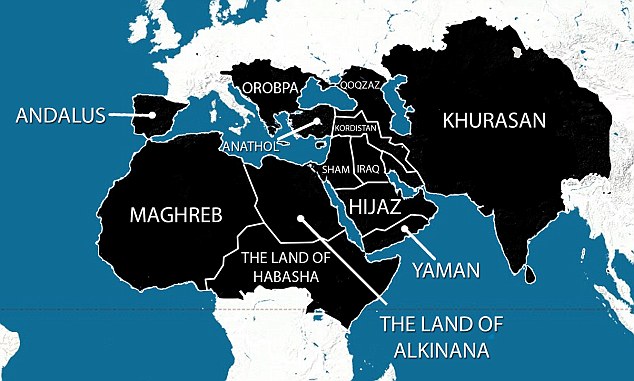
The decentralized wilayas in West Africa, the Philippines, Egypt, Yemen, Afghanistan, Indonesia, and Libya have become more active and are showcasing successes on social media daily.
IS started systematically encouraging lone actor attacks in the West in 2016.
The most lethal weapon
The real threat that the IS, however, poses is that it is able to convince the Muslim extremist fringe that their time has come.
Radicalization, in any event, has less to do with numbers than with the intensity of beliefs. The struggle is not against presumed disparities or injustices meted out to Muslim minorities.
Rather, it reflects the quest for a new militant Islamist identity.
In addition to this, the IS introduced the concept of a new Caliphate — especially al-Baghdadi’s vision of a Caliphate based on Islamic history.
This further ignited the imagination of Muslim youth across the globe and became a powerful magnet to attract volunteers to their cause.
Who was Abu Bakr al-Baghdadi?
The leader of the IS was often described as the most wanted individual in the world.
The US designated him a terrorist some eight years ago and declared a bounty of $10 million (more than Rs 70 crore) on his head.
Baghdadi, who was believed to have been born in Iraq perhaps in 1971, proclaimed himself Caliph of the Islamic State in 2013.
He made his first known public appearance the following year, delivering a Ramzan sermon at the Great Mosque of al-Nuri in Mosul in northern Iraq.
This was the place at which the IS declared itself to be a worldwide Caliphate with al-Baghdadi at its head.
The rise
In early 2014, al-Baghdadi’s fighters had taken control over western Iraq, and over the next year and a half, the IS ran a sweeping campaign of terror and brutality across a vast patch of Iraq and Syria.
It went on terrifying the world with grisly videos of beheadings and shaking up governments everywhere.
By the end of 2015, it had control over an estimated 8-12 million people over which it imposed an unforgiving version of Sharia law, attracting jihadists from across the world, including a few from India.
The terrorist organization and empire that Baghdadi headed was estimated at the time to have been the size of Great Britain, with an annual budget of over a billion dollars and an army of more than 30,000 jihadists.
Downfall
The ISIS started to weaken from 2016 onward as the international coalition, backed by regional allies including, most importantly, Syrian Kurdish peshmerga fighters, gained ground in Syria and Iraq.
As the formal structure of ISIS crumbled, thousands of its fighters went underground, even though local groups continued to carry out isolated terrorist incidents across the world in the name of ISIS and al-Baghdadi.
Infamous terror activities
Among the biggest of ISIS attacks were carried out in Paris in November 2015, and in Sri Lanka in 2019.
Al-Baghdadi described the attacks in Sri Lanka on Easter as revenge for the defeat in Al-Baghuz Fawqani in Syria, which was taken from ISIS in late March.
What does Baghdadi’s killing now mean?
Should Baghdadi’s elimination be confirmed, it would mark the bringing to justice of one of the biggest terrorist killers of modern times and the successful conclusion of a massive international manhunt.
It must be remembered that there have been multiple alerts about his death earlier.
In June 2017, Russia claimed he had been killed in an airstrike near Raqqa, Syria; two weeks later, the most reliable Syrian Observatory of Human Rights reported “confirmed information” that al-Baghdadi was dead.
Did this put an end to ISIS?
Baghdadi’s death will not necessarily mark the end of ISIS itself, which though fragmented and no longer easily visible, is far from dead.
ISIS lives on and today it is much stronger than it was in 2011 before Baghdadi when American troops pulled out of Iraq and the group was considered defeated.
Besides its thousands of fighters in Iraq and Syria, ISIS has a Khorasan province and provinces in the Philippines and West Africa and it is strong and growing in Afghanistan.
These are groups that are robust on the ground and there is enough evidence to suggest that there is the connective tissue between the affiliates and ISIS’s core group in Iraq and Syria.
Implications for India
Rising influence in the vicinity
ISIS has attracted foreign fighters from South Asia, mainly Pakistanis, Afghans, Maldivians, and Bangladeshis.
The Easter attacks showed the potential of violence even by a small group of committed cadres with support of the ISIS network.
The NIA during its investigations has since come across links connecting IS units in Kerala and Tamil Nadu as well as in Sri Lanka.
In Bangladesh three years ago, ISIS did create a small but effective network with the active support of western nationals of Bangladeshi origin.
Vulnerability at home
Less than 100-200 Indians so far are believed to have traveled to Syria and Iraq and Afghanistan to join ISIS.
This creates the potential for more recruitment as well as aiding attacks on Indian soil or interests.
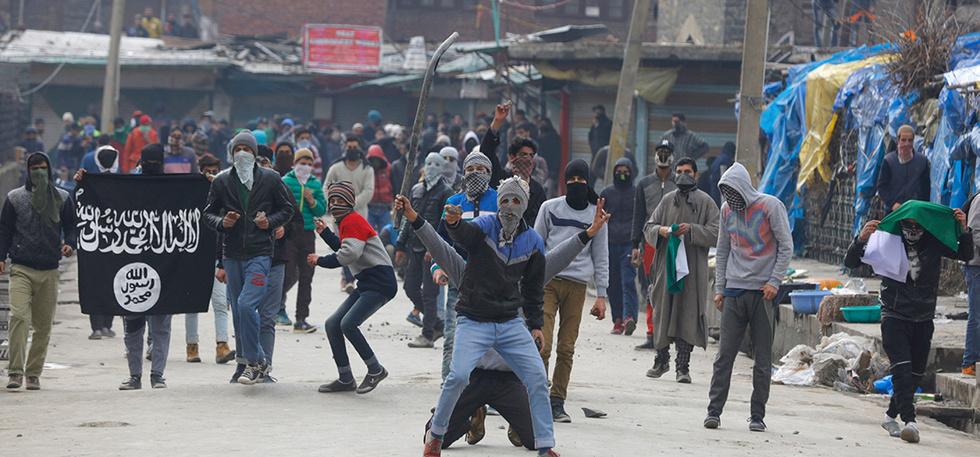
A few weeks ago, ISIS propaganda has called for jihad pegged on sentiments around Kashmir and has specifically called for attacks on Indian interests in the Arabian Peninsula.
Global implications
ISIS has suffered significant setbacks over the past two years, losing most of its territorial control, and has returned to its roots as an insurgent organization.
Given the recent successes in the fight against ISIS, many analysts and government officials are optimistic that Baghdadi’s death will result in substantial weakening and perhaps the demise of ISIS.
However, to effectively bring down a terrorist group through targeting its leader, it’s important to consider three factors: organizational structure, ideology, and popular support.
Baghdadi’s death will not hinder the operational capacity or bring about the collapse of ISIS. In fact, it could even be counterproductive to weakening ISIS.
ISIS – An ideology not a personality cult
Advocates of this view argue that Baghdadi is irreplaceable, given his claim of lineage to the prophet Muhammad.
Despite this belief in Baghdadi’s authority and legitimacy as a leader of the self-proclaimed caliphate, however, ISIS is not a cult of personality.
Baghdadi was successful in institutionalizing essential organizational structures.
Looking at nearly 1,000 instances of leadership decapitation from 1970 to 2016 revealed that it is often ineffective against religious, separatist, Islamist and large organizations.
ISIS is more organized
Bureaucratized terrorist organizations are diversified with a clear division of responsibilities and functions, standard operations procedures, and other characteristics that create redundancies to support their resilience.
In the case of ISIS, Baghdadi created complex bureaucratic structures to govern and manage its finances, social programs, infrastructure and military resources.
ISIS has also developed into a hybrid organizational structure.
That is, the group is hierarchical at the upper organizational levels, with the emir at the top; deputies who oversee financial, military, legal and social operations; and legislative councils including the Shura Council.
At the lower operational levels, the group is more decentralized, with networks including those in Iraq and Syria; affiliated groups in South Asia, the Arabia and Africa; and lone actors who span the globe.
Such hybrid structures are especially difficult to weaken through targeting efforts.
The ideology
The leadership of Islamist, religious or separatist groups is not necessary for recruitment, inspiring attacks or ensuring that the group’s message stays relevant.
The ideology becomes self-sustaining, and the Islamic State’s use of propaganda and technology has been effective at broadening their base of support transnationally.
In August 2018, Baghdadi urged his followers to carry out lone-actor attacks in Western countries.
New successor in queue
ISIS has a wide and deep pool of militants from which to recruit his successor and a bureaucracy that encourages specialization and training.
Less than a week after Baghdadi’s death, the organization announced a successor, Abu Ibrahim al-Hashimi al-Qurashi, as the new caliph.
Popular support
It grants the basis for group legitimacy, which can increase an organization’s efficiency and resilience.
After an attack on a terrorist group’s leadership, popular support is essential to maintaining organizational strength and capacity.
The creation of the self-proclaimed ISIS caliphate broadened this base of support.
Conclusion
The caliphate may be weakened after him, but Baghdadi created a highly resilient bureaucratic organizational structure capable of withstanding the loss of leaders.
Attacks on high-profile leaders are visible counterterrorism measures that can make a fearful U.S. audience feel secure in the belief that their government is successfully fighting the war on terrorism.
It is an alternative to such costly policies as large-scale military operations.
But in the case of ISIS, it’s an alternative that not only disregards critical aspects of the group’s resilience — it could even fuel a strengthened retaliation.