💥Join UPSC 2027,2028 Mentorship (August Batch) + XFactor Notes & Microthemes PDF

GS Paper: GS1

  • Tavleen Singh writes: PM Modi’s guarantees vs Rahul Gandhi’s promises

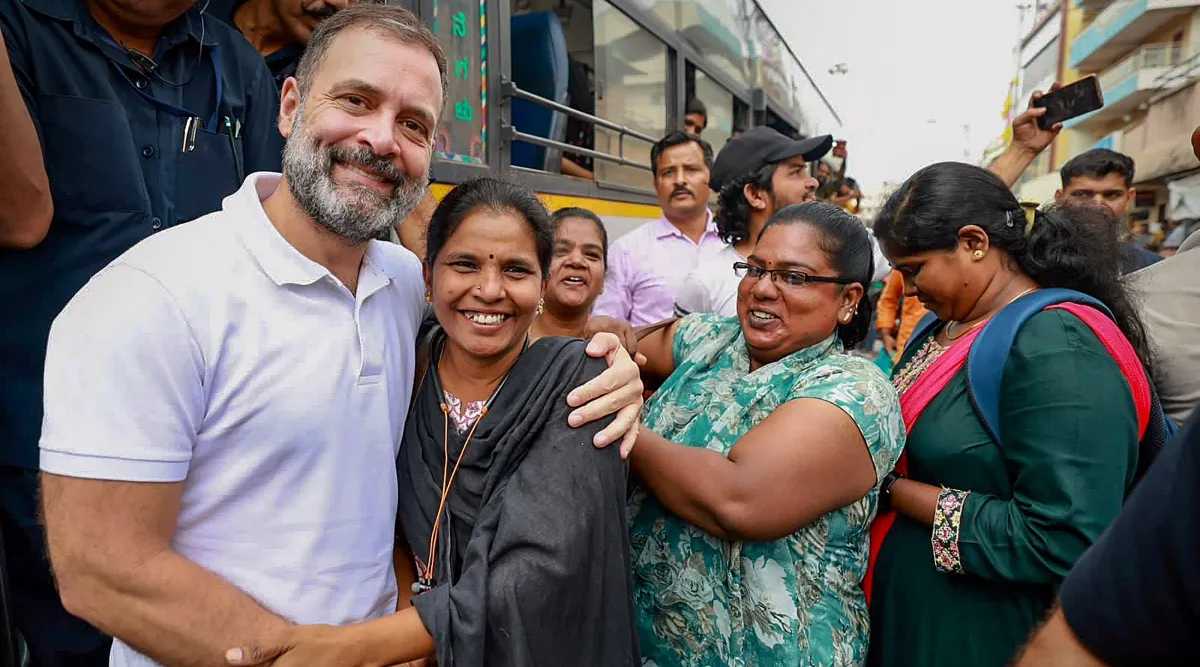
    Post Karnataka win, Rahul Gandhi promises to implement Congress' five  guarantees in first cabinet meeting | India News - The Indian Express

    Central idea 

    Modi’s consolidation of leadership within the BJP presents a challenge to the party’s collective strength. The INDIA alliance struggles to form a united front, lacking a clear leader and shared ideology. Effective communication of Modi’s guarantees, coupled with voter perception of achievements, strengthens his political standing despite opposition attempts.

    Key Highlights:

    • Narendra Modi’s political dominance within the BJP, sidelining other leaders and making himself the primary focus for voters.
    • Modi’s personal guarantees, particularly the promise of a Ram Temple in Ayodhya, shaping the party’s campaign narrative.
    • Rahul Gandhi’s emphasis on ideology and the Congress Party’s goal of empowering the common man.
    • Voter perception of Modi’s leadership, influenced by achievements such as the G20 meeting and the abrogation of Article 370.
    • Challenges faced by the INDIA alliance in forming a cohesive narrative, lacking a clear leader and shared ideology.
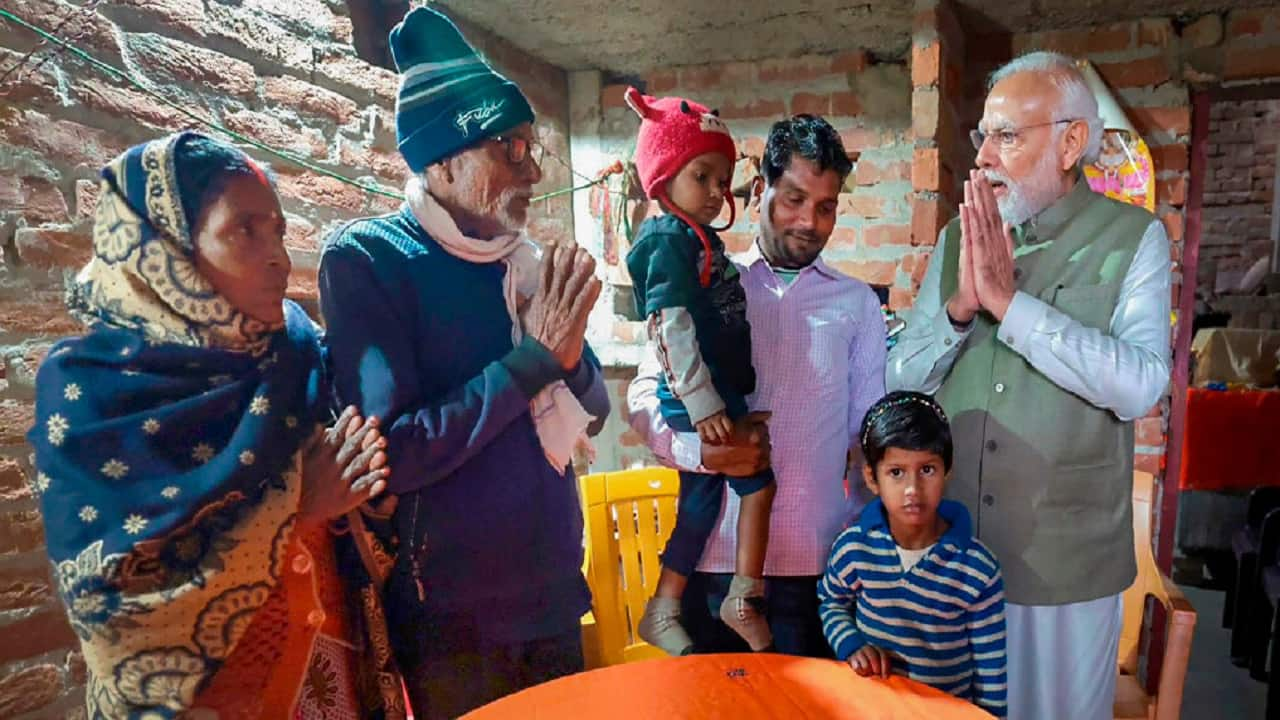
    PM Modi pays surprise visit, drinks tea at an Ujjwala benefeciary's house  in Ayodhya: Take a look

    Key Challenges:

    • Modi’s overwhelming influence within the BJP, potentially sidelining the party’s collective strength.
    • The INDIA alliance struggling to present a united front with a shared ideology and leadership.
    • The challenge of convincing voters that getting rid of Modi is a crucial political goal.
    • Weak response from the alliance to Modi’s guarantees, particularly Rahul Gandhi’s promise of a caste census.

    Key Terms:

    • Modi’s guarantees
    • Ram Temple in Ayodhya
    • INDIA alliance
    • G20 meeting
    • Abrogation of Article 370
    • Ideology
    • Caste census

    Key Phrases:

    • “Modi ki guarantee hai” (Modi’s guarantee)
    • “Fight for ideology” – Rahul Gandhi’s perspective on the Congress Party’s goal.
    • “Destroying democracy” – Alleged reason for getting rid of Modi.
    • “Solid than the INDIA alliance” – Describing the stability of BJP and RSS compared to the alliance.

    Key Quotes:

    • “The foundation of the battle for political power is ideology, and the Congress’s objective is to hand over power to the common man.” – Rahul Gandhi.

    Anecdotes:

    • Modi’s choice of relatively unknown individuals as chief ministers after sidelining powerful leaders during elections.
    • Details of Modi’s inspection tour of the Ram Temple, including the use of a gold coin in a ritual.

    Key Statements:

    • “Nowadays, when I ask the average voter who he will vote for in next year’s general election, the answer is: Modi.”
    • “Rahul Gandhi was speaking at a public rally to commemorate the 139th founding day of the Congress Party and explained his ideology.”
    • “The only thing that all the twenty-eight parties in the alliance appear to agree on is that they have a mission to get rid of Modi.”

    Key Examples and References:

    • Modi’s achievements, such as the G20 meeting and the abrogation of Article 370, influencing voter perception.
    • Weak response from the alliance, including promises like Rahul Gandhi’s caste census, compared to Modi’s guarantees.

    Key Facts and Data:

    • Modi’s success in making himself the central figure for voters in recent months.
    • Voter approval of Modi’s leadership based on achievements and promises.

    Critical Analysis:

    • Examines the shift in BJP dynamics towards Modi’s singular leadership.
    • Highlights the contrast between Modi’s effective communication of guarantees and the alliance’s struggle to present a cohesive narrative.
    • Addresses the challenge of convincing voters that getting rid of Modi is crucial and the weak response from the alliance.

    Way Forward:

    • The BJP may need to balance Modi’s leadership with the strength of the party as a whole.
    • The INDIA alliance needs a more cohesive narrative, a clear leader, and a shared ideology to present a formidable challenge.
    • Emphasizes the importance of effectively countering Modi’s guarantees and presenting a compelling alternative to voters.

  • As we enter election year, let us not be defined by our politics — but our kindness

    90 Happy New Year's Quotes To Ring In Good Vibes For 2023 | YourTango

    Central idea 

    The central idea is to prioritize wishing a “Good New Year” over a simple greeting, emphasizing the connection between goodness, happiness, and knowledge. The message underscores the importance of understanding and kindness towards oneself and others, advocating for a collective effort to bridge societal divides and extend compassion in the face of challenges. The call is to make being good a priority, fostering a sense of duty, compassion, and reason in various aspects of life for a positive and inclusive new year.

    Key Highlights:

    • Emphasizes the importance of wishing a “Good New Year” over a simple “Happy New Year.”
    • Connects goodness with happiness and knowledge.
    • Urges understanding and kindness towards ourselves and others.
    • Quotes Mahatma Gandhi on the importance of collective independence for fostering togetherness.
    • Highlights instances of goodness during the Covid-19 pandemic, such as frontline workers and vaccine distribution.
    • Stresses the need for harmony across societal divides like caste, class, and religion.
    • Raises questions about the inclusion of the poor, disenfranchised, and marginalized in the new year.

    Key Challenges:

    • The challenge of deepening compassion in a divisive election year.
    • The impact of political affiliations on personal identity.
    • The difficulty of being good in a profit-driven and outcome-focused society.
    • The masking of true selves through sophisticated tools and filters.

    Key Terms:

    • Good New Year
    • Collective independence
    • Harmony between reason, spirit, and appetite
    • K-shaped recovery
    • Compassion

    Key Phrases:

    • “Goodness, not newness, is happiness.”
    • “Being good forces us to look beyond our inner orbit.”
    • “Being good, like being a parent or a citizen, can never be the exclusive preserve of one party.”
    • “In an age of me, myself and I.”
    • “The most authentic version of ourselves is the one we see in the mirror when no one’s looking.”

    Key Quotes:

    • “A year which can enhance goodness is one in which we work a little harder to understand ourselves and those who are not like us.”
    • “Kindness is being human.”
    • “Our voting preference is not what makes us human — it’s our being good, our being kind that matters.”

    Anecdotes:

    • Mention of unsung frontline workers during the Covid-19 pandemic.
    • Reference to the distribution of vaccines to countries without access.
    • Reflection on moments when the nation acted as a good collective during the pandemic.

    Key Statements:

    • “A good new year asks us to protect the happiness of all.”
    • “Being good, like being a parent or a citizen, can never be the exclusive preserve of one party.”
    • “Our loved ones will be safe, they can take us for granted as a good new year means we look at those beyond them.”

    Key Examples and References:

    • Plato’s concept of a good life requiring harmony between reason, spirit, and appetite.
    • Mahatma Gandhi’s call for a common declaration of independence by whole communities.
    • Examples of individuals and nations displaying goodness during the Covid-19 pandemic.

    Key Facts and Data:

    • Mention of senior citizens and vulnerable populations prioritized for vaccination.
    • Reference to the first to be vaccinated being chosen based on vulnerability rather than financial capability.
    • Noting the challenges faced by various groups, such as students, executives, and families during the pandemic.

    Critical Analysis:

    • Highlights the importance of looking beyond personal interests and extending kindness to others.
    • Raises awareness about societal divides and the need for collective efforts for a good new year.
    • Acknowledges the challenges of maintaining goodness in a society driven by profit and outcomes.
    • Encourages self-reflection on true values and identity beyond external influences.

    Way Forward:

    • Advocate for a continued focus on goodness and compassion beyond the initial days of the new year.
    • Emphasize the importance of unity and togetherness in addressing societal challenges.
    • Encourage individuals to prioritize being good in various roles, such as parents, citizens, and leaders.
    • Suggest fostering a sense of duty, compassion, and reason in various professions and societal roles.
  • Indian National Congress (INC): From Foundation to Present Day

    inc

    Central Idea

    • On December 28, 1885, the Indian National Congress (INC) was established, marking the beginning of a significant journey in Indian politics.
    • The INC’s journey from influencing British policy to leading India’s nationalist movement, dominating post-independence politics, and its current decline offers a rich political narrative.

    Indian National Congress: Inception in 1885

    • Founding by AO Hume: Allan Octavian Hume, an English bureaucrat, founded the INC to advocate for greater self-governance in India.
    • First Session: The inaugural session in Bombay saw 72 reformers, journalists, and lawyers unite, aiming not for independence but to influence British policies favorably for Indians.
    • Safety Valve Theory: The INC initially served as a platform for Indians to express grievances, seeking to unify diverse population segments and regenerate the nation across various dimensions.

    Politics of Petitions

    • Early Challenges: The Congress faced criticism from both the British and Indians; the former for disrupting the status quo and the latter for its passive resistance approach.
    • Composition and Critique: Dominated by educated, upper-class individuals, the INC was often seen as too moderate and not sufficiently representative of all Indians.
    • Internal Divisions: By 1906, ideological differences led to a split between the moderates (Gopal Krishna Gokhale, Surendranath Banerjea) and the extremists (Bal Gangadhar Tilak), particularly over responses to the Bengal Partition.

    Leadership under Mahatma Gandhi

    • Reunification and Transformation: The INC, under Gandhi’s influence from 1915, transformed into a mass movement, focusing on social issues like caste discrimination and poverty.
    • Diverse Membership: Despite its Hindu upper-caste dominance, the party included members from various ethnic and religious backgrounds.
    • Purna Swaraj Declaration: At the 1929 Lahore session, the INC, under Jawaharlal Nehru’s presidency, committed to complete independence, a goal achieved in 1947 but marred by Partition.

    Dominance in Post-Independence India

    • Electoral Success: The INC’s legacy and organizational strength led to victories in the first six general elections.
    • Policy Direction: Under Nehru, the party promoted secularism, socialist economics, and non-aligned foreign policy.
    • Internal Power Struggles: Post-Nehru, internal conflicts emerged, notably between Indira Gandhi and the party’s old guard, leading to a split into Congress (R) and Congress (O).

    Onset of Decline

    • Electoral Setbacks: The Emergency period (1975-77) led to the INC’s first national electoral defeat in 1977.
    • Fluctuating Fortunes: While it regained power, the 1989 loss marked the end of its dominance, with the Bharatiya Janata Party (BJP) emerging as a strong alternative.
    • Recent Struggles: The INC’s significant reduction in parliamentary strength in the 2014 and 2016 elections underscores its ongoing decline.

    Back2Basics: Important Sessions of INC

    • 1896, Calcutta: Presided over by Rahimtulla M. Sayani, where the national song “Vande Mataram” was sung for the first time.
    • 1906, Calcutta: Presided over by Dadabhai Naoroji, where the goal of Swaraj (self-rule) was formally adopted.
    • 1917, Calcutta: Annie Besant became the first woman president of the INC.
    • 1924, Belgaum: The only session presided over by Mahatma Gandhi.
    • 1937, Faizpur: The first session held in a rural area, reflecting the INC’s commitment to rural issues and agrarian reform.
    • 1938, Haripura: Subhas Chandra Bose elected as President, which marked a shift towards a more radical approach in the freedom struggle.
    • 1940, Ramgarh: Last session presided over by Mahatma Gandhi; emphasized on individual Satyagraha.
    • 1955, Avadi (Madras): Adoption of the ‘Avadi Resolution’ which called for a socialist pattern of society.
    • 1964, Bhubaneswar: First session after the death of Jawaharlal Nehru, marking a new era in the party’s leadership.
  • How Imroz’s love built Amrita Pritam, as a woman and a poet

    51 Amrita pritam ideas in 2023 | amrita pritam, gulzar quotes, zindagi quotes

    Who is amrita pritam?
    • Amrita Pritam (1919–2005) was a renowned Indian poet and writer, hailed as one of the leading literary figures in the Punjabi language and Hindi literature. She is best known for her poignant poetry, which often explored themes of love, loss, and the socio-political issues of her time. Amrita Pritam’s notable works include “Ajj aakhaan Waris Shah nu” (Today I invoke Waris Shah), a poem expressing the anguish of the partition of India in 1947.
    • She received several literary awards, including the Sahitya Akademi Award, the Jnanpith Award, and the Padma Vibhushan, one of the highest civilian honors in India. Amrita Pritam’s writing, characterized by its emotional depth and social consciousness, left a lasting impact on Indian literature.

    Central idea 

    The central idea revolves around the enduring 45-year relationship between Amrita Pritam and Imroz, marked by deep respect and devotion. Imroz’s recent passing is seen as a second loss of Amrita, emphasizing their inseparable connection and the profound impact of supportive relationships in shaping artistic legacies. The narrative explores unconventional expressions of love, challenges societal norms, and highlights the importance of understanding and preserving unique bonds between artists.

    Key Highlights:

    • The 45-year-long relationship between Amrita Pritam and Imroz is marked by deep respect, admiration, and devotion.
    • Imroz’s preferred term for Amrita was “Madam,” reflecting his acknowledgment of her seniority.
    • Amrita’s enduring presence is attributed not only to her literary work but also to Imroz’s reflections on her after his recent passing at 97.

    Key Challenges:

    • The loss of Imroz feels like losing Amrita again, emphasizing the inseparable connection between the two artists.
    • The challenge lies in preserving and understanding the unique bond that shaped Amrita Pritam’s identity and creativity.

    Key Phrases:

    • “Too empty an expression”: Imroz’s perspective on not using the term ‘love’ with Amrita, opting for deeper connections.
    • “Lost Amrita all over again”: Imroz’s passing is seen as a second loss of Amrita, underlining their inseparable connection.

    Key Quotes:

    • “We never used the term ‘love’ or that we loved each other. It was too empty an expression.” – Imroz’s perspective on the depth of their connection.
    • “While passing through your poem, I fear that I’m stepping onto Imroz’s wet canvas.” – Gulzar’s tribute, expressing the intertwining of poetry and art.

    Key Statements:

    • Amrita’s courageous exploration of sexuality and self-realization was groundbreaking in Indian literature.
    • Imroz’s unwavering support and understanding of Amrita’s complex relationships contributed to their enduring bond.

    Key Examples and References:

    • Amrita’s relationship with poet Sahir Ludhianvi and Imroz’s dignified response to her affections.
    • Imroz’s role in supporting Amrita during her last years, caring for her children and her ailing husband.

    Key Facts:

    • Imroz, born Indarjeet Singh, was an illustrator for the Urdu magazine Shama before meeting Amrita.
    • Amrita Pritam passed away in 2005, but her legacy lives on through her extensive body of work.

    Critical Analysis:

    • The relationship between Amrita and Imroz challenges societal norms, with Imroz providing unwavering support and understanding.
    • The loss of Imroz is seen as a profound impact, suggesting that their connection was vital in preserving Amrita’s legacy.

    Way Forward:

    • The challenge lies in understanding and preserving the unique bond between artists like Amrita and Imroz for future generations.
    • Recognition of the profound impact of supportive relationships in shaping artists and their work.
  • Development led by corporates, not women

    G-20 Summit | New Delhi declaration accepts disproportionate impact of  climate change on women - The Hindu

    Central idea 

    The article critiques the G20 Summit’s Declaration on women’s empowerment, highlighting past implementation challenges and questioning the clarity of “women-led development.” It emphasizes the discrepancy between rhetoric and actions, especially regarding declining budget allocations for women’s development. The central theme revolves around the need for a reevaluation of women-led development strategies to address persistent inequalities effectively.

    Key Highlights:

    • The G20 Summit’s Declaration on the empowerment of women is acknowledged, but past working groups and sustainable development goals have seen limited implementation.
    • The term “women-led development” in the Declaration lacks clarity, and the article questions its parameters and implications for the existing development models.
    • The G20 Declaration reaffirms the role of private enterprise in driving economic growth, raising concerns about the compatibility of women-led development with the prevailing macroeconomic model.

    Key Challenges:

    • The article highlights the persistent discrimination against women and girls globally, emphasizing the need for more effective measures to achieve Sustainable Development Goals.
    • Women-led development schemes, as mentioned in government bulletins, are criticized for masking the reduction in government investment in projects benefiting women’s development.
    • The Gender Budget, intended to prioritize women’s development, has shown a decline in total expenditure, raising concerns about the commitment to women-led development.

    Key Terms/Phrases:

    • Women-led development
    • Sustainable Development Goals (SDGs)
    • Trickle-down theory
    • G20 Summit Declaration
    • Gender Budget
    • Private enterprise
    • Corporate-led development

    Key Quotes for value addition:

    • “At the midway point to 2030, the global progress on SDGs is off-track with only 12% of the targets on track.”
    • “We encourage women-led development and remain committed to enhancing women’s full, equal, effective, and meaningful participation…”

    Key Statements:

    • The article questions the lack of clarity in the term “women-led development” and its compatibility with existing development models.
    • Concerns are raised about the reduction in the Gender Budget and the inadequate allocation for wholly women-specific schemes.

    Key Examples and References:

    • The article cites the decline in women’s share in regular waged work in India according to the Periodic Labour Force Survey (PLFS).
    • Specific government schemes and budgetary allocations are referenced to illustrate the disparities in women-led development.

    Key Facts/Data:

    • The total Gender Budget for 2023-2024 was reduced from 5.2% of the total expenditure the previous year to 5%.
    • The share of women in regular waged work in India fell from 21.9% in 2018-2019 to 15.9% in 2022-2023.

    Critical Analysis:

    • The article critically examines the discrepancies between rhetoric and action in women-led development, highlighting concerns about declining budget allocations and the lack of clarity in the proposed development model.

    Way Forward:

    • The need for a reevaluation of women-led development strategies is emphasized, urging policymakers to prioritize economic independence for women and address the disparities in budgetary allocations.
  • In news: Veer Bal Diwas

    veer bal divas

    Introduction

    • The Prime Minister paid homage to the courage and sacrifice of the Sahibzade, the sons of Guru Gobind Singh, the tenth Sikh Guru.
    • This day, announced on January 9, 2022, commemorates the martyrdom of Sahibzada Zorawar Singh and Sahibzada Fateh Singh.

    Veer Bal Divas: A Day of Remembrance

    • Inception: Veer Bal Divas was established to honor the young Sahibzade who were martyred at the ages of 6 and 9.
    • Guru Gobind Singh’s Legacy: Guru Gobind Singh, as the tenth Guru of Sikhs and founder of the Khalsa, holds a significant place in Sikh history.

    The Legend of the Sahibzades

    • Meaning of Sahibzada: In Punjabi, “Sahibzada” means “son,” referring to the four sons of Guru Gobind Singh.
    • Sacrificial Week: The week from December 21 to 27 is observed in memory of the Sahibzades’ sacrifices for Sikhism and Hinduism.
    • Martyrdom for Faith: The Sahibzades, Ajit Singh, Jujhar Singh, Zorawar Singh, and Fateh Singh, were martyred defending their faith against forced conversion.

    Backstory of Their Martyrdom

    • Khalsa Panth and Anandpur Sahib: After establishing the Khalsa Panth, Guru Gobind Singh left Anandpur Sahib with his family in December 1704 amidst Aurangzeb’s invasion.
    • Capture and Martyrdom: The younger Sahibzades were captured by Subedar Wazir Khan of Sirhind and faced pressure for religious conversion, leading to their tragic martyrdom.
    • Elder Sahibzades’ Sacrifice: The elder Sahibzades, Ajit Singh and Jujhar Singh, were martyred in the battle of Chamkaur in 1705.

    Implications and Historical Impact

    • Guru Gobind Singh’s Response: Upon learning of their martyrdom, Guru Gobind Singh wrote the ‘Zafarnama’ to Aurangzeb, declaring the Khalsa’s readiness to challenge his empire.
    • Baba Banda Singh Bahadur’s Revenge: He avenged the Sahibzades’ martyrdom, punishing Wazir Khan and establishing Sikh dominance in the region.
    • Emergence of the Sikh Empire: This sacrifice paved the way for the later establishment of a vast Sikh empire under Maharaja Ranjit Singh.

    Significance in Indian History

    • A Watershed Moment: The martyrdom of the Sahibzades is a pivotal event in Indian history, remembered with both respect and sorrow.
    • Legacy in Sikh Tradition: The Sahibzades’ names are honored in the Sikh Ardas, symbolizing their enduring legacy in Sikh faith and history.
  • Goa’s Konsachem Festival and St. Bartholomew’s Feast

    Konsachem

    Central Idea

    • In Goa, August marks the formation of new rice grains, celebrated through the festival of Konsachem.

    Konsachem Festival and Its Traditions

    • Background: Konsachem, observed by Goan Hindus and Catholics, honors the new rice grains, known as konxeo in Konkani.
    • Shared Rituals: The first harvested rice sheaves are taken for blessings – to deities by Hindus and to saints by Catholics.
    • Catholic Celebrations: For Goan Catholics, the festival peaks on August 24, the Feast Day of St. Bartholomew, one of Jesus Christ’s 12 Apostles.
    • Observances: The celebration includes a procession, ritual cutting of grain, and a thanksgiving mass, with offerings made to St. Bartholomew.

    Bartholomew’s Legacy and Christian Faith in India

    • Missionary Journey: Bartholomew is believed to have landed in Kallianpur and preached along the Konkan coast, reaching as far as Karachi.
    • Lesser-Known Apostles: While St. Thomas’s mission in Kerala and Tamil Nadu is well-documented, St. Bartholomew’s contributions in India are less known but significant.
    • Martyrdom and Influence: He is revered for his martyrdom in Azerbaijan and his role in the Christianization of Armenia and Georgia.
    • Pre-Portuguese Christian Origins: Research by scholars underscores Christianity’s roots in India dating back to the Apostles, reinforcing its integral place in Indian faith traditions.
  • Self-pollination in Field Pansy Flower  

    Field Pansy Flower

    Central Idea

    • Researchers have found that a flower species in Paris, the field pansy (Viola arvensis), is evolving rapidly, exhibiting reduced nectar production and smaller flower sizes.
    • This study aims to understand the impact of these evolutionary changes on plant-pollinator interactions.

    Changing Nature of Field Pansy

    • Decreased Nectar and Size: The wild pansy variety in Paris showed a 20% reduction in nectar production and a 10% decrease in flower size.
    • Comparative Analysis: Scientists compared current flower growth with seeds from 20-30 years ago, observing notable changes.
    • Adaptation to Pollinator Decline: The evolution towards self-pollination in field pansies is attributed to the decreasing availability of insect pollinators.
    • Experimental Design: The study employed the “resurrection ecology” method, planting seeds from the 1990s and 2000s alongside their 2021 descendants.

    Implications of Self-Pollination and Evolutionary Shifts

    • Contrast with Angiosperm Convention: The move towards self-pollination deviates from the typical reliance of angiosperms on insects for pollination.
    • Long-Term Coevolution: The traditional plant-insect relationship, involving nectar production for pollination, has evolved over 100 million years.
    • Genetic Analysis: Population genetics analysis revealed a 27% increase in selfing rates, with consistent trait shifts across studied populations.

    Concerns and Potential Consequences

    • Short-Term Benefits, Long-Term Risks: While self-pollination may offer short-term advantages, it poses long-term survival threats to plants amid environmental changes.
    • Feedback Loop Risks: Reduced nectar production could lead to further declines in pollinator populations, creating a detrimental eco-evolutionary feedback loop.
    • Network Degradation: The study highlights the degradation of plant-pollinator networks, as observed in previous research.
  • Time Measurement and Role of Ujjain in Ancient Astronomy

    ujjain

    Central Idea

    • The newly elected Madhya Pradesh CM asserted that Ujjain, was the reference for world time 300 years ago, before the Prime Meridian shifted to Paris and then Greenwich.
    • For UPSC aspirants, understanding these nuances is essential for a comprehensive grasp of India’s scientific heritage and its global context.

    Time Measurement and Ujjain’s Role

    • Ujjain’s Central Meridian: Before Greenwich’s establishment in 1884, Ujjain was the central meridian for time in India, influencing Hindu almanac calculations.
    • Vedshala Observatory: The Vedshala or Government Jiwaji Observatory in Ujjain offers insights into ancient Indian timekeeping methods.

    Ujjain’s Geographical and Astronomical Significance

    • Surya Siddhanta’s Contributions: This 4th-century astronomical treatise positions Ujjain at the intersection of the zero meridian of longitude and the Tropic of Cancer, highlighting its global importance.
    • Astronomical Landmarks: Ujjain’s location on the Tropic of Cancer, intersecting significant temples, underscores its historical and religious significance in Hindu cosmogony.

    Legacy of Maharaja Sawai Jai Singh II and the Vedshala

    • Observatory’s Origins: Built between 1725-1730 by Maharaja Sawai Jai Singh II, the Vedshala was inspired by the observatory in Samarkand and predates those in Jaipur, Delhi, Mathura, and Varanasi.
    • Motivation for Construction: Jai Singh’s initiative to educate the country in astronomy was sparked by a debate in the Mughal court over astronomical calculations.

    Ujjain’s Astronomical Heritage and Contributions

    • Center for Ancient Astronomy: Ujjain was a hub for astronomical and mathematical studies, home to scholars like Varahamihira, Brahmagupta, and Bhaskaracharya.
    • Vikram Samvat Calendar: King Vikramaditya’s establishment of the Vikram Samvat calendar around 58–56 B.C. further cements Ujjain’s historical importance.

    Exploring the Vedshala’s Instruments and Functions

    • Yantras and Their Uses: The observatory houses various instruments (yantras) for measuring time, celestial altitudes, planetary motions, and eclipses.
    • Unique Instruments: The Shankhu Yantra, Samrat Yantra, Digansha Yantra, Nadi Valay Yantra, and Bhitti Yantra demonstrate the sophistication of ancient Indian astronomical tools.
    • Taramandel Shows: The observatory also features a planetarium offering educational shows about celestial bodies.

    Ongoing Astronomical Research and Preservation

    • Renovation and Continuation of Studies: Maharaja Madhav Rao Scindia of Gwalior renovated the observatory in 1923, ensuring the continuation of astronomical research.
    • Annual Ephemeris Publication: The observatory publishes an ephemeris, detailing the daily positions and movements of planets.

    Conclusion

    • Balancing Historical Pride and Scientific Accuracy: While appreciating Ujjain’s rich astronomical heritage, it’s crucial to distinguish between historical significance and contemporary scientific standards.
    • Insights for UPSC Aspirants: Understanding Ujjain’s role in ancient timekeeping and astronomy offers UPSC aspirants a nuanced perspective on India’s scientific contributions and cultural heritage.
    • Enduring Legacy: Ujjain’s astronomical legacy, exemplified by the Vedshala Observatory, continues to be a testament to India’s historical advancements in science and time measurement.
  • Jats in the modern world

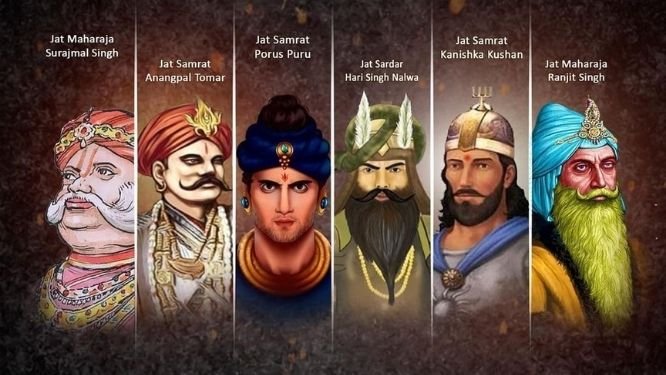
    Jats are a community that is found in the Hindu, Sikh and Muslim religions. Jat History Peddler Media

    Key Highlights:

    • The article explores the historical journey of the Jat community in India over the past 500 years, tracing their nomadic origins to settled agrarian lifestyles.
    • Jats, divided into various sub-castes and known for their traditional practices, have faced historical battles and conversions, contributing significantly to agriculture and politics.
    • Despite internal divisions and religious differences, the Jat community unites on national issues such as farmers’ rights and land legislation, producing prominent leaders like Chaudhary Charan Singh.

    Key Challenges:

    • The Jat community grapples with stereotypes and mockery, facing challenges in reconciling their pride in the past with a desire to assert their qualities in contemporary contexts.
    • The article highlights the internal divisions among Jats based on religion, turning former clansmen into archrivals despite presenting a united front on national issues.
    • Modernization of land-related occupations poses concerns about the future of Jats, leading to efforts to reinvent their identities in the face of changing socio-economic dynamics.

    Key Terms:

    • Khap panchayats: Controversial local bodies involved in delivering justice and making decisions on social matters, often criticized for endorsing conservative practices.
    • Arya Samaj: A reform movement within Hinduism advocating for the worship of the uncreated Supreme Being and rejecting idol worship.
    • Subaltern: Referring to marginalized or oppressed groups within a society.

    Key Phrases for answer enrichment:

    • “Jats strategically placed their faith in their practice of agrarian work.”
    • “Jats seem to have missed the understanding of pride with confidence, as they petition the world on their qualities and superiority.”
    • “With modernisation of land-related occupations and change in the feudal order, Jats are anxious about their future.”

    Key Quotes:

    • “Despite their history, the Jats are mocked and customarily derided among North Indian groups.”
    • “They have a strong desire to assert without a bona fide avenue.”
    • “Olympians from the Jat community have brought international fame to their community and their politics.”

    Key Examples and References:

    • Reference to historical figures like Suraj Mal, Chaudhary Charan Singh, Sir Chhotu Ram, and Raja Mahendra Pratap Singh as notable Jat icons.
    • Mention of Sikh and Muslim Jats driving a conservative agenda within the regional political landscape.
    • Olympic athletes Sakshi Malik, Bajrang Punia, and Vinesh Phogat representing the Jat community and holding the government accountable.

    Key Facts:

    • Jats trace their origins to diverse geographies, from Eastern Europe and Central Asia to sea-adjacent plain fields.
    • Jats have a history of adopting religions en masse, including Buddhism during the spread of the religion.
    • The Jat community is predominantly found in North India, with diverse sub-castes and internal religious divisions.

    Critical Analysis:

    • The article critically examines the challenges faced by the Jat community, including stereotypes, internal divisions, and concerns about the future in the context of changing socio-economic dynamics.
    • It highlights the tension between the community’s pride in its history and the desire to assert itself in contemporary contexts.

    Way Forward:

    • Encourage open dialogues within the Jat community to address internal divisions and promote unity.
    • Advocate for educational initiatives to challenge stereotypes and promote a nuanced understanding of the Jat community’s contributions.
    • Support initiatives that help the Jat community adapt to modernization while preserving its cultural identity and historical pride.