💥Join UPSC 2027,2028 Mentorship (August Batch) + XFactor Notes & Microthemes PDF

GS Paper: GS1

  • Lord Ram, from ‘mandir’ to the more important ‘rajya’

    Ram Rajya” is Bhagwan Parashu Ram's Contribution to Achieve world Peace – YOGIC CONCEPTS

    Central Idea:

    The article discusses the resolution of the Babri Masjid-Ram Janambhoomi dispute in Ayodhya, emphasizing the significance of mediation in preventing bloodshed. It highlights the positive outcomes, including the absence of violence post the Supreme Court judgment in favor of Hindus. The author, Sriram Panchu, reflects on the factors contributing to the peaceful resolution, such as Muslim forums advocating against similar disputes and the recognition that ending the conflict is in the nation’s interest. The Places of Worship Act 1991 is cited as a crucial legislative tool, and the author stresses the need for its strict implementation to prevent similar disputes.

    Key Highlights:

    • Successful mediation in the Babri Masjid-Ram Janambhoomi dispute avoided violence.
    • Factors contributing to the resolution include Muslim forums discouraging similar conflicts and the national interest in ending the dispute.
    • The Places of Worship Act 1991 played a vital role in preventing such disputes but had an exception for the Ayodhya case.
    • The article mentions the initial hasty end to mediation, but a subsequent agreement was reached with significant support from both Muslim and Hindu parties.
    • The Supreme Court’s acknowledgment of the settlement effort and its decision to grant the disputed land to Hindus are discussed.

    Key Terms:

    • Babri Masjid-Ram Janambhoomi dispute: The longstanding conflict over the Ayodhya site between Hindus and Muslims.
    • Places of Worship Act 1991: Legislation prohibiting the conversion of places of worship with an exception for the Ayodhya dispute.
    • Mediation: A process involving positive communication and negotiation to reach a resolution.

    Key Phrases:

    • “Last of such disputes”: The voiced utterance in Muslim forums that the Ayodhya case should set a precedent for ending similar disputes.
    • “Primordial interest of the nation”: Recognizing that resolving the Ayodhya dispute is crucial for the nation’s well-being.
    • “Basic Structure of the Constitution”: Referring to the Places of Worship Act’s status as a constitutional safeguard against majority decisions.
    • “Maryada Purushottam”: Referring to Lord Ram as the ideal man.

    Key Quotes:

    • “Even though a settlement may ‘seem to pass on the wings of the wind’, it shall return.” – Reference to the return of the settlement effort after the initial hasty end to mediation.
    • “Building a temple and installing a statue and creating an airport and the like is of far less worth than following the dharma of Ram Rajya.” – Emphasizing the importance of embodying Lord Ram’s principles.

    Key Statements:

    • “Building the Ram Temple is a landmark achievement, but not the only important thing here.” – Stresses the importance of preventing similar disputes through the strict implementation of the Places of Worship Act.

    Key Examples and References:

    • Reference to Kashi and Mathura as places with historical temples rebuilt on adjoining land, distinguishing them from Ayodhya.

    Key Facts:

    • The Places of Worship Act 1991 prohibits the conversion of places of worship, except for the Ayodhya dispute.

    Key Data:

    • The Kashi Vishwanath temple was built in 1780, and the Srikrishna Janmasthan in 1982.

    Critical Analysis:

    • The article does not deeply analyze the critique of the Supreme Court’s judgment, leaving room for further exploration of its implications.
    • Specific instances or challenges in implementing the Places of Worship Act are not detailed, limiting a comprehensive understanding.

    Way Forward:

    • Emphasizes the need for strict implementation of the Places of Worship Act to prevent the recurrence of similar disputes.
    • Encourages following the principles of Lord Ram’s governance (Ram Rajya) as a more valuable achievement than building physical structures.
  • Demolition of Delhi’s Sunehri Masjid

    Sunehri Masjid

    Introduction

    • The Indian History Congress (IHC), a prominent body of historians, has recently taken a stand against the proposed demolition of the Sunehri Masjid, a late medieval mosque in New Delhi.
    • Since 1984, the IHC has consistently advocated for the protection of monuments, emphasizing that all structures over 200 years old should be strictly preserved under the Protection of Monuments Act.

    About Sunehri Masjid

    Details
    Location Chandni Chowk, Old Delhi, India
    Built By Mughal noble Roshan-ud-Daula
    Construction Period 1721-1722
    Legend In 1739, Persian invader Nadir Shah, ordered the invasion and plunder of Delhi city while standing in this mosque.
    Dedication Dedicated to Shah Bhik (spiritual mentor of Roshan-ud-Daula)
    Architectural Style Mughal Architecture
    Architectural Features Three golden-domed turrets, slender minarets, stucco decorations
    Educational Role Hosted Madrasa Aminia in 1897, later relocated to Kashmiri Gate in 1917


  • Republic Day Tableaux Selection Process and Recent Controversies

    Republic Day Tableaux

    Introduction

    • The Defence Ministry’s proposal for a rollover plan for States and UTs to showcase their tableaux at the Republic Day parade comes amid ongoing controversies and complaints from various states.
    • The plan aims to ensure that every State and UT gets an opportunity to participate within a three-year cycle, addressing the issue of limited slots (approximately 15) available each year.

    Selection Process for Republic Day Tableaux

    • Participants: State Governments/UT Administrations/Central Ministries/Departments are eligible to send tableaux.
    • Application Process: Interested parties submit a concept note and design blueprints to the Ministry of Defence (MoD) by a specified deadline.
    • Expert Committee Evaluation: The MoD appoints a committee of experts in art, culture, and related fields to evaluate the proposals in two stages:
      1. Stage 1: Initial assessment of proposals and design sketches, with possible rejections or suggestions for modifications.
      2. Stage 2: Evaluation of three-dimensional models, leading to final selection or further modifications.

    Criteria for Selection

    • Factors Considered: Visual appeal, thematic relevance, detailing, accompanying music, use of local artists, and adherence to the year’s overarching theme.
    • 2024 Theme: “Viksit Bharat” (Developed India) and “Bharat: Loktantra ki Matrika” (India: the Mother of Democracy).
    • Guidelines: The MoD specifies guidelines, including the use of young designers, electronic displays, robotics, 3D printing, augmented/virtual reality, and eco-friendly materials. Conformity to these guidelines is encouraged.

    Controversies and Rejections

    • Opposition-Ruled States’ Concerns: States like Karnataka, Punjab, and West Bengal have expressed dissatisfaction over their tableaux being rejected.
    • Centre’s Stance: The Centre has maintained its decision without providing specific reasons for rejection.
    • Possible Reasons for Rejection: Misalignment with the broader theme, as suggested by MoD sources regarding Punjab and West Bengal’s proposals.
    • Political Allegations: A politician claimed that the Delhi government’s exclusion lacked justification, intending to showcase the state’s governance model.

    Conclusion

    • Navigating Challenges: The new rollover plan and selection process aim to balance equitable state representation with adherence to thematic and aesthetic guidelines.
    • Addressing Discontent: While the plan seeks to mitigate annual complaints, it also raises questions about transparency and political considerations in the selection process.
    • Future Prospects: Ensuring a transparent, inclusive, and theme-compliant selection process is crucial for maintaining the integrity and celebratory spirit of the Republic Day parade.
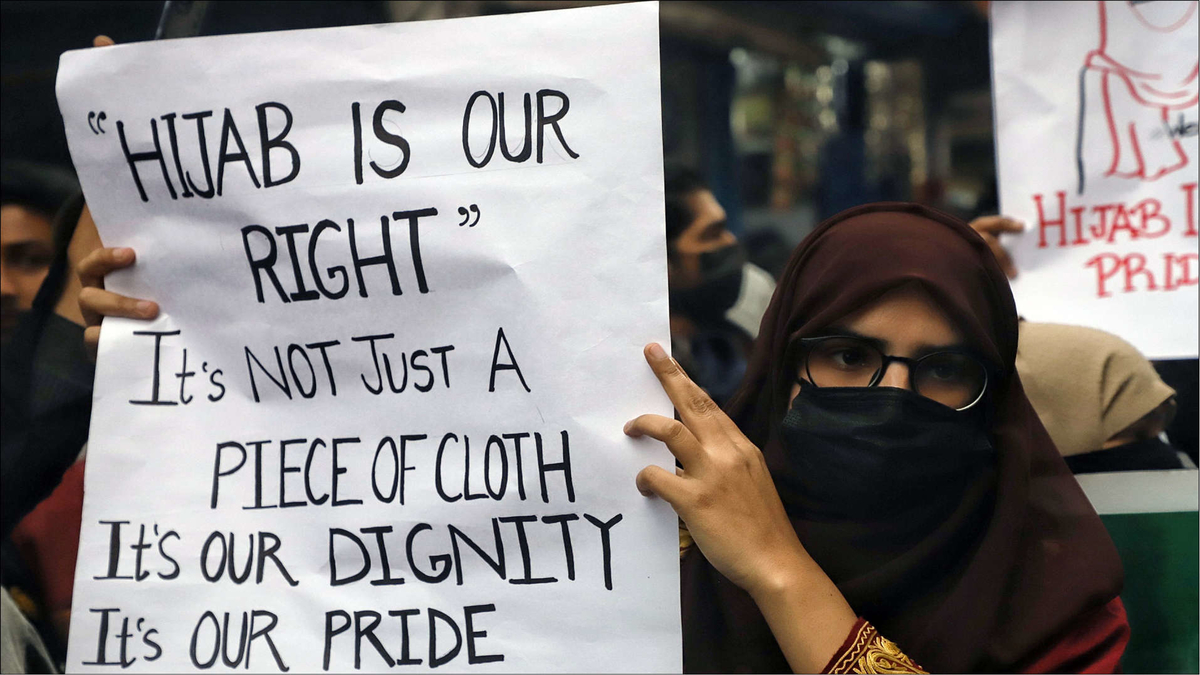
  • A colonial discourse on the veil

    Ghunghat, but not Hijab Abdul Khaliq and Mathew John :: Indian Currents:  Articles

    Central Idea:

    The article focus into the ongoing discourse around the hijab/veil, examining recent political events in India and the global conversation on the subject. It raises questions about the right of Muslim women to choose their attire, the role of the state in regulating religious clothing, and the intersection of Islamic principles with government policies. The central argument posits that criticisms of the hijab often lack genuine concern for gender equality, being influenced by historical Western colonial biases, and mirroring the majoritarian agenda of Hindutva.

    Key Highlights:

    • Karnataka Chief Minister’s stance on the hijab issue is presented as a case of vote bank politics by the Congress, reinforcing BJP’s accusations.
    • The global debate involves Western leaders advocating for bans, while Muslim women protest against enforced veiling in countries like Iran.
    • The article questions the Western perception of Islam’s treatment of women, attributing bias to a colonial mindset.

    Key Challenges:

    • Balancing individual freedom of choice with state regulations on religious attire.
    • Navigating the intersection between Islamic provisions and state policies.
    • Addressing the influence of Western colonial perceptions on the discourse around Muslim women’s rights.

    Key Terms:

    • Hijab/Veil: Islamic head covering worn by some Muslim women.
    • Hindutva: Ideology advocating the cultural and political dominance of Hindus in India.
    • Vote Bank Politics: Political strategy to gain support from specific religious or ethnic groups.
    • Colonial Mindset: Biased perspectives influenced by historical colonial experiences.

    Key Phrases:

    • “Vote bank politics” – Refers to the alleged manipulation of Muslim sentiments for political gain.
    • “Western colonial project” – Describes historical biases influencing perceptions of Islam.
    • “Gender freedom” – The concept of freedom regarding gender roles and choices.

    Key Quotes:

    • “For Europe, Islam was a lasting trauma.” – Edward Said, highlighting the historical impact of colonialism on Western perceptions of Islam.
    • “There is no inherent value placed on man and woman…no pre-ordained system of hierarchy.” – Amina Wudud, on interpreting Islamic provisions for gender equality.

    Key Statements:

    • The Congress government’s indecision on the hijab issue is portrayed as an example of vote bank politics.
    • The author suggests a parallel between the Hindutva majoritarian agenda and Western colonial objectives in their disregard for equal rights.

    Key Examples and References:

    • French President Nicolas Sarkozy’s push for a total ban on the Islamic veil in 2010.
    • British Prime Minister Boris Johnson’s controversial remarks on Muslim women wearing burqas in 2019.
    • Examples of successful Muslim women in India, such as Parveen Babi and Zeenat Aman, who did not conform to hijab norms.

    Key Facts and Data:

    • Historical evolution of the purdah system in various parts of the world, including India.
    • Instances of Western leaders advocating for bans on the Islamic veil.

    Critical Analysis:

    • The author critiques the perceived bias in Western views on Islam, attributing it to a colonial mindset.
    • The alignment of Hindutva’s majoritarian ideology and Western colonial objectives is questioned.
    • The article challenges the sincerity of concerns about gender equality by highlighting selective concerns based on political agendas.

    Way Forward:

    • Advocate for a nuanced understanding of cultural practices and religious choices.
    • Encourage open dialogue between religious communities and policymakers to address concerns.
    • Emphasize the importance of respecting individual choices while ensuring a balance with societal norms.
  • A manifesto for justice that has sprung from crises

    Unemployment in India rose to 8.3% in December; crossed 10% in urban areas:  CMIE

    Central Idea:

    The article discusses the pressing issues faced by India, including unemployment, social unrest, ecological degradation, and threats to democratic rights. It emphasizes the need for alternative approaches and policies to address these challenges and highlights a People’s Manifesto released by Vikalp Sangam, a platform representing various movements and organizations working towards positive change.

    Key Highlights:

    • The article outlines the multifaceted crises in India, such as unemployment, ecological collapse, and erosion of democratic rights.
    • It introduces Vikalp Sangam, a national platform fostering alternative initiatives for a just, equitable, and sustainable India.
    • The People’s Manifesto aims at the 2024 general election and advocates policy shifts in areas like the economy, decentralization, accountability, and social inclusion.
    • Practical examples on the Vikalp Sangam website illustrate successful community-driven solutions to challenges like unemployment and rural development.
    • The manifesto calls for economic reforms, curbing the black economy, and wealth redistribution through measures like basic income and pension for all workers.
    • It addresses concerns about the increasing authoritarianism, calls for decentralization, and the need to protect institutions like the Election Commission and media from political interference.

    Key Challenges:

    • Resistance to policy changes from established political and economic interests.
    • The need for widespread awareness and acceptance of alternative approaches.
    • The challenge of implementing grassroots initiatives on a larger scale.
    • Overcoming political polarization and ensuring bipartisan support for key manifesto points.

    Key Terms/Phrases:

    • Vikalp Sangam
    • People’s Manifesto
    • Alternative pathways
    • National Rural Employment Guarantee Act
    • Decentralization
    • Black economy
    • Basic income
    • Environmental impact assessment
    • Forest Rights Act
    • Climate crisis

    Key Quotes/Statements:

    • “Hope lies in the many initiatives to resist the forces of destruction and to construct alternative pathways.”
    • “The People’s Manifesto for a Just, Equitable and Sustainable India.”
    • “In about a decade, Vikalp Sangam has convened over 30 physical assemblies, published 1,500 stories of positive change…”
    • “The manifesto demands curbs on the enormous black economy, reduction in the ratio of highest and lowest salaries, greater wealth and inheritance taxation of the rich…”
    • “The manifesto urges a national land and water policy that protects important ecological functions…”

    Key Examples and References:

    • Unemployment protests, Joshimath sinking, dam burst in Sikkim, and conflicts in Manipur.
    • Vikalp Sangam’s website with stories of rural revival and positive change.
    • Adivasi village, Mendha Lekha in Maharashtra, and Dalit women farmers in Telangana as examples of successful local initiatives.
    • Residents’ associations in Bhuj town implementing local decision-making.

    Key Facts/Data:

    • 85 people’s movements and civil society organizations released the People’s Manifesto.
    • Vikalp Sangam has convened over 30 physical assemblies and published 1,500 stories of positive change.
    • The manifesto recommends reserving 6% of GDP for education and 3% for health.
    • The Vikalp Sangam process compiled hundreds of practical examples of alternative approaches.

    Critical Analysis:

    • The article effectively outlines the challenges faced by India and the role of Vikalp Sangam in proposing alternative solutions.
    • The manifesto covers a broad spectrum of issues, but the challenge lies in its implementation and acceptance by political authorities.
    • The emphasis on community-led solutions and decentralized decision-making aligns with sustainable development principles.
    • The article lacks a detailed analysis of potential opposition or criticism to the proposed manifesto.

    Way Forward:

    • Raise awareness and garner public support for the People’s Manifesto.
    • Engage with policymakers and political leaders to incorporate key recommendations into their agendas.
    • Strengthen grassroots movements and community-led initiatives.
    • Foster collaborations between government, businesses, and civil society to address the highlighted issues.
    • Continuously monitor and evaluate the progress of alternative approaches to ensure their effectiveness.
  • Festivals: Kateel Yakshagana Mela

    Yakshagana

    Introduction

    • The Karnataka High Court has allowed the century-old Kateel Durgaparameshwari Prasadita Yakshagana Mandali to resume all-night shows, adhering to noise pollution norms.

    About Kateel Yakshagana Mela

    • It refers to a traditional form of theater performance known as Yakshagana, which is predominantly found in the state of Karnataka, India.
    • Specifically, “Kateel” refers to the town of Kateel in Karnataka, which is known for its own unique troupes or ‘Melas’ performing this art form.
    • It includes stories from Hindu epics like the Ramayana and the Mahabharata.
    • They are usually performed on open-air stages at night and can last up to several hours.

    Back2Basics:  Yakshagana

    Details
    Origin and Meaning Originates from Karnataka, India. The word “Yakshagana” literally means the song (gana) of the yaksha (nature spirits).
    Performance Style A blend of dance, music, dialogue, elaborate costumes, makeup, and stage techniques.
    Music Accompanied by traditional music, predominantly with the ‘chande’ and ‘maddale’ drums.
    Narrative Source Based on epic and puranic stories, often depicting scenes from Mahabharata, Ramayana, and Bhagavata.
    Types Badagu Thittu: Predominant in the northern parts of Karnataka, characterized by vigorous dance movements and elaborate costumes.

    Tenku Thittu: Found in the southern parts, known for its relatively more subdued dance and dialogue delivery.

    Costumes and Makeup Elaborate and colorful, with significant emphasis on facial expressions. Characters are often adorned with headgear.
    Modern Adaptations Contemporary themes are being incorporated, and performances are adapted for global audiences.
  • Assam’s Chandubi Festival

    Introduction

    • The 14th Chandubi Festival was recently held near the Chandubi Lake in Assam’s Kamrup district from January 1 to January 5.

    About Chandubi Festival

    • The Chandubi Festival happens every year for five days, starting on New Year’s Day, by the Chandubi Lake in Assam.
    • Chandubi Lake was formed by a earthquake in 1897.
    • The name “Chandubi” comes from “Chand” meaning “five” and “Dubi” meaning “sinking” in the Khasi language.
    • At the festival, one can enjoy local culture, try ethnic food, see handcrafted clothes, and go boating.
    • The festival’s main goal is to encourage eco-tourism and protect the lake, which has been losing water.
    • Preserving the lake and helping the tribes like Rabhas, Garos, Gorkhas, and tea tribes are reasons for holding the festival.

    Course of events

    • During the festival, many attractive ethnic sports competitions were organized by the festival celebration committee which includes the Baghbol competition, Chagalchari competition, Khutikhel, Lewatana etc.
    • Performances of different tribe’s folk dances are held including Garo, Boro, Hajpong, Bihu, Rabha and many others.
  • Lesson from ’12th fail’: In a just society, UPSC obsession would be cruelty. We celebrate it

    12th Fail (2023) - IMDb

    Central Idea:

    The article focus into Vidhu Vinod Chopra’s film, “12th Fail,” capturing the struggles of real-life IPS officer Manoj Kumar Sharma in the competitive UPSC examinations. It highlights the unexpected yet impactful body language of the lead actor, Vikrant Massey, and underscores the film’s exploration of conformity and authenticity in the civil services interview process.

    Key Highlights:

    • Portrayal of Manoj Kumar Sharma’s internal journey in the UPSC examinations.
    • Emphasis on Vikrant Massey’s skill in conveying character emotions through body language.
    • Crucial moments, including the character’s nervousness and a supportive letter from his girlfriend.
    • Vidhu Vinod Chopra’s focus on the significance of staying honest and true to oneself in achieving success.

    Key Challenges:

    • Illustration of challenges faced by candidates in the competitive UPSC examination process.
    • Pressure to conform to societal expectations during interviews.
    • Realities of a low success rate and the potential absence of a happy ending for many candidates.

    Key Terms:

    • UPSC: Union Public Service Commission, responsible for civil service examinations in India.
    • IPS: Indian Police Service.
    • Body language: Non-verbal communication through gestures, postures, and facial expressions.

    Key Phrases:

    • “Internal journey”: Emphasizes the character’s emotional and psychological struggles.
    • “Unfairness of the system”: Highlights challenges of conforming in the competitive examination process.
    • “Without oxygen”: Metaphorically describes the character’s journey to success without significant support.

    Key Quotes:

    • “He has to win by not being himself, by not revealing too much of himself.”
    • “When someone sees you for who you are, they also see you for who you want to be.”
    • “The crucial thing about this film is to show that you can make it big while staying honest.”

    Anecdotes:

    • Manoj Kumar Sharma’s nervousness and struggle with formal attire on the day of the final interview.
    • The pivotal moment when he reads a supportive letter from his girlfriend, providing strength to be true to himself.

    Key Statements:

    • “The real job, as is for most great acting, is internal.”
    • “In a just society, the competitive UPSC process would be seen as cruel.”

    Key Examples and References:

    • Vikrant Massey’s portrayal of Manoj Kumar Sharma’s transformation through body language.
    • Vidhu Vinod Chopra’s emphasis on honesty and integrity in the pursuit of success.

    Critical Analysis:

    The article critically examines societal pressures and challenges in the pursuit of government civil service jobs, advocating for authenticity in success.

    Way Forward:

    Encourages a shift in societal perspectives, promoting a more just and empathetic approach to the challenges faced by candidates in competitive exams, without sacrificing one’s true self.

  • Comprehending Lord Rama in all his dimensions

    What can we learn from Lord Rama in the perspective of modern days? - Quora

    Central Idea:

    The article explores the evolving perceptions of Lord Rama in Hindu society, with a focus on the transformation of the invocation “Jai Shri Ram” and the upcoming consecration of the Ram Janmabhoomi temple. It emphasizes the need to revisit the Ramacharitmanas in its entirety to comprehend Lord Rama in all dimensions, especially his compassionate and childlike aspects.

    Key Highlights:

    • Lord Rama, as depicted by Tulsidas in the Ramacharitmanas, is seen as divine and the upholder of maryada, connoting righteous conduct.
    • The aggressive tone of the current popular invocation, “Jai Shri Ram,” emerged in 1990 during the Rath Yatra led by Lal Krishna Advani for the construction of the Ram temple.
    • The construction of the Ram Janmabhoomi temple is widely welcomed, symbolizing a correction of historical wrongs and a call for Hindu assertiveness.

    Key Challenges:

    • The shift in the invocation from traditional greetings like “Ram Ram” to the more militant “Jai Shri Ram” reflects a change in social thinking, raising concerns about sharpness in Hindu thought.
    • The article notes that the infant form of Lord Rama is rarely invoked, highlighting a departure from Tulsidas’s portrayal in the Ramacharitmanas.

    Key Terms:

    • Maryada: Connotes righteous conduct, context-specific.
    • Rath Yatra: A procession advocating the construction of the Ram temple.
    • Ramlalla Virajman: The deity representing Lord Rama in the Ayodhya case.
    • Samadhi: A memorial, in this context, referring to Gandhi’s resting place at Rajghat.

    Key Phrases:

    • “Jai Shri Ram”: Evolved from the Rath Yatra in 1990, emphasizing a militant tone for the Ram Janmabhoomi temple.
    • “He Ram”: Uttered by Gandhi at the time of his assassination, reflecting a deep connection to Lord Rama.

    Key Quotes:

    • “It is evocative that his samadhi at Rajghat carries these words.” – Referring to the words “He Ram” on Gandhi’s memorial.
    • “Recognising the entire creation as full of Siya and Rama, I make obeisance to them with joined palms.” – Tulsidas’s perspective on Lord Rama and Sita.

    Key Examples and References:

    • Lal Krishna Advani’s Rath Yatra in 1990.
    • D.V. Paluskar’s rendering of the bhajan “Thumak chalat Ramachandra.”
    • Gandhi’s utterance of “He Ram” at the time of his assassination.

    Key Facts and Data:

    • Lord Rama is widely perceived in his warrior mode, especially during the celebration of Dussehra.
    • The consecration of the Ram Janmabhoomi temple is scheduled for January 22, 2024.

    Critical Analysis:

    The article critically examines the changing invocation from traditional greetings to the militant “Jai Shri Ram,” expressing concerns about the sharpness in Hindu thinking. It reflects on the evolution of societal perceptions of Lord Rama, emphasizing the need to embrace the diverse dimensions portrayed in the Ramacharitmanas.

    Way Forward:

    • Encourage a broader understanding of Lord Rama by revisiting the Ramacharitmanas in its entirety.
    • Emphasize the compassionate and childlike aspects of Lord Rama, especially in the context of the upcoming temple consecration.
    • Reflect on Gandhi’s Rama bhakti as a guiding principle, promoting tolerance and compassion in the celebration of religious milestones.
  • How Lakshadweep’s Unique Cultural Landscape developed?

    Lakshadweep

    Introduction

    • PM’s recent trip to Lakshadweep has brought the islands into the national conversation.

    About Lakshadweep

    Details
    Location In the Arabian Sea, off the southwestern coast of India.
    Geographical Formation Formed by coral activities and have a coral atoll structure.
    Formation as UT Formed as a Union Territory of India in 1956.
    Total Islands Comprises 36 islands, including atolls, coral reefs, and submerged banks.
    Inhibition 10 of the 36 islands are inhabited.
    Capital Kavaratti is the capital of the Union Territory.
    Area Total area of 32 sq km.

    Cultural Uniqueness of Lakshadweep

    • Diverse Influences: The islands exhibit a unique blend of cultural influences from Malayalis, Arabs, Tamils, and Kannadigas.
    • Distinct Islamic Practice: The form of Islam practiced here is distinct from the rest of India, reflecting the islands’ diverse ethnic and linguistic heritage.

    Historical Roots: A Pre-Islamic Hindu Society

    • Early Settlers: Scholar Andrew W Forbes suggests that the first settlers were likely Malabari sailors, possibly castaways.
    • Hindu Influence: Evidence points to a pre-Islamic Hindu society, with remnants like buried idols and traditional songs hinting at past Hindu practices.

    Conversion to Islam: A Gradual Transition

    • Arab Influence: Regular contact with Arab merchants and sailors led to the gradual conversion of islanders to Islam, distinct from the Islamic practices in mainland India.
    • Peaceful Introduction of Islam: Historian Mahmood Kooria notes that Islam’s introduction in the region, including Lakshadweep, was marked by minimal political conflict, primarily through commercial interactions.

    Cultural Development: Insulation from Mainland Influences

    • Control by the Arakkal Kingdom: In the 16th century, the islands fell under the Arakkal kingdom of Kannur, Kerala’s only Muslim dynasty.
    • European Interactions: Despite conflicts with European powers, the islands maintained a degree of protection and isolation.
    • British Era: The British rule further insulated Lakshadweep, allowing its culture to evolve distinctly from mainland India.
    • Linguistic Diversity: The islands’ isolation is reflected in their linguistic diversity, with Malayalam, Jazari, and Mahl being the main languages.

    Matrilineal Society: A Unique Aspect of Lakshadweep’s Islam

    • Matriliny in Islamic Society: Lakshadweep’s Islamic society is characterized by matriliny, tracing descent and property through the mother’s line.
    • Anthropological Perspectives: Anthropologist Leela Dube highlights the compatibility of matriliny with Islam in Lakshadweep, contrary to conventional Islamic practices.
    • Kerala’s Influence: Historian Manu Pillai links the matrilineal tradition to Kerala’s cultural patterns, where Nairs and Namboodiris practised matriliny.
    • Broader Indian Ocean Context: Kooria points out that matriliny is common among Muslims in the Indian Ocean region, suggesting a broader cultural context.

    Religious and Sociological Interpretations

    • Islamic Justification for Matriliny: Islanders believe their matrilineal practice aligns with Islam, citing Prophet Muhammad’s life with his first wife, Khadija.
    • Sociological Viewpoint: Dr. N P Hafiz Mohamad emphasizes that the islanders see matriliny as integral to their Islamic practice.

    Conclusion

    • Preservation of Unique Traditions: Lakshadweep’s relative isolation has helped preserve its unique cultural and religious practices.
    • Integration of Diverse Influences: The islands represent a remarkable integration of various cultural and religious influences, forming a distinct identity within the Indian subcontinent.
    • Significance in Broader Indian Ocean Culture: Lakshadweep’s cultural practices, particularly its matrilineal society, highlight the interconnectedness and diversity of cultures across the Indian Ocean region.