💥Join UPSC 2027,2028 Mentorship (August Batch) + XFactor Notes & Microthemes PDF

GS Paper: GS3-17.Awareness in the fields of IT, Space, Computers, Robotics, Nano-technology, Bio-technology and issues relating to Intellectual Property Rights.

  • What are Doppler Radars?

    The India Meteorological Department’s (IMD) Doppler Radar in Mumbai, which surveys weather patterns and forecasts, stopped working after heavy rainfalls.

    How does a Doppler radar work?

    • In radars, a beam of energy– called radio waves– is emitted from an antenna.
    • When this beam strikes an object in the atmosphere, the energy scatters in all directions, with some reflecting directly back to the radar.
    • The larger the object deflecting the beam, the greater is the amount of energy that the radar receives in return.
    • Observing the time required for the beam to be transmitted and returned to the radar allows weather forecasting departments to “see” raindrops in the atmosphere, and measure their distance from the radar.

    What makes a Doppler radar special?

    • It can provide information on both the position of targets as well as their movement.
    • It does this by tracking the ‘phase’ of transmitted radio wave pulses; phase meaning the shape, position, and form of those pulses.
    • As computers measure the shift in phase between the original pulse and the received echo, the movement of raindrops can be calculated.
    • Thus it is possible to tell whether the precipitation is moving toward or away from the radar.

    Types of Doppler radar

    • In India, Doppler radars of varying frequencies — S-band, C-band and X-band — are commonly used.
    • They help track the movement of weather systems and cloud bands and gauge rainfall over its coverage area of about 500 km.
    • The radars guide meteorologists, particularly in times of extreme weather events like cyclones and associated heavy rainfall.
    • An X-band radar is used to detect thunderstorms and lightning whereas C-band guides in cyclone tracking.

    Why are they called ‘Doppler’ radars?

    • The phase shift in these radars works on the same lines as the “Doppler effect” observed in sound waves.
    • It tells that the sound pitch of an object approaching the observer is higher due to the compression of sound waves (a change in their phase).
    • As this object moves away from the observer, the sound waves stretch, resulting in lower frequency.
    • This effect explains why an approaching train’s whistle sounds louder than the whistle when the train moves away.
    • The discovery of the phenomenon is attributed to Christian Doppler, a 19th-century Austrian physicist.
  • What is UV-C technology?

    The Union Ministry for Science and Technology has informed that Ultraviolet-C or UV-C Disinfection Technology will soon be installed in Parliament for the mitigation of airborne transmission of SARS-COV-2.

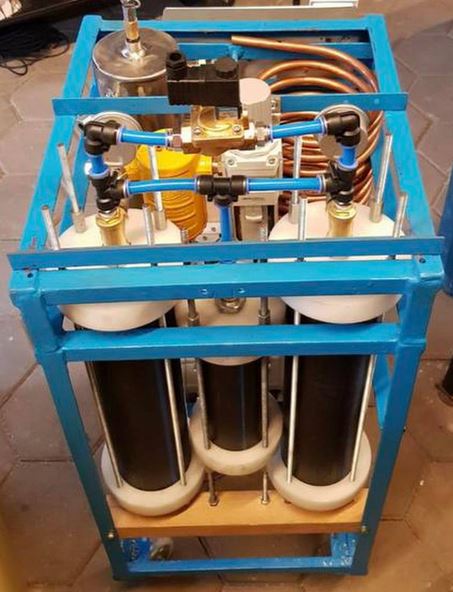
    UV-C air duct disinfection system

    • The UV-C air duct disinfection system was developed by CSIR-CSIO (Central Scientific Instruments Organisation).
    • The system is designed to fit into any existing air-ducts and the virucidal dosages using UV-C intensity and residence time can be optimized according to the existing space.
    • The release adds that the virus is deactivated in any aerosol particles by the calibrated levels of UV-C light. It can be used in auditoriums, malls, educational Institutions, AC buses, and railways.

    What is Ultraviolet (UV)?

    • Ultraviolet (UV) is a type of light or radiation naturally emitted by the Sun. It covers a wavelength range of 100-400 nm. The human visible light ranges from 380–700 nm.
    • UV is divided into three bands: UV-C (100-280 nm), UV-B (280-315 nm) and UV-A (315-400 nm).
    • UV-A and UV-B rays from the Sun are transmitted through our atmosphere and all UV-C is filtered by the ozone layer.
    • UV-B rays can only reach the outer layer of our skin or epidermis and can cause sunburns and are also associated with skin cancer.
    • UV-A rays can penetrate the middle layer of your skin or the dermis and can cause ageing of skin cells and indirect damage to cells’ DNA.
    • UV-C radiation from man-made sources has been known to cause skin burns and eye injuries.

    So, can UV-C kill coronavirus?

    • UV-C radiation (wavelength around 254 nm) has been used for decades to disinfect the air in hospitals, laboratories, and also in water treatment.
    • But these conventional germicidal treatments are done in unoccupied rooms as they can cause health problems.
    • It can destroy the outer protein coating of the SARS-Coronavirus.

    Is it safe for humans?

    • The device is specifically developed to disinfect non-living things.
    • UV-C radiation used in this device could be harmful to the skin and eyes of living beings.

    Answer this PYQ in the comment box:

    Q.What is the role of ultraviolet (UV) radiation in the water purification systems?

    1. It inactivates/kills the harmful microorganisms in water.
    2. It removes all the undesirable odours from the water.
    3. It quickens the sedimentation of solid particles, removes turbidity and improves the clarity of water.

    Which of the statements given above is/are correct? (CSP 2010)

    (a) 1 only

    (b) 2 and 3 only

    (c) 1 and 3 only

    (d) 1, 2 and 3

  • What is Suborbital Flight?


    Virgin Group founder Richard Branson became the first billionaire to fly to the edge of space and back, riding aboard his own Virgin Galactic spacecraft in a suborbital flight.

    What is Suborbital Flight?

    • When an object travels at a horizontal speed of about 28,000 km/hr or more, it goes into orbit once it is above the atmosphere.
    • Satellites need to reach that threshold speed in order to orbit Earth.
    • Such a satellite would be accelerating towards the Earth due to gravity, but its horizontal movement is fast enough to offset the downward motion so that it moves along a circular path.
    • Any object travelling slower than 28,000 km/hr must eventually return to Earth.
    • These are suborbital flights, because they will not be travelling fast enough to orbit Earth once they reach there.
    • Such a trip allows space travellers to experience a few minutes of “weightlessness”.

    Analogical example

    • For an analogy, consider a cricket ball thrown into the air.
    • Given that no human hand can give it a speed of 28,000 km/hr (about 8 m/sec), the ball will fly in an arc until its entire kinetic energy is swapped with potential energy.
    • At that instant, it will lose its vertical motion momentarily, before returning to Earth under the influence of gravity.
    • A suborbital flight is like this cricket ball, but travelling fast enough to reach the “edge of space”, and yet without enough horizontal velocity to go into orbit.
    • If an object travels as fast as 40,000 km/hr, it will achieve escape velocity, and never return to Earth.

    Why the buzz?

    • With Branson and Jeff Bezos kicking off private space flight, several companies are looking for customers wanting to go on suborbital or even orbital journeys.
    • At Branson’s Virgin Galactic, around 600 people have already paid deposits for tickets that are priced up to $250,000 (Rs 1.86 crore).
    • However, Bezos’s Blue Origin, which uses the reusable New Shepard rocket, is yet to announce commercialization plans, according to the BBC.
    • There is also excitement among scientists who want to use suborbital flights for microgravity research.
    • Such flights would be far less expensive than carrying experiments and people to the International Space Station.
    • Suborbital flights could also be an alternative to parabolic flights in airplanes that space agencies currently use to simulate zero gravity.

    Safety concerns

    • The Branson flight comes seven years after his company’s first rocket, called Enterprise, crashed during a test flight, killing one of the pilots on board.
    • The other survived after parachuting out.
    • The current rocket is also not certified by the US Federal Aviation Administration, which is prohibited to do so by law until 2023.
    • This is because the US government does not want to burden companies like Virgin Atlantic with regulations during their “learning” period, when they can innovate by trying out different designs and procedures.
    • Passengers who go on such trips need to sign “informed consent” forms, similar to the ones before going for skydiving or bungee jumping.
  • Possibility of life on Saturn’s Moon

    NASA’s Cassini spacecraft has detected an unusually high concentration of methane, along with carbon dioxide and dihydrogen, in the moons of Saturn by flying through their plumes.

    What is the new observation?

    • The spacecraft has found that Titan has methane in its atmosphere and Enceladus has a liquid ocean with erupting plumes of gas and water.

    Are there methane-producing organisms on Earth?

    • Most of the methane on Earth has a biological origin.
    • Microorganisms called methanogens are capable of generating methane as a metabolic byproduct.
    • They do not require oxygen to live and are widely distributed in nature.
    • They are found in swamps, dead organic matter, and even in the human gut.
    • They are known to survive in high temperatures and simulation studies have shown that they can live in Martian conditions.
    • Methanogens have been widely studied to understand if they can be a contributor to global warming.

    Could there be methanogens on Enceladus?

    • We cannot conclude that life exists in the Enceladus ocean.
    • It is the probability that Enceladus’ hydrothermal vents could be habitable to Earth-like microorganisms.
    • There can be life hypotheses.

    What other processes could have produced the methane?

    • Methane could be formed by the chemical breakdown of organic matter present in Enceladus’ core.
    • Hydrothermal processes could help the formation of carbon dioxide and methane.
    • On Earth, hydrothermal vents on seafloors are known to release methane, but this happens at a very slow rate.
    • This hypothesis is plausible but only if Enceladus was formed through the accretion of organic-rich material from comets.
    • The results suggest that methane production from hydrothermal vents is not sufficient to explain the high methane concentration detected by Cassini in the plumes.
    • An additional amount of methane produced via biological methanogenesis could match Cassini’s observations.
  • Discrete Auroras on Mars

    The UAE’s Hope spacecraft, which is orbiting Mars since February this year, has captured images of glowing atmospheric lights in the Red Planet’s night sky, known as discrete auroras.

    What causes an Aurora on Earth?

    • Auroras are caused when charged particles ejected from the Sun’s surface — called the solar wind — enter the Earth’s atmosphere.
    • These particles are harmful, and our planet is protected by the geomagnetic field, which preserves life by shielding us from the solar wind.
    • However, at the north and south poles, some of these solar wind particles are able to continuously stream down, and interact with different gases in the atmosphere to cause a display of light in the night sky.
    • This display, known as an aurora, is seen from the Earth’s high latitude regions (called the auroral oval), and is active all year round.

    Where are they observed on Earth?

    • In the northern part of our globe, the polar lights are called aurora borealis or Northern Lights and are seen from the US (Alaska), Canada, Iceland, Greenland, Norway, Sweden and Finland.
    • In the south, they are called aurora australis or southern lights and are visible from high latitudes in Antarctica, Chile, Argentina, New Zealand and Australia.

    So, how are Martian auroras different?

    • Unlike auroras on Earth, which are seen only near the north and south poles, discrete auroras on Mars are seen all around the planet at night time.
    • Unlike Earth, which has a strong magnetic field, the Martian magnetic field has largely died out.
    • This is because the molten iron at the interior of the planet– which produces magnetism– has cooled.
    • However, the Martian crust, which hardened billions of years ago when the magnetic field still existed, retains some magnetism.
    • So, in contrast with Earth, which acts like one single bar magnet, magnetism on Mars is unevenly distributed, with fields strewn across the planet and differing in direction and strength.
    • These disjointed fields channel the solar wind to different parts of the Martian atmosphere, creating “discrete” auroras over the entire surface of the planet as charged particles interact with atoms and molecules in the sky– as they do on Earth.

    Why is it important to study them?

    • Studying Martian auroras is important for scientists, for it can offer clues as to why the Red Planet lost its magnetic field and thick atmosphere– among the essential requirements for sustaining life.

    Answer this PYQ in the comment box:

    Q.Which region of Mars has a densely packed river deposit indicating this planet had water 3.5 billion years ago?

    (a) Aeolis Dorsa

    (b) Tharsis

    (c) Olympus Mons

    (d) Hellas


    Back2Basics:

    Hope Orbiter

    • The Hope Probe, the Arab world’s first mission to Mars, took off from Earth in July last year, and has been orbiting the Red Planet since February.
    • The primary objective of the mission is to study Martian weather dynamics.
    • By correlating the lower atmosphere and upper atmosphere conditions, the probe will look into how weather changes the escape of hydrogen and oxygen into space.
    • By measuring how much hydrogen and oxygen is spilling into space, scientists will be able to look into why Mars lost so much of its early atmosphere and liquid water.
    • It is expected to create the first complete portrait of the planet’s atmosphere.
    • With the information gathered during the mission, scientists will have a better understanding of the climate dynamics of different layers of Mars’ atmosphere.

    Mars

    • Mars is the fourth planet from the Sun and the second-smallest planet in the Solar System, being larger than only Mercury.
    • In English, Mars carries the name of the Roman god of war and is often referred to as the “Red Planet”.
    • The latter refers to the effect of the iron oxide prevalent on Mars’s surface, which gives it a reddish appearance distinctive among the astronomical bodies visible to the naked eye.
    • Mars is a terrestrial planet with a thin atmosphere, with surface features reminiscent of the impact craters of the Moon and the valleys, deserts and polar ice caps of Earth.
    • The days and seasons are comparable to those of Earth, because the rotational period, as well as the tilt of the rotational axis relative to the ecliptic plane, is similar.
    • Mars is the site of Olympus Mons, the largest volcano and highest known mountain on any planet in the Solar System, and of Valles Marineris, one of the largest canyons in the Solar System.
  • What is the Human Genome Project?

    Since the release of the draft human genome sequence in 2001, sections were left unsequenced, and some sequence information was incorrect. Now, two decades later, we have a much more complete version.

    What is the human genome sequence?

    • The human genome sequence is contained in our DNA and is made up of long chains of “base pairs” that form our 23 chromosomes.
    • Along our chromosomes are the base pair sequences that form our 30,000 genes.
    • All humans share a great degree of similarity in their genome sequences – the same genes are ordered in the same manner across the same chromosomes.
    • Each of us is unique (except for identical twins) in terms of the exact base pair sequence that makes up our genes and thus our DNA/chromosomes.
    • It is this similarity that, in a genetic sense, defines us as “human” and the specific variation that defines us as individuals.

    The Human Genome Project

    • As early as the 1980s, momentum was gathering behind activities that supported, and would eventually define, the Human Genome Project.
    • Conversations had turned into workshops that likened characterization of the human genome to characterization of the human anatomy that had centuries earlier revolutionized the practice of medicine.
    • In 1990, with continued support from the US and widespread international collaboration and cooperation, the $3 billion dollar Human Genome Project was launched.
    • The project aimed to determine the sequence of the human genome within 15 years.
    • By 2000 (well ahead of schedule) a working draft of the human genome was announced.
    • This was followed by regular updates and refinements and today we all have access to a human “reference genome sequence”.

    Why did it take 20 years?

    • Much of the newly sequenced material is the “heterochromatic” part of the genome.
    • This is more “tightly packed” than the euchromatic genome and contains many highly repetitive sequences that are very challenging to read accurately.
    • These regions were once thought not to contain any important genetic information but they are now known to contain genes that are involved in fundamentally important processes such as the formation of organs during embryonic development.
    • Among the 200 million newly sequenced base pairs are an estimated 115 genes predicted to be involved in producing proteins.

    Two key factors made the completion of the human genome possible:

    1. Choosing a very special cell type
    • The new sequence was created using human cells derived from a very rare type of tissue called a complete hydatidiform mole, which occurs when a fertilized egg loses all the genetic material contributed to it by the mother.
    • Most cells contain two copies of each chromosome, one from each parent and each parent’s chromosome contributing a different DNA sequence.
    • A cell from a complete hydatidiform mole has two copies of the father’s chromosomes only, and the genetic sequence of each pair of chromosomes is identical.
    • This makes the full genome sequence much easier to piece together.
    1. Advances in sequencing technology
    • A new method called “shotgun sequencing”, involved breaking the genome into very small fragments of about 200 base pairs, cloning them inside bacteria, deciphering their sequences, and then piecing them back together like a giant jigsaw.
    • This was the main reason the original draft covered only the euchromatic regions of the genome — only these regions could be reliably sequenced using this method.
    • The latest sequence was deduced using two complementary new DNA-sequencing technologies.

    Is the genome now completely sequenced?

    • Well, no. An obvious omission is the Y chromosome, because the complete hydatidiform mole cells used to compile this sequence contained two identical copies of the X chromosome.
    • However, this work is underway and the researchers anticipate their method can also accurately sequence the Y chromosome, despite it having highly repetitive sequences.
    • Even though sequencing the (almost) complete genome of a human cell is an extremely impressive landmark, it is just one of several crucial steps towards fully understanding humans’ genetic diversity.

    What’s next?

    • The next job will be to study the genomes of diverse populations (the complete hydatidiform mole cells were European).
    • Once the new technology has matured it will be better positioned to make a more significant impact on our understanding of human history, biology and health.
    • Both care and technological development are needed to ensure this research is conducted with a full understanding of the diversity of the human genome to prevent health disparities.

    Answer this PYQ in the comment box:

    Q.With reference to the recent developments in science, which one of the following statements is not correct?

    (a) Functional chromosomes can be created by joining segments of DNA taken from cells of different species.

    (b) Pieces of artificial functional DNA can be created in laboratories.

    (c) A piece of DNA taken out from an animal cell can be made to replicate outside a living cell in a laboratory.

    (d) Cells taken out from plants and animals can be made to undergo cell division in laboratory petri dishes.

  • Skull found in China represents a new human species

    Scientists have announced that a skull discovered in northeast China represents a newly discovered human species they have named Homo longi, or “Dragon Man”.

    Answer this PYQ in the comment box:

    Q.The word ‘Denisovan’ is sometimes mentioned in media in reference to (CSP 2019):

    (a) fossils of a kind of dinosaurs

    (b) an early human species

    (c) a cave system found in North-East India.

    (d) a geological period in the history of Indian subcontinent

    Who is the “Dragon Man”, the latest Chinese discovery?

    • The cranium found in China has been dubbed the “Dragaon Man” or Homo longi, a name that has been derived from the Long Jiang or Dragon River in the Heilongjiang province of China where the city of Harbin is located.
    • The skull was reportedly discovered back in 1933, when a bridge was built over the Songhua River.
    • For thousands of years, the skull remained buried in sediments.
    • Because of the distinctive shape of the skull, which was found almost complete, some members of the team have suggested that it be declared a part of a new species of the genus Homo.
    • Significantly, the size of the skull, which has a considerable brain capacity, is comparable to that of modern humans and Neanderthals.

    Why is this discovery being considered significant?

    • For one, it brings new knowledge about the evolution of Homo sapiens.
    • It might help to bridge the gaps between our ancient ancestors called Homo erectus and us.
    • This knowledge is important because there is very little consensus in the scientific community about how different human species are related, and which species are our immediate ancestors.
    • Smithsonian for instance notes that some palaeontologists believe Homo heidelbergensis to be our immediate ancestors.
    • This species was discovered in 1908, and lived about 700,000 to 200,000 years ago in Europe and possibly China and some parts of Africa.

    Back2Basics: Species of Humans

    • Modern humans are the only human species that exist in the world today.
    • While the exact number of human species is a matter of debate, most scientists believe that there are at least 21 of them.

    As per the Smithsonian National Museum of Natural History, there are over 21 human species.  Major among these are:

    (1) Sahelanthropus tchadensis

    • Sahelanthropus tchadensis is believed to be the oldest member of the human family tree.
    • It lived about 7-6 million years ago somewhere around present-day Chad in Africa.
    • It had both ape-like and human-like features and was bipedalled, an ability that may have increased its chances of survival.

    (2) Homo erectus

    • Homo erectus lived about 1.89 million-110,000 years ago, in Northern, Eastern, and Southern Africa and Western and East Asia.
    • ‘Turkana Boy’ is the most complete fossil belonging to this species and is dated to be around 1.6 million years old.

    (3) Modern man

    • Homo neanderthalensis lived about 400,000-40,000 years ago and co-existed with Homo sapiens for a few thousand years.
    • They lived in Europe and in southwestern and central Asia.
    • Homo sapiens evolved about 300,000 years ago, and are found worldwide.
  • Covid-19 Delta-plus Variant

    The Maharashtra government has tightened the Covid-19 unlocking process in the wake of a rise in cases of the Delta Plus variant.

    What is Delta Plus?

    • A variant that has emerged as a new threat, especially in India, Delta Plus (B.1.617.2.1/(AY.1) is a new mutant strain of the Delta variant of SARS-CoV-2.
    • It is technically the next generation of SARS-COV-2.
    • The Delta variant that was first detected in India eventually became a huge problem for the whole world.
    • However, the Delta Plus variant, at present, is limited to smaller areas in the country. This mutant of Delta was first detected in Europe in March 2021, but it came to light on June 13.
    • Although it is still under investigation, experts believe that the Delta Plus variant has increased transmissibility.

    What is known so far?

    • The new Delta plus variant has been formed due to a mutation in the Delta or B.1.617.2 variant.
    • Delta Plus (AY.1) is resistant to monoclonal antibodies cocktail.
    • Since it’s a new variant, its severity is still unknown.
    • 63 genomes of Delta (B.1.617.2) with the new K417N mutation have been identified by the GISAID (global science initiative) so far.
    • The mutation is in the spike protein of SARS-COV-2, which helps the virus enter and infect the human cells.
    • People reported symptoms like headaches, sore throats, runny noses, and fever.

    Are COVID-19 vaccines effective against the Delta Plus variant?

    • Medical experts say it is too early to predict the effectiveness of the existing vaccines on the new variant.
    • A detailed study would be required to establish any effect of the mutant on the immune system.
    • However, Union Health Ministry says that both Indian vaccines — Covishield and Covaxin are effective against the Delta variant.
    • There is fear that this new variant Delta Plus may spark the third wave of COVID-19, but there is a very low incidence of such cases, so there is no certainty.
  • First-ever genetically modified rubber planted in Assam

    A Rubber Board research farm on the outskirts of Guwahati now sports the world’s first genetically modified (GM) rubber plant tailored for the climatic conditions in the Northeast.

    GM rubber

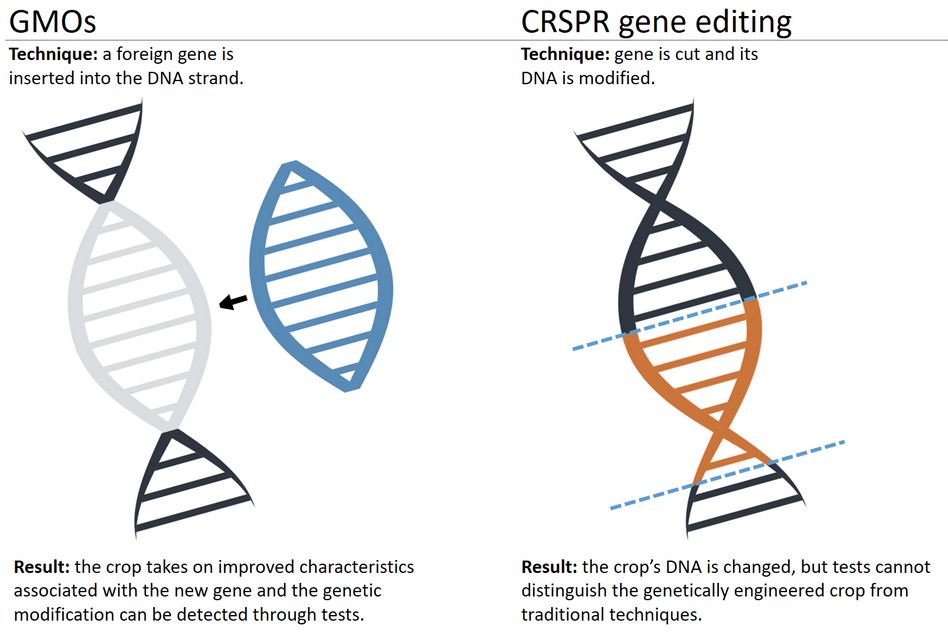
    • The GM rubber has additional copies of the gene MnSOD, or manganese-containing superoxide dismutase, inserted in the plant.
    • The plant was developed at the Kerala-based Rubber Research Institute of India (RRII).
    • It is expected to tide over the severe cold conditions during winter — a major factor affecting the growth of young rubber plants in the region.

    Why need GM rubber?

    • Natural rubber is a native of warm humid Amazon forests and is not naturally suited for the colder conditions in the Northeast, which is one of the largest producers of rubber in India.
    • Growth of young rubber plants remains suspended during the winter months, which are also characterized by progressive drying of the soil.
    • This is the reason for the long immaturity period of this crop in the region.

    What does MnSOD gene offer?

    • The MnSOD gene has the ability to protect plants from the adverse effects of severe environmental stresses such as cold and drought.
    • Laboratory studies conducted at the RRII showed the GM rubber plants overexpressed the MnSOD gene as expected, offering protection to the cells.
    • The plant is thus expected to establish well and grow fast in the region.
    • There was no risk of genes flowing from the GM rubber into any other native species, a concern often raised by environmental groups against GM plants in general.
  • BT Cotton adoption in Punjab has resulted in net economic, environmental benefits

    Amid the perpetual debate surrounding BT cotton’s positive and negative impacts, a recent study has said its adoption in Punjab in the past over a decade has resulted in net economic and environmental benefits.

    Background

    • BT (Bacillus thuringiensis) cotton has been commercially grown in India for the past 19 years.
    • The Genetic Engineering Approval Committee (GEAC) approved the release of BT cotton for commercial cultivation in 2002 in western and southern parts of the country.
    • In Punjab, BT cotton was released for cultivation in 2005.
    • Before the release, it was adopted by 72% farmers on 22% of the cotton area. However, a lot of questions have been raised recently on its impact.

    BT cotton in India

    • BT cotton is a genetically modified organism (GMO) or genetically modified pest resistant plant cotton variety, which produces an insecticide to combat bollworm.
    • Strains of the bacterium Bacillus thuringiensis produce over 200 different BT toxins, each harmful to different insects.
    • Most notably, BT toxins are insecticidal to the larvae of moths and butterflies, beetles, cotton bollworms and flies but are harmless to other forms of life.
    • In 2002, a joint venture between Monsanto and Mahyco introduced BT cotton to India.
    • In 2011, India grew the largest GM cotton crop at 10.6 million hectares.

    Issues with BT cotton

    • In India, BT cotton has been enveloped in controversies due to its supposed failure to reduce the need for pesticides and increase yield.
    • The link between the introduction of BT cotton to India and a surge in farmer suicides has been refuted by other studies with decreased farmer suicides since BT cotton was introduced.
    • BT cotton accounts for 93% of cotton grown in India.
    • Maharashtra banned the sale and distribution of BT cotton in 2012, to promote local Indian seeds, which demand less water, fertilizers and pesticide input.

    What is the new study about?

    Success of BT in Punjab

    • The research was funded by the Agricultural Extension Division of the Indian Council of Agricultural Research under extramural project “Impact evaluation of integrated pest management technologies”.
    • It found that since the commercialization of BT cotton:
    1. there has been reduction in insecticide use by volume and applications,
    2. decline in environmental and human health impact associated with insecticide use,
    3. more reduction in the use of highly hazardous and riskiest insecticides, and
    4. reduction in the expenses associated with insecticide use.
    5. Cotton yields in the past 13 years have been stable, the only exception being 2015

    Now its’ time to answer this PYQ in the comment box:

    Q.In India, the use of carbofuran, methyl parathion, phorate and triazophos is viewed with apprehension. These chemicals are used as: (CSP 2017)

    (a) Pesticides in agriculture

    (b) Preservatives in processed foods

    (c) Fruit-ripening agents

    (d) Moisturizing agents in cosmetics