Mains Ready By December. Smash Mains & Smash PYQ Admissions Open

GS Paper: GS2-18.Bilateral, regional and global groupings and agreements involving India and/or affecting India’s interests.

  • Data and a new global order

    Digital data revolution

    • The Industrial Revolution restructured the global manufacturing order to Asia’s disadvantage.
    • But in the ‘Digital Data Revolution’, algorithms requiring massive amounts of data determine innovation, the nature of productivity growth, and military power.
    • Mobile digital payment interconnections impact society and the international system, having three strategic implications.

    3 implications of mobile digital payment interconnections

    1) Symbiotic nature of military and civilian system

    • Because of the nature and pervasiveness of digital data, military and civilian systems are symbiotic.
    • Cybersecurity is national security, and this requires both a new military doctrine and a diplomatic framework.

    2) Productivity advantage of data to Asia

    • The blurring of distinctions between domestic and foreign policy and the replacement of global rules with issue-based understanding converge with the growth of smartphone-based e-commerce, which ensures that massive amounts of data give a sustained productivity advantage to Asia.

    3) India can negotiate new rules as an equal with US and China

    • Data streams are now at the centre of global trade and countries’ economic and national power.
    • India, thus, has the capacity to negotiate new rules as an equal with the U.S. and China.

    How data shaped US-China relations

    • Innovation based on data streams has contributed to China’s rise as the second-largest economy and the “near-peer” of the U.S.
    • The national security strategy of the U.S. puts more emphasis on diplomacy than military power to resolve conflicts with China, acknowledging that its military allies have complex relationships with Beijing, as it seeks to work with them to close technology gaps.
    • China’s technology weakness is the dependence on semiconductors and its powerlessness against U.S. sanctions on banks, 5G and cloud computing companies.
    • But China’s digital technology-led capitalism is moving fast to utilise the economic potential of data, pushing the recently launched e-yuan and shaking the dollar-based settlement for global trade.

    How global strategic balance will be shaped by data standard

    • China has a $53-trillion mobile payments market and it is the global leader in the online transactions arena, controlling over 50% of the global market value.
    • India’s Unified Payments Interface (UPI) volume is expected to cross $1 trillion by 2025.
    • The U.S., in contrast, lags behind, with only around 30% of consumers using digital means and with the total volume of mobile payments less than $100 billion.
    • The global strategic balance will depend on new data standards.
    • The U.S., far behind in mobile payments, is falling back on data alliances and sanctions to maintain its global position.

    India’s role in digital economy

    • With Asia at the centre of the world, major powers see value in relationships with New Delhi.
    • India fits into the U.S. frame to provide leverage.
    • China wants India, also a digital power, to see it as a partner, not a rival.
    • And China remains the largest trading partner of both the U.S. and India despite sanctions and border skirmishes.

    Way forward for India

    • India, like China, is uncomfortable with treating Western values as universal values and with the U.S. interpretation of Freedom of Navigation rules in others’ territorial waters.
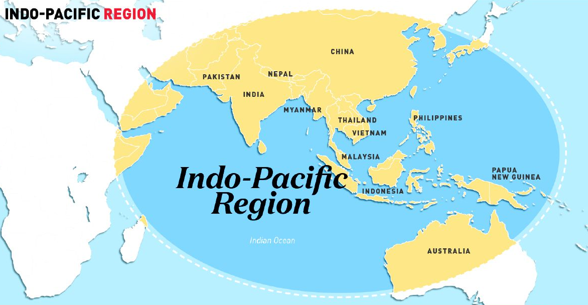
    • New Delhi’s Indo-Pacific vision is premised on “ASEAN centrality and the common pursuit of prosperity”.
    • The European Union recently acknowledged that the path to its future is through an enhanced influence in the Indo-Pacific, while stressing that the strategy is not “anti-China”.
    • The U.S. position in trade, that investment creates new markets, makes it similar to China’s Belt and Road Initiative.

    Conclusion

    India alone straddles both U.S. and China-led strategic groupings, providing an equity-based perspective to competing visions. It must be prepared to play a key role in moulding rules for the hyper-connected world, facing off both the U.S. and China to realise its potential of becoming the second-largest economy.

  • India as a country of Particular concern: USCIRF

    About USCIRF

    • U.S. Commission on International Religious Freedom (USCIRF) is an independent bi-partisan commission.
    • USCIRF recommendations are non-binding.
    • The Trump administration had rejected the USCIRF recommendation to designate India a CPC last year.
    • Last year India had denied visas to members of USCIRF who wanted to visit India for their assessment.

    What are the key concerns of the report

    • The key concerns of the 2021 report include the Citizenship Amendment Act.
    • On the National Register of Citizens (NRC), the report says, “The consequences of exclusion – as exemplified by a large detention camp being built in Assam – are potentially devastating…”
    • Efforts to prohibit interfaith marriage – such as those in Uttar Pradesh and Madhya Pradesh – are also highlighted as a concern.
    • In an apparent reference to the Tablighi Jamaat Markaz in March 2020, the USCIRF says that at the beginning of the COVID-19 pandemic, disinformation and hateful rhetoric often targeted religious minorities.

    Recommendations of the report to the US Congress

    • The USCISRF recommended that the administration impose targeted sanctions on Indian individuals and entities for ‘severe violations of religious freedom’.
    • A second recommendation was for the administration to promote inter-faith dialogue and the rights of all communities at bilateral and multilateral forums “such as the ministerial of the  Quad].
    • Another recommendation – to the U.S. Congress – was to raise issues in the U.S. – India bilateral space, such as by hosting hearings, writing letters and constituting Congressional delegations.
  • EU’s Indo-Pacific strategy

    The Council of the European Union approved conclusions on a European Union strategy for cooperation in the Indo-Pacific.

    Aim:

    • To reinforce its strategic focus, presence and actions in the Indo-Pacific region.
    • To contribute to regional stability, security, prosperity and sustainable development at the time of “rising challenges and tensions in the region.”

    Rationale:

    • The current dynamics in the Indo-Pacific have given rise to:
      • Intense geopolitical competition
      • Increasing tensions on trade and supply chains
      • Challenges in technological, political and security areas
      • Issues related to Human rights
    • As per the EU, these developments threaten the stability and security of the region and beyond, directly impacting on its interests.

    Strategy by European Union:

    • Increased cooperation in the Indo-Pacific
    • Commitment to uphold democracy, human rights, the rule of law and respect for international law.
    • Promote effective rules-based multilateralism
    • Support for ASEAN (Association of South East Asian Nations)
    • Work to mitigate economic and human effects of the COVID-19 pandemic
    • Support open and fair environment for trade and investment
    • Tackling climate change and supporting connectivity with the EU
    • Conclude free trade agreements with Australia, Indonesia and New Zealand
    • Take steps towards the Comprehensive Agreement on Investment with China
    • Deepen economic relations with India
    • Develop partnerships in the areas of security and defence
    • Address maritime security, malicious cyber activities, disinformation, emerging technologies, terrorism, and organised crime
    • Extend the geographic scope of its CRIMARIO (Critical Maritime Routes) IIactivities from the Indian Ocean into South and Southeast Asia to contribute to safer sea lanes of communication with the EU.
  • The great Afghan microcosm

    The article highlights how players at 3 levels: global, regional and local level influence Afghan dynamics.

    Role of global powers in Afghanistan

    1) What the US exit from Afghanistan mean

    • The exit of US and NATO forces from Afghanistan underlines the end of the unipolar moment in international affairs.
    • Ending US military involvement, however, does not necessarily make Washington marginal to the future evolution of Afghanistan.
    • The US remains the most significant global power even after the end of the unipolar moment.
    • Its ability to weigh in on multiple issues is considerable.
    • President Joe Biden is under some pressure at home not to be seen as abandoning Afghanistan.
    • Nor can the US President ignore the dangers of Afghanistan re-emerging as a breeding ground for international terrorism.
    • The US will figure prominently in any Taliban strategy to win international diplomatic recognition and political legitimacy.
    • It will also need Western economic assistance for stabilising the war-torn country.

    2) Russia’s role in Afghanistan

    • Russia is determined to play an important role in the future of Afghanistan.
    • As a member of the UNSC, the joint leader of the Shanghai Cooperation Organisation with China, and a major source of weapons, Russian clout is real.
    • Above all, Putin brings plenty of political will to compensate for Moscow’s loss of superpower status as we have seen across the world, from Venezuela to Myanmar and Mozambique to Syria.

    3) How China will benefit from the US withdrawal

    • If the US is a distant power, China is Afghanistan’s neighbour.
    • Unlike Russia, China can deliver massive economic resources to Afghanistan under the umbrella of the Belt and Road Initiative.
    • China’s expanding relations with the different nations of the Gulf and Central Asia and a deep partnership with Pakistan lends much potential depth to Beijing’s role in Afghanistan.
    • Both Kabul and the Taliban have seen China as a valuable partner in the pursuit of their divergent interests.
    • Beijing has often talked of extending the China Pakistan Economic Corridor to Afghanistan.
    • However, China is vulnerable to the extremist politics of the region that fan the flames of religious and ethnic separatism in its Xinjiang province.

    Regional powers influencing Afghan dynamics

    • One of the biggest concern about the Afghan future is the kind of influence Islamic radicals might regain in the country under Taliban rule and its consequences for the subcontinent, Central Asia, and the Middle East.
    • Pakistan and Iran, which share long physical borders, have had the greatest natural influence on land-locked Afghanistan.
    • When the Taliban ruled Afghanistan, Saudi Arabia and the UAE were the only countries other than Pakistan to recognise the government-run by its leader, Mullah Omar.
    • They have taken a back seat in the current round of Afghan diplomacy, but would certainly return to the centre stage sooner than later.
    • Meanwhile, bold Qatar and ambitious Turkey have injected themselves into the Afghan jousting.

    Influence of local actors

    • The local actors in Afghanistan have agency of their own.
    • All of them know how to manipulate external powers for their own ends in Afghanistan.
    • The image of the Taliban as a creature of the Pakistan army is misleading, the Taliban is quite capable of making independent deals with the rest of the world.
    • The Taliban’s opponents, too, are likely to fight for their interests and will seek out external partners.

    Consider the question “Discarding old hesitations and building new geopolitical coalitions will be critical for a successful Indian engagement with the Afghan microcosm. Comment.” 

    Conclusion

    Several contentions unfolding in and around Afghanistan promise to reorder the region again. Delhi needs much strategic activism to secure its interests and promote regional stability in this flux.

  • India and Russia look for a reset

    Avoiding military alliances and retaining its strategic autonomy could help India play an important role in geopolitics at the same time maintaining the diversity in its relationships.

    Transformation in India-Russia relations

    • The principal objective of the Russian Foreign Minister was to prepare the ground for the visit of President Vladimir Putin later this year.
    • The Indian perspective on the Indo-Pacific was conveyed to the Foreign Minister of Russia.
    •  India insists that its Indo-Pacific initiatives seek a cooperative order, that the Quad is not the nucleus of a politico-military alliance.
    • A $1 billion Indian line of credit for projects in the Russian Far East and activation of a Chennai-Vladivostok maritime corridor were announced in 2019.
    • The message was that India’s effort to restrain Chinese aggression is compatible with Russia’s vision of a Eurasian partnership.
    • Russia remains unconvinced, either because it feels India’s words do not match its actions or because of its close ties with China.

    China factor in India-Russia relations

    • India is concerned about Russia’s China embrace, encompassing close political, economic and defence cooperation: Russia accounted for 77% of China’s arms imports in 2016-20.
    • India’s apprehensions about their technology- and intelligence-sharing were heightened by Mr. Putin’s remark that he would not rule out a future Russia-China military alliance. 

    Russia-Pakistan relations

    • Foreign Minister visited Pakistan directly after India — the first time a Russian Minister has done so.
    • .He confirmed that Russia would strengthen Pakistan’s “counter-terrorism capability” .
    • Russia is now Pakistan’s second-largest defence supplier, accounting for 6.6% of its arms imports in 2016-20.
    • Their cooperation includes joint “counter-terrorism” drills and sharing perspectives on military tactics and strategic doctrines.

    Factors to consider about defence cooperation with Russia

    • Despite being a major defence supplier of China and Pakistan, Russia remains a major supplier of cutting-edge military technologies to India.
    • The Stockholm International Peace Research Institute (SIPRI) records that Russia supplied 49% of India’s arms imports in 2016-20.
    • SIPRI estimates that recent orders for Russian arms could boost future import figures. T
    • his is a reality check.
    • Defence cooperation is not a transactional exchange. Sharing of technologies and strategies is underpinned by a mutual commitment to protection of confidentiality.
    • Sustainable defence cooperation is based on a credible assurance that what is transferred to our adversaries will not blunt the effectiveness of our weapons systems.
    • In this already complex mix, the American sanctions legislation, CAATSA (Countering America’s Adversaries Through Sanctions Act), adds an external layer of complexity.

    Criticality of geography influence India’s relationship with Russia and China

    • The Eurasian landmass to India’s north is dominated by Russia and China.
    • Strategic and security interests in Central Asia, West Asia and Afghanistan dictate our engagement with the region and the connectivity projects linking it, like the International North-South Transport Corridor through Iran.
    • India cannot vacate this space to a Russia-China condominium (with Pakistan in tow), without potentially grave security consequences.

    The broader geopolitical context

    • The principal element in this is the drive for the superpower status of a powerful, assertive China.
    • The U.S., as the pre-eminent superpower, seeks to retard this process.
    • In a deviation from classical geopolitical strategy, the U.S. is taking on both China and Russia.
    • This move is driving Russia and China together and arguably accelerating the move to bipolarity.
    • Even so, the differentials in military, economic and political power across countries may complicate the emergence of two clear poles of the Cold War variety.
    • A decline in Western hostility to Russia could add to the complexity, if Russia takes the opportunity to loosen the Chinese embrace and position itself as a pole in the multipolar world.

    Consider the question “The depth of India’s relationship with Russia will depend on the willingness and capacity of both countries to show mutual sensitivity to core security concerns. Comment.” 

    Conclusion

    India has to explore the space within these processes to maximise its global influence by steering clear of alliances and retaining the autonomy of policy.

  • Vaccine diplomacy that needs specific clarifications

    Amid the second wave of covid pandemic, India’s decision to supply vaccine to foreign countries has been questioned from various quarters. The article deals with this issue.

    Issue of vaccine supply to foreign countries

    • While responding to a question  Minister of State in the Ministry of External Affairs noted that India was sending these vaccines abroad in the form of grant, commercial sales of manufacturers GAVI’s COVAX facility.
    • The supply to GAVI’s COVAX facility is an obligation since India is a member of this multilateral body and also a recipient of vaccines from this body.
    • By doing this, India wishes to signal that it is a responsible global power which does not self-obsessively think of itself alone.
    • This desire to be a good global citizen can be traced to the Objective Resolution moved by Jawaharlal Nehru in the Constituent Assembly on December 13, 1946.
    • The premise of the ideal ‘Vasudhaiva Kutumbakam’ is no different to that of the Objective Resolution.

    Factors to consider

    • The government made estimates of the vaccines that could be sent abroad on the interplay of three factors: domestic production, the demands of the national vaccine programme and requests for vaccines manufactured in India.
    • What is not known is how these factors were collectively addressed in the decision-making process.
    • It is also argued that it was obligatory to send vaccines contracted under GAVI’s COVAX facility.
    • However, sovereign states can always invoke supreme national interest to over-ride obligations.
    • Certainly, the vaccines sent as grants were voluntary and the commercial contracts of the company concerned could always be disregarded under existing laws.

    Conclusion

    The government needs to convince Indians that the vaccine exports have not been made at the cost of their health.

  • The roots of a decentred international order

    With the declining American supremacy in the global order, the world is set for new global order led by the developing countries. The article deals with this rise of alternate global order.

    Factors that explains decentred and pluralistic global order

    • The international order is under threat of the rising economic power of the BRICS nations, with China dominating in its economic and military capacity.
    • It is apparent that the future of global politics requires a significant agenda in the hands of the rising powers that are aggressively building a parallel economic order envisaging new centres of hegemonic power.
    •  It forebodes the final decline of American ascendancy.
    • It was the Bandung Conference of 1955, a meeting of Asian and African states, most of which were newly independent, that set the schema for the rise of Asia, politically and economically.
    • The confrontational stance was therefore the expected corollary in third world struggles to create a parallel order.
    •  America will continue to play a prime role in international affairs though its image representing universal brotherhood has sharply declined under the Trump regime.
    • The rising tide of far-right ultra-nationalism and ethnic purity experienced in the Brexit phenomena, in Trumpism and in the promotion of the right-wing agenda in India, has set in motion the wearing down of liberal democracy.
    • Other threats such as terrorism, ethnic conflicts and the warning of annihilation owing to climate change necessarily demand joint international action where American “exceptionalism” becomes an incongruity and an aberration.
    • This indeed has chipped away at the American global supremacy.
    • The world is, as a result, witness to a more decentred and pluralistic global order.

    New world order led by developing countries

    • Though pandemic has ravaged economies such as Brazil, India, Turkey and South Africa into a downward spiral, in the post-pandemic period, these economies would rise to meet the American-led liberal hegemonic world order.
    •  With China spearheading Asian regionalism, a serious challenge is possible.
    • China must strengthen the opposition to the West through the promotion of regional multilateral institutions.
    •  More than having individual partners or allies, China must embrace and give a push to multilateral affiliations in order to not further exacerbate regional tensions.
    • Power rivalry in a multipolar world would remain a possibility with military conflict not ruled out.
    • However, the capabilities of the rising economies cannot be underestimated.
    • China and India clearly have the age-old potential to lead as, historically, they have been pioneers of some of the oldest civilisations in the world.
    • China is indisputably a serious rival to the U.S. in the South China Sea, a world leader in renewable energy, and a formidable actor on the global stage of investment and trade, penetrating India, Israel, Ethiopia and Latin America.
    • Thus, a kind of dualism persists in the world order with no clear hegemony that can be bestowed on one single nation.

    Conclusion

    It is feared that there could be a possibility of a multipolar world turning disordered and unstable, but it is up to the rising nations to attempt to overcome territorial aspirations and strike a forceful note of faith on cultural mediation, worldwide legitimacy, and the appeal of each society in terms of its democratic values.


  • US Treasury keeps India on currency watch list

    India is one of the 11 countries on the US Treasury’s ‘Monitoring List’ with regard to their currency practices for the first time in the Biden administration.

    What is Currency Manipulation?

    • Currency manipulation refers to actions taken by governments to change the value of their currencies relative to other currencies in order to bring about some desirable objective.
    • The typical claim – often doubtful – is that countries manipulate their currencies in order to make their exports effectively cheaper on the world market and in turn make imports more expensive.

    Why do countries manipulate their currencies?

    • In general, countries prefer their currency to be weak because it makes them more competitive on the international trade front.
    • A lower currency makes a country’s exports more attractive because they are cheaper on the international market.
    • For example, a weak Rupee makes Indian exports less expensive for offshore buyers.
    • Secondly, by boosting exports, a country can use a lower currency to shrink its trade deficit.
    • Finally, a weaker currency alleviates pressure on a country’s sovereign debt obligations.
    • After issuing offshore debt, a country will make payments, and as these payments are denominated in the offshore currency, a weak local currency effectively decreases these debt payments.

    US treasury’s criteria

    To be labelled a manipulator by the U.S. Treasury:

    • Countries must at least have a $20 billion-plus bilateral trade surplus with the US
    • foreign currency intervention exceeding 2% of GDP and a global current account surplus exceeding 2% of GDP

    Implications for India

    • India has traditionally tried to balance between preventing excess currency appreciation on the one hand and protecting domestic financial stability on the other.
    • India being on the watch list could restrict the RBI in the foreign exchange operations it needs to pursue to protect financial stability.
    • This comes when global capital flows threaten to overwhelm domestic monetary policy.
    • The two most obvious consequences could be an appreciating rupee as well as excess liquidity that messes with the interest rate policy of the RBI.
    • Indian policymakers have to be sensitive to the unpredictable nature of policy-making in the US under Trump, especially concerning global trade.
  • A multipolarity, scripted by the middle powers

    Four middle powers: India, Japan, China and Turkey anchor the world to multipolarity. The article deals with this issue.

    New cold war

    • In respect of three crucial relationships, namely China, Russia and Iran, Mr. Biden is following in the footsteps of his predecessor.
    • Mr. Biden has also extended his firm backing for the “Indo-Pacific” and the associated alignment — the Quadrilateral Security Dialogue, or Quad for short.
    • The U.S. continues to view China as its principal adversary on the world stage and that it will use the Quad to challenge China in the Indo-Pacific.
    • The U.S.’s hostility for Russia goes back to the latter’s war with Ukraine and the occupation of Crimea in 2014, followed by allegations of Russian cyber-interference in the U.S. presidential elections of 2016.
    • U.S. animosity has encouraged China and Russia to solidify their relations.
    • The two countries have agreed to harmonise their visions under the Eurasian Economic Union sponsored by Russia and China’s Belt and Road Initiative (BRI).
    • This idea has now been subsumed under the ‘Greater Eurasian Partnership’ to which both are committed.
    • Thus, the new Cold War is now being reflected in a new geopolitical binary — the Indo-Pacific versus Eurasia.

    How middle powers can play an important role

    • Four nations, Japan, Iran, Turkey and India, which, as “middle powers”, have the capacity to project power regionally, build alliances, and support (or disrupt) the strategies
    • But all four seems to be already aligned.
    • Japan and India are part of the Quad and have substantial security ties with the U.S.
    • Iran has found strategic comfort with the Sino-Russian alliance.
    • Turkey, a NATO member, has found its interests better-served by Russia and China rather than the U.S. and its European allies.
    • So, why the uncertainty? The main reason is that, despite the allure, the four nations are not yet prepared to join immutable alliances.

    Why the middle powers are reluctant to join alliances

    1) India’s China concerns

    • India has been expanding defence ties with the U.S. since 2016, by massive defence purchases and agreements on inter-operability and intelligence-sharing and frequent military exercises, as also the elevation of the Quad to ministerial level.
    • This might have signalled to China that India was now irreversibly in the U.S. camp.
    • But China has a point: while the Quad has made India a valuable partner for the U.S. in the west Pacific, neither the U.S. nor the Quad can address the challenges it faces at its 3,500-kilometre land border with China. 
    • Moreover, the U.S.’s intrusive approach on human rights issues ensures that India will need to manage its ties with China largely through its own efforts while retaining Russia as its defence partner.

    2) Sino-Japan relations

    • Japan has an ongoing territorial dispute with China relating to the Senkaku Islands in the East China Sea.
    • But there is more to Sino-Japanese relations: in 2019, 24% of Japanese imports came from China, while 19% of its exports went to China, affirming the adage.

    3) Why Iran is reluctant

    • The crippling sanctions on Iran and the frequent threats of regime change make it a natural ally of the Sino-Russian axis.
    • However, its strategic culture eschews long-term security alignments.

    4) Why Turkey is reluctant to join

    • Turkey is steady distancing from its western partners and increasing geopolitical, military and economic alignment with Russia and China.
    • But Turkey still wishes to keep its ties with the U.S. intact and retain the freedom to make choices.
    • Its “New Asia” initiative involves the strengthening of east-west logistical and economic connectivity backed by western powers and China.

    Consider the question “What are the factors India need to consider as it deepens its involvement in the Quad?” 

    Conclusion

    As the clouds of the new Cold War gathers over the world, these four nations could find salvation in “strategic autonomy” — defined by flexible partnerships, with freedom to shape alliances to suit specific interests at different times.

  • Navigation with permission

    The explains the issues involved in the recent incident in which US position on freedom of navigation under UNCLOS differed from India’s.

    Different positions

    • On April 7, the U.S.’s 7th Fleet Destroyer conducted a ‘Freedom of Navigation Operation’ inside India’s Exclusive Economic Zone (EEZ).
    • This exercise was conducted without requesting India’s consent.
    • Moreover, the U.S. 7th Fleet noted in its press release that India’s requirement of prior consent is “inconsistent with international law”.
    • However, India asserted that the UN Convention on the Law of the Sea (UNCLOS) “does not authorize other States to carry out in the Exclusive Economic Zone and on the continental shelf, military exercises or manoeuvres, in particular those involving the use of weapons or explosives, without the consent of the coastal state”. 
    • The question is, can countries carry out military exercises in another country’s EEZ and if yes, subject to what conditions?

    UNCLOS Provisions for EEZ

    • UN Convention on the Law of the Sea (UNCLOS) binds all its signatories and customary international law binds all states, subject to exceptions like the doctrine of persistent objector.
    • As per the UNCLOS, EEZ is an area adjacent to the territorial waters of a coastal state.
    • Under UNCLOS, a sovereign coastal state has rights and duties relating to management of natural resources; establishment and use of artificial islands, installations and structures; marine scientific research; and protection of the marine environment.
    • India is a party to the UNCLOS while the U.S. is not.
    • Article 87 provides for freedom of the high seas under which all states have the freedom of navigation. 
    • Apart from that, states enjoy the freedom of overflight and of the laying of submarine cables and pipelines as well as other internationally lawful uses of the sea.
    •  However, the freedom of navigation is subject to the conditions laid down under the UNCLOS and other rules of international law.
    • In addition to it, Article 58 (3) stipulates another qualification: “In exercising their rights and performing their duties under this Convention in the exclusive economic zone, States shall have due regard to the rights and duties of the coastal State and shall comply with the laws and regulations adopted by the coastal State…”.

    So, what laws and regulation are adopted by India under Article 58 (3) of UNCLOS

    • The relevant Indian law in this regard is the Territorial Waters, Continental Shelf, Exclusive Economic Zone and Other Maritime Zones of India Act, 1976.
    • Section 7 sub-section 9 of this Act recognises the freedom of navigation of the ships of all States but makes them subject to the exercise of rights by India within the zone.
    • Article 310 of the UNCLOS does permit states to make declarations in order to explain the relationship between the Convention and their own laws.
    • The declaration by India in 1995 also states that India “understands that the provisions of the Convention do not authorize other States to carry out in the exclusive economic zone and on the continental shelf military exercises or manoeuvres.

    Way forward

    • Non-consensual military activities that hinder the lawful enjoyment of rights of coastal states need not be permissible.
    • Also, a coastal state is naturally concerned about military exercises and manoeuvres posing a risk to its coastal communities, its installations or artificial islands, as well as the marine environment.
    • Thus, any state which wishes to conduct such exercises must do so only in consultation with the coastal state since the coastal state is the best judge of its EEZ.
    • Both India and the U.S. should negotiate such concerns for the maintenance of international peace and security.

    Consider the question “What are the rights of coastal state on its Exclusive Economic Zone under UNCLOS? “

    Conclusion

    On a conjoint reading of Articles 58, 87 and 310, it can be argued that freedom of navigation cannot be read in an absolute and isolated manner.