💥Join UPSC 2027,2028 Mentorship (July Batch) + XFactor Notes & Microthemes PDF

GS Paper: E-Governance

  • Report on AI governance guidelines development

    Why in the News?

    A government panel has recommended forming an inter-ministerial committee to enforce AI rules and ensure effective governance of India’s growing AI ecosystem under India’s AI Mission.

    • The Government of India has allocated ₹10,372 crore for the recently launched IndiaAI Mission under the Ministry of Electronics and Information Technology.

    What are the key issues highlighted by the Report?

    • Need for Coordinated Governance: The report emphasizes the necessity of a coordinated, whole-of-government approach for effective AI governance in India. It highlights that fragmentation in AI oversight across ministries may lead to inefficiencies and gaps.
    • Importance of Multi-disciplinary Expertise: The report underscores the importance of pooling together expertise from various departments, regulators, and stakeholders to manage AI’s evolving ecosystem. It suggests setting up a technical secretariat within the Ministry of Electronics and Information Technology (MeitY) to facilitate this process.
    • Life Cycle and Ecosystem View: The report stresses the need for a life cycle approach to AI governance, addressing risks at different stages—development, deployment, and diffusion of AI systems. It advocates for an “ecosystem view” that considers various AI actors, including data providers, developers, and end users, for a holistic approach.
    • Light Regulatory Framework: The report advocates for a lightweight regulatory framework rather than a “command and control” approach. It proposes a tech-enabled digital governance system to gradually scale regulatory control, thus encouraging innovation while ensuring safety and accountability.
    • Sector-Specific Risks: It acknowledges that different sectors, such as health and banking, pose specific risks with AI systems. As such, a one-size-fits-all regulatory approach might not be effective in these areas.
    • Existing Laws for Specific Issues: The report refers to existing legal frameworks to address emerging issues like deepfakes and cybersecurity, reiterating that these concerns can be handled under current laws.

    What are the 8 Principles?

    • Transparency: AI systems must provide meaningful information about their development and capabilities, ensuring that stakeholders understand how they function.
    • Accountability: Developers and deployers of AI systems should be held accountable for their impacts, with clear organizational structures to identify responsible parties.
    • Safety, Reliability, and Robustness: AI systems should be designed to be safe and reliable, with safeguards in place to ensure they function as intended.
    • Privacy and Security: Protect user data privacy and ensure security measures are implemented to safeguard against unauthorized access.
    • Fairness and Non-Discrimination: AI systems must operate without bias, ensuring equitable treatment across different demographic groups.
    • Human-Centered Values: AI should align with human values, promoting positive outcomes for individuals and society while minimizing harm.
    • Inclusive Innovation: Encourage innovation that equitably distributes benefits across society, ensuring that advancements in AI do not exacerbate existing inequalities.
    • Digital Governance: Leverage digital technologies to operationalize governance principles effectively, facilitating compliance and oversight.

    What are the key recommendations?  (Way forward)

    • Establishment of an Inter-Ministerial AI Coordination Committee: This committee should serve as a permanent body to coordinate AI governance efforts across various national authorities and institutions, ensuring a unified approach to policy and regulation.
    • Creation of a Technical Secretariat: The Ministry of Electronics and IT (MeitY) should establish a technical secretariat to act as a focal point for coordination, providing technical advisory support and facilitating collaboration among stakeholders.
    • Development of an AI Incident Database: A central repository should be created to document real-world issues related to AI, such as discriminatory outputs and privacy violations, to inform risk assessments and harm mitigation strategies.
    • Promotion of Voluntary Transparency Commitments: The Technical Secretariat should engage with industry stakeholders to encourage voluntary commitments on transparency and best practices across the AI ecosystem.
    • Exploration of Technological Solutions: The committee should investigate the use of techno-legal measures, such as watermarking and content provenance, to address challenges like deepfakes and ensure accountability in AI systems.
  • Enhancing governance the digital way

    Why in the News?

    Recently, India has started a big effort to move towards digital governance which aims to make services better for citizens and improve the skills of government workers.

    What are the key challenges facing the implementation of digital governance in India?

    • Resistance to Change: Some segments of the government workforce are hesitant to adopt new technologies, leading to slow adaptation within bureaucratic structures. This resistance can hinder the overall effectiveness of digital initiatives.
    • Digital Divide: There is a significant disparity in internet access and digital literacy between urban and rural areas. Many rural employees lack the necessary infrastructure and skills to engage with digital platforms, potentially leaving them behind in the digital transformation process.
    • Incentive Structures: Current initiatives, such as the iGOT Karmayogi platform, risk becoming mere attendance trackers without meaningful outcomes. The lack of incentives for employees to apply new skills can undermine the effectiveness of training programs.
    • Cybersecurity Risks: As government operations increasingly move online, the risk of data breaches and cyberattacks escalates. Ensuring robust cybersecurity measures is essential to protect sensitive information and build trust in digital governance.
    • Need for Continuous Learning: The rapid evolution of technology necessitates ongoing training and upskilling opportunities for government employees to keep pace with new tools and platforms.

    How can technology be leveraged to improve public service delivery and citizen engagement?

    • Streamlined Workflows: Initiatives like e-Office digitize workflows, reducing reliance on paperwork and enhancing operational efficiency, which leads to faster service delivery.
    • Enhanced Communication: Digital platforms facilitate real-time communication between government officials and citizens, improving transparency and responsiveness to public needs.
    • Data-Driven Decision Making: Technologies such as data analytics enable informed decision-making by providing insights into citizen needs and service effectiveness.
    • Citizen-Centric Platforms: Tools like MyGov allow for direct interaction between citizens and the government, fostering greater engagement and participation in governance processes.
    • Online Procurement Systems: Platforms like the Government e-Marketplace (GeM) streamline procurement processes, making them more transparent and efficient.

    What role does collaboration play in successful digital governance?

    • Multi-Stakeholder Engagement: Effective digital governance requires collaboration among various stakeholders, including government bodies, NGOs, community leaders, and citizens, to ensure that diverse perspectives are considered.
    • Capacity Building: Collaborative efforts in training and capacity building can help equip government employees with the necessary skills to navigate digital tools effectively.
    • Sharing Best Practices: Partnerships with private sector entities can facilitate knowledge sharing and the adoption of innovative solutions that enhance public service delivery.
    • Policy Development: Collaborative frameworks can aid in developing policies that address challenges such as the digital divide and cybersecurity threats, ensuring a comprehensive approach to digital governance.
    • Feedback Mechanisms: Establishing channels for citizen feedback enhances accountability and allows for continuous improvement in digital governance initiatives.

    Way forward: 

    • Strengthening Digital Infrastructure and Training: Invest in improving digital infrastructure, especially in rural areas, and provide continuous, targeted training to government employees to bridge the skill gap and ensure effective use of technology.
    • Enhancing Collaboration and Incentives: Foster stronger collaboration between government, private sector, and communities while creating incentive structures that encourage employees to apply newly acquired skills, ensuring the tangible impact of digital governance initiatives.

    Mains PYQ:

    Q “The emergence of the Fourth Industrial Revolution (Digital Revolution) hasinitiated e-Governance as an integral part of government”. Discuss. (UPSC IAS/2020)

  • State-level DPI Adoption Index

    Why in the news?

    The World Bank, in collaboration with the Ministry of Electronics & Information Technology (MEITY), is spearheading the development of a state-level Digital Public Infrastructure (DPI) adoption index.

    About State-Level DPI Adoption Index

    • World Bank confirmed that the project was in its preparatory stages.
    • The envisioned state-level DPI index aims to identify gaps and opportunities for strengthening the DPI for the digital economy, promoting financial inclusion, and fostering public-private innovation.
    • The index will assess different states based on their adoption levels of DPIs, intending to incentivize increased utilization of these digital systems.

    What is Digital Public Infrastructure (DPI)?

    • DPI refers to the foundational digital infrastructure that enables the delivery of digital services and facilitates digital interactions between citizens, businesses, and governments.
    • It encompasses various technological components, policies, and frameworks aimed at enhancing digital connectivity, accessibility, and efficiency in public service delivery.
    DPI, as defined by the G20 New Delhi Leaders’ Declaration (September 2023) “is a set of shared digital systems that are secure and interoperable, built on open technologies, to deliver equitable access to public and/or private services at a societal scale”.

    Three Pillars of DPI:

    • DPI primarily focuses on three key pillars: identity, payments, and data management.
    • India has pioneered the development of all three DPI pillars through its India Stack Platform, setting a global benchmark.
      1. Identity: Aadhar serves as India’s digital ID system.
      2. Payment: The Unified Payments Interface (UPI) facilitates real-time fast payments.
      3. Data Management: The Data Empowerment and Protection Architecture (DEPA) ensures consent-based data sharing.

    India’s Initiatives Leveraging DPI

    • Digital India: Initiatives like Digital Locker, e-sign framework, and the National Scholarship Portal are integral parts of the Digital India campaign.
    • BharatNet: This project aims to provide affordable internet connectivity to rural India, leveraging high-speed broadband networks.
    • National Health Stack: Designed to revolutionize healthcare, this infrastructure facilitates health data exchange and interoperability.
    • National Knowledge Network (NKN): Facilitating collaborative research and innovation, NKN promotes knowledge sharing.
    • UMANG: The Unified Mobile Application for New-age Governance offers access to various government services and schemes.
    • Government e-Marketplace (GeM): An online platform streamlining procurement processes for government agencies.
  • Workers, not tech, should be state’s priority

    Why in the news? 

    The Aadhaar-Based Payment System (ABPS) has attracted significant attention, mainly because of the many difficulties it encounters

    What is Aadhaar-Based Payment System (ABPS)?

    • The Aadhaar-Based Payment System (ABPS) is a unique payment system that utilizes the Aadhaar number as a central key for electronically channelizing government payments

    Aim of ABPS

    • Objective: Provide socio-economically deprived households with work security facilitated by digital technology.
    • Rooted in ideals: Inclusion in the development process, mitigation of inequality and socioeconomic distress.
    • Recognition: Internationally recognized, such as by the United Nations Development Programme, for contributing to a productive, equitable, and connected society.

    Key challenges related to The Aadhaar-Based Payment System (ABPS):

    • Internet Connectivity Issues: Accessibility to stable internet connections in rural areas poses a challenge for implementing the ABPS effectively.
    • Fingerprint Recognition Problems: The ABPS relies on fingerprint recognition for authentication, but issues with fingerprint recognition can hinder the smooth functioning of the system.
    • Difficulties Faced by the Disabled: The system may not be accommodating to individuals with disabilities, leading to exclusion or difficulties in accessing benefits.
    • Unrecorded Working Days: There are instances where the system fails to record the days of work performed by individuals, leading to discrepancies in payment.
    • Name Duplication: Duplicate entries in the system can lead to confusion and errors in identifying beneficiaries and processing payments.
    • Lack of Awareness: Insufficient awareness among beneficiaries about the ABPS and its processes can result in underutilization or misuse of the system.
    • Errors in Linking and Authentication: Issues may arise during the linking of Aadhaar details with the payment system, leading to authentication errors and payment delays.

    Potential of (ABPS) technology 

    • Progressive Principles: Technology has the potential to serve progressive principles globally and historically, contributing to the advancement of societies.
    • Alignment with Sustainable Development Goals (SDGs): Technological interventions can play a crucial role in achieving the SDGs, with rural employment guarantee schemes in India serving as effective pathways towards several SDGs, both directly and indirectly.
    • Effective Utilization of Budgetary Allocation: The substantial budgetary allocation to schemes like MGNREGS should be channeled through a technologically sound system to ensure efficient utilization of funds.

    Conclusion

    The Aadhaar-Based Payment System faces numerous challenges, highlighting the need for prioritizing workers over technology. While technology holds potential, its alignment with socio-economic goals must ensure inclusivity, efficiency, and effective utilization of resources.

    Practice Question for mains 

    Examine the objectives, challenges, and potential of the Aadhaar-Based Payment System (ABPS) in India. (150 words )

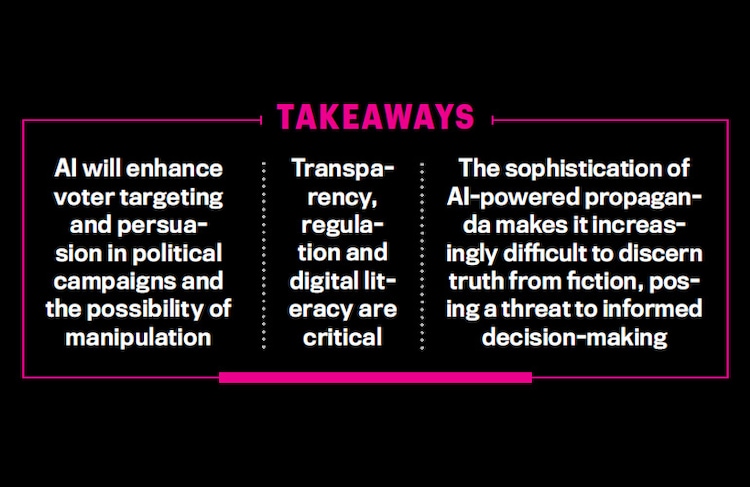
  • With elections in at least 83 countries, will 2024 be the year of AI freak-out?

    Fears grow over AI's impact on the 2024 election | The Hill

    Central Idea:

    The year 2024 is marked by a significant global exercise in democracy, with concerns arising over the impact of AI on elections. However, while efforts to regulate AI and address disinformation are underway, there are potential unintended consequences that may exacerbate existing challenges and concentrate power within the AI industry.

    Key Highlights:

    • Increased global engagement in elections in 2024 prompts worries about AI-driven disinformation.
    • Governments rush to regulate AI to combat disinformation, but unintended consequences may worsen existing issues.
    • Concentration of power within the AI industry may occur due to regulatory requirements, hindering competition and innovation.
    • Ethical and transparency guidelines for AI development face challenges due to differing values and priorities.
    • Democracy faces numerous challenges beyond AI, including political repression, violence, and electoral fraud.

    AI-driven elections, anyone? - India Today

    Key Challenges:

    • Balancing the need to regulate AI with potential unintended consequences that may worsen existing problems.
    • Addressing power concentration within the AI industry without stifling innovation and competition.
    • Establishing ethical guidelines for AI development amidst diverse societal values and priorities.
    • Ensuring meaningful transparency in AI systems through effective auditing mechanisms.
    • Anticipating future risks of AI in electoral processes and formulating proactive regulations.

    Main Terms:

    • AI (Artificial Intelligence)
    • Disinformation
    • Deepfakes
    • Regulation
    • Concentration of power
    • Ethical guidelines
    • Transparency
    • Electoral risks

    Important Phrases:

    • “Ultimate election year”
    • “Digital voter manipulation”
    • “AI bogeyman”
    • “Content moderation”
    • “Watermarking”
    • “Red-teaming exercises”
    • “Existential risks”
    • “Complex adaptive system”
    • “Toothless regulations”

    Quotes:

    • “Democracy has many demons to battle even before we get to the AI demon.”
    • “AI-sorcery may, on the margin, not rank among the biggest mischief-makers this year.”
    • “It is better that these well-intended regulators understand the unintended consequences of rushed regulations.”
    • “Voters in elections beyond 2024 will be grateful for such foresight.”

    Useful Statements:

    • Rushed regulations to combat AI-related electoral risks may exacerbate existing challenges.
    • Power concentration within the AI industry could hinder innovation and ethical oversight.
    • Ethical guidelines for AI development must consider diverse societal values and priorities.
    • Effective auditing mechanisms are crucial for ensuring transparency in AI systems.
    • Proactive regulations are needed to anticipate and mitigate future risks of AI in electoral processes.

    Examples and References:

    • Manipulated videos affecting political leaders’ images in Bangladesh and elsewhere.
    • Concentration of AI investments and influence in a few major companies.
    • Challenges faced by New York’s law requiring audits of automated employment decision tools.
    • Voluntary transparency mechanisms offered by companies like IBM and OpenAI.

    Facts and Data:

    • Close to half of the world’s population engaging in elections in 2024.
    • Three companies received two-thirds of all investments in generative AI in the previous year.
    • New York’s law on auditing automated employment decision tools found to be ineffective.
    • Over 83 elections taking place worldwide in 2024.

    Critical Analysis:

    Efforts to regulate AI in electoral processes must strike a delicate balance between addressing immediate risks and avoiding unintended consequences that may worsen existing challenges. Power concentration within the AI industry poses significant ethical and competitive concerns, while diverse societal values complicate the establishment of universal ethical guidelines. Ensuring transparency in AI systems requires robust auditing mechanisms and proactive regulatory measures to anticipate future risks.

    Way Forward:

    • Proceed cautiously with AI regulations to avoid exacerbating existing challenges.
    • Foster competition and innovation within the AI industry while addressing concerns about power concentration.
    • Engage diverse stakeholders to establish ethical guidelines that reflect societal values and priorities.
    • Implement effective auditing mechanisms to ensure transparency in AI systems.
    • Anticipate future risks of AI in electoral processes and formulate proactive regulations to mitigate them.
  • Work of consultancy firms with government must be regulated

    Return of the 'consultocracy' – how cutting public service jobs to save costs usually backfires

    Central idea 

    The article explores into the growing reliance on consulting firms for policy formulation and program implementation in Indian government projects. It raises concerns about potential downsides, such as the hollowing out of government capabilities, excessive dependence, and the risk of lobbying and corruption scandals. While acknowledging the benefits, the author calls for a balanced approach, emphasizing the necessity of a regulatory framework to ensure fairness, transparency, and knowledge transfer.

    Key Highlights:

    • Rise of Consulting in Government: Government projects, including major initiatives like Ganga cleaning and Swachh Bharat, heavily rely on consulting firms for policy formulation and program implementation.
    • Proliferation of Global Consulting Firms: Reports reveal that Indian ministries paid around Rs 5,000 million in fees to global consulting firms in the last five years, prompting the finance ministry to seek details of these engagements.
    • Concerns Over Dependence: There are concerns about a potential hollowing out of government capabilities due to excessive reliance on consultants, leading to mission creep, repeated redeployment, and potential lobbying for repeat work.

    Key Challenges:

    • Hollowing of Government Capabilities: The unbridled use of consulting firms raises concerns about a decline in the skills and capabilities of government officials, potentially infantilizing government institutions.
    • Mission Creep and Dependence: Excessive dependence on consulting teams may result in mission creep, where routine functions are outsourced, and officials become overly reliant on consultants, risking a loss of institutional knowledge and skills.
    • Consulting-Related Corruption: The global trend of consulting firms influencing policy directions and engaging in lobbying raises concerns about corruption scandals and the distortion of public policy objectives.

    Key Terms and Phrases:

    • Programme Management Units: Consulting firms often establish these units with broad mandates, attached to senior officials, leading to potential mission creep and dependence.
    • Consultocracy: A term coined to describe the permeation of consultants into the core of government, diminishing the traditional role and capabilities of public servants.
    • Digitisation of Public Service Delivery: The increasing complexity of public service delivery, including initiatives like the Direct Benefit Transfer program, demands specialized technical expertise.

    Key Quotes and Statements for mains value addition:

    • “There is a tendency to farm out even routine functions like preparing file notes and letters.”
    • “The unbridled use of consultants reduces the skills and capabilities of officials, thus infantilising government.”

    Key Examples and References:

    • Global Consulting Influence: Books like “The Big Con” and “When McKinsey Comes to Town” highlight concerns about the influence of consulting firms, even leading governments down amoral pathways.
    • Consulting in Indian Ministries: Reports indicate that Indian ministries paid substantial fees to global consulting firms in the last five years, prompting regulatory scrutiny.

    Key Facts and Data:

    • Financial Transactions: Indian ministries paid approximately Rs 5,000 million in fees to global consulting firms over the last five years.

    Critical Analysis:

    • Balancing Act: Acknowledges the benefits of consulting expertise in tackling complex challenges but emphasizes the need for a regulatory framework to prevent overdependence and potential pitfalls.

    Way Forward:

    • Regulatory Ecosystem: Advocates for a comprehensive regulatory ecosystem addressing fairness, transparency, curbing rent-seeking behaviors, and ensuring knowledge transfer to government.
    • Calibrated Onboarding: Suggests a carefully calibrated onboarding of expertise from the private sector within a normative and transparent regulatory framework to enhance public service delivery.
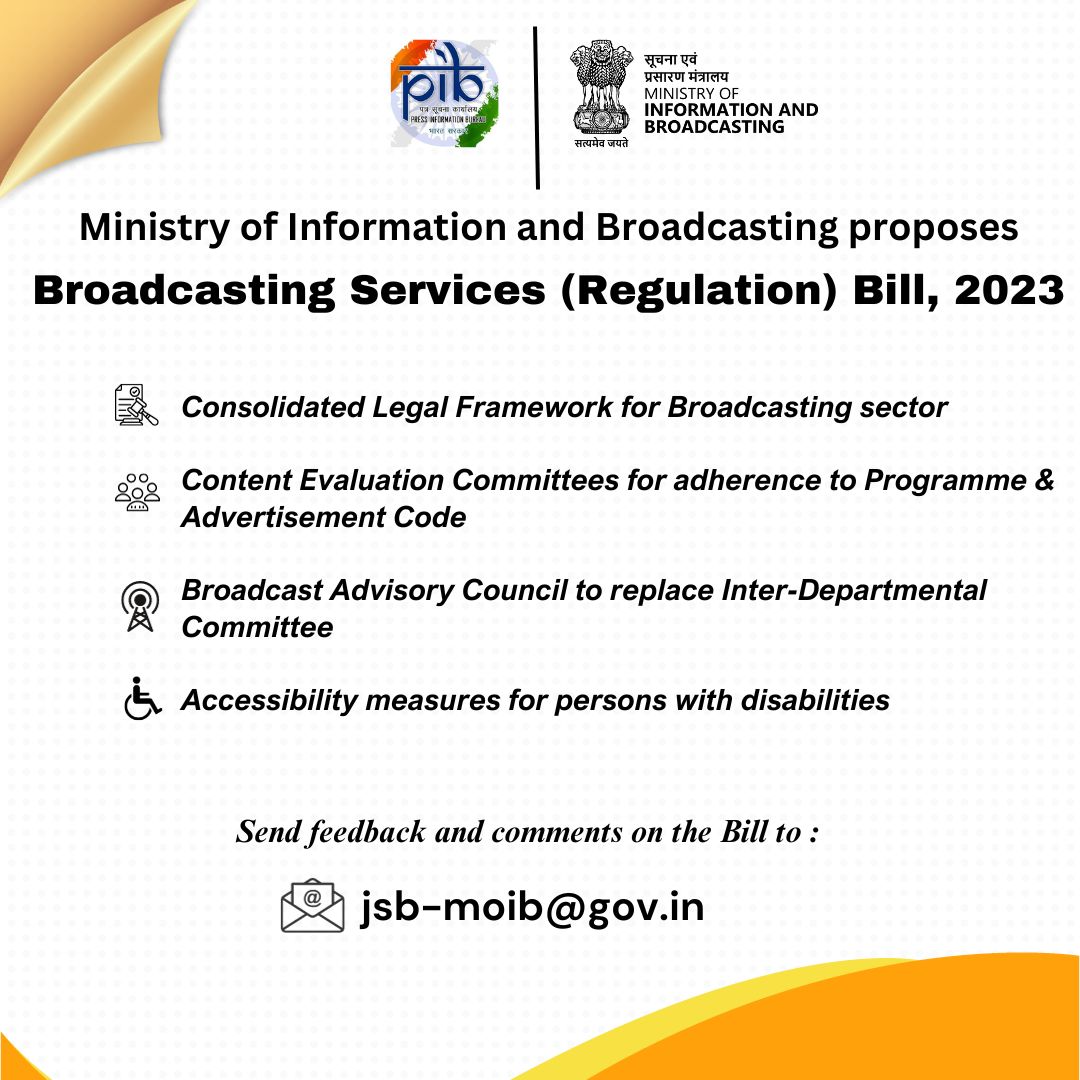
  • Broadcast regulation 3.0, commissions and omissions


    PIB India on X: "Ministry of Information and Broadcasting Proposes  Broadcasting Services (Regulation) Bill, 2023 The draft Bill provides for a  consolidated framework to regulate the broadcasting services in the country  and

    Central idea

    India’s Broadcasting Services Bill aims at regulating broadcasting comprehensively, introducing positive steps like audience data transparency and competition in terrestrial broadcasting. However, concerns arise over privacy, jurisdictional conflicts with OTT regulation, and lack of measures on ownership and an independent regulator.

    Key Highlights:

    • The Broadcasting Services (Regulation) Bill aims to regulate broadcasting comprehensively, marking the third attempt since 1997.
    • Positive propositions include obligations for record-keeping, audience measurement transparency, and allowing private actors in terrestrial broadcasting.

    Key Concerns:

    • Lack of privacy safeguards for subscriber and audience data in data collection practices.
    • Inclusion of Over-the-Top (OTT) content suppliers in the definition of broadcasting creates jurisdictional conflicts and poses threats to smaller news outlets.

    Positive Provisions Requiring Refinement:

    • Obligation for maintaining records of subscriber data.
    • Stipulation of a methodology for audience measurement.
    • Provision to permit private actors in terrestrial broadcasting.

    Apprehensions:

    • Expanded definition of broadcasting may limit conditions for journalists and news outlets not part of large television networks.
    • The mandate for a ‘Content Evaluation Committee’ to self-certify news programming raises feasibility and desirability concerns.

    Crucial Silences in the Bill:

    • Lack of measures to assess cross-media and vertical ownership impacts diversity in the news marketplace.
    • Absence of provisions for creating an independent broadcast regulator.

    Government Empowerment and Intrusive Mechanisms:

    • The Bill grants the government leeway to inspect broadcasters without prior intimation, impound equipment, and curtail broadcasting in “public interest.”
    • Violations of the Programme Code and Advertisement Code could result in deleting or modifying content.

    Concerns Regarding Broadcast Advisory Council:

    • Doubts about the Council’s capacity to address grievances raised by over 800 million TV viewers.
    • Lack of autonomy for the Council, as the Central government has the ultimate decision-making authority.

    Key Terms and Phrases:

    • Over-the-Top (OTT) content suppliers
    • National Broadcasting Policy
    • Content Evaluation Committee
    • Vertical integration
    • Broadcast Advisory Council.

    Key Statements:

    • Privacy concerns arise due to the Bill’s lack of guardrails for subscriber and audience data collection practices.
    • The absence of measures to assess cross-media and vertical ownership impacts the diversity of news suppliers.
    • The Bill’s silence on creating an independent broadcast regulator is a significant omission.

    Key Examples and References:

    • The Bill is part of a series of attempts to regulate broadcasting, following initiatives in 1997 and 2007.
    • TRAI’s ‘National Broadcasting Policy’ proposes including OTT content suppliers in the definition of broadcasting services.

    Key Facts and Data:

    • Lack of specifics on cross-media and vertical ownership in the Bill impedes diversity in the news marketplace.
    • No provisions for an independent broadcast regulator, with the proposal for a ‘Broadcast Advisory Council.’

    Critical Analysis:

    • The potential positive provisions of the Bill require refinement, particularly concerning privacy protection and oversight bodies for news outlets.
    • Intrusive mechanisms grant significant power to the government, posing concerns about press freedom and external pressure on news suppliers.

    Way Forward:

    • The Bill must address jurisdictional conflicts, incorporate privacy safeguards, and reconsider intrusive provisions for effective and balanced regulation.
    • Protection of press freedom and diversity should be prioritized through fine-tuning potentially positive provisions and addressing omissions.
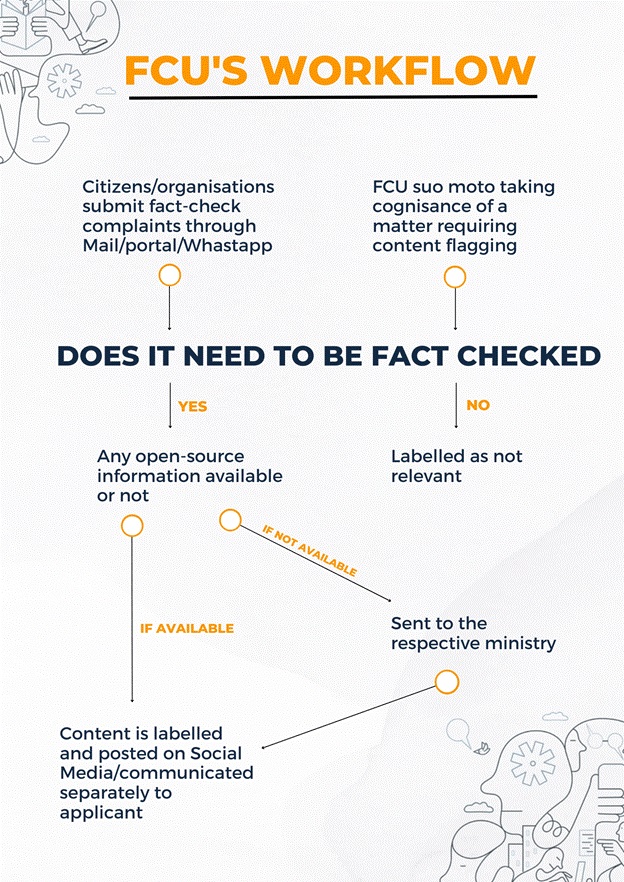
  • A fact check unit that is unconstitutional

    Centre's fact-check unit: What is it and how does the Union govt defend it?

    Central idea

    The article critically examines the Government of Tamil Nadu’s establishment of a Fact Check Unit, highlighting constitutional concerns, the potential impact on freedom of speech, and the challenges posed by ambiguity and absence of due process.

    What is fact check unit?

    A Fact Check Unit is an entity or organization tasked with verifying the authenticity and accuracy of information, particularly in the context of news, announcements, policies, schemes, guidelines, and initiatives of a government or other institutions.

    Key Highlights:

    • Establishment of Tamil Nadu Fact Check Unit: The Government of Tamil Nadu issues an order to create a Fact Check Unit for verifying information related to the state government across diverse media platforms.
    • Constitutional Concerns Raised: Assertions about the order violating fundamental rights and being constitutionally vague and arbitrary, particularly emphasizing the potential infringement on freedom of speech.
    • Impact on Freedom of Speech: Examining the implications of the Fact Check Unit on freedom of speech and expression, highlighting the need for reasonable restrictions and challenging the authority of a Government Order in imposing such restrictions.
    • Chilling Effect Analysis: A deeper analysis of the perceived chilling effect on freedom of speech, exploring the implications of the Government acting as the arbiter of information authenticity.

    Press Information Bureau

    Challenges:

    • Scope Ambiguity and Potential Misuse: Critiques the lack of specificity in defining “information related to the Government of Tamil Nadu,” raising concerns about ambiguity and the possibility of misuse.
    • Due Process Absence: Points out the absence of due process, where the Fact Check Unit lacks a mechanism for the author’s hearing, positioning the government as the sole determinant of information authenticity.
    • Legal Limitations on Government Orders: Discusses the legal limitations of Government Orders in imposing restrictions on freedom of speech, underscoring the need for a more nuanced and legislative approach.
    • Global Challenges of Misinformation: Draws parallels with global challenges of misinformation, citing events like the U.S. presidential election, and underscores the necessity for effective measures in addressing this widespread issue.

    Key Phrases for enhancing answer quality:

    • “Chilling effect on freedom of speech”
    • “Unconstitutionally vague and arbitrary”
    • “Opportunity of hearing”
    • “Mis/disinformation and fake news challenge”
    • “Government as judge, jury, and executioner”

    Analysis:

    • Constitutional Implications Explored: In-depth analysis of the constitutional concerns, with a focus on how the Fact Check Unit might impact freedom of speech and questioning the legal standing of a Government Order.
    • Interrogation of Scope Ambiguity: Scrutiny of the ambiguity surrounding the definition of “information related to the Government of Tamil Nadu,” delving into potential implications for various forms of expression.

    Key Facts:

    • US Election and Misinformation Parallel: Drawing parallels with global challenges of misinformation during events like the U.S. presidential election, emphasizing the need for effective measures.

    Way Forward:

    • Stakeholder Consultation Advocacy: Advocacy for comprehensive consultations with stakeholders, including the public and intermediaries, to develop effective measures against misinformation.
    • Global Best Practices Exploration: Encouraging exploration of global best practices, such as the European Commission’s Code of Practice on Disinformation, for a more inclusive and well-informed approach.
    • Media Literacy Promotion Recommendation: Recommending the promotion of media literacy and support for an independent network of fact-checkers as constructive measures to combat misinformation.
  • Move towards e-FIR, but with caution

    e-FIR

    Central idea

    The Law Commission proposes e-FIR registration for unknown accused in cognizable offenses, combining electronic submission with physical signing within three days. Despite ensuring swift crime registration, concerns arise over limited efficacy, emphasizing the importance of human intervention, especially in cases requiring immediate police involvement. The article suggests exploring e-authentication techniques for enhanced verification.

    What is e-FIR?

    • Definition: Digital system for reporting crimes to the police.
    • Process: Information submitted online through a national portal. Complainant required to physically sign the report within a specified timeframe (usually three days).
    • Objective: Streamline crime registration with initial electronic submission.

    Key provisions of law commissions report

    • e-FIR Recommendation: Proposal for e-FIR registration in all cognizable offenses with unknown accused. Verification through OTP and Aadhaar ID proof suggested by the Law Commission.
    • Verification Process: Complainant verification through OTP for authenticity. Aadhaar ID proof mandated to confirm the complainant’s identity.
    • Information Deletion: Automatic deletion of unverified information within two weeks. Complainant’s failure to sign the e-FIR within the prescribed time leads to deletion.
    • Timeframe for Physical Signing: Complainants given three days to physically sign the e-FIR for formal registration. Failure to sign within the stipulated time results in non-registration.
    • Human Intervention: The article emphasizes the importance of human interaction in certain cases, suggesting that electronic registration may be suitable only for offenses where immediate police interaction is not crucial.

    What are cognisable offences?

    • Cognizable Offenses Definition: Offenses for which police can make an arrest without a warrant. Immediate police action is permissible upon receiving information or a complaint.
    • Serious Nature: Generally involves more severe crimes. Examples include murder, robbery, kidnapping, and certain types of fraud.
    • No Court Permission Needed: Law enforcement can initiate an investigation without court authorization. Immediate action can be taken by the police upon learning about the offense.
    • Jurisdictional Variations: Classification as cognizable or non-cognizable may vary in different legal systems. The severity and nature of offenses determine their categorization.

    Challenges:

    • Limited Efficacy: The concept of e-FIR relies on obtaining information electronically but requires physical signatures within a prescribed time, limiting the effectiveness of the online process.
    • Lack of Discussion: The article notes that the Law Commission did not discuss models adopted by states currently lodging e-FIRs, leading to potential gaps in understanding the practical implementation.

    Key Phrases:

    • Cognizable Offenses: Offenses for which police can make an arrest without a warrant.
    • E-authentication Technique: The use of digital signatures or e-authentication techniques, not extensively discussed in the Law Commission’s recommendations.
    • Human Interaction: Highlighted as crucial, especially in cases like kidnapping, where immediate police involvement is essential for both medical examinations and crime scene visits.

    Key Facts/Data:

    • Verification Methods: OTP and Aadhaar are suggested as methods for verifying the complainant’s identity in the e-FIR process.
    • Three-Day Timeframe: Complainants have three days to physically sign the e-FIR; otherwise, the information is automatically deleted from the portal.

    Way Forward:

    • Mandating E-authentication: The article suggests considering the use of e-authentication techniques, such as digital signatures, to enhance the verification process and facilitate immediate e-FIR registration.
    • Clarification on Models: The Law Commission and states should provide clearer insights into the practical models adopted for e-FIR registration, addressing potential gaps in the recommendations.
  • Meta lawsuits: Big Tech will always be bad for mental health

    mental health

    Central idea

    The article delves into the social media crisis, pointing fingers at Meta for exacerbating youth mental health issues through Instagram’s addictive features. Legal actions highlight the platforms’ intentional exploitation of young users’ vulnerabilities. To address this, a suggested solution is contemplating a shift from the current profit-driven business model to a subscription-based one.

    Key Highlights:

    • Social Media Crisis: Social media platforms, especially Meta (formerly Facebook), are facing a crisis due to concerns about their impact on mental health, particularly among youth.
    • Legal Action Against Meta: Forty-two US Attorney Generals have filed lawsuits against Meta, alleging that Instagram, a Meta-owned platform, actively contributes to a youth mental health crisis through addictive features.
    • Allegations Against Meta: The lawsuit claims that Meta knowingly designs algorithms to exploit young users’ dopamine responses, creating an addictive cycle of engagement for profit.
    • Dopamine and Addiction: Dopamine, associated with happiness, is triggered by likes on platforms like Facebook, leading to heightened activity in children’s brains, making them more susceptible to addictive behaviors.
    Prelims focus – Dopamine

    • Neurotransmitter: Dopamine is a neurotransmitter, a chemical messenger in the brain.
    • Feelings of Pleasure: It is associated with feelings of pleasure, reward, and satisfaction.
    • Reward System: Dopamine plays a crucial role in the brain’s reward system, reinforcing certain behaviors.
    • Motivation: It is linked to motivation, focus, and regulating mood.
    • Addiction and Habits: Dopamine is involved in the development of addictive behaviors and habits.
    • Social Media Impact: Activities on social media, like receiving likes or positive feedback, can lead to a release of dopamine.

    Key examples for mains value addition 

    • The Social Dilemma (2020): A Netflix show that revealed how social media, led by Meta, messes with our minds and influences our behavior, especially impacting the mental health of youngsters.
    • Frances Haugen’s Revelations: A whistleblower exposed internal Meta documents showing that Instagram worsened body image issues for teen girls, making social media’s impact on mental health a serious concern.
    • US Surgeon General’s Advisory: The government’s health expert issued a warning about the negative effects of social media on young minds, emphasizing its importance in President Biden’s State of the Union address.

    Challenges:

    • Addictive Business Model: The core issue with social media is its business model, focusing on user engagement and data monetization, potentially at the expense of user well-being.
    • Transformation from Networks to Media: Social networks, initially built for human connection, have transformed into media properties where users are treated as data for advertisers, impacting their habits and behaviors.
    • Global Regulatory Scrutiny: Meta faces regulatory challenges beyond the US, with UK, EU, and India considering legislative measures. India, having the largest Instagram user base, emphasizes accountability for content hosted on platforms.

    Analysis:

    • Business Model Critique: The article argues that the problem with social media lies in its business model, which prioritizes user engagement for data collection and monetization.
    • Regulatory Consequences: If the lawsuit succeeds, Meta could face significant penalties, potentially adding up to billions of dollars, and signaling a major setback for the company.
    • Global Impact: Regulatory scrutiny extends beyond the US, indicating a need for platforms to be more accountable and responsible for their content and user interactions on a global scale.

    Key Data:

    • Potential Penalties: Meta could face penalties of up to $5000 for each violation if the lawsuit succeeds, posing a significant financial threat considering Instagram’s large user base.
    • Regulatory Pressure in India: India, with 229 million Instagram users, emphasizes the end of a free pass for platforms, signaling a global shift towards increased accountability.

    Way Forward:

    • Shift to Subscription Model: The article suggests that social networks might consider adopting a subscription model, akin to OpenAI’s approach, to prioritize user well-being over advertising revenue.
    • Listen to Regulatory Signals: Platforms are urged to heed regulatory signals and work collaboratively to address issues rather than adopting a confrontational stance.
    • Long-term Survival: To ensure long-term survival, social media networks may need to reevaluate their business models, aligning them with user well-being rather than prioritizing engagement and data monetization.

    In essence, the article highlights the crisis in social media, legal challenges against Meta, the critique of the business model, global regulatory scrutiny, and suggests potential shifts in the industry’s approach for long-term survival.