💥Join UPSC 2027,2028 Mentorship (July Batch) + XFactor Notes & Microthemes PDF

GS Paper: GS1-02.Modern Indian History- Mid-18th century – Present (significant events, personalities, issues);

  • Is it Jawaharlal Nehru’s fault?

    Nehru

    Context

    • Jawaharlal Nehru has recently come under criticism for declining to accept the Kashmir Maharaja’s initial offer to accede to India in September 1947, several weeks before the tribal invasion. Even great statesmen make occasional mistakes and Nehru was no exception. However, a careful examination of the historical background shows that Prime Minister Nehru cannot be faulted in this case.

    Click and get your FREE Copy of CURRENT AFFAIRS Micro Notes

    Background: Jammu and Kashmir’s Maharaja Hari Singh and his stand on accession

    • Stand against accession with either India or Pakistan: Maharaja Hari Singh of Jammu and Kashmir was one of the few princely rulers who had held out against accession to either India and Pakistan before the partition of British India.
    • Lord Mountbatten visit and assurance: a couple of months prior to the partition, the Viceroy, Lord Mountbatten, visited Srinagar in an attempt to persuade the Maharaja to opt for one or the other of the two states, offering him an assurance from Sardar Patel that India would raise no objection if the ruler were to opt for Pakistan.
    • Maharaja evaded discussion and hopes for an independent state: The Maharaja entertained his guest in regal style but evaded any discussion on the political issue, pleading a stomach ailment. Hari Singh evidently hoped that, with the lapse of British paramountcy, he would become the ruler of an independent and sovereign state.

    How Maharaja’s hope of a sovereign state got dashed?

    • Uprising assisted by Pakistan: An uprising in Poonch assisted by Pakistani elements.
    • Economic sanctions by Pakistan: an undeclared economic embargo imposed by the Pakistani authorities. Since Kashmir’s main trade exchanges in those days were with Pakistan, the unofficial embargo resulted in great hardship.

    How Maharaja revised his position on accession?

    • Decided to talk on terms of accession and a message to Nehru: Maharaja asked Justice Mehr Chand Mahajan, his prime minister-designate, to convey to Nehru the terms on which he was prepared to accede to India.
    • Nehru urging Maharaja to induct Sheikh Abdullah into state government: Nehru had been urging the Maharaja to induct Sheikh Abdullah, the leader of the secular National Conference, into the state government in order to ensure popular support for the administration.
    • Reluctant to have immediate administrative reforms Maharaja refused: The Maharaja was not agreeable to introducing immediate reforms in the administration of the state. The Maharaja indicated that he was not prepared to do so, at least at this stage.
    • Nehru reiterated to associate Abdullah with the governance of the state: When Mahajan conveyed these terms to Nehru in the third week of September, the latter reiterated that Abdullah should be freed from prison and associated with the governance of the state.

    Nehru

    Why did Nehru insist on bringing Sheikh Abdullah into the administration?

    • He anticipated the armed intervention by Pakistan and armed rebellion: Nehru anticipated armed intervention by Pakistan in Kashmir and foresaw that this could be repulsed only by a government that enjoyed popular support.
    • A letter to Sardar patel before a month before tribal invasion: He set out his views in a letter to Sardar Patel on September 27, 1947, nearly a month before the tribal invasion. This remarkable letter has not received the attention it deserves.
    • Anticipating the demand of the time, he confirmed his way: Nehru, therefore, concluded that the only acceptable course was for the Maharaja to seek the cooperation of Sheikh Abdullah and the National Conference while acceding to India. This was the only effective way of countering Pakistani designs.

    Interesting: Nehru’s letter to Sardar Patel a month before tribal invasion assisted by Pakistan

    • “The Muslim League in the Punjab and the NWFP are making preparations to enter Kashmir in considerable numbers. The approach of winter is going to cut off Kashmir from the rest of India,” he wrote. “I understand that the Pakistan strategy is to infiltrate into Kashmir now and to take some major action as soon as Kashmir is more or less isolated because of the coming winter. I rather doubt if the Maharaja and the State forces can meet the situation by themselves without some popular help… Obviously the only major group that can side with them is the National Conference under Sheikh Abdullah’s leadership.”

    Nehru

    Rest is the story of accession

    • Nehru’s assessment confirmed and Maharaja agreed to his advice: Nehru’s assessment of Pakistan’s plans to invade Kashmir were confirmed within three weeks. It was only at this stage that the Maharaja heeded Nehru’s advice. He inducted Sheikh Abdullah into the government and acceded to India. This had momentous consequences for the defence of Kashmir against the invaders.
    • Resistance against Pakistani invaders: The normal administrative machinery had broken down and responsibility for maintaining law and order had been taken over by National Conference volunteers. Abdullah and his followers organised the popular resistance against the Pakistani invaders.
    • Advance of raiders and then Indian troops were airlifted to assist and protect the state: With the advance of the raiders towards Srinagar, the Maharaja’s administration had virtually collapsed. By the time Indian troops were airlifted to Srinagar on October 27, 1947, the Maharaja had departed to Jammu for safety. The first batches of Indian troops who had been airlifted to Srinagar had arrived without transport vehicles.

    Conclusion

    • Far from being a blunder, Jawaharlal Nehru’s insistence on linking accession to the installation of a popular government in Jammu and Kashmir bears testimony to his foresight and statesmanship.
  • Shivaji Maharaj and the Agra escape

    Shivaji Maharaj

    Click and get your FREE Copy of CURRENT AFFAIRS Micro Notes

    Context

    • Recently, Maharashtra Tourism Minister Mangal Lodha triggered a controversy by equating Chhatrapati Shivaji Maharaj’s legendary Agra escape to Chief Minister Eknath Shinde’s defection from the Uddhav Thackeray-led camp in Maharashtra. His comments drew sharp criticism from political parties and other organisations that venerate Shivaji as a Maratha icon, with no parallel in the past or present.

    Brief Political background of the issue

    • Eknath Shinde’s “revolt” against party leadership and CM Uddhav Thackeray in June this year led to the fall of the coalition government of the Shiv Sena, NCP, and the Congress. He has since taken the reins of Maharashtra as its CM.

    Shivaji Maharaj

    Who was Chhattrapati Shivaji Maharaj?

    • Chhatrapati Shivaji Maharaj (1630-1680): He was born on 19th February, 1630 at Shivneri Fort in District Pune in the present-day state of Maharashtra. He was born to a general Shahaji raje who served different Deccan Sultans over the course of his life and Jijabai, as known to be an influential and determined woman who was an embodiment of self-respect and virtue.
    • Founder of an Independent Maratha kingdom: Shivaji Maharaj was keen on expanding his father’s fiefdom of modern-day Pune into an independent Maratha state. He carved out an independent Maratha kingdom from various Deccan states in the 17th century. At the time of his death, he held around 300 forts over an area that stretched across the Konkan coast, from Surat to near Goa, and was overlooked by the strategic Western Ghats.
    • Contemporary kingdoms and power struggle: At this point of time, several Sultanates (mainly Bijapur, Golkonda and Ahmadnagar) and the Mughals were vying for the control of the Deccan. As Mughal power grew, these Sultanates would become tributaries to the Mughal Empire (while often continuing to bicker among themselves) with the rulers and ruling clans being given positions in the Mughal court.
    • Lifetime conflicts and fights for Swaraj: His conflict with the Adil Shahi Sultanate of Bijapur began when he was only 16. He would spend the rest of his life fighting various opponents, and in the process, laying the foundation for the Maratha Empire which would stretch across large parts of the Indian subcontinent and rule till the 19th Century.
    • Importance of forts in his times: Early in his life, he realised that the key to holding power in the Deccan (or for that matter, many places in India in that era) was to capture and hold important forts. Thus, his strategies would be centred around taking control of forts in strategic locations, often on hilltops. He also repaired and built new forts as his sphere of control increased.

    How is Shivaji Maharaj remembered?

    • An inspiration to fight against the colonial rule: Shivaji remained a Maratha folk legend until two centuries after his death. It was the British Raj and the subsequent anti-colonial movement that marked his increasing stature in history and as a pan Indian hero.
    • From a folk hero to a Pan India hero: Nationalist historians saw him as an example of an local Indian ruler who was able to successfully resist and defeat the powerful and oppressive “outsiders” (Muslim rulers, including both Mughals and the Deccan Sultans). Thus, Shivaji rose from being a folk hero to a nationalist icon, seen as a proto-nationalist himself.
    • Tales of his bravery and just rule used to infuse motivation: Tales of his bravery were told to galvanise a population that was enduring emasculation and injustices under its British overlords. Over the 19th and 20th centuries, the narrative around Shivaji Maharaj emphasised on both his military heroism and his just rule.

    Shivaji Maharaj

    Shivaji Maharaj and the Mughals

    • Meteoric rise: Shivaji Maharaj’s meteoric rise posed challenges to the suzerainty of the Mughals. His first direct encounter with the Mughals was during Aurangzeb’s Deccan campaigns of the 1650s. As Aurangzeb went North to fight for the Mughal throne, Shivaji Maharaj was able to seize further territory.
    • Swift and smart warfare tactics beyond understanding of the Mughals: His tactics against the Mughals were adapted to the specific nature of his force and the flabby Mughal armies. Using swift cavalry attacks, he would raid and pillage Mughal strongholds. While on the rare occasion he would engage in battle to actually capture and hold Mughal positions, most often, he would simply cause much menace, raid the treasury, and leave with the Mughals in terror and disarray.
    • Well know Seize of Surat: Famously, in 1664, he attacked the port of Surat (now in Gujarat) and plundered one of the richest and busiest commercial towns of Mughal India while the local governor hid in a nearby fort.
    • Posed a greatest challenge to Aurangzeb and subsequent treaty of Purandar: As the legend of Shivaji and the physical sphere of his influence grew, Aurangzeb sent a 100,000-strong, well-equipped army under Raja Jai Singh I to subdue him in 1665. After putting up a valiant fight, Shivaji was besieged in the Purandar hill fort.

    The chronology of the great escape

    • Taken to Agra after purandar treaty: He was taken to Aurangzeb’s court in Agra in 1666. He presented Aurangzeb with various gifts, but he felt slighted at the treatment he received in return, and made his displeasure clear in open court.
    • Kept under strict House arrest: Aurangzeb put him under house arrest in Agra. Far away from home and help, Shivaji realised he needed to escape to save himself and his territories. He began to plot a plan to return home and keep up his fight against the Mughals.
    • The perfect plan of escape: The story of Shivaji’s subsequent escape is now part of common lore. The popularly told story involves an elaborate plan, under which he began daily distribution of alms to brahmans. The alms would be sent from his home in Agra in large, covered baskets.
    • The final escape right under the nose of Mughals: After some time, the Mughal guards became lax about checking the contents of the baskets that daily left his house. One day, Shivaji slipped into one of the baskets, and put his young son, Sambhaji, in another basket. It was in these covered baskets that Shivaji and his son left Agra, right under the noses of the Mughals.
    • Smart and swift movement in disguise from the Mughal territory: From there, he would traverse across Mughal territory, living incognito until he reached the safer lands closer to home. Some versions of this story say that he took the disguise of a wandering ascetic while others say he had a number of different disguises. His exact path is not known, though folktales and songs memorialising Shivaji often mention different towns and places he crossed.
    • Embarrassed Aurangzeb regarded him as a king: Aurangzeb was livid and embarrassed. But he chose not to start an immediate conflict with Shivaji again. Instead, he offered Shivaji the title of Raja and guaranteed his authority in the Maratha lands as long as he acknowledged the supremacy of the Mughals and maintained truce.

    Shivaji Maharaj

    Coronation of Shivaji Maharaj to Chhatrapati and the ideal rule

    • By 1669, Shivaji had regrouped and raised an effective army. Using his old guerilla tactics, he would swiftly descend into static Mughal and Bijapuri strongholds, looting and pillaging the shocked Mughals.
    • During this time, Aurangzeb was occupied with Pathan revolts in the North-West corner of his Empire. Shivaji deftly regained his lost positions in the Konkan coast. In 1674, he crowned himself Chhatrapati, officially creating an independent Maratha kingdom.
    • The next six years were spent expanding his rule and forging new political norms, replacing the prevailing Indo-Persian court culture. He promoted the use of Marathi and Sanskrit in his courts and created an elaborate administrative system with a council of ministers known as “Ashta Pradhan.”

    Conclusion

    • Chhatrapati Shivaji Maharaj is not just a name or a person but to many he is an idea, a life and inspiration for today and tomorrow, which has no parallel in the past or the present.
    • Protection of the Swarajya and welfare of his subjects were the motives that pushed Shivaji Maharaj to escape from Agra. Comparing his love for his subjects with the political exigencies and manoeuvers of present-day politicians will be an injustice to the astuteness of Chhatrapati Shivaji Maharaj.

    Mains question

    Q. Chhatrapati Shivaji Maharaj is considered as the king of the people; Discuss how he is remembered today and what qualities make him stand tall and different from those of the past and present?

    (Click) FREE1-to-1 on-call Mentorship by IAS-IPS officers | Discuss doubts, strategy, sources, and more

  • Uda Devi: A Dalit freedom fighter

    uda devi

    On November 16, events to commemorate the martyrdom of Uda Devi, a freedom fighter from the Pasi community, were held at various places in Uttar Pradesh.

    Who was Uda Devi?

    • Uda Devi is remembered not only for her stories of valour but also for her skill as a leader who managed to mobilise people — especially Dalit women — to take up arms against the British.
    • Born in Ujirao, Lucknow, she was part of the royal guard of Begum Hazrat Mahal of Awadh.
    • Her husband, Makka Pasi, worked as a foot soldier in the army of Awadh’s Nawab, Wajid Ali Shah.
    • Hazrat Mahal’s palace had several women belonging to marginalised communities, and their occupation was mostly to take care of the needs of the royalty.
    • Some of them, who showed promise, were also trained as warriors. Uda Devi was one of them.

    Her legend

    • Amid the revolt of 1857, on June 10, at Chinhat near Ismailganj, a battle was fought between the army of Lucknow and the British troops led by Henry Lawrence, in which Makka Pasi lost his life.
    • The death of her husband spurred Uda Devi on to take up a more active role in the mutiny.
    • On November 16, 1857, Uda Devi was among the soldiers who clashed with the British regiment stationed near the Gomti River.
    • Although not much of the fight has been documented in history, it is said that Uda Devi killed at least three dozen British soldiers from atop a tree before she could be spotted.

    Can you recall the Eka Movement of 1921 from your modern history references? If not, take your time to revise. Read about the contribution of Madari Pasi in this movement.


    (Click) FREE1-to-1 on-call Mentorship by IAS-IPS officers | Discuss doubts, strategy, sources, and more

  • Birth anniversary of Birsa Munda: The leader, his contributions

    birsa

    On the occasion of the birth anniversary of tribal leader Birsa Munda, the Centre marked the second Janjatiya Gaurav Divas on November 15 to celebrate the contributions of tribal communities to Indian culture.

    Who was Birsa Munda (1875-1900)?

    birsa

    • Birsa Munda was a tribal freedom fighter, religious leader, and folk hero who belonged to the Munda tribe.
    • He spearheaded a tribal religious millenarian movement that arose in the Bengal Presidency (now Jharkhand) in the late 19th century, during the British Raj.

    His legacy

    (A) Birth and early childhood

    • Born on November 15, 1875, Birsa spent much of his childhood moving from one village to another with his parents.
    • He belonged to the Munda tribe in the Chhotanagpur Plateau area.
    • He received his early education at Salga under the guidance of his teacher Jaipal Nag.
    • On the recommendation of Jaipal Nag, Birsa converted to Christianity in order to join the German Mission school.
    • He, however, opted out of the school after a few years.

    (B) New faith ‘Birsait’ against religious conversion

    • The impact of Christianity was felt in the way he came to relate to religion later.
    • Having gained awareness of the British colonial ruler and the efforts of the missionaries to convert tribals to Christianity, Birsa started the faith of ‘Birsait’.
    • Soon members of the Munda and Oraon community started joining the Birsait sect and it turned into a challenge to British conversion activities.
    • The Mundas called him Dharati Aaba, the father of earth.

    (C) The Ulgulan

    • The Great Tumult or Ulgulan was a movement started by Birsa Munda against the exploitation and discrimination against tribals by the local authorities.
    • Although the movement failed, it did result in the Chotanagpur Tenancy Act which forbade tribal lands passing to non-tribals, protecting their land rights for the foreseeable future.

    (D) Death

    • On March 3, 1900, Birsa Munda was arrested by the British police while he was sleeping with his tribal guerilla army at Jamkopai forest in Chakradharpur.
    • He died in Ranchi jail on June 9, 1900, at the young age of 25.

    (E) Creation of Jharkhand

    • Birsa Munda’s achievements are known to be even more remarkable by virtue of the fact that he came to acquire them before he was 25.
    • In recognition of his impact on the national movement, the state of Jharkhand was created on his birth anniversary in 2000.


    Try this PYQ from CSP 2020

    With reference to the history of India, “Ulgulan” or the Great Tumult is the description of which of the following event?

    (a) The Revolt of 1857

    (b) The Mappila Rebellion of 1921

    (c) The Indigo Revolt of 1859-60

    (d) Birsa Munda’s Revolt of 1899-1900


    [wpdiscuz-feedback id=”49eza8o2rp” question=”Please leave a feedback on this” opened=”1″]Post your answers here.[/wpdiscuz-feedback]


    (Click) FREE1-to-1 on-call Mentorship by IAS-IPS officers | Discuss doubts, strategy, sources, and more

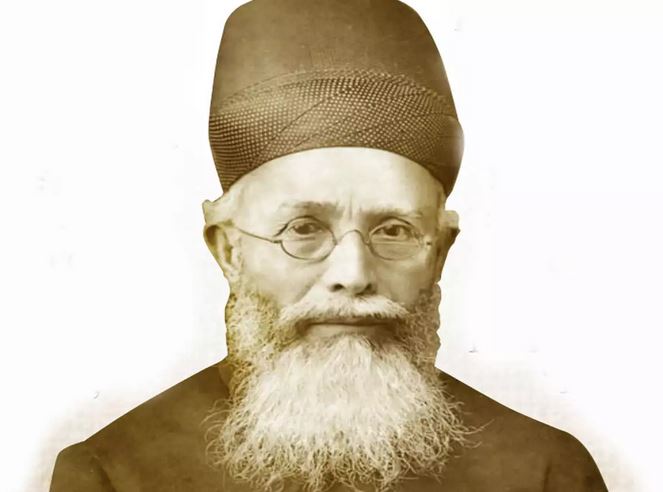
  • Person in news: Dadabhai Naoroji

    dadabhai

    This year, 2022, marks the 130th anniversary of the election, in 1892, of the first person of Indian origin, Dadabhai Naoroji to the House of Commons.

    Why in news?

    • Election of Rishi Sunak as British PM with a narrow majority has brought to focus Naoroji.
    • He too had won Finsbury seat as a MP with a three vote’s majority.

    Dadabhai Naoroji (1825-1917)

    • Dadabhai Naoroji is well known as the “Grand Old Man of India” and “Unofficial Ambassador of India”.
    • He was a Liberal Party Member of Parliament in the British House of Commons, represnting Finsbury Central between 1892 and 1895.
    • He was the second person of Asian descent to be a British MP, the first being Anglo-Indian MP David Ochterlony Dyce Sombre.
    • He was an Indian political leader, merchant, scholar and writer who was served as 2nd, 9th, and 22nd President of the Indian National Congress from 1886 to 1887, 1893 to 1894 & 1906 to 1907.
    • His book Poverty and Un-British Rule in India brought attention to his theory of the Indian “wealth drain” into Britain.
    • He was also a member of the Second Communist International (1889).

    Other works

    • Started the Rast Goftar Anglo-Gujarati Newspaper in 1854.
    • The manners and customs of the Parsees (Bombay, 1864)
    • The European and Asiatic races (London, 1866)
    • Admission of educated natives into the Indian Civil Service (London, 1868)
    • The wants and means of India (London, 1876)
    • Condition of India (Madras, 1882)

    Influence on Gandhi and Jinnah

    • Before his Finsbury win, Naoroji met a young student of law in Inner Temple, 23-year-old Mohandas K Gandhi, and left an everlasting impact on the future leader.
    • He also met another aspiring lawyer then enrolled at Lincoln’s Inn — 16-year-old Mohammed Ali Jinnah, who was to serve for a while as Naoroji’s secretary.
    • Jinnah had the distinction of hearing Naoroji’s maiden speech in the House of Commons from the Visitors’ Gallery.


    Click and get your FREE copy of Current Affairs micro notes

  • Mangarh Massacre of 1913

    mangarh

    Ahead of PM Modi’s visit to Mangarh Dham in Banswara district, Rajasthan CM has sought the declaration of the memorial for tribals as a monument of national importance.

    About Mangarh Massacre

    • Mangarh Dham is known for the massacre of tribals by the British Indian Army in 1913.
    • This place is widely referred to as Adivasi Jallianwala.
    • About 1,500 Bhil tribals and forest dwellers were killed at Mangarh on November 17, 1913, when the British Indian Army opened fire on the protesters.
    • The people were gathered to demand abolition of bonded labour system and relaxation in heavy agricultural taxes imposed by the rulers of princely states.
    • The tribals in the southern Rajasthan region were led by social reformer Govind Guru.

    Course of events

    • Govind Guru started his movement among Bhils in the early 1890s.
    • The movement had, as its religious centrepiece, the concept of a fire god, which required his followers to raise sacred hearths in front of which Bhils pray while performing the purifying havan called dhuni.
    • In 1903, the guru set up his main dhuni on Mangadh Hill.
    • Mobilised by him, the Bhils placed a charter of 33 demands before the British by 1910 primarily relating to forced labour, high tax imposed on Bhils and harassment of the guru’s followers by the princely states.
    • The Bhil struggle for justice under Govind Guru took a serious turn after the British and local rulers refused to accept the demands and tried to break the Bhagat movement in 1913.

    Try this PYQ:

    Q. Which amongst the following provided a common factor for tribal insurrection in India in the 19th century?

    (a) Introduction of a new system of land revenue and taxation of tribal products.

    (b) Influence of foreign religious missionaries in tribal areas.

    (c) Rise of a large number of money lenders, traders and revenue farmers as middlemen in tribal areas.

    (d) The complete disruption of the old agrarian order of the tribal communities.


    [wpdiscuz-feedback id=”xviispmiet” question=”Please leave a feedback on this” opened=”1″]Post your answers here.[/wpdiscuz-feedback]


    UPSC 2023 countdown has begun! Get your personal guidance plan now! (Click here)

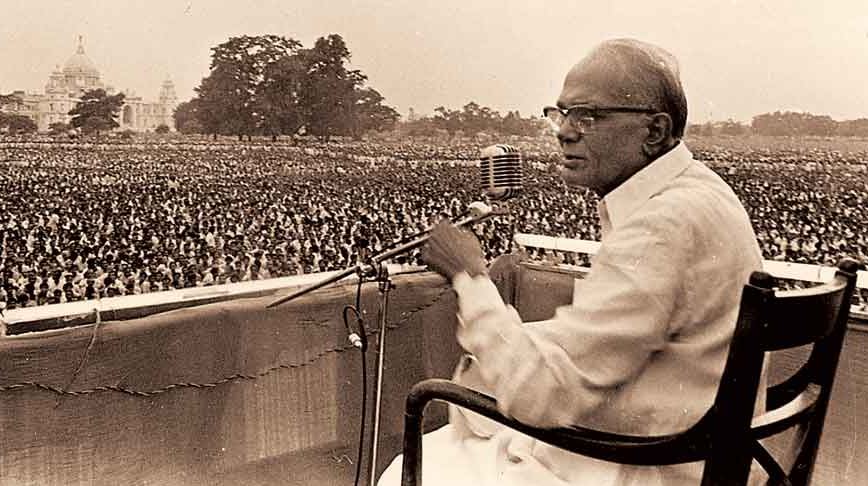
  • Person in news: Jayaprakash Narayan (JP)

    jp

    Union Home Minister unveiled a 15-foot statue of Jayaprakash Narayan or JP on his 120th birth anniversary at the socialist icon’s birthplace, Sitab Diara village in Bihar’s Saran district.

    Who was Jayaprakash Narayan?

    • JP was born in 1902 in Bihar’s Sitab Diara, a village prone to frequent-flooding, after which his family moved to a village in Uttar Pradesh’s Balia district.
    • He quit college to join the non-cooperation movement, before going to study at the University of California, Berkeley, where he was influenced by the ideas of Karl Marx.

    Political affiliations

    • JP returned to India in 1929 and joined the freedom struggle and the Indian National Congress, upon the invitation of Jawaharlal Nehru and drawn by a speech by Maulana Abul Kalam Azad.
    • He went on to become the founding members of the Congress Socialist Party (CSP).
    • However after independence took it out of the Congress and formed the Socialist Party, which was merged with J B Kripalani’s Kisan Mazdoor Praja Party to form the Praja Socialist Party.

    Dissociation from active politics

    • While Nehru was keen on JP joining the Union government, JP sought to distance himself from electoral politics, opting to focus on social causes instead.
    • He was disillusioned with political parties and called for communitarian democracy.
    • Parties, he believed, were centralized and susceptible to moral and financial corruption.

    The JP movement

    • Students in Gujarat began demonstrating in late 1973, in response to mounting mess bills.
    • The protests became widespread in the state, with workers, teachers and several other groups joining in the movement, calling for a change in government.
    • JP saw the youth of Gujarat that had been able to bring about political change as an alternative route from electoral.
    • The protests against corruption grew widespread, and students of Bihar began their movement in March 1974.
    • The students approached JP, who left his self-imposed political exile and led the movement. At a rally in Patna he called for Sampoorna Kranti (Total Revolution).

    Opposition to the Emergency

    • When Indira Gandhi imposed an Emergency on June 25, 1975, JP shifted his focus to opposing the authoritarian rule and opposition parties looked to him for leadership.
    • The Socialists were naturally drawn to him ideologically, while the RSS and its political front the Jana Sangh sought to return to the mainstream, and were happy to be dissolved into the Janata Party that JP had formed.
    • JP is celebrated for launching a popular, mass movement against the Indira Gandhi government, which led to the formation of the Janata Party government in the 1977 general election.
    • This was the first non-Congress government in the country.

    Try this PYQ:

    Who among the following were the founders of the “Hind Mazdoor Sabha” established in 1948?

    (a) B. Krishna Pillai, E.M.S. Namboodiripad and K.C. George

    (b) Jayaprakash Narayan, Deen Dayal Upadhyay and M.N. Roy

    (c) C.P. Ramaswamy Iyer, K. Kamaraj and Veeresalingam Pantulu

    (d) Ashok Mehata, T.S. Ramanujan and G.G. Mehta


    [wpdiscuz-feedback id=”z8t4wjbqux” question=”Please leave a feedback on this” opened=”1″]Post your answers here.[/wpdiscuz-feedback]


    UPSC 2023 countdown has begun! Get your personal guidance plan now! (Click here)

  • How India adopted its military flags and badges based on Lord Mountbatten’s suggestions?

    The new Naval Ensign (flag), which will be unveiled by PM in Kochi, has brought into focus the flags and ranks adopted by the Indian military after Independence.

    Do you know?

    The octagonal shape with twin golden borders draws inspiration from the seal of the great Indian emperor, Chhatrapati Shivaji Maharaj, whose visionary maritime outlook established a credible naval fleet

    Why in news?

    • Documents accessed from National Archives of India show that Lord Mountbatten, former Viceroy and Governor General of India, played a major role in suggesting new flags and rank badges.
    • This was when India was about to become a Republic on January 26, 1950.

    When did India switch from British-era flags and ranks?

    • The switch from British-era flags and ranks took place when India became a Republic (26th Jan, 1950).
    • Prior to that the flags and badges of ranks of the military were of the British pattern.
    • The new, Indian pattern of flags of Army, Navy and Air Force, and also the Regimental Flags of the Army and badges of ranks of all three services were adopted on January 26, 1950.
    • The ‘Kings Commission’ granted to Indian military officers was also changed to ‘Indian Commission’ on the same date.
    • And at a subsequent date the King’s Colours of the various Regiments were laid to rest in Indian Military Academy (IMA), Dehradun.

    When did Lord Mountbatten come into the picture?

    • The national archives have files, dated 1949, that include a detailed note from Lord Mountbatten regarding names, flags and ranks of the armed forces, and then PM Nehru’s letter to the then Defence Minister Baldev Singh regarding Mountbatten’s suggestions.
    • The note, archives reveal, was given to Nehru by Lord Mountbatten when the two met in London.
    • The note was forwarded from the PM’s office to the office of then Governor General C Rajagopalachari on May 24, 1949, stating that it is on the issue of ‘Names and Insignia of Indian Armed Forces’ after India becomes a Republic.
    • The letter also stated that the note should be placed before the Governor General.

    What did Lord Mountbatten say in the note?

    • The note begins by saying that consequent to becoming a Republic the word ‘Royal’ shall be dropped from India’s Army, Navy and Air Force.
    • Mountbatten strongly recommended that no other word like ‘State’ of ‘Republican’ should replace the word ‘Royal’.
    • This was because it would have the effect of separating the forces of India psychologically from the other services in the Commonwealth.
    • He further suggested in the letter that the Crown should be replaced from the insignias and replaced by the “three lions of Ashoka”.
    • Regarding the Naval Ensign, he said that all Commonwealth navies fly the same flag which consists of a large white flag with a red-cross and Union Jack in the upper corner nearer the staff and is known as the ‘White Ensign’.
    • The new Ensign, the note suggested, should continue to have the red-cross but the Indian national flag should replace the Union Jack.
    • He suggested this to maintain commonality with the Commonwealth flags.

    What changes did Mountbatten suggest for uniforms?

    • He strongly urged that existing uniforms should be changed as little as possible.
    • He added that the Crown worn on badges of ranks of Majors and above should be replaced by the “three lions of Ashoka”.
    • The Star of the Order of the Bath should be replaced by Star of India or another form of star.
    • He also suggested that the crossed sword and baton on the badges of ranks of Generals should be retained.
    • The former Viceroy advocated retaining the stripes of rank in Navy and Air Force saying these were internationally almost the same.

    How did the Indian government react to Mountbatten’s suggestions?

    • Nehru wrote to the then defence minister in September 1949 saying that he agreed with the suggestions made by the former Governor General that there should be as little change as possible.
    • The then PM particularly mentioned the changes suggested by Mountbatten for the Navy.
    • Then Governor General C Rajagopalachari also wrote back to Nehru in May 1949 itself agreeing to Mountbatten’s suggestions.
    • In the end, Mountbatten’s suggestions were virtually all accepted and implemented with effect from January 26, 1950.


    UPSC 2023 countdown has begun! Get your personal guidance plan now! (Click here)

  • How Hyderabad became a part of India?

    The Government of India began its year-long celebrations for the ‘Telangana Liberation Day’ on September 17, marking how on the same day in 1948, the state of Hyderabad got its independence from Nizam’s rule, as said in a press release.

    Why in news?

    • From 1911 to 1948, Nizam Mir Usman Ali, the last Nizam of Hyderabad, ruled the state composed of Telangana and parts of present-day Karnataka and Maharashtra (Marathwada).
    • While these states mark the Liberation Day officially, Telangana has never done so.

    Hyderabad’s accession into India: A backgrounder

    (1) Reluctance of Nizam

    • At the time of India’s independence, British India was a mix of independent kingdoms and provinces that were given the options of joining India, Pakistan, or remaining independent.
    • One among those who took a long time to make a decision was the Nizam of Hyderabad.
    • Believed to be one of the richest people in the world at the time, the Nizam was not ready to let go of his kingdom.

    (2) Sufferings for the people

    • Meanwhile, the majority population of Hyderabad state was far from enjoying the same kind of wealth as the Nizam did.
    • The feudal nature of the state at the time caused the peasant population to suffer high taxes, indignities of forced labour, and various other kinds of exploitation at the hands of powerful landlords.

    (3) Lingual friction

    • There was also a demand by the Andhra Jan Sangham for Telugu to be given primacy over Urdu.
    • By the mid-1930s, apart from a reduction in land revenue rates and the abolition of forced labour, introducing Telugu in local courts became another important issue.

    (4) Mass movement

    • Soon after the organisation became the Andhra Mahasabha (AMS), and Communists became associated with it.
    • Together, the two groups built a peasant movement against the Nizam that found local support.

    Who were the Razakars and the Ittehad-ul-Muslimeen?

    • By October 1946, the Nizam banned the AMS.
    • A close aide of the Nizam, Qasim Razvi, leader of the Ittehad-ul-Muslimeen, became closely involved in securing the Nizam’s position.
    • The Ittehad-ul-Muslimeen was a political outfit that sought a greater role for Muslims in the early 20th century, but after Razvi took over the organisation, it became extremist in its ideology.
    • It was under him that a militia of the ‘Razakars’ was formed to suppress the peasant and communist movement, launching a brutal attack.
    • Around this time, the Standstill Agreement was also signed between the Nizam and the Indian government in November 1947, declaring a status quo.
    • This meant that until November 1948, the Nizam could let things be as they were and not finalise a decision as negotiations with the Indian union continued.

    How did the situation escalate to military action?

    • In the first half of 1948, tensions grew as the razakar leaders and the government in Hyderabad began to speak of war with India and began border raids with Madras and Bombay Presidencies.
    • As a response, India stationed troops around Hyderabad and began to ready itself for military intervention.

    India commences Operation Polo

    • With the Nizam importing more arms and the violence of the Razakars approaching dangerous proportions, India officially launched ‘Operation Polo’ on September 9 and deployed its troops in Hyderabad four days later.
    • On September 17, three days after the deployment, the Nizam surrendered and acceded to the Indian Union in November.
    • India has decided to be generous and not punish the Nizam.
    • He was retained as the official ruler of the state and given a privy purse of five million rupees.

    The legacy of Operation Polo

    • It has also been said that the army’s march into Hyderabad did not just target the razakars and the radical extremist forces.
    • A four-member goodwill mission led by Pandit Sunderlal was constituted by the then Prime Minister.
    • At the request of then PM Nehru, a month was spent in Hyderabad in November 1948 where evidence was gathered and at the end, a report was filed.
    • Estimated thousands of people died in communal violence during the military action.

    Why debate now?

    • The debate about whether the day of independence was about integration into the Indian union after months of negotiations, or liberation from an autocratic monarch has continued.
    • Hyderabad’s history continues to affect today’s politics.
    • After Qasim Rizvi left India for Pakistan, the organisation was handed over to Abdul Wahed Owaisi, the grandfather of a present day Parliamentarian.
    • And communal-sectarian politics is storming up the city of Hyderabad leading to religious tensions.


    UPSC 2023 countdown has begun! Get your personal guidance plan now! (Click here)

  • 100 years of periyar because of whom tamil nadu became modern and progressive

    PeriyarContext

    • We celebrate Periyar E.V. Ramasamy’s birth anniversary (September 17) as Social Justice Day.

    Who is periyar?

    • Erode Venkatappa Ramasamy, revered as Periyar or Thanthai Periyar, was an Indian social activist and politician who started the Self-Respect Movement and Dravidar Kazhagam. He is known as the ‘Father of the Dravidian movement’. He rebelled against Brahminical dominance and gender and caste inequality in Tamil Nadu.

    Who started self-respect movement?

    • The self-respect movement was founded by V.Ramaswamy Naicker, commonly known as Periyar. It was a dynamic social movement aimed at destroying the contemporary Hindu social order in its totality and creating a new, rational society without caste, religion and god.

    PeriyarWhy Periyar is called as vaikom hero?

    • V. Ramasamy Periyar led the famous Vaikom Sathya Graha in 1924, where the people of down trodden community were prohibited to enter into the temple. Finally the Travancore government relaxed such segregation and allowed the people to enter into the temple. Hence periyar was given the title of ‘Vaikom Hero’.

    Leadership at a critical juncture

    • The satyagraha began with the active support of the Kerala Pradesh Congress Committee.
    • Within a week all its leaders were behind bars. George Joseph sought directions from Gandhi and C. Rajagopalachari. He also wrote to Periyar pleading with him to lead the satyagraha.
    • Periyar was in the midst of political work. As he was then the president of the Tamil Nadu Congress Committee, Periyar handed over temporary charge to Rajaji before reaching Vaikom in 1924.
    • From that date to the day of the victory celebrations in 1925, he was in the struggle giving it leadership at a critical juncture.

    PeriyarPeriyar’s role

    • Against violence – Periyar presided over the satyagraha in the face of violence and indignity inflicted by the orthodox and the repression of the police.
    • Mobilising – To mobilise support, he visited villages in and around Vaikom and delivered public speeches in several towns.
    • Gandhi – When the Kerala leaders asked for Gandhi’s permission to make the satyagraha an all-India affair, Gandhi refused saying that volunteers from Tamil Nadu would keep it alive.
    • In reports – the British Resident said in his report to the government of Madras: “In fact, the movement would have collapsed long ago but for the support it has received from outside Travancore…”
    • Historian T.K. Ravindran — observes that Periyar’s arrival gave “a new life to the movement”.

    His Vision for the future

    • Ideas on rationality: When he presented his thoughts, there was nuance, honesty, and an explicitness, which prompted even people practising different faiths to discuss and debate his ideas on rationality and religion.
    • Freedom of expression: Periyar himself said, “Everyone has the right to refute any opinion. But no one has the right to prevent its expression.”
    • Eradication of social evils: Periyar is often referred to as an iconoclast, for the rebellious nature of his ideas and the vigour with which he acted. His vision for the future was a part of all his actions. He did not merely aim at the eradication of social evils; he also wanted to put an end to activities that do not collectively raise standards of society.

    Foundation of rationalism

    • He understood the evolution of political thought: Periyar’s vision was about inclusive growth and freedom of individuals. He was an important ideologue of his day because of the clarity in his political stand. More importantly, he understood the evolution of political thought and was able to glide through time with this.
    • He presented rationalism as a solid foundation: For thinking along these lines. He said, “Wisdom lies in thinking. The spearhead of thinking is rationalism.” Periyar was way ahead of his time.
    • Concern towards poor: “Whomsoever I love and hate, my principle is the same. That is, the educated, the rich and the administrators should not suck the blood of the poor.”
    • Periyar proclaimed that he would always stand with the oppressed: In the fight against oppressors and that his enemy was oppression. There have been several social reformers in Tamil Nadu who shared their revolutionary thoughts with the people in the past century. In that spectrum, Periyar occupies a unique place because he made interactions of multiple worlds possible.

    Periyar said, “Any opposition not based on rationalism or science or experience, will one day or other, reveal the fraud, selfishness, lies, and conspiracies.”

    Conclusion

    • His works against the Bhraminical dominance, oppression of women in Tamil Nadu, caste prevalence are exemplary. Periyar promoted the principles of rationalism, self-respect, women’s rights and eradication of caste. He opposed the exploitation and marginalisation of the people of South India and the imposition of what he considered Indo-Aryan India.

    Mains question

    Q.Discuss the future vision of periyar by discussing his role in vaikom satyagraha. Do you think he has placed foundation of rationalism in Tamil Nadu?

    UPSC 2023 countdown has begun! Get your personal guidance plan now! (Click here)