💥Join UPSC 2027,2028 Mentorship (July Batch) + XFactor Notes & Microthemes PDF

GS Paper: GS4-01.Ethics and Human Interface: Essence, Determinants and Consequences of Ethics in – Human Actions; Dimensions of Ethics; Ethics – in Private and Public Relationships.

  • Impact of digital technology as a reliable source of input for rational decision making is a debatable issue. Critically evaluate with a suitable example. (150 words)

    “Technology is a useful servant but a dangerous master.” – Christian Lous Lange

    Digital technology provides vast data infrastructure for modern governance, yet its reliability as an input for objective, rational decision-making remains highly controversial.

    Digital Technology as a Reliable Source of Input for Rational Decision-Making

    Real-Time Policy Inputs: Eg: CoWIN platform enabled real-time vaccine inventory planning across all Indian districts.

    Citizen Participation in Policy- Eg- MyGov collected over 10 crore citizen suggestions that shaped the National Education Policy 2020.

    Digitizing demographic and macro-surveys significantly eliminates human enumeration mistakes and calculation errors.

    Satellite tracking and geospatial maps provide precise objective inputs for infrastructure projects. Eg: PM GatiShakti National Master Plan GIS data.

    Leakage Elimination-

    Interlinked digital architectures unify isolated departmental databases into a singular, holistic policy-making dashboard. Helps eliminate duplication.

    Predictive Weather Planning: Eg: The IMD’s advanced Doppler radar systems supplying precise cyclone trajectory inputs to save coastal communities.

    Counter-Argument: The Flaws and Risks of Digital Inputs

    Poor data collection practices hampers objective policy making and implementation. Eg- Ghost Beneficiaries under Ayushman Bharat.

    The “Black Box” Problem- AI logic is often opaque.

    Institutionalizing Historical Bias- If data is biased , the AI will “learn” and automate that bias. Eg- US COMPAS tool biased against African-Americans.

    Difficulty in ensuring accountability for mistakes.

    Correlation vs Causation Fallacies: Analytical engines can link two completely unrelated data trends together, generating irrational choices.

    Exclusion of the Digitally Illiterate from policy making & online grievance portals

    Way Forward

    Human-in-the-Loop (HITL)- The final “sign-off,” especially in cases affecting human rights, must be by a human officer.

    Mandating regular 3rd-party audits of government algorithms to detect and “unlearn” biases.

    The EU AI Act Approach- “Risk-Based Framework” where high-risk AI (policing or judiciary) face the highest level of ethical regulation.

    Digital Ethics Commissions including ethicists, jurists, and technologists to oversee AI deployment in public service.

    Ethical Coding Standards- Teaching “Ethics by Design” to programmers working on public infrastructure.

    While digital technology streamlines administrative efficiency, it cannot replace human empathy, requiring a balanced model where data informs but conscience rules.
  • Online methodology is being used for day-to-day meetings, institutional approvals in the administration and for teaching and learning in education sector to the extent telemedicine in the health sector is getting popular with the approvals of the competent authority. No doubt it has advantages and disadvantages for both the beneficiaries and system at large. Describe and discuss the ethical issues involved in the use of online method particularly to vulnerable section of society.

    “Technology is a useful servant but a dangerous master.” – Christian Lous Lange

    While online methodologies offer paperless, and boundary-less world, they simultaneously create a “digital wall” of exclusion.

    Advantages and disadvantages

    Ethical issues for vulnerable sections

    Digital exclusion“digital apartheid” for rural students during COVID.

    Privacy risks – Eg- Aadhar data breach

    Children face mental health issues due to increased screentime, exposure to child pornography etc

    Informed consent erosion – Eg- Vulnerable users often click “Agree” without understanding data-sharing terms.

    Surveillance concerns -Constant AI monitoring can turn a “Welfare State” into a “Surveillance State”.

    Difficulty in ensuring accountability for mistakes.

    Loss of “Compassion” and “Conscience”- Eg- It cannot “bend the rules” for a starving widow whose paperwork is missing.

    Dependency exploitation – Eg- Middlemen charge to fill forms.

    Cyber fraud – Eg- rise of digital arrest cases

    Cultural barriers – Language issues in online platforms.

    Disability access – Apps not accessible to visually impaired.

    Psychological Distress- The “Digital Divide” causes a sense of “techno-inferiority” and alienation among the elderly and rural populations.

    Online methodologies should be a bridge, not a barrier. The way forward is not to reject technology, but to adopt a “Phygital” (Physical + Digital) approach.

  • It is believed that adherence to ethics in human actions would ensure in smooth functioning of an organization/system. If so, what does ethics seek to promote in human life? How do ethical values assist in the resolution of conflicts faced by him in his day-to-day functioning?

    Ethics is a branch of philosophy that involves systematizing, defending, and recommending concepts of right and wrong conduct. It acts as a ‘moral compass’ for individual and organisational conduct.

    Importance of Ethics in the Smooth Functioning of an Organization

    Provides Psychological Safety which is essential for team efficiency. (Google’s Project Aristotle)

    Stakeholder Loyalty- attract and retain top talent, loyal customers, and stable investors.

    Conflict Prevention by establishing clear behavioral norms.

    Risk Mitigation- prevents scandals, lawsuits, and regulatory penalties. Eg- Satyam Scandal

    Brand Reputation- Eg- Patagonia’s “Don’t Buy This Jacket”campaign for mindful consumption

    Leadership – “If ethics are poor at the top, that behavior is copied down through the organization.” – Robert Noyce (Intel Co-founder)

    Role of Ethics in human life

    The Realization of Human Dignity (Deontological Ethics) – It promotes the inherent worth and “sacredness” of human life. Eg- Abraham Lincoln’s role in abolition of slavery

    Inner Peace and Psychological Well-being by promoting “clear conscience” and reducing cognitive dissonance. Eg- Gandhiji withdrawing NCM after Chauri Chaura.

    The Pursuit of the “Good Life” (Eudaimonia) – helps individuals align their daily actions with their highest purpose.

    Ethics provides a shared “moral vocabulary” needed for social cohesion and harmony. Eg- Values of tolerance and empathy

    Accountability and Responsibility – Ethics encourages individuals to take ownership of their actions and their consequences. Eg- Lal Bahadur Shastri resigning after Rail accident

    Justice and Fairness – Ethics seeks the equitable distribution of resources, opportunities, and burdens. Eg- Justice Ruth Bader Ginsburg’s advocacy for gender equality

    Intellectual and Moral Growth by promoting the habit of “The Examined Life.”

    Compassion and Altruism – It promotes “other-centeredness” and a sense of purpose for the giver. Eg- Philanthropy by Aziz Premji

    Role of Ethical Values in Resolving Day-to-Day Conflicts

    Objectivity and Impartiality helps address conflict of interest and promotes meritocracy.

    Integrity- ensures consistency in thoughts, beliefs and actions thereby preventing crisis of conscience.

    Prioritization of values – Eg- Choosing transparency over convenience under RTI.

    Empathy and Humility allows an individual to listen and admit mistakes.

    Moral Courage helps resolve “Fear vs. Duty” conflict. Eg- Satyendra Dubey exposing corruption in Golden Quadrilateral project

    Managing Scarcity of Resources Fairly – Eg- Utilitarianism guiding the “greatest good for the greatest number”

    By adhering to a set of core values (Self-Alignment) an individual can reduce Cognitive Dissonance.

    Thus, ethics provides both direction and discipline – it guides what is right and strengthens the will to do it

  • Differentiate ‘moral intuition’ from ‘moral reasoning’ with suitable examples.

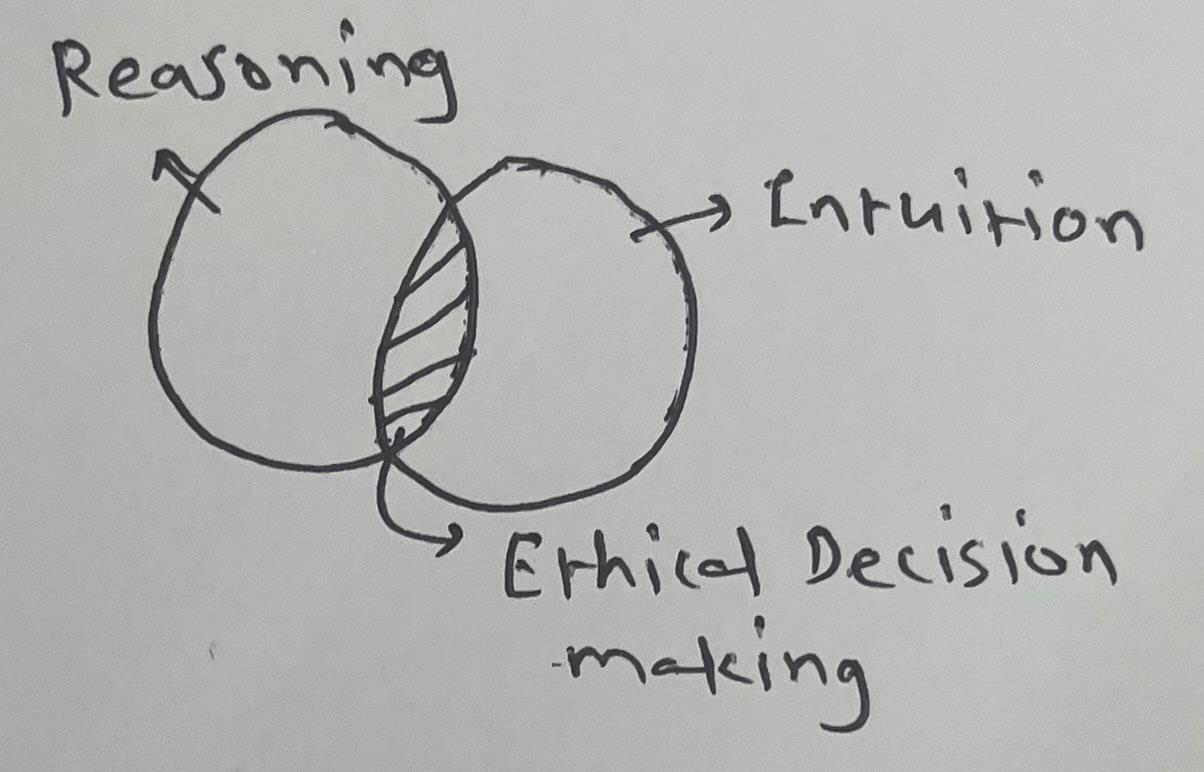
    Ethical decision-making is the process by which individuals evaluate options and make choices based on moral principles. It is “dual-process” system based on emotional insight (intuition) and rational evaluation (reasoning)

    Examples

    Moral Intuition

    The “Railway Track” Heroism by Nicholas Winton

    The “Yuck” Factor in Bioethics

    Moral Reasoning

    The Triage Decision in healthcare during crisis

    Kesavananda Bharati judgment – Moral and Legal Reasoning to develop the “Basic Structure Doctrine.”

    Corporate Downsizing Decisions based on utilitarianism

    Moral Intuition is the “Hero” who acts in the moment, while Moral Reasoning is the “Sage” who builds the system. Both are necessary for a morally complete life.

  • influencing continuation of number of wars influencing continuation of number of wars “Ethics encompasses several key dimensions that are crucial in guiding individuals and organizations towards morally responsible behaviour.” Explain the key dimensions of ethics that influence human actions Discuss how these dimensions shape ethical decision-making in the professional context.

    Ethics is a branch of philosophy that involves systematizing, defending, and recommending concepts of right and wrong conduct. It acts as a ‘moral compass’ for individual and organisational conduct.

    Dimensions of Ethics Guiding Individuals

    Normative Ethics (The “Ought” Dimension)- This is the prescriptive side of ethics. It includes

    Deontology (duty-based). Eg- Respecting human dignity

    Utilitarianism (consequence-based). Eg- guides policy for “greatest good for the greatest number”

    Meta-Ethics (The “Meaning” Dimension)- It deals with the origin of moral principles. Helps solve dilemmas in emerging issues like AI ethics, ethics of biotechnology etc

    Descriptive Ethics (The “Observation” Dimension)- It provides the empirical data on “what is” rather than “what should be.”

    Virtue Ethics (The “Character” Dimension)- helps in inculcating virtues like courage, honesty, and temperance. Eg- Mahatma Gandhi cultivated the virtue of Ahimsa as a personal habit.

    Applied Ethics – Helps apply ethical principles in real life situations. Eg- Compassionate capitalism in corporate governance, Stewardship principle in environmental ethics.

    “Ethics of Care” – emphasizes the importance of interpersonal relationships and compassion.

    Dimensions of Ethics Guiding Organizations

    The Justice Dimension ensures fairness in both outcomes and processes.

    Distributive Justice- Focuses on the fair allocation of rewards and burdens. Eg- Equal Remuneration Act

    The Accountability Dimension – promotes “fiduciary duty” towards stakeholders and prevents the “systemic rot” caused by secrecy. Eg- Infosys whistleblower policy

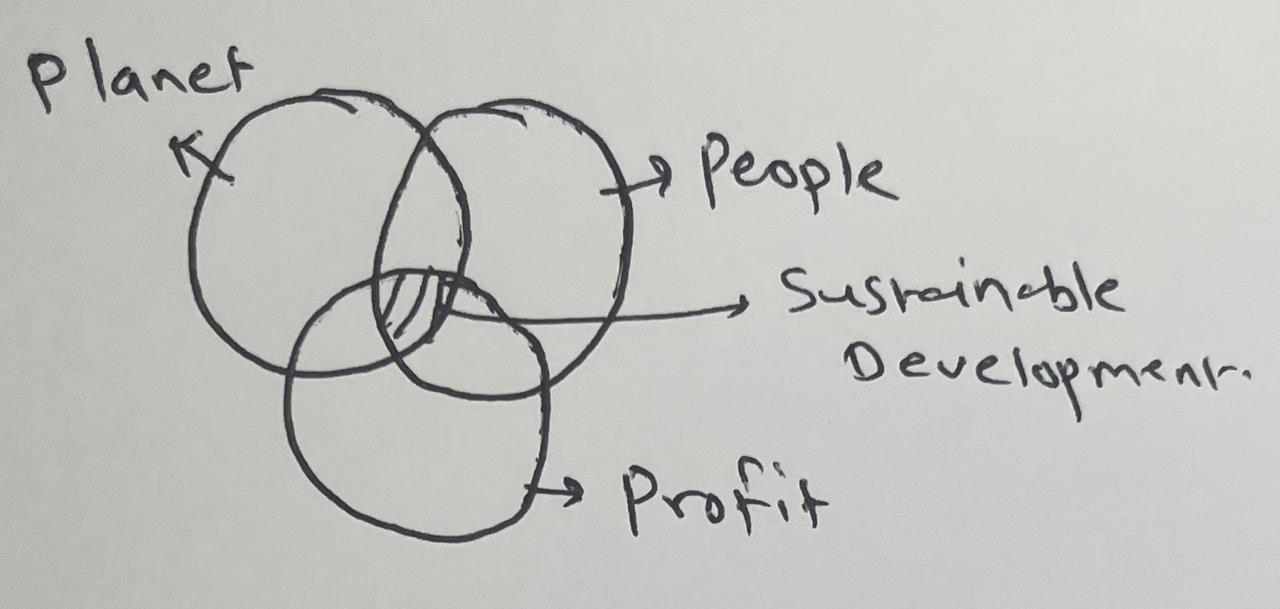
    The Sustainability and Stewardship Dimension – Moving from a “profit-only” model to the Triple Bottom Line. Eg- IKEA’s “People & Planet Positive” strategy

    Solving the “Loyalty vs. Truth” dilemma – the Normative dimension provides the duty to the truth, while the Virtue dimension provides the courage to speak it.

    Builds consistency, predictability and smooth-functioning system based on stable, universal principles. Eg- Zomato’s menstrual leave policy

    These dimensions ensure that human actions are not impulsive but reasoned. As Jane Addams said, “Action indeed is the sole medium of expression for ethics.”

  • The application of Artificial Intelligence as a dependable source of input for administrative rational decision-making is a debatable issue. Critically examine the statement from the ethical point of view.

    The integration of AI into administration marks a shift from “Human Discretion” to “Algorithmic Governance.” However, its role as a “dependable source” is ethically complex as “rational” decision in administration is not just about logical consistency, but about justice and equity.

    Ethical Case for AI as a Dependable Source

    It reduces cognitive bias and offers Neutrality and Objectivity in decision making. Eg- use of AI in SSC exam evaluation

    Data-driven policymaking promotes evidence-based governance. Eg- Aarogya Setu App

    Ensures consistency and predictability – Eg- AI based custom approval process by DGFT

    Efficiency in service delivery. Eg- Samagra Vedika platform of telangana create a “360-degree profile” of every citizen to verify eligibility for welfare schemes

    By removing the “human interface”, AI reduces the opportunity for bribery and rent-seeking. Eg- AI-driven MCA21 V3 portal flags suspicious shell companies and fraudulent filings.

    Enhances accuracy. Eg- IMD using AI for weather forcasting

    Disaster Management Efficiency- Eg- Google’s AI Flood Forecasting model, used by CWC, provides real-time flood alerts

    Targeted welfare delivery – AI improves beneficiary identification in DBT.

    Utilitarian Optimization- Eg- NITI Aayog partnered with IBM to develop AI models for Crop Yield Prediction for farmers

    Enhancing public participation through language inclusivity. Eg- BHASHINI platform

    Ethical Concerns

    The “Black Box” Problem- AI logic is often opaque.

    Institutionalizing Historical Bias- If data is biased , the AI will “learn” and automate that bias. Eg- US COMPAS tool biased against African-Americans.

    Difficulty in ensuring accountability for mistakes.

    Loss of “Compassion” and “Conscience”- Eg- It cannot “bend the rules” for a starving widow whose paperwork is missing.

    Digital Dehumanization- AI reduces complex human lives into “risk scores” or “eligibility percentages”.

    Threat to Right to Privacy- Constant AI monitoring can turn a “Welfare State” into a “Surveillance State”.

    Skill Atrophy- Administrators may stop using their own judgment, leading to a loss of critical thinking – “Steel Frame” to “Silicon Frame”

    Widening North-South divide – Poor countries lack access to tech-mediated services.

    Way Forward- “Human-Centric AI.”

    Explainable AI- Implementing systems where the AI must provide a “human-readable” reason for every decision.

    Human-in-the-Loop (HITL)- The final “sign-off,” especially in cases affecting human rights, must be by a human officer.

    Mandating regular 3rd-party audits of government algorithms to detect and “unlearn” biases.

    The EU AI Act Approach- “Risk-Based Framework” where high-risk AI (policing or judiciary) face the highest level of ethical regulation.

    Digital Ethics Commissions including ethicists, jurists, and technologists to oversee AI deployment in public service.

    Right to Appeal against AI- Statutory rights for citizens to have an AI-driven decision reviewed by a human committee.

    Ethical Coding Standards- Teaching “Ethics by Design” to programmers working on public infrastructure.

    Training civil servants in AI Literacy under Mission Karmayogi.

    Strengthening privacy safeguards under DPDP Act.

    The goal must be not AI-driven governance, but ethically guided AI-assisted governance.

    Code of Ethics

  • “The concept of Just and Unjust is contextual. What was just a year back, may turn out to be unjust in today’s context. Changing context should be constantly under scrutiny to prevent miscarriage of justice.” Examine the above statement with suitable examples.

    In the words of John Rawls, “Justice is the first virtue of social institutions, as truth is of systems of thought.”

    However, Justice is not a static or absolute concept but a dynamic one, shaped by the evolving moral, social, and technological landscape of a society.

    The Contextual Nature of Justice

    Changing political contexts. Eg- Colonial land laws once “legal”, now seen as exploitative.

    Changing economic contexts. Eg- shift of policy focus from economic growth to inclusive growth

    Changing socio-cultural contexts. Eg- Sati was socially accepted earlier but now a criminal offence.

    Changing technological contexts. Eg- A decade ago, mass data harvesting was acceptable but now criticised for “Surveillance Capitalism” and violation Privacy

    Changing legal contexts. Eg- basic structure doctrine or Due Process (Menka Gandhi) expanding FRs

    Changing environmental contexts. Eg- shift from unlimited resource extraction to intergenerational justice

    Changing corporate governance contexts. Eg- shift from profit motive to TBL (people profit planet)

    Need for Scrutiny to Prevent Miscarriage of Justice

    Avoiding “Legal Anachronism” or “Zombie Laws.” Eg- the decriminalization of Section 497

    Prevent legal injustice – Laws may become oppressive if context changes. Eg- Sedition law

    Non scrutiny leads to moral stagnation. Eg- persistence of manual scavenging.

    Adapting to changing social realities. Eg- live in relationships or single parent families

    Maintain legitimacy of state. Eg- RTI Act for transparency in governance

    Protection of vulnerable sections. Eg- legal recognition of Mental Health.

    Preventing Technological Tyranny – Eg- Right to be Forgotten under data protection Acts

    As a society becomes more civilized, the “just” methods of punishment are needed. Eg- over 100 countries abolished Death penalty

    Addressing “New” Harms in the Digital Age. Eg- AI generated Deepfakes

    To uphold constitutional morality. Eg- Triple talaq invalidated despite social practice.

    “The Only Constant in Life Is Change.”- Heraclitus

    Thus, Justice must be a “living” concept for human progress and “Good Life” (Eudaimonia)

  • Gobal warming and climate change are the outcomes of human greed in the name of development, indicating the direction in which extinction of organisms including human beings is heading towards loss of life on Earth. How do you put an end to this to protect life and bring equilibrium between the society and the environment ?

    The crisis of climate change is fundamentally a crisis of values. It is the product of pursuing material progress by disregarding planetary boundaries.

    Global Level- Systemic Harmonization

    Decarbonization of Global Trade- Eg- taxing products imported from high-pollution regions

    Climate Finance Mobilization- Fulfilling the $100 billion annual commitment by developed countries

    Protection of global commons – Eg- early finalization of Global Plastic Treaty to protect oceans

    Government Level- act as the “Architect of Sustainability”

    Rights of Nature Legislation- Formally granting legal personhood to major rivers, mountains, and forests. Eg- Ganga in india

    Energy Transition under Panchamrit Targets- 500 GW from non-fossil sources by 2030.

    Green Urban Planning- Developing “Sponge Cities” with permeable pavements and urban wetlands to manage flooding and “Heat Island” effects.

    Business Level

    Adopting Net-Zero Roadmaps- Measuring and reducing Scope 1, 2, and 3 emissions

    Product Stewardship- Designing products that can be easily repaired or recycled

    ESG Integration in investment decisions, recognizing that “Sustainability is a Competitive Advantage.”

    Supply Chain Decarbonization- ensuring that raw materials are sourced ethically and without deforestation.

    Bio-Inclusive Boardrooms- Eg- “Ecological Representative” or “Voice for Future Generations” on corporate boards

    Society Level- Cultural Re-engineering

    Mainstreaming “Environmentalism of the Poor”- Eg- Chipko or Appico movements where local tribes are the primary guardians of forests.

    Moving from “Environmental Science” to “Environmental Ethics” in school and college curricula

    Community-Led Restoration- Eg- volunteer movements for cleaning coastlines or planting “Miyawaki” urban forests.

    Citizen Level- LiFE (Lifestyle for Environment) movement

    Mindful Consumption through ethical restraint

    Switching from a “throwaway culture” to one of repair and reuse

    lifestyle of “Enoughness”-voluntarily limiting consumption

    “Pro-Planet” dietary Shift to protect water and soil. Eg- millet-based diets

    Energy Citizenship- Transitioning to rooftop solar and adopting energy-efficient appliances (LEDs/BLDC fans).

    Waste Segregation at Source- helps 100% composting or recycling at the municipal level.

    Green Mobility- Preferring public transport, cycling, or Electric Vehicles (EVs)

    By applying the Precautionary Principle to our technology and Intergenerational Equity to our economy, we can move to the trajectory of “Great Restoration.”

  • Q2 (b)Keeping the national security in mind, examine the ethical dilemmas related to controversies over environmental clearance of development projects in ecologically sensitive border areas in the country.

    While national security is a non-negotiable sovereign duty, ecological health is a non-negotiable biological necessity. The ethical dilemma arises because both sides claim the “Right to Life” (Article 21).

    National security imperative

    All weather connectivity. Eg- Zojila or Sela tunnels

    Logistics and supply lines

    Surveillance and communication. Eg- Installing radar stations

    Rapid deployment capability

    Strategic deterrence. Eg- Great Nicobar Port in IOR

    Disaster response access

    Hearts and minds strategy. Eg- vibrant village program

    Ethical dilemmas related to environmental clearance

    Utilitarianism vs. Deontology/ right vs right dilemma – sacrificing a unique, irreplaceable ecosystem for the “greater good” of national security.

    Connectivity vs ecology – Highway projects degrade fragile ecosystems. Eg- Char Dham Pariyojana

    Anthropocentrism vs. Ecocentrism- Does a border road have more “value” than the extinction of an endemic species?

    National interest vs local rights – Eg- Forest Conservation (Amendment) Act 2023 exempts projects within 100km of borders from certain clearances.

    Speed vs scrutiny – Eg- Strategic exemptions from EIA.

    Secrecy vs transparency – Classified projects limit public accountability.

    Intergenerational justice dilemma – Immediate defence gains create long-term ecological vulnerability. Eg- Landslides due to hill cutting.

    Human safety vs wildlife protection – Eg- Border fencing affecting elephant movement.

    Development vs sustainability – Infrastructure improves access but undermines long-term ecological balance.

    Slippery Slope dilemma – extension of ‘national security exemptions’ to other projects in future

    Way Forward

    Strategic Environmental Assessment (SEA)

    Green Engineering. Eg- “Eco-bridges”

    Independent Oversight Body comprising both military strategists and ecologists

    Restorative Compensation

    There is need to shift from “Environmental Clearance” to “Environmental Integration” for sustainable and “Sensitive” security paradigm.

    Ethics in IR