💥Join UPSC 2027,2028 Mentorship (July Batch) + XFactor Notes & Microthemes PDF

GS Paper: GS4-03.Attitude: Content, Structure, Function; its Influence and Relation with Thought and Behaviour; Moral and Political Attitudes; Social Influence and Persuasion.

  • In the context of work environment, differentiate between ‘coercion’ and ‘undue influence’ with suitable examples.

    Work culture refers to the shared values, norms, behaviour and ethical climate that shape how individuals interact, make decisions and exercise authority within an organisation.

    “The culture of any organisation is shaped by the worst behaviour the leader is willing to tolerate.”

    Way Forward for a Healthy and Ethical Work Culture

    Institutionalizing 360-Degree Feedback

    Strengthening Whistleblower Protection Mechanisms

    Civil services board for transparent transfer and posting

    Adopting Nolan Principles of openness

    Promoting “Psychological Safety”

    Regular Ethics Audits

    Democratizing the Workplace

    “Highest Perfection” in duty can never be achieved through fear or manipulation. For effective work culture, authority must be exercised through competence and trust

  • Mindless addiction to Form, ignoring the Substance of the matter, results in rendering of injustice. A perceptive civil servant is one who ignores such literalness and carries out true intent. Examine the above statement with suitable illustrations.

    In public administration, there is tension between procedural formalism and substantive justice. When it becomes a slave to “Form,” it becomes an end in itself, at the cost of the citizen it was meant to serve.

    Mindless Addiction to Form- Rendering Injustice

    Institutionalization of Red Tapism- Eg- Munger-Ganga Bridge in Bihar was delayed by nearly 14 years due to inter-departmental disputes

    Literalness breeds a “mechanical” mindset where officials lose empathy. Eg- denial of emergency care to critically ill patient without documentation

    Inefficiency in crisis management- Eg- migrant labour sufferings during COVID.

    Undermining Rights of the Vulnerable- Eg- PDS exclusion of poor due to biometric authentication failures (Jharkhand case)

    Encourages moral abdication – Officials transfer moral responsibility to the rulebook (banality of evil). Eg- encroachment demolitions without rehabilitation plan.

    Facilitates coercive corruption. Eg- ‘speed money’ for faster file clearance

    Complexity of the “Form” leads to Process becoming Punishment. Eg- complexity in environmental clearances

    “By-the-book” culture stifles innovation and creativity.

    Resource Wastage- Eg- cost and time overruns in PPP projects due to delays in land procurement

    Policy Paralysis- Fear of audit or the “3C” (CBI, CVC, CAG) leads to “Defensive Bureaucracy.”

    The Perceptive Civil Servant- Carrying Out True Intent
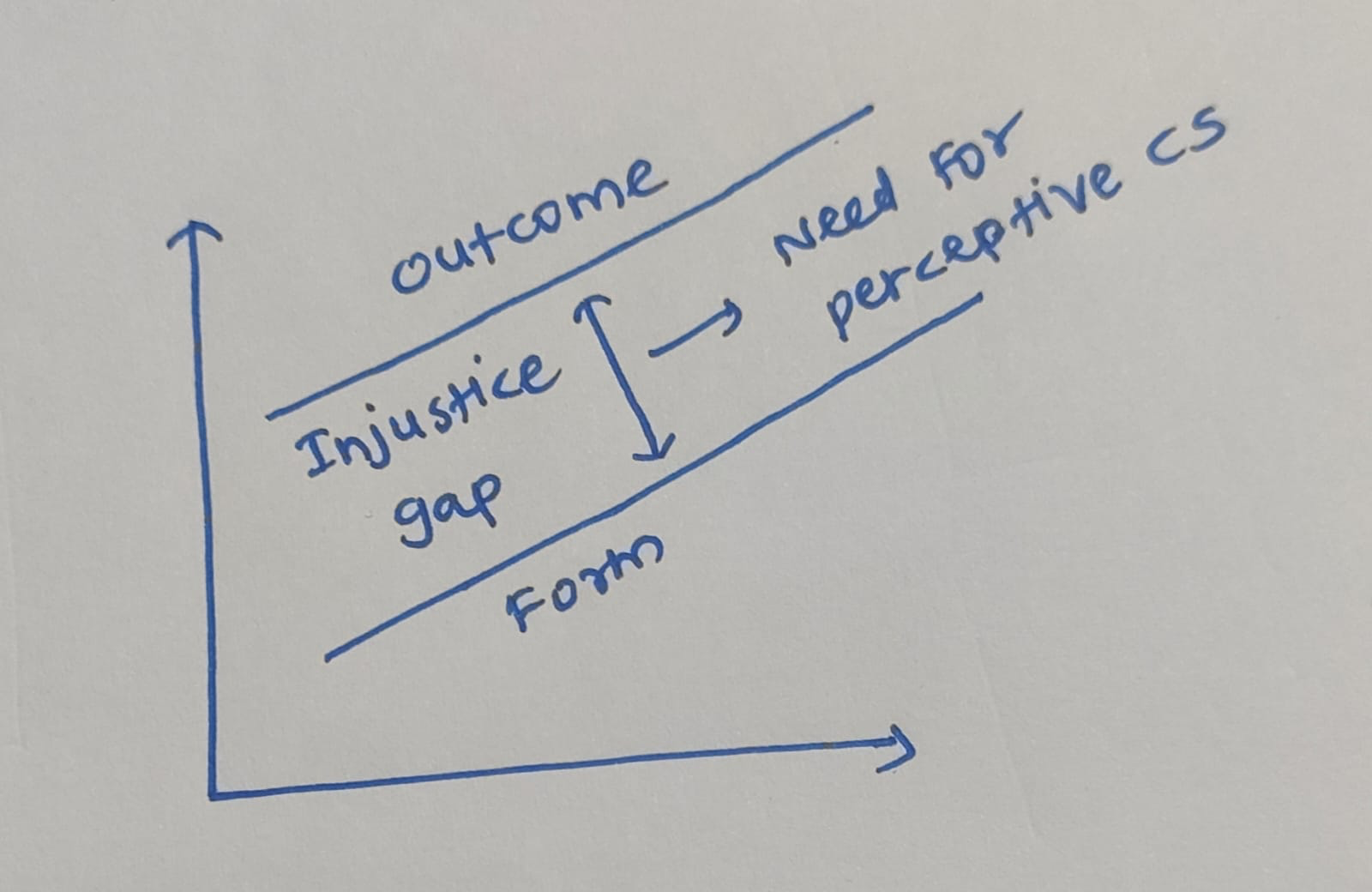
    Proactive Problem-Solving in emergencies- Eg- Dr. Rajendra Bharud (IAS) setting up an oxygen plant in tribal Nandurbar before the second COVID wave

    Empowering through Informal Networks- Eg- Armstrong Pame (IAS) built a 100km road via crowdfunding.

    Administrative Empathy for the Marginalized- Eg- In the “Project Sulaimani” model (Kozhikode), the “Substance” of dignity was prioritized.

    Reforming through Discretion- Eg- Kiran Bedi (IPS) turned Tihar Jail into a reformatory.

    Streamlining Processes for the Citizen- Perceptive officers redesign the “Form” itself. DM of Ganjam (Vijay Kulange) institutionalized “Doorstep Delivery” of pensions for the disabled

    Innovative problem solving- Eg- Rahul Kumar (IAS) converted abandoned buildings into libraries using maintenance funds.

    Defending the Rights of the Voiceless- Eg- S. Sankaran (IAS) provided instant subsistence relief to rescued bonded laborers.

    Rules are meant to serve justice and when they fail to do so, conscience must guide discretion.
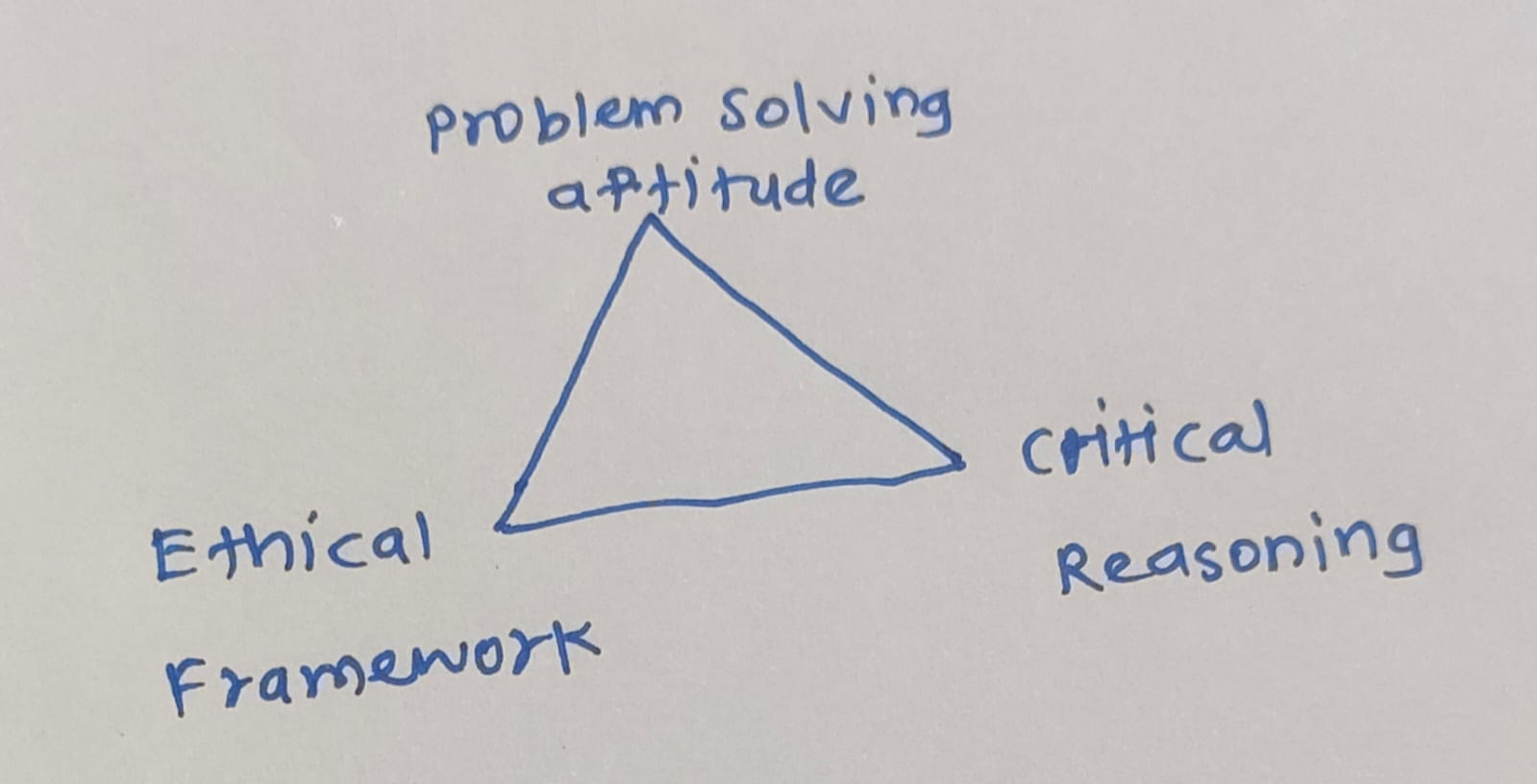
  • Q4 (a)“For any kind of social re-engineering by successfully implementing welfare schemes, a civil servant must use reason and critical thinking in an ethical framework.” Justify this statement with suitable examples.

    Social re-engineering refers to the deliberate attempt to transform social structures, behaviors, and cultural norms to achieve a more equitable society. Civil servants act as a “facilitator” of this change.

    Need for reason and critical thinking in an ethical framework for successful social engineering

    Diagnose real problems, not symptoms – Eg- Nutrition deficits need diet diversity, not only calories.

    Build public trust and legitimacy. Eg- Transparent DBT reduced leakage and improved targeting.

    Uphold constitutional morality over social morality. Eg- conditional cash transfer under “Kanyashree” scheme improved efficiency.

    Design context-specific solutions. Eg- Jal Jeevan Mission adapted to local water sources.

    Avoid one-size-fits-all policies. Eg- location specific housing designs under PM Awas.

    Prevent unintended harm. Eg- advising against loan waivers to avoid moral hazard.

    Balancing competing values. Eg- balancing efficiency and privacy in Aadhaar.

    Ensure bottoms up planning. Eg- fair, prior and informed consent of Gram Sabha under PESA.

    Prevent elite capture of policy. Eg- Social audits in MGNREGA.

    Promote behavioural change, not just compliance. Eg- Gandhigiri in SBM – giving flowers for open defecation.

    Ensure sustainability (intergenerational justice). Eg- PM-PRANAM to promote organic farming

    Protect rights while delivering welfare. Eg- Consent-based data use in health IDs.

    Social transformation requires critical reasoning to design effective interventions and ethical grounding to ensure justice, dignity and inclusion.

  • Q5 (b) To achieve holistic development goal, a civil servant acts as an enabler and active facilitator of growth rather than a regulator. What specific measures would you suggest to achieve this goal?

    “The civil servant is not a mere tool of the government; he is a servant of the people.” – C. Rajagopalachari

    For Viksit Bharat, civil services needs to shift from “weberian” rule-based bureaucracy to “democratic” and enabling bureaucracy.

    Holistic Development Goals

    Economic Inclusivity (Antyodaya).

    Gender Equality

    Environmental Sustainability

    Human Capital development

    Ease of Living

    Good governance

    Social harmony

    Civil servant as regulator vs enabler

    Measures needed

    Promoting “Ease of compliance” and reducing “time-tax” on entrepreneurs and citizens. Eg- “Deemed Approvals” and Single Windows (Bibek Debroy Committee)

    Attitudinal Transformation through “Mission Karmayogi” – From Mai-Baap (patronizing) culture toward a citizen-first approach.

    Institutionalizing Participatory Governance- Eg- Participatory Budgeting model of Porto Alegre, Brazil

    Strengthening Public-Private-Community Partnerships (PPCP)- Eg- In Kudumbashree in Kerala, civil servants facilitate growth by empowering 4.5 million women to run micro-enterprises.

    Data-Driven Decision Making- Eg- Aspirational Districts Programme uses a real-time dashboard to rank districts – make DM as competitive facilitator of local development.

    Adopting “Nudge Theory” for Social Engineering. Eg- Swachh Bharat Abhiyan succeeded because of community persuasion rather than just fining them for open defecation.

    Promoting Frugal Innovation- Encouraging officers to solve local problems with available resources.

    Safeguarding “Honest Discretion”by amending Section 17A of the Prevention of Corruption Act

    Facilitating “Last Mile” Digital Service Delivery through Common Service Centres (CSCs)

    This can help civil servants become an enabler that unlocks the productive potential of citizens, markets and communities.

    Accountability measures