The Assembly of Experts has appointed Mojtaba Khamenei as the new Supreme Leader of Iran following the death of former leader Ali Khamenei in a U.S.–Israeli strike.
Key Highlights
Age: 57
Position: Third Supreme Leader of Iran.
Predecessors:
Ruhollah Khomeini (1979–1989)
Ali Khamenei (1989–2026)
Role of the Supreme Leader in Iran
The Supreme Leader is the highest authority in Iran’s political system.
Key powers include:
Head of state
Commander-in-chief of armed forces
Control over the judiciary, military, and security agencies
Influence over foreign and defence policy
Ability to appoint key officials and veto decisions
Although Iran elects a President, the Supreme Leader holds ultimate authority.
[2016] Which of the following is not a member of ‘Gulf Cooperation Council’? (a) Iran (b) Saudi Arabia (c) Oman (d) Kuwait
PYQ Relevance[UPSC 2017] ‘Simultaneous election to the Lok Sabha and the State Assemblies will limit the amount of time and money spent in electioneering but it will reduce the government’s accountability to the people’ Discuss.Linkage: This PYQ tests understanding of electoral reforms, parliamentary accountability, and the role of elections in ensuring democratic responsiveness within India’s parliamentary system. It directly relates to the One Nation, One Election debate, where synchronised elections may reduce costs and administrative burden but could weaken continuous democratic accountability and federal political cycles.
Mentor’s Comment
The debate on One Nation, One Election (ONOE) has intensified following the introduction of a constitutional amendment proposal based on the High-Level Committee report (2023-24) chaired by former President Ram Nath Kovind. The proposal suggests synchronising the election cycles of the Lok Sabha and State Assemblies through amendments to Articles 83, 172, and a new Article 82A. The issue has become significant because it proposes a fundamental restructuring of India’s electoral calendar and constitutional functioning.
What Does the One Nation, One Election Proposal Entail?
Simultaneous electoral cycle: Aligns elections for Lok Sabha and State Assemblies to a single schedule.
Article 82A (Proposed): Enables the President to notify an “appointed date” aligning Assembly terms with the Lok Sabha cycle.
Truncation of legislative tenure: Requires some Assemblies to end their tenure earlier to achieve synchronisation.
Residual tenure rule: If a legislature dissolves early, the newly elected Assembly serves only the remaining term rather than a full five-year term.
Election Commission authority: Grants the Election Commission of India (ECI) power to defer State elections if simultaneous elections are impractical.
Does Comparative Constitutional Practice Support Simultaneous Elections?
Canada: Conducts separate federal and provincial elections, maintaining independent political cycles.
Australia: State legislatures have fixed four-year terms, while the House of Representatives has a maximum three-year tenure, making synchronisation structurally difficult.
Germany: Stability arises from the Constructive Vote of No Confidence, not from simultaneous elections.
South Africa and Indonesia: Use proportional representation systems, which distribute political power across parties and protect minority voices.
United States analogy: Fixed election cycles function because the executive is insulated from legislative confidence, unlike parliamentary systems.
How Could Simultaneous Elections Affect Parliamentary Accountability?
Feedback loop: Elections across different states allow voters to periodically signal approval or disapproval.
Democratic responsiveness: Frequent elections maintain governments’ dependence on public sentiment, a principle highlighted by James Madison in Federalist No. 52.
Campaign cycles: ONOE may reduce the frequency of elections but risks weakening institutional responsiveness.
What Problems Arise From the Concept of “Unexpired Term Elections”?
Residual mandate: Newly elected legislatures serve only the remaining tenure rather than a full five-year term.
Reduced electoral legitimacy: Governments formed mid-cycle may lack a fresh democratic mandate.
Policy distortions: Short-term governments may prioritise populist measures rather than structural reforms.
Administrative constraints: The Model Code of Conduct (MCC) and truncated tenure may weaken governance capacity.
Does the Proposal Threaten India’s Federal Structure?
Basic structure doctrine: The Supreme Court in S.R. Bommai v. The Union of India affirmed that federalism forms part of the Constitution’s basic structure.
Independent constitutional identity of states: States possess autonomous political cycles and democratic rhythms.
Mandate truncation risk: Aligning electoral cycles may prematurely terminate state mandates.
Central discretion: Proposed Article 82A(5) enables the ECI to defer State elections without clear criteria.
Could the Proposal Enable Constitutional Misuse?
Presidential Rule extension risk: If a State government falls mid-term, elections could be deferred to maintain synchronisation.
Article 356 safeguards: Currently restrict President’s Rule to one year (extendable only during emergencies with ECI certification).
Governance by Governor: Deferred elections could result in prolonged governance through central authority.
Judicial precedent: In NJAC Case, the Court held that constitutional validity depends on institutional design, not on assumptions of benign use.
Is the Fiscal Argument Strong Enough to Justify the Reform?
Election expenditure scale: Combined Lok Sabha and Assembly elections cost about ₹4,500 crore (0.25% of Union Budget).
GDP proportion: Electoral spending accounts for roughly 0.03% of GDP.
Historical data: Lok Sabha election expenditure historically ranged between 0.02-0.05% of GDP (1957-2014).
Administrative flexibility: Elections conducted in phases allow the ECI to rotate EVMs, VVPATs, and security forces.
Resource burden: Simultaneous elections could require significantly greater logistical capacity.
Conclusion
The proposal for simultaneous elections attempts to streamline electoral administration but risks distorting constitutional balance. India’s parliamentary democracy is built on continuous accountability, federal autonomy, and flexible electoral cycles. A reform that truncates mandates, centralises electoral timing, and alters democratic rhythms may weaken rather than strengthen democratic governance.
Why in the News Due to the West Asia conflict affecting shipments through the Strait of Hormuz, India is securing crude oil from alternative sources.
Key Points:
India imports about 88% of its crude oil needs; nearly half normally passes through the Strait of Hormuz.
Indian refiners are sourcing additional crude from:
United States
Russia
West Africa and Latin America.
Refineries have deferred maintenance shutdowns to maintain supply buffers.
A 30-day U.S. waiver (till April 5) allows delivery of already-loaded Russian oil cargoes to India.
Around 120 million barrels of Russian crude are currently in transit globally, some near India.
Concerns:
Alternative routes may increase freight and insurance costs.
Rising oil prices could increase India’s import bill, widen the current account deficit, and pressure the rupee.
Every $10 rise in crude prices may raise inflation by ~20–25 basis points.
[2011] In the context of global oil prices, “Brent crude oil” is frequently referred to in the news. What does this term imply? It is a major classification of crude oil. It is sourced from the North Sea. It does not contain sulphur. Select the correct answer using the code given below: (a) 2 only (b) 1 and 2 only (c) 1 and 3 only (d) 1, 2 and 3
The ongoing conflict in West Asia has raised serious concerns because its consequences extend far beyond oil supply disruptions. The region supplies a large share of India’s critical industrial inputs, and escalating tensions have increased fears of supply chain disruptions, particularly if shipping routes through the Strait of Hormuz are affected. India imported $98.7 billion worth of goods from the region in 2025, reflecting the depth of economic interdependence.
How Dependent is India on West Asia for Critical Industrial Inputs?
Industrial Raw Material Imports: West Asia supplies essential materials including limestone, sulphur, gypsum, direct reduced iron, and copper wires that support multiple manufacturing sectors.
Over 65% of India’s sulphur imports, 68.5% of limestone, 62.1% of gypsum, and 59.1% of direct reduced iron originate from West Asia
Trade Dependence: India imported $98.7 billion worth of goods from West Asia in 2025, indicating strong economic reliance on the region.
Regional Composition: West Asia includes Bahrain, Kuwait, Oman, Qatar, Saudi Arabia, and the UAE, along with Iran, Iraq, Israel, Jordan, Lebanon, Syria, and Yemen.
Strategic Industrial Inputs: More than half of India’s imports of several key commodities originate from the region, making supply diversification difficult in the short term.
Why Could Disruptions in the Strait of Hormuz Trigger Wider Economic Impacts?
Strategic Maritime Route: The Strait of Hormuz is one of the world’s most critical energy and trade chokepoints, linking the Persian Gulf to global markets.
Shipping Vulnerability: Missile and drone attacks on energy and logistics infrastructure across Gulf countries have intensified fears of shipping disruptions.
Energy Supply Shock: Any prolonged disruption could cause global oil supply shocks and disrupt industrial logistics.
Supply Chain Transmission: The Global Trade Research Initiative (GTRI) notes that disruptions lasting more than a week could rapidly impact industries dependent on imported raw materials
What Industrial Sectors in India are Most Vulnerable?
Construction and Infrastructure
Limestone Dependency: India imported $483 million worth of limestone from West Asia, accounting for 68.5% of its total limestone imports.
Gypsum Imports: India imported $129 million worth of gypsum, representing 62.1% of total imports.
Construction Impact: Both minerals are critical inputs for cement production and construction materials.
Infrastructure Risks: Supply disruptions could raise cement prices and delay infrastructure projects.
Fertiliser and Chemical Industry
Sulphur Imports: India imported $420 million worth of sulphur from West Asia, representing 65.8% of its sulphur imports.
Industrial Role: Sulphur is used to produce sulphuric acid, a key input for fertiliser manufacturing and chemical industries.
Agricultural Linkage: Fertiliser supply disruptions could indirectly affect agricultural productivity.
Steel Manufacturing
Direct Reduced Iron (DRI): India imported $190 million worth of DRI from West Asia, accounting for 59.1% of imports.
Industrial Importance: DRI is a critical input for steelmaking.
Industrial Output Risk: Supply disruptions could affect steel production capacity.
Diamond Processing Industry
Rough Diamond Imports: Over 40% of India’s rough diamonds come from West Asia.
Processing Hubs: These diamonds are processed in Indian diamond cutting and polishing hubs before being exported globally.
Export Risk: Supply disruptions could affect India’s global diamond trade competitiveness.
How Are Energy and Industrial Supply Chains Interconnected?
Energy Price Transmission: Rising energy costs increase production and transportation costs across industries.
Industrial Input Inflation: Mineral supply disruptions raise costs for cement, fertilisers, steel, and chemicals.
Export Sector Impact: Higher input costs reduce competitiveness in export-oriented sectors such as diamonds.
Macroeconomic Effect: Supply shocks contribute to inflation and industrial slowdown.
What Strategic Concerns Does This Crisis Highlight for India?
Supply Chain Concentration: Excessive dependence on a single region for multiple industrial inputs creates economic vulnerability.
Geopolitical Risk Exposure: Industrial stability becomes linked to geopolitical stability in West Asia.
Trade Route Security: Disruptions in maritime chokepoints threaten global trade flows.
Need for Diversification: Alternative supply sources and domestic production strategies are essential.
Conclusion
The West Asia conflict demonstrates that geopolitical crises can disrupt not only energy markets but also broader industrial supply chains. India’s dependence on the region for essential industrial inputs exposes structural vulnerabilities in sectors such as fertilisers, construction, steel, and diamond processing. Strengthening supply diversification, enhancing domestic resource capacity, and developing resilient trade networks are critical to safeguarding India’s economic and industrial stability.
PYQ Relevance
[UPSC 2017] The question of India’s Energy Security constitutes the most important part of India’s economic progress. Analyze India’s energy policy cooperation with West Asian Countries.
Linkage: The article highlights India’s deep economic dependence on West Asia not only for energy but also for critical industrial inputs such as sulphur, limestone, gypsum, and DRI, making regional stability vital for India’s economic security. The PYQ directly links geopolitics of West Asia, trade routes like the Strait of Hormuz, and India’s strategic supply chains, which are central themes discussed in the article.
Why in the News? Data from the United States Department of State shows a 69% fall in F-1 visas issued to Indian students in June–July 2025 compared to 2024.
Key Points:
F-1 visa: Non-immigrant visa for international students studying in the U.S.
Visas issued to Indians fell from 41,336 (2024) to 12,776 (2025) during the peak admission period.
Decline followed stricter immigration measures under Donald Trump’s administration, including:
Temporary pause in visa interviews
Expanded social media screening for applicants.
Chinese students also saw a decline, but smaller (about 56%).
Despite the drop, Indians remain the largest international student group in the U.S., with about 3.63 lakh students (31%) in 2024-25.
F-1 Visa
The F-1 visa is a non immigrant student visa issued by the United States that allows foreign students to study full time at accredited academic institutions in the United States.
It is the most common visa for international students pursuing higher education in the U.S.
[2018] Consider the following statements: Human capital formation as a concept is better explained in terms of a process, which enables 1. individuals of a country to accumulate more capital. 2. increasing the knowledge, skill levels and capacities of the people of the country. 3. accumulation of tangible wealth. 4. accumulation of intangible wealth.Which of the statements given above is/are correct? (a) 1 and 2 (b) 2 only (c) 2 and 4 (d) 1, 3 and 4
In the ongoing Aravalli definition case, the Amicus Curiae assisting the Supreme Court of India has alleged that a committee led by the Secretary of the Ministry of Environment Forest and Climate Change (MoEFCC)suppressed the views of the Forest Survey of India (FSI) while recommending a new definition of the Aravalli Range.
About Amicus Curiae is a Latin term meaning “friend of the court.”It refers to a person or lawyer appointed by a court to assist it in deciding a case, especially when the court requires additional expertise, independent opinion, or legal clarification.
Key Allegations by the Amicus Curiae
FSI’s views ignored: The committee report allegedly did not include the FSI’s warning that the proposed definition would exclude most Aravalli hills.
100-metre elevation criterion questioned
The committee proposed defining Aravalli hills as landforms with 100 m elevation above local relief.
FSI reportedly warned that this could exclude nearly 90% of the Aravalli landforms from protection.
Procedural issues in the report: The report was described as “unsigned and undated.”
It was not placed before or approved by the Central Empowered Committee (CEC).
Risk of weaker environmental protection: The definition may exclude many low-height hills, potentially allowing mining or construction in sensitive areas.
[2017] Consider the following statements: In India, the Himalayas are spread over five States only. Western Ghats are spread over five States only. 3. Pulicat Lake is spread over two States only. Which of the statements given above is/are correct? (a) 1 and 2 only (b) 3 only (c) 2 and 3 only (d) 1 and 3 only
PYQ Relevance[UPSC 2014] What do you understand by the concept “freedom of speech and expression”? Does it cover hate speech also? Why do the films in India stand on a slightly different plane from other forms of expression? Discuss.Linkage: The question examines the scope of Article 19(1)(a) and the permissible restrictions under Article 19(2), which form the constitutional basis for regulating hate speech in India. It links directly to current debates on judicial intervention, hate speech laws under the Bharatiya Nyaya Sanhita (BNS), and restrictions on speech to maintain public order and social harmony.
Mentor’s Comment
The debate on hate speech and constitutional accountability has resurfaced after recent judicial proceedings concerning alleged communal remarks by a senior political leader. Courts have reiterated that while India possesses several legal provisions to curb hate speech, implementation remains weak and inconsistent. The discussion also raises deeper constitutional questions, whether hate speech should be treated merely as a criminal offenceor also as a constitutional tort.
What is Hate Speech in Indian Law?
Hate speech in India does not have a single statutory definition. It generally refers to words, signs, electronic communication, or representations that incite hatred, discrimination, or violence against individuals or groups based on religion, race, caste, community, language, or place of birth. The regulation of hate speech operates through criminal law provisions under the Bharatiya Nyaya Sanhita, 2023 and constitutional restrictions that balance freedom of speech with public order and social harmony.
Key Legal Provisions
Bharatiya Nyaya Sanhita (BNS), 2023
Section 196: Penalises promotion of enmity or hatred between groups on grounds such as religion, race, caste, language, or community, especially when it threatens public tranquillity.
Section 298: Punishes deliberate and malicious acts intended to outrage religious feelings through words, signs, or representations.
Section 353(2): Criminalises statements, rumours, or reports that create or promote enmity, hatred, or ill-will between different classes of people.
Special Legislation
Scheduled Castes and Scheduled Tribes (Prevention of Atrocities) Act, 1989: Prohibits public insults, intimidation, or hate speech targeting SC/ST communities, particularly when committed in public view.
Electoral Law
Representation of the People Act, 1951: Treats appeals to religion, caste, or community during elections as a corrupt electoral practice, enabling action by the Election Commission of India.
Constitutional Basis
Article 19(1)(a): Guarantees freedom of speech and expression.
Article 19(2): Allows reasonable restrictions on speech in the interests of public order, security of the state, morality, and decency.
Key Concepts and Legal Understanding
Law Commission Definition: The Law Commission of India Report No. 267 characterises hate speech as speech that incites violence, discrimination, or hostility against groups based on identity markers.
Online Hate Speech Regulation: Offensive online speech earlier addressed under Information Technology Act, 2000 Section 66A was struck down in Shreya Singhal v. Union of India for vagueness; however, online hate speech remains punishable under BNS provisions.
Threshold for Criminal Liability: Hate speech law targets speech that creates public disorder, discrimination, or violence, not merely speech that causes offence or hurt sentiments.
Recent Policy Developments: States such as Karnataka have proposed dedicated legislation like the Karnataka Hate Speech and Hate Crimes (Prevention) Bill to impose stricter penalties and clearer definitions.
What has been the recent role of the judiciary in addressing hate speech?
Preventive guidelines on mob lynching and hate crimes: In Tehseen Poonawalla v. Union of India, the Supreme Court of India directed states to appoint nodal officers in every district, establish special task forces, identify sensitive areas, and ensure fast-track trials and victim compensation in hate crime cases.
Regulation of inflammatory speech during elections: In Abhiram Singh v. C.D. Commachen, the Supreme Court of India held that candidates cannot seek votes on the basis of religion, caste, race, language, or community, reinforcing secular electoral practices under the Representation of the People Act, 1951.
Need for legislative action against hate speech: In Pravasi Bhalai Sangathan v. Union of India, the Court acknowledged the growing threat of hate speech but stated that courts cannot create new offences and urged Parliament to enact stronger legislation.
Distinction between advocacy and incitement: In Shreya Singhal v. Union of India, the Court clarified that only speech that incites violence or public disorder can be restricted, establishing the “advocacy vs incitement” test for regulating speech.
Guidelines on preventive policing (2023 directions): The Supreme Court of India directed states to register FIRs suo motu against hate speech without waiting for formal complaints and mandated immediate preventive action by police authorities.
Recent judicial scrutiny (2026): Petitions seeking criminal prosecution of Assam Chief Minister Himanta Biswa Sarma for alleged communal remarks led the Supreme Court of India to direct petitioners to approach the Gauhati High Court, which issued a notice on 26 February 2026, reflecting continued judicial monitoring of hate speech complaints.
Why is hate speech difficult to define and criminalise?
Prejudicial discourse: Hate speech often manifests as narratives that marginalise communities rather than direct calls to violence, making legal classification difficult.
Ambiguity in language: Political rhetoric frequently uses dog whistles or coded expressions, enabling speakers to deny explicit intent.
Context of social hierarchy: Harm arises not only from the speech but also from existing inequalities and power relations.
High threshold for criminal liability: Criminal law requires proof of clear incitement or threat, which many divisive speeches avoid.
Should hate speech be treated as a constitutional tort?
State accountability principle: A constitutional tort holds the state liable when failure to act leads to rights violations.
Failure of enforcement: Repeated inaction by authorities allows hate speech to continue unchecked.
Judicial remedy: Courts could award compensation to victims when the state fails to prevent or respond to hate speech.
Strengthening institutional responsibility: Such recognition would compel authorities to respond swiftly to hate speech incidents.
How does political rhetoric contribute to the spread of hate speech?
Electoral mobilisation: Communal narratives are often deployed to consolidate vote banks.
Leadership signalling: Statements from senior political leaders influence behaviour of lower-level actors.
Institutional inertia: Lack of decisive action by institutions encourages repetition of divisive rhetoric.
Public discourse polarisation: Hate speech deepens social divisions and marginalises vulnerable groups.
How effective has the Supreme Court’s intervention been?
Judicial directives: In Tehseen Poonawalla v. Union of India, the Court issued guidelines to prevent mob lynching and hate crimes.
Administrative measures: Courts directed states to appoint nodal officers to monitor hate crimes.
Further orders (2023): States were directed to register FIRs suo motu in hate speech cases.
Monitoring challenge: Courts face difficulty supervising compliance across all states.
Reluctance to intervene directly: In some cases, the Court has transferred matters to High Courts rather than exercising its powers under Article 142.
Do existing legal provisions adequately address hate speech?
Representation of the People Act, 1951: Enables the Election Commission of India to act against hate speech during elections.
Section 123(3A) of the RPA, 1951: Defines the promotion of enmity or hatred between classes of citizens on grounds of religion, race, caste, community, or language as a “corrupt practice”.
Criminal law provisions: Sections of the IPC and now BNSS address promoting enmity between groups and inciting violence.
Implementation gaps: Evidence shows inconsistent enforcement of these provisions.
Political climate factor: Without political consensus, legal provisions alone struggle to curb hate speech.
Could a comprehensive hate speech law improve regulation?
Law Commission recommendation: Suggested dedicated criminal provisions for hate speech.
Karnataka Hate Speech and Hate Crimes (Prevention) Bill, 2025: Attempts to address hate speech through a legislative framework.
Conceptual limitation: Critics argue that the bill focuses on injury or offence rather than structural discrimination.
Broad definitions: Overly expansive definitions risk arbitrary application and misuse.
Implementation testing: Effectiveness can only be evaluated after operationalisation.
Conclusion
India possesses multiple legal provisions addressing hate speech, yet enforcement remains inconsistent. Judicial directives have attempted to strengthen accountability, but structural reforms, legislative clarity, and political commitment are essential. Effective regulation requires balancing free speech with constitutional values of equality, dignity, and social harmony.
The United States has announced plans to deploy precision gravity bombs against Iranian targets, signalling a shift in military strategy from remote missile strikes to direct aerial bombing operations. Earlier operations relied on stand-off munitions launched from safe distances to avoid Iranian air defence systems. The move toward gravity bombs suggests that the US military believes Iranian air defences have been significantly degraded in recent operations.
What are gravity bombs and how do they function?
Free-fall munition: Gravity bombs are unguided bombs without propulsion systems, dropped from aircraft and guided by gravity and aerodynamics toward the target.
Trajectory mechanics: The bomb’s path depends on gravity, aerodynamic drag, aircraft speed, altitude, and release angle.
Modern upgrades: The integration of JDAM kits with GPS guidance and steerable fins converts traditional bombs into precision-guided munitions.
Operational evolution: Despite their historical association with World War-era weapons, modern gravity bombs form a core component of contemporary US Air Force strike capability.
Operational theatres: These bombs have been deployed extensively in Iraq, Afghanistan, and Syria and also used in conflicts involving Israel in Gaza and Lebanon.
Why has the United States relied on stand-off weapons until now?
Stand-off strategy: Long-range munitions allow attacks without entering enemy air defence zones, minimizing pilot risk.
Cruise missile systems: Weapons such as the Tomahawk cruise missile are launched from naval destroyers or stealth aircraft and can strike targets hundreds of kilometres away.
Drone warfare: Systems like the LUCAS drone (Low-cost Unmanned Combat Attack System) provide remote strike capability
Risk mitigation: Stand-off weapons reduce the probability of pilot casualties and aircraft losses.
Air defence challenge: Iran’s layered air defence network previously limited the feasibility of direct bombing missions.
What are the main types of conventional US gravity bombs?
MK-82 (500-pound bomb): Designed for soft targets such as light vehicles, radar installations, and exposed infantry positions.
MK-83 (1,000-pound bomb): Used against reinforced structures, command posts, and smaller bridges.
MK-84 (2,000-pound bomb): A bunker-buster weapon capable of penetrating deep military complexes or large industrial facilities.
Blast impact: The MK-84 can produce craters up to 50 feet wide and 36 feet deep.
Operational series: Current US operations rely primarily on the Mark-80 series bombs equipped with JDAM kits.
How do conventional gravity bombs differ from nuclear gravity bombs?
Conventional payload: Standard gravity bombs carry chemical explosive charges and cause destruction through blast and fragmentation.
Nuclear variants: The US arsenal also includes nuclear gravity bombs such as the B61 and B83 series, capable of delivering explosive yields measured in kilotons or megatons of TNT.
Strategic control: Nuclear gravity bombs require explicit authorisation from the US President before deployment.
Escalation risk: Their use would represent a major escalation in global nuclear tensions.
Why is the US shifting from stand-off missiles to gravity bombs?
Cost efficiency: Cruise missiles cost millions of dollars per strike, while gravity bombs cost approximately $25,000-$30,000 when equipped with JDAM kits.
Air superiority assumption: Direct bombing missions are viable only if a military has neutralised enemy air defence systems.
Tactical trade-off: Gravity bombs reduce costs but increase risk to pilots and aircraft.
Strategic signalling: The shift suggests that US forces believe Iranian anti-aircraft systems have been weakened.
Which aircraft platforms can deploy these gravity bombs?
F-15 Strike Eagle: Multi-role fighter capable of precision ground strikes.
F-35 stealth fighter: Provides low-observable penetration of defended airspace.
B-52 Stratofortress: Long-range strategic bomber capable of carrying large payloads of conventional bombs.
Operational flexibility: Gravity bombs can be deployed by fighter jets, stealth aircraft, and heavy bombers, enabling diverse operational strategies.
Conclusion
The proposed use of gravity bombs reflects a significant tactical transition in modern warfare, from expensive remote missile strikes toward cost-efficient direct bombardment enabled by precision guidance technologies. This shift indicates confidence in degrading Iranian air defence systems while highlighting the continuing relevance of traditional aerial bombs in the era of advanced precision warfare.
PYQ Relevance
[UPSC 2021] How is S-400 air defence system technically superior to any other system presently available in the world?
Linkage: This question highlights the role of advanced air defence systems in establishing air superiority, a key factor that determines whether direct bombing missions (such as gravity bomb deployment) are feasible. Understanding such systems helps analyse modern warfare dynamics, including missile defence, aerial dominance, and the strategic use of precision air strikes.
An Iranian warship IRIS Dena was reportedly torpedoed by a US submarine in the Indian Ocean near Sri Lanka after participating in the MILAN 2026 and the International Fleet Review at Visakhapatnam. The incident has sparked debate about the legal framework governing naval warfare in international waters.
Key Legal Framework Governing Maritime Conflict
1. UNCLOS (United Nations Convention on the Law of the Sea)
United Nations Convention on the Law of the Sea regulates maritime zones, navigation rights and ocean governance.
It mainly governs peacetime maritime activities.
It does not directly regulate wartime naval operations.
Notably, the United States is not a signatory to UNCLOS.
2. Law of Naval Warfare
During armed conflict, naval warfare laws operate alongside UNCLOS.
Key principles include:
Warships of enemy states can be legitimate military targets.
The laws of armed conflict at sea regulate blockades, attacks, and treatment of vessels.
3. UN Charter and Use of Force
The United Nations Charter provides rules for the use of force.
Article 2(4): Prohibits the use of force against another state.
Article 51: Allows self-defence in response to an armed attack.
4. UN Security Council Authorization
Under Chapter VII of the UN Charter, the United Nations Security Council can authorise the use of force.
However:
Requires majority approval.
None of the permanent members must use their veto.
Maritime Zones Relevant to the Incident
Territorial Sea – up to 12 nautical miles from coast (full sovereignty).
Exclusive Economic Zone (EEZ) – up to 200 nautical miles where coastal states have economic rights.
High Seas – international waters beyond national jurisdiction. The attack reportedly occurred in the EEZ of Sri Lanka.
[2022] With reference to the United Nations Convention on the Law of Sea, consider the following statements: A coastal state has the right to establish the breadth of its territorial sea up to a limit not exceeding 12 nautical miles, measured from baseline determined in accordance with the convention. Ships of all states, whether coastal or land-locked, enjoy the right of innocent passage through the territorial sea. The Exclusive Economic Zone shall not extend beyond 200 nautical miles from the baseline from which the breadth of the territorial sea is measured. Which of the statements given above are correct? (a) 1 and 2 only (b) 2 and 3 only (c) 1 and 3 only (d) 1, 2 and 3
India and Finland have elevated their bilateral relations to a “Strategic Partnership in Digitalization and Sustainability” after talks between Narendra Modi and Finnish President Alexander Stubb in New Delhi.
Key Outcomes of the Visit
Strategic Partnership Focus
Cooperation will expand in high-technology sectors such as:
Artificial Intelligence
6G telecommunications
Clean energy
Quantum computing
Digital infrastructure
Agreements Signed
Three agreements were signed in the fields of:
Mobility cooperation
Environment and sustainability
Statistics and data sharing
New Institutional Mechanisms
The two countries will establish:
Joint Working Group on Digitalization
Joint Task Force on 6G technology
Consular Dialogue mechanism
Greater connectivity between startup ecosystems
Economic Cooperation
India and Finland aim to double bilateral trade by 2030.
The countries will co-host the World Circular Economy Forum in India.
Cooperation expected in sectors such as: Defence, Space, Semiconductors and Critical minerals
Existing India–Finland Cooperation
Examples highlighted during the meeting include:
Finnish company Nokia helping build telecom networks in India.
Finnish architectural collaboration in constructing the Chenab Railway Bridge.
Finland’s partnership in establishing the world’s largest bamboo-to-bioethanol refinery at Numaligarh in Assam.
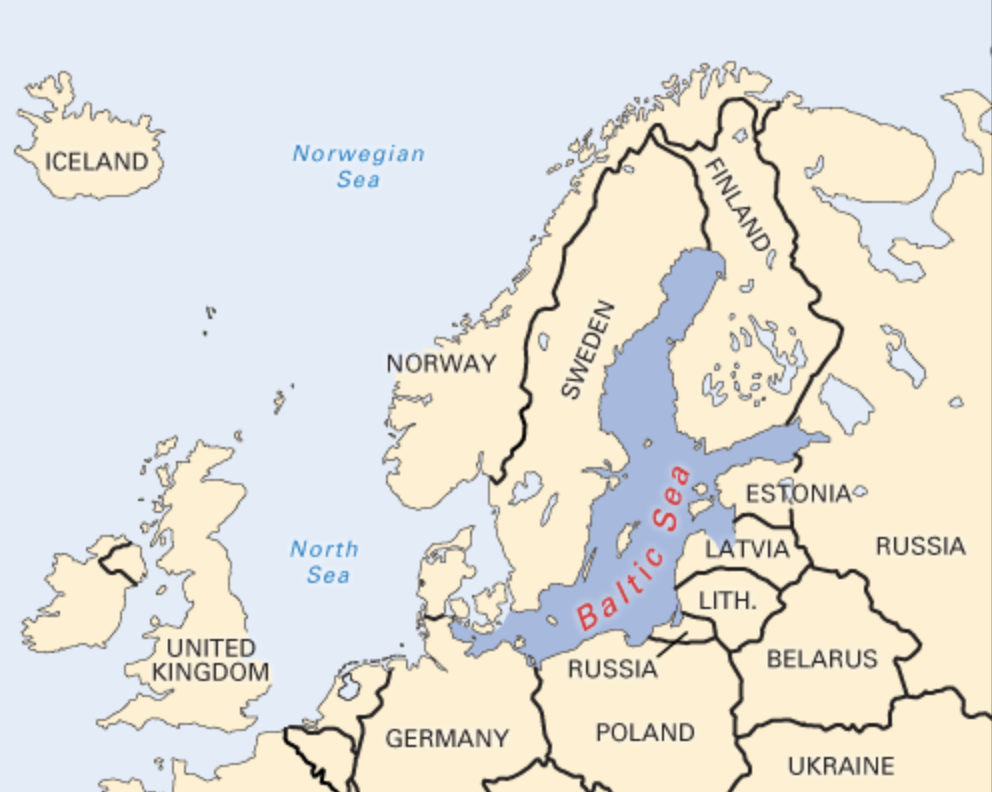
Consider the following countries: 1. Finland 2. Germany 3. Norway 4. Russia How many of the above countries have a border with the North Sea? (a) Only one (b) Only two (c) Only three (d) All four