💥Join UPSC 2027,2028 Mentorship (July Batch) + XFactor Notes & Microthemes PDF

GS Paper: GS2

  • A thousand days of Ukrainian resilience

    Why in the News?

    Exactly 1,000 days ago, world history took a dramatic turn when Russia initiated a full-scale military invasion with the goal of eradicating Ukrainian statehood, culture, and nationhood.

    ukraine

    How has Ukraine demonstrated resilience against Russian aggression?

    Ukraine has demonstrated remarkable resilience against Russian aggression since the full-scale invasion began on February 24, 2022. Key factors contributing to this resilience include:

    • National Unity: The unification of the Ukrainian people under President Volodymyr Zelenskyy has been crucial. This collective spirit has galvanized both military and civilian efforts to resist Russian advances, leading to significant victories such as the defense of Kyiv and the liberation of the Kharkiv and Kherson regions.
    • Military Strength: Throughout the conflict, the Ukrainian armed forces have transformed into one of the strongest military forces globally. Their ability to repel invaders and conduct successful counteroffensives has been widely recognized and admired internationally.
    • International Support: Ukraine has received substantial military, financial, and humanitarian aid from allies worldwide. This support has been instrumental in sustaining its defense efforts and rebuilding initiatives.
    • Cultural and Moral Resolve: The war has fostered a strong sense of identity among Ukrainians, who view their struggle as not only for survival but also for European values and democracy. This moral clarity strengthens their resolve against oppression.

    What are the human and economic costs of the conflict for the whole world?

    • Human Costs: Thousands of civilians, including 600 children, have died. Over eight million people have left Ukraine, and 3.6 million are still displaced. Russia has taken more than 20,000 children, many of whom are still missing or in captivity.
    • Economic Costs: Ukraine has lost over $400 billion, and it will need $500 billion to rebuild and $35 billion to clear landmines. The war has affected global supply chains and caused inflation worldwide.

    How can Ukraine in seeking peace and rebuilding?

    • Diplomatic Efforts: Ukraine continues to engage in diplomatic initiatives aimed at securing international support for its sovereignty and territorial integrity.
      • President Zelenskyy emphasizes that neutrality is not an option countries must choose sides in this conflict.
    • Reconstruction Plans: As rebuilding begins, Ukraine aims to restore its infrastructure while implementing reforms that demonstrate resilience and commitment to democratic values. This effort is supported by international partners who provide financial assistance1.
    • Cultural Restoration: Protecting cultural heritage is a priority, with initiatives underway to restore damaged institutions and memorialize those lost during the conflict. This cultural revival is integral to national identity and unity moving forward.

    What opportunity does India have from this conflict? (Way forward)

    • Strengthening Diplomatic Influence: India can play a key role in diplomatic efforts by supporting Ukraine’s sovereignty and promoting peace talks, which enhances its global standing as a peacebuilder.
    • Economic and Trade Opportunities: As Ukraine seeks reconstruction, India can explore investment and trade opportunities in rebuilding efforts, especially in sectors like infrastructure, agriculture, and technology.
    • Cultural and Educational Collaboration: India can collaborate with Ukraine in preserving cultural heritage and restoring educational institutions, fostering cultural exchanges and strengthening bilateral ties.

    Mains PYQ:

    Q What is the significance of Indo-US defence deals over Indo-Russian defence deals? Discuss with reference to stability in the Indo-Pacific region. (UPSC IAS/2020)

  • [pib] World Toilet Day, 2024

    Why in the News?

    • World Toilet Day, celebrated every year on November 19, is an official United Nations observance aimed at raising awareness of the global sanitation crisis and promoting action for safe toilets worldwide.
      • 2024 Theme: “Sanitation for Peace” – highlights the role of sanitation in promoting peace, security, and resilience.

    About World Toilet Day 

    • It is celebrated each year on November 19 to raise awareness about global sanitation issues.
    • It became an UN-recognized day in 2013 to emphasize the importance of safe sanitation under SDG 6.
    • It was first proposed by Jack Sim of the World Toilet Organization in 2001.
    • Purpose: To address the health, dignity, and environmental challenges linked to inadequate sanitation.

    Significance and Global Collaborations 

    • Public Health: Prevents waterborne diseases; 1,000 child deaths daily linked to unsafe sanitation (WHO).
    • UN Initiatives: UNICEF, WHO, and UN-Water work with countries to improve WASH (water, sanitation, hygiene) facilities.
    • NGO Support: Organizations like World Toilet Organization and WaterAid implement sanitation projects and awareness.
    • International Partnerships: Programs like Sanitation and Water for All (SWA) unify governments and NGOs for sanitation solutions.

    India’s Policies and Successes

    • Swachh Bharat Mission (SBM):
      • SBM-Grameen: Over 11.73 crore household toilets built; 5.57 lakh villages ODF.
      • SBM-Urban: 63.63 lakh household toilets constructed; 4,576 cities ODF.
    • Jal Jeevan Mission: Aims to provide piped drinking water to rural households, supporting sanitation.
    • Women’s Safety Campaigns: Programs like Hamara Shauchalay: Hamara Samman link sanitation to dignity, especially for women.
    • Waste Management: SBM Phase II focuses on sustainable waste management and sanitation systems.

    PYQ:

    [2024] Consider the following statements regarding World Toilet Organization:

    1. It is one of the agencies of the United Nations.
    2. World Toilet Summit, World Toilet Day and World Toilet College are the initiatives of this organization, to inspire action to tackle the global sanitation crisis.
    3. The main focus of its function is to grant funds to the least developed countries and developing countries to achieve the end of open defecation.

    Which of the statements given above is/are correct?

    (a) 2 only

    (b) 3 only

    (c) 1 and 2

    (d) 2 and 3

  • [pib] Italy-India Joint Strategic Action Plan (2025-2029)

    Why in the News?

    India and Italy signed an ambitious 5-year ‘joint strategic action plan 2025-2029’ that would include cooperation in space sector, critical technology, research, co-production of military equipment and widening the ambit of economic cooperation.

    Key Focus Areas of the Joint Strategic Action Plan:

    Details
    Political Dialogue • Regular high-level meetings and reciprocal visits.
    • Annual bilateral consultations between foreign ministries to discuss mutual interests.
    Economic Cooperation • Boosting trade, market access, and investments in sectors like transportation, agriculture, pharmaceuticals, and green technologies.
    • Promoting industrial partnerships and mutual investments.
    Connectivity • Collaborating on sustainable transport initiatives.
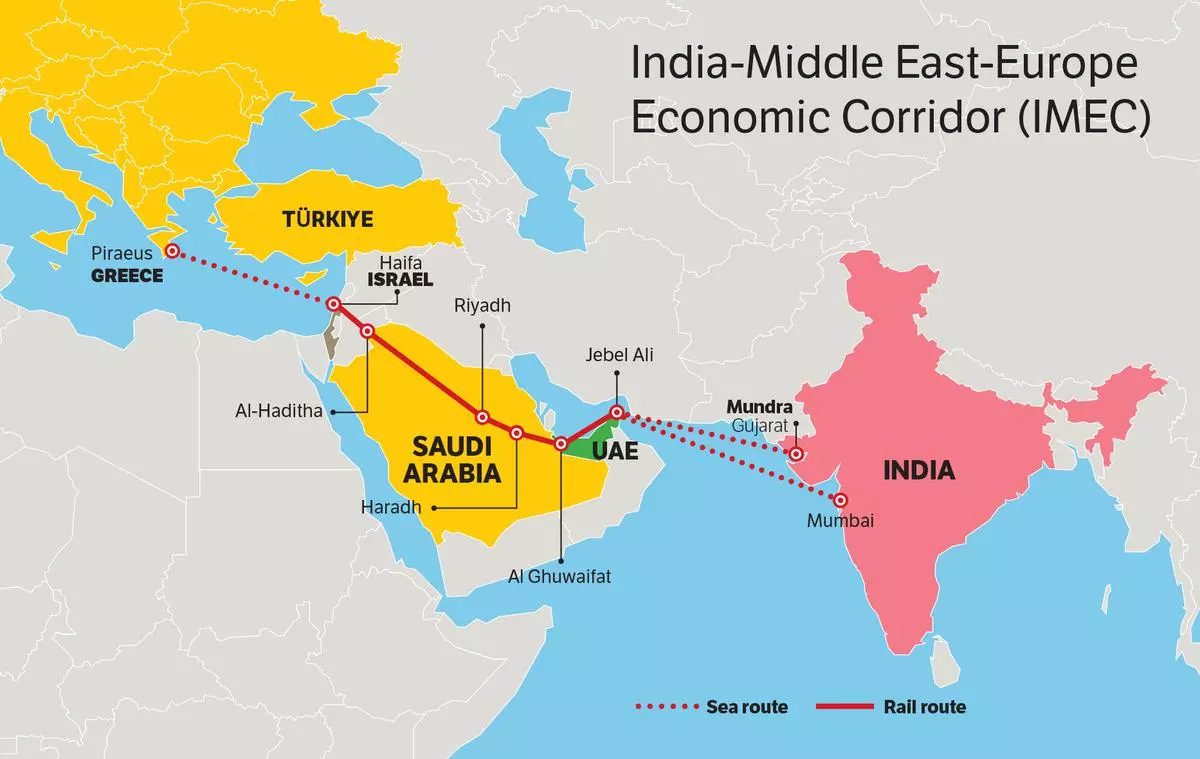
    • Enhancing maritime and land infrastructure, participating in the India-Middle East-Europe Economic Corridor (IMEEC).
    Science, Technology, IT, Innovation • Cooperation in emerging technologies like Artificial Intelligence (AI), telecommunications, and digital services.
    • Innovation, research collaborations, and exchange programs for scientific growth.
    Space Sector • Collaboration between the Italian Space Agency (ASI) and the Indian Space Research Organisation (ISRO) in Earth observation and lunar science.
    • Facilitating mutual commercial space collaborations.
    Energy Transition • Technology summits in renewable energy.
    • Cooperation in green hydrogen, biofuels, and energy efficiency.
    • Collaboration in global energy alliances like the International Solar Alliance (ISA) and Global Biofuels Alliance.
    Defence Cooperation • Joint defence consultations and staff talks.
    • Co-development of defence platforms and equipment.
    • Negotiating a Defence Industrial Roadmap.
    Security Cooperation • Capacity-building in cybersecurity and counter-terrorism.
    • Regular exchanges and sector-specific talks in multilateral forums.

    Significance of the Plan:

    • Time-Bound Initiatives: It outlines specific, time-bound initiatives to ensure measurable progress and accountability.
    • Mutual Growth: By focusing on co-development and co-production, the plan aims to leverage the strengths of both nations for mutual economic and technological advancement.
    • Strategic Alignment: The collaboration in areas like defence, energy transition, and space signifies a strategic alignment of interests, enhancing regional and global stability.
    • Cultural and People-to-People Ties: Emphasizing cultural exchanges and academic collaborations strengthens the social fabric and mutual understanding between the two countries.

    PYQ:

    [2016] With reference to the ‘Trans-Pacific Partnership’, consider the following statements:

    1. It is an agreement among all the Pacific Rim countries except China and Russia.

    2. It is a strategic alliance for the purpose of maritime security only.

    Which of the statements given above is/are correct?

    (a) 1 only

    (b) 2 only

    (c) Both 1 and 2

    (d) Neither 1 nor 2

  • [19th November 2024] The Hindu Op-ed: Manipur as a case for imposing Article 356

    PYQ Relevance:

    Q) Though the federal principle is dominant in our Constitution and that priniciple is one of its basic features, but it is equally true that federalism under the Indian Constitution leans in favour of a strong Centre, a feature that militates against the concept of strong federalism. (UPSC CSE 2014)

    Q) Given the diversities among tribal communities in India, in which specific contexts should they be considered as a single category? (UPSC CSE 2022)

    Prelims Relevance: 

    If the President of India exercises his power as provided under Article 356 of the Constitution in respect of a particular State, then (2018)
    (a) The Assembly of the State is automatically dissolved. 
    (b) The powers of the Legislature of that State shall be exercisable by or under the authority of the Parliament. 
    (c) Article 19 is suspended in that State. 
    (d) The President can make laws relating to that State.

    Mentor’s Comment:  Federal issues, state-centre conflicts, or the Northeast ethnic issues have always been the focal point for UPSC Mains and Prelims.

    Today’s editorial focuses on present ethnic crises and government failure in the Manipur state. It majorly talks about the implications that we can face after the application of the President’s Rule.

    We can use this content for topics like – Governance failure, Federal challenges, and Ethno-religious issues in India.

    _

    Let’s learn!

    Why in the News?

    The continued violence in Manipur since May 2023 shows a failure of governance, making it necessary for the President to use Article 356, even without waiting for the Governor’s report.

    About Article 356 

    Provision of President’s Rule: Article 356 allows the President of India to take direct control of a state if its constitutional machinery fails, typically leading to the dissolution or suspension of the state government.
    • Conditions for Invocation: It can be invoked based on the Governor’s report or if the President is otherwise satisfied that the state cannot be governed under constitutional provisions.

    Why the state of Manipur reflects a classic case of failure of Constitutional machinery?

    • Manipur exemplifies a failure of constitutional machinery due to the unabated violence that erupted in May 2023, which has led to significant loss of life and displacement.
      • The ongoing ethnic conflict between the Meitei and Kuki-Zo communities has resulted in over 250 deaths and the displacement of approximately 60,000 people, indicating a breakdown of law and order. 
    • The President of India is empowered under Article 356 to intervene when a state’s governance cannot be maintained according to constitutional provisions, and the situation in Manipur has prompted calls for such intervention.
      • The inability of both state and central governments to restore peace and protect citizens’ rights underscores this constitutional failure.

    What are the recent issues and challenges related to Manipur?

    • Ethnic Violence: Continuous clashes between the Meitei and Kuki communities have resulted in significant casualties and widespread destruction.
    • Displacement: More than 60,000 individuals have been displaced from their homes, living in precarious conditions in relief camps.
    • Government Inaction: Reports indicate a lack of effective response from both state and central governments, leading to accusations of complicity or negligence.
    • Human Rights Violations: Numerous reports highlight serious human rights abuses, including gender-based violence, extrajudicial killings, and the destruction of property.
    • Political Instability: The ruling party’s inability to manage the crisis has led to calls for accountability and demands for the Chief Minister’s resignation.
    What are the reasons behind the Manipur issues? 

    Historical Ethnic Tensions and Insurgency: Long-standing ethnic conflicts between the Hindu Meitei and Kuki-Zomi tribal groups, fueled by land rights disputes and autonomy movements, have created a climate of mistrust and violence.
    • Immediate Triggers: The Manipur High Court’s directive to consider ST status for the Meitei community sparked protests by tribal groups, escalating into violent clashes on May 3, 2023.
    • Socio-Political Dynamics: Discriminatory perceptions of government policies, such as eviction drives, and the influx of Kuki refugees from Myanmar have heightened tensions over demographic shifts and resource competition.

    The Supreme Court has issued several orders regarding the situation in Manipur:

    • Initial Response: On May 8, 2023, the Court acknowledged a temporary lull in violence but emphasized the need for law and order maintenance and humanitarian relief.
    • Suo Motu Action: In July 2023, following disturbing reports of sexual violence against women during the riots, the Court demanded accountability from the government for these violations and required updates on actions taken against perpetrators.
    • Continued Oversight: Despite multiple hearings (27 reported), the Court’s interventions have been criticized as slow and ineffective given the ongoing violence and human rights abuses.

    Way forward: 

    • Restoring Law and Order: Deploy neutral central forces to ensure immediate cessation of violence, provide security to all communities, and expedite relief and rehabilitation efforts for the displaced.
    • Inclusive Dialogue and Policy Reform: Facilitate dialogue among ethnic groups to address grievances, implement impartial governance measures, and establish long-term frameworks to promote harmony and equitable resource distribution.

    https://www.thehindu.com/opinion/lead/the-nilgiris-as-a-shared-wilderness/article68820359.ece

  • [pib] Ayushman Vay Vandana Yojana

    Why in the News?

    Within just three weeks of its launch, over 10 lakh senior citizens have enrolled for the Ayushman Vay Vandana Yojana.

    Note: Pradhan Mantri Vaya Vandana Yojana (PM-VVY) is a pension scheme and insurance policy for senior citizens in India. One must not get confused with Ayushman-VVY.

    About Ayushman Vay Vandana Yojana:

    Details
    Features and Provisions Cashless health coverage up to ₹5 lakh per year for senior citizens aged 70 and above.
    • Beneficiaries receive an Ayushman Vay Vandana Card, which grants them access to free treatment in empaneled hospitals across India.
    • Coverage includes medical consultations, treatments, pre- and post-hospitalization expenses, and complex procedures such as angioplasty.
    Structural Mandate Administered under the PM-JAY framework, ensuring structured implementation and integration with India’s health insurance network.
    • Implemented across empaneled hospitals in both urban and rural areas, ensuring nationwide reach.
    Centralized digital system tracks treatments, patient details, and expenses for transparency and accountability.
    Specifically designed for senior citizens, addressing their unique healthcare needs.
    Aims and Objectives Universal healthcare for senior citizens, ensuring access to essential medical treatments without financial strain.
    • Seeks to reduce out-of-pocket expenditure for elderly citizens and their families.
    • Encourages preventive care and early medical intervention to address age-related health conditions.
    Eligibility Criteria • Open to all Indian citizens aged 70 and above.
    • There are NO income/ family size restrictions, making it accessible to all senior citizens, regardless of their economic status.
    • Beneficiaries must be Indian citizens.
    • Seniors need to register under PM-JAY to receive the AVV Card and avail of the benefits.
  • [18th November 2024] The Hindu Op-ed: The ‘new’ Justitia and reimagining justice

    PYQ Relevance:
    Q) The judicial systems in India and the UK seem to be converging as well as diverging in recent times. Highlight the key points of convergence and divergence between the two nations in terms of their judicial practices. (UPSC CSE 2020)

    Mentor’s Comment:  UPSC Mains have continuously focused on some micro themes in the Judiciary like – Judicial Governance (2023-24), major decisions taken by Apex Court, and the issues/challenges associated with Indian Judiciary (in 2021).

    World Justice Project’s Rule of Law Index ranks India at 69th out of 139 countries,   reflecting public concerns about corruption and delays within the judiciary. Today’s Editorial talks about the challenges and some of the recent initiatives taken by the Judiciary.

    This Editorial can be effectively used as a ‘case study’ as well as for representing present ‘challenges’ faced by the Indian Judiciary.

    _

    Let’s learn!

    Why in the News?

    The Chief Justice of India unveiled a new statue of Lady Justice at the Supreme Court premises, replacing the earlier version. The new statue features Lady Justice in a saree, without a blindfold, holding scales in one hand and the Indian Constitution in the other.

    What is the Background?

    • Origin of Lady Justice: The modern depiction of ‘lady justice’ is rooted in Justitia, the Roman goddess of justice, characterized by a blindfold (clossed eyes), scales, and a sword.
    • The symbolism of the Blindfold: Introduced during the Renaissance as a satire on corrupt legal systems, it later came to represent impartiality during the Enlightenment, emphasizing justice without bias related to wealth or social status.

    How does this new representation reflect societal demands for justice?

    • Colonial Influence: The British legal system established in India introduced a hierarchical court structure. ‘Lady justice’ became a prominent symbol in Indian courts during this period.
    • Decolonial Intent: The new statue aims to replace colonial symbols with representations more aligned with Indian traditions.
      • Cultural Representation: The statue’s attire is changed to a saree, reflecting Indian heritage.
      • Open Eyes: The removal of the blindfold signifies that justice is not blind. It acknowledges social diversity and the need for nuanced approaches to justice for underprivileged groups.
      • Constitution as Symbol: The sword is replaced with the Constitution, highlighting its supremacy in Indian jurisprudence while maintaining the scales to signify impartiality in weighing evidence.

    What are the implications of it?

    • Controversies Around Statues: Historical controversies surrounding judicial statutes highlight the need for careful consideration of how justice is visually represented. Questions arise about whether justice should embody protest and resistance or reflect lived experiences and struggles.
    • Re-envisioning Justice: There is a call for justice representations to signify virtues such as feminism, anti-caste sentiments, secularism, and judicial independence. The aim is to creatively challenge existing biases within the judiciary while fostering discussions on improving public perceptions without perpetuating new forms of discrimination based on caste or religion.

    Interpretation may differ related to the new statute of Lady justice but the Government should focus on issues related Judiciary in India: 

    What are the challenges related to the judiciary?

    Judicial Delays: The Supreme Court recently dismissed a plea for a three-year timeline to resolve over five crore pending cases, citing practical challenges due to overwhelming litigation.
    Revised Memorandum of Procedure: There is an urgent need to finalize this document regarding judge appointments to enhance transparency and accountability in the judiciary.
    Representation Issues: Less than 25% representation from backward classes, scheduled castes, tribes, and religious minorities exists in higher judiciary roles; women represent less than 15%. Appointments should reflect India’s social diversity.
    Court Capacity: High Courts operate at only 60-70% capacity, exacerbating case backlogs. The government needs to expedite appointments based on collegium recommendations and fill vacancies in lower courts promptly.
    Priority Cases: Constitutional validity cases and those concerning individual liberties should be prioritized by the higher judiciary to ensure timely justice delivery.

    Way forward: 

    • Strengthen Judicial Capacity: Expedite appointments in higher and lower courts to address vacancies, enhance infrastructure, and streamline case management systems to reduce pendency.
    • Promote Diversity and Transparency: Finalize the Memorandum of Procedure for judicial appointments, ensuring representation of marginalized communities and women to reflect India’s social diversity and foster inclusivity.

    https://www.thehindu.com/opinion/op-ed/the-new-justitia-and-reimagining-justice/article68879316.ece#:~:text=The%20addition%20of%20the%20open,India%20in%20her%20left%20hand.

  • Will Riyadh summit have an impact on Gaza war?

    Why in the News?

    Saudi Arabia recently hosted a summit of Arab and Islamic leaders, urging an immediate halt to Israel’s military actions in Gaza and Lebanon while addressing the broader Palestine issue.

    What were the key outcomes of the Riyadh summit on the Gaza conflict?

    • Condemnation of Israeli Actions: The leaders from Arab and Islamic countries condemned the Israeli military’s actions in Gaza, describing them as “shocking and horrific crimes,” including accusations of genocide and ethnic cleansing.
    • Call for Investigation: They demanded the establishment of an “independent, credible” international committee to investigate these alleged crimes committed by Israel.
    • Support for Palestinian Statehood: The summit urged for measures to end the Israeli occupation and called for the establishment of an independent Palestinian state based on the borders prior to June 4, 1967, with East Jerusalem (Al-Quds) as its capital, aligning with the two-state solution and the Arab Peace Initiative of 2002.

    How does the summit reflect changing dynamics in regional politics?

    • Shift from Normalization: The summit reflects a significant shift in regional politics where Arab nations, which had previously moved towards normalising relations with Israel (as seen in the Abraham Accords), are now re-emphasizing the importance of addressing the Palestinian issue as a prerequisite for peace.
    • Collective Arab Stance: The gathering showcased a united front among Arab leaders in response to Israel’s actions, indicating a collective anger and a strategic pivot back towards supporting Palestinian rights rather than sidelining them for diplomatic ties with Israel.
    • Impact on Saudi-Israel Relations: Saudi Crown Prince Mohammed bin Salman’s strong condemnation of Israel’s actions signals a deterioration in potential normalization talks with Israel, as any future agreements are now explicitly linked to resolving the Palestinian question.

    What is the possibility of the Arab World Joining the war?

    • Unlikelihood of Military Action: Despite heightened tensions and strong rhetoric, it is highly unlikely that any Arab nation will engage militarily against Israel. Historical precedents show that while Arab states have condemned Israeli actions, they have refrained from direct military confrontation since 1973.
    • Focus on Diplomatic Solutions: The current sentiment among Arab nations leans towards seeking diplomatic resolutions rather than military involvement, especially given their previous moves towards normalizing relations with Israel.
    • Strategic Realignment: The recent developments suggest a subtle realignment in West Asia’s strategic landscape, where Arab states may prioritize internal stability and regional cooperation over direct military engagement, even as they express solidarity with Palestine.

    What can India do to resolve the Gaza conflict?

    • Mediation and Dialogue Facilitation: India can leverage its strong relationships with both Arab countries and Israel to act as a neutral mediator, facilitating dialogue and promoting peaceful negotiations between the conflicting parties.
    • Support for International Initiatives: India can advocate for a renewed focus on the two-state solution within international forums like the UN, aligning with global efforts to establish a sustainable, independent Palestinian state alongside Israel.

    Way forward: 

    • Strengthen Diplomatic Efforts: Arab nations should focus on reinforcing diplomatic pressure on Israel and the international community to address the Palestinian issue, promoting dialogue and supporting peaceful resolutions.
    • Support Palestinian Unity: Arab countries should work towards fostering unity within Palestinian leadership to present a coherent political front and advance their cause for statehood in international forums.

    Mains PYQ:

    Q How will the I2U2 (India, Israel, UAE and USA) grouping transform India’s position in global politics? (UPSC IAS/2022)

  • [pib] Press Council of India

    Why in the News?

    • National Press Day is celebrated annually on November 16 to honour the critical role of a free and responsible press in society.
      • It marks the start of the Press Council of India in 1966, established as a moral watchdog to uphold press standards and protect it from undue influence or threats.

    About the Press Council of India (PCI):

    Details
    Historical Background • Constituted on July 4, 1966, as an autonomous, statutory, and quasi-judicial body.
    • Established to act as a moral watchdog over the press to ensure it operates with ethics and independence.
    First Press Commission of India (1954) recommended forming a council to uphold professional standards in journalism.
    • Initially governed by the Press Council Act of 1965, later replaced by the Press Council Act of 1978.
    Composition of PCI • Comprises 28 members and a Chairperson.
    Chairperson appointed by a committee that includes the Chief Justice of India, the Speaker of the Lok Sabha, and a representative of the President.
    Member Representation:
    13 working journalists representing different news organizations.
    6 members from editors and newspaper owners.
    5 members from Parliament (3 from Lok Sabha, 2 from Rajya Sabha).
    1 nominee each from the University Grants Commission (UGC), the Bar Council of India (BCI), and Sahitya Akademi.
    Term: Each member serves a 3-year term and can be re-elected.
    Powers and Functions of PCI Quasi-Judicial Authority: PCI has statutory powers to hold inquiries into complaints against the press or journalists for professional misconduct.
    Inquiry Powers: PCI can summon witnesses and call for documents if necessary.
    Disciplinary Action: PCI has the authority to censure or admonish newspapers, editors, or journalists for violating professional ethics.
    Recommendations: Although PCI cannot enforce laws or impose penalties, it can recommend actions to the relevant authorities in case of serious violations.Functions:
    Upholding Press Freedom: Ensures that the press in India is free from undue influence and performs its duties with responsibility.
    Protecting Journalists: Investigates complaints of harassment or threats against journalists and defends their rights.
    Policy Advisory Role: Advises the government on policy issues that affect press freedom and media laws.
    Studies and Reports: Conducts studies on media issues, such as election reporting, defense coverage, and journalist safety, to provide guidelines on responsible reporting.


    PYQ:

    [2018] Right to Privacy is protected as an intrinsic part of Right to Life and Personal Liberty. Which of the following in the Constitution of India correctly and appropriately imply the above statement?

    (a) Article 14 and the provisions under the 42nd Amendment to the Constitution.
    (b) Article 17 and the Directive Principles of State Policy in Part IV.
    (c) Article 21 and the freedoms guaranteed in Part III.
    (d) Article 24 and the provisions under the 44th Amendment to the Constitution.

  • [16th November 2024] The Hindu Op-ed: Universities are different from religious institutions

    PYQ Relevance:
    Q) Discuss the main objectives of Population Education and point out the measures to achieve them in India in detail. (UPSC CSE 2021)

    Mentor’s Comment: UPSC Mains has always focused on Governance and Policy issues related to Education in India – Free and Compulsory Education (in 2022), National Education Policy (in 2021), and Inclusive development through SDG 4 (in 2020).

    In the 2022 Global Education Ranking, India was placed 107th out of 140 countries in terms of educational quality, reflecting ongoing challenges in achieving equitable access across different religious communities.

    Being an old civilization known for its rich tapestry of culture, Why is India standing back? 

    Is the Government/Judiciary taking any initiative to improve this situation?

    Today’s editorial focuses on the Educational Universities in India that need the governance call to ensure educational policies are free from religious bias while promoting a culture of tolerance. This editorial analysis can be used in both cases – for ‘Educational Policy Development’ and ‘Inclusive Development’.

    _

    Let’s learn!

    Why in the News?

    The Apex Court in a landmark 4:3 ruling by a seven-judge bench has overruled its past 1967 decision that denied AMU minority status.

    • In a new ruling, the court clarified that universities founded by minority communities should be recognized as such, even if they are governed by an Act of Parliament.
    • The court has now sent the question of AMU’s minority status to another panel for further review, which could have important implications for student admissions and the university’s independence.
    Background of this Case:

    1981 Reference: The AMU (Amendment) Act, 1981 was enacted by the Indian Parliament to restore the minority status of AMU after it had been challenged in previous judgments, including the landmark case of S. Azeez Basha vs. Union of India (1967) This amendment recognized AMU as a minority institution, allowing it to reserve seats for Muslim students.
    2019 Reference: In 2019, a three-judge bench of the Supreme Court referred the issue of AMU’s minority status to a larger seven-judge bench for further examination due to ongoing legal debates about the university’s classification as a minority institution and its implications for educational policies.
    2024 Judgement: The present AMU judgment is unique because the dissenting opinions did not truly oppose the broader interpretation of Article 30 of the Constitution, which protects minority educational institutions. Article 30 of the Indian Constitution guarantees the right of minorities to establish and administer educational institutions of their choice.
    • The ruling emphasized that past judgments should not limit the Constitution’s ability to evolve (as it did in the K.S. Puttaswamy case of 2017), and the minority status should involve a flexible and comprehensive approach.
    • The upcoming decisions regarding AMU’s status could significantly affect educational policies and minority rights in India.

    What are the fundamental differences between Universities and Religious Institutions?

    • Mission and Values: Universities focus on academic excellence, research, and critical thinking and offer diverse programs across various disciplines without a religious foundation.
      • Religious Institutions are based on specific religious beliefs, integrating faith and moral values into education that includes courses on theology and ethics.
    • Infrastructure and Networking opportunities: Universities often have larger classes, and a wide range of clubs and organizations, leading to less individual attention.
      • While religious institutions typically feature smaller classes, and emphasize faith-based activities, allowing for personalized mentorship that includes spiritual guidance.
    • Policies: Universities are open to all qualified students, adhering to non-discrimination policies. On the other hand, religious institutions may prioritize applicants who share their faith or require adherence to specific values.

    What are the implications of these differences on Academic Freedom?

    • Academic Freedom in Universities: A collegial governance model supports academic freedom by allowing faculty to pursue research and teaching without undue interference. It promotes an environment where diverse viewpoints can be expressed, fostering critical thinking and innovation.
      • However, increasing corporatization leads to a focus on profitability and market-driven priorities, which can undermine traditional academic values.
    • Academic Freedom in Religious Institutions: The hierarchical governance may restrict academic freedom, as decisions are often influenced by religious beliefs and doctrines. Faculty may face limitations if they conflict with the institution’s religious values.
      • While religious institutions may be more vulnerable to ideological conformity based on their foundational beliefs.

    What are the concerns about Minority Status criteria?

    • Governance Structure: Presently, the judges have argued that a university should not be granted minority status just because it has a governance structure/infrastructure similar to other universities.
    • Exclusive Communal Character: According to the judiciary, the minority status should depend on an institution primarily serving one particular community. However, this approach could limit the diversity and inclusivity that universities should promote.
    • Universities vs. Religious Institutions: The universities should not be treated like religious institutions, which have specific beliefs defining their identity.
    • Expecting secular universities to segregate based on community contradicts the principles of Article 30 of the Indian Constitution, which supports inclusive education for all.

    What needs to be focused?

    • Emphasize the Incorporating Act: Justice M.H. Beg, in Xaviers Case (1974), clearly stated that any law forcing a minority institution to give up its fundamental rights would be considered invalid.
    • Determining Criteria for Minority Status: The Chief Justice pointed out that simply mentioning the founder’s name in the law should not be the only factor in deciding minority status.
    • For example, other institutions face much stricter government oversight than AMU, including the power to dissolve them due to the unavailability of such criteria.
    • Need to increase the Government Regulations: Regulations mainly ensure that institutions operate efficiently and meet standards, not to determine whether they are minority institutions.
    • Increased government control is generally justified to protect the interests of non-minority students and others affected by decisions made by minority management.

    https://www.thehindu.com/opinion/lead/universities-are-different-from-religious-institutions/article68873247.ece

  • India needs a globally recognized public policy school

    Why in the News?

    India, the world’s largest democracy, still doesn’t have a top-tier public educational policy institution like those in the United States and Europe.

    What are the gaps between public policy education and job market demands?

    • Mismatch of Skills and Employability: According to the India Skills Report 2024, only 51.8% of fresh graduates meet industry employability standards, with the employability rate for individuals aged 22-25 at 58.6%.
      • This indicates that many graduates, including those from public policy programs, lack the skills required by employers.
    • Limited Policy-Specific Job Opportunities: Despite approximately 130 institutions offering public policy courses in India, there are few dedicated policy-specific jobs available.
      • Graduates often compete for roles in think tanks and NGOs, where job openings are limited, leading to intense competition and underemployment in their field.
    • High Unemployment Among Educated Youth: The India Employment Report 2024 shows that educated youth (with secondary or higher education) account for 65.7% of the total unemployed youth, a significant increase from 35.2% in 2000.
      • The unemployment rate for graduates is reported at 29.1%, highlighting a disconnect between educational attainment and job availability.
    • Theoretical Focus Over Practical Experience: Many public policy programs primarily emphasize theoretical knowledge rather than practical skills.
      • A report from the National Institute of Public Finance and Policy notes that these programs often lack hands-on training opportunities, limiting students’ ability to apply academic concepts to real-world situations.
    • Barriers to Government Employment: Access to government jobs remains limited compared to countries like the U.S., where structured recruitment routes exist for public policy graduates.
      • In India, there are no dedicated pathways for these graduates to enter government service, restricting their career options and diminishing the effectiveness of public policy education.

    How can India bridge the gap between public policy education and job market demands?

    • Curriculum Alignment: Public policy institutions must develop curricula that align closely with the needs of the job market, emphasizing practical skills alongside theoretical knowledge. This includes training in data analysis, policy evaluation, and understanding local governance dynamics.
    • Internship and Field Experience: Integrating mandatory internships and fieldwork into public policy programs can provide students with real-world experience and enhance their employability.
    • Focus on Local Contexts: Training should include a focus on India’s unique political dynamics, informal power structures, and socio-economic challenges to prepare graduates for effective policy-making in the Indian context.
    • Continuous Learning and Adaptability: Encouraging a culture of lifelong learning among students will equip them to adapt to evolving job market demands. This could involve offering short courses or certifications in emerging areas of public policy.

    What structural changes are necessary to improve Public Policy Education?

    • Decentralization of Power: Reforming the decision-making structure within public policy institutions to allow greater input from diverse stakeholders, including civil society and academia, can enhance the relevance and impact of policy education.
    • Interdisciplinary Approach: Incorporating interdisciplinary studies that combine economics, sociology, political science, and environmental studies can provide a holistic understanding of public policy issues.
    • Strengthening Research Capabilities: Investing in research facilities and encouraging academic contributions to policy debates can help bridge the gap between theory and practice, making institutions more influential in shaping policies.
    • Creating Non-Partisan Spaces: Establishing independent platforms for dialogue among various political factions can foster a more inclusive environment for policy discussions, reducing sycophancy and promoting evidence-based policymaking.
    • Partnerships with Global Institutions: Collaborating with established international public policy schools can enhance curriculum development and provide exposure to global best practices in governance and policy analysis.

    How can India establish itself as a global leader?  

    • Promoting Innovation in Policy Making: Encouraging innovative approaches to problem-solving within public policy education can position India as a leader in addressing complex global challenges such as climate change, health crises, and economic inequality.
      • The Indian government has to set a target to increase public investment in education to 6% of GDP, aligning with the recommendations of the Kothari Commission.
    • Investment in Human Capital: Prioritizing education and skill development across sectors will create a knowledgeable workforce capable of contributing to both national development and global governance.
      • For example, schools like the Harvard Kennedy School in the U.S. and the London School of Economics train leaders who influence both National and Global politics.
    • Fostering Sustainable Development Goals (SDGs):  India can bridge the gap in public policy education by aligning curricula with job market needs, promoting internships, and fostering global partnerships. This aligns with SDG Goal 4 (Quality Education) and Goal 8 (Decent Work and Economic Growth), ensuring skilled and employable graduates.

    Mains PYQ:

    Q National Education Policy 2020 is in conformity with the Sustainable Development Goal-4 (2030). It intends to restructure and reorient the education system in India. Critically examine the statement. (UPSC IAS/2020)