đŸ’„Join UPSC 2027,2028 Mentorship (July Batch) + XFactor Notes & Microthemes PDF

GS Paper: GS2

  • [pib] E-Sanjeevani Tele-Medicine Platform

    1.5 lakh teleconsultations were recently completed on the “eSanjeevani” and “eSanjeevani OPD” tele-medicine.

    Why Telemedicine?

    Telemedicine can increase the efficiency of care delivery, reduce expenses of caring for patients or transporting to another location, and can even keep patients out of the hospital.  

    E-Sanjeevani Platform

    • E-Sanjeevani is a platform-independent, browser-based application facilitating both doctor-to-doctor and patient-to-doctor tele-consultations.
    • It provides the ease of accessing the health records at the comforts of one’s home.
    • The application is based on invite-system which restricts it to the actual beneficiaries of the application.
    • It has a user-friendly interface which facilitates both tech-savvy and novice doctors/users in the rural and urban environment to access the application.
    • This eSanjeevani platform has enabled two types of telemedicine services viz. Doctor-to-Doctor (eSanjeevani) and Patient-to-Doctor (eSanjeevani OPD) Tele-consultations.
    • The former is being implemented under the Ayushman Bharat Health and Wellness Centre (AB-HWCs) programme.

    Services included:

    The telemedicine platform hosts speciality OPDs which include:

    • Gynaecology, Psychiatry, Dermatology, ENT, Ophthalmology, antiretroviral therapy (ART) for the AIDS/HIV patients, Non-Communicable Disease (NCD) etc

    With inputs from:

    https://www.cdac.in/index.aspx?id=hi_pr_eSanjeevani

  • Digital realities of India

    Context

    • Google has recently announced a decision to invest $10 billion in India.
    • To put that sum in context, it is over 10 times the money set aside for 100 smart cities and almost 20 times that for Digital India.
    • Purpose of that investment is stated to be digitising India.

    Digital realities of India Google must consider:

    1) Contradictions

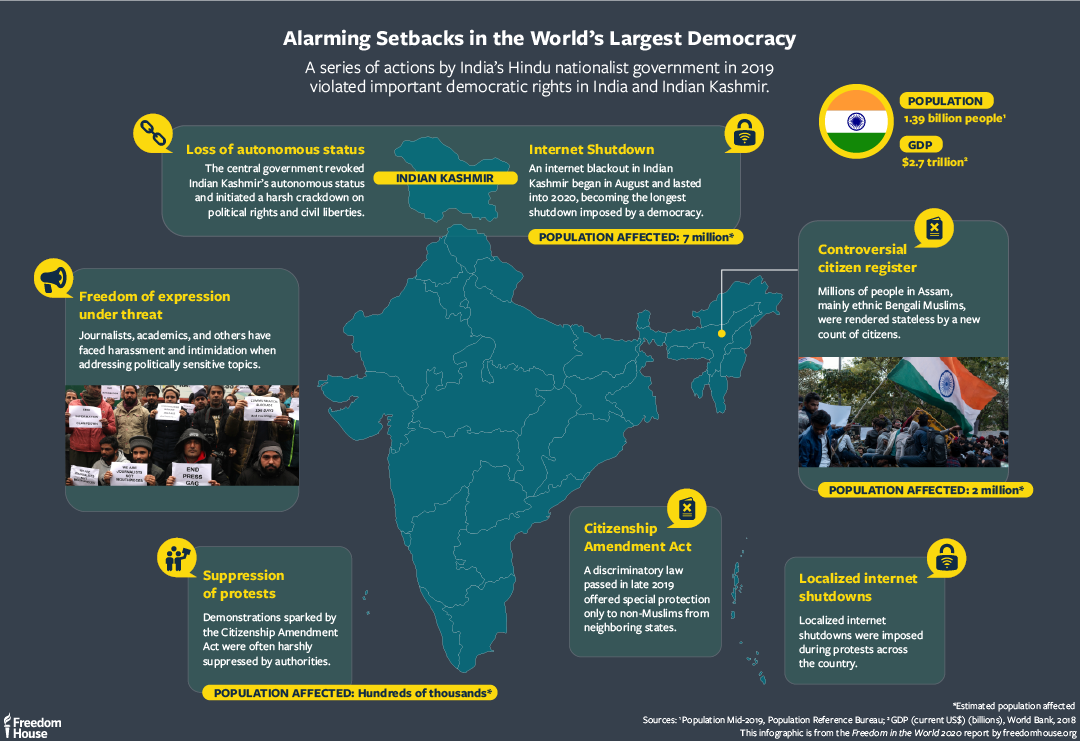
    •  India recognises the internet as a human right, and yet, has led the world in internet shutdowns.
    • Its internet speeds can be slow and variable, but its uptake of smartphones is the world’s fastest.
    • It is second only to China in internet users, app downloads and social media users.

    2) Lack of access to internet

    • Only 21 per cent of women are mobile internet users, while the percentage for men is twice that number.
    • There are many societal factors that make it difficult for women and girls to enjoy full digital freedoms.
    • In rural India, where two-thirds of the country lives, just about a quarter of the population has internet access.
    • Differences in digital access mean differences in the quality of education.
    • The gaps are both digital and societal.

    3) Lack of access to banks

    •  India’s workforce is mostly informal.
    • Only 22 per cent of recipients of migrant remittances have access to banks within one km, according to a report by the Centre for Digital Financial Inclusion.
    • A push from Google and its competitors could make payments and financial access more inclusive.

    4) Need for special products for India

    • you mention new products for India’s unique needs, of which there are many.
    • Consider the needs in the agricultural sector alone.
    • Impac of predictive data analytics and basic artificial intelligence into Indian agriculture using readily available technologies would be huge.
    • Precision farming to improve the timing and quantity of seeding, irrigation and fertiliser usage.
    • Helping farmers get credit at lower costs and helping predict commodity prices can create $33 billion in new value annually in Indian agriculture.

    5) Lack of data governance and issues with it

    • Nandan Nilekani has said, India will be data rich before it is “economically rich”.
    • With 650 million internet users, there is a lot of data richness already.
    • But this data richness exists without a forward-looking and inclusive data governance policy.
    • The experience with Aarogya Setu, provided a perfect case study on the discomfort within India because of the absence of such governance.

    6) Prevalence of misinformation

    • It is essential to get a handle on the “infodemic” problem in India.
    • The situation was made far worse by the pandemic, where many of the prejudices, fears have converged.
    • Google-owned YouTube is a critical medium for spreading information, fact and fiction.
    • To its credit, YouTube removed over 8,20,000 videos in India in the first quarter of 2020.
    • This is a great start, but the bad guys will only find ways around it and Google must make deeper investments in both human and machine intelligence to stay ahead.

    7) Geopolitical context

    • India is inching closer to the US corner in the tech Cold War between the US and China.
    • India-China relationship has cooled this year as a fallout from the political tensions between New Delhi and Beijing.
    • India acted against Chinese ByteDance-owned video streaming app TikTok, along with 59 mobile apps.
    • Google’s role will be important as a bargaining chip against China and the partnership with Jio.
    • This important role may help Google get some domestic leverage with Indian regulators.

    8) Job creation

    • Digital technologies can create jobs.
    • For this to happen India must streamline the regulations to enhancing the country’s digital and physical foundations.
    • There is also need for developing more progressive data accessibility laws.
    • To translate into productive work, the government must invest in skill-building and education at all levels.

    Consider the question “Digitising India could accelerate its progress toward development but there are certain factors which must be addressed before India could reap benefits of digitising. Examine such factors and suggest the ways to deal with the issues in digitising the country.”

    Conclusion

    There is a lot Google can take while working on the task of digitising India. But the above-mentioned factors will help Google chart out its journey well.

    Original articles:

    https://indianexpress.com/article/opinion/columns/sundar-pichai-google-education-digital-india-6544793/

  • Back in news: EWS quota law

    The Supreme Court has referred to a five-judge Constitution Bench a batch of petitions challenging the 103rd Constitution Amendment of 2019 that provides 10% reservation for Economically Backward Section (EWS).

    Try this question for mains:

    Q.What are the various constitutional challenges posed by the 103rd Constitutional Amendment Act?

    What does the reference mean?

    • A reference to a larger Bench means that the legal challenge is an important one.
    • As per Article 145(3) of the Constitution, “the minimum number of Judges who are to sit for the purpose of deciding any case involving a substantial question of law as to the interpretation of this Constitution” shall be five.
    • The Supreme Court rules of 2013 also say that writ petitions that allege a violation of fundamental rights will generally be heard by a bench of two judges unless it raises substantial questions of law.
    • In that case, a five-judge bench would hear the case.
    • Laws made by Parliament are presumed to be constitutional until proven otherwise in court.
    • The SC had refused to stay the 103rd Amendment. A reference will make no difference to the operation of the EWS quota.

    What is the 103rd amendment about?

    • It provides for 10% reservation in government jobs and educational institutions for EWS, by amending Articles 15 and 16 that deal with the fundamental right to equality.
    • While Article 15 prohibits discrimination on grounds of religion, race, caste, sex or place of birth, Article 16 guarantees equal opportunity in matters of public employment.
    • An additional clause was added to both provisions, giving Parliament the power to make special laws for EWS as it does for SCs, STs and OBCs.
    • The states are to notify who constitute EWS to be eligible for reservation.

    Issues with the law

    The SC agreed that the case involved at least three substantial questions of law, whether:

    • First, it violates the Basic Structure of the Constitution. This argument stems from the view that the special protections guaranteed to socially disadvantaged groups is part of the Basic Structure and that the 103rd Amendment departs from this by promising special protections on the sole basis of economic status.
    • Second, it violates the SC’s 1992 ruling in Indra Sawhney Case, which upheld the Mandal Report and capped reservations at 50%. In the ruling, the court held that economic backwardness cannot be the sole criterion for identifying backward class.
    • The third challenge has been of private, unaided educational institutions. They have argued that their fundamental right to practise a trade/profession is violated when the state compels them to implement its reservation policy and admit students on any criteria other than merit.

    What are the government’s arguments?

    • The Ministry of Social Justice and Empowerment filed counter-affidavits to defend the amendment.
    • When a law is challenged, the burden of proving it unconstitutional lies on the petitioners.
    • The government argued that under Article 46 of the Constitution, part of DPSP, it has a duty to protect the interests of economically weaker sections.

    1) The very identity of the Constitution has not been altered.

    2) Countering the claims about Indra Sawhney principle, the government relied on a 2008 ruling— Ashok Kumar Thakur v Union of India, in which the SC upheld the 27% quota for OBCs. Here, the court accepted that the definition of OBCs was not made on the sole criterion of caste but a mix of caste and economic factors, to prove that there need not a sole criterion for according reservation.

    3) For the unaided institutions, the government argued that the Constitution allows the Parliament to place “reasonable restrictions” on the right to carry on trade.

    B2BASICS

    What are the significances of the EWS quota?

    • Address economic inequality: Currently, the economically weaker sections of citizens have remained excluded from attending higher educational institutions and public employment due to their financial incapacity. Therefore, the 10% quota is progressive and could address the issues of educational and income inequality in India.
    • Constitutional recognition:The proposed reservation through a constitutional amendment would give constitutional recognition to the poor from the upper castes.
    • Remove stigma associated with Reservation: It will gradually remove the stigma associated with reservation because reservation has historically been related with caste and most often the upper caste look down upon those who come through the reservation.

    What are the challenges before the EWS quota?

    1.Eligibility criteria:

    • Critics claim that the 8 lakh income threshold is very high and will practically cover nearly all population not already covered by reservations.
    • Notably, NSSO and IT department data shows that at least 95% of Indian families will fall within this limit.
    • Other eligibility criteria have also claimed to be flawed.

    2.Sole economic criteria:

    • The Supreme Court in Indra Sawhney judgement has maintained that a backward class cannot be determined mainly with respect to the economic criterion.
    • Hence introducing reservation based on economic criteria would invite judicial scrutiny.

    3.50 percent limit:

    The SC has put a cap for reservations at 50% – the current proposal will exceed the limit and hence could be legally challenged.

    4.Determining economic backwardness:

    This is a  major challenge as there are concerns regarding the inclusion and exclusion of persons under the criteria.

    5.Enforcement:

    The implementation of the legislation would also be a great challenge since the states do not have the finances to enforce even the present and constitutionally mandated reservations.

    Shrinking jobs:

    When the government is trying to restrict its public services through the advancement of technology in the government system, providing quota in jobs will be a useless move.

    6.Encouraging reservations: 

    The intent of constitutional makers as originally manifested via Article 15 and 16 was to be reviewed after 10 years. However, instead of restricting the policy of positive discrimination, the government is pushing it in some or other forms.

    7.Populist initiative:

    When elections are near, many populists’ measures are put forward by political parties such as loan waiver, reservations, etc. Considering the low levels of political literacy and awareness among masses, political parties take leverage of the same thus impacting the socio-economic and political structure at large.

    8.Lack of proofs to back the outcomes:

    Even after years of reservation policy, there are no considerable pieces of evidence to support the achievements of the original intent of affirmative action. For instance, only about 4 percent each of rural Scheduled Tribe and Scheduled Caste households have a member in a government job.

    9.Lack of Level Playing Field:

    It has to be noted that the Upper ladder in the reserved category are mainly benefitted from the policy whereas the benefits do not reach the marginalized. It may also happen with respect to reservation based on economic criteria as well.

    What is the way forward?

    • One-time usage: Make sure that beneficiaries use their reserved category status only once in their lifetime. For example, a person shall not be allowed to use the reservation for jobs if he/she has already used it for college admissions. Aadhaar can be utilized for this purpose in order to prohibit the second usage.
    • Quality of education: The government should focus on quality in addition to access. For instance, it is no use to give reservation to the poor people in college admission if the quality of the education is low = they get no job. Hence, the quality of education should be given due attention from the primary school stage itself.
    • Vocational education: should be promoted with the necessary skills and knowledge to make them industry ready.
    • Entrepreneurship: Create a spirit of entrepreneurship and make them job giver instead of a job seeker.
    • Social upliftment measures: Alternative as well as effective social upliftment measures should be adopted instead of just focussing on reservation aspect.


  • Appointment of new Lt. Governor of the UT of J&K

    A veteran politician has been appointed as Lieutenant Governor of the Union Territory of Jammu and Kashmir.

    Try this PYQ:

    Q.Which one of the following suggested that the Governor should be an eminent person from outside the State and should be a detached figure without intense political links or should not have taken part in politics in the recent past? (CSP 2019)

    (a) First Administrative Reforms Commission (1966)

    (b) Rajamannar Committee (1969)

    (c) Sarkaria Commission (1983)

    (d) National Commission to Review the Working of the Constitution (2000)

    Office of the Lt. Governor

    • A Lt. Governor is the constitutional head of the union territories in India.
    • She/he is appointed by the President of India for a term of five years and holds office at the President’s pleasure.
    • Since the union territories of Delhi, J&K and Puducherry have a measure of self-government with an elected legislature and council of ministers, the role of the lieutenant governor there is mostly a ceremonial one, akin to that of a state’s governor.
    • In Andaman and Nicobar Islands and Ladakh however, the lieutenant governor holds more power, being both the head of state and head of government.
    • The other three UTs—Chandigarh; Dadra and Nagar Haveli and Daman and Diu; and Lakshadweep—are governed by an administrator.

    Some related facts

    • Unlike the lieutenant governors of other territories, they are usually drawn from the IAS or IPS.
    • Lieutenant governors do not hold the same rank as a governor of a state in the list of precedence.
    • Since 1985 the Governor of Punjab has also been the ex-officio Administrator of Chandigarh.
  • [pib] Sahakar Cooptube NCDC Channel

    Union Minister of Agriculture & Farmers’ Welfare has launched the Sahakar Cooptube NCDC Channel, a new initiative by National Cooperative Development Corporation (NCDC).

    Note: Article 19 states that the Right to form co-operative societies is a Fundamental Right and DPSP Article 43-B provides for the promotion of co-operative societies.

    Sahakar Cooptube

    • The Sahakar Cooptube Channel aims to facilitate the involvement of the youth in the cooperative movement.
    • Cooperatives lend strength to farmers to minimize risks in agriculture and allied sectors and act as a shield against exploitation.
    • The channel will give a boost to Atmanirbhar Bharat Abhiyan under which the government has announced a series of transformative measures and sector-specific financial packages to help agriculture.
    • The initiatives are steps towards One Nation One Market with the objective for India to become a food factory of the world.

    Back2Basics: NCDC

    • The NCDC is a statutory Corporation set up under an Act of Parliament on 13 March 1963.
    • The objectives of NCDC are:

    planning and promoting programmes for production, processing, marketing, storage, export and import of agricultural produce, foodstuffs, industrial goods, livestock and certain other notified commodities and services on cooperative principles and for matters concerned therewith or incidental thereto

    • NCDC Act has been further amended which will broad-base the area of operation of the Corporation to assist different types of cooperatives and to expand its financial base.
    • NCDC will now be able to finance projects in the rural industrial cooperative sectors and for certain notified services in rural areas like water conservation, irrigation and micro-irrigation, agri-insurance, agro-credit, rural sanitation, animal health, etc.
  • What is Parivar Pehchan Patra (PPP)?

    Haryana CM Manohar Khattar has distributed ‘Parivar Pehchan Patra’ to the eligible families and announced that welfare schemes of all departments would be linked with the PPP within the next three months.

    Practice question for mains:

    Q.What is Parivar Pehchan Patra (PPP) recently rolled out by Haryana Govt.? How it is beneficial compared to the Aadhaar?

    What is Parivar Pehchan Patra (PPP)?

    • It is an 8-digit Unique Identity Card number meant for each family to enable smooth and automatic delivery of several citizen-centric services.
    • The government will establish the scheme-wise eligibility of a particular family using this 8-digit code according to the information available in the PPP of the family.
    • The benefits, according to the schemes, shall automatically be transferred to the family using the same code.
    • PPP will ensure that not a single beneficiary is left out from the government benefits that they are entitled to.

    How is PPP different from the Aadhaar card?

    • The PPP, mathematically, is an integral number of Aadhaar.
    • While Aadhaar represents an individual as a unit, a PPP represents a family as a unit. Most of our government schemes are structured around the family.
    • It is not structured around an individual.
    • For example, ration eligibility is there for the family but the family can split it into various members as long as they are above 18 years and say they are separating entitlements for all individuals.

    Will it be mandatory for every family of Haryana to get PPP?

    • No, it will not be mandatory for every family of the state to obtain a PPP.
    • But, PPP is mandatory for families availing benefits under government schemes.
    • Also, whenever a family wants to avail any government scheme, it will have to first get a PPP to be eligible.

    The logic behind

    • Haryana officials said although there is a union government’s Aadhaar card, it contains individual’s details and does not cater to the entire family as a unit.
    • In certain circumstances, it may not be possible for a state government to keep track of all the families residing in the state.
    • Although the ration card system is there, it is not updated and does not contain adequate family records.
    • With the PPP, it will be easier for the state government to maintain a complete database of all the state dwellers.

    How would it work?

    • To begin with, the government has already linked PPP with three social security schemes – old age Samman allowance, divyang pension, and the widow and destitute women pension scheme.
    • For instance, when a family member turns 60, they will automatically get a message through the software and will automatically start getting benefits of the old-age pension if they meet the required criteria.
    • Similarly, the teenagers will get messages on turning 18 years old and shall become eligible for various government schemes that will be notified to them through the software.
  • National Education Policy and current status of education

    The article contrasts the targets set in the National Education Polity with the present state of education in the country.

    Key recommendations

    • Redesigning the school curriculum to accommodate early childhood care and education.
    • Ensuring universal access to education.
    • Increasing gross enrolment in higher education to 50% by 2035.
    • Improving research in higher education institutes by setting up a Research Foundation.

    Let’s take stock of the current situation on the above-suggested parameters.

    1) Universal Access to Education

    • Despite the Right to Education Act-2009 retaining children remains a challenge for the schooling system.
    • As of 2015-16, Gross Enrolment Ratio was 56.2% at senior secondary level as compared to 99.2% at primary level.
    • Data for all groups indicates a decline in GER as we move from primary to senior secondary for all groups.
    • This decline is particularly high in case of Scheduled Tribes.

    NEP 2020 recommendations

    • The NEP recommends strengthening of existing schemes and policies which are targeted for such socio-economically disadvantaged groups.
    • Further, it recommends setting up special education zones in areas with a significant proportion of such disadvantaged groups.
    • A gender inclusion fund should also be setup to assist female and transgender students in getting access to education.

    2) GER to 50% in higher education

    • The NEP aims to increase the GER in higher education to 50% by 2035.  
    • As of 2018-19, the GER in higher education in the country stood at 26.3%.
    • The annual growth rate of GER in higher education in the last few years has been around 2%.

    NEP 2020 recommendations

    • The NEP recommends increasing capacity of existing higher education institutes by restructuring and expanding existing institutes.
    • It recommends that all institutes should aim to be large multidisciplinary institutes, and there should be one such institution in or near every district by 2030.
    • Further, institutions should have the option to run open distance learning and online programmes to improve access to higher education.

    3) Restructuring of Higher Education Institutes

    • The NEP notes that the higher education ecosystem in the country is severely fragmented.
    • At present, there is complex nomenclature of higher education institutes (HEIs) in the country such as ‘deemed to be university’, ‘affiliating university’, ‘affiliating technical university’, ‘unitary university’.
    • These shall be replaced simply by ‘university’.

    NEP 2020 recommendations

    • The NEP recommends that all HEIs should be restructured into three categories:
    • 1)  research universities focusing equally on research and teaching.
    • 2)  teaching universities focusing primarily on teaching.
    • 3) degree-granting colleges primarily focused on undergraduate teaching.
    •  All such institutions will gradually move towards full autonomy – academic, administrative, and financial.

    4) National research foundation to boost research

    • The NEP states that investment on research and innovation in India, at only 0.69% of GDP, lags behind several other countries.
    • The total investment on R&D in India as a proportion of GDP has been stagnant at around 0.7% of GDP.
    • Of which 58% of expenditure was by government, and the remaining 42% was by private industry.

    NEP 2020 recommendation

    • To boost research, the NEP recommends setting up an independent National Research Foundation (NRF).
    • The Foundation will act as a liaison between researchers and relevant branches of government as well as industry.
    • Specialised institutions which currently fund research, such as the Department of Science and Technology, and the Indian Council of Medical Research, will continue to fund independent projects.
    • The Foundation will collaborate with such agencies to avoid duplication.

    5) Digital Education

    • The NEP states that alternative modes of quality education should be developed when in-person education is not possible.
    • But let’s look into the accessibility of such mode.
    • As of 2017-18, only 4.4% of rural households have access to a computer (excludes smartphones).
    • Nearly 15% have access to internet facility.  Amongst urban households, 42% have access to the internet.

    NEP 2020 recommendations

    • Several interventions are recommended-
    • (i) developing two-way audio and video interfaces for holding online classes.
    • (ii) use of other channels such as television, radio, mass media in multiple languages to ensure the reach of digital content where digital infrastructure is lacking.

    6) Increasing public spending on education to 6% of GDP

    • Public spending of 6% of GDP was first made by the National Policy on Education 1968 and reiterated by the 1986 Policy.
    • NEP 2020 reaffirms the recommendation of increasing public spending on education to 6% of GDP.
    •  In 2017-18, the public spending on education-includes spending by centre and states-was budgeted at 4.43% of GDP.
    •  In 2020-21, states in India have allocated 15.7% of their budgeted expenditure towards education.
    • States such as Delhi, Rajasthan, and Maharashtra have allocated more than 18% of their expenditure on Education for the year 2020-21.
    • On the other hand, Telangana (7.4%), Andhra Pradesh (12.1%) and Punjab (12.3%) lack in spending on education, as compared to the average of states.

    Consider the question “Examine the provision with regard to increasing research in the country in the National Education Policy 2020.”

    Conclusion

    The National Education Policy is an ambitious document with the potential to transform. What is required is the zeal to implement and assess the progress by analysing the outcomes.


    Source-

    https://www.prsindia.org/theprsblog/national-education-policy-recommendations-and-current-scenario

  • Higher Education Financing Agency (HEFA)

    The JNU has got approval for a fund from the Higher Education Funding Agency (HEFA) for the construction of new infrastructure.

    Try this PYQ:

    What is the aim of the programme ‘Unnat Bharat Abhiyan’? (CSP 2017)

    (a) Achieving 100% literacy by promoting collaboration between voluntary organizations and government’s education system and local communities.

    (b) Connecting institutions of higher education with local communities to address development challenges through appropriate technologies.

    (c) Strengthening India’s scientific research institutions in order to make India a scientific and technological power.

    (d) Developing human capital by allocating special funds for health care and education of rural and urban poor, and organizing skill development programmes and vocational training for them.

    About HEFA

    • HEFA is a joint venture company of Canara Bank and Ministry of Human Resource Development.
    • It provides financial assistance for the creation of educational infrastructure and R&D in India’s premier educational institutions.
    • All the Centrally Funded Higher Educational Institutions will be eligible to join as members of the HEFA.
    • For joining as members, the educational institution must agree to escrow a specific amount from their internal accruals for a period of 10 years to the HEFA.

    Funding pattern of HEFA

    • HEFA will have an authorized capital of 2,000 crore rupees and the government equity would be 1,000 crore
    • It also mobilizes CSR funds from Corporates/PSUs which will, in turn, be released for promoting research and innovation in these institutions on a grant basis.
    • The principal portion of the loan will be repaid through the ‘internal accruals’ of the institutions earned through the fee receipts, research earnings etc.
  • Mythmaking and Article 370

    The articles talk about various myths that have been building around the issues of Jammu and Kashmir. Not only does these myths affect the political outlook towards the state but is also responsible for people’s perspective on this whole story. Go on and read to understand further..

    The myths

    Kashmir has been a favourite site of our national mythmaking; myths that have over the years assumed larger-than-life manifestations in our collective psyche.

    #Myth1

    • Article 370 is considered as the root cause of terrorism in Jammu and Kashmir.
    • But there is a little material basis to it — neither Article 370 can be considered as responsible for terrorism in the Valley nor has its removal ensured a reduction in terrorism.

    #Myth2

    • Article 370 is also held responsible for ruining J&K, stalling its development, preventing proper health care and blocking industries. Once again, these arguments also lack merit and evidence.
    • J&K, as a matter of fact, has been doing much better than most other Indian States and one of the reasons for this was the land reforms carried out in the State in the early 1950s which was possible precisely because of the presence of Article 370.
    • Also, private investors do not set up shop in Kashmir due to militancy which is a product of an existing conflict; not because of Articles 370 or 35A.

    #Myth3

    • If J&K is doing better than the other Indian States, it is because of the massive amounts of funds provided by New Delhi.
    • The real argument here is not whether Kashmir received funding from New Delhi but massive funding as it is often made out to be.
    • Funds from the center can be divided as:
    • Funds to take care of J&K government’s revenue deficit: J&K, for historical reasons, has had a bloated bureaucracy in comparison to other States and their salaries and pensions have been financed by the central government. But these funds do little for the State’s economy or the general population.
    • Then there are routine transfers of funds from the Centre to J&K just as transfers take place from New Delhi to other States.
    • Finally, J&K also received funds due to its special category State status which again is a case with several other Indian States.
    • Put differently, J&K’s better performance in comparison to most other Indian States is at least partly because of Article 370, and its well-being is not necessarily a result of New Delhi’s economic packages.

    #Myth4

    • Development can defeat militancy and insurgency.
    • The reality is that development may not lead to the pacification of the conflict in Kashmir.
    • The Kashmir conflict is a function of complex historical grievances, politico-ethnic demands, increasing religious radicalisation, and Pakistan’s unrelenting interference in the Kashmir Valley.
    • It would be simplistic to imagine that such a multi-layered and complex conflict can be resolved by development alone.
    The deep impact of mythmaking
    • Changed the way how common people understand and treat Kashmir and Kashmiris.
    • Ideas like “Kashmir needs to be reunited with the rest of India” have become a powerful claim made by such representations and political articulations.
    • Yet another popular perception about ‘Kashmiris as troublemakers and sympathisers of terror’ has led to a noticeable increase in the mistreatment of Kashmiri Muslims in the rest of the country.
    Conclusion

    The way forward here is not in celebrating the scrapping of Article 370. It lies in critically examining various outcomes of this process. It is essential that New Delhi work the local people and leaders to reduce the trust and legitimacy deficit that we see today.

  • In news: Mahatma Gandhi National Rural Employment Guarantee Scheme

    • One-third of the way through the financial year, government data shows that the MGNREGA scheme has used up almost half its allocated funds.
    • Its spending has been more than â‚č48,500 crores out of the expanded â‚č1 lakh crore allocations announced following the COVID-19 outbreak.

    Try this question for mains:

    Q.Discuss how the MGNREG Scheme has been providing a minimum basic income since the Covid pandemic. Also discuss how it can prove to be a game-changer if coupled with Direct Benefit Transfer (DBT).

    About MGNREGA

    • The MGNREGA stands for Mahatma Gandhi National Rural Employment Guarantee Act of 2005.
    • This is labour law and social security measure that aims to guarantee the ‘Right to Work’.
    • The act was first proposed in 1991 by P.V. Narasimha Rao.

    Its objectives

    • To enhance the livelihood security of the rural poor by generating wage employment opportunities.
    • To create a rural asset base which would enhance productive ways of employment, augment and sustain a rural household income.

    Features of the Scheme

    • MGNREGA is unique in not only ensuring at least 100 days of employment to the willing unskilled workers, but also in ensuring an enforceable commitment on the implementing machinery i.e., the State Governments, and providing a bargaining power to the labourers.
    • The failure of provision for employment within 15 days of the receipt of job application from a prospective household will result in the payment of unemployment allowance to the job seekers.
    • Employment is to be provided within 5 km of an applicant’s residence, and minimum wages are to be paid.
    • Thus, employment under MGNREGA is a legal entitlement.

    Also read:

    [Burning Issue] Reorienting MGNREGA in times of COVID