Mains Ready By December. Smash Mains & Smash PYQ Admissions Open

GS Paper: GS3-15.Science and Technology- Developments and their Applications and Effects in Everyday Life.

  • [pib] UV Blaster: A UV Disinfection Tower

    The DRDO has developed an Ultra Violet (UV) Disinfection Tower for rapid and chemical-free disinfection of high infection-prone areas.

    GYAN:

    We have a UV filter in our home based water filter.  Ever wondered, how do UV rays kill viruses/bacteria?

    UV Blaster

    • The UV blaster is a UV based area sanitizer designed and developed by Laser Science & Technology Centre (LASTEC), the Delhi based premier laboratory of DRDO.
    • It is useful for high tech surfaces like electronic equipment, computers and other gadgets in laboratories and offices that are not suitable for disinfection with chemical methods.
    • The product is also effective for areas with a large flow of people such as airports, shopping malls, metros, hotels, factories, offices, etc.

    How does it work?

    • The UV based area sanitizer may be used by remote operation through laptop/mobile phone using wifi link.
    • The equipment has six lamps each with 43 watts of UV-C power at 254 nm wavelength for 360-degree illumination.
    • For a room of about 12 x 12 feet dimension, the disinfection time is about 10 minutes and 30 minutes for 400 square feet area by positioning the equipment at different places within the room.
    • This sanitizer switches off on the accidental opening of a room or human intervention.

    Back2Basics: UV germicidal irradiation

    • UV irradiation is a disinfection method that uses short-wavelength ultraviolet rays to kill or inactivate microorganisms by destroying nucleic acids and disrupting their DNA, leaving them unable to perform vital cellular functions.
    • UVGI is used in a variety of applications, such as food, air, and water purification.
    • UVGI devices can produce strong enough UVC light in circulating air or water systems to make them inhospitable environments to microorganisms such as bacteria, viruses, moulds, and other pathogens.
    • UVGI can be coupled with a filtration system to sanitize air and water.
    • It has been used primarily in medical sanitation and sterile work facilities.
    • Increasingly, it has been employed to sterilize drinking and wastewater since the holding facilities are enclosed and can be circulated to ensure a higher exposure to the UV.
  • What is Geo-fencing?

    The Centre is using powers under the Indian Telegraph Act to “fetch information” from telecom companies every 15 minutes to track COVID-19 cases across the country.

    What is Geo-fencing?

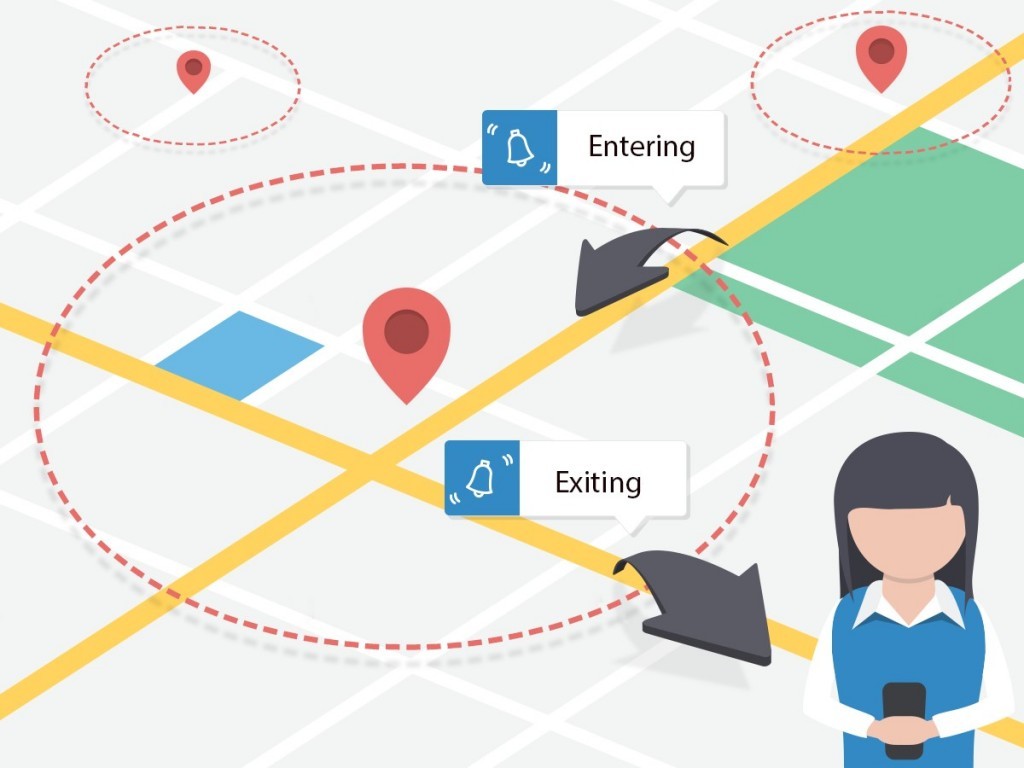
    • A geofence is a virtual perimeter for a real-world geographic area.
    • A geo-fence could be dynamically generated—as in a radius around a point location, or a geo-fence can be a predefined set of boundaries (such as school zones or neighbourhood boundaries).
    • The use of a geofence is called geofencing, and one example of usage involves a location-aware device of a location-based service (LBS) user entering or exiting a geo-fence.
    • This activity could trigger an alert to the device’s user as well as messaging to the geo-fence operator.

    Tracking COVID-19 patients

    • The government has tested an application that triggers e-mails and SMS alerts to an authorised government agency if a person has jumped quarantine or escaped from isolation, based on the person’s mobile phone’s cell tower location.
    • This “geo-fencing” is accurate by up to 300 m.
  • A different fight-back

    Context

    Coronavirus crisis is an opportunity for India to build on domestic technological capabilities in artificial intelligence, big data analytics, life sciences and health technology in the private sector.

    How a small tech company flagged Covid-19 outbreak?

    • What does it do? A small tech company in Canada — BlueDot — was among first outside China to spot a new epidemic spreading out from Wuhan last December.
      • BlueDot, founded in Canada by a medical scientist of South Asian origin, Kamran Khan, tracks the origin and transmission of infectious diseases around the world.
    • How could they detect the outbreak in China?  BlueDot did this by sifting through massive volumes of news reports and blogs by individuals, including health professionals flowing out of China.
      • Data analytics and medical expertise combined: BlueDot combines “public health and medical expertise with advanced data analytics to build solutions that track, contextualise, and anticipate infectious disease risks”.
      • Use of AI: BlueDot is one of the many technology firms leveraging artificial intelligence for business and policy purposes.
      • Many governments are reaching out to tech companies to cope with the corona crisis.
      • The state government of California has just hired BlueDot to help it deal with the challenge.

    The growing role of technology in dealing with coronavirus

    • Across the world, policymakers see a growing role for technology in identification, tracking, and treating the coronavirus.
    • Alibaba and Tencent’s help in China: In China, the Communist Party roped in big tech companies like Alibaba and Tencent in the battle against the virus.
    • Silicon valley’s help in the US: In the US, President Donald Trump has set aside his well-known distaste for Democrat-leaning Silicon Valley to tackle what he now calls a war-like emergency.
    • India will need all the science and technology it can get hold of in overcoming the crisis that is bound to escalate by the day.
    • An opportunity to do good: For the small tech startups in related areas, this is a moment to shine. For the large tech companies, this is a huge opportunity to deploy their immense capabilities to resolve the specific problems posed by the spread of the coronavirus.
      • In rising to the occasion, they could fend off a lot of the recent negative criticism of their business practices and demonstrate that their commitment to “doing good” is not just empty rhetoric.
    • A good business proposition: “Doing good” is also a sensible business proposition at this time.
      • As governments desperately seek solutions to the crisis, the tech startups and established companies leverage the moment to scale up many technologies, develop new uses and markets.

    How countries used technology to deal with the outbreak

    • How China used technology? In China, as the government moved decisively after the delayed initial response, it turned to-
      • the well-established mass surveillance system based on facial recognition technologies,
      • sensing technologies to identify those with fever in public places and
      • data from mobile phone companies to trace the people who might be infected, and limit the spread of the disease.
    • China also developed a Health Code that uses data analytics to-
      • identify and assess the risk of every individual in a targeted zone based on travel history and time spent in infected places.
      • The individuals are assigned a colour code (red, yellow, or green) which they can access via popular apps to know if they ought to be quarantined or allowed in public.
    • How Korea used technology? Many Asian democracies like South Korea have also turned to AI tools to contain the spread of the disease.
    • How the US used technology? As it copes with the rapid spread of the coronavirus, the US had no option but to use surveillance to contain it.
      • Partners in dealing with outbreak: Unsurprisingly, the big tech companies in the US, based on collecting and monetising massive amounts of data from individuals, have inevitably become partners for Washington.
      • But the relationship between the government, corporations and individual citizens in the US is governed by a welter of laws.
      • There is mounting pressure now to tweak these laws to manage the corona crisis.
      • The US is also liberalising the regulations on the access to, and use of, patients’ health records.

    Growing collaboration between science and the state

    • The race between China and the US: Overarching these arguments is a race between the US and China to find new vaccines for the coronavirus.
      • And, more broadly, for the mastery of new scientific capabilities — from artificial intelligence to health technologies.
      • The competition, in turn, is promoting a more intensive alliance between science and the state in both nations.
    • Collaboration could accelerate the technological capabilities: The collaboration between science and the state during past crises led to a dramatic acceleration of technological capabilities.
      • World War precedents: During the Second World War, science and the state got together to move nuclear physics from the lab to the battlefield.
      • Cold War precedent: The Cold War between America and Russia promoted the development of space technology, microelectronics, communications and computing.
    • Role of private entities: What marks out the current technological race between the US and China is the role of private and non-governmental entities.
      • That might well be the missing link in India’s effort to beat the coronavirus.

    Conclusion

    • Opportunity for India: The current crisis, however, is also an opportunity for India to build on the existing domestic technological capabilities in the areas of artificial intelligence, big data analytics, life sciences, health technology in the private sector.
    • India needs stronger private sector in science: In India, the state has dominated the development of science and its organisation. That was of great value in the early decades after Independence.
      • Today, what Delhi needs is a stronger private sector in science and greater synergy with it in dealing with challenges like the corona crisis.
  • PCR Test for Diagnosis of the COVID-19


    The diagnosis of COVID-19 can be done with the Polymerase Chain Reaction (PCR) Test which is explained as under:

    The PCR Test

    • It uses a technique that creates copies of a segment of DNA. ‘Polymerase’ refers to the enzymes that make the copies of DNA.
    • Kary Mullis, the American biochemist who invented the PCR technique, was awarded the Nobel Prize for Chemistry in 1993.
    • The ‘chain reaction’ is how the DNA fragments are copied, exponentially — one is copied into two, the two are copied into four, and so on.
    • However, SARS-COV-2 is a virus made of RNA, which needs to be converted into DNA. For this, the technique includes a process called reverse transcription.
    • A ‘reverse transcriptase’ enzyme converts the RNA into DNA. Copies of the DNA are then made and amplified.
    • A fluorescent DNA binding dye called the “probe” shows the presence of the virus. The test also distinguishes SARS-COV-2 from other viruses.

    Various Stages:

    1) Collection and transport

    • Testing centre takes swabs from nasal cavities and back of the throat (pharynx), and puts samples in a “virus transport medium”, which contains balanced salts and albumin to prevent the virus from disintegrating.
    • Sample is then transported in cold storage to the testing lab.

    2) Extraction of viral RNA

    • Coronaviruses have large single-stranded RNA genomes.
    • Testing lab extracts the RNA from the samples, using commercially available kits.

    3) Putting THE RNA in THE PCR mix

    • Extracted RNA is added to a polymerase chain reaction (PCR) mix.
    • This includes the ‘master mix’, which contains a ‘reverse transcriptase’ enzyme that converts the RNA into DNA.
    • Master Mix contains Taq polymerase, the enzyme that creates copies of the DNA, nucleotides, as well as other elements such as magnesium — an ion of which is needed to amplify the DNA.
    • The PCR mix also contains ‘reagents’ such as ‘primers’ and ‘probes’.
    • Primers are particular strands of DNA that are designed to bind with the DNA that is to be copied; probes are used to detect the specific sequence in the DNA sample.
    • Finally, the PCR mix consists of a “housekeeping” gene — a normal human gene (RNAse P) that is used to ensure that samples were properly collected, and RNA extracted.

    4) Amplification of the viral DNA

    • Sample, in its PCR mix, is put into tubes or plates, which are then put in a thermal cycler machine that is used to conduct the PCR process.
    • First, the RNA is converted into DNA. Then the process of copying the genes starts.
    • The thermal cycler heats and cools the mixture with the sample, alternating between three temperatures — for melting the DNA to separate the two strands.
    • The thermal cycler runs 30-40 such cycles in order to amplify the DNA to check for the virus.

    5) Testing against controls

    • Amplified DNA is tested against a positive control, which usually consists of genes of the virus cloned into plasmid, and a negative control, which is a ‘known’ sample that has tested negative for the virus earlier.
    • RNase P should show amplification, positive control should be positive, negative control should be negative, and then whatever result you get for the specimen, is the correct result.
    • In order for a test to be valid before the result is released, certain ‘validity criteria’ have to be met.
    • If the housekeeping gene (RNase P) is positive, positive control is positive, negative control is negative, and the sample does not show any PCR positive result, the sample is declared negative.
    • If the PCR result is positive, the patient has COVID-19.
  • [pib] Amendment to the Export Policy of APIs and formulations made from these APIs

    The Government has made amendments in the export policy and restricted export of specified APIs (Active Pharmaceutical Ingredients) and formulations made from these APIs.

    Active Pharmaceutical Ingredients (APIs)

    • All drugs are made up of two core components: the API, which is the central ingredient, and the excipients, the substances other than the drug that helps deliver the medication to your system.
    • The API is the part of any drug that produces its effects.
    • Excipients are chemically inactive substances, such as lactose or mineral oil.
    • The quality of APIs has a significant effect on the efficacy and safety of medications.

    The notification covers the following APIs and formulations made from these APIs:

    • Paracetamol
    • Tinidazole
    • Metronidazole
    • Acyclovir
    • Vitamin B1
    • Vitamin B6
    • Vitamin B12
    • Progesterone
    • Chloramphenicol
    • Erythromycin Salts
    • Neomycin
    • Clindamycin Salts
    • Ornidazole
  • Svalbard Global Seed Vault


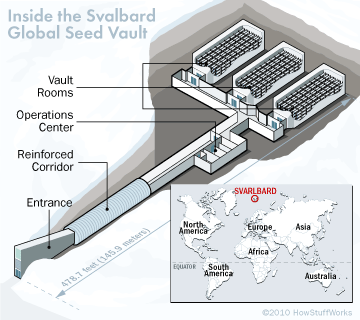
    The Svalbard Global Seed Vault — referred to as the earth’s ‘doomsday vault’ — now contains about 1.05 million seeds.

    Global Seed Vault

    • The vault — in the island of Spitsbergen, midway between Norway and the North Pole — opened in 2008 and preserves seeds for several food varieties.
    • The aim of the vault is to preserve a vast variety of crop seeds in the case of a doomsday event, calamity, climate change or national emergency.
    • The vault is artificially cooled at temperatures of minus 18 degrees Celsius.
    • The low temperature and limited access to oxygen will ensure low metabolic activity and delay seed ageing.
    • The permafrost surrounding the facility will help maintain the low temperature of the seeds if the electricity supply fails.

    Access to seeds

    • Vault seed samples are copies of samples stored in the depositing genebanks.
    • Researchers, plant breeders, and other groups wishing to access seed samples cannot do so through the seed vault; they must instead request samples from the depositing genebanks.
    • The samples stored in the genebanks will, in most cases, be accessible in accordance with the terms and conditions of the International Treaty on Plant Genetic Resources for Food and Agriculture, approved by 118 countries or parties.
  • In news: Yaravirus

    In a lake in Brazil, researchers have discovered a virus that they find unusual and intriguing.

    Yaravirus

    • The Yaravirus infects amoeba and has genes that have not been described before, something that could challenge how DNA viruses are classified.
    • It has a puzzling origin and phylogeny (evolutionary relationship).
    • Because of the Yaravirus’s small size, it was unlike other viruses that infect amoeba and they named it as a tribute to Yara, the “mother of waters” in the mythological stories of the Tupi-Guarani indigenous tribes.
    • The virus does not infect human cells, according to the researchers.
  • RO-based water filtration systems

    • The Union Environment Ministry has issued a draft notification that seeks to regulate membrane-based water filtration systems in areas where the source of water meets drinking water norms of the Bureau of Indian Standards.
    • This primarily affects reverse osmosis (RO)-based water filtration systems and the rules, at least in letter, effectively prohibit homes from installing domestic RO systems.

    What is reverse osmosis (RO)?

    • RO was originally a technology devised to desalinate sea water. The idea exploits the principle of osmosis.
    • Take a tube, twist it into a ‘U’-shape and insert a semi-permeable membrane (a material with very small holes that will allow only certain molecules to filter through) at the point where the tube curves.
    • Fill half the tube with salt water and the other with freshwater. Over time, fresh water will cross over into the salty arm until the proportion of salt and water in both arms is the same.
    • This is due to osmotic pressure which dilutes a region with a higher concentration of solute (in this case, the salt).
    • It would need to create some external pressure that will counter the osmotic pressure and suck all the water from the salty arm into the freshwater arm while leaving the salt behind. This is the essential principle of an RO system.
    • To create external pressure, RO relies on a pump and electric motors. It uses “activated carbon” components, such as charcoal and carbon black that can filter out contaminants as well as organic substances such as bacteria.
    • It all depends on the filtering material and the number of filters that incoming tap water must pass through.
    • However, it is possible to deploy a wide array of membranes and multiple stages of filters to filter a wide variety of solutes — arsenic, fluoride, hexavalent chromium, nitrates, bacteria — that come mixed in water.

    What is the problem with RO?

    • In making tap water pass through multiple stages of cleaning, RO systems end up wasting a lot of water.
    • Anywhere between three-five times more water is wasted by them than they produce and given the challenges that cities and government face in providing potable water.
    • It is as part of this legal dispute, which began in March 2019 that led the Environment Ministry to move to regulate RO systems.
    • Another concern with RO is that it filters out calcium, zinc, magnesium, which are essential salts needed by the body; drinking such water over time could be harmful.
    • However, many manufacturers claim to overcome this challenge by “post-treatment”.
    • This increases costs and reduces the incentive for public-funded water distribution systems to supply clean water to the vast majority of the country who can ill-afford such systems.
    • The average RO system only aims to reduce Total Dissolved Solids, ensure water is odourless and has a pH from 6.5-8.5.
    • The National Institute of Virology (NIV) claimed that most filtration methods did not eliminate Hepatitis E virus. A combination of filtration systems can eliminate most contaminants.

    How is the quality of piped water in the country?

    • Under the Jal Jeevan Mission, the Prime Minister has committed to provide tap water to the entire country by 2024. However, studies show that the existing quality of piped water is deficient in much of India.
    • Last year, the Department of Consumer Affairs undertook a study through the Bureau of Indian Standards (BIS) on the quality of piped drinking water being supplied in the country.
    • Most samples drawn from various places did not comply with the BIS’s requirements.
  • What is Fermentophone?


    Fermentation, the chemical breakdown of a substance by microorganisms such as bacteria or yeasts, results in some of the most delicious foods and beverages, including cheese, chocolate and wine.  Now, research has shown it can result in music, too.

    Fermentophone

    • The chemical processes of fermentation can be used to create spontaneous tunes.
    • Researchers has built multiple art exhibits called Fermentophone to showcase how fermentation can make music.
    • First, different fruits and veggies are placed in glass jars and fermented.
    • As the fermentation kicks off, the yeast — or bacteria — present in the food chows down on the foods’ sugars, which results in the release of carbon dioxide bubbles.
    • The release of these bubbles creates a tiny sound, which is picked up by underwater microphones.
    • A computer processes the sounds and, with the help of algorithms plugged in, electronic music is created.
  • [op-ed snap] Cybersecurity a critical challenge for India’s digital payments ecosys

    Context

    Digital payments in India are witnessing consistent growth at a compound annual growth rate (CAGR) of 12.7%.

    Growth potential and challenges involved in digital payments

    • Expected growth in mobile wallet payment: The mobile wallet market is expected to continuously grow at a CAGR of 52.2% by volume between 2019-23, according to a recent report by KPMG.
      • This digital explosion can be seen in the accelerating rise in the download and use of electronic wallets as well as an unprecedented increase in digital transactions/payments.
      • UPI/IMPS use growth: Payment systems such as UPI/IMPS are likely to register average annualised growth of over 100%, according to RBI’s 2021 vision document.
    • Challenge of Cybersecurity: Cybersecurity is one of the most critical challenges faced by stakeholders of the digital payment ecosystem.
      • Types of risks involved: With more and more users preferring digital payments, the chances of getting exposed to cybersecurity risks such as-
      • Online fraud
      • Information theft.
      • Malware or virus attacks are also increasing.
      • Digital payment frauds account for about half of all bank frauds in India.

    Steps taken by the RBI

    • Guidelines issued: In view of risks, the Reserve Bank of India (RBI) has also issued some guidelines as security and risk mitigation measures for digital payments.
      • It has also issued guidelines that limit the liability of customers on unauthorised electronic banking transactions
    • Steps taken: The central bank has taken steps for securing card transactions, internet banking, electronic payments, ATM transactions, and prepaid payment instruments (PPIs).

    Securing the fintech revolution

    • Fraudsters building advanced technologies: The changing nature of cybersecurity attacks such as-
      • Web application attack.
      • Ransomware.
      • Reconnaissance.
      • The DDoS attack clearly establishes cyber-risk as a new reality.
    • What needs to be done to secure the fintech revolution?
      • A robust regulatory framework.
      • An effective customer redressal framework.
      • Foolproof security measures to enable confidence and trust.
      • Incentives for larger participation and benefits similar to cash transactions- are some measures that can help ensure long-term success for digital payments.
    • Leveraging technology: Technology can be leveraged for making popular methods of cashless payments secure.
      • Biometric authentication-enabled cards can provide a greater layer of security by enabling replacement of the traditional PIN.
      • Through biometric authentication, consumers can authenticate transactions by placing their finger on a fingerprint sensor embedded in the card.
      • Ensuring security: Safety is ensured as the consumer’s fingerprint is stored only in the secure chip within the card and the same chip is used to match the scanned fingerprint with the stored one.
      • The biggest advantage: The biggest advantage is that the bank or merchant cannot access the consumer’s biometric data, which also counters potential privacy concerns.

    Conclusion

    To reap the advantages of the promising fintech revolution steps must be taken to secure the digital environment.