Why in the News
The Government of India banned sugar exports till 30 September 2026 due to concerns over El Niño, the Iran war, fertiliser disruptions, and inflation.
Key Reasons for the Ban
- El Niño Concerns: El Niño causes weak monsoon and higher temperatures in India. This may reduce sugarcane planting and future yields.
- Threat to Sugarcane Production: Sugarcane is water and fertiliser intensive. Poor rainfall and fertiliser shortages may affect the 2027-28 sugar crop.
- Iran War and Supply Disruptions: Conflict near the Strait of Hormuz threatens:
- Fertiliser imports
- Energy supplies
- Shipping routes
- Inflation Concerns: The government aims to prevent: Food inflation, Fuel inflation, and Rise in sugar prices
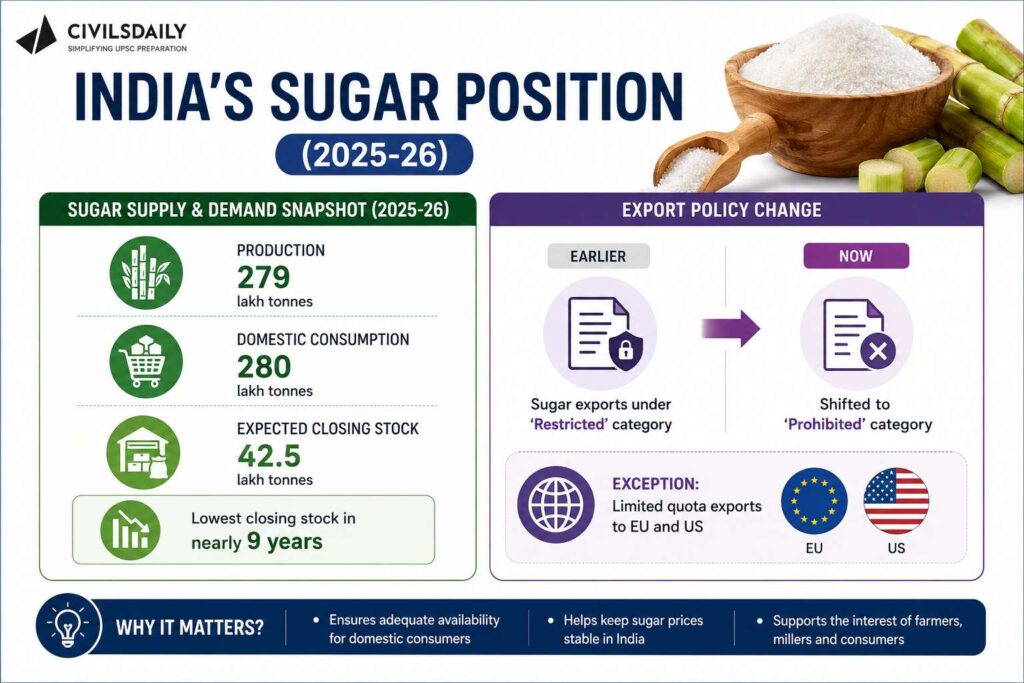
India’s Sugar Position (2025-26)
- Production: 279 lakh tonnes
- Domestic consumption: 280 lakh tonnes
- Expected closing stock: 42.5 lakh tonnes
- Lowest closing stock in nearly 9 years
Export Policy Change
- Earlier: Sugar exports under “Restricted” category
- Now: Shifted to “Prohibited” category
- Exception: Limited quota exports to EU and US
| [2021] Among the following which one is the least water-efficient crop? [A] Sugarcane [B] Sunflower [C] Pearl millet [D] Red gram |
