Why in the News?
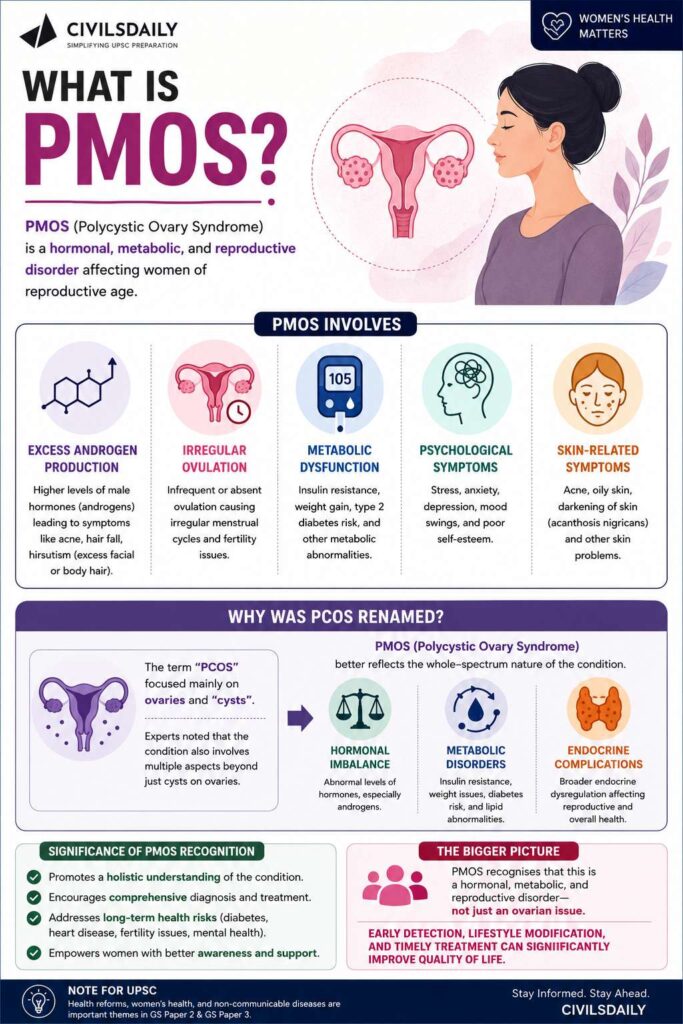
A global medical consensus led by Monash University renamed Polycystic Ovary Syndrome (PCOS) as Polyendocrine Metabolic Ovarian Syndrome (PMOS) to better reflect its multisystem nature.
What is PMOS?
- PMOS is a hormonal, metabolic, and reproductive disorder affecting women of reproductive age.
- It involves:
- Excess androgen production
- Irregular ovulation
- Metabolic dysfunction
- Psychological and skin-related symptoms
Full Form of PMOS
- Polyendocrine: Multiple hormonal systems affected
- Metabolic: Linked with diabetes, obesity, insulin resistance
- Ovarian: Reproductive involvement
- Syndrome: Group of symptoms
Why Was PCOS Renamed?
- The term “PCOS” focused mainly on ovaries and “cysts”.
- Experts noted that the condition also involves:
- Hormonal imbalance
- Metabolic disorders
- Endocrine complications
Major Features of PMOS
- Metabolic Features
- Obesity
- Type 2 diabetes
- Dyslipidemia
- Hypertension
- Fatty liver disease (MASLD)
- Reproductive Features
- Irregular periods
- Infertility
- Ovulation problems
- Pregnancy complications
- Psychological Features
- Depression
- Anxiety
- Eating disorders
- Dermatological Features
- Acne
- Facial hair growth
- Hair thinning
Importance for India
- Estimated prevalence in India: 16% to 18%
- Indians have higher risk of:
- Diabetes
- Heart disease
- Insulin resistance
| [2024] Which one of the following is synthesised in human body that dilates blood vessels and increases blood flow [A] Nitric oxide [B] Nitrous oxide [C] Nitrogen dioxide [D] Nitrogen pentoxide |
