Why in the News?
- Government likely to notify draft rules for E85 fuel rollout as part of alternative fuel strategy and energy security push.
What is E85 Fuel
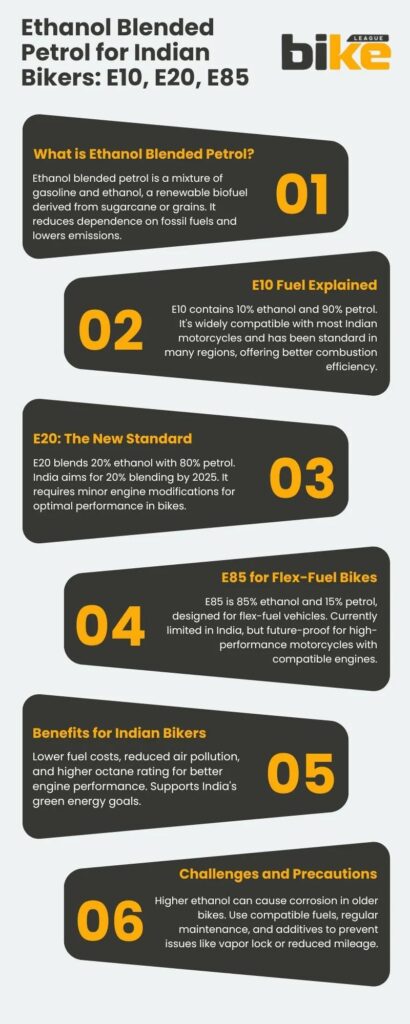
- Fuel blend containing:
- Up to 85% ethanol
- About 15% petrol
Current Context
- India already implemented: E20 fuel (20% ethanol blending) nationwide (April 2026)
- E85 will be: A separate fuel category
Key Features of E85
- High ethanol concentration
- Requires:
- Special engines (flex-fuel vehicles)
- Dedicated fuel infrastructure
Raw Materials for Ethanol
- Produced from: Sugarcane, Maize, and Other grains
- Renewable and domestically available
Benefits of E85
- Energy Security: Reduces dependence on crude oil imports
- Environmental Benefits: Cleaner burning than petrol and Reduces vehicular emissions
- Economic Benefits: Supports: Farmers and Biofuel industry
Back2Basics
| Generation | Source Material | Context for India |
| 1st Gen (1G) | Edible crops (Sugarcane, Maize, Rice). | Currently used for E20; raises “Food Security” concerns. |
| 2nd Gen (2G) | Non-edible waste (Rice straw, Corn cobs, Wood chips). | Promoted under PM JI-VAN Yojana to stop stubble burning. |
| 3rd Gen (3G) | Micro-organisms like Algae. | High yield, doesn’t require agricultural land. |
| 4th Gen (4G) | Genetically modified (GM) crops. | Focuses on Carbon Capture and Storage (CCS) while growing. |
| [2020] According to India’s National Policy on Biofuels, which of the following can be used as raw materials for the production of biofuels? 1. Cassava 2. Damaged wheat 3. grains 4. Groundnut seeds 5. Horse gram 6. Rotten potatoes 7. Sugar beet Select the correct answer using the code given below: (a) 1, 2, 5 and 6 only(b) 1, 3, 4 and 6 only(c) 2, 3, 4 and 5 only(d) 1, 2, 3, 4, 5 and 6 |
