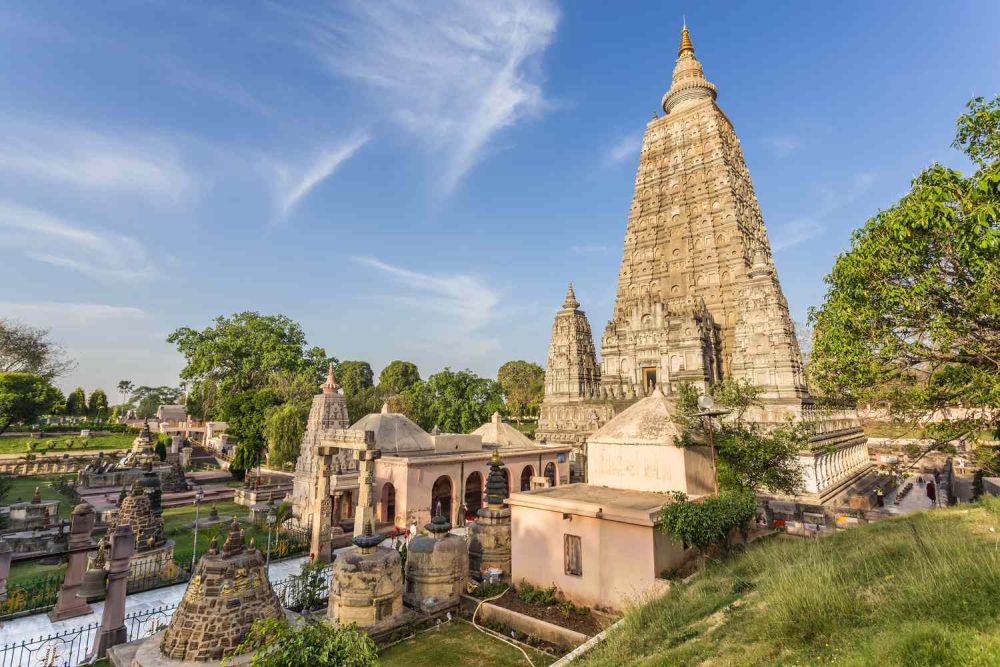
Mahabodhi Temple Complex
|
- Location: Bodh Gaya, Bihar
- Significance: Marks the location where Buddha attained enlightenment.
- UNESCO Status: World Heritage Site since 2002.
- Historical Importance: One of the four holy sites related to Buddha’s life (Enlightenment).
- Original Construction: Built by Mauryan Emperor Ashoka around 260 BCE.
- Reconstruction: Reconstructed in brick during the late Gupta period (5th or 6th centuries).
- Archaeological Finds: Indicates a site of veneration since the Mauryan period; Vajrasana (Diamond Throne) dated to the third century BCE.
- Main Temple Structure: Dates from the 6th century CE, incorporates parts from 2nd or 3rd century CE.
- Architectural Features: Two large shikhara towers, the largest over 55 meters high; influenced Jain, Hindu, and Buddhist architecture globally.
- Materials: Made mostly of brick covered with stucco.
- Bodhi Tree: A direct descendant of the original tree under which Buddha attained enlightenment.
- Traditional Accounts: Describes 7 weeks Buddha spent meditating after enlightenment at various spots within the complex.
- Decline and Revival: Declined after the Huna and early Islamic invasions; revived under the Pala Empire (8th-12th century); declined again after 12th century CE invasions by Turk armies.
|
Ratna Bhandar of Jagannath Puri Temple
|
- Location: Puri, Odisha
- Significance: Important Vaishnavite temple dedicated to Jagannath, a form of Sri Krishna
- History: Rebuilt from the 10th century onwards, begun by Anantavarman Chodaganga Deva, first king of the Eastern Ganga dynasty
- Annual Event: Famous for its annual Ratha Yatra (chariot festival) where three principal deities are pulled on huge, elaborately decorated temple cars
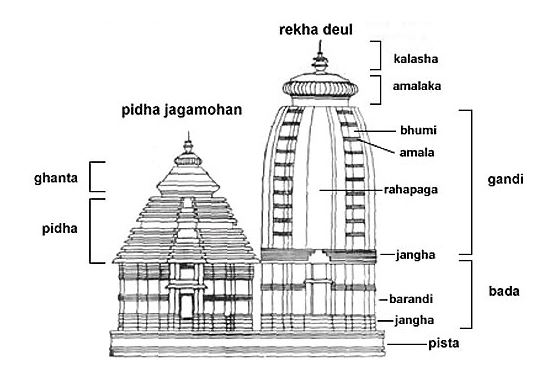
- Architecture: Oriya style of temple architecture; complex covers over 400,000 square feet, surrounded by a high fortified wall (Meghanada Pacheri); main structures include Deula (Sanctum sanctorum), Mukhashala (Frontal porch), Nata mandir/Natamandapa (Audience Hall/Dancing Hall), Bhoga Mandapa (Offerings Hall)
Ratna Bhandar:
- Context: The sacred treasury of Shree Jagannath Temple, Puri, known as Ratna Bhandar, was reopened after 46 years amid legal battles and controversies
- Contents: Stores gold and jewels offered by devotees to the deities Lord Jagannath, Lord Balabhadra, and Goddess Subhadra
- Location: Adjacent to the prayer hall on the north side of the temple.
- Sections: Consists of two sections: the ‘Bhitar Bhandar’ (Inner Treasury) and the ‘Bahar Bhandar’ (Outer Treasury)
- Historical Significance: Legend says Odisha’s King Anangabhima Dev (1211 to 1238) donated 2.5 lakh madhas of gold to prepare jewelry for the deities
- Management: Safety managed by the Temple’s Committee chaired by the titular ‘King of Puri’; keys held by the Puri royal family, temple committee, and collectorate with changes over the years
- Recent Developments: Reopened by breaking the locks of the inner chamber due to inability to open traditionally, following strict procedures
|
