Why in News?
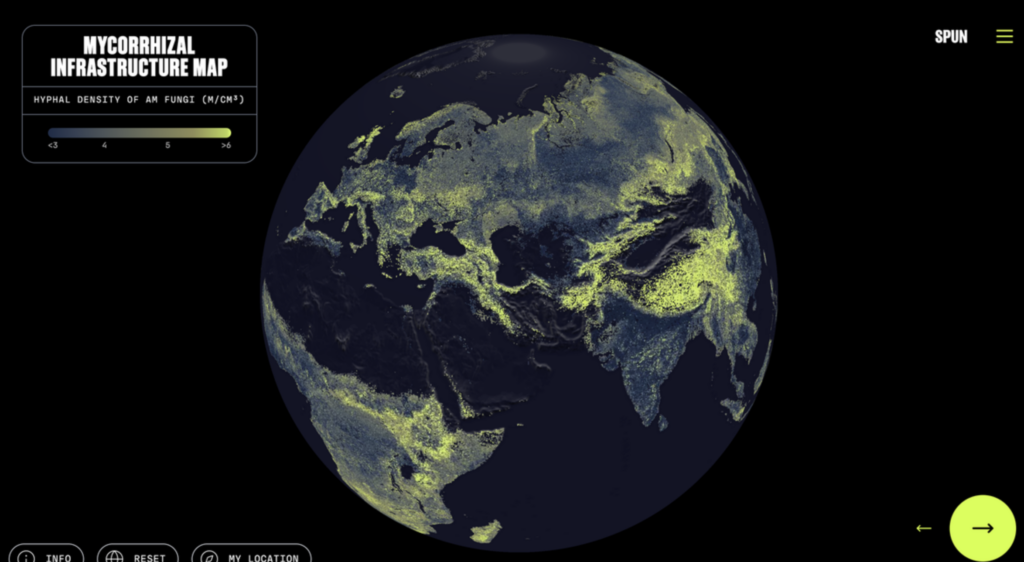
A study published in the journal Science produced the first global map of arbuscular mycorrhizal (AM) fungi, revealing the enormous extent of underground fungal networks and their importance for climate regulation.
Key Findings
- Topsoils worldwide contain about 110 quadrillion km of fungal hyphae.
- This distance is equivalent to nearly one billion trips between the Earth and the Sun.
- AM fungal networks store around 300 million tonnes of carbon.
- This is 4 to 6 times the weight of the entire human population.
- The study analysed data from more than 16,000 soil cores using machine-learning techniques.
Role in Climate Regulation
- AM fungi form symbiotic associations with nearly 70% of all plant species.
- They exchange Nutrients and water with plants, in return for carbon compounds produced through photosynthesis.
- These networks sequester approximately 4 billion tonnes of CO₂-equivalent annually.
- This equals roughly 11% of global human-related carbon emissions.
Arbuscular Mycorrhizal (AM) Fungi
- A group of fungi belonging to the phylum Glomeromycota.
- They colonise plant roots and form mycorrhizae (fungus-root associations).
- The fungal filaments, called hyphae, extend into the soil and improve nutrient uptake.
Benefits
- Enhance absorption of: Phosphorus, Nitrogen, Micronutrients, and Water.
- Improve plant growth and drought tolerance.
- Increase soil aggregation and fertility.
- Contribute to long-term carbon storage.
Biodiversity Hotspots Identified
The study found that around 40% of global AM fungal networks occur in grassland ecosystems, including South Sudan, The Tibetan Plateau, and Banni Grasslands.
Major Threats
- Croplands contain about 50% lower fungal density compared to natural ecosystems.
- Grasslands are being converted into agricultural land four times faster than forests.
- This threatens underground fungal biodiversity and its ecosystem services.
Why is the Study Important?
- Highlights fungi as a form of “living infrastructure” supporting ecosystems.
- Emphasises the need to include soil biodiversity and fungi in climate policy.
- Strengthens the case for grassland conservation alongside forest protection.
[2021] Which of the following have species that can establish symbiotic relationship with other organisms?
1. Cnidarians
2. Fungi
3. Protozoa
Select the correct answer using the code given below.
[A] 1 and 2 only
[B] 2 and 3 only
[C] 1 and 3 only
[D] 1, 2 and 3
