💥Mains Ready By December. Smash Mains & Smash PYQ Admissions Open

Search results for: “”

  • UPSC 2024 Mains GS1 Model Solutions

    The UPSC General Studies Paper 1 (GS1) is a crucial part of the Civil Services Mains Examination. Covering a diverse range of topics such as Indian heritage and culture, world history, geography, and social issues, it requires candidates to demonstrate in-depth knowledge and analytical skills. This page provides well-structured model answers for GS1 questions, designed to aid aspirants in understanding key themes and answering effectively in the exam.

    Below is a table of 20 questions from the GS1 2024 paper along with direct links to detailed model answers. You can also download the full set of model answers as a PDF. 

    UPSC Mains GS1 2024 Paper Questions and Answers

    S.No.QuestionsView Answer Link
    1Underline the changes in the field of society and economy from the Rig Vedic to the later Vedic period.View Answer
    2Estimate the contribution of Pallavas of Kanchi for the development of art and literature of South India.View Answer
    3What were the events that led to the Quit India Movement? Point out its results.View Answer
    4What is sea surface temperature rise? How does it affect the formation of tropical cyclones?View Answer
    5Why do large cities attract more migrants than smaller towns? Discuss in light of conditions in developing countries.View Answer
    6What is the phenomenon of cloudbursts? Explain.View Answer
    7What is the concept of demographic winter? Is the world moving towards such a situation? Elaborate.View Answer
    8Distinguish between gender equality, gender equity, and women empowerment. Why is it important to take gender concerns into account in program design and implementation?View Answer
    9Intercaste marriages between castes which have socio-economic parity have increased, but this is less true of interreligious marriages. Discuss.View Answer
    10What type of cooperation between government, NGOs, and private sectors be most effective in tackling socio-economic issues of development?View Answer
    11The great Cholas are remembered with great pride because of their achievements in art and architecture. Comment.View Answer
    12How far is it correct to say that the First World War was fought for the preservation of balance of power?View Answer
    13How far was the Industrial Revolution in England responsible for the decline of handicrafts and cottage industries in India?View Answer
    14The groundwater potential of the Gangetic valley is on serious decline. How does it affect the food security of India?View Answer
    15What are aurora australis and aurora borealis? How are these triggered?View Answer
    16What is a twister? Why are the majority of twisters observed in areas around the Gulf of Mexico?View Answer
    17What is regional disparity? How does it differ from diversity? How serious is the issue of regional disparity in India?View Answer
    18Despite comprehensive policies for equity and social justice, underprivileged sections are not yet getting full benefits of affirmative action envisaged by the Constitution. Comment.View Answer
    19Globalization has increased urban migration by skilled young unmarried women from various classes. How has this trend impacted personal freedom and relationships with family?View Answer
    20Critically analyse the proposition that there is a high correlation between India’s cultural diversities and socio-economic marginalities.View Answer

    Download UPSC GS1 2024 Full Model Answers PDF

    For a complete set of detailed model answers for the UPSC GS1 Paper, download the PDF below:

    Download Model Answers PDF

    Frequently Asked Questions (FAQs)

    1. What is the UPSC GS1 Paper about?
    The GS1 Paper of the UPSC Civil Services Mains Examination covers Indian Heritage and Culture, History, Geography of the World and Society. The aim is to test candidates’ ability to connect these subjects with contemporary issues.

    2. Why is GS1 important for UPSC aspirants?
    GS1 is a significant part of the UPSC Mains Examination as it helps assess candidates’ knowledge of key subjects like history, culture, and geography. High scores in GS1 can greatly boost overall Mains performance.

    3. What is the best way to prepare for GS1?
    A good preparation strategy for GS1 includes reading NCERT books, referring to standard reference books on history and geography, staying updated with current affairs, and practicing answer writing.

    4. Can I directly use these model answers in the exam?
    These model answers are designed to provide guidance and structure. It’s important to personalize them with your own understanding and connect them with current affairs and specific case studies.

    5. How do I download the full set of answers?
    You can download the complete PDF of model answers by clicking on the download link provided above.

    6. Are these model answers based on real UPSC questions?
    Yes, these answers are crafted based on real and closely related UPSC GS1 questions to give aspirants an authentic practice experience.
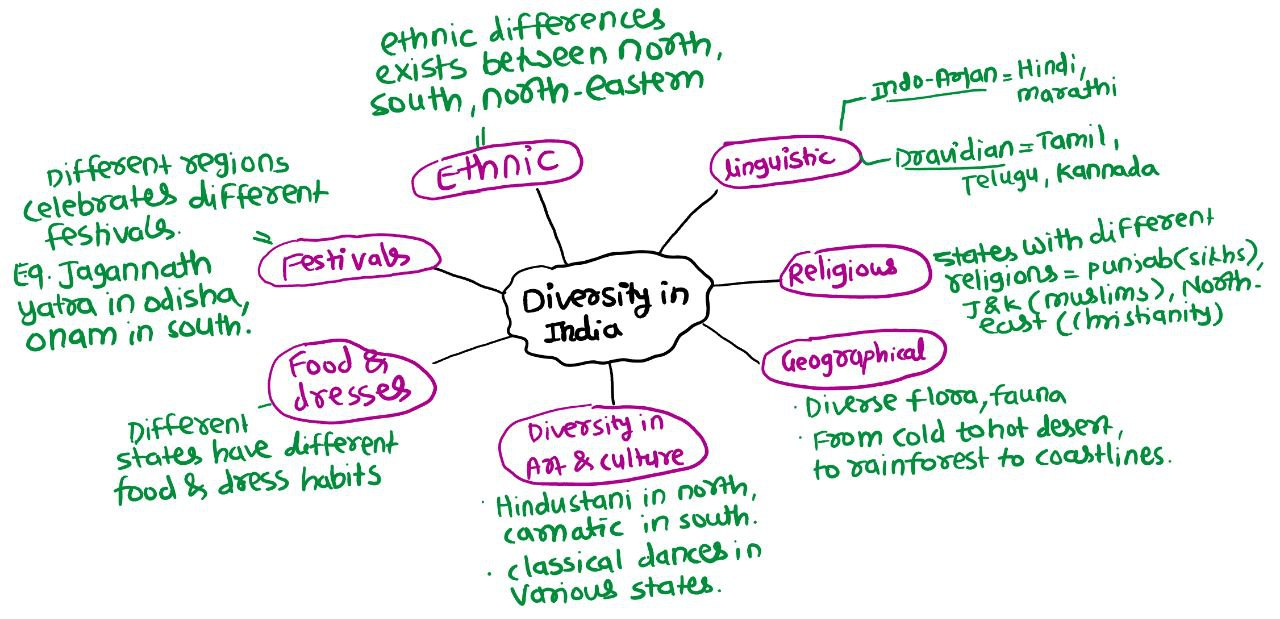
  • Critically analyse the proposition that there is a high correlation between India’s cultural diversities and socio-economic marginalities(GS1 2024 Question)

    “India is, the cradle of the human race, birthplace of human speech, mother of history, the grandmother of legend, & great grandmother of tradition.” – Mark Twain. However, this richness often intersects with socio-economic marginalities, disproportionately impacting certain communities.

    Cultural Diversity Intersect With Socio-Economic Marginalities Reinforcing Inequality

    1. Caste and Socio-Economic Marginality: Lower castes like SCs and STs face systemic discrimination, limiting access to education, jobs, and land. Eg- 79% of rural SC households rely on manual labour, reflecting their economic disadvantage (SECC 2011).
    2. Sociologist M.N.Srinivas in his concept of ‘dominant caste’ noted economic status of various cultural groups reflects historical privileges and disadvantages. Eg. Dominant castes like Brahmins, Jats, Marathas, Reddy, Yadavs, etc historically benefited from better access to education and employment.
    3. Tribal Identity and Economic Exclusion: suffer from high poverty and displacement due to development projects. 50% of STs live in multidimensional poverty (MPI 2019). Eg- Bhils in Narmada valley displaced due to Sardar sarovar dam.
    4. Religious Diversity and Economic Inequality: The Sachar Committee (2006) reported that Muslims lag behind in most socio-economic indicators.
    5. Linguistic Diversity and Regional Inequality: Eg. ASER report noted only 14% of tribal children in grade 3 have comprehension skills.
    6. Gender and Intersectionality: Women from marginalised cultural groups (SCs, STs, Muslims) experience double marginalisation due to both gender and socio-cultural identity. Only 11% of ST women complete higher education (NFHS-4), highlighting intersectional disadvantages.
    7. Geographic and ethnic factors especially in context of north-eastern states, which are rich cultural diverse region, but experiencing lower socio-economic development. Eg. Ongoing conflict of kuki vs meitei in Manipur.
    8. Policy and Governance Challenges: Affirmative action has helped, but elite capture within groups like OBCs leaves the most vulnerable excluded. Eg- Denotified Tribes (DNTs) and other subgroups often do not fully benefit from welfare schemes.

    Challenging the Proposition

    1. Political Representation: 15% of Parliament seats are reserved for SCs, and 7.5% for STs, enhancing political participation.
    2. Religious and Linguistic Minorities Thriving: Eg: Sikhs are one of the wealthiest agricultural communities, and Jains have the highest literacy and income levels in India (Census 2011).
    3. Affirmative Action Success: Reservations in education and employment for SCs, STs, and OBCs. SC/ST enrolment in higher education has risen to 21% due to reservation policies (AISHE 2020-21).
    4. Economic Liberalisation: Economic reforms have benefited certain sections of marginalised groups, particularly OBCs, in accessing jobs in sectors like IT and services.
    5. Development Programs: Government welfare schemes like MGNREGA and PM-KISAN have provided direct support to marginalised communities. Eg- MGNREGA created 309 crore person-days of work in 2022-23.
    6. Cultural enrichment: diversity has promoted different avenues such as art,food,tourism and handicrafts. Eg. Red ant chutney of odisha got GI tag.

    Way Forward

    1. Strengthen Implementation of Affirmative Action –  Sub-categorization of SC and ST as mandated by SC in State of Punjab & Ors. vs Davinder Singh & Ors.
    2. Promotion of Local Languages and culture: New Education Policy 2020 has supported the three-language policy.
    3. Cultural Integration and Economic Empowerment: Supporting tribal handicrafts in regions like the Northeast and Odisha can create sustainable livelihoods while preserving cultural heritage. 
    4. Improving Social Justice Systems: Strengthening the implementation of the Forest Rights Act of 2006 and PESA
    5. Fostering Community-Based Development: Eg- Kudumbshree Model of Kerala
    6. Enhancing Political Representation: Early implementation of 106th Constitutional Amendment Act.

    A a multi-pronged approach with stakeholder participation is need to realise the Trinity of Social, Political and Economic empowerment of Marginalised communities. As PM Modi stated, “The nation is not just land for us, but an inspirational unit,” emphasizing the importance of unity in addressing these disparities.

  • Globalization has increased urban migration by skilled, young, unmarried women from various classes. How has this trend impacted upon their personal freedom and relationship with family?(GS1 2024 Question)

    Globalization describes the growing interdependence of the world’s economies, cultures, and populations, brought about by cross-border trade in goods and services, technology, and flows of investment, people, and information, often led to changes in lifestyle, beliefs, ideologies and economies.

    Increased Urban Migration  By Skilled, Young, Unmarried Women From Various Classes Due To Globalization 

    1. Economic Opportunities in Urban Areas: According to a NASSCOM report (2021), the Indian IT sector is projected to create over 1.5 million new jobs by 2025, with women constituting about 34% of the workforce in these cities, highlighting the demand for skilled labor.
    2. Access to Education and Skill Development: As per All India Survey on Higher Education (AISHE) 2021-2022 which said that female enrolment in Higher Education increased to 2.07 crore in 2021-22 from 1.57 crore in 2014-15 
    3. Financial Independence and Personal Freedom: Working in urban tech sectors enables women to achieve financial autonomy. 
    4. Social Mobility: Migration provides young women with opportunities for upward social mobility, allowing them to improve their socio-economic status.
    5. Breaking Traditional Family Norms: A study by UN Women (2021) found that 60% of urban women prioritize their careers over traditional family expectations.
    6. Access to Better Living Standards: According to the National Sample Survey Office (NSSO, 2020), urban areas have seen a 20% increase in access to basic services, contributing to a higher quality of life that attracts young women.

    Globalization’s Impact on personal freedoms

    Positive Negative
    1. Economic Independence: reducing the pressure of early marriage and childbirth.

    2. Breaking Traditional Norms and to explore their personal identities, choose their attire, and build social networks. 

    3. Freedom in Lifestyle Choices about relationships, career paths, and social activities.

    4. Enjoying Fundamental rights like Right to bodily autonomy under Article 21.

    5. Professional Growth – Access to better career opportunities and skill development.

    6. Changing Attitudes: Eg:The MeToo movement in India has raised awareness and changed workplace policies on harassment.

    7. Increase in Live-In Relationships: A 2023 report by the India Today Group found that 18% of urban youth are open to live-in relationships, a significant increase from 5% in 2010. 
    1. Persistent Glass Ceiling: Women still face significant barriers in employment opportunities. Eg: In 2022, women held only 15% of senior management positions in India.

    2. Social Media Challenges: According to NCRB data, crimes against women increased by 15% in 2021.

    3. Socio-Cultural Expectations: often relegated to “pink-collar” jobs such as nursing and caregiving. India ranks 135th out of 156 countries in the Gender Gap Index (2022).

    4. Mental Health Issues: Among those aged 15-39, suicide has become a leading cause of death, with women accounting for 71% of these cases in this age group.

    Globalization’s Impact on familial relationship

    Positive Negative
    1. Secularization of Customs: The rising preference for court marriages over traditional big fat Indian weddings.

    2. Shift in Familial Expectations – Changing family roles as daughters become breadwinners or key contributors.

    3. Assertiveness in Nuclear Families: Women find it easier to assert their rights in nuclear families which has seen a rise due to globalization. 

    4. Financial support of family increases respect and status.

    5. Emotional Maturity: more self-aware and emotionally resilient, enabling them to handle family dynamics with patience and understanding. 
    1. Diminished Sacredness of Marriage: The divorce rate in India, though still low, has risen, with urban areas like Bangalore reporting a 4.5% divorce rate as per a 2022 study by the Indian Journal of Psychological Medicine.

    2. Emotional Distance: Urban migration often leads to less frequent interactions with family members, creating emotional distance. 

    3. Conflicts Over Independence: Migrant women may face disapproval from family regarding their lifestyle choices, such as working late hours or living independently. 

    4. Cultural and Generational Gaps: Migrant women may adopt new values and lifestyles that differ from their family’s traditions, leading to misunderstandings and tensions.

    As per american philosopher Nancy Fraser, “Globalization has the potential to both liberate and oppress women, depending on the context and the policies that are put in place.”

  • Despite comprehensive policies for equity and social justice, underprivileged sections are not yet getting the full benefits of affirmative action envisaged by the Constitution. Comment.(GS1 2024 Question)

    India’s constitutional vision of equity and social justice, embodied in preamble, Articles 15, 16, and 46, has led to extensive affirmative action policies. However, the gap between policy formulation and ground-level impact remains significant, revealing systemic issues in implementation and societal structures.

    Comprehensive Policies For Equity And Social Justice

    1. Constitutional Provisions guarantees Fundamental Rights(article 14,15,16,19) and Directive Principles of State Policy(art 46). 
    2. Welfare Schemes like the MGNREGA and the National Social Assistance Programme (NSAP). 
    3. Social Justice Institutions such as the NCSC, NCST, and the NHRC monitor violations, recommend policy changes, and ensure accountability in protecting human rights.
    4. Laws for Protection like Rights Of Persons With Disability Act, Prevention of Atrocities Act, Domestic Violence Act,etc.
    5. Educational and Health Reform: The Right to Education (RTE) Act and Ayushman Bharat.
    6. Judicial Contributions: Public Interest Litigations (PILs). Eg. Indira Sawhney Case 

    Achievements of Equity and Social Justice Policies 

    1. Poverty Reduction: As per Multidimensional Poverty Index (2023), India lifted 415 million people out of poverty between 2005-06 and 2019-21.
    2. Financial Inclusion: As of 2023, over 500 million Jan Dhan accounts have been opened,and 56% of these accounts belong to women, promoting gender-inclusive growth.
    3. Agricultural Growth and Rural Development:
    1. Mahatma Gandhi National Rural Employment Guarantee Act (MGNREGA): In 2022-23, 309 crore person-days of employment were generated.
    2. Pradhan Mantri Kisan Samman Nidhi (PM-KISAN): Under this scheme, farmers receive ₹6,000 annually in three instalments, benefiting 11 crore farmers as of 2023.
    3. Ayushman Bharat – Pradhan Mantri Jan Arogya Yojana (PM-JAY): Over 20 crore beneficiaries have been registered, providing free treatment for over 4 crore hospital admissions.
    1. Education – The Gross Enrolment Ratio (GER) at the elementary level reached 99.2% in 2022, reflecting near-universal enrolment.
    2. Pradhan Mantri Awas Yojana (PMAY): Over 3 crore houses have been constructed under the rural and urban versions of the scheme.
    3. Swachh Bharat Mission: Nearly 10 crore toilets were built, significantly improving sanitation access and contributing to the elimination of open defecation.

    Why are Underprivileged sections not getting the full benefits of affirmative action

    Political Factors

    1. Implementation Gaps: Programs like MGNREGA face delays in wage payments, with only 54% of households getting full work in 2022-23.
    2. Inconsistent Representation: 14% women representation in Parliament, Pati Panchayat in PRI’s
    3. Creamy Layer Effect: Mandal Commission Reported, affluent within disadvantaged groups, like the top 10% of SC/ST beneficiaries, dominate reservation benefits, leaving the most marginalized behind .
    4. Intersectionality Neglect: Policies often ignore intersections like Dalit women, who face dual discrimination.
    5. Economic Factors
    1. Poverty and Resource Access: 30% of SCs and 45% of STs live below the poverty line, limiting access to education and healthcare despite affirmative action.
    2. Quality vs. Quantity Debate: Kothari Commission noted Quantitative improvements in education (35% increase in SC/ST enrollment) lack qualitative support, such as skill development.
    3. Social Factors:
    1. Caste-Based Discrimination: as per NCRB, 50,900 cases of crimes against SCs in 2022 highlight ongoing caste bias.
    2. Lack of Awareness: 45% of rural SC/ST beneficiaries are unaware of affirmative action schemes, as per PRS Legislative Research (2021).
    3. Technological Factors:
    1. Data Deficiency: Absence of caste census data hampers effective policymaking, as highlighted by the Rangarajan Committee Report (2014).
    2. Digital Divide: Only 15% of rural households have internet access, limiting SC/ST students’ ability to benefit from online education.
    3. Poor Technology Integration: 60% of tribal villages lack banking infrastructure, causing delays in DBT schemes like PM-KISAN, as per NITI Aayog (2022).
    1. Weak Law Enforcement: Only 25% of cases under the SC/ST (Prevention of Atrocities) Act result in conviction, per NCRB (2022).
    2. Environmental Factors:
    1. Geographical Disparities: 60% of tribal villages in the Northeast lack access to secondary education, limiting benefits from affirmative action, per NITI Aayog (2020).
    2. Urban Marginalisation: 70% of urban migrant workers lack access to PDS and health benefits, per Aajeevika Bureau (2022).

    Way Forward

    1. Addressing Creamy Layer and Elite Capture: Introduce income criteria to ensure reservations benefit the economically disadvantaged within categories
    2. Promoting Social Inclusion and Awareness through initiatives like “Beti Bachao, Beti Padhao”.
    3. Implement a socio-educational index that considers educational and socio-economic factors along with caste. The Sachar Committee Report recommended data-driven approaches to better serve marginalized groups.
    4. Sub-categorization of SC and ST to advance affirmative action as mandated by SC in State of Punjab & Ors. vs Davinder Singh & Ors.

    “The spirit of inclusion pervades every aspect of our social life. Affirmative action must be strengthened as an instrument of inclusion.” – President Droupadi Murmu

  • What is regional disparity? How does it differ from diversity? How serious is the issue of regional disparity in India?(GS1 2024 Question)

    Regional disparity refers to the unequal distribution of economic resources, development, and opportunities across different regions within a country. It results in significant differences in income, living standards, infrastructure, and employment levels across areas.

    Difference between regional disparity and diversity

    AspectRegional DisparityDiversity
    Definitionunequal distribution of resources, wealth, and opportunities across different regions of a country. (negative)existence of varied cultural, linguistic, economic, and social differences within a society or region. (positive)
    BasisEconomic: Primarily economic and developmental, focusing on gaps in growth between regions.Cultural: Rooted in cultural, ethnic, linguistic, and social differences.
    Examples in IndiaThe per capita income of the five richest states in India was 338% higher than that of the bottom states in 2017-18. India has 122 officially recognized languages, but there are more than 19,500 languages and dialects spoken as a mother tongue. 
    Nature of IssueExclusive: Leads to grievances and demands for equitable development and resources, like special category status.Inclusive: Celebrates coexistence of different identities and is not necessarily viewed as problematic.
    EffectsCreates political instability, demand for autonomy, and social unrest in underdeveloped regions.Enhances cultural richness and plurality, but can also lead to identity-based conflicts if not managed properly.
    SolutionsBalanced regional development through schemes like NITI Aayog’s Aspirational Districts Program, and increasing focus on backward regions to reduce disparities.Promoting inter-cultural understanding, protection of minority languages, and celebrating diversity through national initiatives.

    Seriousness of issue of regional disparity in India 

    A report titled ‘Relative Economic Performance of Indian States: 1960-61 to 2023-24’ by Economic Advisory Council to the Prime Minister (EAC-PM) has highlighted a significant disparity in the economic performance of Indian states

    • The economic divide between northern and southern states – 5 Southern states have emerged as major contributors to India’s GDP, accounting for 30% by March 2024. On the other hand, Uttar Pradesh contributes only 9.5% of GDP and Bihar just 4.3%
    • Industrial and connectivity Disparity: The Western and Southern regions have strong transport and logistics networks while northeastern states have poor connectivity.  
    • Agrarian Crisis in regions like Vidarbha due to inadequate irrigation, lack of access to credit, and market fluctuations, where high rates of farmer suicides are reported, is a stark contrast to the agricultural prosperity found in Western Maharashtra.
    • Educational and Health Facilities: Kerala boasts a literacy rate of 96.2% and a Human Development Index (HDI) of 0.79, one of the highest in India. Bihar, on the other hand, has a literacy rate of just 70.9% (Census 2011) and a high infant mortality rate (IMR) of 35 per 1,000 live births (SRS 2020), compared to Kerala’s IMR of 6.
    • Insurgencies,demands for autonomy and regional unrest, particularly in states like Nagaland and Manipur, often stem from feelings of neglect and underdevelopment. 
    • Migration Issues: The heavy influx of migrants from states like Bihar and Uttar Pradesh to metropolitan cities such as Mumbai reflects economic desperation. Migrants often face precarious living conditions, limited access to services, and employment challenges, which can strain urban resources and infrastructure.

    Impact of Regional Disparity

    Human Geographist Sucheta Yadav in her article “The Problem of Regional Disparities: An Overview in Indian Context” noted- Regional imbalances lead to various consequences, including agitations for statehood, such as the movements for separate Vidarbha and Bodoland. Migration from backward to developed areas occurs in search of better livelihoods, while social unrest arises from disparities, exemplified by Naxalism. Urbanization causes housing shortages and pollution in metropolitan cities, while rural youth face frustration due to limited job opportunities. Accumulating wealth in developed regions further exacerbates these imbalances, leaving less developed areas behind.

    Way forward 

    1. Enhance Agricultural Investment, particularly in lagging regions, focusing on water harvesting, soil conservation, rural infrastructure, and high-value crops to stimulate economic growth and reduce disparities. Eg. need for evergreen revolution especially in backward states.
    2. Prioritize Service Sector Growth: Promote the banking, insurance, and infrastructure sectors in backward regions, as they are vital for economic acceleration and can create job opportunities.
    3. Upgrade Basic Infrastructure such as power, transport, telecommunications, and irrigation in underdeveloped states to enhance the quality of life and attract private investment. Eg. Bharatmala, promotion of renewable energy.
    4. Revise Financial Resource Allocation: Shift the allocation formula for centrally collected resources to prioritize population size and backwardness indices, ensuring funds are directed toward the most disadvantaged districts rather than evenly distributed.
    5. Focus on Governance Quality: Strengthen governance in backward states to improve revenue generation and project execution, thereby creating a conducive environment for attracting both domestic and foreign investments.

    India’s regional diversity reveals significant disparities in development, emphasizing the need for inclusive growth strategies that honor its rich cultural tapestry while addressing economic inequalities across various regions.

  • What is a twister? Why are the majority of twisters observed in areas around the Gulf of Mexico?(GS1 2024 Question)

    A twister or tornado is a rotating column of air that forms from a thunderstorm and touches the ground, while over the sea it is known as a waterspout. Tornadoes are among the most violent and destructive natural phenomena, with wind speeds exceeding 300 km/h in extreme cases.

    Characteristics of Twister

    1. Funnel-Shaped Cloud extends from the thunderstorm to the ground, composed of condensed water, dust, and debris.
    2. Rotating Winds that can reach speeds of 100 to 300 km/h, causing significant destruction.
    3. Short Duration and Localized Impact: Twisters usually last only a few minutes to an hour and have a narrow path of destruction, affecting areas from a few meters to several kilometers wide.
    4. Varied Intensity: Rated on the Enhanced Fujita (EF) scale from EF0 (weak) to EF5 (devastating), depending on wind speed and damage.
    5. Associated with Thunderstorms: Tornadoes form in severe thunderstorms, particularly supercells, when warm and cold air masses collide.

    Formation of Twisters

    1. Warm and Cold Air Collision:This creates atmospheric instability and strong updrafts within a thunderstorm.
    2. Thunderstorm Development: A supercell thunderstorm forms, with strong updrafts and downdrafts, creating conditions for rotation within the storm.
    3. Wind shear (a change in wind direction and speed with height) causes the rising air to start spinning horizontally within the storm.
    4. Vertical Tilt of Air Rotation: The updrafts within the storm tilt the horizontally rotating air vertically, forming a rotating column of air called a mesocyclone.
    5. Tornado Formation: As the mesocyclone strengthens, a narrow funnel cloud forms. If the funnel cloud reaches the ground, it becomes a tornado or twister.
    6. Touchdown: Once the rotating air makes contact with the ground, it starts picking up debris, creating the dangerous rotating vortex associated with tornadoes.

    Why are the Majority of Twisters Observed in Areas Around the Gulf of Mexico

    1. Proximity to Warm Ocean Waters: The Gulf of Mexico provides a constant source of warm, moist air, which is a critical factor in tornado formation.
    2. Clash of Air Masses: This region frequently experiences the convergence of warm, moist air from the Gulf of Mexico and cold, dry air from the north (Canada), creating ideal conditions for severe thunderstorms and tornadoes.
    3. Frequent Low-Pressure Systems: Low-pressure systems combined with wind shear (a difference in wind speed and direction at different altitudes), can lead to the development of tornadoes.
    4. Hurricanes and Tropical Storms – tornadoes are a relatively common hazard produced by North Atlantic hurricanes, as 83% of hurricanes that made landfall along the Gulf of Mexico between 1950 and 2005 produced tornadoes 
    5. Flat Terrain: The flat landscape of the central U.S. (known as Tornado Alley) allows for the unimpeded movement of these air masses, increasing the likelihood of tornado formation.
    6. Jet stream patterns: The positioning of the jet stream in this region, especially during spring and early summer, enhances wind shear and atmospheric instability, further promoting tornado development.

    Tornadoes are powerful natural disasters that can cause devastating destruction in minutes. Climate change is increasing their frequency and intensity by altering atmospheric conditions, threatening not only concentrated regions but also other countries, requiring countries to adhere to stricter climate goals to mitigate it.

  • What are aurora australis and aurora borealis? How are these triggered?(GS1 2024 Question)

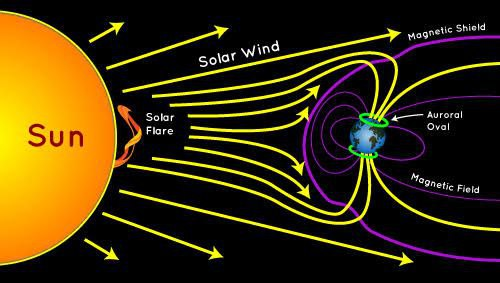
    Auroras are luminous phenomena that occur near the North (Aurora Borealis) and South Poles (Aurora Australis). They are caused by the interaction of charged particles from the Sun with the Earth’s magnetic field and atmosphere.

    Aurora Borealis: Often called the Northern Lights, it occurs in the northern hemisphere, predominantly in regions near the Arctic Circle. This includes countries like Russia, Norway, Sweden, Finland, Iceland, Canada, and Alaska.

    Aurora Australis: Also known as the Southern Lights, it occurs in the Southern Hemisphere, primarily around the Antarctic Circle. It can be seen in countries such as Australia, New Zealand, Antarctica, and parts of southern South America.

    Characteristic features of auroras

    1. Timing and Frequency:  Auroras are most visible during winter and around the equinoxes, with increased activity during periods of high solar activity, such as solar storms or solar flares
    2. Shapes and Movements: Both auroras exhibit a variety of shapes, including arcs, curtains, rays, and spirals. They often move and change shape rapidly due to interactions with Earth’s magnetic field.

    Colors of Aurora

    1. Altitude and Atmospheric Composition: Higher altitudes produce red glows from oxygen atoms, while lower altitudes result in the more common green-yellow hues.
    2. Oxygen and Nitrogen: Oxygen atoms at lower altitudes produce the familiar green-yellow hues, while reddish and bluish light in the lower fringes of auroras is created by ions striking nitrogen atoms.
    3. Rare Colors: Ions striking hydrogen and helium atoms can produce blue and purple auroras, but these colors are rarely visible to the human eye as they are outside the visible spectrum.

    Trigger and Formation of auroras

    1. Solar Wind Generation: This solar wind (primarily electrons and protons) is a result of the sun’s intense activity and consists of superheated gases.
    2. Interaction with Earth’s Magnetic Field: Most of the solar wind is deflected, but some particles become trapped within the magnetosphere and are directed towards the magnetic poles.
    3. Trapping in the Ionosphere: The trapped ions enter the ionosphere and accumulate in ring-shaped areas around the geomagnetic poles.
    4. Collisions with Atmospheric Gases like oxygen and nitrogen and transfer of energy to these atoms resulting into light.
    5. Colorful Displays: oxygen at lower altitudes produces green and yellow hues, while higher altitudes can emit red light. Nitrogen can create blue or purple shades.
    6. Influence of Solar Activity: Geomagnetic storms, triggered by solar events like coronal mass ejections (CMEs) and solar flares, enhance auroral activity.  Eg- During periods of heightened solar activity, auroras can be seen further south than usual and can exhibit more vibrant colors.

    Significance and importance of Auroras

    1. Understanding Earth’s upper atmosphere, including its density, composition, flow speeds, and the strength of electrical currents flowing in the upper atmosphere.
    2. Study of Solar Activity: Auroras are directly linked to solar activity, including solar flares and coronal mass ejections (CMEs). Monitoring auroras can help predict and mitigate the effects of solar activity on technological infrastructure like satellites and GPS systems.
    3. Cultural and Historical Importance: Auroras have been observed and revered by various cultures throughout history, often appearing in mythology and folklore. For example, the Inuit people believed auroras were the spirits of their ancestors.
    Due to 4 strong Coronal Mass Ejections (CMEs) Aurora lights in red hues were visible from Ladakh on May 10th 2024.

    Auroras are not only breathtaking natural phenomena but also help advance our understanding of Earth’s magnetosphere, solar activity, and the upper atmosphere, making them an essential subject of study.

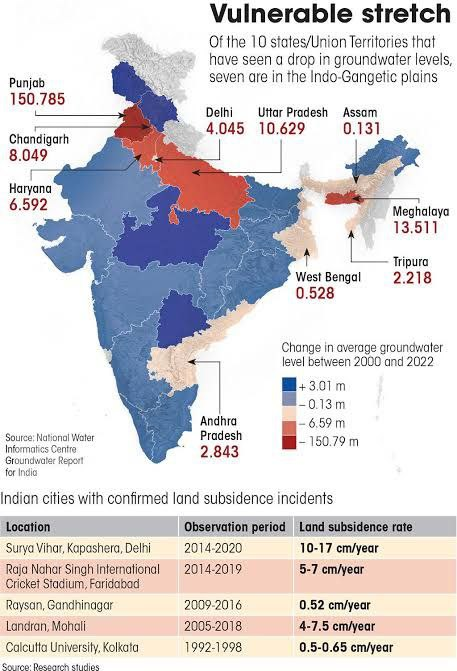
  • The groundwater potential of the Gangetic valley is on a serious decline. How may it affect the food security of India?(GS1 2024 Question)

    As per “Interconnected Disaster Risks Report 2023” of the UN, Some areas in the Indo-Gangetic basin in India have already passed the groundwater depletion tipping point and its entire northwestern region is predicted to experience critically low groundwater availability by 2025. As per CGWA, groundwater storage levels in the Ganga basin have been declining by 2.6 centimeters per year.

    Reasons for declining groundwater potential in gangetic valley 

    1. Overextraction: Eg. CGWB noted rural areas in Gangetic Valley rely 70% on groundwater leading to unsustainable extraction rates.
    2. Urbanization: has increased impermeable surfaces, reducing natural groundwater recharge and increasing runoff. Eg- As per Bangalore Water Supply and Sewerage Board (BWSSB) data, city harvests only 10 percent of the rainwater while the rest 90 percent drains away wasted.
    3. Pollution: Contamination from agricultural runoff, industrial discharges, and inadequate waste management reduces the quality and usability of groundwater resources. 
    4. Land Use Changes: Modifications in land use, such as deforestation and conversion of land especially at Himalayan foothills for agriculture or urban development, disrupt the natural hydrological cycle and groundwater recharge processes.
    5. Climate Change: Variability in precipitation patterns due to climate change affects the natural recharge of groundwater systems, leading to periods of both drought and flooding, which make rainfall unable to recharge groundwater.

    Groundwater Decline Impact on food security 

    1. Declining food production – Punjab and Haryana produce 50 percent of the country’s rice supply and 85 percent of its wheat stocks.
    2. Declining food productivity: over 85% of Groundwater extracted is used for agriculture. Eg- 1-meter decline in groundwater from its long-term mean results in an approximately 8 percent reduction in food grain production.
    3. Shift in Cropping Patterns – Shifting from traditional crops like wheat and rice to less water-demanding options, such as millets and pulses, may not meet India’s food demand, risking staple availability and increasing prices. 
    4. Food Inflation – A decline in agricultural productivity due to groundwater depletion can lead to higher food prices, disproportionately affecting the poor and vulnerable populations, thus threatening food affordability.
    5. Increased farm distress because of reduced groundwater availablity leading to crop failures, reduced farmer income and indebtedness, leading to depeasantization further impacting food production.
    6. Land degradation and desertification due to overuse of groundwater which leads to alkaline and saline soil declining production of wheat and rice which are sensitive to alkalinity and over salinity. Eg. Lands of western UP, Haryana, Punjab 

    Way Forward to Solve Groundwater Potential’s decline


    1. micro- irrigation systems
    2.  Mandatory permits and  Metering of groundwater usage
    3. Zoning regulations: to control the density of borewells and establish ‘no-go’ zones
    4. Implementation of Mihir Shah report (2016) which seeks to unify CGWB and Central Water commission to prepare a unified national level plan to manage groundwater extraction.
    5.  Install water-efficient fixtures such as low-flow faucets, promote use of greywater recycling systems, and use treated water for non-potable purposes like irrigation and toilet flushing.
    Best Practice Case Study
    Andhra Pradesh Farmer Managed Groundwater Systems (APFAMGS) project – led to a 20-30% reduction in groundwater extractionCommunity Led Springshed Management in Kumaon Region of Uttarakhand

    The groundwater clock is ticking towards day zero. India needs a combination of strategy and investment to safeguard and revitalize the same.

  • How far was the Industrial Revolution in England responsible for the decline of handicrafts and cottage industries in India?(GS1 2024 Question)

    The Industrial Revolution in Britain, beginning in the 18th century, transformed the country into an economic powerhouse. However, this progress came at the expense of India’s local industries, which faced stagnation due to the influx of cheap British goods and exploitative colonial policies.

    Industrial revolution in Britain as responsible for decline of handicrafts and cottage industries in india

    1. Cheap industrial goods: mass production of factory made textiles which were cheaper and are of higher quality, flooded the Indian market, making it difficult for Indian handmade textiles to compete. Eg. Famous Dacca muslin suffered heavily due to cheap British textiles flooded Indian markets.
    2. Import of British goods favored due to British policies like high tariff on Indian made goods in England while there is duty free trade of British good into india.
    3. Destruction of Traditional Economy: Indian weavers, artisans, and craftsmen lost their livelihoods as their traditional industries declined, leading to the collapse of the Indian cottage industries. eg. Indian silk and cotton made goods production hampered by British machine made products.
    4. Shift in consumer preferences: as mass produced goods are available consumer preference shifted. Many people began to prefer the lower-priced, uniform products from factories over the unique but more expensive handicrafts.
    5. Disruption of Traditional Skills: The rise of industrial production undermined traditional skills and practices. Artisans who relied on their crafts for livelihood found it increasingly difficult to maintain their trades in the face of industrial competition.

    Other factors responsible for decline of handicrafts and cottage industries in India

    1. Introduction of railways facilitated movement of British manufactured goods into rural markets, making these products more accessible and affordable than locally produced handicrafts. Historian Bipan Chandra noted that railways helped integrate colonial economies, often to the detriment of local industries.
    2. Absence of Industrial Protection Policies: Unlike countries such as Germany and the United States, which implemented protectionist tariffs to nurture domestic industries, India under British rule lacked such policies. This absence left local artisans vulnerable to foreign competition.
    3. Economic critique by Dadabhai Naoroji noted British exploitation of Indian resources had devastating effects on local industries. The enforced cultivation of cash crops, such as indigo in Bengal, redirected land and resources away from traditional agriculture and handicrafts, undermining local economies.
    4. Effect of famines: British economic policies worsened famines like the Bengal Famine of 1770, causing millions to starve and local economies to collapse. Mahatma Gandhi argued that these famines stemmed from exploitative practices, devastating local industries and artisans.
    5. Decline of Traditional Patronage: Historian Irfan Habib noted that the weakening of traditional power structures left many artisans without royal patronage and financial support, resulting in the deterioration of their crafts and skills.
    6. Lack of Technological Advancement in India: The technological gap between British industries and Indian handicrafts was significant. The introduction of power looms and spinning jennies in British factories enabled mass textile production, which artisans could not compete with.

    Efforts by nationalist and freedom fighter for revival of industries

    1. Economic nationalism: Eg. swadeshi is used as symbol against oppression in Swadeshi Movement(1906) And Non Cooperation Movement(1921).
    2. Educational initiatives Eg. Tagore founded Shantiniketan in 1901.
    3. Cottage Industries Movement: Eg. The All India Spinners’ Association, formed in 1938.

    Although the Industrial Revolution in England hindered the growth of traditional industries in India, textile sector today contributes 2.3 % to the country’s GDP, 13% to industrial production and 12% to exports.

  • How far is it correct to say that the First World War was fought essentially for the preservation of balance of power?(GS1 2024 Question)

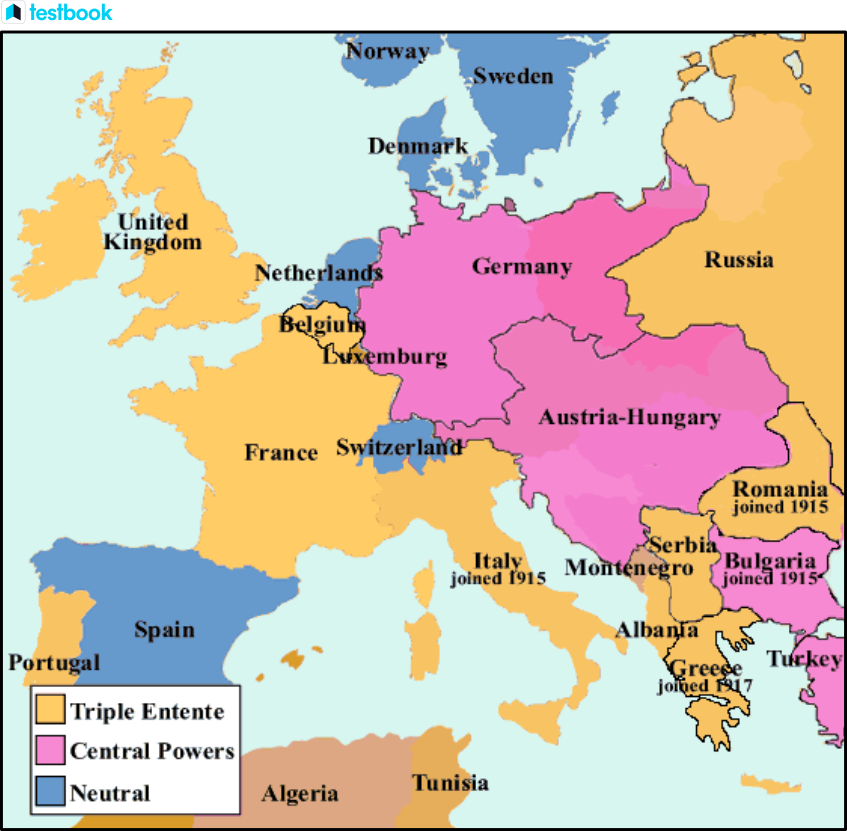
    The First World War, often referred to as the Great War, was a worldwide conflict that spanned from 1914 to 1918. It involved numerous major powers and resulted in extensive loss of life and widespread destruction. A significant factor contributing to the war’s outbreak was the ambition to preserve the balance of power in Europe.


    Preservation of balance of power as the reason for first world war

    1. Formation of Alliances such as the Triple Alliance (Germany, Austria-Hungary, and Italy) and the Triple Entente (Britain, France, and Russia), was a strategic move to balance military strength in Europe. 
    2. Germany’s rapid economic and military growth was perceived as a threat by other European powers, particularly Britain. The naval arms race between Britain and Germany exemplified this power struggle, escalating tensions that contributed to the outbreak of war.
    3. Colonial Rivalries: Competition for colonies and global influence intensified rivalries among European nations. Incidents such as the Moroccan Crises (1905 and 1911) highlighted these tensions, as conflicts over African territories further strained relationships between France and Germany.
    4. Austro-Hungarian and Russian Rivalry in the Balkans: The Bosnian Crisis of 1908, when Austria-Hungary annexed Bosnia, angered Russia and Serbia, exacerbating existing tensions in the Balkans. This rivalry played a crucial role in destabilizing the region and contributing to the war’s outbreak.
    5. France’s Desire for Revenge: After losing Alsace-Lorraine to Germany in the Franco-Prussian War, France sought alliances with Russia and Britain to contain Germany’s growing power. This desire for revenge fueled France’s involvement in the conflict.
    6. Preservation of Empires: The fear of losing imperial influence motivated British involvement, highlighting how imperial ambitions were intertwined with the balance of power considerations.

    Other Reasons of First World War

    1. Nationalism and ethnic tensions: rising nationalism in the Balkans and killing of Franz Ferdinand was rooted in serbian nationalism, which had less to do with European balance of power struggle. 
    2. Economic rivalry,desire for market dominance and resource control particularly between Britain and Germany especially in Africa and Asia was also a key reason for world war.
    3. Imperialism: war was essentially fought over retention and expansion of colonies. Scramble for Africa and control over Asian colonies led to long standing tensions between these imperial powers.
    4. Militarism in pre pre-war environments like Germany’s Schlieffen Plan, which aimed for a rapid attack on France from Belgium. Arm race among European powers fostered an environment of distrust and war.
    5. Diplomatic failures as initial alliances like the Franco-Russian alliance of 1894 created an environment of mistrust and escalated confrontations against germany.

    While the First World War was primarily fought to preserve the balance of power, it was not the sole cause. Nationalism, imperialism, economic rivalry, and domestic pressures also played significant roles, making the balance of power a central but not exclusive factor in the conflict.