With Less than 60 days remaining for UPSC 2022 Prelims, your preparation must revolve around revision and attempting tests. At this stage, aspirants become more stressed and anxious than when they first started their preparation. Having a foolproof strategy for the last few days can work wonders — especially for those falling on the borderline, scoring between 80-90 marks in the mock test series. Now is the time to focus on improving your performance and boosting your scores.
While many of you, would have felt easier following a timetable for an entire year, you might not be sure how to revise every topic in the syllabus along with test series and current affairs of 1.5 years in last few days.
Open to all, Free Live Webinar by IPoS Officer Vikas Palwe (CSE 2020)
Vikas Palwe has a special command over UPSC Prelims. In all his 5 attempts, He scored 120+ marks consistently. Now, with prelims coming up in few days, he would be happy to share his mantras and techniques to scoring high in prelims with future aspirants.
If you are attempting this year’s prelims then do not miss this opportunity. Attend the webinar to gain topper’s insights on prelims and clear your personal queries with him.
Webinar Details
This Ask me Anything session is free for all aspirants to attend but is perfect for anyone looking for a refreshing break from their grueling studies. Only limited slots are available, so register ASAP.
Evening 09:00 PM – TIKDAM: Art of Elimination Session.
Download Habitat app from the Playstore Join our Official Civilsdaily Space for GS and CSATHere
13th Apr 2022
The monsoonal rainfall in India is concentrated only in four months and more than 50% of the net sown area is rainfed only. Irrigation is thus essential to overcome spatial and temporal variation of rainfall.
Archaeological and historical records show that from ancient times we have been constructing sophisticated hydraulic structures like dams built of stone rubble, reservoirs or lakes, embankments and canals for irrigation. Not surprisingly, we have continued this tradition in modern India by building dams in most of our river basins. Before we look at these methods of irrigation in detail, let’s have a look at some of the hydraulic structures used in ancient India!
Some Hydraulic Structures used in Ancient India:
In the first century BC, Sringaverapura near Allahabad had sophisticated water harvesting system channelling the flood water of the river Ganga.
During the time of Chandragupta Maurya, dams, lakes and irrigation systems were extensively built.
Evidences of sophisticated irrigation works have also been found in Kalinga (Orissa), Nagarjunakonda (Andhra Pradesh), Bennur (Karnataka), Kolhapur (Maharashtra), etc.
In the eleventh century, Bhopal Lake, one of the largest artificial lakes of its time was built.
In the 14th century, the tank in Hauz Khas, Delhi was constructed by Iltutmish for supplying water to the Siri Fort Area.
Coming back to irrigation in the present day India, let’s look at some important facts and figures before we move forward:
Some important facts and figures:
The net irrigated area = 66.1 million hectares.
Total/Gross Irrigated Area = 92.6 million hectares.
Irrigation Intensity in India = (Gross Irrigated Area ÷Gross Sown Area) * 100
= (92.6 ÷ 194.4) *100
= 47.6%
More than 50% of the country’s cropped area depends exclusively on rainfall, most of which is concentrated in a few months of the year. Even where the annual overall precipitation is high, the available moisture is not adequate to support multiple cropping.
Ultimate Irrigation Potential:
As seen in the above figures, only about 66mha i.e. 47.6% of the net sown area is estimated to be irrigated. There is a need to bring more cropped area under assured irrigation so as to increase agricultural productivity and production.
The total ultimate irrigation potential of the country has been estimated as 140mha, with about 76 mha from surface water sources and about 64mha from groundwater sources.
Irrigation – Sources and Methods
The main sources of irrigation in India are:
Canals
Wells (and tubewells)
Tanks
The relative importance of these has been changing from time to time. Let’s look at these in detail:
1. Canal Irrigation:
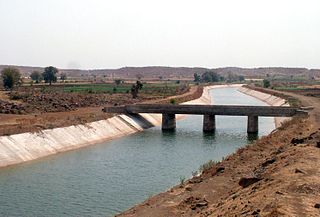
A canal is an artificial watercourse constructed for water supply and irrigation.
Inundation Canals – These are taken out from the rivers without any regulating system like weirs etc at their head. Such canals are useful only during the rainy season
Perennial Canals – These are those which are taken off from perennial rivers by constructing a barrage across the river. Most of the canals at present in India are perennial.
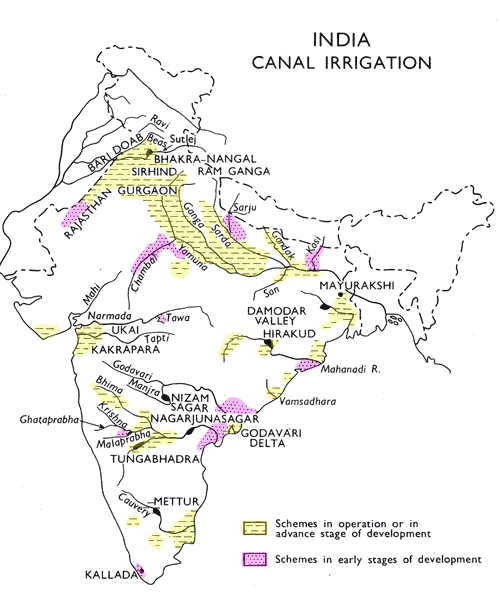
Canals can be an effective source of irrigation in areas of low relief, deep fertile soils, perennial source of water and an extensive command area. Therefore the main concentration of canal irrigation is in the northern plains.
The canals are practically absent from the peninsular plateau region because of rocky terrain. However, the coastal and the delta regions in South India have some canals for irrigation.
The percentage of canal irrigation area to total irrigated area in the country has fallen from about 40% in 1950-51 to less than 25% at present.
The states UP, Punjab, Haryana, Rajasthan and Bihar account for about 60% of the canal irrigated area in the country.
Merits of canal irrigation:
Perennial Source
Provides safety from droughts
Brings fertile sediments to the fields
Economical to serve a large area
Demerits:
Canal water soaks into the ground and leads to water logging, increases salinization, and leads to marshy conditions leading to malaria and flooding
Wastage of water.
2. Wells (and Tube Wells)
A well is a hole dug in the ground to obtain the subsoil water. An ordinary well is about 3-5 metres deep but deeper wells up to 15 metres are also dug.
This method of irrigation has been used in India from time immemorial. Various methods are used to lift the ground water from the well. Some of the widely used methods are the persian wheel, reht, charas or mot, and dhinghly (lever) etc.
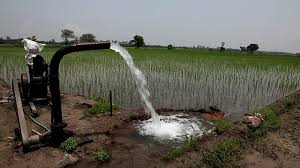
A tube well is a deeper well (generally over 15 metres deep) from which water is lifted with the help of a pumping set operated by an electric motor or a diesel engine.
Well irrigation is gradually giving way to energized tube wells. But there are many wells still in use where electricity is not available or the farmers are too poor t0 afford diesel oil.
This method of irrigation is popular in those areas where sufficient sweet ground water is available.
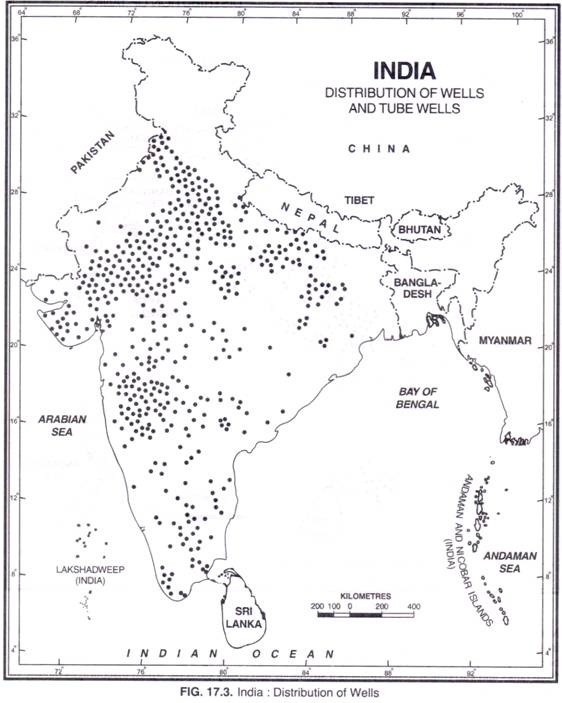
It is particularly suitable in areas with permeable rock structure which allows accumulation of ground water through percolation. Therefore wells are seen more in areas with alluvial soil, regur soil, etc. and less seen in rocky terrain or mountainous regions.
These areas include a large part of the great northern plains, the deltaic regions of the Mahanadi, the Godavari, the Krishna and the Cauvery, parts of the Narmada and the Tapi valleys and the weathered layers of the Deccan trap and crystalline rocks and the sedimentary zones of the peninsula
However, the greater part of peninsular India is not suitable for well irrigation due to rocky structure, uneven surface and lack of underground water.
Large dry tracts of Rajasthan, the adjoining parts of Punjab, Haryana and Gujarat and some parts of Up have brackish ground water which is not fit for irrigation and human consumption and hence unsuitable for well irrigation
At present irrigation from wells and tubewells accounts for more than 60% of the net irrigated area in the country.
UP has the largest area under well irrigation which accounts for 28% of the well irrigated area of the country. U.P., Rajasthan, Punjab, Madhya Pradesh, Gujarat, Bihar and Andhra Pradesh account for about three-fourths of the total well-irrigated area
Well is an independent source of irrigation and can be used as and when the necessity arises. Canal irrigation, on the other hand, is controlled by other agencies and cannot be used at will.
Some ground water salts are useful for crops
Does not lead to salinization and flooding problems
There is a limit to the extent of canal irrigation beyond the tail end of the canal while a well can be dug at any convenient place.
Demerits
Only limited area can be irrigated. Normally, a well can irrigate 1 to 8 hectares of land.
Not suitable for dry regions
Overuse may lead to lowering of water table
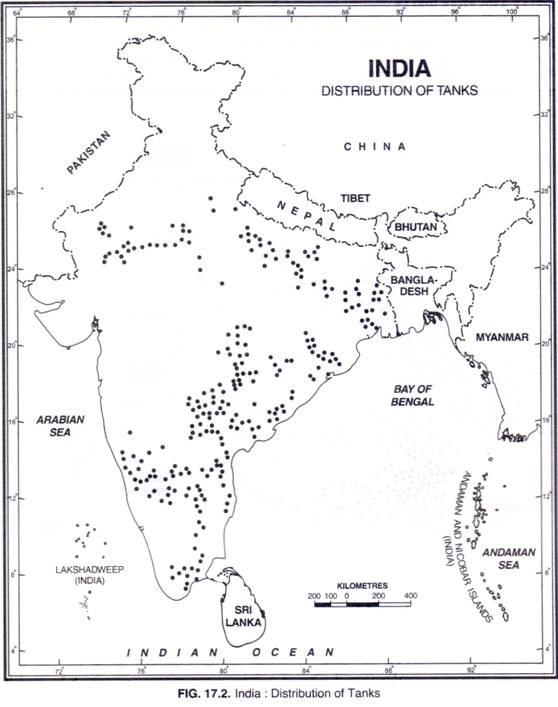
3. Tank irrigation
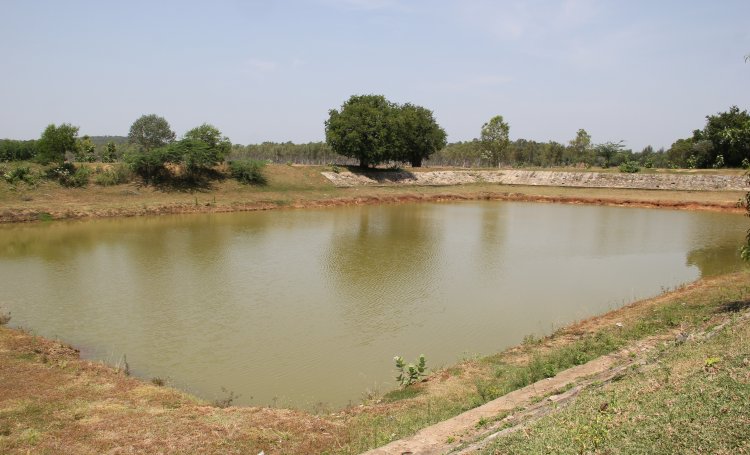
A tank is a reservoir for irrigation, a small lake or pool made by damming the valley of a stream to retain the monsoon rain for later use.
It is practised mainly in the peninsular region due to the following reasons:
The undulating relief and hard rocks make it difficult to dig canals and wells
There is little percolation of water due to hard rock structure and ground water is not available in large quantities.
Most of the rivers are seasonal; there are many streams which become torrential during the rainy season – so the only way to use this water is to impound it by constructing bunds and building tanks. Also, it is easy to collect rainwater in natural or artificial pits because of impermeable rocks.
Scattered nature of agricultural fields
Merits
Most of the tanks are natural and do not involve cost for their construction
Independent source for an individual farmer or a small group of farmers
longer life span
can be used for fishing also
Demerits
Depends on rain and these tanks may dry up during the dry season
Silting of their beds
Require large areas
Evaporation losses
Sometimes there might be a need to lift the water to take it to the field
Irrigation water is generally applied to crops by:
Flooding on the field surface
Applying beneath the soil surface
Spraying under pressure
Applying in drops in the crop root zone
The application method must ensure a uniform distribution of water along the cropped field as well as in the root zone of the crop with high application efficiency. The ratio of water stored in the root zone to that delivered to the field should be maximum. There should be minimum or no wastage of water either through surface run-off or deep percolation below the root zone of a crop.
Several water application methods are practised to suit different soil types, water supply and its quantity, the topography of the land, crops to be irrigated and costs.
Surface Application Methods:
In this method, water is applied to the crop by flooding it on the soil surface.
This method requires proper land grading for the flow of water over the land surface.
More than 95% of the irrigated area in India is under surface irrigation.
Merits:
It is simple in layout and operation.
The amount of manual labour required is minimum.
It does not obstruct the use of machinery for land preparation, cultivation, harvesting, etc.
Demerits:
The overall irrigation efficiency is low. The worldwide average irrigation in canal command areas shows an overall efficiency of as low as 28%.
It may result in water=logging and soil salinization besides the huge amount of water losses.
Surface Irrigation methods may be broadly classified as:
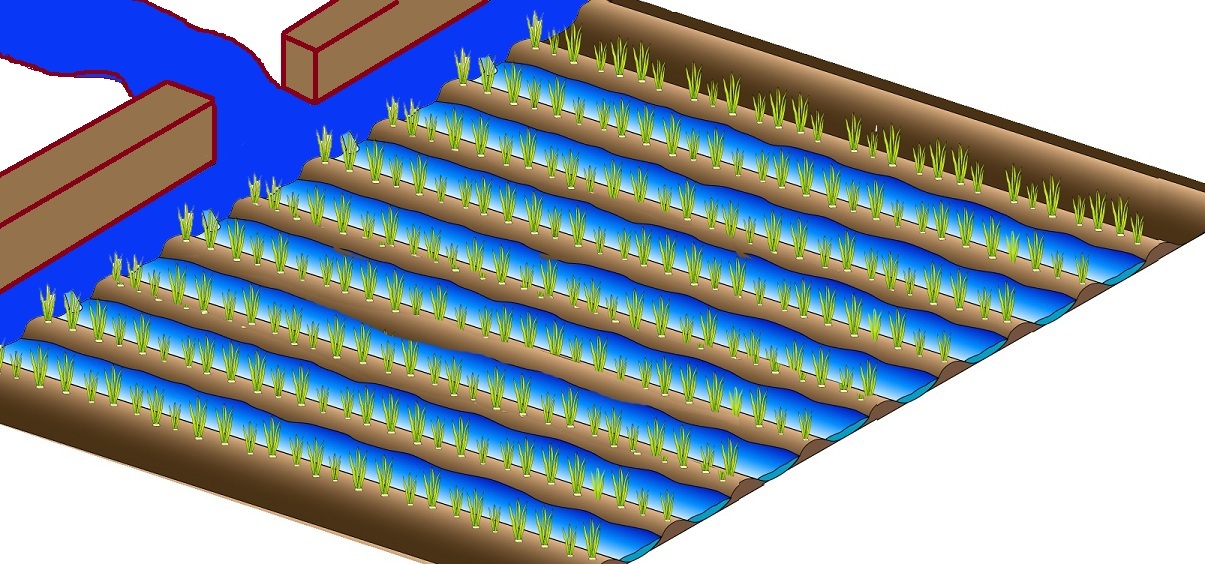
Border Method:
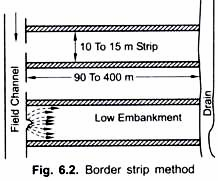
Borders are formed by dividing the field into a number of strips which are separated by ridges.
The strips are generally levelled along the width but may or may not have slope along the length.
An irrigation channel runs along the upper end of the borders.
The water is diverted from the channel into the strips. The water flows slowly towards the lower end, wetting the soil as it advances. Extra water is generally removed from the strip by means of a collecting drain. It is provided at the other end.
This method is suitable in the fields where the soil is sufficiently capable of absorbing the water.
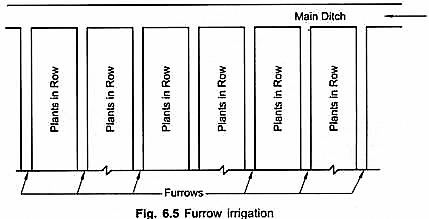
Furrow irrigation is adaptable to a great variation in slope, crops and topography.
When the crops are grown and planted in rows this method is the best suited. In this method, unlike flooding, only a part of the field is wetted. The area wetted varies from 1/2 to 1/5 of total area over which crops are grown.
Close growing crops, on slopes and soils that develop crust after being wet, may be irrigated with small furrows which are called corrugations or rills.
Furrow spacing should be such that the lateral water movement of the moisture wets the ridges by the time irrigation is complete. The lateral movement from the furrows depends on the soil type.
Furrow spacing is determined by agronomic requirements of row-to-row spacing and machinery to be used for planting and cultivation.
Furrow length: Longer furrows = more percolation and less run-off
Benefits of this method:
In this method plants in their early tender age are not damaged by the flow of water.
The land between the rows of plants is utilised to construct furrows, therefore useful irrigable land is not wasted.
As the area wetted is just 1/2 to 1/5 of the cropped area of the field, puddling and crusting of the soil is minimum.
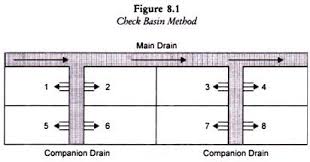
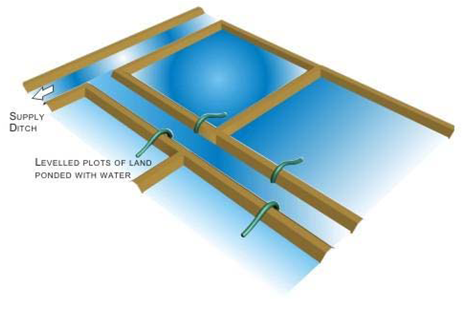
Check basin:
It consists of running water into relatively level plots surrounded by small ridges.
The length of the plot is generally less than 3 times the width.
The main and lateral channels irrigate The main channel is aligned along the upper end of the field and checks are made on the either side of the lateral channels.
The check basins are especially suitable for heavy soils with low infiltration rate or highly permeable sandy soils.
The key to attaining high irrigation efficiency in the design of the check basin is to spread water over the entire basin as rapidly as possible.
Therefore, the use of large inflow stream reduces water spread time over the basin.
Sprinkler and Micro-Sprinkler Application:
Sprinklers:
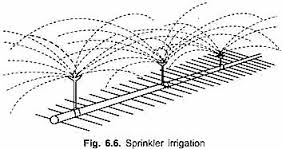
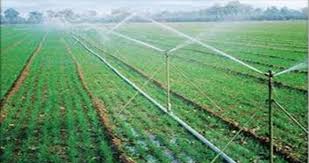
This system sprinkles water in a manner similar to rainfall so that run-off and deep percolation losses are avoided and the uniformity of application is quite high.
The system consists of sprinkler heads or nozzles, which are mounted on risers in lateral lines taken from the main line, which is further connected to a pumping unit.
The soil is too porous for good distribution by surface irrigation.
The fields have an uneven surface.
The soil is easily erodable.
The water supply is just sufficient for crop growth.
Merits:
Sprinklers can be used on all soil types of any topography.
It entails increased irrigation frequency which has a positive effect on crop yield.
In this method, a water saving of 30% to 50% is reported in comparison to the surface method of irrigation
Thus by introducing sprinklers, an additional area ~ up to 50% can be brought under irrigation besides increased crop yields
The overall efficiency of the system is above 80% and no land is wasted on making bunds and channels, and about 40-50% of saving in labour as compared to surface irrigation.
Only 2 to 5% water is lost through evaporation.
Demerits:
Expensive
Requires continuous maintenance and skill for installation and operation
The high energy requirement for operation as sprinklers operate at water pressure ranging from 1 to 10 kg/sq cm.
Wind interferes with the distribution pattern. It reduces the spreading rate and in turn the efficiency. Under high temperatures and strong winds heavy evaporation loss takes place thereby offsetting the saving in water.
Micro-sprinklers:
It sprinkles around the root zone with small sprinklers that work under low pressure.
In this method, water is applied only to the root zone area unlike to the entire field as in the case of sprinkler irrigation method.
This method is highly suitable for orchard crops and vegetable crops.
Drip Application
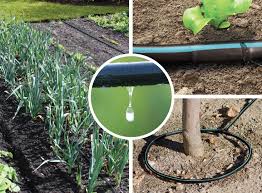
In this method, the application of water is precise but slow as discrete drops, continuous drops, tiny streams or miniature sprays through mechanical devices, called emitters or applicators located at selected points along water delivery lines.
This is useful in areas with water scarcity and salt problems.
Drip irrigation system consists of main pipe, sub-mains, lateral valves, drippers or emitters, a riser valve, vacuum breakers, pressure gauges, water metres, filters, fertiliser tanks etc.
These are designed to supply water at desired rates (1 to 10 litres/hour) directly to the soil.
Low pressures ranging from 0.35 to kg/sq cm are sufficient for drip system
Book your slot for UPSC Mock interviews (paneled by ex UPSC members) and get a dedicated mentor, on-call DAF analysis, DAF-based personalized questionnaire, and Situational questionnaire (FREE)
We, at Civilsdaily, dedicate our work to our students, and we work hard every day to make sure our students get the best guidance and study material possible. Our efforts feel magical when our students succeed and share their views. Jagrati Awasthi, AIR 2, had an interview with a television channel about her success. And in that interview, she recommended Civilsdaily for preparation. She said that the content on Civilsdaily is rich and high quality. It helped her prepare better for Mains and succeed!
As Pakistan goes through a major political convulsion, India must resist the temptation to see the changes across our western frontiers through the narrow prism of bilateral relations.
Why Pakistan matters
Pakistan is an important regional piece in the power play between the US, China and Russia.
Given its location at the crossroads of the Subcontinent, Middle East, Eurasia, and China, Pakistan has always been a vital piece of real estate that was actively sought by contending geopolitical blocs.
The internal and external have always been tightly linked in Pakistan.
Today, Pakistan’s internal battles are tied to external geopolitical rivalry.
Two important factors in the political trajectory of Pakistan
Any Indian strategy in dealing with the new government in Islamabad would depend on an assessment of Pakistan’s post-Imran political trajectory.
Two important factors stand out.
1] First is the changing nature of civil military relations in Pakistan.
It is part of a serious intra-elite struggle that transcends the well-known military dominance over Pakistan’s polity.
One of the more interesting questions to come out of the current episode is whether the army’s famed internal coherence and unity of command might endure the crisis.
2] Second is the growing fragility of Pakistan’s polity triggered by the deepening economic crisis and sharpening social contradictions.
There is no guarantee that the army’s ties with new civilian rulers will be smooth nor can we assume that the civilian coalition against Imran Khan will survive the many challenges ahead as it confronts difficult policy challenges on multiple fronts.
Geopolitical challenges of Pakistan
Engaging India is unlikely to be a high priority for the new government in Islamabad.
Today, Pakistan has many other things to worry about — reviving its flagging economic fortunes, stabilising the Durand Line with Afghanistan, and rebalancing its ties with the major actors in the Middle East, including Iran, UAE, Saudi Arabia and Turkey.
Pakistan, which traditionally enjoyed good relations with the West as well as China, is finding it hard to maintain a balance in its great power relations.
While the army and the new government are eager to restore ties with the US, Imran Khan has made it hard for them.
Imran Khan’s repeated praise for India’s independent foreign policy was in essence a critique of the Pakistan army that has long steered Islamabad’s international relations.
Way forward
Delhi should focus on the potential shifts in Pakistan’s strategic orientation triggered by the current crisis.
The good news from Pakistan is that India is not part of the argument between the political classes or between Imran Khan and the “deep state” represented by the army.
Conclusion
An India that gets an accurate sense of Pakistan’s changing geopolitics will be able to better deal with Islamabad.
The first bi-monthly meeting of the Reserve Bank of India’s Monetary Policy Committee (MPC) for the current financial year reaffirmed its focus on inflation management.
Towards the normalisation of monetary policy
The MPC voted to keep the policy rate unchanged at 4 per cent and retained its accommodative stance.
However, the wording was changed to “remain accommodative while focusing on withdrawal of accommodation to ensure that inflation remains within the target going forward, while supporting growth.”
This statement sets the stage for a shift to a neutral stance in the next meeting and policy rate hikes in subsequent meetings.
RBI has announced the withdrawal of some of the steps taken during the pandemic to support the economy.
These will foster the normalisation of monetary policy.
Inflation challenge
The central bank has acknowledged that the disruptions caused by the Russia-Ukraine crisis have upended their growth and inflation outlook.
It has steeply revised its inflation projection from 4.5 per cent earlier to 5.7 per cent now for the current financial year.
The projection is based on an average global crude oil price of $100 per barrel.
The Food and Agriculture Organisation’s (FAO’s) Food Price Index, a gauge of global food prices, posted a record growth of 12.6 per cent from February.
Formalisation of Liquidity Adjustment Framework (LAF)
The RBI has been managing liquidity infused into the system during the pandemic through the Variable Rate Reverse Repo Auctions (VRRR) to withdraw liquidity and Variable Rate Repo auctions to inject liquidity.
RBI has now formalised the Liquidity Adjustment Framework (LAF).
The LAF is a framework to absorb and inject liquidity into the banking system.
The LAF is now a symmetric corridor with a width of 50 basis points.
The policy repo rate is at the centre of the corridor, with the MSF 25 basis points above the policy rate and the SDF 25 basis points below the policy rate.
What is a Standing Deposit Facility
The RBI has introduced the Standing Deposit Facility (SDF) as the lower bound of the LAF corridor to absorb liquidity.
The idea of the SDF was first mooted by the Urjit Patel Committee report on the monetary policy framework.
The RBI Act was amended through the Finance Act of 2018 to allow RBI to use this instrument.
The SDF will be a facility available to banks to park their funds.
The SDF will serve as the standing liquidity absorption facility at the lower end of the LAF corridor.
At the upper end of the corridor is the Marginal Standing Facility (MSF) to inject liquidity.
Through the SDF, the RBI can absorb liquidity without placing government securities as collateral, hence it will give greater flexibility to the central bank.
The change also marks a shift away from reverse repo being the effective policy rate.
Key takeaways
While on the face of it, there are no rate hikes, the shift from the reverse repo rate to the SDF signals a tightening of monetary policy.
There is a 40 basis points increase in the floor rate.
In the medium run, the call money rate would move towards the new LAF corridor, thus bringing orderly conditions in the money market.
As RBI begins to normalise liquidity in a calibrated manner, its ability to manage bond yields will likely be limited.
Yields on bonds are likely to inch up and remain above the 7 per cent mark.
Going forward, the trade-off between managing inflation and the borrowing programme of the government will become challenging.
Conclusion
For now the RBI has rightly decided to place top priority on inflation management. This will help in maintaining the credibility of the inflation targeting framework.
Book your slot for UPSC Mock interviews (paneled by ex UPSC members) and get a dedicated mentor, on-call DAF analysis, DAF-based personalized questionnaire, and Situational questionnaire (FREE) | Call @ 8668582260
Detailed Application Form (DAF) is one of the most important documents that you might have filled for UPSC interviews. A major part of the interview will revolve around the information and details provided in the DAF. It is more than your CV.
Your ability to defend your DAF before the panel is going to decide your success. Anticipating and preparing for the questions based on your DAF is an essential part of the interview preparation.