India now finds itself positioned between Algeria (ranked 102) and Guatemala (ranked 104), all classified as lower-middle-income countries.
About Global Talent Competitiveness Index (GTCI)
The GTCI ranks 134 countries based on their ability to grow, attract, and retain talent.
It is released by INSEAD, a partner and sponsor of the United Nation’s Sustainable Development Goals (SDGs)Davos, Switzerland recently.
INSEAD is one of the world’s leading and largest graduate business schools with locations all over the world and alliances with top institutions.
The report ranks countries based on 6 pillars:
enable
attract
grow
retain talent
vocation and technical skills
global knowledge skills
India’s Ranking and Comparisons
Rank 103: India’s current rank is well below the median score of the countries assessed in the GTCI.
BRICS Nations: India’s performance in the GTCI is the weakest among the BRICS countries. China leads the group at rank 40, followed by Russia at 52, South Africa at 68, and Brazil at 69.
Top Three Countries: These are Singapore, Switzerland, and the United States.
Skills Mismatch: India faces an increased skills mismatch and difficulties in finding skilled employees, resulting in its low rankings in the ‘Employability’ and ‘Vocational and Technical Skills’ categories.
Best-Performing Area: India’s best-performing area in the GTCI is “Global Knowledge Skills,” driven by innovation and software development, contributing to its 69th position in the “Talent Impact” sub-pillar.
India and China, historical adversaries who fought a war in 1962, reached their first-ever border agreement, known as the Border Peace and Tranquility Agreement (BPTA), in 1993, following years of border disputes.
The BPTA aimed to maintain peace along the Line of Actual Control (LAC) and reduce the risk of unplanned confrontations.
Why discuss this?
Thirty years later, the legacy of this historic agreement is continued by contested interpretations and unfulfilled commitments, while the ongoing border crisis further highlights the challenges both nations face in reaching a resolution.
BPTA: A Historic Yet Contested Agreement
Context: The BPTA was negotiated in the aftermath of the Sumdorong Chu standoff, marking a significant diplomatic achievement in the early 1990s.
Signing: The agreement was signed in 1993 during the tenure of PV Narasimha Rao as PM.
Peaceful Coexistence: The agreement committed both nations to avoid using or threatening force against each other. It emphasized strict adherence to the LAC and mutual reduction of military forces to maintain friendly relations.
Legacy: While it played a crucial role in maintaining peace for nearly two decades, the BPTA also spurred infrastructure development and frequent incidents, ultimately leading to the Galwan clash in 2020.
Ambiguity Surrounding the LAC
Inherent Ambiguity: The primary issue undermining border agreements is the inherent ambiguity surrounding the LAC, which was embedded in the BPTA.
LAC Problem: India’s discomfort with the term “LAC” proposed by China in 1959 remained a contentious issue.
Ambiguous Formulation: The BPTA allowed both sides to clarify the LAC wherever necessary, implying a lack of shared perception about the 1959 LAC.
Compromised Clarity: This formulation didn’t definitively reject China’s version of the LAC but aimed to prevent constant confrontation.
Impact on Subsequent Agreements
Positive Developments: The BPTA paved the way for additional agreements, such as confidence-building measures in the Military Field along the LAC (1996) and the appointment of Special Representatives (2003).
Unfinished Business: Negotiations for a final boundary settlement stalled, and the mechanisms to clarify LAC claims remained incomplete.
Infrastructure Development and Tensions
Race for Facts on the Ground: Ambiguity over the LAC drove both countries to strengthen their claims through infrastructure development and increased patrols.
Frequent Encounters: Frequent encounters between patrols exacerbated tensions along the border.
Unforeseen Consequences: The BPTA inadvertently contributed to a slowdown in boundary negotiations, as both sides aimed to bolster their positions along the LAC.
The Current Crisis
Blatant Disregard: The ongoing crisis, beginning in 2020, saw both nations cast aside the commitments made in the first article of the BPTA.
Stalled Boundary Negotiations: Amidst the crisis, efforts to settle the boundary dispute have almost completely stalled.
A Challenging Relationship: The 30-year-old border remains unsettled, mirroring the broader complexities of the India-China relationship.
Conclusion
The BPTA reached 30 years ago, marked a significant milestone in India-China relations.
However, its legacy remains deeply contested and fraught with ambiguities.
As the ongoing border crisis unfolds, the challenges in achieving a lasting resolution and fostering peaceful coexistence between the two nations persist.
In a recent decision, the Himachal Pradesh High Court ruled that the failure to report sexual crimes against minors is a bailable offence.
This ruling has raised significant legal questions regarding the interpretation of the Protection of Children from Sexual Offences (POCSO) Act, particularly with respect to the nature of the offence and its implications for pre-arrest bail.
What is the POCSO Act?
The POCSO Act came into effect on November 14, 2012, following India’s ratification of the UN Convention on the Rights of the Child in 1992.
Its primary objective is to address offences related to the sexual exploitation and abuse of children, which were previously either not specifically defined or inadequately penalized.
According to the Act, a child is defined as any person below the age of 18 years.
In 2019, the Act underwent a review and amendment, introducing more stringent punishments (after Nirbhaya Case), including the death penalty, for those committing sexual crimes against children.
Interpretation of the POCSO Act
Section 21 of POCSO Act: This section of the POCSO Act mandates the reporting of sexual offences against children. However, it does not explicitly specify whether the offence is bailable or not.
Reference to CrPC: The court, in its ruling, argued that since the POCSO Act does not provide clarity on the bailability of the offence, it should be determined by referring to the Code of Criminal Procedure (CrPC).
CrPC Classification: The CrPC classifies offences as either bailable or non-bailable based on the maximum punishment they entail. Offences punishable with imprisonment of less than three years are generally considered bailable and non-cognizable.
POCSO Act’s Penalty: Section 21 of the POCSO Act prescribes a penalty of imprisonment ranging from 6 months to 1 year. Consequently, this makes it fall within the category of bailable offences under the CrPC.
Case Context
Allegations: The case in question involved a hotel manager accused of failing to report an offence committed against a minor, as mandated by Section 21 of the POCSO Act.
Main Accused: The main accused had committed a sexual assault on a minor schoolgirl and recorded a video of the incident in a hotel.
Legal Charges: The accused faced charges under Sections 376 (Rape) and 506 (Criminal Intimidation) of the Indian Penal Code, as well as Sections 6 and 21 of the POCSO Act, which address aggravated penetrative sexual assault and the failure to report sexual crimes against children.
Hotel Manager’s Involvement: The hotel manager was also named in the FIR due to the mandatory reporting provision under the POCSO Act.
Mandatory Reporting Under POCSO
Section 19: Section 19 of the POCSO Act obliges “any person” who apprehends or has knowledge of a sexual offence against a child to report it to the Special Juvenile Police Unit (SJPU) or the police.
Penalty for Non-Reporting: Section 21 of the POCSO Act prescribes a penalty, including imprisonment, for failing to report such offences.
Exemptions: Children are not held liable for failing to report sexual offences, and those making false complaints are also exempt from punishment under Section 22 of the Act.
Supreme Court’s Perspective
The seriousness of Non-Reporting: The Supreme Court has consistently held that the failure to report such cases is a serious crime, emphasizing the importance of reporting child sexual abuse.
Specific Obligations: In certain cases, the Supreme Court has placed additional obligations on professionals, such as medical practitioners and educators, to report child sexual abuse cases to appropriate authorities.
Balancing Reporting Requirements with Privacy
SC’s Balance Attempt: In a recent case (X vs The Principal Secretary, Health and Family Welfare Department, Govt of NCT of Delhi), the Supreme Court sought to balance the mandatory reporting provision under POCSO with the confidentiality provision under the Medical Termination of Pregnancy Act, 1971.
Minors Seeking Medical Termination: The court recognized that minors may seek medical termination of pregnancies resulting from consensual sexual activity, and the mandatory reporting requirement might deter them from approaching qualified doctors.
Harmonious Interpretation: To ensure that minors’ rights to privacy and reproductive autonomy are protected, the court advocated for a harmonious interpretation of both the POCSO Act and the Medical Termination of Pregnancy Act.
Exemption for RMPs: The court suggested that registered medical practitioners, upon the request of minors and their guardians, can be exempted from disclosing a minor’s identity and personal details when reporting an offence under Section 19(1) of the POCSO Act or in any ensuing criminal proceedings.
Conclusion
The Himachal Pradesh High Court’s ruling on the availability of the failure to report sexual crimes against minors has sparked discussions on the interpretation of the POCSO Act and its alignment with the CrPC.
Furthermore, the Supreme Court’s efforts to strike a balance between mandatory reporting requirements and minors’ privacy rights underscore the complexity of addressing child sexual abuse within the legal framework.
In a significant verdict, the Punjab and Haryana High Court has invalidated a law passed by the Haryana government in 2020, which reserved 75% of private sector jobs for residents of the state.
The court ruled that discriminating against individuals based on their non-residency in the state is unconstitutional, as it violates fundamental rights enshrined in the Indian Constitution.
Haryana Employment of Local Candidates Act, 2020: The Controversy
Origins: Enacted by the Haryana Assembly in November 2020, the law aimed to reserve 75% of jobs in the private sector with monthly salaries under Rs 30,000 (originally Rs 50,000) for Haryana residents.
Effective Date: The law received the Governor’s approval on March 2, 2021, and came into effect on January 15, 2022.
Key Provisions: All private entities, including companies, societies, trusts, and individual employers with ten or more employees, were covered. The law mandated recruitment through a designated online portal, with provisions for employer exemptions.
High Court’s Verdict and Rationale
Unconstitutional Restrictions: The High Court held that Sections 6 and 8 of the Act, which required employers to submit quarterly reports on local candidates employed and gave authorized officers powers to verify compliance, amounted to an “Inspector Raj.” These provisions placed undue control over private employers, which is permissible for public employment but not for the private sector.
Violation of Fundamental Rights: The court found that the law severely impaired an individual’s right to carry on an occupation, trade, or business under Article 19(1)(g) of the Constitution. It emphasized that the State cannot discriminate against individuals based on their non-residency in a particular state.
Inspector Raj and Legal Immunity: The court also criticized the Act’s provision under Section 20, which protected authorized or designated officers acting in “good faith.” This provision effectively restricted legal proceedings against such officers, further impinging on employers’ rights.
Reasons for quashing
Article 19(1) (g) Violation: The Act potentially infringes upon Article 19(1)(g), which guarantees the right to carry out any occupation, trade, or business. It may impede this right by mandating job reservations in the private sector, affecting individuals’ occupational freedom.
Article 16 Boundaries: The Act’s provision of reservation based on domicile or residence may cross constitutional boundaries. Article 16 ensures equal opportunity in public employment, but the Act extends this to the private sector, a prerogative of Parliament.
50% Reservation Limit: The Act breaches the 50% reservation limit set by the Supreme Court in the Indra Sawhney case. Exceptional circumstances must be proven for such a breach, challenging the equality principle.
One Nation Concept: India’s constitutional vision as one nation with equal rights for all is challenged by these laws. Restricting out-of-state citizens’ job opportunities hinders their freedom to reside and work anywhere in India.
Economic Implications: The Act could raise operational costs for businesses and exacerbate income inequality among States.
What Comes Next
Supreme Court’s Involvement: The Haryana government, determined to pursue the reservation policy, plans to move the Supreme Court and file a Special Leave Petition (SLP) challenging the High Court’s verdict.
Prior Legal Proceedings: The High Court had previously stayed the law on February 3, 2022, but the Supreme Court later set aside this stay, directing the High Court to decide on the law’s validity within four weeks.
Conclusion
The Punjab and Haryana High Court’s ruling, declaring Haryana’s 75% reservation law for private jobs unconstitutional, marks a significant development in the ongoing debate over state-based job reservations in India.
The impending Supreme Court battle will determine the fate of this contentious legislation.
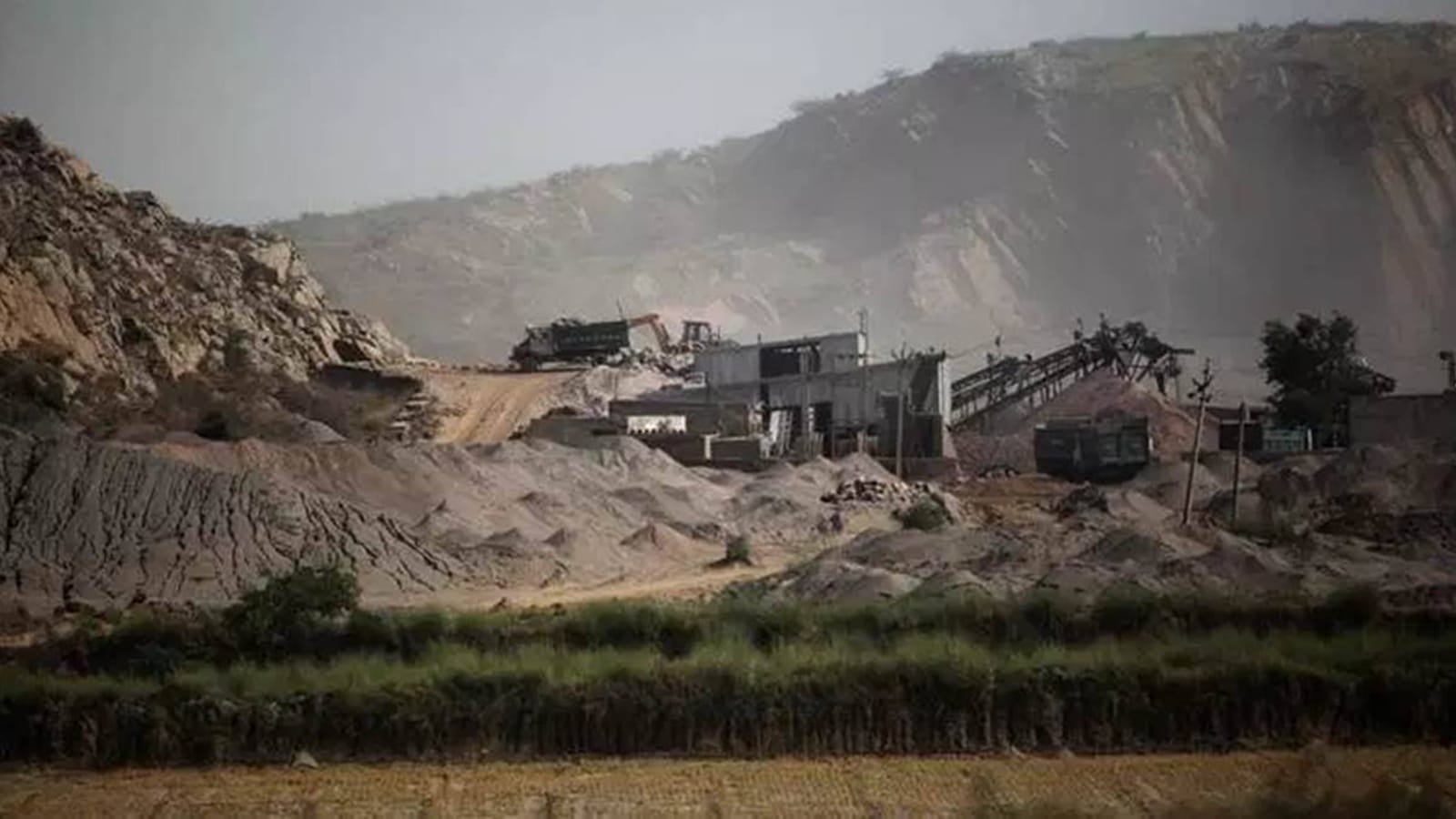
The article highlights India’s opportunity in the emerging critical minerals market in Afghanistan’s Hindu Kush, emphasizing responsible mining amidst environmental considerations. It connects this opportunity to the global shift towards electric mobility, with the potential for job creation.
Key Highlights:
Afghanistan’s Riches: The Hindu Kush region in Afghanistan holds minerals worth a trillion dollars, a potential game-changer.
Mobility Shift: Global movement from oil to electric vehicles is escalating demand for critical minerals.
Indian Opportunity: Geological hints suggest the possibility of similar mineral wealth in the northern Indian side of the Hindu Kush range.
Untapped Potential: India, with vast unexplored land and advancements in deep-sea mining, may have undiscovered mineral riches.
Challenges:
Governance and Environmental Concerns: Past issues highlight the need for robust laws to balance environmental concerns with job creation.
Political Tensions: Historical discord between the central government and Congress on mining needs resolution for cohesive policies.
Legislative Balance: Striking a balance between ecological conservation and job creation requires nuanced legislation.
Private Sector Role: Private sector involvement is crucial for capital-intensive mining, demanding careful governance.
Key Phrases for value addition:
“Afghanistan: Saudi Arabia of lithium” emphasizes the potential of the Hindu Kush region.
“Transition from oil to electric mobility” underlines the global shift and increasing demand for critical minerals.
“New Middle East: Hindu Kush mountain range” positions the region as a significant player in the emerging critical minerals market.
“Global critical minerals race” highlights the competitive dynamics in securing these resources worldwide.
Analysis:
Global Shift: The global transition to electric mobility is a key driver behind the soaring demand for critical minerals.
Indian Potential: India, with its untapped resources, is poised to benefit from the increasing global demand for minerals.
Balancing Act: Striking a balance between environmental conservation and job creation is essential for sustainable mining practices.
Private Sector Significance: In the capital-intensive mining sector, the private sector’s involvement is crucial for efficiency and technological advancements.
Key Data:
Trillion-Dollar Potential: Afghanistan’s Hindu Kush region is estimated to hold minerals worth a trillion dollars.
Geological Reports: Reports suggest the possibility of untapped mineral deposits in the northern Indian side of the Hindu Kush range.
Exploration Status: Less than 10% of India’s landmass has been explored, with only 2% mined.
Way Forward:
Legislation: Enforcing robust environmental, labor, and land laws is crucial for responsible and sustainable mining.
Private Exploration: Encouraging large-scale private exploration for critical minerals is vital for efficiency and technological advancements.
Deep-Sea Prospects: Leveraging emerging deep-sea mining technologies can open new avenues for resource exploration.
Balance Priority: Striking a balance between environmental conservation and job creation should be a priority in future mining policies.
In the last 3 years, there has been an upsurge in Philosophical essays in UPSC Main
Generally, aspirants are comfortable with static (GS-based) essays
But, static essays don’t create much space to stand out and convince the examiner
You don’t have much edge there.
IPS Kartikeya has crafted a process for writing and scoring high in Philosophical essays
That’s what he is bringing in his Masterclass
Read what Kartikeya, IPS has to say about Essay writing skills
“I believe as an aspirant you must ask yourself constantly – ‘What is my edge in this exam?’. Where can I get those extra marks?
I asked the same.
I realized essay writing is where the biggest scope lies. There are many doubts about choosing between – a ‘Static vs Philosophical’ essay. I say an essay is not about knowledge but an expression of your arguments. You don’t need to depend only on UPSC-related subject knowledge. I used ‘Panchatantra stories’ in my essays and scored the highest marks of all my attempts.
Second, aspirants think, the general rule is to write various dimensions like social, political, economic, etc but they end up writing the same arguments in different dimensions.
You need to learn to find and write relevant anecdotes. You need to craft a thesis and antithesis around the central theme of the essay. You need to enrich your essay by using different combinations of ideas. You need to learn the art of using the right ‘Quotes’ and ending the essay on a high note to charm the examiner.
This is where the majority of aspirants fail.
This is what I am going to talk about in my masterclass and also share my personal, handwritten PDF essay copies over our private Zoom meeting.”
Go from the ‘hit and trial method’ to a proven process to score in Essay Paper
It’s 2023. Essay paper demands more than just covering standard books and mocks.
(Don’t wait—the next masterclass won’t be until Dec 23)
We live in an infinite content and attention-deficit world. If you can’t craft a result-oriented process, and become consistent with exam preparation… you’ll never qualify for it.
This Masterclass is crafted to ensure the following
You don’t just consume books and lectures but apply and test consistently what you have learned.
To equip you with a ranker-verified process to score high in the Essay Exam
You develop a daily habit of studying to cover the syllabus or attempt and analyse mocks, note-making, revision or improve marks with a consistent approach.
We won’t just tell you WHAT you should study. We’ll teach you WHY you should study it based on timeless UPSC-CSE principles. And you’ll apply everything you learn with support from us and other smart aspirants and toppers.
Register Now!
Attend Masterclass by IPS Kartikeya for FREE
First 100 will get scanned PDF Essay Copies and Material from IPS Kartikeya
There are countless UPSC-CSE webinars out there. Most are conducted by teachers, ex-aspirants, or toppers who built a large following and explain WHAT they did.
This Masterclass focuses on the WHY and the HOW. You’ll learn the timeless UPSC-CSE principles to become a top 1% rank-worthy aspirant.
Deeply understand yourself and your constraints
The best aspirants and toppers aren’t the ones who know the most about the syllabus & topics. They know the most about… themselves and their constraints.
It’s time to get clear about your way of preparing for the exam, finally. And you’ll build a much-needed process to understand what makes you score high marks in Philosophical essays. No more guessing. Lots more results.
Attend Masterclass by IPS Kartikeya for FREE
First 100 will get scanned PDF Essay Copies and Material from IPS Kartikeya
Masterclass was created by Civilsdaily. We know first-hand how valuable these insights are – They are the bedrock for a successful attempt…
Collectively, we helped over 5,000+ aspirants qualify for prelims since the private launch of these masterclasses (last 2 years).
We are making it open for everyone for the first time this year for the 2024 Prelims.
These masterclasses are packed with value. They are conducted in private with a closed community. We rarely open these masterclasses for everyone for free. This time we are keeping it for 300 seats only.
Fee:
Special Access (extra 15 min with Ranker) – Free (only for first 100 registrations, register before 21st Nov, 1 PM)
Early Access – Rs. 299 (for the next 100 registrations, register before 22nd Nov, 1 PM )
Late Access – Rs. 499 (for last 100 registrations, register 22nd Nov, post 5 PM)
Ready to attend the Masterclass?
Let’s make 2024-25 your best attempt yet. You deserve this.
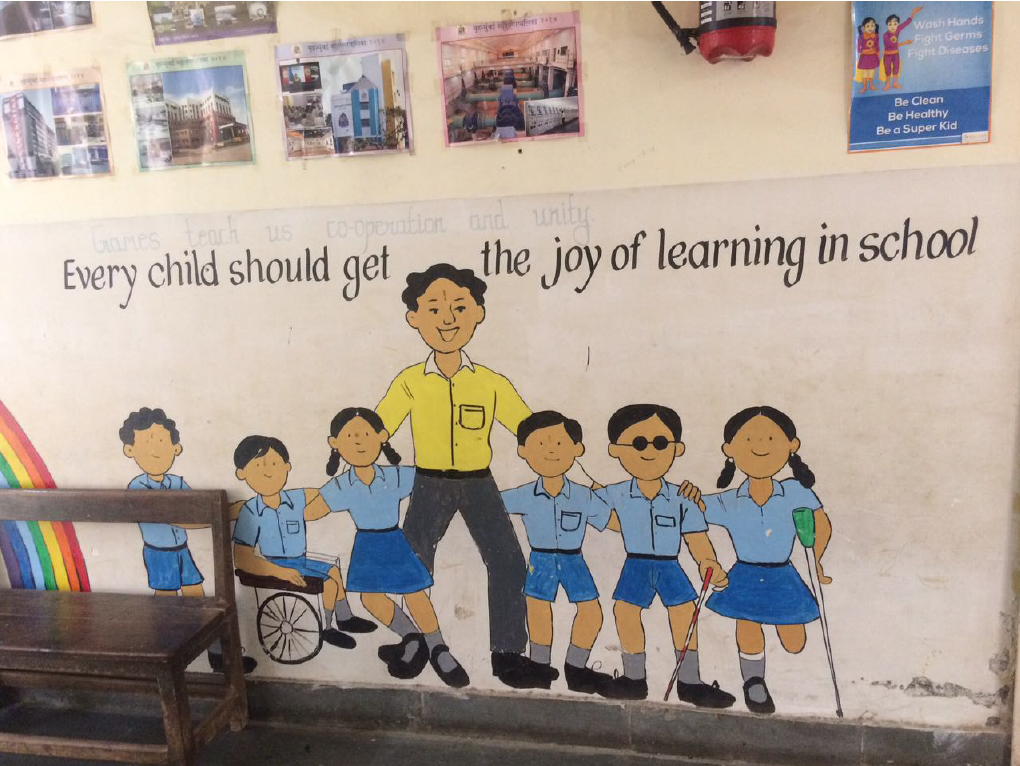
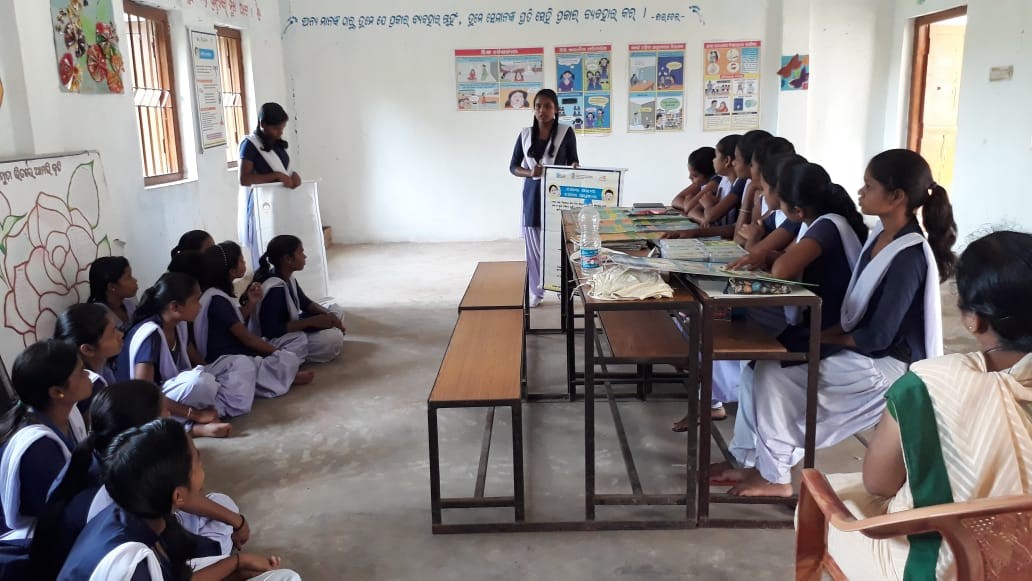
Odisha revolutionizes public education with initiatives like Odisha Adarsha Vidyalayas, ‘Mo School’ Abhiyan, and 5T-High School Transformation, aiming to surpass private schools in quality. This results in a substantial shift, with 81% of students currently enrolled in government schools. The state’s commitment to inclusivity, alumni engagement, and technology integration drives equality and excellence in education.
Key Highlights:
Revolutionary Reforms: Odisha’s education sector undergoes revolutionary changes through initiatives like Odisha Adarsha Vidyalayas, ‘Mo School’ Abhiyan, and 5T-High School Transformation Programme.
Recognition and Ranking: OAVs receive accolades, with one ranked the fifth-best in government-run day schools, emphasizing qualitative English-medium education for rural and semi-urban areas.
Inclusive Enrollment: OAVs ensure representation of marginalized groups, leading to a higher enrollment of female students. They also rescue and prepare vulnerable children for OAV entrance exams.
Alumni Engagement: Mo School Abhiyan connects schools with alumni, promoting mentorship, collaboration, and financial contributions, creating a significant impact on infrastructure and engagement.
Key Phrases:
Quality Education: Odisha’s focus on continuous teacher education, technology integration, and maintaining a favorable teacher-pupil ratio highlights its commitment to providing quality education.
Alumni Community: Mo School Abhiyan leverages the alumni community to contribute to school development, creating a unique model of collaborative efforts for educational improvement.
5T-High School Transformation: The 5T concept drives the High School Transformation Programme, emphasizing transparency, technology, teamwork, and timeliness for comprehensive educational changes.
Analysis:
Odisha’s proactive approach to education, combining infrastructure development, alumni engagement, and technology integration, has led to a significant shift in enrollment patterns, with a majority of students now choosing government schools.
Key Data:
Enrollment Shift: In 2019-20, private schools had 16,05,000 students; in 2021-22, this number reduced to 14,62,000, indicating a shift towards government schools.
Financial Contributions: More than 5.5 lakh contributors, including ministers, MPs, and professionals, have contributed over ₹797 crore in 40,855 schools under the School Adoption Programme.
Key Terms:
Odisha Adarsha Vidyalayas (OAV): A model aiming to bridge the rural-urban education gap by providing qualitative and affordable English-medium education.
Mo School Abhiyan: An initiative connecting schools with alumni, promoting collaboration, contributions, and celebrating successes to improve government schools.
5T-High School Transformation Programme: Rooted in transparency, technology, teamwork, and timeliness, focusing on technological advancements and holistic development in high schools.
Challenges:
Parental Trust: Historical perceptions of poor education quality in government schools challenge rebuilding parental trust.
Affordability Concerns: Despite reforms, concerns persist regarding the economic accessibility of quality education in government schools.
Perceived Quality Gap: Overcoming the perception gap regarding the quality of education in government schools compared to private counterparts.
Economic Accessibility: Addressing financial barriers for families, ensuring that quality education remains economically accessible.
Way Forward:
Continuous Alumni Engagement: Strengthen collaborations between schools and alumni to maintain a sustained focus on improvement. Explore mentorship programs and alumni-led initiatives for ongoing school development.
Enhancing Perceived Value: Implement awareness campaigns highlighting the positive changes in government schools. Showcase success stories and academic achievements to alter perceptions.
Financial Inclusivity: Introduce scholarship programs or financial aid to address economic barriers. Collaborate with governmental and non-governmental organizations to provide educational subsidies.
Technology Integration: Expand technological resources in schools for interactive and enhanced learning experiences. Introduce digital literacy programs to prepare students for a technology-driven future.
India’s road safety crisis, witnessing an estimated 300,000 annual fatalities, demands immediate interventions. Despite economic progress, road crashes cost 5-7% of the national GDP, emphasizing the need for strategic investments, political will, and a collective mindset shift. Urgent actions are crucial to curb this silent but deadly pandemic.
Key Highlights:
India’s Annual Road Fatalities: Approximately 3,00,000 people lose their lives on Indian roads annually.
Global Road Deaths: India contributes to 25% of the worldwide road fatalities.
India’s Disproportionate Role: Despite global road safety concerns, one in four road deaths occurs in India.
Economic Toll: Road crashes in India impose a substantial economic cost, ranging from 5-7% of the nation’s GDP.
Challenges:
Urgent Intervention Needed: Over 34 deaths per hour underscore the critical need for immediate and coordinated action.
Economic Impact: The economic toll of road crashes in India is substantial, affecting the nation’s GDP.
Economic Toll: Road crashes in India impose a substantial economic cost, ranging from 5-7% of the nation’s GDP.
State Disparities: The economic impact varies across states, impacting the quality of emergency care and after-care services.
Key Data:
Annual Road Fatalities: Approximately 3,00,000 people are estimated to be killed on Indian roads every year. Equivalent to more than 34 people every hour of every day.
Economic Toll: Road crashes in India are estimated to cost between 5% and 7% of the national GDP.
Global Road Safety: Positions road safety as a global problem, with 1.3 million people killed in road crashes every year.
Key Phrases:
Silent Pandemic: Describes road-related fatalities as a silent but deadly pandemic demanding attention.
Whole-of-Society Effort: Emphasizes the need for a collaborative approach involving government, private sector, and citizens.
World Day of Remembrance: Commemorates the World Day of Remembrance for Road Traffic Victims on November 19.
Motor Vehicles (Amendment) Act, 2019: Indicates positive steps taken by the Indian government to enhance road safety measures.
Analysis:
Pedestrians and Two-Wheelers: Emphasizes the vulnerability of pedestrians, cyclists, and two-wheeler riders, constituting 75% of road deaths in India.
Policy Impact: Acknowledges positive steps like the Motor Vehicles (Amendment) Act, 2019, and improved data collection while emphasizing the need for a comprehensive safe-system approach.
Legislative Impact: Acknowledges positive steps like the Motor Vehicles (Amendment) Act, 2019, and emphasizes the need for strategic investments in road safety measures.
Data-Driven Approach: Highlights the importance of enhanced data collection to understand the causes and locations of road crashes better.
Way Forward:
Seatbelt and Helmet Use: Prioritize the enforcement of seatbelt and helmet use for both drivers and passengers to significantly reduce fatalities.
Behavioral Change: Emphasize the importance of public awareness campaigns like #MakeASafetyStatement to instigate behavioral changes and promote road safety.
Large-Scale Initiatives: Launch campaigns on a national scale, such as #MakeASafetyStatement, involving international celebrities, to raise awareness and instigate behavioral changes.
Collaborative Efforts: Encourage a whole-of-society effort involving the government, private sector, and citizens for effective road safety measures.
An article in a German newspaper accused Indian poet Ranjit Hoskote of “anti-Semitism” and supporting the BDS (Boycott, Divestment, Sanctions) movement.
What is BDS Movement?
BDS (Boycott, Divestment, Sanctions) movement was launched in 2005 by over 170 Palestinian groups.
It aims to garner international support for Palestinian people’s rights.
BDS describes itself as an “inclusive, anti-racist human rights movement” opposing all forms of discrimination, including anti-Semitism and Islamophobia.
It draws inspiration from the South African anti-apartheid movement.
BDS Goals
BDS calls for nonviolent pressure on Israel until it complies with international law, with three key demands:
Ending Israel’s occupation and colonization of Arab lands and dismantling the Wall.
Recognizing the rights of Arab-Palestinian citizens of Israel to full equality.
Respecting, protecting, and promoting the rights of Palestinian refugees to return to their homes, as per UN Resolution 194.
Strategies of BDS
BDS involves boycotts of Israeli government, associated institutions, and companies involved in human rights violations.
Divestment campaigns urge institutions to withdraw investments from Israel.
Sanctions campaigns seek to pressure governments to fulfill legal obligations to end Israeli apartheid.
BDS focuses on a smaller number of carefully selected companies and products for maximum impact.
Israeli Government’s Response
Israel’s Prime Minister Benjamin Netanyahu has linked BDS to anti-Semitism.
BDS argues that criticism of Israel’s violations of international law should not be equated with anti-Semitism.
Israeli Minister Gilad Erdan led efforts against the economic boycott of Israel but downplayed the threat.
Economic Impact of BDS
BDS has led to some brands and celebrities refusing to work in Israel.
Impact on an entire state’s economy is challenging to measure due to various factors.
BDS aims to become a powerful tool in ending western support for Israeli apartheid and settler colonialism.