Government data shows growth in the Index of Eight Core Industries slowed sharply to 2.3% in February 2026, a three-month low.
What are Core Sectors
Eight industries with high weight in IIP: Coal, Crude oil, Natural gas, Refinery products, Fertilisers, Steel, Cement, and Electricity
Key Findings
1. Sharp Slowdown
Growth declined from 4.7% (January) → 2.3% (February)
Broad-based slowdown across sectors
2. Best Performing Sectors
Cement: 9.3% growth (though slowing)
Steel: 7.2% growth
3. Weak Performing Sectors
Crude oil: –5.2% (6th month of decline)
Natural gas: –5% (20th month of decline)
Refinery products: –1%
Electricity: 0.5% (low growth)
Coal: 2.3% (slowed)
[2015] In the ‘Index of Eight Core Industries’, which one of the following is given the highest weight? (a) Coal Production (b) Electricity generation (c) Fertilizer production (d) Steel production
The Ministry of New and Renewable Energy has proposed expanding its authority under the Electricity Act, 2003 and seeks recognition as the “Central Government” for all renewable energy matters.
Background
Currently, the Ministry of Power exercises primary control over the Electricity Act, including grid-connected renewable energy. The proposal by MNRE aims to redefine this institutional arrangement.
Key Demands by MNRE
Policy and Market Design
Authority to design renewable energy markets
Power to frame and notify bidding guidelines for renewable projects
Regulatory Role
Power to define tariff principles for the Central Electricity Regulatory Commission
Ability to guide the regulator on renewable energy issues
Monitoring Renewable Purchase Obligations (RPOs)
Oversight of compliance by distribution companies and large consumers
Addressing weak implementation by states
Institutional Coordination
Greater role in regulation-making by the Central Electricity Authority
Influence over national transmission planning
Current Status of Renewable Energy in India
Total installed capacity stands at about 520 GW
Non-fossil capacity is around 272 GW, more than half of total capacity
Renewable energy contributes about 263 GW
However, actual electricity generation from non-fossil sources is only about 25 percent
Government Target
India aims to achieve 500 GW of non-fossil fuel capacity by 2030, making efficient governance of the sector critical.
[2019] In India, which of the following review the independent regulators in sectors like telecommunications, insurance, electricity, etc.? Ad Hoc Committees set up by the Parliament Parliamentary Department Related Standing Committees Finance Commission Financial Sector Legislative Reforms Commission NITI Aayog Select the correct answer using the code given below: (a) 1 and 2 (b) 1, 3 and 4 (c) 3, 4 and 5 (d) 2 and 5
Planning for UPSC 2027 is not just about studying hard. It is about knowing what to do, when to do it, and how to stay consistent over a long preparation cycle.
In this session, I will break down a step by step plan for the UPSC 2027 attempt, from building your base to managing revision, practice, and exam readiness.
What You’ll Learn in This Session
1. How to begin your UPSC 2027 preparation the right way You’ll understand how to start with clarity, avoid confusion, and build a strong foundation from day one.
2. How to plan each phase of the journey step by step From basic books and notes to answer writing, Prelims preparation, revision, and test practice, this session will help you see the full roadmap clearly.
3. How to avoid common mistakes that waste time in the first year Many aspirants lose months in over planning, over reading, or jumping between sources. You’ll learn how to avoid these traps.
4. How to balance consistency, coverage, and revision I will explain how to study in a way that is sustainable and exam oriented, not just intense for a few weeks.
5. What serious aspirants should focus on to stay ahead early This session will help you understand what creates long term momentum and how early planning gives you a real advantage.
Who should attend:
• Beginners targeting UPSC CSE 2027
• College students and working professionals planning an early start
• Aspirants who want a structured roadmap instead of random preparation
It will be a 45 minute session, post which we will open up the floor for all kinds of queries which a beginner must have. No questions are taboo and Shubhankar Sir is known to be patiently solving all your doubts.
Join us for a Zoom session on 21st March at 7 PM. This session is a must attend for you If you are attempting UPSC for the first time or have attempted earlier and now preparing for 2026/2027, then it is going to be a valuable session for you too.
See you in the session”
Register for the session for a complete in-depth UPSC Prep
(Don’t wait—the next webinar/session won’t be until End March’26)
These masterclasses are packed with value. They are conducted in private with a closed community. We rarely open these webinars for everyone for free. This time we are keeping it for 300 seats only.
PYQ Relevance[UPSC 2023] Introduce the concept of Artificial Intelligence (AI). How does AI help clinical diagnosis? Do you perceive any threat to privacy of the individual in the use of AI in healthcare?Linkage: The question examines the use of Artificial Intelligence in healthcare and the associated concerns of data privacy and ethics. Similar privacy and ethical issues arise in AI-based tax governance, where sensitive financial data is processed.
Mentor’s Comment
The growing application of Artificial Intelligence in tax administration has significant implications for revenue mobilisation and governance in India. The Income Tax Department’s Project Insight (PI) represents a major shift towards data-driven tax administration. It leverages Artificial Intelligence and data analytics to enhance compliance, detect evasion, and improve revenue outcomes.
What is Project Insight (PI) and how does it function?
Project Insight (PI): Establishes a data-driven tax intelligence system to strengthen compliance and enforcement.
Income Tax Transaction Analysis Centre (INTRAC): Processes financial data from banks, GST, property, and securities to generate taxpayer insights
360-degree Profiling: Integrates multi-source financial data to build comprehensive taxpayer profiles
Non-intrusive Usage of Data to Guide and Enable (NUDGE) Strategy: Uses behavioural nudges such as SMS and emails to prompt voluntary compliance
Compliance Management Centralised Processing Centre: Ensures behavioural monitoring and correction of inaccurate filings
How does AI improve tax compliance and administrative efficiency?
Voluntary Compliance: Enables self-correction; over one crore revised returns filed since 2021
How does algorithmic bias affect fairness in tax enforcement?
Historical Bias Replication: Uses past enforcement data, reinforcing socio-economic disparities
Geographical Skew: Targets specific regions or taxpayer categories disproportionately
International Example: Dutch childcare benefits scandal demonstrates risks of biased AI systems
Equity Concerns: Undermines fairness and trust in taxation
Why is explainability critical in AI-based tax systems?
Transparency Requirement: Ensures taxpayers understand reasons for scrutiny
Right to Appeal: Facilitates challenge to algorithmic decisions
Human Oversight: Maintains human-in-the-loop for high-impact decisions
Legal Validity: Supports principles of natural justice and due process
What are the concerns related to data privacy and security?
Sensitive Data Handling: Involves financial and personal taxpayer information
Cybersecurity Risks: Expands attack surface for data breaches
Surveillance Concerns: Enables potential misuse of taxpayer data
Regulatory Gaps: Highlights need for AI-specific safeguards
Why is institutional oversight necessary in AI governance?
AI Ombudsman Requirement: Establishes independent grievance redressal
Algorithm Audits: Ensures external verification of AI systems
Public Disclosure: Reports false positives and system accuracy
Trust Building: Enhances legitimacy of tax administration
Conclusion
AI-based tax governance improves compliance and revenue outcomes. However, risks related to bias, privacy, and accountability require institutional safeguards. A balance between efficiency and fairness remains essential.
The disruption of the Strait of Hormuz, through which nearly one-fifth of global oil trade flows, has triggered a sharp spike in oil prices (crossing $110/barrel) and exposed the fragility of global energy supply chains. The crisis is significant because it disrupts a critical chokepoint for the first time at this scale in recent years, contrasting with earlier relatively stable flows despite geopolitical tensions.
How did past oil shocks reshape global energy geopolitics?
1970s oil crisis: Oil prices increased sharply due to OPEC actions, exposing dependence of Western economies on West Asian oil.
Shift in control: Oil geopolitics moved from Western firms to state-controlled national oil companies in producer countries.
U.S. response: Initiated energy diversification and domestic production push, culminating in shale oil revolution (mid-2000s).
Outcome: U.S. became the world’s largest oil producer, reshaping global supply dynamics and reducing dependence on imports.
How have wars and conflicts shaped control over oil resources?
Gulf War (1990-91): Ensured continued Western access to Gulf oil after Iraq’s invasion of Kuwait.
Iraq War (2003–2011): Reinforced U.S. strategic presence in West Asia and control over energy routes.
Venezuela factor: U.S. actions (including sanctions and political pressure) influenced oil-rich regions outside West Asia.
Strategic logic: Energy security has been a primary driver of military interventions and foreign policy decisions.
What is the significance of global oil reserve distribution?
Reserve concentration:Venezuela and Iran together account for ~39% of proven oil reserves, highlighting extreme geographic concentration.
Power asymmetry: Countries with reserves wield disproportionate geopolitical influence.
Supply vulnerability: Concentration increases risk of supply shocks during conflicts.
Example: Hormuz disruption directly affects exports from reserve-rich Gulf countries.
Why is the Strait of Hormuz central to global energy security?
Strategic chokepoint: Handles nearly 20% of global oil trade, making it a critical artery for global energy flows.
Geographical concentration: Links Persian Gulf producers (Saudi Arabia, UAE, Iran) to global markets.
Energy dependence asymmetry: West Asia produces surplus energy, while Asia (China, India, Japan) drives demand.
Limited alternatives: Lack of viable substitutes increases vulnerability; pipelines and alternate routes remain insufficient.
How has the disruption reshaped global oil markets and prices?
Market volatility: Disruptions triggered uncertainty, impacting futures markets and energy planning.
Historical contrast: Earlier geopolitical tensions did not significantly block flows; current disruption marks a sharper shock.
Supply shock transmission: Increased input costs for transport, manufacturing, and inflation globally.
What role do major powers play in the geopolitics of energy flows?
U.S. energy dominance: Became the world’s largest oil producer post-2000s shale boom, reducing import dependence.
Strategic intervention: Seeks increased purchases of unsanctioned Russian oil to stabilize markets.
Russia’s repositioning: Post-2022 sanctions, redirected exports toward India and China, emerging as key supplier.
Control over reserves: Countries like U.S., Russia, Venezuela, Canada possess large reserves, influencing power balance.
How has India navigated shifting oil geopolitics?
Import dependence: India is the second-largest crude importer and third-largest consumer globally.
Value addition: Crude oil is refined into petrol, diesel, LPG, and petrochemicals.
Discounted Russian oil: Share increased from 2.5% (2022) to ~39% (2023), reducing import costs.
Refining advantage: India processes crude into petrol, diesel, LPG, petrochemicals, exporting refined products.
China parallel: Similar refinery expansion strategy adopted by China.
Strategic vulnerability: Heavy reliance on imports, especially via Hormuz, exposes India to supply shocks.
What are the structural imbalances in global energy flows?
Supply-demand mismatch:West Asia = supply hub; Asia = demand hub, creating interdependence.
Regional concentration risk: Energy reserves concentrated in few regions increases geopolitical tensions.
Consumption disparity: U.S. per capita energy use is 10× India and 2.4× China, reflecting unequal demand patterns.
Global trade imbalance: Countries like China and India remain net importers, while Gulf nations are exporters.
What are the implications for future global energy order?
Energy realignment: Shift toward Russia-Asia energy axis due to sanctions and trade redirection.
Geopolitical fragmentation: Emergence of competing blocs (West vs Russia-China alignment).
Strategic stockpiling: Countries likely to enhance reserves and diversify suppliers.
Long-term uncertainty: Persistent instability in West Asia could reshape global energy governance.
Conclusion
The Strait of Hormuz disruption underscores the structural fragility of global energy systems rooted in geographic concentration and geopolitical rivalries. It accelerates the transition toward diversified supply chains, strategic autonomy, and new energy alliances, while exposing India’s dual position as both a beneficiary (discounted oil) and a vulnerable importer.
PYQ Relevance
[UPSC 2017] The question of India’s Energy Security constitutes the most important part of India’s economic progress. Analyze India’s energy policy cooperation with West Asian Countries.
Linkage: This PYQ aligns with the article’s focus on geopolitics of oil and chokepoint vulnerability, especially the Strait of Hormuz. It also reflects India’s evolving strategy of diversification (Russia) and refining-led value addition amid global energy disruptions.
The Mahad Satyagraha is in the news due to its upcoming centenary in 2027, prompting reflection on its legacy. It is significant as it marked an organised Dalit assertion of civil rights, while also highlighting the continuing gap between constitutional equality and social reality.
What was the Mahad Satyagraha?
The Mahad Satyagraha (also known as the Chavdar Tale Satyagraha) was a non-violent social movement led by Dr. B.R. Ambedkar on March 20, 1927. It was a landmark event in the struggle for Dalit rights in India, aimed at asserting the right of “untouchables” to use water from the public Chavdar Tank in Mahad, Maharashtra.
Key Aspects of the Movement
The Act of Defiance: Dr. Ambedkar led thousands of followers to the tank and publicly drank water from it, symbolically breaking the traditional caste-based prohibition.
Historical Context: Although the Mahad Municipality had officially opened the tank to all in 1924 following the 1923 Bole Resolution, local upper-caste resistance had effectively barred Dalits from using it until this direct action.
Beyond Water: Dr. Ambedkar famously stated that the movement was not just about water, but about establishing human rights and dignity. He viewed it as a “social revolution” against the caste hierarchy.
Backlash and Rituals: Following the protest, upper-caste individuals “purified” the tank using cow urine and other rituals, highlighting the deep-seated prejudice of the time.
Manusmriti Dahan Din: Later that year, in December 1927, as part of the ongoing struggle in Mahad, Ambedkar and his followers publicly burned the Manusmriti, a text they saw as the ideological source of caste oppression.
What structural inequalities did the Mahad Satyagraha challenge?
Caste-based exclusion: Enforced denial of access to public resources; e.g., Dalits prohibited from using Chavdar tank despite legal sanction.
Social segregation: Institutionalised untouchability dictated everyday practices; e.g., separate access to water, temples, and public spaces.
Denial of dignity: Reduced individuals to impure status; e.g., prohibition on touching vessels or shared resources.
Legal-social disconnect: Laws permitted access but social enforcement denied it; e.g., 1923 resolution remained ineffective.
How did Mahad transform the idea of rights in India?
Assertion over petitioning: Shift from appeals to direct action; e.g., Ambedkar leading thousands to drink water publicly.
Civil rights framework: Established access to public resources as a fundamental right, not charity.
Collective mobilisation: Mass participation of Dalits signified organised resistance; e.g., large procession in Mahad.
Symbolic transformation: Water became a symbol of equality and citizenship.
What was the legal and constitutional legacy of Mahad?
Social Empowerment Day: The date of the satyagraha, March 20, is observed annually in India as Social Empowerment Day (Samajik Sabalikaran Din).
Article 15 foundation: Prohibits discrimination in access to public places; reflects Mahad’s core demand.
Article 17 embodiment: Abolishes untouchability and criminalises its practice.
Constitutional morality: Reinforces equality as a lived principle, not abstract ideal.
Judicial validation: Courts eventually upheld rights to public resources; e.g., prolonged litigation confirmed access rights.
Why does caste discrimination persist despite constitutional guarantees?
Social inertia: Deep-rooted caste norms resist legal change; e.g., continued exclusion in rural areas.
Invisible discrimination: Shift from overt to subtle practices; e.g., indirect denial of services.
Economic dependency: Marginalised groups lack bargaining power to assert rights.
Weak enforcement: Laws exist but implementation gaps remain.
How does Mahad compare with other nationalist movements like Dandi March?
Different objectives: Mahad targeted internal social injustice; Dandi challenged colonial authority.
The Mahad Satyagraha remains a foundational moment in India’s journey toward equality, but its centenary exposes an unfinished agenda. The persistence of caste-based discrimination reveals that legal abolition has not translated into social transformation. The event calls for renewed commitment to constitutional morality, ensuring that dignity and equality move from text to lived reality.
PYQ Relevance
[UPSC 2021] Trace the rise and growth of socio-religious reform movements with special reference to Young Bengal and Brahmo Samaj.
Linkage: The PYQ tests evolution of socio-religious reform movements and their role in transforming Indian society. Mahad Satyagraha marks the shift from elite reform (Brahmo, Young Bengal) to mass-based assertion of equality and dignity by Scheduled Castes.
The Supreme Court of India (March 2026) struck down the 3-month age cap for maternity leave for adoptive mothers under:
Maternity Benefit Act, 1961
Code of Social Security, 2020
What the Law Earlier Said
12 weeks maternity leave was allowed only if child < 3 months at adoption
Result: Most adoptive mothers could not qualify
Supreme Court Ruling
Adoptive mothers: Entitled to 12 weeks maternity leave regardless of child’s age
Held: “Motherhood cannot depend on child’s age”
Why SC Struck Down the Cap
1. Violation of Equality (Article 14)
Article 14 of the Indian Constitution
Court said: Distinction between mothers based on child’s age is: Artificial and unreasonable
Same caregiving responsibilities: Infant (2 months) vs child (4 months)
2. Violation of Right to Life & Dignity (Article 21)
Article 21 of the Indian Constitution
Includes:
Reproductive autonomy
Right to form a family (including adoption)
3. Law was “Illusory” in Practice
Adoption process (under Juvenile Justice Act, 2015):
Mandatory waiting periods
Legal procedures
Result: Child rarely available below 3 months
4. Importance of Child Bonding
Maternity leave ensures: Emotional bonding and Child’s adjustment in new family
Applies equally to: Adoptive mothers (even more critical)
5. Rejection of Government Argument
Govt suggested: Use crèche facilities
Court response:
Not universal (only for ≥50 employees)
Cannot replace maternal care
[2019] With reference to the Maternity Benefit Amendment Act, 2017, consider the following statements: Pregnant women are entitled for three months pre-delivery and three months post-delivery paid leave. This act applies to all organisations with 20 or more employees. It has made it mandatory for every organisation with 100 or more employees to have a crèche. Which of the statements given above is/are correct? (a) 1 and 2 only (b) 2 only (c) 3 only (d) 1, 2 and 3
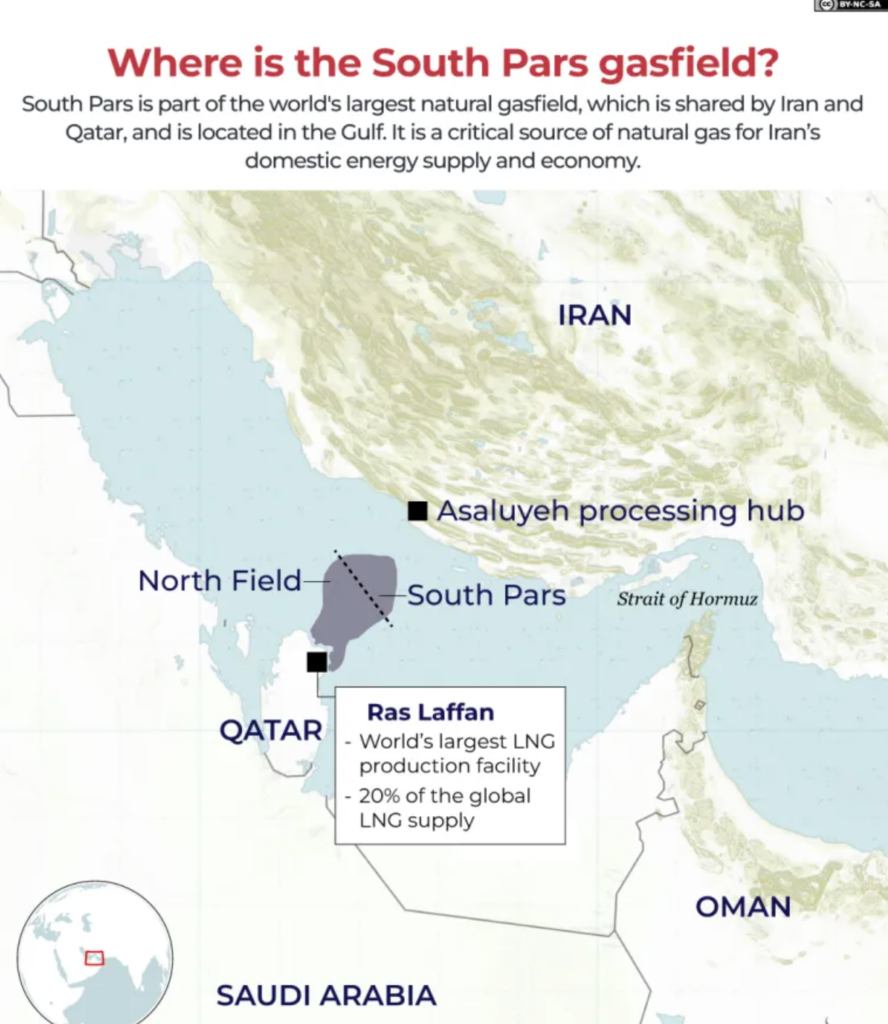
Missile strikes on Ras Laffan Industrial City, the world’s largest LNG facility, amid West Asia conflict have raised concerns over global energy supply and India’s energy security.
What Happened
Iran targeted:
LNG facilities in Qatar (Ras Laffan)
Other energy sites in Saudi Arabia, Kuwait
Earlier: Attack on South Pars Gas Field (world’s largest gas field)
Marks escalation from transport disruption → production disruption
Why Ras Laffan is Important
Accounts for ~20% of global LNG supply
Hub of:
LNG production
Liquefaction
Export infrastructure
Damage may cause long-term supply disruption
Impact on Global Energy
Brent crude: Jumped above $119/barrel
Natural gas prices: Sharp rise
Risk: From supply chain issue → full supply crisis
India’s Energy Dependence
1. LNG Dependence
~50% of gas demand met via imports
>40% LNG from Qatar
Most from Ras Laffan
2. Overall Energy Imports
Crude oil: ~88% import dependent
LPG: ~60%
Natural gas: ~50%
3. Strategic Chokepoint
Strait of Hormuz:
~50% of India’s crude imports
~60% LNG
~90% LPG
Immediate Impact on India
LNG supply cuts to industries
LPG supply concerns
Rising energy import costs
[2024] Consider the following statements: Statement-I: Sumed pipeline is a strategic route for Persian Gulf oil and natural gas shipments to Europe . Statement-II: Sumed pipeline connects the Red Sea with the Mediterranean Sea . Select the correct answer using the code given below: (a) Both Statement-I and Statement-II are correct and Statement-II explains Statement-I (b) Both Statement-I and Statement-II are correct but Statement-II does not explain Statement-I (c) Statement-I is correct but Statement-II is incorrect (d) Statement-I is incorrect but Statement-II is correct
India plans to extend its pulses import agreement with Myanmar for 5 more years (beyond 2025-26) to ensure food security amid global supply disruptions.
Background of the Agreement
Original MoU signed in 2021
Between: India’s Ministry of Consumer Affairs and Myanmar’s Ministry of Commerce.
Import Commitments (2021–26)
Urad dal: 2.5 lakh tonnes/year
Tur dal: 1 lakh tonnes/year
New Developments
Extension proposed till 2030-31
Additional: +1 lakh tonnes Tur dal (2026-27)
Why Extension is Needed
1. Demand–Supply Gap
India’s pulses demand: 28–29 million tonnes
Domestic production: 24–25 million tonnes
Persistent import dependence
2. Falling Domestic Production
Tur: ↓ from 3.64 → 3.45 million tonnes
Urad: ↓ from 2.24 → 1.74 million tonnes
3. Global Supply Chain Disruptions
Due to geopolitical tensions: US–Israel–Iran conflict.
Risks to: Fuel supply, Fertilizer availability, and Food imports.
Role of Myanmar
Key supplier of pulses to India
Imports rising:
Tur: ↑ 44% (2025-26)
Urad: ↑ significantly
Significance
Food Security: Ensures stable supply of protein-rich pulses (dal)
Price Stability: Prevents inflation in essential commodities
Strategic Trade Diversification: Reduces risk from global disruptions
[2020] With reference to pulse production in India, consider the following statements: Black gram (Urad) can be cultivated as both kharif and rabi crop. Green-gram alone accounts for nearly half of pulse production. In the last three decades, while the production of kharif pulses has increased, the production of rabi pulses has decreased. Select the correct answer using the code given below: (a) 1 only (b) 2 and 3 only (c) 2 only (d) 1, 2 and 3
[2012] The acidification of oceans is increasing. Why is this phenomenon a cause of concern? The growth and survival of calcareous phytoplankton will be adversely affected. The growth and survival of coral reefs will be adversely affected. The survival of some animals that have phytoplanktonic larvae will be adversely affected. The cloud seeding and formation of clouds will be adversely affected. Select the correct answer using the code given below: (a) 1, 2 and 3 only (b) 2 only (c) 1 and 3 only (d) 1, 2, 3 and 4
![🔴[UPSC Webinar for 2027] By Komal Mavi, AIR 314, UPSC CSE 2025 | How to Plan Your UPSC 2027 Attempt Step by Step | Join on 21st March at 7PM](https://d18x2uyjeekruj.cloudfront.net/wp-content/uploads/2026/03/Komal-Mavi-thumb.png)