💥UPSC 2026, 2027, 2028 UAP Mentorship (March Batch) + Access XFactor Notes & Microthemes PDF

Search results for: “”

  • UPSC Geography Optional Paper Syllabus

    Geography is an important subject for UPSC aspirants. Bearing weight in both UPSC Prelims and Mains, it encompasses a comprehensive syllabus. But here is the take: there is an overlap of Geography topics in Prelims and mains. That is a great advantage for people who have opted for Geography as an option. Moreover, those who have a background in Geography will it highly incentivising. 

    That said, the syllabus for the UPSC Geography optional paper is divided into Papers I & II. They are divided into Principles of Geography and Indian Geography, further divided into topics like Geomorphology, Climatology, Indian Agriculture, etc. Knowing the detailed UPSC Geography optional syllabus is the first step towards preparing well. Let’s have a closer look at the latest Geography UPSC syllabus.

    UPSC Geography Optional Paper Syllabus 2024-2025

    There are no major changes in the Geography topics of UPSC Mains in the current year. Those who have been preparing for UPSC do not have to worry about the addition or deletion of new topics. They can continue preparation from where they left even for the current and upcoming year. 

    UPSC Geography Optional Paper Overview

    Paper I (Principles of Geography)Paper II (Geography of India)
    GeomorphologyPhysical Setting
    ClimatologyResources
    OceanographyAgriculture
    BiogeographyIndustry
    Environmental GeographyTransport, Communication, and Trade
    Perspectives in Human GeographyCultural Setting
    Economic GeographySettlements
    Population and Settlement GeographyRegional Development and Planning
    Regional PlanningPolitical Aspects
    Models and Theories in Human GeographyContemporary Issues

    UPSC Geography Optional Syllabus Paper I (Principles of Geography)

    Physical Geography

    Geomorphology: Factors controlling landform development; endogenetic and exogenetic forces; Origin and evolution of the earth’s crusts; Fundamentals of geomagnetism; Physical conditions of the earth’s interior; Geosynclines; Continental drift; Isostasy; Plate tectonics; Recent views on mountain building; Volcanicity; Earthquakes and Tsunamis; Concepts of geomorphic cycles and Landscape development; Denudation chronology; Channel morphology; Erosion surfaces; Slope development; Applied Geomorphology; Geomorphology, economic geology, and environment.

    Climatology: Temperature and pressure belts of the world; Heat budget of the earth; Atmospheric circulation; Atmospheric stability and instability. Planetary and local winds; Monsoons and jet streams; Air masses and fronts; Temperate and tropical cyclones; Types and distribution of precipitation; Weather and Climate; Koppen’s Thornthwaite’s and Trewartha’s classification of world climate; Hydrological cycle; Global climatic change, and role and response of man in climatic changes Applied climatology and Urban climate.

    Oceanography: Bottom topography of the Atlantic, Indian, and Pacific Oceans; Temperature and salinity of the oceans; Heat and salt budgets, Ocean deposits; Waves, currents, and tides; Marine resources; biotic, mineral, and energy resources; Coral reefs coral bleaching; Sea-level changes; Law of the sea and marine pollution.

    Biogeography: Genesis of soils; Classification and distribution of soils; Soil profile; Soil erosion, Degradation, and conservation; Factors influencing world distribution of plants and animals; Problems of deforestation and conservation measures; Social forestry, agro-forestry; Wildlife; Major gene pool centres.

    Environmental Geography: Principle of ecology; Human ecological adaptations; Influence of man on ecology and environment; Global and regional ecological changes and imbalances; Ecosystem their management and conservation; Environmental degradation, management, and conservation; Biodiversity and sustainable development; Environmental policy; Environmental hazards and remedial measures; Environmental education and legislation.

    Human Geography

    Perspectives in Human Geography: Areal differentiation; regional synthesis; Dichotomy and dualism; Environmentalism; Quantitative revolution and locational analysis; Radical, behavioural, human, and welfare approaches; Languages, religions, and secularisation; Cultural regions of the world; Human development index.

    Economic Geography: World economic development: measurement and problems; World resources and their distribution; Energy crisis; The limits to growth; World agriculture: a typology of agricultural regions; Agricultural inputs and productivity; Food and nutrition problems; Food security; famine: causes, effects, and remedies; World industries: location patterns and problems; Patterns of world trade.

    Population and Settlement Geography: Growth and distribution of world population; Demographic attributes; Causes and consequences of migration; Concepts of the over-under-and optimum population; Population theories, world population problems and policies, Social well-being and quality of life; Population as social capital. Types and patterns of rural settlements; Environmental issues in rural settlements; Hierarchy of urban settlements; Urban morphology; Concept of primate city and rank-size rule; Functional classification of towns; Sphere of urban influence; Rural-urban fringe; Satellite towns; Problems and remedies of urbanization; Sustainable development of cities.

    Regional Planning: Concept of a region; Types of regions and regionalization methods; Growth centres and growth poles; Regional imbalances; Regional development strategies; Environmental issues in regional planning; Planning for sustainable development. 

    Models, Theories, and Laws in Human Geography: System analysis in Human geography; Malthusian, Marxian, and demographic transition models; Central Place theories of Christaller and Losch; Perroux and Boudeville; Von Thunen’s model of agricultural location; Weber’s model of industrial location; Ostov’s model of stages of growth. Heartland and Rimland theories; Laws of international boundaries and frontiers.

    UPSC Geography Optional Syllabus Paper II (Geography of India)

    Physical Setting: Space relationship of India with neighbouring countries; Structure and relief; Drainage system and watersheds; Physiographic regions; Mechanism of Indian monsoons and rainfall patterns; Tropical cyclones and western disturbances; Floods and droughts; Climatic regions; Natural vegetation, Soil types and their distributions.

    Resources: Land, surface and ground water, energy, minerals, biotic and marine resources, Forest and wildlife resources and their conservation; Energy crisis.

    Agriculture: Infrastructure: irrigation, seeds, fertilizers, power; Institutional factors; land holdings, land tenure and land reforms; Cropping pattern, agricultural productivity, agricultural intensity, crop combination, land capability; Agro and social-forestry; Green revolution and its socio-economic and ecological implications; Significance of dry farming; Livestock resources and white revolution; Aquaculture; Sericulture, Agriculture and poultry; Agricultural regionalisation; Agro-climatic zones; Agroecological regions.

    Industry: Evolution of industries; Locational factors of cotton, jute, textile, iron and steel, aluminum, fertiliser, paper, chemical and pharmaceutical, automobile, cottage, and ago-based industries; Industrial houses and complexes including public sector undertakings; Industrial regionalisation; New industrial policy; Multinationals and liberalisation; Special Economic Zones; Tourism including ecotourism.

    Transport, Communication, and Trade: Road, railway, waterway, airway, and pipeline networks and their complementary roles in regional development; Growing importance of ports on national and foreign trade; Trade balance; Trade Policy; Export processing zones; Developments in communication and information technology and their impacts on economy and society; Indian space programme.

    Cultural Setting: Historical Perspective of Indian Society; Racial linguistic and ethnic diversities; Religious minorities; Major tribes, tribal areas, and their problems; Cultural regions; Growth, distribution, and density of population; Demographic attributes: sex-ratio, age structure, literacy rate, work-force, dependency ratio, longevity; migration (inter-regional, intraregional and international) and associated problems; Population problems and policies; Health indicators.

    Settlements: Types, patterns, and morphology of rural settlements; Urban developments; Morphology of Indian cities; Functional classification of Indian cities; Conurbations and metropolitan regions; Urban sprawl; Slums and associated problems; Town planning; Problems of urbanisation and remedies.

    Regional Development and Planning: Experience of regional planning in India; Five Year Plans; Integrated rural development programmes; Panchayati Raj and decentralised planning; Command area development; Watershed management; Planning for backward area, desert, drought-prone, hill tribal area development; Multi-level planning; Regional planning and development of island territories.

    Political Aspects: Geographical basis of Indian federalism; State reorganization; Emergence of new states; Regional consciousness and inter-state issues; International boundary of India and related issues; Cross-border terrorism; India’s role in world affairs; Geopolitics of South Asia and Indian Ocean realm.

    Contemporary Issues: Ecological issues: Environmental hazards: landslides, earthquakes, Tsunamis, floods and droughts, epidemics; Issues related to environmental pollution; Changes in patterns of land use; Principles of environmental impact assessment and environmental management; Population explosion and food security; Environmental degradation; Deforestation, desertification, and soil erosion; Problems of agrarian and industrial unrest; Regional disparities in economic development; Concept of sustainable growth and development; Environmental awareness; Linkage of rivers; Globalisation and Indian economy.

    You can obtain the UPSC geography optional paper Syllabus below. Alternatively, you can also download the Geography UPSC Syllabus PDF from the Official Website.

    Geography Syllabus for UPSC Prelims

    If you’re looking for the Geography syllabus for UPSC Prelims, it is mentioned under one board theme: 

    Indian and World Geography – Physical, Social, Economic Geography of India and the World.

    Major topics include India’s location, neighbours, physical features (Himalayas, plains, plateaus, deserts), river systems, climate, monsoons, agriculture, and minerals. World Geography for UPSC covers major natural regions and regional geography of developed and developing countries. 

    There is physical Geography that includes geomorphology, climatology, oceanography, and biogeography. Human Geography explores population, migration, settlements, and economic activities.

    Analysis of Geography Topics in UPSC Mains

    The UPSC Geography optional syllabus is broad and covers both theoretical and practical aspects of physical and human geography. Here are a few practical tips for aspirants:

    Divide and Conquer

    UPSC Geography optional paper is split into Physical Geography (Paper I) and Indian Geography (Paper II). Prioritise topics like Geomorphology, Climatology, Oceanography, and Biogeography in Paper I, which often involve diagrams and conceptual clarity.

    Focus on the Indian Context

    UPSC Geography optional Paper II, the focus shifts to India’s geography, covering topics like resources, agriculture, industry, and regional planning. Stay updated on India’s current economic policies, Five-Year Plans, and environmental issues for relevant case studies.

    Master the Key Theories

    Paper I mentions important geographical theories like Malthusian and Marxian models, Central Place Theory, and Von Thunen’s agricultural location model. Understanding these theories will improve your answer quality.

    Link Physical with Human Geography

    The connection between natural features (climate, topography) and human activities (settlement patterns, agriculture) in the UPSC Geography optional paper is critical. Relate the two to write more integrated answers.

    Practical Application

    The UPSC geography optional Paper II’s sections on regional development and planning require knowledge of real-world scenarios. Understand how state policies, international boundaries, and regional disparities shape India’s geography and economy.

    Illustrate with Diagrams

    Many topics, like monsoons, plate tectonics, or river systems, are better explained with diagrams. Use maps to show India’s natural resources, population distribution, and regional planning.

    Overlap with Prelims

    There is an overlap between the UPSC Prelims and the UPSC Geography optional paper syllabus. It happens in topics like Physical Geography, Human Geography, and Indian Geography. 

    Both cover aspects of India’s geography, including natural resources and regional development. While the Geography syllabus for UPSC Prelims provides a broader outline, the UPSC Geography optional paper syllabus goes deeper into theories, models, and regional case studies. Aspirants should keep this in mind during their preparation, especially those with Geography optional.

    How to Prepare for UPSC Geography Optional Paper

    Understand Syllabus: The first step is to analyse the UPSC Geography optional Paper syllabus and make a study plan according to that. It reveals which areas you should focus more on and not focus much. 

    Study Materials: Begin with NCERT textbooks for geography to build a solid understanding. Afterwards, go for more advanced texts like those by Savindra Singh and Majid Hussain for all-round coverage of the UPSC Geography optional paper syllabus.

    Exam Patterns: Analyze previous UPSC geography optional question papers to pinpoint key areas that require focused revision.

    Writing Practice: Start writing answers after finishing a few units. Evaluate previous questions and refer to successful candidates’ responses for structure and clarity. Aim to include various perspectives, ensuring your answers align with the syllabus. Consistent practice in answer writing is critical for scoring well.

    Incorporate Visuals: Enhance your answers with maps and diagrams, which can significantly improve their quality. Regular practice will make it easier to add these visuals.

    Mock Tests: Regularly take mock tests to check your preparation level for the UPSC Geography optional Paper syllabus.

    Booklist for Geography Optional Paper Syllabus

    1. NCERT Class 11th and 12th
    2. Certificate Physical and Human Geography by GC Leong
    3. Physical Geography By Savindra Singh
    4. Indian Geography by D R Khullar
    5. Human Geography by Majid Hussain
    6. Models and Theories by Majid Hussain
    7. Geographical Thought by RD Dikshit
    8. Geography of India by Majid Hussain
    9. Settlement Geography by K Siddhartha

    In the End

    For rigorous preparation of the UPSC Geography optional paper syllabus, consider joining geography-focused study groups where members can practice map pointing, diagram drawing, and answer writing together. Creating collaborative mind maps and conducting peer reviews can provide fresh perspectives. 

    Additionally, following prominent geographers and geography journals on social media platforms can help stay updated with current geographical phenomena and environmental changes—aspects that frequently appear in UPSC examinations.

    FAQs

    Does the Geography syllabus for UPSC prelims overlap with that of Mains?

    Yes, the Geography syllabus for UPSC Prelims overlaps significantly with Mains. Both cover topics like Physical Geography (landforms, climate, oceanography), Indian Geography (rivers, agriculture, resources), and Human Geography (population, settlements). Prelims offer a foundational overview, while Mains requires in-depth analysis, case studies, and critical thinking.

    What is the structure of the UPSC Geography optional paper?

    The UPSC Geography optional paper consists of two papers: Paper I focuses on Physical Geography, while Paper II covers the Geography of India, including its socio-economic aspects and regional planning.

    How do I prioritise topics in the UPSC Geography Optional Syllabus?

    Start with the basics of physical geography, focusing on your strengths and weaknesses. After mastering the fundamentals, move on to human geography. For Paper II, concentrate on India’s geographical features and socio-economic conditions. This method will improve your understanding and retention.

    Is Geography a good optional subject for UPSC?

    Yes, Geography is a good optional subject for UPSC. It is an easy subject to understand and memorize. More students in the past have opted for Geography over sociology. Above all, the syllabus of Geography Mains overlaps with that of Prelims, which is a great advantage for UPSC aspirants.

  • Secularism is a core part of the Constitution: SC

    Why in the News?

    On Monday, October 21, 2024, the Supreme Court affirmed that secularism is an integral and fundamental component of the Basic Structure of the Constitution.

    Is Secularism an Unamendable Part of the Indian Constitution?

    • Part of the Basic Structure: The Supreme Court has consistently held that secularism is an essential and indelible part of the Basic Structure of the Indian Constitution. This means that even though the Preamble was amended in 1976 to include the word “secular,” the principles of secularism were considered inherent in the Constitution from the start.
    • Kesavananda Bharati Case (1973): The landmark judgment established the “Basic Structure Doctrine,” which states that certain fundamental features of the Constitution cannot be altered or destroyed through amendments. Secularism, along with democracy, rule of law, and judicial review, was deemed a part of this unamendable structure.
    • Equality and Fraternity: The right to equality (Article 14) and the emphasis on fraternity in the Constitution have been interpreted by the judiciary to embody secularism as a core value, ensuring the protection of all religions and the principle of state neutrality in religious matters.
    • Indira Gandhi’s 42nd Amendment (1976): The amendment officially added the term “secular” to the Preamble, though the court’s view is that secularism was always implicitly present in the spirit of the Constitution.

    How Does Indian Secularism Differ from Western Models?

    • Equal Respect for All Religions (Sarva Dharma Sambhava): Indian secularism emphasizes the equal respect and treatment of all religions, rather than the strict separation of religion and state seen in Western secular models.
    • State Intervention for Social Reform: Unlike Western secularism, where religion is often seen as a strictly private affair, Indian secularism allows the state to engage with religious institutions to reform practices that may be discriminatory or harmful (e.g., abolition of untouchability or regulation of religious endowments).

    What Implications Do Challenges to Secularism Have for Indian Democracy?

    • Erosion of Minority Rights: The rise of majoritarian politics, fueled by Hindu nationalism, threatens minority rights and equality before the law, with accusations of fostering an environment where attacks on minorities are tolerated.
    • Centralization of Power: The concentration of power has weakened institutional autonomy, curtailed civil liberties, and marginalized minority voices, impacting the democratic principles of secularism and dissent.
    • Impact on Governance and International Relations: Religious considerations in policymaking can result in discriminatory practices, harm India’s international reputation regarding human rights, and attract global criticism.

    Way forward: 

    • Strengthen Legal Safeguards: Reinforce constitutional provisions that protect secularism by ensuring strict enforcement of anti-discrimination laws and promoting inclusive policies that uphold the principles of equality, fraternity, and state neutrality in religious matters.
    • Promote Civic Education on Secularism: Increase public awareness and education about the significance of secularism in India’s constitutional framework to foster social harmony and counter identity-based politics, reinforcing the values of pluralism and unity in diversity.
  • On sanctions and shadow fleets

    Why in the News?

    During coverage of the Russia-Ukraine conflict, many Western media outlets have referred to tanker ships transporting Russian crude oil or oil products to other countries as a “shadow fleet.”

    What is shadow fleet?

    • The “shadow fleet” refers to tanker ships transporting oil from sanctioned countries, using tactics like flag hopping, complex ownership structures, and cargo transfers at sea to evade detection and sanctions.

    What are Flags of Convenience (FoCs)?

    • Flags of Convenience (FoCs) refer to the practice of registering a ship in a country other than that of the ship’s owner. Ships then fly the flag of the country where they are registered, known as the “flag state.”
    • Initially, FoCs emerged as a way for shipowners to minimize taxes and avoid stringent regulations. They allow shipowners to benefit from favorable regulatory environments, such as lower taxes, less stringent safety requirements, and more lenient labor laws.
    • Examples: Common FoCs include Panama, Liberia, and the Marshall Islands. These nations have minimal regulations, making it easier for ships to operate with reduced scrutiny.

    How do corporations with large fleets obscure ownership and origin of cargo? (Challenges to find the origin country of the ship)

    • Complex Ownership Structures: Corporations often create complex ownership arrangements to hide the true identity of shipowners. This may involve setting up multiple shell companies, where each company owns only one or two ships. The use of offshore accounts and subsidiaries further adds to the opacity.
    • Frequent Changes in Ship Registration and Management: Ships frequently switch their flag state (known as “flag hopping”) to avoid detection and regulatory compliance.
    • Renaming Vessels: Ships involved in activities that could trigger sanctions often change their names to avoid being traced back to previous sanctioned activities.
    • Using FoCs and Non-Compliant Jurisdictions: Ships may be registered in countries that are not signatories to international regulatory frameworks, such as the International Maritime Organization (IMO).
      • For instance, Eswatini has emerged as a FoC because it does not follow IMO guidelines, allowing for less regulatory oversight.

    Why has India been accused of hosting a shadow fleet?

    • Increased Russian Oil Shipments: Indian firms and Dubai-based entities with Indian ties have been involved in transporting Russian oil, raising suspicions of sanction evasion.
    • Certification by Indian Register of Shipping (IRS): The IRS certified more ships linked to Russian oil post-sanctions, which some viewed as supporting “shadow fleet” operations.
    • Use of Flags of Convenience: Ships connected to India often registered under foreign flags, obscuring their ownership and the origin of their cargo to bypass sanctions.

    What are the different ways through which ships ensure they don’t lose their insurance?

    • Switching Insurance Providers: If a ship loses its Protection and Indemnity (P&I) insurance cover due to violations of sanctions, the owner may shift the vessel’s management to a different company with valid P&I insurance.
    • Changing Ship Management and Ownership: By changing the management entity or even the registered owner (via shell companies), ships can regain insurance cover without having to comply with the initial sanctions.
    • Use of Different Flag States: Ships registered under FoCs or jurisdictions not compliant with international regulations face less scrutiny, which can help them maintain insurance coverage despite potentially violating sanctions.
    • Renaming Vessels: This practice helps erase the association of the ship with any prior incidents or sanctions violations, allowing the ship to be insured under a different identity.

    Way forward: 

    • Enhance Oversight and Transparency: India should tighten regulations on ship certification and ownership disclosure, ensuring compliance with international norms to prevent any association with sanction-evading activities.
    • Strengthen International Coordination: India should collaborate with global maritime bodies to align its policies with international shipping standards, promoting responsible trade practices while safeguarding its economic interests.
  • The case for a nature restoration law in India

    Why in the News?

    The urgent global issue of ecosystem degradation affects India significantly, with nearly 30% of its land degraded. India’s need for a comprehensive nature restoration law is critical, drawing inspiration from the EU’s NRL

    Why does India need a Nature Restoration Law?

    • High Land Degradation: Nearly 30% of India’s land is degraded, with areas like Gujarat, Karnataka, Maharashtra, and Rajasthan severely affected.
    • Rising Desertification: The extent of desertification in India has increased significantly, impacting ecosystems and agricultural productivity.
    • Biodiversity Loss: The degradation of natural habitats threatens India’s rich biodiversity and contributes to the global biodiversity crisis.
    • Climate Change Mitigation: Degraded ecosystems lose their ability to act as carbon sinks, worsening climate change impacts.
    • Economic Implications: Land degradation affects agriculture, water security, and livelihoods, necessitating legal intervention for sustainable management.

    What should the Nature Restoration Law in India include?

    • Legally Binding Restoration Targets: Similar to the EU’s NRL, set mandates to restore a specific percentage of land and water bodies by 2030 and 2050.
    • Multi-Ecosystem Approach: Include provisions for forests, agricultural lands, rivers, wetlands, and urban areas to ensure comprehensive ecosystem restoration.
    • Monitoring and Reporting Mechanisms: Establish a framework for monitoring progress, conducting periodic reviews, and reporting on restoration outcomes.
    • Funding and Incentive Mechanisms: Provide financial support and incentives for states, communities, and private entities engaging in restoration projects.
    • Integration with Existing Programs: Align with ongoing initiatives like the Green India Mission and watershed programs for enhanced effectiveness.

    What are the potential benefits of implementing such a law?

    • Environmental: Restoring degraded lands can enhance biodiversity, improve soil health, and increase carbon sequestration, aiding climate resilience.
    • Economic: Could generate economic returns through improved agricultural productivity, job creation, and enhanced water security.
    • Social: Restoration projects can create rural employment opportunities and support sustainable livelihoods, especially in degraded areas.
    • Alignment with International Commitments: Helps India achieve its Sustainable Development Goals (SDGs), especially Goal 15, and meet Paris Agreement targets.

    Way forward: 

    • Adopt a Comprehensive Restoration Framework: India should enact a Nature Restoration Law with legally binding targets, integrating multi-ecosystem restoration approaches and aligning with existing environmental programs.
    • Strengthen Monitoring and Funding Mechanisms: Establish robust monitoring frameworks for progress evaluation and provide financial incentives for restoration efforts, ensuring effective implementation and long-term sustainability.
  • India, China reach deal on easing LAC tensions 

    Why in the News?

    India and China announced an agreement on patrolling arrangements, resolving the military standoff along the Line of Actual Control (LAC), as per government officials.

    What are the key components of the agreement between India and China?

    • Patrolling Arrangements: The agreement includes the resumption of patrolling along the Line of Actual Control (LAC) in previously disputed areas, where patrolling had been stopped since 2020.
    • Disengagement and Buffer Zones: The agreement aims to complete the disengagement process by restoring the situation to pre-2020 levels, including addressing issues at friction points like Demchok and Depsang.
      • The existence or adjustment of buffer zones, which were established to prevent clashes, remains undisclosed.
    • Diplomatic and Military Dialogue: The resolution is a result of multiple high-level meetings and negotiations, involving Foreign Ministers, the Working Mechanism for Consultation and Coordination (WMCC), and military commanders from both sides.
    • Return to Pre-2020 Status: Indian officials have indicated that the situation at the LAC will revert to what it was before 2020, although further steps like deinduction and demobilization of troops still need to be undertaken.

    How does this agreement impact the broader geopolitical landscape in the region?

    • Regional Stability: The agreement could contribute to stability along the India-China border and help reduce military tensions in the region, especially at sensitive points like the Galwan Valley, where past clashes occurred.
    • Influence on China-India Relations: It marks a potential thaw in India-China relations, creating a conducive atmosphere for high-level diplomatic engagements, possibly including a meeting between Prime Minister Modi and President Xi Jinping during the BRICS summit.
    • Implications for Multilateral Forums: The agreement preceding the BRICS summit indicates a strategic effort to avoid bilateral friction overshadowing multilateral diplomacy. A peaceful resolution along the border could bolster cooperation within BRICS and other regional platforms.
    • Signal to Neighboring Countries: The resolution may influence the perception of China’s border policies among other neighboring countries in Asia, possibly setting a precedent for dispute resolution.

    What are the implications for India’s national security strategy?

    • Shift Towards Dialogue and Diplomacy: The agreement underscores India’s willingness to resolve border issues through diplomatic means while maintaining a strong defense posture.
    • Strategic Focus on LAC Management: Although disengagement is underway, continued monitoring and readiness at the LAC will remain crucial. The agreement may lead to a recalibration of India’s military deployments and infrastructure development along the border.
    • Enhanced Security Coordination: With border tensions easing, India can refocus on comprehensive security strategies involving cooperation with allies and partners in the Indo-Pacific region, addressing broader challenges such as maritime security and countering China’s influence.
    • Preparedness for Future Contingencies: The completion of disengagement does not eliminate future risks. India will likely continue to strengthen its border infrastructure and military capabilities as a precaution against any future incursions.

    Way forward: 

    • Strengthen Diplomatic Engagements: India should prioritize continuous diplomatic dialogues with China to solidify the agreements reached and prevent future misunderstandings.
    • Enhance Border Infrastructure and Defense Preparedness: India should invest in improving border infrastructure and logistics to support troop mobility and supply lines.
  • Moonlight Programme

    Why in the News?

    The European Space Agency (ESA) launched its Moonlight Lunar Communications and Navigation Services (LCNS) Programme.

    About Moonlight Programme

    Details
    Agency European Space Agency (ESA)
    Purpose To establish a communications and navigation infrastructure around the Moon to support future lunar missions by space agencies and private companies.
    Planned Missions Supports over 400 moon missions planned over the next 20 years.
    Satellite Constellation Deployment of 5 lunar satellites to provide communication and navigation services.
    Data Transfer Range Enables data transfer between Earth and the Moon over a distance of 400,000 km.
    First Satellite Lunar Pathfinder, a communications relay satellite built by Surrey Satellite Technology Ltd, is set to launch in 2026.
    Operational Timeline Initial services expected to begin by 2028, with full operational capability by 2030.
    Primary Focus Area Coverage around the Moon’s South Pole, an area of high interest due to favorable lighting conditions and potential water ice presence in permanently shadowed craters.
    Global Collaboration Collaboration with NASA and JAXA (Japanese Space Agency) as part of LunaNet for standardizing lunar mission communications and navigation.
    Significance – Enables over 400 lunar missions
    – Supports NASA’s Artemis programme
    – Provides continuous all-weather connectivity for lunar missions
    – Focuses on the South Pole for ice deposits
    – Reduces costs by sharing infrastructure
    – Technological advancements for Mars missions (MARCONI)
    Strategic Advantage Enhances ESA’s role in global lunar exploration and contributes to the future of commercial lunar activities.
  • Z-Morh Tunnel Project

    Why in the News?

    Some militants attacked workers building the Z-Morh tunnel on the Srinagar-Sonamarg highway, killing seven people.

    What is the Z-Morh Tunnel?

    • The Z-Morh tunnel is a 6.4-kilometer tunnel located near Gagangir village, connecting the Sonamarg health resort to Kangan town in the Ganderbal district of central Kashmir.
      • It is part of the larger Zojila tunnel project, which aims to provide year-round road connectivity between Srinagar and Ladakh.
    • It is part of the Srinagar-Sonamarg-Leh highway.
    • It is being constructed at an altitude of over 8,500 feet.
    • It derives its name from the Z-shaped road stretch where it is being built.
    • The project was originally conceived by the Border Roads Organisation (BRO) in 2012.
    • A soft opening of the tunnel was held in February 2024, although the full inauguration has been delayed.

    Significance of the Z-Morh Tunnel

    • The tunnel provides all-weather road connectivity to the Sonamarg health resort, ensuring that the popular tourist destination remains accessible year-round.
    • It is essential for maintaining all-weather connectivity to Ladakh, a region of strategic importance for India, particularly due to the military presence along the border with Pakistan and China.
    • The tunnel is strategically important for the Indian Army, as it provides quick and safe access to forward areas in Ladakh, reducing the dependence on air transport for the movement of troops and supplies.
    • It will also reduce expenditure on air maintenance of forward locations, thereby increasing the lifespan of Indian Air Force aircraft.
    • The tunnel will boost economic growth by improving accessibility to Sonamarg, thereby supporting tourism in the region.

    PYQ:

    [2016] Border management is a complex task due to difficult terrain and hostile relations with some countries. Elucidate the challenges and strategies for effective border management.

  • New ‘Lady Justice’ Statue

    justice

    Why in the News?

    • The Chief Justice of India unveiled a new ‘lady justice’ statue at the Supreme Court.
      • This new statue replaces the previous version and is clothed in a saree, holds scales in one hand, and the Indian Constitution in the other, with its eyes uncovered—symbolizing that justice sees all equally.

    About the Lady Justice Statue:

    Details
    History
    • Introduced during colonial rule, becoming a common feature in Indian courthouses.
    • Depicted in the Calcutta High Court (1872) and the Bombay High Court, with variations in blindfold status.
    Modern Depiction In 2024, a new 6-foot statue was unveiled by the Supreme Court of India, created by Vinod Goswami.
    Symbolism Absence of the blindfold signifies that “law is not blind,” promoting the idea of equality in justice.
    Origins Traces back to Greek mythology with Themis and Roman mythology with Justitia, traditionally depicted with a blindfold, scales, and a sword.
    Notable Changes
    • Symbolizes that “the law is not blind,” emphasizing equality in justice.
    • Adorned in a Saree, reflecting Indian heritage and tradition.
    • Holds a copy of the Indian Constitution instead of a sword, representing rights and fairness.
    • Continues to hold scales, emphasizing the need for balance in weighing evidence and arguments.
    • Breaks free from colonial influences, aligning with contemporary Indian values.
    • Signifies a justice system that is aware, inclusive, and rooted in constitutional principles.
    • Positioned in the Judges’ Library of the Supreme Court, highlighting its significance in Indian jurisprudence.
  • Minority Institutions

    Why in the News?

    • The Supreme Court stated that laws regulating institutions run by religious or linguistic minorities do not inherently violate the principle of secularism.
      • The CJI made this observation while hearing a challenge to the Allahabad High Court’s decision to strike down the Uttar Pradesh Board of Madrasa Education Act, 2004.

    Why do we need to discuss this?

    • The 2004 Act regulated madrasas in Uttar Pradesh, and the High Court concluded that it violated secular principles.
    • It had ordered the transfer of madrasa students to regular schools, which affected nearly 17 lakh students across 16,000 madrasas in the state.
      • Petitioners pointed out that the High Court believed that madrasas violated Article 28 of the Constitution, which prohibits religious instruction in institutions fully funded by the State.

    Key Observations made by the SC:

    • A law regulating a minority institution does not, by itself, violate secularism.
    • The CJI referred to the Hindu Religious Endowments and Charitable Institutions Act, which regulates the administration of religious institutions in many states, from Maharashtra to Tamil Nadu.
    • The CJI emphasized that the State has the right to legislate to improve the quality of education in government-aided minority-run institutions.
    • He noted that children attending madrasas need a broad-based education to learn essential subjects required to lead a proper life and become worthy citizens.

    About Minority Educational Institutions in India:

    Details
    Constitutional Provision Article 30(1) of the Constitution of India grants linguistic and religious minorities the right to establish and administer educational institutions of their choice.
    Legislative Framework National Commission for Minority Educational Institutions Act, 2004 safeguards the educational rights of minorities as per Article 30(1).
    Definition A “Minority Educational Institution” is defined as a college or institution established or maintained by a person or group from amongst the minorities (Section 2(g) of the Act).
    Judicial Precedent In T.M.A. Pai Foundation vs. State of Karnataka (2002), the Supreme Court ruled that minority status is determined by state demographics, not national population.
    Rights of Minority Institutions Article 29 protects the interests of minorities by allowing them to conserve their distinct language, script, or culture.

    • Minority institutions do not have an absolute right to appoint staff;
    • This was upheld in the context of the West Bengal Madrasah Service Commission Act, 2008.
    Recognized Minority Communities Muslims, Sikhs, Christians, Buddhists, Jains, and Zoroastrians (Parsis) are recognized as minority communities under the National Commission for Minorities Act of 1992.
    Significance Minority educational institutions play a crucial role in preserving the cultural and linguistic heritage of minority communities while providing access to education.


    PYQ:

    [2011] In India, if a religious sect/community is given the status of a national minority, what special advantages it is entitled to?

    1. It can establish and administer exclusive educational institutions.

    2. The President of India automatically nominates a representative of the community to Lok Sabha.

    3. It can derive benefits from the Prime Minister’s 15-Point Programme.

    Which of the statements given above is/are correct?

    (a) 1 only

    (b) 2 and 3 only

    (c) 1 and 3 only

    (d) 1, 2 and 3

  • [23rd October 2024] The Hindu Op-ed: Working toward a meaningful ‘victims’ register’ in Bastar

    PYQ Relevance:

    Q) Naxalism is a social, economic and developmental issue manifesting as a violent internal security threat. In this context, discuss the emerging issues and suggest a multilayered strategy to tackle the menace of Naxalism. (UPSC CSE 2022)

    Q) What are the determinants of left-wing extremism in Eastern part of India? What strategy should the Government of India, civil administration and security forces adopt to counter the threat in the affected areas? (UPSC CSE 2020)

    Q) Effective utilization of public funds is crucial to meet development goals. Critically examine the reasons for under-utilization and mis-utilization of public funds and their implications. (UPSC CSE 2019)

    Q) Left Wing Extremism (LWE) is showing a downward trend, but still affects many parts of the country. Briefly explain the Government of India’s approach to counter the challenges posed by LWE. (UPSC CSE 2018)

    Mentor’s Comment: Data indicates a decline in Naxal-related violence over the past decade, with a reported 76% decrease in incidents by 2022 compared to 2010. Yet, the ‘Naxalite’ issue in India represents a significant challenge to internal security, rooted in socio-economic disparities and historical grievances.

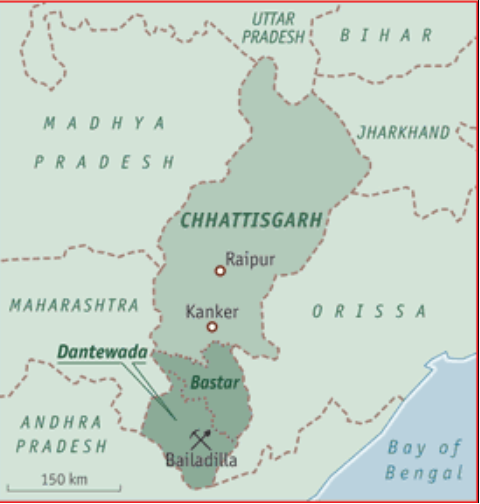
    Bastar (Chattisgarh) has been a focal point of conflict due to ongoing violence between Security forces and Maoist insurgents. This conflict has led to numerous civilian casualties and widespread trauma among the local population. Without proper victims’ data/registry, many individuals suffer in silence, lacking access to necessary support and recognition.

    Today’s editorial addresses the pressing need for a comprehensive victims’ register in the Bastar region, an area that is significantly affected by left-wing extremism (LWE). Today, we will study the significance of recognizing and documenting the experiences of victims to facilitate justice and rehabilitation.

    _

    Let’s learn!

    Why in the News?

    Union Home Minister has set a deadline of March 31, 2026, for the complete eradication of Naxalism in India, emphasizing the four districts of the Bastar region.

    • He also announced plans for a welfare scheme to support those affected by Naxal violence, aiming to assist in jobs and healthcare.

    What is the purpose of the victims’ register in Bastar?

    The purpose of the victims’ register in Bastar is to document and recognize individuals affected by violence, particularly those impacted by Maoist activities and state responses. This initiative aims to:

    • To provide formal recognition of the experiences of victims.
    • To enable victims and their families to receive reparations and government support inclusively ensuring no one is overlooked.
    • Serve as a foundation for dialogue and peace-building efforts in the region. (E.g., in Colombia).

    How does the initiative draw from international examples, particularly Colombia?

    • The Colombian model has successfully aided in providing reparations and integrating victims (over 9 million) back into society.
      • The Bastar initiative seeks to establish similar mechanisms for compensating victims through financial aid, land, jobs, and healthcare support.
    • Mirroring Colombia’s inclusive approach that does not differentiate between types of victimization, register aims to include diverse narratives from various groups
    • The process in Bastar involves community participation, allowing victims to share their testimonies in local languages, akin to Colombia’s efforts to ensure that victims’ voices are heard and validated.
    • Colombia’s experience has been successful where such measures contributed to National unity post-conflict.

    How can the government support the ‘New Peace Process’ initiative in Bastar?

    • Facilitating Dialogue: The government needs to actively engage in negotiations with both tribal leaders and Maoist representatives to foster an environment conducive to peace talks. For example, ‘Bastar Dialogues’ to bridge gaps between conflicting parties.
      • Collaborate with local organizations and community groups like the ‘Sarva Adiwasi Samaj’ to amplify grassroots efforts for peace.
    • Implement the Victims’ Register: Establish and maintain a comprehensive victims’ register that aligns with successful models from other countries, such as Colombia.
    • Enhance Rehabilitation Programs: Develop robust rehabilitation policies for both victims and surrendered like job training, education, and healthcare services tailored to their needs, ensuring they can reintegrate into society effectively.
    • By Monitoring the Progress: Establish mechanisms to monitor the progress of peace initiatives and community sentiments regarding the peace process, allowing for adjustments based on feedback from affected populations.

    https://www.thehindu.com/opinion/op-ed/working-toward-a-meaningful-victims-register-in-bastar/article68784116.ece

  • Best Current Affairs Books for UPSC

    Current affairs carries huge weightage in the civil services exam. The biggest challenge for UPSC aspirants is to find the perfect book that serves all their needs of the subject when preparing for UPSC Civils. Selecting the right ensures you have access to up-to-date, verified and accurate information. The cost of relying on the wrong book is high. 

    So, what is the best current affairs book for UPSC? You must check syllabus coverage, and expert suggestions, take guidance from toppers, reputation, accessibility, cost, etc. We have compiled the list of best current affairs books for UPSC in this article. Check out the list. 

    Top Current Affairs Book for UPSC

    Book TitleLanguagesPriceAvailable at
    Manorama YearbookEnglish₹341 (Print)₹999/Year (Digital)https://www.manoramayearbook.in/
    Mathrubhumi YearbookEnglishNAhttps://yearbook.mathrubhumi.com/en/
    Current Affairs for IAS (PRE) (S. A. Majid)EnglishNAAmazon
    Concise General Knowledge Manual (Barry O’Brien)EnglishNAAmazon
    India Yearbook (Publication Division (GOI))English₹255Amazon
    Economic Survey (Digital Only)EnglishFreehttps://www.indiabudget.gov.in/economicsurvey/
    Concise General Knowledge Manual (J. K. Chopra)English₹428Amazon
    Current Affairs & News in Focus Objective Questions (Vol.1) (Kiran Prakashan)EnglishNAAmazon
    GK and Current Affairs (India) in English (CD) (Practice Guru)EnglishNAAmazon

    Best Current Affairs Magazine for UPSC

    MagazineFocus AreaLanguageSubscription Costs
    Yojana (Monthly)Socio-economic issues, govt. programsEnglish, Hindi, RegionalAvailable at yojana.gov.in
    Kurukshetra (Monthly)Rural development, agriculture, tribal issuesEnglish, HindiAvailable at yojana.gov.in
    EPW (Weekly)Economic and political issues, researchEnglish₹5,500/Year, ₹ 7,760/Year for Digital+Print
    Down to Earth (Fortnightly)Environmental issues, livelihood, healthEnglish₹4,780 (Print+Digital), ₹2,880 (Print), ₹1,500 (Digital)
    Pratiyogita Darpan (Monthly)Current affairs, employment news, solved papersEnglish, Hindi₹150/edition
    Civil Services Times (Monthly)National & international affairs, economyEnglish₹2,600 (Annual), ₹3,500 (Practice Papers)
    Geography and You (Bi-Monthly)Environment, geography, scienceEnglish, Hindi₹199 (Silver), ₹499 (Gold), ₹899 (Platinum)
    Competition Success Review (CSR) (Monthly)Current affairs, success storiesEnglish₹70/month, ₹1,260/3 years, eMag: ₹70/month, ₹540/2 years
    World Focus (Monthly)Foreign affairs, international relationsEnglish₹1,300/year (Print), ₹800/year (Digital)

    Points to Remember When Selecting Current Affairs Book for UPSC

    • Ensure that the best current affairs book covers topics relevant to the UPSC syllabus, including polity, economy, environment, and social issues.
    • Choose a book that provides current and timely information, reflecting recent national and international affairs developments.
    • Look for books that cover a wide range of topics, including government schemes, socio-economic issues, and significant events.
    • Check the credibility of the author or publisher. Reputable authors or organisations often ensure accurate and reliable content.
    • Select a book that presents information clearly and concisely, making it easier to grasp complex topics.
    • The best current affairs book presents facts, analysis, and context, helping you understand the implications of current events.
    • Ensure the book includes practice questions or previous years’ papers, allowing you to apply your knowledge.
    • Consider books that come with supplementary online resources or PDFs for additional reading and revision.
    • Check the readability and formatting of information for easy consumption, when selecting the best current affairs book.
    • Focus on one or two well-reviewed books at a time to avoid confusion and to allow for deeper understanding rather than trying to cover too many sources at once.
    • Check reviews or seek recommendations from successful UPSC candidates to find the best current affairs books that have proven helpful.

    In the End

    While selecting the best current affairs book for UPSC is important, it’s equally imperative to stay consistent with daily updates from reliable newspapers like The Hindu or Indian Express. You can also read economic newspapers like The Economic Times, The Financial Express, etc., to gain up-to-date knowledge on the Indian economy. 

    These resources provide real-time information, which can complement the books you choose. Aspirants should also revise frequently and make concise notes for quick reference during revision. Staying organised with your sources ensures you’re always well-prepared for the dynamic nature of UPSC exams.

    FAQs

    How can I select the best current affairs book for UPSC?

    To select the best current affairs book for UPSC, focus on books that cover the UPSC syllabus, provide recent and reliable information, and offer analysis of key events. Check author credibility, and reviews, and include practice questions for exam preparation.

    Which book is best for current affairs UPSC?

    For current affairs in UPSC, top books include Manorama Yearbook, India Yearbook, S.A. Majid’s Current Affairs for IAS, and Barry O’Brien’s Concise General Knowledge Manual. Kiran Prakashan’s Current Affairs Objective Questions and Economic Survey are also essential for all-round coverage of economic and political updates.

    How to study current affairs for the best results?

    For the best results in studying current affairs, focus on daily reading from trusted sources. Revise regularly, link current events with the UPSC syllabus, and practice answering questions. Use monthly magazines, newspapers, and reliable online platforms for updates.

    Is current affairs for UPSC difficult?

    Current affairs for UPSC can seem difficult due to its vast scope and constant updates. However, with consistent reading, focused revision, and connecting events to the syllabus, aspirants can simplify it and improve their understanding over time.

  • Understanding Negative Marking in UPSC

    UPSC (Union Public Service Commission) is considered one of the toughest exams in India. If you’re going to write the UPSC exam in 2025, you must learn that there is a negative marking in the UPSC prelims. There is a negative marking in UPSC Prelims, which penalises wrong answers. The general rule is ⅓ of the marks assigned to a question are deducted. 

    Even if you have answered many questions correctly, wrong answers can potentially decrease your score, which you should not afford to do. What are the rules for negative scoring in UPSC? How to calculate negative marking in the UPSC? Let’s look at all the details related to UPSC Negative marking in this short guide. 

    What is a Negative Marking

    Negative marking in exams refers to the practice of deducting marks for incorrect answers. In the UPSC Prelims, for example, a penalty of one-third (0.33) of the marks assigned to a question is deducted for each wrong answer. Negative marking in UPSC discourages random guessing, as incorrect responses can lower the overall score. 

    However, no negative marks are applied to unanswered questions. So candidates can only attempt questions they are reasonably confident about. Understanding the scheme of negative marking in UPSC helps candidates devise an effective strategy to balance risk and accuracy.

    UPSC Exam Pattern 2025

    Exam PatternPrelimsMains
    Exam Duration2 papers (2 hours each)9 papers (3 hours each)
    Type of PaperObjective (MCQs)Descriptive
    Total Number of QuestionsGS: 100 questionsCSAT: 80 questionsUsually, 20 questions per paper
    Total Marks4001750
    Marking Scheme+2 for correct answer, 300 Marks for the first two papers and 250 marks for the rest 7 papers.
    Negative MarkingNegative marking of 1/3 of 2 marksNo negative marking

    Negative Marking in UPSC Prelims

    There is a negative marking on both papers of the UPSC Prelims. While the general rule for negative marking in the UPSC Prelims is “deduction of ⅓ of marks assigned to a question”, the question types differ in the two papers. Questions in the General Studies Paper carry 2 marks, which means you will lose 0.66 marks for every wrong answer.

    Questions in the CSAT paper carry 2.5 marks each. You will lose 0.83 marks for each wrong answer marked. So, CSAT negative marking is way higher than that of GS, when overall performance is compared. Every aspirant must keep in mind the negative marking scheme in the UPSC prelims to obtain a maximum score. Worst, not to attract penalty for wrong answers. 

    UPSC Prelims Negative Marking Calculator

    PaperTotal QuestionsMarks per Correct AnswerMarks Deducted for Incorrect AnswerMultiple Options Selected (Penalty)
    GS Paper I10020.66 (1/3rd of 2 marks)0.66
    CSAT Paper802.50.83 (1/3rd of 2.5 marks)0.83

    How to Calculate Negative Marking in UPSC

    Aspirants need to know how total marks are evaluated, given the negative marking in the UPSC Prelims. Let’s imagine an imaginary candidate Rahul with the following performance.

    GS Paper I

    • Correct Answers: 65
    • Incorrect Answers: 30

    Marks Calculation:

    • Correct: 65×2 = 130 marks
    • Negative: 30×0.66 = 19.8 marks deducted

    Total Marks (GS I): 130−19.8 = 110.2 marks

    CSAT

    • Correct Answers: 55
    • Incorrect Answers: 20

    Marks Calculation:

    • Correct: 55×2.5 = 137.5 marks
    • Negative: 20×0.83 = 16.6 marks deducted

    Total Marks (CSAT): 137.5−16.6 = 120.9 marks

    Final Score

    110.2+120.9 = 231.1 Marks

    So, Rahul has scored 231.1 marks in the UPSC Prelims exam. 

    Negative Marking in UPSC Mains

    There is no negative marking in UPSC mains as it is a descriptive exam. The exam pattern of UPSC mains significantly differs from that of Prelims, which is an objective type test. UPSC Mains contains a total of 9 papers: 2 language papers, 1 Essay Paper, 4 GS papers, and 2 Optional papers. Candidates can attempt all questions without fear of negative marking in UPSC Mains. 

    Negative Marking in UPSC Interview

    There is no negative marking in the UPSC interview, so candidates aren’t penalised for providing incorrect answers. It is because this part of the exam evaluates more than just factual knowledge. However, success in the interview is important to pass the UPSC exam.

    The interview panel seeks individuals with qualities suited for civil service roles. They focus on candidates’ ability to think critically, communicate effectively, and stay informed on current issues. Success in the interview is about presenting well-reasoned responses, even if one doesn’t have all the answers. Thoughtful, intelligent preparation on current affairs and clear articulation of ideas are key to making a strong impression, ultimately leading to success in the UPSC.

    Practical Tips to Avoid Negative Marking in UPSC Prelims

    • Gain a solid understanding of the UPSC syllabus and exam pattern to focus on key topics. Strong knowledge is always the first step to stay clear of negative marking in the UPSC.
    • Calculate your “safe score”, during the preparation. Know how many questions you must get right to clear the cutoff, considering negative marking. 
    • Study standard UPSC materials, textbooks, and current affairs thoroughly.
    • Answer only those questions you’re confident about; avoid guessing if unsure to overcome negative marking in the UPSC.
    • Apply elimination techniques to rule out incorrect options and boost accuracy. It saves time also. 
    • Learn about filling the OMR sheet used in UPSC prelims. Improper marking can attract negative marking in the UPSC.
    • Practice regularly with past papers and mock tests to improve analysis and decision-making skills. 
    • Avoid marking multiple answers for any question to prevent negative marking in the UPSC.
    • Skip questions where you need more knowledge to avoid negative marks.
    • Pay attention to keywords in questions to identify the correct answer.
    • Manage your time wisely; move on if a question seems too difficult.
    • Don’t rely on wild guesses; only answer with reasonable confidence to avoid attracting negative marking in the UPSC.
    • However, you have to master “intelligent guessing” as well. For example, look for contextual clues, extreme options, and typical wrong answer patterns. USE it only when it can yield the right answer. 

    Conclusion

    In addition to avoiding negative marking in the UPSC, you must have a strong hold on the information and good memory. You should also develop strong conceptual clarity. UPSC doesn’t just test factual recall but also how well you understand and apply concepts. Make sure to revise regularly. Engage in active learning through discussions and analysis of current events. This will help you tackle more complex and analytical questions effectively, boosting your overall performance. Preparing smartly, not just thoroughly, is key to success.

    FAQs

    Is there a negative marking in the UPSC exam 2025?

    Yes, there is a negative marking in the UPSC exam. But it is confined to UPSC Prelims which is an objective type exam. There is no negative marking in the UPSC Mains.

    What does 1/3 negative marking mean in UPSC?

    In UPSC, 1/3 negative marking means that for every incorrect answer, one-third of the marks assigned to that question are deducted from your total score, discouraging random guessing.

    What is the exam pattern of IAS Prelims vs Mains?

    IAS Prelims is completely an objective type exam, containing multiple choice questions (MCQs). Consequently, candidates have to mark answers in an OMR sheet. Whereas IAS Mains is a descriptive or written exam, where candidates have to write answers in a given booklet. 

    When was negative marking in UPSC Prelims introduced?

    Negative markings in the UPSC Prelims came up in 2007, before which, there was no penalty for wrong answers in Prelims. This step is aimed at discouraging candidates from doing guesswork.

    Is there a negative marking in UPSC Mains?

    There is no negative marking in the UPSC mains. 

    What should I do when I want to answer unclear questions in UPSC Prelims?

    When facing unclear questions in the UPSC Prelims, avoid guessing. Instead, analyse the options using the process of elimination, focus on keywords, and recall related concepts. Only answer if you’re reasonably confident; otherwise, skip to avoid negative marks.

  • भारत में हरित क्रांति

    परिचय 

    1940 में रिचर्ड ब्राडली ने भारत को “भिखारी का कटोरा” कहा क्योंकि यह भारी मात्रा में खाद्यान्न आयात के लिए अमेरिका पर निर्भर था।  

    हरित क्रांति 1960 के दशक में नॉर्मन बोरलॉग द्वारा शुरू की गई एक पहल थी। उन्हें विश्व में ‘हरित क्रांति के जनक’ के रूप में जाना जाता है।  

    इस प्रयास के कारण उन्हें 1970 में नोबेल शांति पुरस्कार से सम्मानित किया गया, क्योंकि उन्होंने गेहूं की उच्च उपज वाली किस्में (HYVs) विकसित की थीं।  

    हरित क्रांति का तात्पर्य तीसरी दुनिया के देशों में आधुनिक इनपुट्स, प्रौद्योगिकियों, HYVs, कृषि मशीनीकरण और सिंचाई सुविधाओं के उपयोग पर आधारित फसल उत्पादन में कई गुना वृद्धि से है।

    भारत में हरित क्रांति  

    भारत में हरित क्रांति का नेतृत्व मुख्य रूप से एम.एस. स्वामीनाथन ने किया।  

    1961 में, एम.एस. स्वामीनाथन ने नॉर्मन बोरलॉग को भारत आमंत्रित किया, जिन्होंने मेक्सिको, जापान आदि में हुई क्रांति जैसी भारतीय कृषि में बदलाव की सलाह दी।  

    हरित क्रांति की शुरुआत इंटेंसिव एग्रीकल्चर डिस्ट्रिक्ट प्रोग्राम (IADP) के साथ प्रयोगात्मक रूप से भारत के 7 जिलों में की गई।  

    1965-66 में उच्च उपज वाली किस्मों (HYV) का कार्यक्रम शुरू किया गया, जिसे भारत में हरित क्रांति की शुरुआत माना जाता है।  

    1967-68 से 1977-78 तक फैली हरित क्रांति ने भारत को खाद्यान्न की कमी वाले देश से दुनिया के प्रमुख कृषि राष्ट्रों में बदल दिया।  

    हरित क्रांति के परिणामस्वरूप, विकासशील देशों में नई, उच्च उपज वाली किस्मों के बीजों की शुरुआत के कारण खाद्यान्न (विशेष रूप से गेहूं और चावल) के उत्पादन में भारी वृद्धि हुई, जिसकी शुरुआत 20वीं सदी के मध्य से हुई थी।

    भारत में हरित क्रांति का इतिहास 

    हरित क्रांति का इतिहास 1940 के दशक से जुड़ा है, जब अमेरिका ने मैक्सिको में कृषि प्रौद्योगिकी के विकास में मदद के लिए एक वैज्ञानिक अभियान शुरू किया। उच्च उपज वाली किस्में (HYVs) इस नई तकनीक का मुख्य केंद्र थीं।  

    नॉर्वे में जन्मे और अमेरिका में कार्यरत कृषि वैज्ञानिक डॉ. नॉर्मन बोरलॉग ने बौनी किस्मों के गेहूं के ‘चमत्कारी बीज’ (HYV) का नवाचार किया।  

    1943 में, भारत ने दुनिया के सबसे भयानक खाद्यान्न संकट का सामना किया; बंगाल अकाल, जिसमें लगभग 40 लाख लोग भूख के कारण पूर्वी भारत में मारे गए।  

    1947 में स्वतंत्रता प्राप्ति के बाद भी 1967 तक सरकार मुख्य रूप से खेती के क्षेत्रों के विस्तार पर ध्यान केंद्रित करती रही। लेकिन जनसंख्या वृद्धि खाद्यान्न उत्पादन की तुलना में कहीं अधिक तेज गति से हो रही थी।  

    इसने उपज में वृद्धि के लिए तत्काल और कठोर कार्रवाई की आवश्यकता पैदा की। यह कार्रवाई हरित क्रांति के रूप में सामने आई।  

    भारत में हरित क्रांति की शुरुआत 1960 के दशक के अंत में हुई। हरित क्रांति 1967 से 1978 की अवधि के दौरान मुख्य रूप से पंजाब और हरियाणा के कुछ हिस्सों में कार्यान्वित हुई।  

    इस चरण में हरित क्रांति केवल गेहूं और चावल पर केंद्रित थी। भारत के डॉ. एम.एस. स्वामीनाथन ने हरित क्रांति का नेतृत्व किया।  

    इसके विपरीत, 1980 के दशक में कृषि वृद्धि (हरित क्रांति की दूसरी लहर) में लगभग सभी फसलों को शामिल किया गया, जिसमें चावल भी था, और यह पूरे देश में फैल गई।

    हरित क्रांति के उद्देश्य  

    लघु अवधि: 

    हरित क्रांति का मुख्य उद्देश्य भारत की भूख की समस्या को हल करना था, विशेषकर दूसरे पंचवर्षीय योजना के दौरान।

    दीर्घकालिक:  

    इसका दीर्घकालिक उद्देश्य समग्र कृषि का आधुनिकीकरण था, जो ग्रामीण विकास, औद्योगिक विकास, बुनियादी ढांचे और कच्चे माल पर आधारित था।

    रोज़गार:  

    कृषि और औद्योगिक क्षेत्र दोनों में श्रमिकों को रोजगार प्रदान करना।

    वैज्ञानिक अध्ययन:  

    ऐसे मजबूत पौधों का उत्पादन करना जो अत्यधिक जलवायु और बीमारियों का सामना कर सकें।

    कृषि जगत का वैश्वीकरण: 

    प्रौद्योगिकी को गैर-औद्योगिक देशों में फैलाना और प्रमुख कृषि क्षेत्रों में कई कंपनियों की स्थापना करना।

    हरित क्रांति की मुख्य विशेषताएं 

    उच्च उपज वाली किस्में (HYVs):  

    ये आनुवंशिक रूप से संशोधित बीज होते हैं, जो सामान्य फसलों की तुलना में 2 से 3 गुना अधिक उपज दे सकते हैं।  

    यह बौनी किस्म होती है, जिसका घना छत्र होता है और इसे अधिक पानी, रासायनिक उर्वरक, कीट और खरपतवार से सुरक्षा की आवश्यकता होती है क्योंकि यह बहुत नाजुक होती है।  

    यह फसल की मिट्टी की तैयारी जैसे गतिविधियों की भी मांग करती है। इसकी छोटी उत्पादन अवधि होती है, जिससे कम समय में अधिक उत्पादन संभव हो पाता है।

    सिंचाई सुविधाएं:  

    1960 में कुल सिंचित क्षेत्र केवल 30 मिलियन हेक्टेयर था, और पूरे भारत में सिंचाई का विस्तार करना एक कठिन कार्य था।  

    ऋण आवश्यकताएं: 

    हरित क्रांति के लिए किसानों की जरूरतों को पूरा करने के लिए ग्रामीण ऋण और सूक्ष्म वित्त का एक मजबूत नेटवर्क आवश्यक था।  

    कृषि का व्यवसायीकरण:  

    फसलों के लिए न्यूनतम समर्थन मूल्य (MSP) की शुरुआत ने किसानों को अधिक फसल उगाने का प्रोत्साहन दिया।  

    कृषि मशीनीकरण:

    फसल उत्पादन बढ़ाने के लिए कृषि मशीनीकरण की आवश्यकता थी।  

    कमान क्षेत्र विकास कार्यक्रम (CADP):  

    CADP की शुरुआत 1974 में हुई, जिसमें दो विधियाँ शामिल थीं:  

    – फार्म में विकास गतिविधियाँ: इसमें कृषि नहरों का निर्माण, जुताई, समतलीकरण, कली तैयार करना आदि शामिल हैं।  

    – फार्म के बाहर विकास गतिविधियाँ: इसमें सड़कों का निर्माण, ग्रामीण संपर्क, विपणन, परिवहन, संचार आदि शामिल हैं।  

    रासायनिक उर्वरकों का उपयोग: 

    भारतीय मिट्टी में नाइट्रोजन की कमी होती है, इसलिए 4:2:1 के मानक अनुपात में NPK उर्वरक का उपयोग किया गया, लेकिन वास्तविक अनुपात 3:8:1 था।  

    कीटनाशक, रोगनाशक और खरपतवारनाशक का उपयोग: 

    कीट, बीमारियों और खरपतवारों से फसलों की सुरक्षा के लिए कीटनाशकों और रोगनाशकों का उपयोग किया गया।  

    ग्रामीण विद्युतीकरण: 

    कृषि मशीनीकरण बढ़ाने के लिए ग्रामीण विद्युतीकरण एक पूर्व शर्त थी।  

    भूमि धारण और भूमि सुधार:

    भूमि धारण का मतलब भूमि का एकीकरण है, और भूमि सुधारों में बिचौलियों और जमींदारी व्यवस्था का उन्मूलन, किरायेदारी सुधार आदि शामिल हैं।  

    हरित क्रांति में महत्वपूर्ण फसलें:  

    मुख्य फसलें गेहूं, चावल, ज्वार, बाजरा और मक्का थीं।  

    नई रणनीति में खाद्यान्नों के अलावा अन्य फसलों को शामिल नहीं किया गया।  

    गेहूं कई वर्षों तक हरित क्रांति की मुख्य धुरी बना रहा।

    भारत में हरित क्रांति के चरण 

    (1) हरित क्रांति का पहला चरण (1965-66 से 1980)  

    भारत को तत्काल खाद्य आपूर्ति और खाद्यान्न उत्पादन में आत्मनिर्भरता की सख्त आवश्यकता थी। गेहूं क्रांति मेक्सिको, मिस्र जैसे विभिन्न तीसरी दुनिया के देशों में सफल रही थी।  

    हरित क्रांति का पहला चरण न केवल फसल विशेष था बल्कि क्षेत्र विशेष भी था, क्योंकि:  

    – पंजाब में कृषि अवसंरचना अच्छी तरह से विकसित थी, जबकि हरियाणा और पश्चिमी उत्तर प्रदेश ने अपनी निकटता का लाभ उठाया, जहां सिंचाई सुविधाएं आसानी से विस्तारित की जा सकती थीं।  

    – यह क्षेत्र प्राकृतिक आपदाओं से मुक्त था।  

    यह चरण IADP और IAAP कार्यक्रमों के साथ प्रयोगात्मक रूप से शुरू हुआ, लेकिन मुख्य पहल 1965-66 की वार्षिक योजना के दौरान HYV कार्यक्रम था।  

    1974 में कमांड एरिया डेवलपमेंट प्रोग्राम के साथ हरित क्रांति को फिर से महत्व दिया गया।  

    1950-51 में खाद्यान्न उत्पादन केवल 25 मिलियन टन था और 1965-66 में यह 33 मिलियन टन था। 1980 में यह 100 मिलियन टन तक पहुंच गया, जो 10 वर्षों में तीन गुना वृद्धि थी।  

    यह चरण मुख्य रूप से गेहूं उत्पादन पर केंद्रित था, जो 5 वर्षों में 2.5 गुना बढ़ा। इसे हरित क्रांति कहा गया।  

    इसने भारत को खाद्यान्न उत्पादन में आत्मनिर्भरता प्रदान की, और कुपोषण, अकाल, गरीबी और भुखमरी की घटनाओं को कम किया। भारत “भिखारी का कटोरा” की छवि से सफलतापूर्वक बाहर आ गया।

    (2) हरित क्रांति का दूसरा चरण (1980-1991)  

    छठी और सातवीं पंचवर्षीय योजना के दौरान, गीली कृषि (मुख्य रूप से चावल) पर ध्यान केंद्रित किया गया।  

    पहले चरण में चावल उत्पादन केवल 1.5 गुना बढ़ा था। ऐसे क्षेत्र जिनमें 100 सेमी से अधिक वर्षा होती थी, जैसे पश्चिम बंगाल, बिहार, पूर्वी उत्तर प्रदेश, असम, तटीय मैदानों को लक्षित किया गया।  

    इस चरण में आंशिक सफलता मिली, और कृष्णा-गोदावरी डेल्टा और कावेरी बेसिन ने अपेक्षित परिणाम दिए। पश्चिम बंगाल और बिहार ने भी उत्पादन में वृद्धि दिखाई।  

    हालांकि, चावल की उत्पादकता की पूरी क्षमता को संस्थागत कारकों जैसे भूमि सुधार, किरायेदारी आदि के कारण महसूस नहीं किया जा सका।  

    किसानों की पारंपरिक सोच भी हरित क्रांति के दूसरे चरण की सफलता में एक प्रमुख बाधक थी।

    (3) हरित क्रांति का तीसरा चरण (1991-2003) 

    आठवीं और नौवीं पंचवर्षीय योजना के दौरान, शुष्क भूमि कृषि पर ध्यान केंद्रित किया गया, और कपास, तिलहन, दालें, बाजरा आदि में उच्च उपज वाली किस्में (HYV) पेश की गईं। इस चरण को आंशिक सफलता मिली।  

    उप-आर्द्र और अर्ध-शुष्क क्षेत्रों की स्थिति में सुधार के लिए एकीकृत जलग्रहण प्रबंधन कार्यक्रम (IWMP) शुरू किया गया।  

    हालांकि, यह केवल नर्मदा-तापी दोआब, तुंगभद्रा बेसिन और भीमा-कृष्णा बेसिन में ही कुछ हद तक सफल रहा।  

    नौवीं योजना के अंत के बाद, सरकारी नीतियों के दृष्टिकोण में एक मौलिक बदलाव आया।  

    हरित क्रांति वाले क्षेत्रों में पारिस्थितिकीय प्रभावों के कारण, कृषि पारिस्थितिकी, संरक्षण विधियों और सतत विकास पर आधारित संतुलित कृषि वृद्धि की नई अवधारणा (10वीं योजना) सामने आई।  

    पूरे कृषि क्षेत्र को लक्षित किया गया, और इसे ‘इंद्रधनुष क्रांति’ के रूप में जाना जाता है।  

    इंद्रधनुष क्रांति की प्रक्रिया 1980 के दशक में पीली क्रांति (तिलहन), नीली क्रांति (मत्स्यपालन), श्वेत क्रांति (दूध, 1970 के दशक में), ब्राउन क्रांति (उर्वरक) और सिल्वर क्रांति (कुक्कुट पालन) के साथ संबद्ध थी।  

    11वीं योजना में, इस विचार को संतुलित वृद्धि के साथ सतत कृषि तक बढ़ाया गया, जिसे समावेशी वृद्धि कहा जाता है।

    भारत में हरित क्रांति का प्रभाव  

    फसल उत्पादन में भारी वृद्धि: 

    1978-79 में 131 मिलियन टन अनाज उत्पादन हुआ, जिससे भारत दुनिया के सबसे बड़े कृषि उत्पादक देशों में से एक बन गया।  

    खाद्यान्न आयात में कमी: 

    भारत खाद्यान्न में आत्मनिर्भर हो गया और केंद्रीय भंडार में पर्याप्त स्टॉक था। समय-समय पर भारत खाद्यान्न निर्यात करने की स्थिति में भी था। प्रति व्यक्ति खाद्यान्न की शुद्ध उपलब्धता भी बढ़ी।  

    किसानों को लाभ:  

    हरित क्रांति ने किसानों की आय के स्तर को बढ़ाने में मदद की। किसानों ने अपनी अधिशेष आय का उपयोग कृषि उत्पादकता में सुधार के लिए किया।  

    विशेष रूप से बड़े किसानों को इस क्रांति का लाभ मिला, जिन्होंने HYV बीज, उर्वरक, मशीनरी आदि जैसे विभिन्न इनपुट्स में भारी निवेश किया।  

    इसने पूंजीवादी कृषि को भी बढ़ावा दिया और कृषि में अधिशेष उत्पन्न किया, जिससे इसका व्यवसायीकरण हुआ।  

    औद्योगिक विकास:  

    हरित क्रांति से बड़े पैमाने पर कृषि मशीनीकरण हुआ, जिससे ट्रैक्टर, हार्वेस्टर, थ्रेशर, डीजल इंजन, इलेक्ट्रिक मोटर, पंप सेट आदि जैसी विभिन्न मशीनों की मांग बढ़ी।  

    रासायनिक उर्वरक, कीटनाशक, रोगनाशक, खरपतवारनाशक की मांग भी काफी बढ़ी।  

    कई कृषि उत्पादों का उपयोग कृषि आधारित उद्योगों में कच्चे माल के रूप में किया गया।  

    कृषि प्रसंस्करण उद्योगों और खाद्य प्रसंस्करण उद्योगों के विकास ने टियर- II/III शहरों का औद्योगिकीकरण किया और शहरीकरण की दर में वृद्धि हुई।  

    ग्रामीण रोजगार:  

    हरित क्रांति के कारण कई फसलों और उर्वरकों के उपयोग के कारण श्रम शक्ति की मांग में उल्लेखनीय वृद्धि हुई।  

    इसने न केवल कृषि श्रमिकों के लिए बल्कि औद्योगिक श्रमिकों के लिए भी रोजगार के कई अवसर पैदा किए, जैसे कि फैक्ट्रियों और जलविद्युत स्टेशनों की स्थापना।  

    हरित क्रांति ने भूख और अकाल को समाप्त करने में मदद की।  

    इसने ग्रामीण बुनियादी ढांचे के विकास को भी बढ़ावा दिया, जो हरित क्रांति की पूर्व शर्त थी।

    भारत में हरित क्रांति के नकारात्मक प्रभाव 

    सीमित खाद्यान्न पर ध्यान केंद्रित करना:  

    हालाँकि गेहूं, चावल, ज्वार, बाजरा और मक्का जैसी फसलों को हरित क्रांति से लाभ हुआ, लेकिन अन्य फसलें जैसे कि मोटे अनाज, दालें और तिलहन इसके दायरे में नहीं आईं।  

    व्यावसायिक फसलें जैसे कपास, जूट, चाय और गन्ना भी लगभग अनछुई रही।  

    HYVP का सीमित कवरेज: 

    उच्च उपज वाली किस्मों का कार्यक्रम (HYVP) केवल पांच फसलों तक सीमित था: गेहूं, चावल, ज्वार, बाजरा और मक्का।  

    आर्थिक प्रभाव: 

    – व्यक्तिगत अंतर: अलग-अलग स्थानों पर आय में अंतर के कारण व्यक्तियों के बीच भेदभाव बढ़ा।  

    – क्षेत्रीय अंतर: फसल उत्पादन में अंतर के कारण पश्चिमी उत्तर प्रदेश और पूर्वी उत्तर प्रदेश के बीच अंतर बढ़ा।  

    – राज्य स्तर पर अंतर: 1960 में पंजाब और बिहार दोनों राज्यों का फसल उत्पादन समान था, लेकिन हरित क्रांति के कारण 1990 तक इन दोनों राज्यों के बीच उत्पादन में बड़ा अंतर आ गया।  

    – ऋण जाल: अनौपचारिक ऋण सेवाओं की वृद्धि के कारण श्रमिकों और किसानों को ऋण के जाल में फंसने की समस्या उत्पन्न हुई।  

    रासायनिक उपयोग का अत्यधिक प्रयोग: 

    हरित क्रांति ने पेस्टिसाइड्स और सिंथेटिक नाइट्रोजन उर्वरकों के बड़े पैमाने पर उपयोग को बढ़ावा दिया।  

    हालाँकि, किसानों को इनकी उच्च जोखिम वाली उपयोगिता के बारे में कोई जानकारी नहीं दी गई, जिससे फसलों को नुकसान हुआ और पर्यावरण एवं मिट्टी प्रदूषण की समस्या बढ़ी।  

    जल का अत्यधिक उपयोग:  

    हरित क्रांति के दौरान उगाई गई फसलें जल की अधिक खपत करने वाली थीं।  

    मिट्टी और फसल उत्पादन पर प्रभाव:  

    बार-बार फसल चक्रीकरण के कारण मिट्टी के पोषक तत्व समाप्त हो गए।  

    नई किस्मों के बीजों की जरूरत को पूरा करने के लिए उर्वरकों का उपयोग बढ़ा, जिससे मिट्टी के pH स्तर में वृद्धि हुई।  

    रासायनिक उर्वरकों के कारण मिट्टी में फायदेमंद सूक्ष्मजीव नष्ट हो गये, जिससे उपज में गिरावट आई।  

    सामाजिक प्रभाव:

    – ग्रामीण भूमिहीनता में वृद्धि: छोटे और सीमांत किसान भूमि विहीन हो गए और कृषि श्रमिक बन गए, जिससे ग्रामीण गरीबी और स्वास्थ्य समस्याएं बढ़ीं।  

    – मशीनीकरण के कारण बेरोजगारी: कृषि मशीनीकरण के कारण रोजगार के अवसर घटे।  

    – पितृसत्तात्मक संरचना की मजबूती: महिलाओं के खिलाफ भेदभाव, भ्रूण हत्या, दहेज प्रथा में वृद्धि हुई।  

    स्वास्थ्य पर प्रभाव: 

    रासायनिक उर्वरकों और पेस्टिसाइड्स का बड़े पैमाने पर उपयोग (जैसे फॉस्फामिडोन, मेथोमिल, फोरेट, ट्रियाज़ोफोस, और मोनोक्रोटोफोस) ने कई गंभीर स्वास्थ्य समस्याओं को जन्म दिया, जिनमें कैंसर, गुर्दे की विफलता, मृत बच्चे और जन्म दोष शामिल हैं।

    निष्कर्ष  

    भारत में हरित क्रांति का उद्देश्य देश में खाद्यान्न की आत्मनिर्भरता हासिल करना था, जिसे सफलतापूर्वक प्राप्त किया गया है। अब इसे एक सतत कृषि पद्धति में परिवर्तित करना आवश्यक है।  

    इसके अलावा, हरित क्रांति को कहीं अधिक व्यापक क्षेत्र में लागू किया जा सकता है और इसे हरित क्रांति से “सर्वकालिक क्रांति” (Evergreen Revolution) में बदलने की आवश्यकता है।  

    यह कृषि में वही वैज्ञानिक क्रांति थी जिसे औद्योगिक देशों ने पहले ही अपना लिया था, और भारत ने इसका सफल रूप से अनुकूलन और हस्तांतरण किया।  

    हालाँकि, खाद्य सुरक्षा सुनिश्चित करने के अलावा पर्यावरण, गरीब किसानों की स्थिति, और उनके लिए रासायनिक उपयोग के बारे में शिक्षा जैसे अन्य महत्वपूर्ण पहलुओं की उपेक्षा की गई।  

    आगे बढ़ने के लिए नीति निर्माताओं को गरीबों को अधिक सटीक रूप से लक्षित करना चाहिए ताकि वे नई तकनीकों से अधिक प्रत्यक्ष लाभ प्राप्त कर सकें, और ये तकनीकें पर्यावरणीय दृष्टिकोण से भी अधिक सतत होनी चाहिए।

  • SC upholds Section 6A of Citizenship Act as valid

    Why in the News?

    On October 17, 2024, political parties widely welcomed the Supreme Court’s decision upholding Section 6A of the Citizenship Act, addressing citizenship under the Assam Accord.

    What is Section 6A?

    • Section 6A of the Citizenship Act, added in 1985, grants citizenship to immigrants in Assam who entered between January 1, 1966, and March 25, 1971, under the Assam Accord provisions.

    What are the implications of upholding Section 6A for citizenship in Assam?

    • Legal Recognition of the Assam Accord: The verdict reinforces the Assam Accord’s legal status, acknowledging the cut-off date of March 25, 1971, for granting citizenship to immigrants. This solidifies the Accord’s role as a foundational legal document addressing the state’s citizenship issues.
    • Clarifying Citizenship Status: The ruling provides legal clarity on the citizenship status of individuals who entered Assam between January 1, 1966, and March 25, 1971. They are granted citizenship if they comply with specific conditions, while those arriving post-1971 are deemed illegal immigrants.
    • Impact on the NRC Process: The decision may influence the National Register of Citizens (NRC) process in Assam by determining who is eligible for inclusion. The cut-off date could guide the verification of citizenship claims, potentially affecting those at risk of being declared stateless.

    How does this ruling interact with existing immigration laws and policies?

    • Consistency with the Foreigners Act: The ruling aligns with existing immigration policies under the Foreigners Act, where illegal immigrants are identified and potentially deported.
    • Implications for Deportation and Detection: The verdict mandates continued efforts to detect and deport illegal immigrants who arrived post-March 25, 1971.
      • This may intensify identification and deportation processes, requiring robust legal and administrative mechanisms.
    • Role in NRC and Citizenship Amendment Act (CAA) Debate: The ruling interacts with ongoing discussions about the CAA, which grants citizenship to non-Muslim migrants from neighboring countries who entered before December 31, 2014.

    What are the broader constitutional implications of this decision?

    • Federalism and Regional Autonomy: The judgment upholds Assam’s unique historical and cultural context, recognizing the state’s special legal provisions under the Assam Accord.
    • Right to Equality and Non-discrimination: By validating different cut-off dates for citizenship determination in Assam compared to the rest of India, the ruling raises questions about equal treatment and the uniformity of laws across the country.
    • Judicial Endorsement of Accord-based Legislation: The ruling sets a precedent for upholding legislation based on historical accords or regional agreements.

    Way forward: 

    • Full Implementation of the Assam Accord: Ensure the complete execution of all clauses of the Accord, including detecting, deleting, and deporting illegal immigrants, while providing support to those recognized as citizens to integrate smoothly into society.
    • Strengthen Legal and Administrative Frameworks: Enhance the infrastructure for the NRC process, deportation mechanisms, and border management to maintain consistency in immigration policies, while addressing humanitarian concerns for affected individuals.
  • Climate change impact harsher on poorer farmers in India: FAO report

    Why in the News?

    On October 16, 2024, the FAO said that poor households around the world lose 5% of their income each year due to heat stress and 4.4% due to floods.

    About FAO: 

    • The Food and Agriculture Organization (FAO) is indeed a specialized agency of the United Nations (UN), established to lead international efforts aimed at combating hunger and improving food security and nutrition globally.
    • It founded on October 16, 1945, FAO operates from its headquarters in Rome, Italy, and comprises 195 members, including 194 countries and the European Union.

    Key Objectives of the Food and Agriculture Organization (FAO):

    • Eradicate Hunger and Malnutrition: The FAO aims to eliminate hunger, food insecurity, and malnutrition worldwide by promoting sustainable agricultural practices and increasing food availability.
    • Promote Sustainable Agriculture: The organization encourages sustainable management of natural resources and resilient agricultural systems to combat climate change and preserve biodiversity.
    • Reduce Rural Poverty: FAO works to improve the livelihoods of rural populations through economic development, social protection measures, and improved access to markets.
    • Enhance Food Systems: It focuses on improving food production, distribution, and consumption to ensure the global population has access to nutritious, safe, and affordable food.
    • Respond to Crises: The FAO assists countries in addressing food-related emergencies and building resilience against future shocks, such as natural disasters and conflicts.

    Key Highlights of the Present Report by FAO:

    • Economic Losses from Climate Stress: The report highlighted that poor households globally lose 5% of their income due to heat stress and 4.4% due to floods annually, compared to better-off households.
    • Impact on Rural Poor in India: It found that rural poor households in India are affected by climate stress differently, with reduced off-farm employment opportunities during droughts, forcing them to allocate more resources to agriculture.
    • Structural Inequalities: The report noted that poor households’ vulnerability to climate stressors is rooted in structural inequalities, calling for policy measures such as expanding social security.
    • Recommendations for Livelihood Support: Suggested scaling up anticipatory social protection programs and improving off-farm employment opportunities to reduce reliance on negative coping strategies.
    • Gender and Employment Barriers: The report urged addressing gender disparities in non-farm employment through gender-transformative approaches to tackle discriminatory norms.

    What is NITI Aayog’s Response?

    • Efforts to Combat Climate Change: NITI Aayog highlighted India’s proactive measures, such as the National Innovations on Climate Resilient Agriculture (NICRA) project, which supports farmers’ adaptation to severe climate conditions.
    • Social Safety Nets: Emphasized India’s implementation of a nationwide employment guarantee scheme and extensive food distribution efforts during the pandemic as evidence of social protection measures.
    • Women’s Workforce Participation: Cited data from the Periodic Labour Force Surveys showing increased female participation in the workforce, indicating progress in addressing gender issues.
    • Open to FAO Suggestions: Acknowledged the value of considering the FAO’s recommendations for further policy improvement while emphasizing India’s existing initiatives.

    Way forward: 

    • Strengthen Social Protection: Expand anticipatory social protection programs and climate-resilient agricultural practices to support vulnerable households, reducing income losses from climate stress.
    • Address Structural Inequalities: Enhance off-farm employment opportunities, tackle gender disparities, and implement policies targeting the root causes of vulnerability to climate-related risks.
  • India’s SDG focus and its Human Development issues 

    Why in the News?

    On September 9-10, 2023, New Delhi hosted the G-20 Summit, where participants committed to enhancing the implementation of the UN Agenda 2030 for Sustainable Development.

    How effectively is India progressing towards achieving the SDGs by 2030?

    • Current Status: India is classified in the “medium human development” category, with an HDI value of 0.644 and a rank of 134 out of 193 countries.
    • Improvement Over Time: India saw an increase of 48.4% in HDI value from 1990 (0.434) to 2022 (0.644), indicating positive long-term trends despite recent stagnation and slight declines due to factors such as the COVID-19 pandemic.
    • SDG Interconnections: India’s HDI dimensions directly align with several SDGs, including SDG-3 (good health), SDG-4 (quality education), and SDG-5 (gender equality). Progress in these areas is critical for achieving broader SDG targets.
    • Rank Improvements: From 2015 to 2022, India improved its HDI ranking by four places, while neighboring countries such as Bangladesh and Bhutan improved their rankings by 12 and 10 places, respectively, highlighting the need for India to enhance its efforts.

    What are the key human development challenges that India faces?

    • Gender Inequality: India has one of the largest gender gaps in the Labor Force Participation Rate (LFPR), with a stark difference of 47.8 percentage points between women (28.3%) and men (76.1%). The GDI indicates significant disparities in HDI achievements between genders, which undermines development.
    • Income Inequality: India experiences high income inequality, with the richest 1% holding 21.7% of total income, significantly higher than many neighboring countries and above global averages. This poses a barrier to sustainable development and equitable growth.
    • Education and Health: The impact of the COVID-19 pandemic has negatively affected education and health sectors, leading to increased vulnerabilities among poorer and marginalized populations.
    • Urban-Rural Divide: There is a notable disparity in female labour force participation between rural (41.5%) and urban areas (25.4%), suggesting that urban policy initiatives may not adequately support women’s employment.

    What strategies can be implemented? (Way forward)

    • Strengthening Gender Equality: Implement gender-transformative approaches to enhance women’s participation in the labour force and address systemic barriers. This includes policies promoting work-life balance, flexible work arrangements, and targeted skill development programs.
    • Enhancing Education and Skill Development: Invest in quality education, vocational training, and lifelong learning opportunities that cater to both genders, particularly in rural areas.
    • Promoting Social Protection: Expand social safety nets and anticipatory social protection programs that target vulnerable populations, particularly women and marginalized groups.
    • Reducing Income Inequality: Implement progressive taxation and wealth redistribution policies to address the concentration of income.
    • Multi-Stakeholder Engagement: Foster collaboration between government, civil society, and the private sector to implement sustainable development initiatives.

    Mains PYQ:

    Q National Education Policy 2020 isin conformity with the Sustainable Development Goal-4 (2030). It intends to restructure and reorient education system in India. Critically examine the statement. (UPSC IAS/2020)

  • West Nile Virus

    Why in news?

    Ukraine is currently dealing with a serious outbreak of West Nile virus (WNV), with health officials raising alarms as the death toll rises.

    About West Nile Virus

    Details
    Virus Type Member of the flavivirus genus, family Flaviviridae
    First Isolated 1937 in a woman in the West Nile district of Uganda
    Geographical Distribution Commonly found in Africa, Europe, Middle East, North America, and West Asia
    Transmission Primarily transmitted through infected mosquito bites; mosquitoes become infected by feeding on infected birds. Can also spread through infected animal tissues.
    Symptoms Asymptomatic: ~80% of infected individuals show no symptoms
    West Nile Fever: ~20% develop symptoms like fever, headache, fatigue, body aches, nausea, vomiting, and occasional skin rash.
    Peak Infection Period Typically spikes between June and September (summer to autumn)
    Reported Outbreaks 19 countries have reported outbreaks, including Albania, Austria, Bulgaria, Croatia, Cyprus, Czechia, France, Germany, Greece, Hungary, Italy, North Macedonia, Romania, Serbia, Slovakia, Slovenia, Spain, Türkiye, and Kosovo.
    Treatment No vaccine available; supportive treatments provided for neuroinvasive WNV patients


    PYQ:

    [2017] Consider the following statements:

    1. In tropical regions, Zika virus disease is transmitted by the same mosquito that transmits dengue.

    2. Sexual transmission of Zika virus disease is possible.

    Which of the statements given above is/are correct?

    (a) 1 only

    (b) 2 only

    (c) Both 1 and 2

    (d) Neither 1 nor 2

  • Drugs Technical Advisory Board (DTAB)

    Why in the News?

    The Drugs Technical Advisory Board (DTAB), the highest statutory body on technical drug-related matters in India, has recommended including all antibiotics under the definition of ‘New Drugs in the New Drugs and Clinical Trial (NDCT) Rules, 2019.

    What are ‘New Drugs’?

    • According to Rule 122 E of the Drugs and Cosmetics Rules, 1945, a new drug is one that:
      • Has not been used in the country.
      • Has not been recognized as effective and safe by the licensing authority.
      • May also be an already approved drug with modified claims such as new indications, dosages, or routes of administration.

    Implications of Including Antibiotics in the New Drug Category:

    • If antibiotics are classified as new drugs:
      • Their manufacturing, marketing, and sale will be documented.
      • Clearance for manufacturing and marketing will need to be obtained from the Central government instead of State drug administrations.
      • Antibiotics will only be sold to patients on prescription.

    Additional Recommendations:

    • The board is considering amending the labelling rules under the Drugs Rules, 1945, by adding a blue strip or box for antimicrobial products.
    • It has recommended that antimicrobials should not be sold to non-pharmaceutical industries unless they have the necessary licences.

    About the Drugs Technical Advisory Board:

    Details
    Authority Highest statutory decision-making body on technical matters related to drugs in India
    Establishment Constituted under the Drugs and Cosmetics Act, 1940
    Affiliation Part of the Central Drugs Standard Control Organization (CDSCO)
    Nodal Ministry Ministry of Health and Family Welfare
    Functions – Advises the Central and State Governments on technical matters related to the Drugs and Cosmetics Act
    – Carries out functions assigned by the Act
    Role of CDSCO – Approval of drugs
    – Conduct of clinical trials
    – Establishing standards for drugs
    – Quality control of imported drugs
    – Coordination with State Drug Control Organizations
    Specialized Licenses Responsible for granting licenses for critical categories of drugs, including blood products, IV fluids, vaccines, and sera
    Decision-Making Provides expert advice and technical recommendations to ensure drug safety, efficacy, and quality


    PYQ:

    [2019] Which of the following are the reasons for the occurrence of multi-drug resistance in microbial pathogens in India?

    1. Genetic predisposition of some people
    2. Taking incorrect doses of antibiotics to cure diseases
    3. Using antibiotics in livestock farming
    4. Multiple chronic diseases in some people

    Select the correct answer using the code given below.

    (a) 1 and 2
    (b) 2 and 3 only
    (c) 1, 3 and 4
    (d) 2, 3 and 4

  • [pib] Government extends SAMARTH Scheme till March 2026

    Why in the News?

    The Samarth Scheme (Scheme for Capacity Building in Textiles Sector), which aims to teach 300,000 people in textile-related skills, has been extended for two years (FY 2024–25 and 2025–26).

    Achievements of the SAMARTH Scheme:

    • So far, 3.27 lakh candidates have been trained under the Samarth Scheme, with 2.6 lakh (79.5%) of them gaining employment.
    • There is a strong focus on women’s employment, with 2.89 lakh (88.3%) women trained so far.

    What is ‘SAMARTH’ Scheme?

    Details
    Name Samarth (Scheme for Capacity Building in Textile Sector)
    Nodal Ministry Ministry of Textiles
    Approval Approved by the Cabinet Committee of Economic Affairs as a continuation of the Integrated Skill Development Scheme for the 12th Five Year Plan (FYP)
    Implementing Agency Office of the Development Commissioner (Handicrafts)
    Objectives • Provide demand-driven, placement-oriented skilling programs
    • Incentivize industry efforts to create jobs in organized textile and related sectors
    • Promote skilling and skill upgradation in traditional sectors
    Scope Covers the entire textile value chain, excluding spinning and weaving
    Special Provisions Includes upskilling and reskilling programs to improve productivity of existing workers in the apparel and garmenting segments
    Target Beneficiaries Handicraft artisans and individuals seeking employment in the textile sector
    Implementing Agencies • Textile Industry
    • Institutions/Organizations of the Ministry of Textiles/State Governments with training infrastructure
    • Reputed training institutions/NGOs/Trusts/Companies with placement tie-ups


    PYQ:

    [2020] Consider the following statements:

    1. The value of Indo-Sri Lanka trade has consistently increased in the last decade.
    2. “Textile and textile articles” constitute an important item of trade between India and Bangladesh.
    3. In the last five years, Nepal has been the largest trading partner of India in South Asia.

    Which of the statements given above is/are correct?

    (a) 1 and 2 only
    (b) 2 only
    (c) 3 only
    (d) 1, 2 and 3

  • What is the ‘Doctrine of Coverture’ in English common law?

    Why in the News?

    The Marital Rape Exception (MRE), rooted in the doctrine of coverture from English common law, has long sparked debates about the legal autonomy of women within marriage.

    Marital Rape Exception (MRE): What is it?

    • The MRE is found in Exception 2 to Section 375 of the Indian Penal Code (IPC), 1860, and its equivalent, Section 63 of the Bharatiya Nyaya Sanhita (BNS), 2023.
      • According to these provisions, sexual intercourse or sexual acts by a man with his wife do not constitute rape if the wife is above 18 years of age.

    Why discuss this?

    • This legal immunity for husbands has been challenged for violating fundamental rights, and now, a three-judge Bench led by CJI D.Y. Chandrachud is set to examine the constitutional validity of this exception.
    • The outcome of this case could redefine the boundaries of consent and bodily autonomy within the institution of marriage in India.


    Split Verdict by the Delhi High Court in 2022:

    1. Justice Rajiv Shakdher’s Opinion:

    • Declared the Marital Rape Exception (MRE) unconstitutional.
    • Argued that the MRE violates a woman’s bodily autonomy and expression.
    • Criticized the exception as being rooted in patriarchy and misogyny.
    • Held that the classification of marital rape as different from rape outside marriage is unreasonable and arbitrary.
    • Emphasized that forced sex outside marriage is treated as “real rape,” while the same act within marriage is not.

    2. Justice C. Hari Shankar’s Opinion:

    • Upheld the Marital Rape Exception, considering it legal within the framework of marriage.
    • Argued that sexual relations within marriage are a legitimate expectation.
    • Expressed concerns that allowing prosecution of husbands for non-consensual sex would be antithetical to the institution of marriage as understood in Indian society.
    • Believed that introducing the possibility of husbands being seen as rapists within marriage would undermine the institution of marriage.

    Doctrine of Coverture from English Common Law:

    • The doctrine states that upon marriage, a woman’s legal existence was essentially merged with that of her husband.
    • The married woman was legally dependent on her husband, losing autonomy over her legal rights and property.
    • Impact on Women’s Rights:
      • Under this doctrine, a wife had no independent legal identity during marriage.
      • Women could not own property, enter contracts, or bring legal claims without their husband’s approval.
      • The husband had control over the wife’s body and actions, including sexual relations.
    • Influence on Marital Rape Exception:
      • The doctrine formed the basis for the original Marital Rape Exception in British common law.
      • It implied that a wife gave permanent consent to sexual relations upon marriage, which could not be withdrawn.
      • This legal reasoning was adopted in many British colonies, including India, and continues to influence Indian law today.
    • Modern Rejection:
      • England abolished the Marital Rape Exception in 1991 in the case of R v. R, recognizing that the doctrine of coverture no longer reflected the status of women in modern society.
      • Despite this, the doctrine’s influence persists in India’s legal system, particularly through the Marital Rape Exception in BNS.

    PYQ:

    [2024] The soul of new law, Bhartiya Nyay Sanhita (BNS) is Justice, Equality and Impartiality based on Indian culture and ethos. Discuss this in the light of major shift from a doctrine of punishment to justice in the present judicial system. 

More posts