It is obvious that institutional intermediaries in a representative democracy must themselves be democratic. However, beyond the rhetoric, internal democracy in a political party is less straightforward.
How democratic accountability in a political party is different from that in a country
Democratic accountability in a political party is qualitatively different from that in a country.
A political party is a collaborative platform to capture state power to achieve a certain vision for society.
In a country, there are sharp differences between citizens on the vision and values themselves and the role of democracy is not just to create a framework to negotiate conflict but to ensure that the state is representative of the largest section of the electorate through periodic elections.
Thus, while democracy at the level of the country is a bottom-up opportunity to change direction altogether, democratic accountability in a political party exists within an ideological framework.
Is internal elections for party leadership a solution?
Subversion of internal institutional process: Proponents underestimate the ability of existing repositories of power to subvert internal institutional processes to consolidate power and maintain the status quo.
Independence of lower level: the assumption that the lower levels would be independent and hold the higher levels of leadership to account glosses over the many ways power asserts itself.
Independence and quality of electorate: The outcome of internal elections is contingent on the independence and quality of the electorate.
In indirect elections (through delegates), the electorate would likely mirror the existing balance of power.
In direct elections, there is a concern of ideological dilution and/or capture through opportunistic membership.
It is evident that internal elections may factionalise power but cannot establish normative accountability, which extends to all members of the party along three interconnected axes of ideology, organisation and competence.
Normative accountability is thus rooted in a dynamic context and is necessarily a deliberative process.
Democratic functioning in political parties is not an end in itself
Unlike for the state, democracy is not an end in itself for a political party.
The highest possible attainment of individual well-being and individual self-will through a democratic state is an end in itself.
The purpose of a political party is the acquisition of state power.
Democratic functioning may be an ideological imperative, operational choice, or legitimising tactic but it is not an end in itself for a political party.
Way forward
Instead of looking at internal party processes, one way to decentralise power is by getting rid of the anti-defection law.
The need to canvass votes in the legislature will create room for negotiation in the party organisation too.
Most importantly, this reform will impose a similar burden on all political parties and may create space to change the overall political culture.
Consider the question “Lack of internal democratic functioning in the political parties has bearing on the overall political functioning of the country. Examine the factors responsible for its lack in India and suggest measures to encourage it.”
Conclusion
The role of democracy is not just to create a framework to negotiate conflict but to ensure that the state is representative of the largest section of the electorate through periodic elections.
Since the pandemic, there is a growing concern about the pay-out and job-securities of the delivery persons and other gig workers of the e-commerce companies.
E-com boom in India
E-commerce in India is a nascent industry that is probably less than 13 years old.
In this short period, it has captured the collective imagination of the nation.
The covid-19 crisis has accelerated its adoption, and even die-hard fans of shopping at a physical store have switched to shopping online.
Various issues faced by the gig workers
Harsh working conditions
Quality of work and the temporary nature of engagement
Absence of a social security net
Long hours
Delayed pay-outs
Pressure to maximize speed of delivery (at the risk of road accidents)
E-coms under scanner
The bigger an industry gets, and the more successful it is perceived to be, the more responsible and thoughtful it needs to be in everything it does.
Fairness in employment: Some of the concerns are fair and call for introspection on the part of e-commerce companies.
Premature regulation: There is a rising demand for regulation of the gig economy created by them.
Significance of e-commerce sector
Anyone complaining about the quality of jobs being created by the e-commerce industry probably needs to spend some time understanding the history of job creation in India.
An attractive sector for India’s ‘jobs problem’
Ample workforce: India is a demographically youthful nation, and every year between 17 and 20 million people look for jobs.
Attractive sector: This includes around 5 million people who are abandoning highly exploitative and less remunerative farm jobs every year to find employment in other sectors, mostly in the nearest urban districts.
Limited success of service sector: The IT and business process outsourcing industry has less than 200,000 jobs a year during its 25 years of existence. This is just a minuscule 1% of the total number of jobs that need to be created.
Data justifying un-steady flow of income
According to CSO, only about 17% of India’s workers are regular wage earners and less than 23% of Indian households have a regular wage earner.
In other words, 77% of our households did not have a steady flow of income.
Self-employed (46%) and casual labour (33%) together account for nearly 80% of the workforce and claimed to earn less than ₹10,000 per month.
These are the realities that cannot be ignored.
E-commerce: A game-changer
The new-age platforms have done is nothing short of a miracle both in terms of creating jobs as well as paying a fair wage.
It can be well established that it has provided a better remedy for unemployment in India.
Why do e-marketplaces matter?
Failure of Skills: Neither skill nor knowledge is enough to ensure one generates income.
Technology dependency and free market: Efficient marketplace which are enabled by technology, matters.
Common platform: A startup such as the Urban Company is an example of a technology-powered marketplace for common services such as plumbing, carpentry, beauty, and house-cleaning, among others.
Single marketplace: They brought consumers and suppliers of services (based on skills) on a common platform and made the whole process of matching demand and supply pretty seamless.
Benefits offered
Decent pay: A consumer of a service is willing to pay more for better quality of service if there is a consistent and reliable process of evaluating the capability of service providers.
Self-employment: Most of these workers are always self-employed and even with these platforms, they operate in a gig mode which isn’t structurally different.
Better livelihood: Youth from rural India had been joining the Ola and Uber platforms in large numbers, many of whom were either unemployed or heavily under-employed.
No skill-compulsion: When skilling is voluntary and driven by a free market mechanism, the outcomes are magical.
Industrializing the services: These platforms did ‘industrialize’ the services—industrialization allowed effortless consumption and created structured mechanisms to scale services and service capabilities.
New consumption pattern: The technology enabled markets resulted in ‘new consumption’ which, in turn, led to creation of more goods and service providers.
Way forward
As far as the e-commerce industry is concerned, there are several obvious lessons that can contribute towards its growth, going ahead.
Also it is not fair to paint the entire industry as exploitative or be unduly critical of the gig model which is actually a very good model.
Many of the gig workers themselves would be reluctant to take up full time and fixed salaried jobs. Pushing for premature regulation could be lethal.
And finally, it is unrealistic to expect the e-commerce industry to create jobs that are probably as well paying like the IT industry.
Conclusion
Creating high-paying jobs was never easy and will never be easy.
Nor is it realistic that everyone, or even a majority of the 20 million, will be employed in high-paying jobs.
The Union Government has told the Supreme Court West Bengal state govt does not have any “absolute” power to keep the Central Bureau of Investigation (CBI) from investigating crimes inside the State.
What is the issue?
A case of post-poll violence was transferred to the CBI by the Calcutta High Court.
Hence the State Police is under a cloud.
In a response to this, the West Bengal had filed a suit against the Union of India under Article 131 of the Constitution.
What is Article 131 of Indian Constitution?
Article 131 states talks about the original jurisdiction of the Supreme Court on matters subject to the provisions of Constitution between the Government of India and one or more States.
Thus, the Article allows a state to file a suit in the Supreme Court in case of any dispute that it may have with the central government, invoking the court’s “original jurisdiction”.
Why WB challenged the Union govt?
The State has challenged the CBI’s jurisdiction to register FIRs and conduct investigations in the State in myriad cases.
West Bengal said it had withdrawn “general consent” to the CBI way back in 2018.
The State said the CBI’s actions were a direct attack on the federal structure of governance.
What is this ‘General Consent’ about?
Unlike the National Investigation Agency (NIA), which is governed by its own NIA Act and has jurisdiction across the country, the CBI is governed by the Delhi Special Police Establishment Act.
This makes consent of a state government mandatory for conducting an investigation in that state.
Hence the CBI has jurisdiction only over central government departments and employees.
However, it can investigate a case involving state government employees or a violent crime in a given state only with the consent of state government.
Arguments made by Centre
The Centre said that the CBI was an autonomous body not controlled by the Union Government.
Hence the suit was misplaced and should be dismissed.
Global agricultural productivity (GAP) is not growing as fast as the demand for food, amid the impact of climate change, according to a new report.
GAP Report
The GAP Report is released by Virginia Tech’s College of Agriculture and Life Sciences.
It urges the acceleration of productivity growth from smallholders to large-scale farmers to meet consumers’ needs and address current and future threats to human and environmental well-being.
Key indicator: Total factor productivity (TFP)
In agriculture, productivity is measured as Total Factor Productivity or TFP.
An increase in TFP growth indicates that more crops, livestock, and aquaculture products were produced with the same amount (or less) land, labor, fertilizer, machinery, feed, and livestock.
TFP grows when producers increase output using improved technologies and practices, such as advanced seed varieties, precision mechanization, efficient nutrient and water management techniques, and improved animal care practices.
Using agricultural inputs efficiently to generate more output reduces agriculture’s environmental impact and lowers costs for producers and consumers.
Highlights of the report
Total factor productivity (TFP) is growing at an annual rate of 1.36 per cent (2020-2019).
This is below the annual target of 1.73 per cent growth to sustainably meet the needs of consumers for food and bioenergy in 2050.
Climate change has already reduced productivity growth globally by 21 per cent since 1961, the report said.
In the drier regions of Africa and Latin America, climate change has slowed productivity growth by as much as 34 per cent.
The report noted that middle-income countries including India, China, Brazil and erstwhile Soviet republics continued to have strong TFP growth rates.
Agricultural productivity in India
India has seen strong TFP and output growth this century.
The most recent data shows an average annual TFP growth rate of 2.81 per cent and output growth of 3.17 per cent (2010–2019).
Key recommendations
The report urged accelerating investments in agricultural R&D to increase and preserve productivity gains, especially for small farmers.
It identified six strategies and policies that would create sustainable agricultural growth at all scales of production:
The Union Minister for Culture, Tourism has unveiled the UNESCO World Heritage Listing plaque at Ramappa – Kakatiya Rudreshwara Temple in Palampet.
Rudreswara Temple
The Rudreswara temple was constructed in 1213 AD during the reign of the Kakatiya Empire by Recharla Rudra, a general of Kakatiya king Ganapati Deva.
It is also known as the Ramappa temple, after the sculptor who executed the work in the temple for 40 years.
The main temple is flanked by the collapsed structures of the Kateshwarayya and Kameshwarayya temples in Palampet, about 220 km from Hyderabad.
An inscription dates the temple to 1135 Samvat-Saka on the eighth day of Magha (January 12, 1214).
It is India’s 39th UNESCO World Heritage Site. (Total 40 in number after Dholavira).
Its architecture
The temple complexes of Kakatiyas have a distinct style, technology, and decoration exhibiting the influence of the Kakatiyan sculptor.
The temple stands on a 6 feet high star-shaped platform with walls, pillars, and ceilings adorned with intricate carvings that attest to the unique skill of the Kakatiyan sculptors.
The foundation is built with the “sandbox technique”, the flooring is granite, and the pillars are basalt.
The lower part of the temple is red sandstone while the white gopuram is built with light bricks that reportedly float on water.
European merchants and travelers were mesmerized by the beauty of the temple and one such traveler had remarked that the temple was the “brightest star in the galaxy of medieval temples of the Deccan”.
Surviving through ages
According to the temple priest, some of the iconography on the temple was damaged during the invasion of Malik Kafur in 1310.
Treasure hunters vandalized the rest.
But the biggest test for the temple was an earthquake in the 17th century (one of the biggest was that of 7.7-8.2-magnitude on June 16, 1819).
Answer this PYQ in the comment box:
Q.Which one of the following was a very important seaport in the Kakatiya kingdom? (CSP 2017)
(a) Kakinada
(b) Motupalli
(c) Machilipatnam (Masulipatnam)
(d) Nelluru
[wpdiscuz-feedback id=”j1r8z6yr20″ question=”Please leave a feedback on this” opened=”1″]Post your answers here.[/wpdiscuz-feedback]
Back2Basics: UNESCO World Heritage Sites
A World Heritage Site is a landmark or area, selected by the UN Educational, Scientific and Cultural Organization (UNESCO) for having cultural, historical, scientific, or other forms of significance, which is legally protected by international treaties.
The sites are judged to be important for the collective and preservative interests of humanity.
To be selected, a WHS must be an already-classified landmark, unique in some respect as a geographically and historically identifiable place having special cultural or physical significance (such as an ancient ruin or historical structure, building, city, complex, desert, forest, island, lake, monument, mountain, or wilderness area).
It may signify a remarkable accomplishment of humanity, and serve as evidence of our intellectual history on the planet.
The sites are intended for practical conservation for posterity, which otherwise would be subject to risk from human or animal trespassing, unmonitored/uncontrolled/unrestricted access, or threat from local administrative negligence.
The list is maintained by the international World Heritage Program administered by the UNESCO World Heritage Committee, composed of 21 “states parties” that are elected by their General Assembly.
UNESCO World Heritage Committee
The World Heritage Committee selects the sites to be listed as UNESCO World Heritage Sites, including the World Heritage List and the List of World Heritage in Danger.
It monitors the state of conservation of the World Heritage properties, defines the use of the World Heritage Fund, and allocates financial assistance upon requests from States Parties.
It is composed of 21 states parties that are elected by the General Assembly of States Parties for a four-year term.
What is that one subject with which you can ace all the 3 stages of UPSC-CSE – Prelims, Mains and Interview? Yes, it’s Current Affairs.
Every year, 30% of the questions in the Prelims exam appear from Current Affairs. With current affairs knowledge, you will know how to answer 60-70% questions in UPSC Mains. And, 80% of the interview questions ask your opinion on the news events of last one year.
So, with every stage the importance of current affairs sees a proportional increase.
Why you should attend Parth Sir’s Webinar?
If UPSC Civil Services Examination is a bike, then one wheel is GS Static and the other is GS Current Affairs. You can’t have a smooth ride even if one the tyres get punctured. While standard books and NCERTs are enough to cover the static subjects, what about the vast syllabus of Current Affairs?
Even after reading The Hindu and Indian Express are you unable to get desired scores in the daily quiz? Are you aware of the important news but struggle to connect it to the topics in your static portions? Are you not getting time to explore other sources like PIB, Yojana or Kurukshetra?
Don’t get bogged down by the demands of Current Affairs. Attend the webinar conducted by Parth Sir this Sunday to allay all your fears and doubts and stay focused in clearing UPSC CSE!
What will you learn from this webinar?
1. How to finish reading all the sources of current affairs in one hour?
2. How not to approach current affairs for UPSC CSE?
3. Direct and indirect relation of current affairs in recent years with evidence. This will be a reality check for many aspirants!
4. What are the important sources for current affairs?
5. How to make micro notes with topic-wise current affairs?
6. How to answer current affairs questions in a smart and efficient manner?
At the end of the session, Parth Sir will also conduct a Q&A session.
Webinar Details
Don’t miss the chance to get value addition inputs to score better in the examination! This webinar is absolutely free. All aspirants are welcome to attend.
Date – 24th October 2021 (Sunday)
Time – 3:00 P.M.
Limited slots are available. Please register immediately.
About Parth Sir
Our Civilsdaily Mentor, Mr Parth has been mentoring students since 2017. He has an admirable experience of attending UPSC-CSE interview two times. Parth sir has always scored 400+ in all the 4 GS Mains Subjects. The secret of success according to him is consistency and time-management.
India, with a population of over 1.3 billion, has seen tremendous growth in the past two decades. Gross Domestic Product has increased 4.5 times and per capita consumption has increased 3 times. Similarly, food grain production has increased almost 2 times. However, despite phenomenal industrial and economic growth and while India produces sufficient food to feed its population, it is unable to provide access to food to a large number of people, especially women and children.
In recently published the Global Hunger Index (GHI), India has slid down, falling behind its South Asian neighbors to rank 101 out of 116 countries. The government has dismissed the report’s ‘unscientific’ methodology.
Poverty and hunger have been a universal and increasing menace to humankind. Let us learn about these issues in detail.
Hunger
Hunger is the condition where both adults and children cannot access food constantly and have to decrease food intake, eat poor diets, and often go without any food. (Dillon and Marquand, 2011).
According to Amartya Sen, the real cause for hunger is the lack of ability to pay for food.
Root causes of hunger
World hunger has many annoying factors and major causes, such as insufficient economic systems, misinformation, and climate changes.
But the main unbearable factor is poverty as poverty always has led to people going without regular meals because they cannot afford to eat.
There are majority of people in developing countries such as Kenya, Uganda, and Ethiopia that are in desperate need of food. With the growth of population, the number of hungry people also increases at an uneven rate.
Climate change is also a major issue for world hunger.
With the amount of rain that a country gets increases, it can possibly lead to serious flooding. Flooding adversely affects how much food is produced and available to the impoverished and raises the costs.
Among numerous issues, Hunger and malnutrition are closely associated in Indian scenario.
The Global Study revealed that 42% children in India are underweight and 58% of children are stunted by two years of age.
Malnutrition occurs when a person’s body receives little or no nutrients. People who are malnourished get sick more often and as a result in many cases die.
Malnutrition is consequently the most important risk factor for the problem of disease in developing countries.
It is the direct cause of about 300,000 deaths per year and is indirectly responsible for about half of all deaths in young children.
It can be said that world hunger must be taken seriously and should be approached with all deliberate and instant policies.
There are different issues of world hunger but the three main ones are poverty, climate changes, and also feeble economies.
Poverty
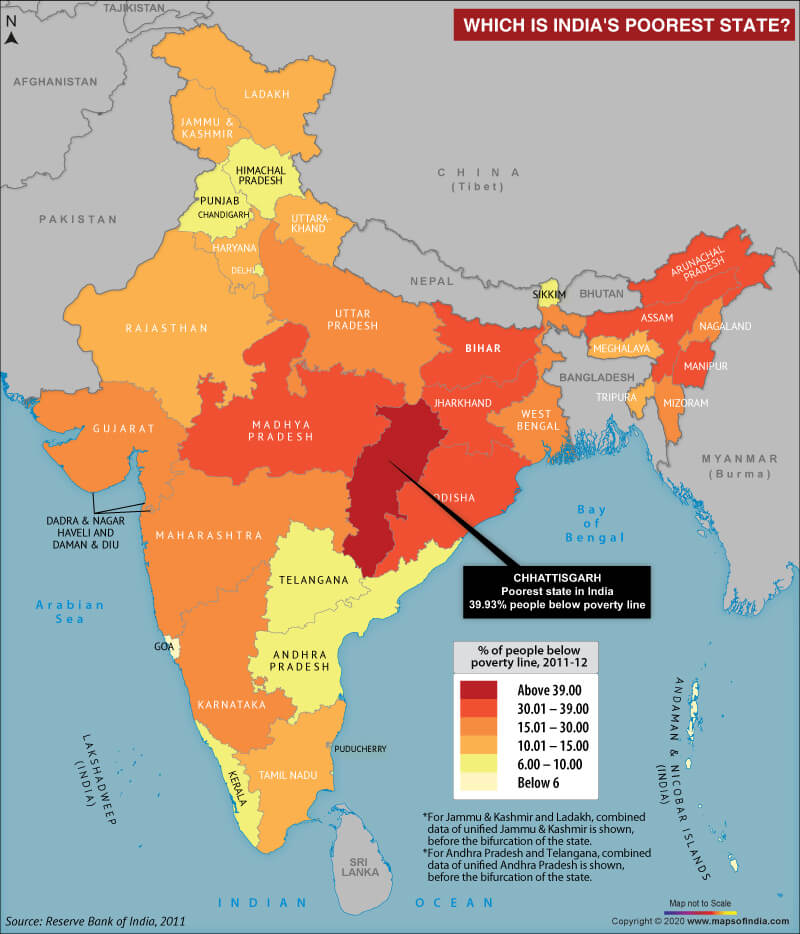
In India, 21.9% of the population lives below the national poverty line in 2011.
In India, the proportion of the employed population below $1.90 purchasing power parity a day in 2011 is 21.2%.
For every 1,000 babies born in India in 2017, 39 die before their 5th birthday.
Poverty is a condition characterized by lack of basic needs such as water, health care, foods, sufficient access to social and economic services, and few opportunities for formal income generation.
Poverty is often described in terms of the income level below which people are unable to access sufficient food for a healthy working life.
Hunger and food insecurity are the most serious forms of extreme poverty.
Progress in poverty reduction has been concentrated in Asia and especially East Asia. In other areas, the number of people in extreme poverty has increased especially in sub-Saharan Africa.
Poverty in India is primarily due to improper government policies and the misuse of the financially weaker section by the wealthier community.
The main outcome of poverty is hunger. Hunger’s seriousness can be understood easily from the fact that every year, 5.8 million children die from hunger related-causes around the world (FAO Hunger Report 2008).
Poverty involves more than the lack of income and productive resources to ensure sustainable livelihoods. Its manifestations include hunger and malnutrition, limited access to education and other basic services, social discrimination and elimination as well as the lack of participation in decision-making.
Poverty in India and other developing countries
Reports of the World Bank revealed that India is one of the poorest countries in the world. Some of the main issues associated with prevalent poverty in India are poor health services, and insufficient education and training. Almost half of India’s population drops out of school by the age of thirteen and only one in ten people receive some form of job training.
Poor health services: It has been observed that People of India have less access to good health services as compared to industrialized nations. The relationship between poverty and access to health care can be seen as part of a larger cycle, where poverty leads to ill health and ill health maintains poverty.
Child malnutrition: The occurrence of under-nutrition in India is amongst the highest levels found in any country in the world and in spite of the development in food production, disease control and economic and social development; India is facing an acute problem of child malnutrition.
Insufficient education and training: In developing countries, children do not have access to basic education because of inequalities that originate in sex, health and cultural identity. It has been revealed in reports that illiteracy and lack of education are common factor that lead to poverty.
Governments of developing countries often cannot have enough money to provide for good public schools, especially in rural areas.
Poor people also often sacrifice schooling in order to concentrate on making a minimal living.
Additionally, developing countries tend to have few employment opportunities, especially for women. As a result, people do not want to attend school.
Corruption and warfare: Political power is unreasonably centralized. This often causes development problems. In these situations politicians make decisions about places that they are unaware with, lacking sufficient knowledge about the context to design effective and appropriate policies and programs.
Another issue related with poverty is corruption often accompanies centralization of power, when leaders are not accountable to those they serve. Corruption hinders development.
Warfare also lead to entrenched poverty by diverting scarce resources allocated for reducing poverty to maintaining a military.
Environmental degradation: It is also a major issue in increasing poverty.
In the developing world, the poor communities depend on natural resources to fulfill their basic needs.
Therefore, the depletion and impurity of water sources directly impend the livelihoods of those who depend on them.
Inequality: One of the more deep-rooted sources of poverty around the globe is social inequality that stems from cultural ideas about the relative worth of different genders, races, ethnic groups, and social classes.
Other causes include:
Population Rise
Low Productivity in Agriculture
Under-Utilized Resources
Low Rate of Economic Development
Price Rise
Unemployment
Shortage of Capital and Able Entrepreneurship
Social Factors
Global Hunger Index (GHI)
The Global Hunger Index is a peer-reviewed annual report, jointly published by Concern Worldwide and Welthungerhilfe.
It determines hunger on a 100-point scale, where 0 is the best possible score (no hunger) and 100 is the worst.
It is designed to comprehensively measure and track hunger at the global, regional, and country levels.
The aim of the GHI is to trigger action to reduce hunger around the world.
For each country in the list, the GHI looks at four indicators:
Undernourishment (which reflects inadequate food availability): calculated by the share of the population that is undernourished (that is, whose caloric intake is insufficient)
Child Wasting (which reflects acute undernutrition): calculated by the share of children under the age of five who are wasted (that is, those who have low weight for their height)
Child Stunting (which reflects chronic undernutrition): calculated by the share of children under the age of five who are stunted (that is, those who have low height for their age)
Child Mortality (which reflects both inadequate nutrition and unhealthy environment): calculated by the mortality rate of children under the age of five
India’s (poor) performance
India is among the 31 countries where hunger has been identified as serious.
Only 15 countries fare worse than India.
Some of these include Afghanistan (103), Nigeria (103), Congo (105), Mozambique (106), Sierra Leone (106), Timor-Leste (108), Haiti (109), Liberia (110), Madagascar (111) and Somalia (116).
India was also behind most of the neighbouring countries.
Pakistan was placed at 92 rank, Nepal at 76 and Bangladesh also at 76.
Reasons for such poor performance
Poor maternal health: Mothers are too young, too short, too thin and too undernourished themselves, before they get pregnant, during pregnancy, and then after giving birth, during breast-feeding.
Poor sanitation: Poor sanitation, leading to diarrhoea, is another major cause of child wasting and stunting.
Food insecurity: Low dietary diversity in India is also a key factor in child malnutrition.
Poverty: Almost 50 million households in India are dependent on these small and marginal holdings.
Livelihood loss: The rural livelihoods loss after COVID and lack of income opportunities other than the farm sector have contributed heavily to the growing joblessness in rural areas.
Issues with GHI
The GHI is largely children-oriented with a higher emphasis on undernutrition than on hunger and its hidden forms, including micronutrient deficiencies.
The first component — calorie insufficiency — is problematic for many reasons.
The lower calorie intake, which does not necessarily mean deficiency, may also stem from reduced physical activity, better social infrastructure (road, transport and healthcare) and access to energy-saving appliances at home, among others.
For a vast and diverse country like India, using a uniform calorie norm to arrive at deficiency prevalence means failing to recognise the huge regional imbalances in factors that may lead to differentiated calorie requirements at the State level.
Understanding the connection between stunting and wasting and ways to tackle them
India’s wasting prevalence (17.3%) is one among the highest in the world.
Its performance in stunting, when compared to wasting, is not that dismal, though.
Child stunting in India declined from54.2% in 1998–2002 to 34.7% in 2016-2020, whereas child wasting remains around 17% throughout the two decades of the 21st century.
Stunting is a chronic, long-term measure of undernutrition, while wasting is an acute, short-term measure.
Quite possibly, several episodes of wasting without much time to recoup can translate into stunting.
Effectively countering episodes of wasting resulting from such sporadic adversities is key to making sustained and quick progress in child nutrition.
Way forward: If India can tackle wasting by effectively monitoring regions that are more vulnerable to socioeconomic and environmental crises, it can possibly improve wasting and stunting simultaneously.
Low child mortality
India’s relatively better performance in the other component of GHI — child mortality — merits a mention.
Studies suggest that child under nutrition and mortality are usually closely related, as child under nutrition plays an important facilitating role in child mortality.
However, India appears to be an exception in this regard.
This implies that though India was not able to ensure better nutritional security for all children under five years, it was able to save many lives due to the availability of and access to better health facilities.
Initiatives by Government to Curb Poverty in India
Ending poverty in all its forms is the first of the 17 Sustainable Development Goals (SDGs) of the 2030 Agenda for Sustainable Development.
The government of India took several initiatives to eradicate poverty from the country.
Saansad Aadarsh Gram Yojana (SAGY) – Ministry of Rural development initiated the scheme in 2014. The scheme aims to develop five ‘Adarsh Villages’ or ‘Model Villages’ by 2024.
National Rural Livelihood Mission (NRLM) – Ministry of Rural Development started NRLM 2011 to evolve out the need to diversify the needs of the rural poor and provide them jobs with regular income on a monthly basis.
Mahatma Gandhi National Rural Employment Guarantee Act (MGNREGA) – In 2005 Ministry of Rural Development initiated MGNEREGA to provide 100 days of assured employment every year to every rural household. One-third of the proposed jobs would be reserved for women.
National Urban Livelihood Mission (NULM) – In 2013, NULM was commenced by the Ministry of Housing and Urban Affairs focusing on organizing urban poor in Self Help Groups, creating opportunities for skill development leading to market-based employment, and helping them to set up self-employment ventures by ensuring easy access to credit.
Pradhan Mantri Jan Dhan Yojana (PMJDY) – the Ministry of Finance in 2014 initiated PMJDY that aimed at direct benefit transfer of subsidy, pension, insurance, etc., and attained the target of opening 1.5 crore bank accounts. The scheme particularly targets the unbanked poor.
Hunger and Poverty are the biggest challenges for good governance in India still today. Evaluate how far successive governments have progressed in dealing with these humongous problems. Suggest measures for improvement. (250 words)
Post your answers in comments below.
Initiatives by Government to fight against Hunger in India
The Government of India took several initiatives to fight against hunger across the nation.
National Nutrition Mission (NNM), Poshan Abhiyan – NNM was started in 2018 by the Ministry of Women and Child Development to reduce the level of under-nutrition and also enhance the nutritional status of children in the country.
National Food Security Mission – Ministry of Agriculture initiated NFSM in 2007 to increase the production of rice, wheat, pulses, and coarse cereals through area expansion and productivity enhancement in a sustainable manner.
Zero Hunger Programme – launched on October 16, 2017 with the aim to make farm inventions, organizing the farming system for nutrition, setting up genetic gardens for biofortified plants and initiating zero hunger training.
Eat Right India Movement: An outreach activity organized by the Food Safety and Standards Authority of India (FSSAI) for citizens to nudge them towards eating right.
Pradhan Mantri Matru Vandana Yojana: A centrally sponsored scheme executed by the Ministry of Women and Child Development, is a maternity benefit programme being implemented in all districts of the country with effect from 1st January, 2017.
Food Fortification: Food Fortification is the addition of key vitamins and minerals such as iron, iodine, zinc, Vitamin A & D to staple foods such as rice, milk and salt to improve their nutritional content.
National Food Security Act, 2013: It legally entitled up to 75% of the rural population and 50% of the urban population to receive subsidized food grains under the Targeted Public Distribution System.
Mission Indradhanush: It targets children under 2 years of age and pregnant women for immunization against 12 Vaccine-Preventable Diseases (VPD).
Global Initiative against Poverty and Hunger
Food is at the core of the Sustainable Development Goals (SDGs). Goal 2 of SDG deals with Zero Hunger. Given below are some global level initiatives to fight poverty and hunger-
The End to Poverty Initiative – This Centenary Initiative is designed specifically as the vehicle to take forward the ILO’s work in implementing the 2030 Agenda for Sustainable Development to alleviate poverty.
Zero Hunger By World Food Programme – with humanitarian food assistance, provide nutritious food to those in urgent need. Meanwhile, the complementary programs address the root causes of hunger and build the resilience of communities.
Fight Hunger First – With a vision to have a world without hunger and poverty, Welthungerhilfe- WHH has been implementing several initiatives in rural areas of India and Bangladesh. It was set up by a UN agency FAO.
Zero Hunger Challenge (Save Food) by FAO – The 2012 United Nations Conference on Sustainable Development, also known as Rio+20, launched the Zero Hunger Challenge which includes addressing the sustainability of all food systems and the vision of zero food loss and waste (FLW).
Conclusion
Food insecurity remains an alarming issue due to such entitlement failures in India. While the government has rejected the findings of the Global Hunger Index as “unscientific”, we cannot ignore the dismal ground realities. India faces a malnutrition challenge that is not only large but worsening. It is time for the government to face up to these inconvenient truths and pursue the means and mechanisms needed to improve the situation. A safe and bright future for our children will translate into a safe and bright future for the country. And that’s the message we want every fellow citizen to internalize — Sahi Poshan, Desh Roshan.
There is a growing divergence in the relationship between poverty and hunger in India. The shrinking of social expenditure by the government is forcing the poor to spend more on non-food essential items squeezing their food budget. Elucidate. (250 words)
What is that one subject with which you can ace all the 3 stages of UPSC-CSE – Prelims, Mains and Interview? Yes, it’s Current Affairs.
Every year, 30% of the questions in the Prelims exam appear from Current Affairs. With current affairs knowledge, you will know how to answer 60-70% questions in UPSC Mains. And, 80% of the interview questions ask your opinion on the news events of last one year.
So, with every stage the importance of current affairs sees a proportional increase.
Why you should attend Parth Sir’s Webinar?
If UPSC Civil Services Examination is a bike, then one wheel is GS Static and the other is GS Current Affairs. You can’t have a smooth ride even if one the tyres get punctured. While standard books and NCERTs are enough to cover the static subjects, what about the vast syllabus of Current Affairs?
Even after reading The Hindu and Indian Express are you unable to get desired scores in the daily quiz? Are you aware of the important news but struggle to connect it to the topics in your static portions? Are you not getting time to explore other sources like PIB, Yojana or Kurukshetra?
Don’t get bogged down by the demands of Current Affairs. Attend the webinar conducted by Parth Sir this Sunday to allay all your fears and doubts and stay focused in clearing UPSC CSE!
What will you learn from this webinar?
1. How to finish reading all the sources of current affairs in one hour?
2. How not to approach current affairs for UPSC CSE?
3. Direct and indirect relation of current affairs in recent years with evidence. This will be a reality check for many aspirants!
4. What are the important sources for current affairs?
5. How to make micro notes with topic-wise current affairs?
6. How to answer current affairs questions in a smart and efficient manner?
At the end of the session, Parth Sir will also conduct a Q&A session.
Webinar Details
Don’t miss the chance to get value addition inputs to score better in the examination! This webinar is absolutely free. All aspirants are welcome to attend.
Date – 24th October 2021(Sunday)
Time – 3:00 P.M.
Limited slots are available. Please register immediately.
About Parth Sir
Our Civilsdaily Mentor, Mr Parth has been mentoring students since 2017. He has an admirable experience of attending UPSC-CSE interview two times. Parth sir has always scored 400+ in all the 4 GS Mains Subjects. The secret of success according to him is consistency and time-management.
In memory of these and other colleagues killed, all the police forces of the State and Centre observe October 21 as Police Commemoration Day.
Casualties among the police forces
As the CRPF is deployed in the highly disturbed areas of Jammu and Kashmir, the Northeast and the Left-Wing Extremist-affected States, the highest casualties (82) were seen in this force.
The Indo-Tibetan Border Police (ITBP), which guards the border from Ladakh to Arunachal Pradesh at forbidding heights, lost 54 of its personnel.
The Border Security Force lost 47 personnel.
Among the State Police forces, Chhattisgarh, which is combating the Maoist menace, lost the most personnel (32) followed by J&K (17) and Karnataka (17).
Neglect of the police and paramilitary personnels
They get paid low salaries, have a poor quality of life and are often deprived of basic facilities.
The morale of the paramilitary personnel is not of the desired level.
Those who cleared recruitment exams in 2003 but joined the force in 2004 or later are not eligible for pension under the old norms.
Canteen and medical facilities are dismal.
Items sold through the Central Police Canteens are not exempted from GST.
There are notable variations in the ex-gratia amounts given to the next of kin of the police who are killed.
The Centre and the States need to bring about uniformity in the amount paid.
Care should be taken to ensure that the next of kin are not deprived of a decent living.
Payments from the public exchequer need to be made judiciously.
Conclusion
It is high time the government takes note of the grievances of the police and paramilitary personnel and not let their sacrifices go in vain.
The Essay Paper in Mains makes or breaks your dream of becoming an IAS officer. Do you know a well-structured essay uplifts your rank by more than a 100 notches?
While the performance of students is more or less the same in GS papers (especially 1,2,3), but in the case of essay the variation of marks is rather huge (in 60s to 160). Yes, a single Essay paper can create a gulf of 100 marks.
If you have not yet started writing essays or if you’re confused on how to write quality answers within a short duration, then this webinar is for you!
Open to All, Attend the Webinar Essay FLT.
The orientation session is about learning the basics of essay writing. We welcome all the sincere and serious aspirants who understand the value of scoring 120+ in the essay paper. This is the only paper where mere management of time and thoughts will fetch you marks more than any other paper.
Who must join the webinar?
One who is attempting Mains in 2021.
One who is going to attempt Prelims 2022.
Anyone who has a basic understanding of the UPSC syllabus.
What can you learn from this webinar?
1. Right sources to prepare Essay Paper for Mains.Is just reading GS Subjects and Current Affairs enough for Essay Paper?
2. Understanding the type of questions asked. What are the 8 broad themes of essay?
3. Brainstormingthe topic before writing. What are the 10 parameters by which your essay will be evaluated?
4. Organising your thoughts into paragraphs. How to write 1200 words and maintain the flow with well linked paragraphs?
5. Framing the correct thesis statement. How to sound persuasive yet logical?
6. Different types of introduction you can write for your essay. What kind of anecdotes work and how to remember them?
7. Developing balanced main body arguments. How to be less biased with an interdisciplinary approach?
8. Concluding the essay perfectly. How can you score additional marks over here?
Arpit Sir will also hold a Q&A Session where beginners and veterans can clarify their doubts.
So attend this webinar and start the very first step of essay writing in the right direction!
Webinar Details
Date – 22nd October 2021(Friday)
Time – 4:00PM-5:00PM
About Arpit Sir
Arpit Sir has the experience of attending all the stages of UPSC CSE – prelims, mains and interview. He has been mentoring aspirants for the last 8 years. According to him, enjoying the process of preparation will prevent the fear of the end result.