
Hello aspirants, you can download Paper 1 (Set C) from the link given below.
Search results for: “”
-

(Today) Interact 1-1 with UPSC 2020 Toppers | Jayant, AIR 56 is LIVE | Smart strategy for UPSC | Your questions, Jayant sir’s answers
Click here: Interact with UPSC IAS toppers on Habitat || 11 pm onwards on Habitat.
Hey all,
It is your lucky day!
Vaibhav Rawat, AIR 25, IFS and Jayant Nahata, AIR 56, IAS will be on Habitat to interact directly with you. This will be a 1-1 interaction session with you all.

The second session will be taken up by Jayant Nahata.

You don’t want to miss out on this opportunity to discuss, learn and get guidance from UPSC IAS toppers.
You will be interacting with other UPSC toppers and rankers on Habitat as well.
-
Daily Answer Writing Enhancement (AWE) Program is Back || Enrollments Open for the Months of October and November
The competition in the UPSC examination is fierce. One day and even writing one answer a day can make a huge difference. UPSC Prelims is on 10th October 2021. Many of you might want to take a break. And honestly, you deserve it!
But writing just 4 answers a day can be a perfect balance to take a break and not lose momentum.
Let’s keep the momentum going.
Answer writing practices through Civilsdaily’s Daily AWE program can reduce test anxiety and helps you ace the GS Mains answer writing. And what is a better way to practice for UPSC Mains Examinations than attempting Questions which are the closest to the demands of the UPSC Civil Services Mains Examination? The more you are accustomed to sitting for a period of time, answering questions, and pacing yourself, the more comfortable you will feel when you actually sit down to take the real UPSC Mains examinations yourself.
We are working hard to make the program more featureful, highlight the best answers, show the competency levels of students.
WHAT THE PROGRAM INCLUDES:
- Daily 4 questions from General studies 1, 2, 3, and 4 will be provided to you. A sample 2 week schedule is available below.
- A Mentor’s Comment will be available for all answers. This can be used as a guidance tool, but we encourage you to write original answers.
- You can write your answer on the same day and attached a scanned copy. Within 4 days, a review of your answer will be provided.
- Also, write the Razor payment ID, when you attached your answer.
- If you are writing answers late, then please tag the mentor, to let him know about your submission. These answers will be evaluated as per the mentor’s schedule.
SCHEDULE:
Here is the schedule for the first week of October to give you an idea about how we will follow your Syllabus:

NOTE: For GS2 and GS3, we take questions from recent current affairs. This ensures coverage of both static and current affairs.
For Course enrollment details, click the link given below.
-
GI Tags in News
08th Oct 2021
UPSC 2022 countdown has begun! Get your personal guidance plan now! (Click here)
Geographical Indications in India
- A Geographical Indication is used on products that have a specific geographical origin and possess qualities or a reputation that are due to that origin.
- Such a name conveys an assurance of quality and distinctiveness which is essentially attributable to its origin in that defined geographical locality.
- This tag is valid for a period of 10 years following which it can be renewed.
- Recently the Union Minister of Commerce and Industry has launched the logo and tagline for the Geographical Indications (GI) of India.
- The first product to get a GI tag in India was the Darjeeling tea in 2004.
- The Geographical Indications of Goods (Registration and Protection) Act, 1999 (GI Act) is a sui generis Act for the protection of GI in India.
- India, as a member of the WTO, enacted the Act to comply with the Agreement on Trade-Related Aspects of Intellectual Property Rights.
- Geographical Indications protection is granted through the TRIPS Agreement.

Two well-known products from Tamil Nadu — Dindigul lock and Kandangi Saree — have been given the Geographical Indication (GI) tag by The Geographical Indications Registry in Chennai.
Dindigul lock
- The Dindigul locks are known throughout the world for their superior quality and durability, so much so that even the city is called Lock City.
- Government institutions such as prisons, godowns, hospitals, and even temples use these locks instead of other machine-made ones.
- The application for the lock was made by the Dindigul Lock, Hardware and Steel Furniture Workers Industrial Co-operative Society Limited.
- More than 3,125 lock manufacturing units are limited to an area of 5 km in and around Dindigul.
- The abundance of iron in this region is the reason for the growth of the industry.
- There are over 50 varieties of locks made by the artisans using raw materials such as MS flat plates and brass plates procured from the nearby towns, including Madurai and Salem.
The Kandangi sarees
- The Kandangi sarees are manufactured in the entire Karaikudi taluk in Sivaganga district.
- They are characterised by large contrast borders and some are known to have borders covering as far as two-thirds of the saree which is usually around 5.10 m-5.60 m in length.
- Worn in summer, these cotton sarees are usually bought by customers in bulk.
- The Amarar Rajeev Gandhi Handloom Weavers Co-operative Production and Sales Society Limited filed the application for the Kandangi saree.
Palani Panchamirtham
- PalaniPanchamirtham, an abishegaPrasadam, from Palani Town is one of the main offerings in the Abisegam of Lord Dhandayuthapani Swamy, the presiding deity of the Temple.
- It is a combination of five natural substances, namely, banana, jaggery sugar, cow ghee, honey and cardamom in a definite proportion.
- It is prepared in a natural method without addition of any preservatives or artificial ingredients and is well known for its religious fervour and gaiety.
- This is the first time a temple ‘prasadam’ from Tamil Nadu has been bestowed with the GI tag.
Tawlhlohpuan
- Tawlhlohpuan, a medium to heavy, compactly woven, good quality fabric from Mizoram is known for warp yarns, warping, weaving & intricate designs that are made by hand.
- Tawlhloh, in Mizo language, means ‘to stand firm or not to move backward’. Tawlhlohpuan, which holds high significance in the Mizo society, is produced throughout the state of Mizoram, Aizawl and Thenzawl town being the main centre of production.
Mizo Puanchei
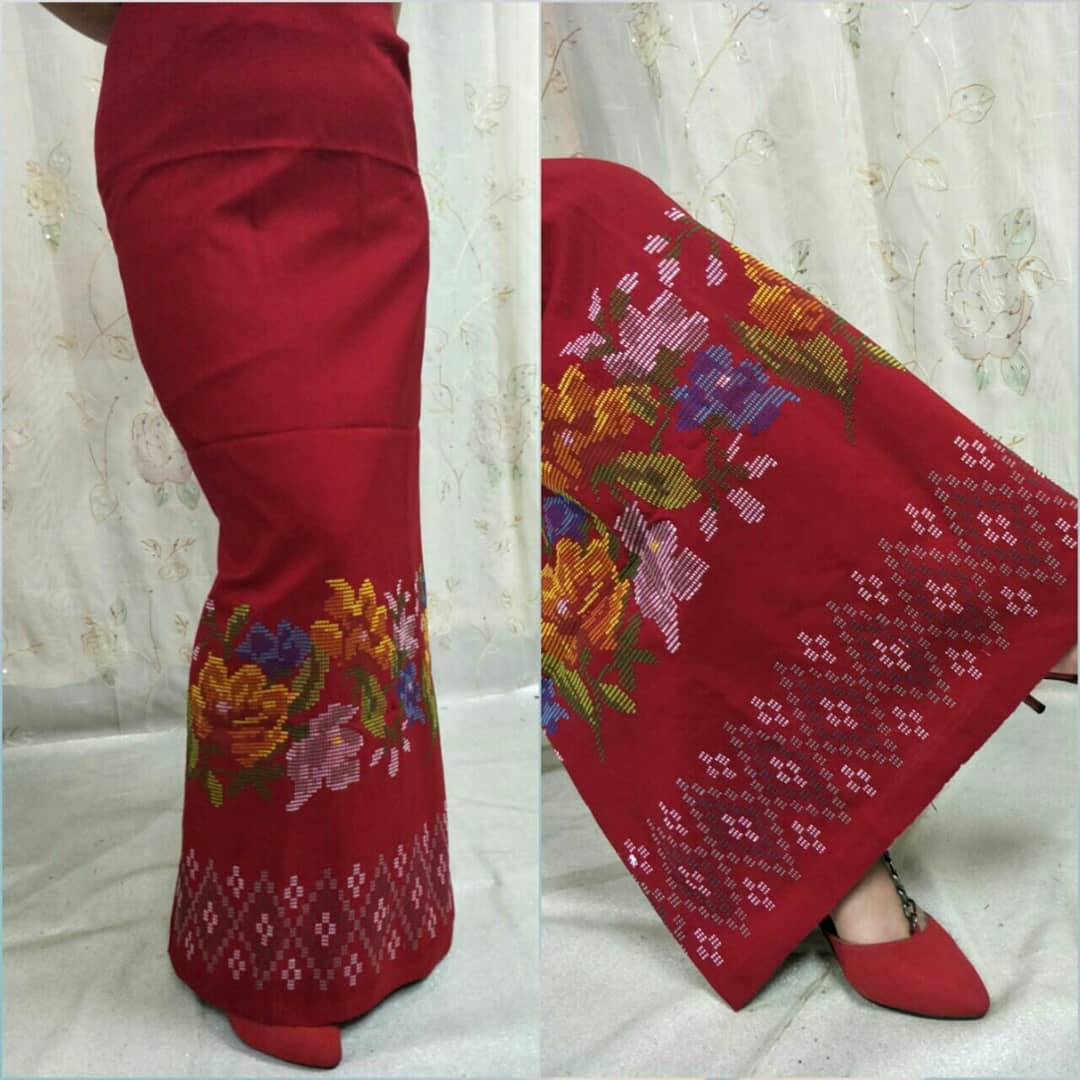
- Mizo Puanchei, a colourful Mizo shawl/textile, from Mizoram, is considered as the most colourful among the Mizo textiles.
- It is an essential possession for every Mizo lady and an important marriage outfit in the state.
- It is also the most commonly used costume in Mizo festive dances and official ceremonies.
- The weavers insert the designs and motifs by using supplementary yarns while weaving to create this beautiful and alluring textile.
Tirur betel vine
- Tirur betel vine from Kerala is mainly cultivated in Tirur, Tanur, Tirurangadi, Kuttippuram, Malappuram and Vengara block panchayaths of Malappuram District.
- It is valued both for its mild stimulant action and medicinal properties.
- Even though it is commonly used for making pan masala for chewing, it has many medicinal, industrial and cultural usages and is considered as a remedy for bad breath and digestive disorders.
Panchamirtham’ of Palani temple gets GI tag
- The famous Palani panchamirtham, given as ‘prasadam’ at the Murugan temple at Palani has been granted the Geographical Indication (GI) tag.
- This is the first time a temple ‘prasadam’ from Tamil Nadu has been given the GI tag.
About the Panchamirtham
- It is sweet in taste and one of the main offerings for Lord Dhandayuthapani Swamy, the presiding deity of Arulmigu Dhandayuthapani Swamy Temple, situated on Palani Hills.
- The panchamirtham is a combination of five natural substances — banana, jaggery, cow ghee, honey and cardamom.
- Dates and diamond sugar candies are added for flavour.
- The panchamirtham is an ‘abhishega prasadam’ (food that is a religious offering), which is served in a semi-solid state.
- Not even a single drop of water is added during the preparation of the panchamirtham.
- This gives it its classic semi-solid consistency and taste. No preservatives or artificial ingredients are used.
Pashmina
- Pashmina is a fine type of cashmere wool. The textiles made from it were first woven in Kashmir.
- The wool comes from a number of different breeds of the cashmere goat; such as the changthangi or Kashmir pashmina goat from the Changthang Plateau in Tibet and part of the Ladakh region and few parts of Himachal Pradesh.
- Often shawls called shahmina are made from this material in Kashmir and Nepal; these shawls are hand spun and woven from the very fine cashmere fibre.
- Traditional producers of pashmina wool are people known as the Changpa.
About Kodaikanal’s malai poondu Garlic

- Also known by its scientific name Allium Sativum, this particular garlic is known for its medicinal and preservative properties. It is grown in the Kodaikanal Hills, Dindugul district.
- It has anti-oxidant and anti-microbial potential, which is attributed to the presence of higher amount of organosulfur compounds, phenols and flavonoids compared to other garlic varieties.
- Its usually white or pale yellow and each bulb weighs 20-30g on an average.
- According to the GI application, Kodaikanal Hill Garlic cultivation is done twice in a year, once around May and for second time in November depending upon the suitability of the climate.
- The hill altitude, the misty condition and the soil prevailing in the Kodaikanal region are responsible for its medicinal property and the long storage shelf life of the garlic.
Kolhapuri Chappal
- According to the GI application made by the two states, Kolhapuris can be traced back to the 12th century King Bijjal who ruled Bidar in Karnataka.
- His prime minister Vishwaguru Basavanna wanted to create a casteless society and remove the stigma associated with the cobbler community.
- The community embraced Lingayat faith and used its creative skills to start producing footwear known equally for its ruggedness and regal bearing.
- Brand Kolhapuri came into being only in the beginning of 20th century when the footwear began to be traded in Kolhapur.
- Chhatrapati Shahu Maharaj (1874-1922) of Kolhapur encouraged its production and 29 tanning centres were opened during his rule in Kolhapur.
Kandhamal Haldi
- Kandhamal in Odisha’s southern hinterland is famed for its turmeric, a spice that enjoys its pride of place in an array of cuisines.
- The agricultural product also stands out for its healing properties and arresting aroma.
- The GI tag was primarily developed with the purpose of recognising the unique identity connecting different products and places.
- For a product to get GI tag it has to have a unique quality, reputation or characteristic which is attributable to its geographic origin. ‘Kandhamal Haldi’ has been placed under Class-30 type.
GI Tag for 5 Indian Coffee varieties
Coorg Arabica coffee
- It is grown specifically in the region of Kodagu district in Karnataka.
Wayanaad Robusta coffee
- It is grown specifically in the region of Wayanad district which is situated on the eastern portion of Kerala.
Chikmagalur Arabica coffee
- It is grown specifically in the region of Chikmagalur district and it is situated in the Deccan plateau, belongs to the Malnad region of Karnataka.
Araku Valley Arabica coffee
- It is coffee from the hilly tracks of Visakhapatnam district of Andhra Pradesh and Odisha region at an elevation of 900-1100 Mt MSL.
- The coffee produce of Araku, by the tribals, follows an organic approach in which they emphasise management practices involving substantial use of organic manures, green manuring and organic pest management practices.
Bababudangiris Arabica coffee
- It is grown specifically in the birthplace of coffee in India and the region is situated in the central portion of Chikmagalur district.
- Selectively hand-picked and processed by natural fermentation, the cup exhibits full body, acidity, mild flavour and striking aroma with a note of chocolate.
- This coffee is also called high grown coffee which slowly ripens in the mild climate and thereby the bean acquires a special taste and aroma.
Sirsi Arecanut
- It is cultivated in Yellapura, Siddapura and Sirsi taluks.
- Totgars’ Cooperative Sale Society Ltd., Sirsi, is the registered proprietor of the GI.
- The arecanut grown in these taluks have unique features like a round and flattened coin shape, particular texture, size, cross-sectional views, taste, etc.
- These features are not seen in arecanut grown in any other regions.
Shahi Litchi
- The lychee crop, which is available from May to June, is mainly cultivated in the districts of Muzaffarpur and surrounding districts.
- Cultivation of litchi covers approximately an area of about 25,800 hectares producing about 300,000 tonnes every year.
- India’s share in the world litchi market amounts to less than 1%.
- The names of the litchi produced in Muzaffarpur are Shahi and China.
- The fruits are known for excellent aroma and quality.
King of Mangoes gets GI tag
- Alphonso from Ratnagiri, Sindhudurg, Palghar, Thane and Raigad districts of Maharashtra, is registered as Geographical Indication (GI).
- The king of mangoes, Alphonso, better known as ‘Hapus’ in Maharashtra, is in demand in domestic and international markets not only for its taste but also for pleasant fragrance and vibrant colour.
- It has long been one of the world’s most popular fruit and is exported to various countries including Japan, Korea and Europe.
- New markets such as USA and Australia have recently opened up.
GI Tag for Telangana
- The Chennai-based GI Registry gave Geographical Indication certificate for Warangal dhurries
- The shatranji carpets and jainamaaz prayer mats are made in Warangal
Specialty of carpets
- Bright colors, geometrically repetitive patterns and interlocking zigzag motifs in cotton and jute are the signature styles of the carpets
- One of the newest innovations by the weavers here is an adaptation of tie-dyed ikat techniques and hand-painted or block-printed kalamkari designs for the dhurries to save time and energy.
Kalamkari Paintings
- Kalamkari or qalamkari is a type of hand-painted or block-printed cotton textile, produced in Iran and
India - Its name originates in the Persian, which is derived from the words qalam (pen) and kari (craftsmanship),
meaning drawing with a pen - There are two distinctive styles of kalamkari art in India – the Srikalahasti style and the Machilipatnam
style - The Srikalahasti style of kalamkari, wherein the "kalam" or pen is used for freehand drawing of the
subject and filling in the colors is entirely hand worked - The Pedana Kalamkari craft made at Pedana nearby Machilipatnam in Krishna district, Andhra Pradesh,
evolved with the patronage of the Mughals and the Golconda sultanate
MP gets GI tag for a chicken breed
- Madhya Pradesh has received the Geographical Indications (GI) tag for Kadaknath, a chicken breed whose black meat is in demand in some quarters
- The protein-rich meat of Kadaknath, chicks, and eggs are sold at a much higher rate than other varieties of chicken.
Samanvaya: Free 1-to-1 mentorship for UPSC IAS
Fill up this form to schedule a free on-call discussion with senior mentor from Civilsdaily. Once submitted we will call you within 24 hours.
Civilsdaily Samanvaya 1-On-1 Mentorship Form
-
Important Schemes Regarding MSME Sectors
06th Oct 2021
UPSC 2022 countdown has begun! Get your personal guidance plan now! (Click here)
Credit Guarantee Trust Fund for Micro and Small Enterprises (CGTMSE)
What is CGTMSE?
- CGTMSE is a fund which provides a guarantee for loans given to MSEs i.e. in case borrowers fails to give back loans, the bank will get their money from this fund.
- It is a Central Government program to promote MSMEs.
- Government has increased corpus of fund from Rs 2500 crore to Rs 7500 crore
- Now loans given by NBFCs can also be covered under this fund
Udyami Mitra’ portal
- Small Industries Development Bank of India (SIDBI) has revamped its Udyami Mitra with enhanced features.
- The portal was launched to improve the accessibility of credit for the MSMEs.
- It helps MSMEs for submission of loan applications which can be picked up by multiple lenders.
- It aims at bringing in transparency in the processing of loans by the banks.
- Now non-banking finance companies and small finance banks are being on-boarded on the platform for enhancing the flow of credit to MSMEs.
- Under the new capitalisation plan, banks will have to compete for loans through the revamped udyamimitra portal.
A Scheme for Promotion of Innovation, Rural Industry and Entrepreneurship (ASPIRE)
- ASPIRE has been launched on 16.03.2015 with an objective to set up a network of technology centres, incubation centres to accelerate entrepreneurship and also to promote start-ups for innovation and entrepreneurship in the rural and agriculture-based industry with a fund of Rs.210 crores.
- The planned outcomes of ASPIRE are setting up Technology Business Incubators (TBI), Livelihood Business Incubators (LBI) and creation of a Fund of Funds for such initiatives with SIDBI.
Prime Ministers Employment Generation Programme, PMEGP
- Khadi and Village Industries Commission (KVIC) is a nodal implementation agency at the national level.
At State and district level, State offices of KVIC, Khadi and Village Industries Boards (KVIBs) and District Industry Centres (DIC) are the implementing agencies.
Objectives
- To generate continuous and sustainable employment opportunities in Rural and Urban areas of the country
- To provide continuous and sustainable employment to a large segment of traditional and prospective artisans, rural and urban unemployed youth in the country through setting up of micro-enterprises.
- To facilitate the participation of financial institutions for higher credit flow to the micro sector.
Eligibility
- Individuals above 18 years of age
- VIII Std. pass required for the project above Rs.10.00 lakhs in manufacturing and above Rs. 5.00 lakhs for Service Sector
- Self Help Groups and Charitable Trusts
- Institutions registered under Societies Registration Act- 1860
- Production-based Co-operative Societies
Salient features of the scheme
- The Scheme is implemented through KVIC and State/UT Khadi & V.I. Boards in Rural areas and through District Industries Centres in Urban and Rural areas in ratio of 30:30:40 between KVIC / KVIB / DIC respectively.
- No income ceiling for setting up projects.
- Assistance under the Scheme is available only to new units to be established.
- Existing units or units already availed any Govt. Subsidy either under State/Central Govt. Schemes are not eligible.
- Any industry including Coir Based projects excluding those mentioned in the negative list.
- Per capita investment should not exceed Rs. 1.00 lakhs in plain areas and Rs. 1.50 lakhs in Hilly areas.
- The maximum project cost of Rs. 25.00 lakhs in the manufacturing sector and Rs. 10.00 lakhs in Service Sector.
Credit Linked Capital Subsidy Scheme (CLCSS) -CLCSS aims at facilitating technology up-gradation of Micro and Small Enterprises (MSEs) by providing 15% capital subsidy (limited to maximum Rs.15 lakhs) for purchase of Plant & Machinery. -Maximum limit of eligible loan for calculation of subsidy under the scheme is Rs.100 lakhs. Presently, more than 1500 well established/improved technologies under 51 sub-sectors have been approved under the Scheme. UDYAM SAKHI
It is a network for nurturing social entrepreneurship creating business models revolving around low-cost products and services to resolve social inequities.
Mission
- Udyam Sakhi seeks to encourage women entrepreneurs and to aid, counsel, assist and protect their interests. It also preserves free competitive enterprise and to maintain and strengthen the overall economy of our nation.
- The Udyam Sakhi helps Indian women to start, build and grow businesses. It recognises that women entrepreneur in the industry is critical to economic recovery and strength, in building the nation’s future, and to helping India compete in today’s global marketplace.
Samadhan Portal The portal aims at empowering micro and small entrepreneurs across country to directly register their cases relating to delayed payments by Central Ministries, Departments, CPSEs, State Governments. The Samadhaan portal will give information about pending payment of MSEs with individual CPSEs/Central Ministries, State Governments, etc. The CEO of PSEs and Secretary of Ministries concerned will also be able to monitor cases of delayed payment under their jurisdiction and issue necessary instructions to resolve the issues. The portal will facilitate monitoring of delayed payment in more effective manner. The information on portal will be available in public domain, thus exerting moral pressure on defaulting organisations. The MSEs will also be empowered to access portal and monitor their cases. Zero Defect, Zero Effect
- ZED Scheme aims to rate and handhold all MSMEs to deliver top quality products using clean technology.
- It will have sector-specific parameters for each industry.
- ZED Scheme is meant to raise quality levels in unregulated MSME sector which is an engine of growth for the Indian economy.
- The scheme will be the cornerstone of the Central Government’s flagship Make in India programme, which is aimed at turning India into a global manufacturing hub, generating jobs, boosting growth and increase incomes.
National Schedule Caste and Schedule Tribes (SC/ST) Hub
- Ministry of Micro, Small and Medium Enterprises (MSME) is implementing a scheme of National Schedule Caste and Schedule Tribes (SC/ST) Hub.
- The Hub is set up to provide professional support to SC/ST entrepreneurs to fulfil the obligations under the Central Government Public Procurement Policy for Micro and Small Enterprises Order 2012, adopt applicable business practices and leverage the Stand-Up India initiatives.
- The functions of Hub include collection, collation and dissemination of information regarding SC/ST enterprises and entrepreneurs, capacity building among existing and prospective SC/ST entrepreneurs through skill training and EDPs, vendor development etc.
- Four special subsidy schemes/programmes have been approved under National SC/ST Hub namely
- Single Point Registration Scheme
- Special Marketing Assistance Scheme (SMAS)
- Performance & Credit Rating Scheme and
- Special Credit Linked Capital Subsidy Scheme.
SFURTI
- As per the revised guidelines, the following schemes are being merged into SFURTI:
- The Scheme for Enhancing Productivity and Competitiveness of Khadi Industry and Artisans
- The Scheme for Product Development, Design Intervention and Packaging (PRODIP)
- The Scheme for Rural Industries Service Center (RISC) and
- Other small interventions like Ready Warp Units, Ready to Wear Mission, etc.
Objectives of Scheme
- To organize the traditional industries and artisans into clusters to make them competitive and provide support for their long term sustainability and economy of scale;
- To provide sustained employment for traditional industry artisans and rural entrepreneurs;
- To enhance the marketability of products of such clusters by providing support for new products, design intervention and improved packaging and also the improvement of marketing infrastructure;
- To equip traditional artisans of the associated clusters with the improved skills and capabilities through training and exposure visits;
- To make provision for common facilities and improved tools and equipment for artisans to promote optimum utilization of infrastructure facilities;
- To strengthen the cluster governance systems with the active participation of the stakeholders, so that they are able to gauge the emerging challenges and opportunities and respond to them in a coherent manner;
- To build up innovated and traditional skills, improved technologies, advanced processes, market intelligence and new models of public-private partnership s, so as to gradually replicate similar models of cluster-based regenerated traditional industries
- To look for setting up of multi-product cluster with an integrated value chain and a strong market-driven approach for viability and long term sustainability of the cluster;
- To ensure convergence from the design stage with each activity of the cluster formation and operations thereof.
- To develop specific product lines out of the currently offered diversified basket of heterogeneous products based on the understanding of the target consumer segment. A brand unification exercise also needs to be done to maximize the value.
Trade-Related Entrepreneurship Development Assistance Scheme (TREAD) Women entrepreneurship programme
- There is a provision of Govt of India Grant up to 30% of Loan/credit sanctioned subject to a maximum ceiling of 30 Lakhs to NGOs as appraised by Lending Institutes/Banks for undertaking capacity building activities such as Training, counselling, participation in exhibitions, the establishment of new SHGs etc and other components as approved by Bank/Steering Committee.
- The non-farming activities taken up by women are Tailoring, Handicrafts, Embroidery, Toy making, Readymade garments, Candle making, Agarbatti making, paper cup and plate making, Masala powder making, Saree weaving, Coir mat making, Pickles making, Readymade garments, basketry and brooms making, Jute bag making etc.
- The focus of the scheme is to promote self-employment and income generation activities for women mostly from SHG groups in the non-farm sector.
Samanvaya: Free 1-to-1 mentorship for UPSC IAS
Fill up this form to schedule a free on-call discussion with senior mentor from Civilsdaily. Once submitted we will call you within 24 hours.
Civilsdaily Samanvaya 1-On-1 Mentorship Form
-
Schemes, Project, and Policies Regarding Science and Technology
09th Oct 2021
UPSC 2022 countdown has begun! Get your personal guidance plan now! (Click here)
1. SATHI
The Department of Science & Technology has launched a unique scheme called “Sophisticated Analytical & Technical Help Institutes(SATHI)”.
Objectives of the Scheme
- SATHI will address the problems of accessibility, maintenance, redundancy and duplication of expensive equipment in the institutions.
- This will also foster a strong culture of collaboration between institutions and across disciplines to take advantage of developments, innovations and expertise in diverse areas.
2. National Mission on Quantum Technologies & Applications (NM-QTA)
The Finance Minister in budget 2020 has announced a National Mission on Quantum Technologies & Applications (NM-QTA).
About NM-QTA
- The mission will function under the Department of Science & Technology (DST).
- It will be able to address the ever-increasing technological requirements of society and take into account the international technology trends.
- The mission will help prepare next-generation skilled manpower, boost translational research and also encourage entrepreneurship and start-up ecosystem development.
3. Project MANAV: Human Atlas Initiative
- For the first time, Indian scientists will be mapping every single tissue of the human body to have a deeper understanding of the roles of tissues and cells linked to various diseases.
- Department of Biotechnology (DBT) launched MANAV: Human Atlas Initiative towards improving knowledge on human physiology.
- It is a project funded by DBT, which aims at creating a database network of all tissues in the human body from the available scientific literature.
- It is a project that involves scientific skill development for annotation, science outreach along with handling big data.
- It will involve gaining better biological insights through physiological and molecular mapping, develop disease models through predictive computing and have a holistic analysis and finally drug discovery.
- The student community, who will be the backbone on assimilating the information, will be trained and imparted with skills to perform annotation and curation of information that will ultimately form the online network.
- DBT has invested funds shared between two institutions in Pune – National Centre for Cell Science (NCCS) and Indian Institute of Science, Education and Research (IISER), Pune.
- Besides, Persistent Systems Limited has co-funded the project and is developing the platform.
4. Project Cosmic Microwave Background-Bharat
- CMB stands for Cosmic Microwave Background, and the scientific space project CMB-Bharat has been presented as a proposal to ISRO and is under consideration.
- In the workshop, project CMB-Bharat, which could help us listen to the faintest murmurs of the early universe, was discussed.
- CMB-Bharat is a proposal for comprehensive next-generation Cosmic Microwave Background (CMB) mission in international collaboration with major Indian contribution.
- This referred to quantum gravitational waves, which are different from what LIGO detectors had observed that were classical in nature.
5. Phyto-Pharma Plant Mission
Objectives
- Rs 50 crore Mission aimed at conservation and cultivation of endangered and threatened endemic medicinal plants, and discovery of new botanical drugs for unmet medical needs using the rich traditional ethnobotanical knowledge and biodiversity of these states and at the same time also improve the availability of authentic and quality botanical raw material on a sustainable basis for a boom in the phyto-pharmaceutical industry
- Nodal Ministry –Ministry of Science & Technology
6. Brahmaputra Biodiversity and Biology Boat
Objectives
- B4 will establish a large barge on the river with a well-equipped laboratory for analysis of all components of the entire ecosystem of the river and surroundings. The B4 will link to all the local research institutions along the river, as well as national and international laboratories
- Nodal Ministry –Ministry of Science & Technology
7. INSPIRE (INNOVATION IN SCIENCE PURSUIT FOR INSPIRED RESEARCH)
Objectives
- To attract talent to Science.
- To communicate to the youth of the country the excitements of creative pursuit of science, attract talent to the study of science at an early age and thus build the required critical human resource pool for strengthening and expanding the Science & Technology system and R&D base.
- It does not believe in conducting competitive exams for the identification of talent at any level.
- It believes in and relies on the efficacy of the existing educational structure for the identification of talent.
- INSPIRE has three components:
- i. Scheme for Early Attraction of Talent (SEATS)
- ii. Scholarship for Higher Education (SHE)
- iii. Assured Opportunity for Research Careers (AORC)
- The Inspire Awards have been renamed as MANAK
8. JIGYASA –
Objectives
- Student-Scientist Connect Programme
- Connecting school students and scientists so as to extend student’s classroom learning with that of a very well planned research laboratory-based learning.
- CSIR + Kendriya Kendriya Vidyalaya Sangathan (KVS).
9. VAJRA
Objectives –
- The Government of India recently launched VAJRA (Visiting Advanced Joint Research) Faculty scheme by the Department of Science and Technology which enables NRIs and overseas scientific community to participate and contribute to research and development in India. The Science and Engineering Research Board (SERB), a statutory body of the Department will implement the Scheme.
- International Faculty / scientists/technologists including Non-resident Indians (NRI) and Persons of Indian Origin (PIO) / Overseas Citizen of India (OCI) are offered adjunct / visiting faculty positions in Indian Institutions / Universities for a period of 1-3 months under this scheme. The faculty can also undertake the role of teaching /mentoring apart from R&D.
- Public funded institutions and national laboratories are allowed to host the VAJRA faculty.
- Nodal Ministry –Ministry of Science & Technology
10. National Initiative for Developing & Harnessing Innovation (NIDHI)
Objectives
A programme to address the complete chain of innovation ecosystem right from scouting to mentoring to scaling up innovations. launched by DST. Establishment of a research park at IIT Gandhinagar has been supported at a cost of Rs.90 cr.
11.Surya Jyoti
Objectives
- In order to capture daylight and concentrate the same inside a dark room, particularly in the urban slum or rural areas which lack electricity supply, a low cost and energy-efficient Micro Solar Dome (Surya Jyoti) has been tested and developed. -Potential users of this device are10 million households.
- According to preliminary estimates, if this technology is adopted in 10 million households only, it has the potential of saving 1750 million units of energy.
- It would also lead to an emission reduction of about 12.5 million ton of CO2 equivalent, hence giving a fillip to the mission of ‘Clean India, Green India’.
- The manufacturing process, being labour-intensive, would also generate huge job opportunities in the economy.
- Nodal Ministry – Department of Science & Technology.
12. Rashtriya Avishkar Abhiyan
- Rashtriya Avishkar Abhiyan is running successfully to motivate children to learn Science, Maths and Technology through observation and experimentation.
- It was launched on 9th July 2015 by Late Dr A.P.J. Abdul Kalam, Former President of India.
- Nodal Ministry-HRD Ministry.
Samanvaya: Free 1-to-1 mentorship for UPSC IAS
Fill up this form to schedule a free on-call discussion with senior mentor from Civilsdaily. Once submitted we will call you within 24 hours.
Civilsdaily Samanvaya 1-On-1 Mentorship Form
-
Last Minute Revision Modules for UPSC CSE Prelims 2021

Revision and practice of the mock test have incomparable importance in the UPSC Prelims examination. Considering this year’s prelims being just a week ahead, it’s high time that all of the appearing aspirants should go through the important and most repetiting topics being asked in the exam.
Looking at the demand of the examination, we have started the “Mission Nikalo Prelims’ initiative for better coverage of the syllabus. We have cherrypicked the ‘60 most important topics‘ from where a maximum number of questions have been asked by UPSC in the past 10 years. We have accompanied the mock tests so that the practice angle should also get covered.
It’s the best time to give the final touch to your preparation and cover the topics which have left due to a dearth of time. The link to the initiative is given below:
Mission Nikalo Prelims (Click here)
All the best!
-
Air India Disinvestment Deal

After 68 years, Air India is all set to return to the Tata fold.
What is the deal?
- The Tatas will own 100% stake in Air India, as also 100% in its international low-cost arm Air India Express and 50% in the ground handling joint venture, Air India SATS.
- Apart from 141 planes and access to a network of 173 destinations including 55 international ones, Tatas will also have the ownership of iconic brands like Air India, Indian Airlines and the Maharajah.
History of Air India
- Prominent industrialist JRD Tata founded the airline in 1932 and named it Tata Airlines.
- As India gained Independence, the government bought 49% stake in AI.
- In 1946, the aviation division of Tata Sons was listed as Air India, and in 1948, the Air India International was launched with flights to Europe.
- In 1953, Air India was nationalised and for the next over four decades it remained the prized possession for India controlling the majority of the domestic airspace.
Why was Air India sold?
- End of Monopoly: With economic liberalisation and the growing presence of private players, this dominance came under serious threat.
- Govt running an airline: Ideologically too, the government running an airline did not quite gel with the mantra of liberalisation.
- Continuous losses: By 2007, AI (which flew international flights) was merged with the domestic carrier, Indian Airlines, to reduce losses.
- Wastage of taxpayers money: But it is the mark of how poorly the airline was run that it has never made a profit since 2007.
Why wasn’t it sold earlier?
Ans. Fear over Operational Freedom
- The first attempt to reduce the government’s stake — disinvestment — was made in 2001 under the then NDA government.
- But that attempt — to sell 40% stake — failed.
- In 2018, the government made another attempt to sell the government stake — this time, 76%. But it did not elicit even a single response.
- In the latest attempt started in January 2020, the government has been able to finally conclude the sale.
So how was it managed this time?
- Govt gives up stakes: The mere fact that the government retained a partial stake. In other words, as long as the government kept a certain shareholding of AI, private players did not seem interested.
- Operational freedom: That’s because the mere idea of government ownership, even if it was as little as 24%, made private firms wonder if they would have the operational freedom needed.
- Debt sharing: In the past, the government expected the bidders to pick up a certain amount of the debt. This time, the government let the bidders decide the amount of debt they wanted to pick up.
Significance of the deal
[A] From the government’s perspective: A success
- Disinvestment: It underscores govt commitment to reducing the its role in the economy.
- Easing burden on taxpayers: This claims to have saved taxpayers from paying for daily losses of AI.
- Economic reforms: Given the historical difficulties in AI’s disinvestment, or any disinvestment at all this is a significant achievement.
[B] Business perspective: Still a failure
- Missing the target: Purely in terms of money, the deal does not result in as big a step towards achieving the government’s disinvestment target of the current year.
- Unresolved bankruptcy: The assets left with the government, such as buildings, etc., will likely generate Rs 14,718 crore. But that will still leave the government with a debt of Rs 28,844 crore to pay back.
[C] Value perspective: Success for Tatas
- Business success: From the Tatas’ perspective, apart from the emotional aspect of regaining control of an airline that they started, AI’s acquisition is a long-term bet.
- Investment boost: The Tatas are expected to invest far more than what they have paid the government if this bet is to work for them.
Conclusion
- Complete liberalization: The privatisation of Air India is a message from the Government to the markets and global investors that it has the political will to bite the reform bullet.
- Roadmap for economic reforms: The govt had to shed the “over-conservatism” that is typical of bureaucracy.
- Future disinvestments: A transaction as “tough and complex” as Air India’s in an open, transparent and competitive bidding process, will boost future privatisation.
Way forward
- Other loss-making PSUs continue to drain taxpayers’ hard-earned money and get abused and fleeced in the name of social welfare.
- The govt should imbibe this experience gained in future disinvestment biddings.
UPSC 2022 countdown has begun! Get your personal guidance plan now! (Click here)
-
India-ASEAN FTA
The Commerce and Industry Minister has called for a renegotiation of the India-ASEAN free trade agreement (FTA).
Why such move?
- The MCI aims to prevent its misuse by ‘third parties’ and remove trade restrictions as well as non-tariff barriers that he said had hurt Indian exports disproportionately since the pact was operationalized in 2010.
- The focus needed to be on new rules to eliminate misuse ‘by third parties outside ASEAN’, the minister said, hinting at China.
- India had to deal with several restrictive barriers on exports in the ASEAN region, particularly in the agriculture and auto sectors.
About ASEAN
- Members:

- Officially the Association of Southeast Asian Nations, ASEAN is an economic union comprising 10 member states in Southeast Asia.
- It promotes intergovernmental cooperation and facilitates economic, political, security, military, educational, and sociocultural integration between its members and other countries in Asia.
India-ASEAN Free Trade Agreement
- The initial framework agreement for ASEAN–India Free Trade Area (AIFTA) was signed on 8 October 2003 in Bali, Indonesia.
- The FTA came into effect on 1 January 2010.
- The FTA had emerged from a mutual interest of both parties to expand their economic ties in the Asia-Pacific region.
Background of the AIFTA
- India’s Look East policy was reciprocated by similar interests of many ASEAN countries to expand their interactions westward.
- After India became a sectoral dialogue partner of ASEAN in 1992, India saw its trade with ASEAN increase relative to its trade with the rest of the world.
- Between 1993 and 2003, ASEAN-India bilateral trade grew at an annual rate of 11.2%, from US$2.9 billion in 1993 to US$12.1 billion in 2003.
- Total Indian FDI into ASEAN from 2000 to 2008 was US$1.3 billion.
Acknowledging this trend and recognising the economic potential of closer linkages, both sides recognised the opportunities to pave the way for the establishment of an ASEAN–India Free Trade Area (FTA).
Structure of the AIFTA
- The signing of the ASEAN-India Trade in Goods Agreement paves the way for the creation of one of the world’s largest FTAs – a market of almost 1.8 billion people with a combined GDP of US$2.8 trillion.
- It sees tariff liberalisation of over 90 percent of products traded between the two dynamic regions, including the so-called “special products”.
- The products include palm oil (crude and refined), coffee, black tea and pepper.
Criticism
While there are many benefits to the ASEAN-India FTA, there is concern in India that the agreement will have several negative impacts on the economy.
- Opening-up its market: This FTA will allow them to increase the market access of their products.
- No specific gains: It is criticised, however, that India will not experience as great an increase in market access to ASEAN countries as ASEAN will in India.
- Export driven ASEAN: The economies of the ASEAN countries are largely export-driven. Considering India’s expansive domestic market, the ASEAN countries will look eagerly towards India as a home for its exports.
- Huge trade deficit: Since the early 2000s, India has had an increasing trade deficit with ASEAN. It is feared that a gradual liberalisation of tariffs and a rise in imported goods into India will threaten several sectors of the economy.
- Inaccessible Markets: As a dominant exporter of light manufacturing products, ASEAN has competitive tariff rates that make it difficult for India to gain access to the industry market in ASEAN countries.
- Cheaper imports: The state of Kerala is an important exporter in the national export of plantation products. It fears that cheap imports of oil palm, rubber, coffee, and fish would lower domestic production, adversely affecting farmers and ultimately its economy.
UPSC 2022 countdown has begun! Get your personal guidance plan now! (Click here)