A new Additional National Security Advisor (ANSA) was appointed on July 1, 2024, marking the first time this position has been filled. The ANSA will assist the National Security Advisor (NSA) in managing the country’s national security affairs.
Recent Controversies about the NSA’s Role
Recent controversies involving R&AW and the Agniveer initiative have brought the NSA’s role back into focus.
Questions remain about the ideal background for the NSA and the prioritization of experience in internal versus external security.
National Security Advisor (NSA):
The NSA is the senior official on the National Security Council of India.
The post was created on 19 November 1998 by the Government of Atal BihariVajpayee.
He/ She is also the chief adviser to the Prime Minister of India on national security policy and international affairs.
Ajit Doval is the current NSA, and has the same rank as a Union Cabinet Minister.
The NSA receives all intelligence (RAW, IB, NTRO, MI, DIA, NIA) reports and co-ordinates them to present before the Prime Minister.
The NSA serves at the discretion of the Prime Minister of India.
About the National Security Council of India:
NSC is an executive government agency tasked with advising the Prime Minister’s Office on matters of national security and strategic interest.
The 3 tier structure of the NSC comprises:
Strategic Policy Group (SPG),
National Security Advisory Board (NSAB) and
National Security Council Secretariat.
All aspects of national security are deliberated upon by the National Security Council (NSC), the apex body.
Members: Ministers of Home Affairs, Defence, External Affairs, Finance and Deputy Chairman of the NITI Aayog.
The NSA is its Secretary.
Changes in the National Security Architecture
Previous Structure
New Structure
Additional National Security Advisor (ANSA)
The position was consistently vacant
New ANSA appointed for the first time
NSA’s Role
NSA had a more operational role
NSA’s role is now more advisory, focusing on strategic policy and advisory outfits
Reporting Structure
CDS, service chiefs, and Union secretaries reported to NSA and their respective ministers
CDS, service chiefs, and Union secretaries continue to report to NSA and their ministers; however, ANSA now acts as a gatekeeper
Size of NSA’s Organization
Smaller organization with no ANSA
Larger organization with an ANSA and three deputy NSAs
Daily Security Briefings
Directly by NSA
Unclear if briefings will be by NSA, ANSA, or both
Communication Chain
Direct communication between mid-level unit heads and NSA
ANSA acts as an intermediary between mid-level unit heads and NSA, adding a bureaucratic layer
Ministerial Reporting
NSA interacted with Union ministers and Prime Minister
Ministerial bosses also interact directly with respective secretaries, causing potential turf issues
Speculations and Future Roles
Speculations about the continuity and succession of the current NSA
Ongoing speculations about the future role and potential succession by the newly appointed ANSA
Internal Security Management
NSA handled internal security along with other duties
ANSA now specifically responsible for internal security management and threat analysis
Overall Security Strategy
NSA managed both strategic advisory and operational aspects
Separation of strategic advisory role (NSA) and operational internal security role (ANSA)
Issues with the re-structuring:
Bureaucratic Layering: The introduction of the ANSA adds an additional bureaucratic layer, potentially slowing down decision-making.
Turf Issues: Potential conflicts between the NSA and the Principal Secretary to the Prime Minister, especially regarding convening meetings.
Lack of clarity in Roles: Uncertainty about whether the NSA or ANSA will conduct daily security briefings, leading to possible communication confusion.
Ministerial Reporting Dynamics: Challenges for ministers in managing secretaries’ dual reporting lines to both the NSA and their respective ministers.
Operational Efficiency: The NSA’s shift to a more advisory role might affect the operational efficiency in handling immediate security threats.
Future of the NSA
There is speculation about the future of the incumbent NSA, Ajit Doval, and whether his elevation is a precursor to retirement.
Questions arise about whether ANSA Rajinder Khanna will succeed Doval or if an outsider will be appointed.
PYQ:
[2021] Analyse the multidimensional challenges posed by external state and non-state actors, to the internal security of India. Also discuss measures required to be taken to combat these threats.
This year marks the 100th anniversary of the first human electroencephalography (EEG) by German physiologist Hans Berger.
Historical Development of EEG
The development of EEG started with Richard Caton in 1875, who first noticed electrical signals in the brains of animals.
His work was expanded by Adolf Beck and later by Vladimir Pravdich-Neminsky, who recorded the first EEG of a dog.
Hans Berger was the first to record these signals from a human brain in 1924.
What is EEG?
EEG stands for electroencephalography. “Electro” means electricity, “encephalo” refers to the brain, and “graphy” means recording.
It tracks the electrical activity in the brain that happens when neurons, the brain’s cells, move tiny charged particles.
This helps doctors tell if the brain is working normally or not.
Doctors use EEG to diagnoseepilepsy, check how deep a person is under anesthesia, study sleep patterns, and even confirm if a person has passed away.
Understanding Volume Conduction
Volume conduction explains how the brain’s electrical signals move through different layers like skin and bone to reach the electrodes on the scalp.
The signals that electrodes pick up need to be cleaned up from any distortions caused by these layers or other noises before doctors can read them accurately.
How does an EEG Test Works?
Neurons interact with their surroundings and sometimes push ions around.
This movement creates waves of electrical activity.
Electrodes on the head detect these waves and measure how strong they are, which is then recorded as an EEG.
Setting up an EEG involves putting gel on the head and placing electrodes accurately, which can be affected by things like having thick hair.
What EEG Can and Can’t Show?
Strengths: EEG is very good at catching fast changes in the brain’s electrical activity, which is helpful for immediate observations.
Limitations: It mainly detects signals from the surface of the brain and is better at picking up signals from certain types of cell parts than others.
Pinpointing exactly where the brain an activity started can be difficult.
Cost and Accessibility
EEG is simple and affordable compared to other methods like MRI.
It’s portable, doesn’t use large equipment, and is safe.
PYQ:
[2015] With reference to ‘Near Field Communication (NFC) Technology’, which of the following statements is/are correct?
1. It is a contactless communication technology that uses electromagnetic radio fields.
2. NFC is designed for use by devices which can be at a distance of even a metre from each other.
3. NFC can use encryption when sending sensitive information.
Select the correct answer using the code given below:
The most secure virtual data rooms comply with security standards, allow users to have granular access and offer features such as dynamic watermarks that stop printing, saving or copying which makes it hard for cybercriminals to make use of confidential documents. For M&A or fundraising, businesses that need to share documents with third parties require the right tools to safeguard sensitive information and keep their business operations running smoothly.
There are many options when it comes to choosing a virtual dataroom. However there are many providers that do not offer the functionality that businesses require. Read reviews on trustworthy software review websites to determine whether the provider offers the features you require to conduct your business. You can also look into the additional services that come with virtual data rooms.
Some of the most well-known virtual data rooms are traditional service providers, with a long and rich history that dates back to before the advent of the Internet read post dataroomsolutions.org and a name that is well-established. These include RR Donnelley, Intralinks and Datasite. They are known for being feature-heavy and were designed with M&A in mind since due diligence in this process calls for an extensive amount of scrutiny of documents. They tend to be expensive and might not be able to be able to meet the requirements of smaller transactions.
Other providers are newer and more innovative. Firmex is an example of a rising-star that offers the ease of use and security of the larger players while delivering the cost savings that come with a start-up. The company is trusted by an array of industries. It provides advanced user settings and an ISO 27001 certificate, as well as other standards of compliance. The simple interface and basic features are also a plus for users.
A board of directors meeting allows your company to take stock of the organization and discuss new policies to be implemented. This allows for important discussions to be had about issues that could cause problems. But, it is essential that you keep discussions focused on the primary issues. It is equally important to encourage your board members to content be involved in meetings and give them the opportunity to speak freely and share their views.
In the beginning of the meeting, the presiding official reviews the attendance of all participants to ensure that there is a sufficient quorum. They then go over the agenda at a high level and approve the previous meeting minutes.
The next section of the meeting focuses on reviewing key performance indicators. These could be as simple as net promoter scores, sales by region or revenues and costs for a specific time period. These KPIs assist your board members to see the progress of the company over time and determine whether the company is moving in the right direction or if drastic changes are needed.
After reviewing your current business situation The board will work together to come up with strategies which will help your business grow. This can be achieved in a variety ways, such as discussing upcoming policies, projects or strategies during the meeting or through the use of a series of meetings outside of the boardroom, such as weekly breakfasts and monthly lunches, or informal emails.
Investment banking is a career that requires more than an undergraduate degree. You must have a certain amount of GPA, advanced skills, and a solid network to get into the industry. Many prospective financial professionals are curious about which schools will be the most beneficial in making a career.
Bulge bracket investment banks usually hire for analyst and associate positions from a specific group of universities. They are also known as “target schools.” These are the schools you must attend for anyone who wants to land an employment at the top investment bank.
The best investment banking school is one which consistently sends a significant amount of graduates to biggest investment banks and has impressive placement rates for undergrads. Some of these schools also have extracurricular activities or student groups that let students gain exposure to the industry for example, the Stern Finance Society and Booth’s famous finance program.
This year, Cornell tops the list of top investment banking schools which is followed by MIT and Columbia. All three are Ivy League institutions that have an extensive history of sending graduates to Wall Street. The University of Texas at Austin also made the list. The McCombs School of Business offers an accounting track as well as a finance major.
It will be a lot more difficult to be accepted into an investment bank that is top-of-the-line in the event that you don’t attend the school of your choice. The most feasible option for students who aren’t targeted is to sign with an established middle market company view website https://dataroomssoftware.net/more-confidence-with-the-best-virtual-data-rooms/ in the region and then gradually lateralize to a bulge bracket.
X-Factor Notes on Transparency and Accountability for UPSC CSE Mains GS Paper II Prepared by Civilsdaily IAS’ Core Team & AIR 2, Animesh Pradhan
Previous Year Questions on Transparency and Accountability
[2021] An independent and empowered social audit mechanism is an absolute must in every sphere of public service, including judiciary, to ensure performance, accountability and ethical conduct. Elaborate.
[2020] “Recent amendments to the Right to Information Act will have a profound impact on the autonomy and independence of the Information Commission”. Discuss.
[2019] There is a view that the Officials Secrets Act is an obstacle to the implementation of RTI Act. Do you agree with this view? Discuss.
[2018] The Citizen’s Charter is an ideal instrument of organisational transparency and accountability, but it has its own limitations. Identify the limitations and suggest measures for greater effectiveness of the Citizen’s Charters.
[2016] Effectiveness of the government system at various levels and people’s participation in the governance system are interdependent. Discuss their relationship with each other in the context of India.
[2015] If an amendment bill to the Whistleblowers Protection Act 2011 tabled in the Parliament is passed, there maybe no on left to protect. Critically Evaluate.
[2013] Though Citizen’s charters have been formulated by many public service delivery organisations, there is no corresponding improvement in the level of citizens’ satisfaction and quality of services being provided. Analyse.
1. Transparency
“Democracy must be built through open societies that share information. When there is information, there is enlightenment. When there is debate, there are solutions.” – James Bovard
“Where a society has chosen to accept democracy as its creedal faith, it is elementary that the citizens ought to know what their government is doing.” – Justice P N Bhagwati.
“Corruption thrives in the shadows, and transparency is the most effective antidote to corruption.” – Daniel Kaufmann
“A popular Government without popular information or the means of acquiring it is but a Prologue to a Farce or a Tragedy or perhaps both.” – James Madison
“There can be no faith in government if our highest offices are excused from scrutiny—they should be setting the example of transparency.” – Edward Snowden
“Transparency refers to the increased flow of timely and reliable economic, social, and political information, which is accessible to all relevant stakeholders, promoting accountability and informed decision-making.” – World bank
As a principle, it mandates that public officials to act in a manner that is visible, predictable, and understandable. This openness promotes participation and accountability, allowing third parties to easily perceive and understand the actions being performed.
Transparency and Good Governance
Enhancing Accountability
Visibility of Actions: When government actions and decisions are transparent, public officials can be held accountable for their actions. Eg- RTI
Monitoring and Evaluation: Citizens and civil society organizations can monitor government performance, ensuring that officials meet their responsibilities and objectives. Eg– Public Financial Management System (PFMS) enables real-time tracking of government expenditures
Promoting Public Participation
Informed Citizenry: Transparency provides citizens with the information they need to engage meaningfully in governance processes. Eg- MyGov platform
Inclusive Decision-Making: Open access to information allows diverse voices to be heard, leading to more inclusive and representative decision-making.
Building Trust and Legitimacy
Trust in Institutions: Transparency builds public trust in government institutions by demonstrating that they operate openly and honestly.
Legitimacy of Governance: When citizens can see and understand government actions, they are more likely to view the government as legitimate and trustworthy.
Preventing Corruption
Deterrence: The risk of exposure and public scrutiny deters corrupt practices.
Detection: Transparent processes make it easier to detect and address corruption when it occurs. Eg- The Public Procurement Portal publishes details of government contracts and tenders, facilitating the detection of irregularities
Improving Efficiency and Effectiveness
Better Decision-Making: Access to comprehensive and accurate information allows for more informed and effective decision-making.
Resource Allocation: Transparency in budgeting and spending ensures that resources are allocated efficiently and effectively, reducing waste and mismanagement.
Strengthening the Rule of Law
Legal Clarity: Transparency in the legal and regulatory processes ensures that laws and regulations are clear and accessible to all.
Equal Enforcement: Open access to legal information helps ensure that laws are applied equally and fairly.
Challenges
Information Overload – Complex and voluminous data on government websites without proper summarization or categorization can lead to confusion and reduced public engagement.
Lack of institutionalization of social audits and citizen charters
Technological Barriers – Despite initiatives like Digital India, a significant digital divide still exists, limiting the reach of online transparency initiatives.
Political Resistance – Government officials or political leaders may resist transparency initiatives to maintain control, and power, or hide malpractices. Eg- exclusion of political parties under RTI
Cultural Factors – In some cultures, secrecy in governance is historically entrenched. In societies where hierarchical structures dominate, there may be resistance to transparency as it challenges traditional power dynamics.
Lack of Awareness and Education – Low awareness of the RTI Act among rural populations limits its effectiveness in promoting transparency.
Bureaucratic Hurdles – Complicated processes for filing RTI requests or accessing public records discourage citizens from seeking information.
Security Vs Transparency – Sensitive information related to defense or internal security is often exempt from public disclosure, potentially leading to a lack of transparency in certain areas.
Resource Constraints – Lack of adequate funding for maintaining and updating open data portals affect the quality and timeliness of information provided.
Legal Limitations – Inadequate whistleblower protection laws deter individuals from disclosing information about corruption or malpractice.
Data Integrity and Quality – Inaccurate or outdated information on government websites can mislead the public and undermine trust in transparency initiatives.
Strategies to Increase Transparency in Governance
Access to Information
Establish records management laws and computerisation
Publish government documents (e.g., ‘M’ books) on official websites
Implement web-based approval systems for various processes
Ethics and Integrity
Develop and implement a model code of conduct for political representatives, civil service, judiciary, and civil society groups
Remove all discretionary powers provided to officials under the law to prevent misappropriation
Public Hearings & Meetings: Ensure transparency in procedures and systems by opening them up for public review. Also, Conduct social audits and involve the public in policy-making processes.
Institutional Reforms
Proactive Disclosure of Information: Government departments should automatically disclose important information. This includes budgets, audits, and decision-making processes.
Annual Transparency Reports: Governments should publish annual reports detailing their activities, budget utilization, and audits to keep the public informed and engaged.
Public Service Agreements: Establish agreements for the delivery of services by executive agencies, holding them accountable objectively and transparently
Stakeholder Participation: Involve citizen committees, Citizen Boards and focus groups in the decision-making process
Easy Access to Government Officials: Make contact numbers of senior officials available for grievance registration
Citizen Service Facilitation Counters: Set up counters to facilitate public access to government services and information
Assessment and Monitoring
Performance Measurement and Management through performance indicators and annual performance white papers
Citizens’ Charter Implementation: Develop and implement citizens’ charters in all government departments to provide timelines for service delivery
Government Initiatives to Increase Transparency
Right to Information Act, 2005:
Citizen Charter Bill, 2011: Mandates public authorities to deliver services within specified timelines and establishes mechanisms for grievances if service commitments are not met.
E-Governance Initiatives: Utilizes ICT, including the Digital India mission, JAM trinity, and Direct Benefit Transfer, to improve public access to government information and services.
Simplifying Processes: The government has eliminated approximately 1,500 outdated rules and laws to streamline governance and increase transparency. Measures such as self-attestation and the elimination of interviews for junior positions also contribute to these goals.
AEBAS– Aadhar Enabled Biometric Attendance enables real-time and flawless monitoring of employee attendance thereby ensuring punctuality among employees,
e-Office aims to usher in more efficient, effective, and transparent inter-government and intra-government transactions and processes.
GeM: – Government e-Market (GeM) provided rich listing products for individual categories of Goods and Services, transparency and ease of buying, and a user-friendly dashboard for buying and monitoring supplies and payment.
The Web Responsive Pensioner’s Service provides a single-point web solution for pensioners to obtain comprehensive information relating to the status of the pension processing and payment.
The CAG’s Audit reports after they are tabled in the Parliament/Legislature, are uploaded on the website of CAG. Information related to the status of pension, GPF, and Gazetted Entitlement cases is available on the websites of the respective Account General’s Office.
Transparency Vs Privacy
“There is a fine balance required to be maintained between the right to information and the right to privacy, which stems out of the fundamental right to life and liberty. The citizens’ right to know should definitely be circumscribed if disclosure of information encroaches upon someone’s personal privacy. But where to draw the line is a complicated question.” – Dr. Manmohan Singh
Emphasizing Transparency:
Essential Nature: during the COVID-19 pandemic, the dissemination of affected individuals’ travel histories helped trace virus transmission chains, despite concerns about personal privacy.
Not Absolute: The Supreme Court’s judgment in the Puttaswamy case (2017) declared privacy a fundamental right but not an absolute one. This ruling supports the notion that personal data can be used for valid purposes, aligning with public health and safety.
Prevent Misuse: The RTI Act aims to curb the misuse of privacy claims that shield information necessary for public scrutiny.
Legal Safeguards: Under the RTI Act, Section 8(1)j, information that concerns personal privacy can be disclosed if there is an overriding public interest. Eg.- asset declarations by politicians.
Public Over Private: The principle that public interest trumps personal privacy is foundational to transparency laws.
Upholding Privacy:
Personal Sovereignty: The principle of “informational self-determination,” recognized internationally, supports individuals’ control over their personal data, starkly contrasting with approaches in totalitarian states.
Ensure Dignity: Privacy is linked to dignity and autonomy, essential for a free life.
Modern Needs: As the use of Information and Communication Technology (ICT) expands, laws need to evolve to protect personal data. Eg.- Personal Data Protection Bill.
Risk of Surveillance: The potential for surveillance and data misuse is a significant concern, incidents like the Pegasus spyware scandal, shows the risks of privacy breaches when government authorities have unrestricted access to personal data.
Balancing the two Rights:
Aspect
Balancing Transparency and Privacy
Legal and Ethical Standards
Comply with transparency laws and ethical guidelines while also adhering to data protection laws.
Consent and Control
Inform individuals about data collection and use, obtain explicit consent, and provide control over their data.
Security Measures
Disclose security measures to build trust and implement robust security protocols to protect data.
Data Anonymization
Share aggregated data for transparency while removing personally identifiable information to maintain privacy.
Transparency Reports
Regularly publish transparency reports and highlight steps taken to protect privacy.
Data Minimization
Collect only necessary data for transparency purposes and avoid collecting excessive or irrelevant information.
Access Controls
Limit access to data to authorized personnel only and implement role-based access controls to protect sensitive information.
User Rights
Allow individuals to access information about data usage and enable them to access, correct, and delete their data.
Accountability Mechanisms
Establish frameworks for oversight and appoint data protection officers or committees to ensure compliance.
Setting Boundaries
It’s critical to clearly define the extent to which private information can be disclosed, which will require continuous dialogue and legislative refinement.
Transparency and Confidentiality
Necessity of National Security Measures:
Aspect
Elaboration
National Security
Protects information related to national security and public safety. Eg- details of surgical strikes
Personal Privacy
Eg- Confidentiality of Aadhaar data, with stringent measures to protect citizens’ biometric information.
Effective Policy Formulation
Incrementalism in Policy Making supports the idea that confidential discussions lead to better policy decisions. Eg- Cabinet Committee meetings
Whistleblower Protection
Safeguards individuals who report corruption or misconduct from retaliation and ensure safety.
Strategic Advantage
Strategic Management Theory highlights the importance of secrecy in achieving competitive and operational advantages.
Diplomatic Relations
Confidential negotiations during the India-China border talks to ensure sensitive discussions remain undisclosed
Public Order and Stability
Withholding specific details of anti-terror operations in Jammu and Kashmir to avoid public panic and ensure operational success.
Protecting Sensitive Information
Encryption of sensitive government communications to prevent cyberattacks, as emphasized after incidents like the malware attack on Kudankulam Nuclear Power Plant
Way Forward:
Balance Secrecy and Disclosure: According to RTI Act’s Section 8(2), public interest can override secrecy when disclosure is more beneficial than harmful.
Reducing Overclassification: Officials should justify their reasons for classifying information.
Reform the Official Secrets Act: Based on the 2nd Administrative Reforms Commission’s (ARC) recommendation, the OSA should be replaced with more transparent provisions within the National Security Act to suit a democratic society.
2. Accountability
“It is wrong and immoral to seek to escape the consequences of one’s acts.” –Mahatma Gandhi
“A body of men holding themselves accountable to nobody ought not to be trusted by anybody.” – Thomas Paine
Accountability means decision-makers must justify their actions and inactions to those impacted by these decisions. It extends beyond mere hierarchical obligations to include responsibilities towards all stakeholders, such as citizens and civil society.
Various Forms of Accountability
External Accountability: Refers to the government’s responsibility to its citizens, primarily enforced via electoral processes.
Internal Accountability: Deals with the internal controls, checks, and balances within government agencies. Eg- the CAG of India plays a crucial role in auditing government expenditures, ensuring internal accountability.
Financial Accountability: Involves the review of financial requests from various departments by parliamentary committees.
Ethical Accountability: Concerns the ethical obligations between organizations and their members.
Professional Accountability: Relates to adherence to professional standards and codes of conduct enforced by employers or professional bodies.
Legal Accountability: Applies when individuals or organizations are held responsible under legal statutes.
Political Accountability: Enables citizens to hold elected officials accountable, crucial for upholding democratic values and human rights.
Mechanisms of Accountability
Category
Mechanism
Example
Constitutional
Judiciary
Supreme Court’s ruling on Section 377 decriminalizing homosexuality.
Parliamentary Committees
PAC review of MGNREGA scheme implementation.
Article 311
Provides safeguards to civil servants against arbitrary dismissal, removal, or reduction in rank.
Legal
RTI Act
RTI request revealing Aadhaar data breach in 2017.
Whistleblower Protection
Protection under the Whistle Blowers Protection Act for an MCD employee.
Lokpal and Lokayuktas
Karnataka Lokayukta’s chargesheet against senior IAS officer.
Institutional
CAG
CAG report on 2G spectrum allocation case.
CVC
Investigation of corruption in the Food Corporation of India in 2021.
Election Commission of India (ECI)
ECI’s cancellation of Vellore Lok Sabha election in 2019.
Central Information Commission (CIC)
CIC’s directive to RBI to disclose willful defaulters list in 2015.
CPGRAMS
A centralized system to monitor and address public grievances related to administrative functions.
Societal
Media and Civil Society
Media investigation into PM CARES Fund management in 2020.
Participatory Budgeting
Citizens directly participate in budget formulation and monitoring the execution at the local government level. Eg- Gram Sabha
Citizen Report Card
Participatory surveys provide quantitative feedback to service providers on citizens’ satisfaction with public services.
Social Audit
Social audits of MGNREGA in Andhra Pradesh; Social audit initiatives by the Society for Social Audit, Accountability, and Transparency (SSAAT) in Telangana.
Public Hearings (Jan Sunwai)
Jan Sunwais conducted by MKSS in Rajasthan, where officials are questioned in public about the implementation of welfare programs.
Challenges in Ensuring Accountability in Governance in India
Challenge
Description
Corruption
Corruption undermines trust in public institutions and hampers accountability mechanisms. Eg – Vyapam scam in Madhya Pradesh
Bureaucratic Red Tape
Excessive procedural formalities delay decision-making and accountability. Eg- delays in environmental clearances
Lack of Transparency
Limited access to government data restricts public scrutiny. Eg- refusal to disclose details of the electoral bonds scheme
Political Interference
Political influence compromises the neutrality and effectiveness of civil servants. Eg- Frequent transfers of IAS officer Ashok Khemka
Social Audit Limitations
The absence of mandated social audits leads to difficulties in verifying official actions and resistance from authorities.
Weak Legal Framework
Delays in implementing the Lokpal and Lokayuktas Act
Limited Public Participation
Low public participation in the Gram Sabha, reduction in voting percentage etc.
Inefficiencies in Judicial System
Eg- The long pendency of the 2G spectrum case, which took nearly a decade to reach a verdict
Resource Constraints
Understaffing and lack of funds for anti-corruption agencies like the CVC
Cultural Factors
Social norms that tolerate corruption (“speed money”) and lack of accountability.
Resistance to Change
Lack of enforcement of Supreme Court directives on police reforms and non-compliance of political parties with RTI directives.
Way Forward
Strengthening Legal Frameworks – Expedite the implementation of pending laws like the Whistle Blowers Protection Act and strengthen existing laws such as the Prevention of Corruption Act
Judicial Reforms – Implementing fast-track courts specifically for corruption and public interest litigation to ensure timely resolution of cases.
Enhancing Transparency Mechanisms – Strengthen the Central Information Commission (CIC) and State Information Commissions to reduce the backlog of RTI appeals and ensure compliance by public authorities.
Empowering Independent Institutions – Ensure sufficient staffing and funding for the CVC and CAG to carry out thorough investigations and audits without political interference.
Promoting Citizen Engagement – Expand the use of the MyGov platform to solicit citizen feedback on policy decisions and improve accountability through direct public involvement
Proactive Information Sharing – Eg- Implementing a public dashboard for major infrastructure projects, similar to the Pragati platform used by the Prime Minister’s Office to track project progress
Implement compulsory social audits for all government schemes by engaging community members in evaluating the implementation and impact of government programs.
Revising citizen charters to include penalty clauses for service delays and non-compliance, and ensuring widespread awareness among citizens
Limit discretionary powers in governance by defining clear rules and criteria for decision-making to minimize subjectivity. Eg- implementing automated systems for approvals and licenses
Create and enforce a code of conduct for civil servants involving training, regular evaluations, and clear disciplinary actions for violations
Regular Monitoring and Evaluation – Establishing a Performance Management and Evaluation System (PMES) across ministries to regularly review and publicly report on project outcomes
3. Citizen Charter
A Citizen’s Charter is a document that outlines the commitment of an organization to uphold certain standards, ensure quality, and deliver services within a specified timeframe.
It promotes transparency and accountability in administration by including mechanisms for addressing grievances.
Components of a Citizen Charter:
Vision and Mission Statement: Defines the organization’s core objectives and the principles guiding its operations.
Domain of the Organization: Specifies the range of topics and service areas covered by the organization, clarifying what users can expect in terms of service.
Standards, Quality, and Timeframes: Establishes the expected quality and timelines for service delivery, ensuring reliability and efficiency.
Grievance Redressal Mechanism: Details the process for addressing complaints, including how to access this service and what to expect during the redressal.
Citizen Responsibilities: Describes the duties and obligations of citizens in utilizing the services provided, promoting responsible engagement.
Additional Commitments: Includes guarantees such as compensation or other remedial actions in case of service failure, reinforcing the organization’s dedication to effective service delivery.
Significance of Citizen Charter:
Transparency and Accountability: Enhances clarity and accountability in public services by detailing what citizens can expect.
Citizen Participation: Boosts public involvement by informing citizens about organizational goals and procedures.
Improved Service Efficiency: Leads to more efficient and effective public service delivery.
Corruption Reduction: Helps reduce corruption by setting clear service standards.
Cost Reduction: Decreases costs and delays in public services, promoting efficient governance.
Equitable Services: Sets service standards that promote fair access and treatment for all citizens.
Issues:
Lack of Legal Enforcement: Citizen Charters aren’t legally binding, which limits accountability.
Inadequate Design: Many charters are poorly designed and lack essential information, weakening their impact.
Low Awareness: There is significant unawareness among both citizens and implementing agencies.
Limited Consultation: Charters often don’t involve consultations with end-users or NGOs, leading to gaps in service alignment.
Rare Updates: Many charters are outdated, having not been revised since the 1990s.
Overlooking Vulnerable Groups: Needs of groups like senior citizens and the disabled are often ignored.
Insufficient Training: Implementing staff frequently lack the training and ownership needed to enforce the charters effectively.
Complex Procedures: The process for complaints and grievances is often complicated and inaccessible.
No Independent Audits: The absence of audits undermines transparency and effectiveness.
Language Barriers: Charters are typically available only in English or Hindi, limiting accessibility for non-speakers.
Way Forward:
Recommendations by the 2nd Administrative Reforms Commission (2nd ARC)
Decentralization of Charter Formulation: Customize Citizen Charters for different government departments to reflect their specific operational realities.
Extensive Consultation Process: Develop Citizen Charters through consultations within the organization and with inputs from civil society and experts.
Robust Redressal Mechanisms: Include compulsory redressal mechanisms in Charters to ensure compliance and accountability.
Periodic Evaluation by External Agencies: Regularly evaluate the effectiveness of Citizen Charters through external agencies and use the findings for improvement.
End-User Feedback for Benchmarking: Use feedback from service users to measure the performance of agencies and guide improvements.
Realistic Promise Setting: Focus on achievable promises to enhance trust and ensure service delivery within the capabilities of agencies.
Accountability for Results: Hold officials and agencies accountable for delivering on the commitments made in the Citizen Charters.
Adoption of the Sevottam Model: The Sevottam model was suggested by the 2nd ARC in its 12th report on “Citizen Centric Administration”. This model combines the principles of ‘service’ and ‘uttam’ (excellence) and outlines a systematic approach:
Defining services and identifying clients.
Setting standards and norms for each service.
Developing capabilities to meet these standards.
Performing services to achieve the standards.
Monitoring and evaluating performance continuously.
Implementing continuous improvements based on evaluations.
These steps provide a comprehensive pathway to revitalize the Citizen Charter framework, ensuring it effectively meets the expectations of citizens and leads to a more accountable and responsive public service system.
4. Social Audit
Social audit is a collaborative process in which the public, particularly the beneficiaries, actively participate in evaluating the performance of government programs and projects. This form of audit allows people to directly assess and oversee the effectiveness of governmental initiatives, together with the administration.
Evolution of Social Audit in India:
Origin: Social audit originates from “Corporate Social Responsibility” (CSR), first adopted in Western countries. It was later incorporated by various corporate and social institutions worldwide. In the 1980s, it was introduced in the public sector, driven by a shift towards democratic governance and increased citizen participation.
1979: In India, the concept of social audit was first initiated by Tata Iron and Steel Company Limited (TISCO) in Jamshedpur.
73rd Constitutional Amendment Act: The momentum for social audit increased with the 73rd Constitutional Amendment Act, which empowered Gram Sabhas to audit Panchayat accounts.
Civil Society Initiatives (1990s onwards): Various civil society organizations and movements began conducting social audits to monitor the performance of various institutions.
9th Five-Year Plan (2002-2007): It emphasized the role of Gram Sabhas in conducting social audits for the effective functioning of Panchayati Raj Institutions (PRIs).
Right to Information Act, 2005: This act facilitated the indirect engagement of citizens in the social auditing of government operations.
MGNREGA 2006: The inclusion of Section 17, mandating transparency and public scrutiny, significantly enhanced the relevance and acceptance of social audit globally.
Social Audit Units (SAU): Established by many states, these units facilitate the social audit of programs like Pradhan Mantri Awas Yojana (PMAY), Midday Meal Scheme (MDM), etc.
Meghalaya Social Audit Act, 2017: Meghalaya became the first state in India to enact legislation that institutionalizes the social audit of government schemes and programs as a governance mechanism.
Objectives of Social Audit
Transparency and Accountability: Enhance transparency and accountability in government policy implementation.
Resource Allocation: Ensure proper utilization of funds and prioritize development activities.
Policy Scrutiny: Examine various policy decisions and identify any gaps in funding and outcomes.
Program Efficiency: Boost the efficacy and efficiency of local development programs, considering the interests of stakeholders.
Awareness Creation: Raise awareness among beneficiaries and providers of local social and productive services.
Principles of Social Audit:
Inclusivity: Incorporate the viewpoints of all stakeholders affected by decisions.
Comprehensive & Comparative: Evaluate and report on every aspect of an organization’s performance.
Participatory: Foster stakeholder engagement and value sharing.
Consistency: Regularly produce social accounts to integrate the practice into the organization’s culture.
Integrity: Ensure that social accounts are audited by an impartial and experienced individual or agency.
Transparency: Make audited accounts accessible to stakeholders and the broader community to support transparency and accountability.
Importance of Social Audit in India:
Participatory Governance: Public meetings (Jansunwais) review RTI records, identify issues, correct schemes, reduce secrecy, and build trust. Eg: Andhra Pradesh’s MGNREGA Jansunwais addressed job card and wage payment discrepancies.
Innovative Approach: Social audits compare real outcomes with official records. Eg: Rajasthan’s PDS audits revealed ration distribution issues, leading to reforms.
Increased Transparency: Audits publicize official information, raising awareness. Eg: PMAY audits published beneficiary lists and construction progress online.
Improved Accountability: Audits hold officials accountable for poor implementation. Eg: Bihar’s MDM Scheme audits exposed meal distribution irregularities, resulting in disciplinary actions.
Local Oversight: Gram Sabhas conduct regular project audits, ensuring community involvement. Eg: Kerala’s People’s Planning Campaign includes regular audits by Gram Sabhas.
Deters Corruption and Malpractices – In Rajasthan, social audits have exposed irregularities in various public works and services, leading to corrective actions and prosecutions.
Improves Public Service Delivery – Social audits in the public distribution system (PDS) have helped to identify and rectify issues such as fake ration cards and improper allocation of food grains .
Challenges in Implementing Social Audit:
Lack of Legal Backing – While social audits are mandated in several schemes, there is no comprehensive legal framework ensuring their implementation and follow-up.
Lack of Political and Administrative Will: SA often seen as a formality with no real outcomes due to reluctance to share information and fear of scrutiny.
Low Public Awareness and Participation: Insufficient awareness, incentives, interest, and capacity among the public to engage in SA meaningfully.
Institutional Issues: No permanent structure, lack of independence, inadequate staffing in SAUs, no strict penalties for non-compliance, and no independent body to act on SA findings.
Complexity and Scope: Audits covering large and multi-faceted schemes like MGNREGA can be overwhelming, leading to incomplete or superficial assessments.
Follow-Up and Action on Findings: According to the Ministry of Rural Development, a significant percentage of social audit recommendations remain unaddressed
Insufficient Resources: Many social audit units are underfunded and understaffed, making it difficult to conduct thorough audits. Eg- social audits of MGNREGA
Poor Record Keeping: Inconsistent and fragmented government data hampers comprehensive audits.
Localized and Sporadic Audits: SA are often localized, sporadic, and ad-hoc, leading to inconsistent impacts and reduced relevance due to delays.
Weak Civil Society Support: Few active and committed civil society organizations to facilitate social audits and train stakeholders.
Government Steps to Institutionalize Social Audit:
Information-Monitoring, Evaluation, and Social Audit (I-MESA): Launched by the Ministry of Social Justice and Empowerment in FY 2021-22 to audit all department schemes using State SAUs and NIRD&PR.
Short-term Certificate Course: Developed for district-block resource persons and SHGs in collaboration with TISS and NIRD&PR, Hyderabad.
Institutionalizing SAs in Rural Schemes: Implemented in major schemes like the National Social Assistance Programme and PM Awas Yojana-Gramin, including funds from the 14th Finance Commission.
Training Women SHGs: Approximately 60,000 women SHGs trained through a special certificate course to conduct social audits.
Directorates of SAs: Established in various states with resource persons to conduct audits of government schemes.
Operational Guidelines: Issued by the Ministry of Housing and Urban Poverty Alleviation for social audit methodologies across different schemes.
Civil Society Engagement: Example: MV Foundation conducted social audits of Mid-Day Meals in Andhra Pradesh, focusing on child labor and education rights.
Way Forward:
Raise Awareness and Build Capacity: Educate stakeholders to hold authorities accountable. Utilisation of Media to popularize social audits.
Mandatory Real-Time Data Disclosure: Require proactive sharing of financial data and beneficiary lists. Use technology like MIS for transparency.
Increase Funding and Staffing for SAUs: Ensure SAUs are well-funded and staffed independently, free from political influence.
Legal Sanctions and Punitive Actions: Implement legal consequences based on social audit findings to build public trust. Meghalaya’s law can serve as a model.
Promote Civil Society Participation: Encourage civil society involvement to enhance capacity and streamline processes. As Jharkhand includes CSO representatives in social audit panels.
Increase Audit Frequency: Conduct social audits more frequently. Every Gram Panchayat should have an audit every six months.
Training Programs: Implement training on social audit methods, report preparation, and presentation at Gram Sabha. Establish district teams of social audit experts for training.
Enact National Law for Social Audits: Create a national law to empower citizens and strengthen grassroots democracy.
5. Right to Information
“Where a society has chosen to accept democracy as its creedal faith, it is elementary that the citizens ought to know what their government is doing.” – Justice P N Bhagwati
“Information is the currency of democracy,” – Thomas Jefferson
Right to Information Act, 2005
The Right to Information (RTI) Act, enacted in 2005, aims to enhance transparency, and accountability, and curb corruption.
Constitutional Basis:
Article 21: RTI is a derivative right under this article, ensuring the protection of life and personal liberty.
Article 19(1)(a): RTI complements the fundamental right to freedom of speech and expression, which includes the Right to Know.
Goals of the RTI Act:
Citizen Empowerment: Informed Citizenry
Allows citizens to question and review government actions.
Empower individuals to influence government policies and schemes.
Enhances transparency and accountability by providing the right to access state information.
Information Access:
Ensures proactive disclosure and reporting.
Improves record-keeping in government offices.
Mandates dedicated public information officers in all government departments.
Supreme Court ruling: RTI Act overrides the Official Secrets Act, fostering greater transparency.
Promoting Good Governance:
Utilized for women’s rights, youth development, democratic rights, and the rights of the underprivileged.
Addresses misuse of executive power and strengthens participatory governance.
Helps expose various scams, such as the Crawford Market redevelopment issues in Mumbai.
Right to Know: RTI is a crucial tool for citizens to promote, protect, and defend their right to know.
Supreme Court on Right to Information:
Bennett Coleman and Co. v. Union of India (1973): Recognized the right to information as part of the right to freedom of speech and expression under Article 19(1)(a).
Indira Gandhi v. Raj Narain (1975): Emphasized that secrecy in public affairs is against the public interest, and officials must explain and justify their actions to prevent oppression and corruption.
SP Gupta v. Union of India (1981): Affirmed the public’s right to know about every public act and transaction by public officials.
People’s Union for Civil Liberties v. Union of India (1996): Held that public scrutiny is essential for ensuring clean and transparent governance.
Evolution of RTI Act in India
Year
Event
Details
1977
Janata Government Working Group
Formed to consider modifying the Official Secrets Act, 1923, for greater public access to information.
1986
Supreme Court Directive
In Mr. Kulwal vs Jaipur Municipal Corporation, the court stated that Article 19 of the Constitution implies the Right to Information.
1990
Emphasis by Prime Minister V.P. Singh
Stressed the importance of RTI as a legislated right, but failed to enact due to political instability.
1994
MKSS Grassroots Campaign
Mazdoor Kisan Shakti Sangathan began advocating for RTI, focusing on rural development transparency in Rajasthan.
1995
Drafting of RTI Act
Social activists formulated a draft RTI Act at a meeting at LBSNAA, Mussoorie.
1996
Founding of NCPRI
The National Campaign for People’s Right to Information was established to push for RTI legislation.
1997
Tamil Nadu’s RTI Law
Tamil Nadu became the first state in India to pass a Right to Information law.
2002
Freedom of Information Act
The first central RTI legislation was passed but not implemented.
2005
Enactment of RTI Act
The amended Right to Information Act was passed and enacted.
Key Features of the RTI Act, 2005:
Right to Information (Section 3): Citizens have the right to access information from public authorities.
Obligations of Public Authorities (Section 4): Public authorities must maintain and proactively disclose information.
Designation of Public Information Officers (PIOs) (Section 5): Public authorities must designate PIOs to handle requests and provide information.
Request for Obtaining Information (Section 6): Citizens can submit a request in writing or electronically to the PIO, specifying the information required.
Disposal of Request (Section 7): PIOs must respond to requests within 30 days. If the information concerns the life or liberty of a person, the response time is 48 hours.
Exemptions from Disclosure (Section 8):
Section 8(1):
Sensitive Information:
Affects India’s sovereignty, security, or economic interests.
Damages foreign relations.
Incites offenses.
Court-Restricted Data: Forbidden by courts or constitutes contempt of court.
Parliamentary Privilege: Breaches the privilege of Parliament or State Legislature.
Trade Secrets and Intellectual Property: Harms the competitive position unless public interest justifies disclosure.
Confidential Information: Received from foreign governments.
Cabinet Documents: Includes deliberations of the Council of Ministers and other officials (disclosed after decisions are made).
Personal Data Unless it serves a greater public interest.
Section 8(2): Allows disclosure of exempt information under the Official Secrets Act, 1923, if it serves the public interest.
Third-Party Information (Section 11): In case the requested information relates to a third party, the PIO must inform the third party within five days and take their representation into account.
Constitution of Information Commissions (Section 12 & 15): Establishment of the Central Information Commission (CIC) and State Information Commissions (SICs).
Powers and Functions of Information Commissions (Section 18 & 19): CIC and SICs have the authority to receive complaints, conduct inquiries, and handle appeals regarding RTI requests.
Appeals process:
First appeal to the departmental First Appellate Authority.
Second appeal to the Central or State Information Commission.
Penalties (Section 20): Imposes penalties on PIOs for non-compliance, including Rs. 250 per day of delay, up to a maximum of Rs. 25,000.
Jurisdiction of Courts (Section 23): Courts are barred from entertaining suits or applications challenging any order made under the RTI Act. Appeals against CIC/SIC orders can only be made to the High Court.
Protection of Action Taken in Good Faith (Section 21): Provides protection to PIOs from any legal action for anything done in good faith while performing their duties under the Act.
Timely Response:
Information must be provided within 30 days, or 48 hours for urgent matters related to life and liberty.
Penalties for delays and disciplinary actions for officials who deny information with malafide intent.
Importance of RTI:
Promotes Transparency and Accountability: By allowing access to information, it holds public officials accountable for their actions and decisions, reducing corruption and enhancing governance.
Empowers Citizens: Citizens can use RTI to obtain information on public services, local development projects, and government spending, enabling them to advocate for their rights and better services.
Strengthens Democracy: RTI promotes an informed citizenry, which is crucial for a functioning democracy. It ensures that citizens have the information needed to make informed choices and hold their representatives accountable.
Facilitates Investigative Journalism: RTI is a powerful tool for journalists, enabling them to access government records and documents, which are essential for investigative reporting.
Enhances Government Efficiency: By mandating transparency, RTI can lead to more efficient and effective government administration. RTI applications have revealed delays and mismanagement in public services, prompting authorities to streamline processes and improve service delivery.
Protects Public Interest: RTI helps in protecting public interest by ensuring that government actions are subject to public scrutiny. It acts as a deterrent against arbitrary and unjust decisions.
Empowerment of Marginalized Communities: Enables poor communities to use information to demand their rights.
Grievance Redressal: Establishes Central and State Information Commissions to address RTI-related complaints.
Key Achievements of RTI:
Effective Anti-Corruption Mechanism: Recognized as a top anti-corruption tool, ranking fourth out of 111 countries in 2016 for promoting transparency and accountability.
Case Studies:
Exposure of Major Scams:
2G Spectrum Scam: An RTI filed by activist Subhash Chandra Agrawal revealed massive corruption in the telecom sector during the UPA regime.
Misappropriation of Relief Funds: In 2008, an RTI application by a Punjab NGO uncovered the misuse of funds meant for Kargil war and disaster victims by local Indian Red Cross Society officials. The responsible officials were charged with fraud, and the misused funds were transferred to the Prime Minister’s Relief Fund.
Adarsh Society Scam and Assam Public Distribution Scam: RTI played a crucial role in exposing these scams, leading to legal actions and systemic reforms.
Local Accountability:
Ration Shop Misconduct in Bikaner: Villagers used RTI to obtain records of their local ration shop, uncovering the illegal sale of grains meant for the poor. The corrupt dealer was removed, and the villagers received compensation equivalent to the stolen grains.
RTI Act Amendment 2019:
Reasons for Amendment:
Inconsistent implementation across states.
Lack of clarity regarding terms and conditions of service for Information Commissioners.
Challenges in maintaining the independence of Information Commissions.
Key Changes Brought by the 2019 Amendment:
Aspect
RTI Act 2005
RTI Amendment 2019
Tenure of Information Commissioners
Fixed tenure of five years for the Chief Information Commissioner (CIC) and Information Commissioners.
The Central Government will notify the tenure of all Information Commissioners (at both central and state levels).
Quantum of Salary
CIC and Central Information Commissioners were paid equivalent to the Chief Election Commissioner (CEC) and Election Commissioners. State Information Commissioners were paid equivalent to the Chief Secretary of the state.
Salaries and allowances of Information Commissioners will be determined by the Central Government.
Deductions in Salary
If Information Commissioners were receiving pension or other retirement benefits, their salaries were adjusted accordingly.
These provisions have been removed, allowing for full salary without deductions.
Criticism of the Amendments:
Impact on Federalism: The central government now controls the tenure and salaries of state information commissioners, reducing the autonomy of state governments.
Threat to Transparency and Accountability: The fixed tenure and salary that provided relative independence to the Chief Information Commissioner (CIC) and Information Commissioners (ICs) have been removed.
Risk of Manipulation: The new provisions may turn CIC and ICs into tools for protecting sensitive government information.
Loss of Basic Guarantees: Essential tenure guarantees for independent oversight institutions like the Central Vigilance Commission (CVC), Chief Election Commissioner (CEC), and Lokpal have been undermined.
Issues in Implementing the RTI Act
Low Utilization: Despite 40 to 60 lakh RTI applications filed annually, less than 3% of Indian citizens have ever filed an RTI plea.
Ineffective Information Delivery: A 2018-19 report by Satark Nagrik Sangathan (SSN) and the Centre for Equity Studies (CES) revealed that less than 45% of applicants received the information they sought. Of the 55% who didn’t, fewer than 10% filed appeals.
Decline in Data Reporting: A study by the Commonwealth Human Rights Initiative noted a significant drop in mandatory data reporting by Ministries and Departments to the CIC between 2012-13 and 2018-19.
Backlog of Appeals: The CIC takes an average of 388 days to dispose of a case. As of June 30, 2021, 2.56 lakh appeals were pending with 26 Information Commissions. In Odisha, it takes over 6 years to dispose of a matter, according to the Satark Nagrik Sangathan (SNS) 2021 report.
Public Awareness:
Low Awareness Levels: Less than 35% in rural areas and 40% in urban areas are aware of the RTI Act, as per the RTI Assessment and Advocacy Group (RaaG) 2013 survey.
Limited Process Knowledge: Even fewer people know the complete process of seeking information.
Filing Constraints: Absence of user guides causes hardship in understanding the RTI request process.
Quality of Information: Applicants often receive raw data instead of precise information.
Attitude of Public Information Officers (PIOs): 59% of respondents in a survey rated PIOs’ courteousness as “poor” or “just fair,” discouraging RTI applications.
Outdated Practices: Ineffective record management leads to delays in processing RTI applications.
Monitoring and Review: No centralized database for RTI applicants exists.
Motivation and Resources for PIOs: PIOs often lack motivation and resources to implement the RTI Act effectively.
Infrastructure Issues: Lack of printers, computers, and other necessary infrastructure.
Minimal IT Integration: Low use of Information Technology for handling RTI applications.
Enforcement Powers: CIC has minimal enforcement powers, making it ineffective in some cases (e.g., bringing political parties under RTI).
High Vacancies: As per a 2020 report by Satark Nagrik Sangathan (SNS) and Centre for Equity Studies (CES), 31% of information commissions were without a chief commissioner. Some states like Odisha, Rajasthan, Jharkhand, and Tripura are severely understaffed or defunct.
Safety Concerns: RTI activists face threats and attacks.
Rejection of Applications: Applications are sometimes rejected for trivial reasons like not being typed or written in English.
Applicability Issues:
Political Parties and Funding: Remain outside the RTI’s scope.
Qualified Applicability: Exemptions for judiciary and intellectual property rights (e.g., RBI denying information on demonetization).
Private Sector: Major service providers in the private sector are not adequately covered under RTI.
Misuse of the RTI Act
“The Right to Information Act is a good law, but it is being abused.” — Chief Justice S.H. Kapadia
The RTI Act is often misused due to the lack of a requirement for applicants to demonstrate a justified reason for seeking information (locus standi).
Evasion of Clauses like Section 2(h): Government evades this clause by denying public authority status to certain bodies, like the PM-CARES fund.
Non-Compliance: The Act lacks provisions to hold officials in contempt for not complying with information commission orders, reducing its effectiveness.
Settling Scores: Some individuals misuse RTI to settle personal grudges.
Pressure Tactics: RTI is used to intimidate and harass senior officials. For example, a teacher in Vidya Bharti school, Delhi, filed around 15 RTI petitions to harass authorities.
Personal Vendetta: RTI is misused to settle personal disputes. In Mr. Narayan Singh vs Delhi Transport Corporation, the CIC noted the misuse of RTI for personal vendetta.
Extortion: Some people use RTI to blackmail others, preventing officials from making decisions.
Data Collection: RTI is sometimes used for non-essential purposes, such as PhD students using it to gather data for their theses.
Way Forward
Strengthen Implementation:
Enhance Public Awareness: Conduct extensive awareness campaigns to educate citizens about the proper use of RTI.
Improve Infrastructure: Invest in better infrastructure, such as computers and printers, for processing RTI requests.
Utilize Information Technology: Integrate IT solutions to streamline the acceptance and processing of RTI applications.
Enhance Accountability:
Ensure Compliance: Strengthen provisions for holding officials accountable for non-compliance with RTI orders.
Monitor and Review: Establish a centralized database for RTI applications and implement regular monitoring and review mechanisms.
Support Information Commissions:
Address Vacancies: Fill vacancies in Information Commissions promptly to reduce backlog.
Training for PIOs: Provide regular training for Public Information Officers to enhance their understanding and implementation of the RTI Act.
Rationalizing Conflicting Laws:
Merge laws like UAPA, MISA with RTI.
Repeal the Official Secrets Act, 1923.
Revise Section 123 of the Indian Evidence Act, 1972.
Administrative Reforms:
Amend Central Civil Services (Conduct) Rules to align with RTI.
Replace the oath of secrecy with an oath of transparency for ministers.
Expanding Applicability:
Include private sectors and political parties under the definition of public authority.
Reduce exemptions in Section 8 to cover electoral bonds, PM CARES fund, NRC, etc.
Enhancing Accessibility:
Publish information online in regional languages.
Set up fast-track courts for RTI cases. Improve training and infrastructure for Public Information Commissioners. Simplify the RTI application process for easier access, especially in rural areas.
Automate and efficiently maintain information.
Strategies to Prevent Misuse:
Increase Fees for Large Requests: Utilize Section 7(3) to raise fees for extensive information requests to discourage false cases and harassment.
Implementing Reasonable Restrictions: Impose restrictions to ensure requests serve genuine public interest, and introduce penalties for misuse.
Preventing False Complaints: Mandate attaching a copy of ID proof when filing RTI complaints to prevent false claims made in others’ names.
Preventing Abuse: Ensure the RTI Act is not used for personal grudges, score-settling, or harassment.
During a campaign rally in Butler, Pennsylvania, Donald Trump was the target of an apparent assassination attempt.
The suspected gunman, identified as 20-year-old Thomas Matthew Crooks, fired up to eight shots from an AR-15-style rifle before being killed by a Secret Service sharpshooter.
What is the U.S. Secret Service?
The U.S. Secret Service is a federal law enforcement agency under the Department of Homeland Security. It was originally established in 1865 to combat counterfeiting of U.S. currency.
After the assassination of President William McKinley in 1901, the Secret Service was given the additional responsibility of protecting the President.
About the Protective Mission:
The Secret Service is tasked with protecting the President, Vice President, President-elect, Vice President-elect, and their immediate families.
It also protects former Presidents and their spouses (unless remarried), as well as major presidential and vice presidential candidates within 120 days of a general election.
The Secret Service provides physical security for the White House, the Vice President’s residence, and foreign diplomatic missions in Washington D.C.
It secures major events designated as National Special Security Events, like the State of the Union address and presidential inaugurations.
What is the difference between SPG (Special Protection Group) and the US Secret Service?
Dimensions
India’s SPG
US Secret Service
Mandate and Origins
The SPG was formed in 1988 to provide proximate security to the Prime Minister of India
The U.S. Secret Service was established in 1865 to combat currency counterfeiting.
Scope of Protection
The SPG is mandated to provide security only to the serving Prime Minister and their immediate family.
The U.S. Secret Service protects the President, Vice President, their families, presidential/vice-presidential candidates, and former Presidents and their spouses for life.
Tenure and Resignation
SPG personnel have a fixed 6-year tenure and are not allowed to resign during their deputation.
U.S. Secret Service agents can resign freely and may be assigned to protective details for 3-5 years before being transferred.
Coordination with Foreign Agencies
When the Indian PM visits the U.S., the SPG takes a backseat while the U.S. Secret Service takes over primary security responsibilities.
The U.S. Secret Service coordinates with foreign agencies to protect visiting heads of state, including the Indian PM.
Operational Differences
The SPG has an unblemished record, while the U.S. Secret Service has lost one President (John F. Kennedy) to assassination.
SPG personnel are drawn from various paramilitary forces, while the Secret Service has its own dedicated agents.
Conclusion: While both the SPG and the U.S. Secret Service are elite protective agencies with distinct mandates, origins, and operational structures, they each play critical roles in safeguarding their respective leaders.
Mains PYQ:
Q Indian government has recently strengthed the anti-terrorism laws by amending the Unlawful Activities (Prevention) Act, (UAPA), 1967 and the NIA Act. Analyze the changes in the context of the prevailing security environment while discussing the scope and reasons for opposing the UAPA by human rights organisations. (UPSC IAS/2019)
The Supreme Court upheld the West Bengal government’s suit, which accuses the Union government of “Constitutional overreach” by using the Central Bureau of Investigation (CBI) to register and investigate cases in the state, despite the state’s withdrawal of general consent on November 16, 2018.
Background
In November 2018, the West Bengal government withdrew its “general consent” that allowed the CBI to conduct investigations within the state.
However, the CBI continued to register FIRs and conduct investigations in West Bengal, leading the state government to file an original suit in the Supreme Court under Article 131 of the Constitution.
The suit accused the Union government of “constitutional overreach” by allowing the CBI to operate in West Bengal despite the withdrawal of general consent.
Key highlights of the verdict:
Solicitor-General Tushar Mehta argued the CBI’s independence from the Union government, but the Supreme Court pointed to the DSPE Act’s provisions.
It highlighted the Act’s requirement for Central government control over CBI’s establishment and administration, except for cases under the Prevention of Corruption Act, which the CVC oversees.
Is the CBI an Independent Agency or Under Union Government Control?
The Supreme Court ruled that the Central Bureau of Investigation (CBI) is not entirely independent.
The CBI is constituted, administered, and has its powers extended under the Delhi Special Police Establishment (DSPE) Act, 1946.
The central government exercises superintendence over the CBI, particularly for offenses other than those under the Prevention of Corruption Act, where the Central Vigilance Commission has superintendence.
Therefore, the Union government is vitally concerned with the CBI’s functions and operations.
Does the CBI Need the State’s Permission to Carry Out Investigations in Its Territory?
The CBI derives its powers from the DSPE Act, of 1946.
According to Section 6 of this Act, the CBI requires the state government’s consent to extend its investigation beyond the Union Territories.
The Supreme Court has ruled that although the CBI is under the administrative control and superintendence of the Union government, this does not negate the requirement of state consent for investigations as per the DSPE Act.
There are two types of consent – General consent and Specific consent.
When a state gives general consent, the CBI does not need to seek permission for every case.
However, if the general consent is withdrawn, the CBI needs to seek specific case-by-case consent from the state.
Several opposition-ruled states have withdrawn their general consent for CBI investigations, which has hampered the CBI’s ability to freely investigate cases of corruption involving central government employees in those states.
The states that have withdrawn are- Mizoram, West Bengal, Andhra Pradesh, Chhattisgarh, and then states of Punjab, Maharashtra, Rajasthan, Kerala, and Jharkhand (2020).
Telangana, Tamil Nadu, and Meghalaya withdrew general consent in 2022.
However, the withdrawal of general consent does not affect pending CBI investigations or cases where a court has ordered a CBI probe. The CBI can also approach a local court to obtain a search warrant to conduct investigations in states that have withdrawn consent.
Note: In total, 10 states have withdrawn general consent to the CBI as of 2022. This has significantly limited the CBI’s ability to freely investigate cases in these states without seeking prior permission.
Way Forward:
Strengthening Federal Cooperation: Establish a clear institutional framework that promotes cooperation and coordination between the central and state governments regarding CBI investigations.
Legal and Administrative Reforms: Consider amending the DSPE Act to provide more clarity on the roles and powers of the CBI and the requirements for state consent.
Jurisdictional Overview and Federal Character:
The CBI operates within the context of India’s federal structure, which grants states certain powers and autonomy. The need for state consent limits the CBI’s jurisdiction, as it cannot conduct investigations in states without their general consent.
Powers and Jurisdiction of CBI
Offenses against Central Government Employees: The CBI has jurisdiction to investigate crimes committed against employees of the central government, such as bribery, corruption, or misconduct cases involving central government officials.
Interstate and International Cases: The CBI can investigate cases that have inter-state or international ramifications, including organized crime, terrorism, human trafficking, money laundering, and other offenses that require a nationwide or global perspective.
Specific Offences Listed in the Delhi Special Police Establishment Act: The CBI can investigate offenses specified in the Delhi Special Police Establishment Act, including offences under the Prevention of Corruption Act, crimes related to the violation of certain central laws, and cases referred to the CBI by the courts or the central government.
Mains PYQ:
Q The jurisdiction of the Central Bureau of Investigation (CBI) regarding lodging an FIR and conducting probe within a particular State is being questioned by various States. However, the power of the States to withhold consent to the CBI is not absolute. Explain with special reference to the federal character of India. (UPSC IAS/2021)
On July 8, the Supreme Court issued guidelines against stereotyping and discriminating persons with disabilities in visual media, prompted by a plea to ban Aaankh Micholi.
Background:
The Supreme Court’s guidelines came in response to a plea filed by activist Nipun Malhotra challenging the alleged insensitive portrayal of differently-abled individuals in the Film ‘Aaankh Micholi’.
The petitioner argued that the film contained derogatory references and stereotyping of persons with disabilities.
Key Highlights of the Supreme Court Ruling:
Avoiding Derogatory Language: The court asked creators to avoid words like “cripple”, “spastic”, “afflicted”, “suffering”, and “victim” as they contribute to negative self-image and perpetuate discriminatory attitudes.
Accurate Representation: The court said stereotyping differently-abled persons in visual media and films must end, and creators should provide an accurate representation of disabilities rather than mocking or mythifying them.
Involvement of Persons with Disabilities: The court asked creators to practice the principle of “nothing about us, without us” and involve persons with disabilities in the creation and assessment of visual media content.
Training and Collaboration: The court emphasized the need for training programs for writers, directors, producers, and actors to sensitize them on the impact of portrayals on public perceptions.
What are the laws which grant disability rights?
Rights of Persons with Disabilities Act (RPwD Act), 2016: This is the primary legislation that comprehensively addresses the rights and entitlements of persons with disabilities in India. It replaced the earlier Persons with Disabilities (Equal Opportunities, Protection of Rights and Full Participation) Act, of 1995.
The National Trust Act, 1999: It provides legal support to persons with autism, cerebral palsy, mental retardation, and multiple disabilities. It focuses on enabling guardianship and providing support to those who may not have guardians.
Rehabilitation Council of India Act, 1992: Regulates the training of rehabilitation professionals and promotes research in rehabilitation and special education.
Mental Healthcare Act, 2017: While primarily focusing on mental health issues, this Act also includes provisions related to the rights and treatment of persons with mental disabilities.
Are the laws governing the ‘Rights of Differently-abled’ persons being implemented properly?
Implementation Gaps: There are significant gaps between the provisions laid out in laws like the Rights of Persons with Disabilities (RPwD) Act, 2016, and their actual implementation on the ground. Many disabled persons continue to face barriers to accessing their entitlements and rights.
Awareness and Sensitization: There is a lack of awareness among the general public, as well as within government bodies and institutions, about the rights and needs of persons with disabilities.
Infrastructure and Accessibility: Despite legal mandates for accessibility in public places, transportation, and buildings, implementation remains uneven.
Employment Opportunities: While laws mandate employment quotas for persons with disabilities in government and private sectors, these quotas are often not met.
What is the way forward?
Enhanced Monitoring and Accountability: Implement regular audits and monitoring mechanisms to ensure compliance with disability rights laws at all levels of governance and across sectors.
Need to Increase Awareness and Sensitization: Launch nationwide awareness campaigns targeting both the general public and stakeholders within government and private sectors to promote understanding of disability rights.
Mains PYQ:
Q The Rights of Persons with Disabilities Act, 2016 remains only a legal document without intense sensitisation of government functionaries and citizens regarding disability. Comment. (UPSC IAS/2022)
New Delhi aims to boost trade with Moscow to $100 billion by 2030, but India faces a $57 billion trade deficit due to strong oil imports from Russia.
Background
India’s trade with Russia has been skewed since the onset of the Ukraine war in 2022. Russia has become India’s top oil supplier, while Indian exports to Russia have struggled, resulting in a large trade deficit.
The trade deficit in the bilateral trade stood at $57 billion in FY24, with a total trade value of $66 billion. This deficit is primarily driven by India’s significant oil imports from Russia.
Why is the widening trade gap with Russia benefiting the Yuan?
Increase in Balanced Trade with China: Unlike India, China has been able to maintain a more balanced trade relationship with Russia since the Ukraine war began in 2022.
China’s exports to Russia have surged, with shipments increasing by 47% year-on-year to $111 billion in 2023.
95% of trade between China and Russia is conducted in domestic currencies, making the yuan the most popular currency in the Russian stock market.
Increase in volatility of Rubble and Rupee: Unlike the yuan, both the Indian rupee and Russian ruble have experienced considerable volatility, complicating trade in domestic currency.
The yuan’s relative stability compared to the rupee and ruble has made it a more attractive currency for settling Russia-India trade
Reluctance of Private Banks: The Indian private banks have been reluctant to facilitate trade with Russia due to fears of Western sanctions.
Most Indian private banks have significant business interests in Western countries and fear their branches could face sanctions if they engage with Russia.
As Russia prefers the yuan for payments, India’s limited exports to Russia have hindered the use of the rupee in bilateral trade.
What are the benefits of the Internationalisation of the Rupee?
Reduced Dependence on USD: Internationalizing the rupee would reduce India’s reliance on foreign currencies like the US dollar for international trade and financial transactions.
This would enhance India’s economic sovereignty and reduce exposure to currency fluctuations.
Enhanced Trade Efficiency: Using the rupee for international transactions can simplify trade processes and reduce transaction costs.
Internationalization of the rupee would eliminate the need for currency conversions, reducing transaction costs and simplifying cross-border trade.
Mitigating Risks: Protection from currency volatility not only reduces the cost of doing business but also enables better growth of business, improving the chances for Indian businesses to grow globally
Increased Global Influence: A widely accepted rupee would boost India’s economic and political influence on the global stage.
How can India internationalize the rupee?
The Reserve Bank of India permitted settling trade using the rupee through its circular in July 2022.
Trade invoicing: For the rupee to be recognized as an international currency, it needs to be increasingly used for trade invoicing.
Trade invoicing refers to the process of issuing invoices for goods or services exchanged between international trading partners. It includes detailing the terms of sale, such as prices, quantities, payment terms, and currencies used for settlement.
Increase Rupee Turnover: The rupee needs to achieve a global forex turnover share of around 4% to be regarded as an international currency, up from the current 1.6%.
Government Support: Strengthening industrial cooperation and addressing banking sector concerns can promote the use of the rupee.
Challenges involved:
Banking Sector Reluctance: Private banks are hesitant to facilitate trade with Russia due to fear of Western sanctions.
Rupee Settlement Mechanism: Indian exporters face difficulties using the rupee settlement mechanism due to the absence of a Standard Operating Procedure (SOP) for banks.
Note: A Standard Operating Procedure (SOP) for banks is a formal document outlining step-by-step instructions for routine processes and activities to ensure consistency and compliance.
Currency Volatility: Both the ruble and the rupee have experienced considerable volatility, complicating trade in domestic currencies.
International Sanctions: Private banks’ significant business interests in Western countries make them wary of facilitating trade with Russia.
How are Russia and India planning to boost trade?
Both countries have decided to eliminate non-tariff and tariff barriers in trade.
Negotiations for a trade deal with the Russia-led Eurasian Economic Union (EEU) could ease the flow of Indian products into the EEU.
Cooperation in manufacturing sectors like transport engineering, metallurgy, and chemicals.
Implementation of joint projects in priority areas and expanding reciprocal trade flows of industrial products.
Discussions on a Migration and Mobility partnership agreement to facilitate trade and movement between the two countries.
Way Forward
Enhanced Banking Support and Infrastructure: Develop a robust Standard Operating Procedure (SOP) for banks to facilitate smoother implementation of the rupee settlement mechanism for trade with Russia.
Strategic Economic Diplomacy: Strengthen bilateral economic ties through high-level diplomatic engagements to mitigate banking sector reluctance and enhance trust between Indian and Russian financial institutions.
Mains PYQ:
Q Craze for gold in Indian has led to surge in import of gold in recent years and put pressure on balance of payments and external value of rupee. In view of this, examine the merits of Gold Monetization scheme. (UPSC IAS/2015)
After 46 years, the sacred treasury of Shree Jagannath Temple, Puri, known as Ratna Bhandar, was reopened amid years of legal battles, controversies, and debates.
About the Ratna Bhandar
The Ratna Bhandar stores the gold and jewels offered by devotees to the deities Lord Jagannath, Lord Balabhadra, and Goddess Subhadra.
It is located adjacent to the prayer hall on the north side of the temple.
It consists of two sections: the ‘Bhitar Bhandar’ (Inner Treasury) and the ‘Bahar Bhandar’ (Outer Treasury), with the last inventory in 1978 noting significant amounts of gold and silver items in both chambers.
Legend says, Odisha’s King Anangabhima Dev (1211 to 1238) donated 2.5 lakh madhas of gold to prepare jewellery for the almighty.
The Odisha government passed the Jagannath Temple Act, 1952 to have a greater role in the temple’s management, which included maintaining an inventory of the offerings in the Puri collectorate’s Record Room.
Recent Developments:
The safety of the Ratna Bhandar is managed by the Temple’s Committee, chaired by the titular ‘King of Puri’ and includes IAS officers and other state-appointed members.
Originally, keys to the Ratna Bhandar were held by the Puri royal family, temple committee, and collectorate, with significant changes in ownership and access protocols over the years due to legal rulings.
The recent reopening involved breaking the locksof the inner chamber as they could not be opened traditionally, following strict procedures.
About Jagannath Puri Temple
The Jagannath Temple is an important Vaishnavite temple dedicated to Jagannath, a form of Sri Krishna in Puri in Odisha.
The present temple was rebuilt from the 10th century onwards, on the site of an earlier temple, and begun by Anantavarman Chodaganga Deva, the first king of the Eastern Ganga dynasty.
The Puri temple is famous for its annual Ratha Yatra, or chariot festival, in which the three principal deities are pulled on huge and elaborately decorated temple cars.
Its Architecture:
With its sculptural richness and fluidity of the Oriya style of temple architecture, it is one of the most magnificent monuments of India.
The huge temple complex covers an area of over 400,000 square feet and is surrounded by a high fortified wall.
This 20 feet high wall is known as Meghanada Pacheri.
Another wall known as kurma bedha surrounds the main temple.
The temple has four distinct sectional structures, namely:
Deula, Vimana or Garba griha (Sanctum sanctorum) where the triad deities are lodged on the ratnavedi (Throne of Pearls). In Rekha Deula style;
Mukhashala (Frontal porch);
Nata mandir/Natamandapa, which is also known as the Jagamohan (Audience Hall/Dancing Hall), and
Bhoga Mandapa (Offerings Hall)
PYQ:
[2012] The Nagara, the Dravida and the Vesara are the:
(a) Three main racial groups of the Indian subcontinent
(b) Three main linguistic divisions into which the languages of India can be classified
(c) Three main styles of Indian temple architecture
(d) Three main musical Gharanas prevalent in India
Significance: Marks the location where Buddha attained enlightenment.
UNESCO Status: World Heritage Site since 2002.
Historical Importance: One of the four holy sites related to Buddha’s life (Enlightenment).
Original Construction: Built by Mauryan Emperor Ashoka around 260 BCE.
Reconstruction: Reconstructed in brick during the late Gupta period (5th or 6th centuries).
Archaeological Finds: Indicates a site of veneration since the Mauryan period; Vajrasana (Diamond Throne) dated to the third century BCE.
Main Temple Structure: Dates from the 6th century CE, incorporates parts from 2nd or 3rd century CE.
Architectural Features: Two large shikhara towers, the largest over 55 meters high; influenced Jain, Hindu, and Buddhist architecture globally.
Materials: Made mostly of brick covered with stucco.
Bodhi Tree: A direct descendant of the original tree under which Buddha attained enlightenment.
Traditional Accounts: Describes 7 weeks Buddha spent meditating after enlightenment at various spots within the complex.
Decline and Revival: Declined after the Huna and early Islamic invasions; revived under the Pala Empire (8th-12th century); declined again after 12th century CE invasions by Turk armies.
Ratna Bhandar of Jagannath Puri Temple
Location: Puri, Odisha
Significance: Important Vaishnavite temple dedicated to Jagannath, a form of Sri Krishna
History: Rebuilt from the 10th century onwards, begun by Anantavarman Chodaganga Deva, first king of the Eastern Ganga dynasty
Annual Event: Famous for its annual Ratha Yatra (chariot festival) where three principal deities are pulled on huge, elaborately decorated temple cars
Architecture: Oriya style of temple architecture; complex covers over 400,000 square feet, surrounded by a high fortified wall (Meghanada Pacheri); main structures include Deula (Sanctum sanctorum), Mukhashala (Frontal porch), Nata mandir/Natamandapa (Audience Hall/Dancing Hall), Bhoga Mandapa (Offerings Hall)
Ratna Bhandar:
Context: The sacred treasury of Shree Jagannath Temple, Puri, known as Ratna Bhandar, was reopened after 46 years amid legal battles and controversies
Contents: Stores gold and jewels offered by devotees to the deities Lord Jagannath, Lord Balabhadra, and Goddess Subhadra
Location: Adjacent to the prayer hall on the north side of the temple.
Sections: Consists of two sections: the ‘Bhitar Bhandar’ (Inner Treasury) and the ‘Bahar Bhandar’ (Outer Treasury)
Historical Significance: Legend says Odisha’s King Anangabhima Dev (1211 to 1238) donated 2.5 lakh madhas of gold to prepare jewelry for the deities
Management: Safety managed by the Temple’s Committee chaired by the titular ‘King of Puri’; keys held by the Puri royal family, temple committee, and collectorate with changes over the years
Recent Developments: Reopened by breaking the locks of the inner chamber due to inability to open traditionally, following strict procedures
Also in news:World Heritage Young Professional Forum
India is hosting the UNESCO’s World Heritage Committee meeting for the first time in New Delhi.
Theme: “World Heritage in the 21st Century: Building Capacities and Exploring Opportunities for Youth.”
The World Heritage Young Professionals Forum is an initiative by UNESCO to engage young professionals in the field of heritage conservation.
The first World Heritage Young Professionals Forum was organized in 1995.
The primary aim is to engage young professionals in heritage conservation and management through capacity building, networking, and awareness-raising.
PYQ:
[2012] The Nagara, the Dravida and the Vesara are the:
(a) Three main racial groups of the Indian subcontinent
(b) Three main linguistic divisions into which the languages of India can be classified
(c) Three main styles of Indian temple architecture
(d) Three main musical Gharanas prevalent in India
Takaaki Kajita, a Nobel laureate has supported India’s pursuit of a neutrino lab.
Despite numerous obstacles, Kajita believes that the India-based Neutrino Observatory (INO) project, which would rank as one of the largest basic science projects in the country, is still worth pursuing.
Who is Takaaki Kajita?
Takaaki Kajita is a Japanese physicist who was awarded the 2015 Nobel Prize in Physics for discovering the oscillations of neutrinos from one flavour to another, which proved that those subatomic particles have mass.
He shared the prize with Canadian physicist Arthur B. McDonald.16 May 2024
About India-based Neutrino Observatory (INO):
Details
Location
INO Peak near Theni, Tamil Nadu, India
Objective
Study atmospheric neutrinos and provide precise measurements of neutrino mixing parameters
Project Scope
One of the largest experimental particle physics projects in India
Initial Completion Date
Originally planned for 2015
Key Equipment
Iron Calorimeter (ICAL) Detector, designed to probe Earth matter effects on neutrino propagation and determine neutrino oscillation parameters.
50,000 tonnes, the world’s largest magnet, four times larger than CERN’s CMS detector magnet
Research Goals
Neutrino Oscillation Parameters: Unambiguous and precise determination using atmospheric neutrinos.
Matter Effects: Study through electric charge identification to determine the sign of mass differences.
CP Violation: Investigate charge-conjugation and parity violations in the leptonic sector.
CPT Violation: Possible studies of charge-conjugation, parity, and time-reversal violations.
Kolar Events: Study possible identification of very-high-energy neutrinos and multi-muon events in Kolar Gold Fields.
Historical Discussions
Initial discussions in 1989, formal collaboration in 2001, and MoU signed in 2002
Current Status
Construction stalled as of July 2021 due to local opposition and environmental concerns; ongoing legal and governmental deliberations
What is Neutrinos?
Neutrinos,often referred to as “ghost particles,” are subatomic particles with nearly zero mass and no electric charge.
Other issues in space:
Last week, ISRO Chairman S Somanath expressed the possibility of engaging with the asteroid Apophis during its close approach to Earth at a distance of 32,000 km in 2029.
What is Apophis?
Apophis is classified as a near-Earth asteroid (NEA), specifically a Potentially Hazardous Asteroid (PHA) due to its size and proximity to Earth’s orbit.
Apophis is approximately 335 meters (1,100 feet) in diameter, making it one of the larger near-Earth asteroids.
Discovered in 2004, Apophis initially posed a 2.7% chance of colliding with Earth, raising alarms due to its size (about 450 m wide).
Subsequent observations ruled out immediate collision risks in 2029, 2036, and 2068, but it will pass close to Earth in 2029 at 32,000 km.
PYQ:
[2010] India-based Neutrino Observatory is included by the planning commission as a mega-science project under the 11th Five-year plan. In this context, consider the following statements:
Neutrinos are chargeless elementary particles that travel close to the speed of light.
Neutrinos are created in nuclear reactions of beta decay.
Neutrinos have a negligible, but non-zero mass.
Trillions of Neutrinos pass through the human body every second.
The Gumla district administration in Jharkhand has announced that the Asur community, a particularly vulnerable tribal group (PVTG) residing in the Netarhat plateau region of Gumla, will soon benefit from the Forest Rights Act (FRA), 2006.
About Asur Community
The Asur tribe primarily resides in the districts of Gumla, Lohardaga, Palamu, and Latehar in Jharkhand, India.
They speak Asuri, a Munda language belonging to the Austroasiatic language family.
Traditionally, the Asur were skilled iron-smelters, practicing metallurgy using indigenous techniques.
Over time, many have shifted to agriculture, although some are still involved in mining work.
The Asur community has a traditional council (jati panch) to settle disputes.
They maintain kinship ties with neighboring tribes like Kharwar and Munda.
Social Structure of Asur Community:
They live in forest-surrounded clearings called pats, with houses made of mud walls, wooden poles, and roofs covered with paddy straw.
Asurs follow a religion that combines animism, animatism, naturalism, and ancestral worship.
Their chief deity is Singbonga, and they celebrate festivals like Sarhul and Karma.
Marriage is significant, following rules of monogamy with exceptions for barrenness or widowhood.
Widow remarriage is allowed, and marriages occur within the tribe (endogamy).
Back2Basics: Forest Rights Act, 2006
Details
Purpose
Recognizes and vests forest rights in Forest Dwelling Scheduled Tribes (FDST) and Other Traditional Forest Dwellers (OTFD).
Eligibility
Individuals or communities residing in forest land for at least 3 generations (75 years)prior to December 13, 2005.
Rights Recognized
Title Rights: Ownership up to 4 hectares for cultivation.
Use Rights: Includes Minor Forest Produce and grazing areas.
Relief and Development Rights: Rehabilitation and basic amenities in case of eviction.
Forest Management Rights: Conservation and sustainable use of community forest resources.
Authority
Gram Sabha initiates the process of determining Individual Forest Rights (IFR) or Community Forest Rights (CFR).
Conservation
Balances forest conservation with livelihood and food security of FDST and OTFD.
PYQ:
[2021] At the national level, which ministry is the nodal agency to ensure effective implementation of the Scheduled Tribes and Other Traditional Forest Dwellers (Recognition of Forest Rights) Act, 2006?
(a) Ministry of Environment, Forest and Climate Change
Q) Examine the role of ‘Gig Economy’ in the process of empowerment of women in India. (UPSC IAS/2021) Q) Can the strategy of regional-resource-based manufacturing help in promoting employment in India? (UPSC IAS/2019)
Prelims: Consider the following statements: (UPSC IAS/2017) 1. The Factories Act, 1881, was passed with a view to fix the wages of industrial workers and to allow the workers to form trade unions. 2. N.M. Lokhande was a pioneer in organizing the labour movement in British India.Which of the statements give above is/are correct? (a) 1 only (b) 2 only (c) Both 1 and 2 (d) Neither 1 nor 2
Note4Students:
Prelims: Right to Employment; Social Welfare Policies of the Government;
Mains: Gig Workers and Economy; Minimum Wage Policies adopted in India;
Mentor comment: Last time we discussed that Gig workers are independent contractors, freelancers, or often through online platforms, rather than being employed in traditional long-term employer-employee relationships. We also studied the key highlight of the Bill proposed for the welfare of gig workers. Gig workers are often excluded from social security and labor legislation due to their ambiguous employment status. In India, we lack a comprehensive code coverage for their security. In this aspect, we need to study the areas of scope where we can bring out significant change in governance and policy frameworks.
However, critics argue that this model does not address the employment relations of gig workers, which is a crucial aspect of their working conditions.
The rise of Gig work and the work issues associated in India:
As per the Economic Survey 2020–21, India has emerged as one of the world’s largest countries for flexible staffing, or gig workers.
Gig Economy Growth: •Current Size: Approximately 7.7 million workers. • Future Projections: Expected to rise to 23.5 million by 2029-30. •Proportion of Livelihood: Comprising around 4% of overall livelihood in the country.
The growing gig economy: The number of gig and platform workers in India is rising rapidly, projected to reach 23.5 million by 2030. Gig work is providing livelihoods amid an overall slowdown in employment generation.
Work Issues with Gig Employment:
Unresolved Issues: Lack of employment relations means no application of protective labor laws. Many gig workers have protested against issues like revenue sharing, working hours, and poor working conditions.
No Minimum Earnings: No guarantee of minimum earnings even when available for work.
No Regulation on Working Hours: Regular incidents of overwork and accidents. Gig workers demand fair treatment, improved working conditions, and access to social security.
Employment Relations: The existing labor laws are inadequate as they are based on traditional employer-employee relationships, which are absent or complicated in the gig economy.
Aggregator companies consider gig workers as independent contractors, while workers see them as employers who control the terms of service.
Case Study: U.K. Ruling: • The UK Supreme Court Ruled that Uber drivers need to be classified as workers who are entitled to minimum wage and paid leave. • This verdict helped in setting a precedent for gig economy workers, potentially leading to significant compensation and improved conditions, due to Uber’s control over their work.
The issue with the Code and Social Security assigned to Gigworkers in India:
Prevailing unclear Law:
In the Code on Social Security 2020, the Gig workers are included as informal self-employed. Even in other codes, there is no mention of ‘gig workers’ on Wages, Industrial Relations, and Occupational Safety.
Now at present, the issue is that the recent legislations introduced in Rajasthan and Karnataka do not define employment relations, using the term “aggregator” instead of employer.
Limitations of the Welfare Board Model
The welfare board model adopted by Rajasthan and Karnataka provides some benefits but does not replace institutional social security like provident fund, gratuity, or maternity benefits available to regular workers.
Historically, welfare boards have been poorly implemented, as seen with the Construction Workers Welfare Act of 1996 and the Unorganized Workers Social Security Act, where funds were inadequately used.
Lack of minimum wage and working hour protections
The Karnataka Bill discusses income security regarding payment deductions (through cess) but does not guarantee minimum income, wage entitlements, or revenue sharing between aggregators and gig workers.
The bill only requires weekly payments without specifying a minimum amount.
Conclusion: The Karnataka Bill, like the Code on Social Security, 2020 and the Rajasthan Act 2023, fails to address employment relationships in the gig economy. This oversight confuses employment relations and absolves employers of legal obligations, making it difficult to fully protect workers’ rights
We are excited to launch our Foundation July Batch.
Our thought process has been the same – ensuring you have a rank in your 1st attempt.
Mentorship becomes a very important component of our Foundation program as well.
Civilsdaily’s Foundation
Traditional Institutes
1:1 Mentorship
Included
Not included. Take a mentorship course next year where you realize Foundation was ineffective
Lecture Focus
Ensuring that the Fundamentals required from UPSC perspective are covered in a timely manner.
Basic lectures covering NCERTs in the format taught in school. No value add.
Lecture Delivery
More graphical in nature. Maps, infographics, charts, diagrams.
Text-heavy. Keep writing what is being dictated.
Lecture Content
Story Telling, making sure you understand the context.
Covering Factual information.
Here are some snippets from the History Lecture
Snippets from Geography Lecture
This should give you some idea about how we approach these topics. Our Faculty’s have been toppers throughout their academic careers and have deep interest in the subject + they keep a tab on questions being asked in Prelims & Mains and revise their content accordingly.
Much of the factual information is covered via FlashNotes and Handouts for student to repeatedly revise.
A good percentage of students enrolled in our Mentorship program have completed their Foundation Courses with traditional institutes. Unfortunately many are unable to explain some very basic terms.
With our methodology, we want to avoid this scenario at all costs. Don’t waste your time and energy chasing old confused methodologies that dont work.
The Government of India has decided to observe 25th June every year as ‘Samvidhaan Hatya Diwas.’
National Emergency imposition in India
June 25, 2025, will mark fifty years since the imposition of the Emergency.
The Emergency lasted from June 25, 1975, to March 21, 1977.
It was characterized by the suspension of civil liberties, press freedom, mass arrests, the cancellation of elections, and rule by decree.
What was the Emergency?
PM Indira Gandhi’s government used constitutional provisions to impose sweeping executive and legislative control.
Opposition leaders were jailed, and fundamental rights, including freedom of speech and expression, were curtailed, leading to press censorship.
The federal structure was effectively converted into a unitary one, with the Union controlling state governments.
Parliament extended its term, made laws on state subjects, and extended the Union’s executive powers to the states.
Legal and Constitutional Sanction
Article 352 allowed the President to proclaim an emergency if India’s security was threatened by war, external aggression, or armed rebellion.
In 1975, “internal disturbance” was used as grounds for the Emergency, citing incitements against the police and armed forces.
This was the only instance of emergency due to “internal disturbance,” later removed by the 44th Amendment in 1978.
Article 358suspended limitations on Article 19 (“Right to freedom”).
Article 359 allowed the President to suspend the right to court enforcement of rights during an emergency.
Political and Social Circumstances: A Timeline
In 1974, the Navnirman movement against corruption in Gujarat led to President’s Rule.
Inspired by Navnirman, a student movement in Bihar, led by Jayaprakash Narayan (JP), aimed to cleanse the country of corruption and misgovernance.
In May 1974, George Fernandes led a massive railway workers’ strike.
On June 5, 1974, JP called for “Sampoorna Kranti” (total revolution).
On June 12, 1975, Justice Jagmohanlal Sinha of the Allahabad High Court convicted Indira Gandhi of electoral malpractice.
On June 25, 1975, President Fakhruddin Ali Ahmed signed the Proclamation of Emergency, cutting power to major newspapers and informing the Cabinet the next morning.
Impact on Opposition Leaders, Media, and Political Dissenters
Almost all opposition leaders, including JP, were detained under the Maintenance of Internal Security Act (MISA).
Newspapers faced pre-censorship, with UNI and PTI merged into a state-controlled agency, Samachar.
More than 250 journalists were jailed, and The Indian Express resisted by printing blank spaces when stories were censored.
Sanjay Gandhi’s “five-point programme” included forced family planning and slum clearance, leading to forced sterilizations and violent clashes.
Sanjay Gandhi’s “Five-Point Programme”
Sanjay Gandhi, the younger son of then PM, Mrs. Indira Gandhi had come forward with a programme to ‘improve’ the condition of the poor people.
His programme can be divided under five Headings, i.e.
Adult Education.
To abolish Dowry.
To Grow more trees.
Family planning – only two children.
Eradication of caste system.
Legal Changes during the Emergency
With opposition leaders in jail, Parliament passed amendments barring judicial review of the Emergency and securing the Prime Minister’s election.
The 42nd Amendment expanded Union authority over states and gave Parliament unbridled power to amend the Constitution.
In ADM Jabalpur vs. Shivkant Shukla (1976), the Supreme Court ruled that detention without trial was legal during an emergency, with Justice H.R. Khanna dissenting.
Lifting the Emergency and Aftermath
Indira Gandhi lifted the Emergency in early 1977, leading to her defeat in the elections.
The Janata Party emerged victorious, with Morarji Desai becoming India’s first non-Congress Prime Minister.
The Janata government reversed many constitutional changesfrom the 42nd Amendment, made judicial review of emergency proclamations possible, and removed “internal disturbance” as grounds for emergency imposition.
PYQ:
[2022] Which of the following is/are the exclusive power(s) of Lok Sabha?
To ratify the declaration of Emergency
To pass a motion of no-confidence against the Council of Ministers
To impeach the President of India
Select the correct answer using the code given below:
Scientists from the Zoological Survey of India (ZSI) have discovered a new species of deep-water dogfish shark, Squalus hima, from the Sakthikulangara fishing harbour in Kerala along the Arabian Sea.
About Squalus hima
Squalus is a genus of dogfish sharks in the family Squalidae, commonly known as spurdogs, characterized by smooth dorsal fin spines.
The new species, Squalus hima sp. nov., has been misidentified with S. mitsukurii and S. lalannei in the past.
Squalus hima differs from other species by the number of precaudal vertebrae, total vertebrae, teeth count, trunk and head heights, fin structure, and fin colour.
Comparison with Other Species
On the Indian coast, two species of Squalus are found from the southwest coast of India.
The new species, Squalus hima n.sp., is very similar to Squalus lalannei but differs in many characteristics.
Species in the Squalus megalops group are characterized by an angular short snout, a small mouth almost as wide as the snout, the first dorsal fin origin behind the pectoral fins, and a body without any spots.
Economic and Conservation Implications
Sharks in the genus Squalus and Centrophorus are exploited for their liver oil, which contains high levels of squalene, used in high-end cosmetic and anti-cancer products.
Fishermen from southern India and the Andaman and Nicobar Islands harvest these sharks for their liver oil, making conservation of these species critical.
Importance of the Discovery
The discovery of Squalus hima is significant for the conservation of shark species exploited for commercial purposes.
Dogfish sharks are commercially important for their fins, liver oil, and meat and are sometimes caught as by-catch in fisheries targeting other species.
The Reserve Bank of India (RBI) has broadened the regulations governing remittances to International Financial Services Centres (IFSCs) under the Liberalised Remittance Scheme (LRS). The RBI’s circular authorizes “authorised persons” to facilitate remittances for all permissible purposes under LRS to IFSCs.
About Liberalised Remittance Scheme (LRS)
LRS is governed by the Foreign Exchange Management Act (FEMA) 1999, regulated by the Reserve Bank of India (RBI).
The scheme was introduced by the RBI in 2004 to facilitate outward remittances from India.
LRS allows resident individuals, including minors, to remit a specified amount of money abroad each financial year (April – March).
Currently, individuals are allowed to remit up to USD 250,000 per financial year under LRS.
Funds remitted under LRS can be used for permissible current or capital account transactions, or a combination of both.
Permissible Uses:
Expenses related to travel (private or for business).
Medical treatment abroad.
Payment of fees for education abroad.
Gifts and donations.
Maintenance of close relatives.
Investment in shares, debt instruments, and immovable properties overseas.
Accounts: Individuals can open and maintain foreign currency accounts with banks outside India for transactions permitted under LRS.
Exclusions: LRS is NOT available to corporations, partnership firms, Hindu Undivided Families (HUFs), trusts, etc.
Prohibited Transactions:
Remittances for activities prohibited under Schedule-I of FEMA, such as purchase of lottery tickets, sweepstakes, proscribed magazines, etc.
Trading in foreign exchange abroad.
Remittances to countries identified as non-cooperative by the FATF.
Remittances to individuals/entities identified as posing a terrorism risk by the RBI.
Significance of the move
The RBI’s decision reinforces GIFT IFSC’s position as a prominent international financial services hub.
By broadening the scope of LRS, GIFT IFSC aims to attract more diverse investments and transactions, contributing to the growth of India’s financial sector.
Context: Used to eradicate the invasive weed Salvinia molesta from the Sarani reservoir in Betul district, Madhya Pradesh.
Biological Details: Exotic beetle from Brazil, targets and eradicates Salvinia molesta, dies naturally post-eradication.
Bioremediation: Implemented by ICAR-DWR (Indian Council of Agricultural Research-Directorate of Weed Research), started in April 2022, completed within 15 to 18 months.
Economic and Social Impact: Restored livelihoods for fishermen by reviving fish populations; initial challenges included high cost and impracticality of manual removal.
Conservation Status: No risk, as the beetle dies naturally after eradicating the weed.
Squalus hima
Context: Newly discovered species of deep-water dogfish shark found in the Arabian Sea off the coast of Kerala.
Biological Details: Genus Squalus, family Squalidae, commonly known as spurdogs; differs in vertebrae count, teeth, and fin structure from other species.
Discovery: Discovered by Zoological Survey of India (ZSI) at Sakthikulangara fishing harbour, Kerala; significant for new species identification and conservation.
Economic and Social Impact: Important for commercial products like liver oil used in cosmetics and anti-cancer products; challenges include high exploitation for liver oil, fins, and meat.
Conservation Status: Critical due to high commercial exploitation for liver oil, fins, and meat; important for conservation efforts.
PYQ:
[2018] Why is a plant called Prosopis juliflora often mentioned in the news?
(a) Its extract is widely used in cosmetics.
(b) It tends to reduce the biodiversity in the area in which it grows.
(c) Its extract is used in the synthesis of pesticides.
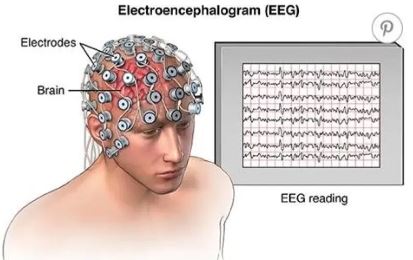

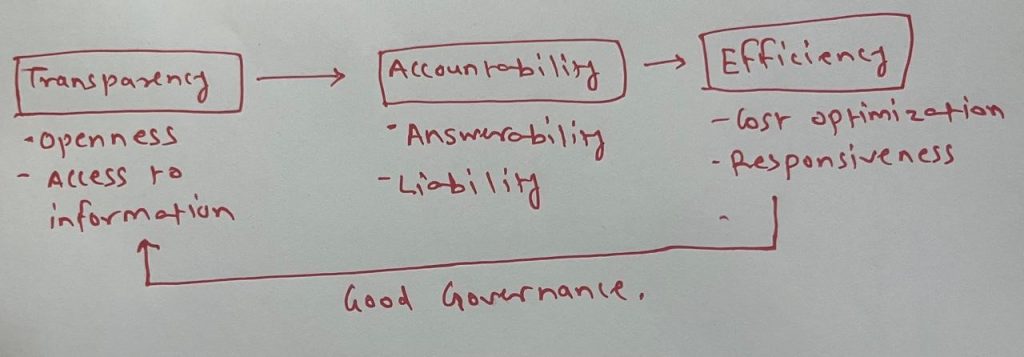
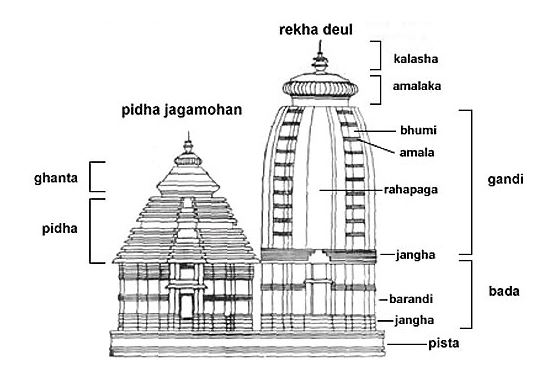

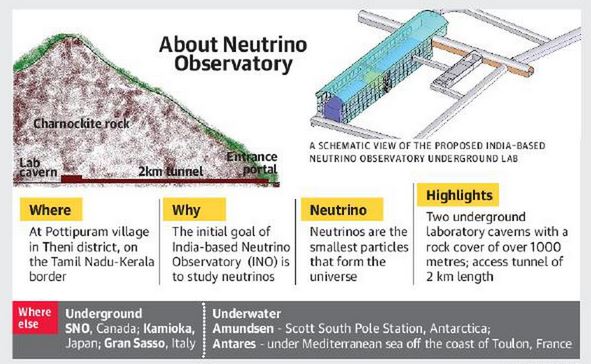
![[15th July 2024] The Hindu Op-ed: The problem with the Karnataka Gig Workers Bill](https://www.civilsdaily.com/wp-content/uploads/2024/07/15-july-1568x882.jpg)