(सागरमाला सरकार का एक प्रमुख कार्यक्रम है जिसका उद्देश्य देश में बंदरगाहों की अगुवाई में विकास की गति तेज करना है. यह योजना चार रणनीतिक पहलुओं पर आधारित है, वे रणनीतियाँ कौन कौन सी हैं, इसके बारे में आप उपरोक्त लिंक पर क्लिक कर जान सकते हैं.)
(सरकार द्वारा ई-मंडी की शुरुआत की गई है. नया एकीकृत इलेक्ट्रॉनिक मंच सीमित तरीके से शुरू हुआ है लेकिन फिर भी यह किसानों की तमाम समस्याओं को हल करेगा. देश के सभी 585 प्रमुख बाजारों को मार्च 2018 तक ई-प्लेटफार्म से जोडऩे की योजना है. उपरोक्त लिंक से इस बारे में और जानिये)
3. क्यों कोलार खदान के फिर खुलने से देश की जेब पर पड़ रहा बोझ कुछ कम हो सकता है
(सिंधु घाटी सभ्यता से लेकर ब्रिटिश हुकूमत और फिर आजाद भारत तक भरपूर सोना देती रही कोलार खदान को सरकार फिर शुरू करने वाली है. उपरोक्त लिंक द्वारा आप कोलार के बारे में कई महत्वपूर्ण तथ्य और जानकारी हासिल कर सकते हैं.)
मित्रों,
विस्तृत आलेख श्रृंखला के इस भाग में आज आप सरकार की तीन योजनाओं के बारे में जानेंगे- श्रमेव जयते कार्यक्रम, जन धन से जन सुरक्षा और अंत्योदय योजना. उम्मीद है इस श्रृंखला के पिछले दो भाग आपने ज़रूर पढ़े होंगे. आज के अनुवाद पढ़ने के लिए आपको पिछली बार की तरह ही नीचे दिए गए लिंक पर जाना है और सीडी एक्सप्लेन(CD Explain) पर क्लिक करना है.
इस श्रृंखला का पिछले भाग जिसमें हमने हेल्प, नीरांचल और नई पूंजीगत वस्तु नीति के बारे में बताया था, उन्हें पढ़ने के लिए नीचे दिए लिंक पर क्लिक कीजिये. हमारी कोशिश रहेगी कि प्रत्येक तीन दिनों के अंतराल पर इस श्रृंखला को आगे बढ़ाते रहें.
Maritime India Summit 2016 (MIS 2016) is a maiden flagship initiative of the Ministry of Shipping.
Maiden = First time ever. First time ever translates to a higher probability of it finding its way in the IAS Prelims this year.
Why do we say so? If you wrote the IAS prelims in 2014, you would remember the National Biodiversity Express initiative launched by GoI that year and how a few questions from E&B found their source in the released pamphlet. So, no harm in giving this a look, right?
Focus Area for intervention which are important for your review:
Port Modernization
New Port Development
Inland Waterways
Green Initiatives in Ports
Maritime Potential of Indian States
If you are loath to read through the commentary, make sure you go through this infographic (in desktop mode – click on the pic to enlarge) & make quick notes.
source: www.maritimeinvest.in
#1. Port Modernization
India has 12 Major Ports, administered by the Central Government, and around 200 notified Non-Major Ports, administered by the State Governments. In 2014-15, out of the 200 Non-Major Ports, 69 ports were reported to have handled cargo traffic.
Kandla was the last major port built by India – 1950
India plans to add 8 major ports to this list of 12. Source: ET
Fodder points –
The infrastructure sector, particularly the Maritime Sector, is expected to grow significantly with the increase in international and domestic trade volumes
Since about 95% of India’s trade by volume is via the maritime route (Source : NTDPC), there is a continuous need to develop India’s ports and trade related infrastructure to accelerate growth in the manufacturing industry and to aid the ‘Make in India’ initiative.
#2. New Port Development
Why is there a need you may ask?
Capacity Saturation – Ports such as JNPT, Paradip have limited capacity to expand and are saturated with traffic
Non-availability of Ports – There are few specific stretches along the coastline which do not have an operational port. In absence of the port at such locations, the cargo is forced to travel longer distances to use alternate ports
Strategic Locations – The southern tip of India is optimally located as it falls under the East-West trade route. However most of transshipment cargo from India is dependent on ports of Colombo and Singapore. Hence, we need to fulfill this need
Potential Projects? Greenfield major ports to be developed at
Vadhavan (Maharashtra) – MOU was signed by JNPT. Read here.
Sagar Island (West Bengal) – This island, also known as Gangasagar or Sagardwip, is a place of Hindu pilgrimage
Paradip Satellite Port (Odhisha) – What is a satellite port?
Cuddalore/Sirkazhi (Tamil Nadu)
Machilipatnam/Vodarevu
Question: Find out the difference between Greenfield and Brownfield projects. A term often used in PPP parlance.
#3. Inland Waterways
India has an extensive network of inland waterways in the form of rivers, canals, backwaters and creeks. Of the total navigable length of 14,500 km, 5200 km of the river and 4000 km of canals can be used by mechanized crafts.
India has recognized 106 waterways of which 6 are declared as national waterways –
Source: Wiki
#4. Green Initiatives in Ports
Solar and wind based power systems at all the Major Ports across the country
What’s the plan? Solar energy capacity at 8 major ports + Wind energy capacity at 3 major ports
Key initiatives (Fodder points):
The Ministry of Shipping has recently introduced an incentive scheme under which the Ministry will share up to 50% of the total project cost that promote the use of green energy
Anti-fouling System Convention of International Maritime Organization has been incorporated in the Merchant Shipping Act, 1958
If you have time and you want to venture out and see the other heads of developments, do go and visit the website, especially carved out for this summit.
State of Indian Agriculture & renewed focus on increasing a farmer’s income – Facts
What was wrong with APMCs? Mains
Quick facts on NAM – Prelims
State of Indian Agriculture & renewed focus on increasing a farmer’s income
If we go back in time (aug 2015) and read this PIB release – National Agricultural Market – A Harbinger of Change, we would realise that government realised (yet again) the importance of agriculture in Indian economy.
While the Government has rolled out large number of programmes to improve yield levels on a sustainable basis, it recognises the need for creating a competitive market structure in the country that will generate marketing efficiency.
Question: Good time to go back in time and revise the programs launched to improve yield levels. Would you like to write them out for us in the comments?
The net result out of this concern this –
The Department of Agriculture & Cooperation formulated a Central Sector scheme for Promotion of National Agriculture Market through Agri-Tech Infrastructure Fund (ATIF) through provision of the common e-platform.
The APMC (Agricultural Produce Market Committees) is a relic of the past that forces the farmers to sell their produce only to middlemen approved by the government in authorized Mandis (markets). Thus, if you are a vegetable producer and I’m a supermarket, I cannot directly buy from you. Both of us need to go through a broker. This increases prices for the end buyer and unnecessarily adds redtape.
An Agricultural Produce Market Committee is a marketing board established by state governments of India
One main function of which is basically to provide a platform for farmers to sell their produce
The challenges posed by present day APMCs –
Fragmentation of State into multiple market areas, each administered by separate APMC
Separate licences for each mandi are required for trading in different market areas within a state. This means that we have limited the first point of sale for the farmer. He has to come to the local mandi – which could be both good and bad depending upon how it is governed
Licensing barriers leading to conditions of monopoly
Opaque process for price discovery
The need to unify the markets both at State and National level was therefore, clearly the requirement of time. Think of it as an e-commerce platform with a marketplace model and not an inventory one. Every farmer has his own webpage (or something to the tune of that).
Quick facts on NAM
National Agriculture Market is going to implemented by the Department of Agriculture & Cooperation through Small Farmers Agribusiness Consortium (SFAC).
NAM is not replacing the mandis. NAM is an online platform with a physical market or mandi at the backend enabling buyers situated even outside the state to participate in trading at the local level.
It seeks to leverage the physical infrastructure of mandis through an online trading portal, enabling buyers situated even outside the state to participate in trading at the local level.
source: Financialexpress.com
NAM is currently being launched in 21 mandis and it will offer trade in –
chana,
castor seed,
paddy,
wheat,
maize,
onion,
mustard and tamarind
Cons:
Fruits and vegetables, where there often are prices fluctuations, are yet to be included in the NAM platform
Country’s two biggest mandis—Azadpur (Delhi) and Vashi (Mumbai)—have not yet agreed to come on board
What about interstate taxes and levies? NAM does not say anything on that!
Questions:
How will NAM function and what are the benefits that it would bring?
What needs to be done on ground to make sure that NAM is successful?
(प्रस्तावित समझौते के तहत भारत के जहाज को अगर तेल लेना है या फर्निशिंग करानी है तो वो अमरीका में करवा सकता है और अमरीका भी भारत में यह कर सकता है. अमरीका के साथ यह सहमति कितनी अहम है और इसके फ़ायदों के साथ ही इससे क्या मुश्किलें हो सकती हैं, इस बारे में आप उपरोक्त लिंक पर पढ़ हैं)
(दक्षिण एशिया वन जीवन प्रवर्तन नेटवर्क आठ देशों: अफगानिस्तान, बांग्लादेश, भूटान, भारत, मालदीव, नेपाल, पाकिस्तान एवं श्रीलंका से निर्मित एक क्षेत्रीय नेटवर्क है. क्या हैं इसके उद्देश्य और यह काम करेगा इसे आप उपरोक्त लिंक पर पढ़ सकते हैं)
(मिस्र की सरकार सऊदी अरब के साथ मैरीटाइम डिमार्केशन एकॉर्ड पर हस्ताक्षर किए, जिसके तहत मिस्र के दो द्वीप तिरान और सनाफिर सऊदी अरब की जलसीमा में पड़ते हैं. भौगोलिक दृष्टिकोण से और आईआर के लिहाज़ से इस आलेख को देखा जाना चाहिए.)
You guys were just awesome in posting contents. Do you guys are running any coaching institutes in chennai. if so please let me i would be glad to join it.
What do we mean by LSA, CISMOA & BECA – Back2basics terms
Why the US wants India to sign them? Mains & Interview
Why was India averse to signing these pacts? Mains
What is Defense Technology and Trade Initiative (DTTI)? Prelims & Mains
Are we gonna sign all eventually?
What are LSA, CISMOA and BECA agreements?
Welcome to the world of 3 foundational agreements that the US has been insisting on India to sign to further enhance the bilateral defence and strategic relationship.
#1. The Logistics Support Agreement (LSA)
LSA would set a framework for the two countries to share military logistics
To assist each other’s armed forces with simple military logistics. For the U.S. Navy, for example, logistics support from India would be a valuable asset, helping it better project power in the Indian Ocean.
LSA would allow each other to access their military bases without any conflict for e.g in 1991 Gulf war India denied the US from refueling its aircraft from Indian territory.
#2. The Communication and Information Security Memorandum of Agreement (CISMOA)
CISMOA would allow the United States to supply India with its propriety encrypted communications equipment and systems
Thus allowing secure peacetime and wartime communication between high-level military leaders on both sides
CISMOA would extend this capability to Indian and U.S. military assets, including aircraft and ships
#3. The Basic Exchange and Cooperation Agreement (BECA)
BECA would set a framework through which the United States could share sensitive data to aid targeting and navigation with India
Why the US wants India to sign them?
The agreements clearly puts emphasis on building interoperability and capacity of the emerging partners through joint military exercises, training, and defence equipment sales
US increasingly expects India to play the larger role of a “net security provider”
It believes that these foundational agreements will facilitate a strong defence and strategic partnership between the two countries
During the United Progressive Alliance (UPA) Government, India was less inclined towards signing these agreements BUT the India-US defence and strategic relationship has dramatically improved since the Narendra Modi Government came to power in May 2014.
Really? How so?
India & USA agreed to transform from mere buyer-seller defence relationship to joint research, co-development and production of high end defence equipments
Signed a “Joint Strategic Vision for the Asia-Pacific and Indian Ocean Region”. Again, this would be a good time to revisit our updated maritime strategy where we increased our ambit of surveillance because we want to be a“net security provider” in Indo-pacific. Click to read here.
If that is the case, why was India averse to signing these agreements before?
India was concerned that it might erode its military independence
Botch up its historically close security relationship with Russia, jeopardizing ongoing projects
May antagonize China, leaving India in a disadvantageous position vis-a-vis its border disputes with Beijing. China’s visualization of US activity with any South Asian nation as its ‘Asia Pivot’ Strategy!
In the case of CISMOA, it might allow the United States undue insight into Indian operational practices
Question
These look like valid reasons for not signing the agreements. And anyway, we were going on with our weapons procurement business with US with/ without these. What changed then? Why has India given an in-principle nod to signing the LSA?
Hint:
The India-US statement came on a day when China expressed anger at the Group of Seven (G7) advanced economies opposing “any intimidating coercive or provocative unilateral actions that could alter the status quo and increase tensions” in the East and South China Seas.
Know more about Defence Technology and Trade Initiative (DTTI)
Indo-Us defence pact, unveiled in 2012 – 4 major area of focus – Cooperation in (research, co-production , S&T and Military sales).
It is mere framework not a treaty or law & disagreements have led to no progress since 2012!
US prioritization of trade issues & India’s focus on technology transfers = Deadlock!
Challenges and concerns = Terrorism from AF-PAK region, China’s assertiveness over South China sea.
The aim of this compilation is to help you serve as a last minute revision tool for the upcoming IAS Prelims 2016. UPSC is known to pitch in with factual questions in the Prelims Exam. A sincere student ends up missing out on them as a part of his/ her daily studies and here’s where such compilations come to rescue!
#1. Defence Capability Enhancements
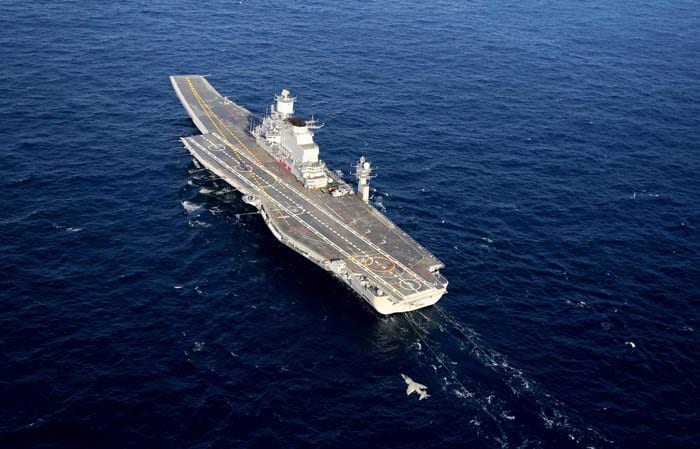
India’s biggest ship, aircraft carrier INS Vikramaditya, finally arrives
source: NDTV.com
INS Vikramaditya is a Kiev class aircraft carrier which was commissioned by Russian Navy in 1987 under the name Baku. It was later renamed as Admiral Gorshkov and last sailed in 1995 in Russia, before being offered to India. India agreed to buy it in 2004 for $974 million. The cost kept shooting up as Russia delayed the delivery by over five years.
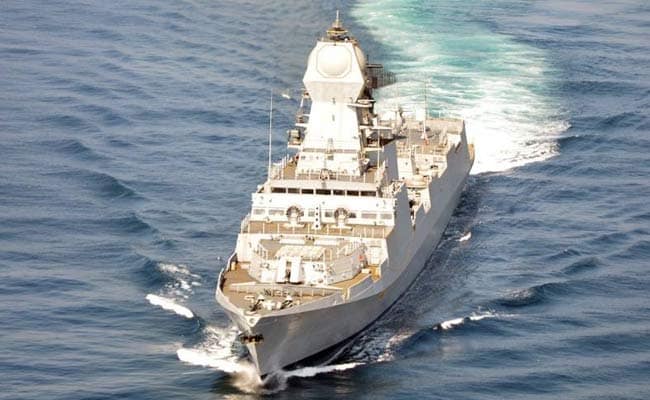
INS Kolkata – Biggest warship ever to be built in India till date
source: NDTV.com
INS Kolkata is the lead ship of the Kolkata-class stealth guided-missile destroyers of the Indian Navy. She was constructed at Mazagon Dock Limited (MDL), and was handed over to the navy on 10 July 2014. A bit of an old news but mightier still!
INS Kolkata, under the Project 15 Alpha, belongs to the destroyer class and is the first of three ships currently under construction
Being wholly constructed in the country, the ship provides credence to India’s defense capabilities in an geo-politically unstable world.
#2. Technological Advancements
Agni 5, India’s Longest Range Ballistic Missile (2015)
Agni-V is a solid fueled intercontinental ballistic missile (ICBM)
Range – 5,000 km
Nuclear capable – YES
Three Stage Missile – Solid Fuel
Strategic Missile – YES
What’s the difference between a strategic and a tactical missile system?
Strategic weapons are used for strategic purposes – threatening an opponent’s industrial infrastructure, targeting their command structure, and are generally designed to hit targets which disrupt the enemy’s ability to conduct warfare at a high level.
Tactical weapons are for local battlefield use, and are designed to be deployed against targets strictly of immediate military value.
NOTE: India has started the production of AGNI 6.
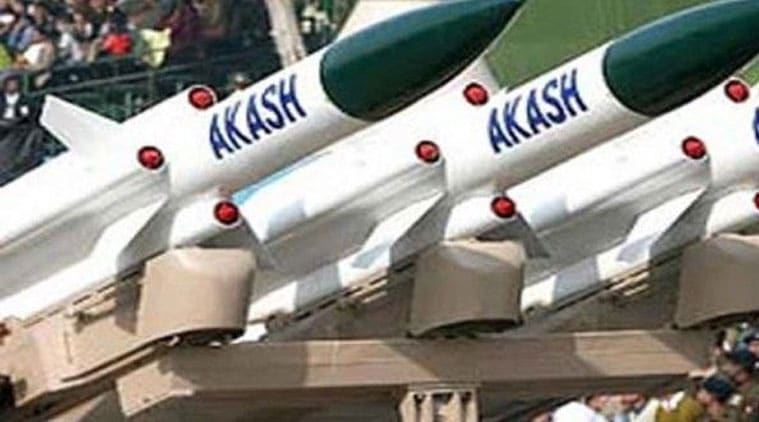
Surface-to-air missile ‘Akash’ inducted in IAF (2015)
source: Indianexpress.com
‘Akash’ has been developed by DRDO as part of the Integrated Guided Missile Development
The missile can track a target 100 km away and hit the enemy’s helicopter, plane or drone from a 25-km distance
Astra is an active radar homing beyond-visual-range air-to-air missile (BVRAAM) developed by the DRDO
The missile is technologically more sophisticated than the nuclear capable Agni missile series of strategic ballistic missiles
The maximum range of Astra is 110 km in head-on chase and 20 km in tail chase
The Mark 2 version of Astra will have a maximum range of 150 km and tail chase range of up to 35 km
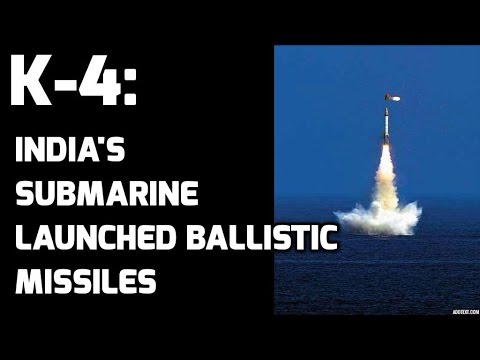
The secretive submarine-launched K-4 – nuclear missile (2016)
A long range submarine-launched ballistic missile, codenamed K-4, capable of can strike targets upto 3,500 kilometres away
The K-4, a derivative of the more well known Agni ballistic nuclear missiles already in service, will be the most potent part of India’s nuclear deterrent
Incidentally, K-4 is named after APJ Abdul Kalam
Indian Navy successfully test fires Barak-8
The firing was undertaken on the Western Seaboard by INS Kolkata, wherein the missile successfully intercepted an aerial target at extended ranges
Long Range Surface to Air Missile (LR SAM) – a significant milestone in enhancing its anti-air warfare capability
Developed jointly by India and Israel
Anti-tank HeliNa missile hits targets in crucial test (2015)
source: Linkedin.com
HeliNa is a helicopter-launched version of Nag and has been developed by the DRDO under the Integrated Guided Missile Development Programme (IGMDP)
HeliNa missile will be integrated with the weaponised version of the Advanced Light Helicopter Dhruv, the light combat helicopter produced by Hindustan Aeronautics Limited
#3. Bonus for our readers
Most of the time you are likely to be flummoxed by questions on tactical/ strategic – surface to surface missiles. Let’s list down all of them in order for you to remember and revise!
Surface to surface missile
Did we miss out on anything? Add to the growing list for prelims worthy questions.
We have started a new initiative & tried to revive CD Discuss for the benefit of the community. The idea is to consolidate our learnings from the NEWS and mix them with static & dynamic portion of the syllabus to ask a few pertinent questions.
Scope of discussion
What is RCEP and how did it come into being? – Prelims & Mains
Why is RCEP Vital for India? – Mains & Interview
With TPP Advancing, India Pins Hopes On RCEP Trade Bloc
Scope of discussion
Maritime challenges & Our new Maritime Security Strategy
Geopolitical aspects of maritime challenges – Fodder for Mains & Essay
Indian maritime agencies – Fodder for Prelims
Diplomatic dimensions – Fodder for Prelims & Interview
Challenges ahead? Mains & Interview
———
You will find some very carefully chosen questions at the bottom of most of these writeups. If you have been writing answers all year long, it should be easy for you to recall and give crisp point wise comments. If you have not been practicing this answer writing – now is a good time to start and contribute.
PS: This initiative is on best effort basis and will be clamped down if we recieve less than viable participation. Just like what happened with daily Q&A a few months back. So please go ahead and spend some time in thinking through these questions