💥UPSC 2026, 2027, 2028 UAP Mentorship (March Batch) + Access XFactor Notes & Microthemes PDF

Search results for: “”

  • 6 Oct 2016 | GS2 | For the success of the Right to Information (RTI), a major challenge is to develop capacities for access to information. Discuss. How can the capacities of public authorities and citizens be enhanced?

    GS2 (Governance and transparency)

    For the success of the Right to Information (RTI), a major challenge is to develop capacities for access to information. Discuss. How can the capacities of public authorities and citizens be enhanced?

    Best answer

    Srishty Arun wrote the best answer for this question and got a score of 5/10 (if the best answer is an image, it cannot be uploaded here, hence scroll down to see those). The answer is being reproduced below for everyone’s convenience. Of course these answers can always be improved. (Best answer  of a particular only involves those given on that day, later answers may not have been checked)

    The verdict of Raj Narain case led to formulation of Right to information Act in 2005. Prior to this right to information was liberally interpreted by the Supreme court as fundamental right under Art 21.
    Right to information is an important pillar of democracy and good governance. Yet there has been challenges in realising the objectives of this legislation. Some of them include
    # low awareness level
    Women less than men and rural less than urban areas
    # no standard forms of application is followed
    # inadequate efforts to receive the application in electronic means, limited use of IT with non availability of basic infrastructure
    # official apathy, inadequately trained PIOs
    # lack of assistance in filling forms and non availability of user guides
    # lack of monitoring and review mechanisms
    # lack of accountability in government, failure to provide information within 30 days
    How can this be addressed?
    > improve record management practices
    > change the drafting of RTI application itself ie, standardized and user friendly
    > provide periodic refresher and behavioural training to PIOs
    > ensure transparency and accountability in the process
    > stringent penalties for non compliance for non submission of reports or implementation of the provisions
    > upgrade infrastructure and provide IT training
    > adequate incentives and recognition of work done by the officials
    Empowered and informed citizens determine the success of democracy in a country. Making RTI truly accessible to all becomes a big step in the right direction.

  • 6 Oct 2016 | GS1 | What are the features of tropical cyclones? Why is India one of the worst affected by cyclones even though other parts of the world have more tropical cyclones?

    GS1 (Indian geography)

    What are the features of tropical cyclones? Why is India one of the worst affected by cyclones even though other parts of the world have more tropical cyclones?

    Best answer

    Shashank Pander wrote the best answer for this question and got a score of 5/10 (if the best answer is an image, it cannot be uploaded here, hence scroll down to see those). The answer is being reproduced below for everyone’s convenience. Of course these answers can always be improved. (Best answer  of a particular only involves those given on that day, later answers may not have been checked)

    Cyclones are wind system with low pressure dissent and are classified into two kinds – Tropical and Temperate and India being a teopical latitudinal country is.mostly affected by Tropical cyclones, the featyres if whicb are:
    1. Thermal Origin – usually oeifinates due to differential sea-land heating.
    2. Circular Isobars.
    3. Travel from east to west as are embedded.in the easterlies (since in tropics)
    4. Usually accompanied by a cumulonumbus clouds, that cause heavy rainfall on reaching the surface.
    5. The cyclone follow an anti clockwise wind system in the Northetn Hemisphere while vice versa in the southern hemisphere.
    6. They are usually 150-300km in diameter although they can be as huge as 1000km diameter.
    7. Huge pressure geadient force and carry large amount of vapor that cause storm surge on reaching the coast.
    8. The cebtral calm region of low pressure called eye is a characteristic feature of this system.
    9. Some.models link their origin to the phenomenon of easterly waves.

    While there are numerous other world cyclones along atlantic coasts of americas(Hurricanes), north america, as well as the south china coasts and philippines and Australia. (Phaigos, Taifu, Willy Willy). Howvwrt, India is one of the worst affected because:
    1. A long east facing coastline.
    2. Huge expanse if teopical water in Bay of Bengal gives greater thermal energy and landless features do not break the intensity of incoming cyclone.
    3.Greater proportion of people living in the coastal regiobs.
    4. Lack of evacuation plans Early warning system, inadequate crisis mapping and protection shelters in the form of coastal forests in the east coasts.
    5. Lack of disaster management preparedness and resilient livelihood and infrastructure practices.

    In addition to this the cyclones developing in the post monsoon period also get pushed by the prevailing tropospheric wind systems because if obsetting mobsoon in the region of south china sea, further increasing the intensity. A well mapped disaster zones, satellite monitoring using apparatus like INSAT 3DR and a powerful and efficient NDRF would help in managing such events.

  • 6 Oct 2016 | Prelims Daily: CA Questions with Tikdams & Tidbits

    Dear students,

    When you submit your answer, if possible, give some reasoning & more info. along with the ABACAA format. Elaborate on what you know. This helps the whole community to know more and learn more!


    Q.1) Consider following statements with regard to Nobel Prize in Physics 2016.

    1. This year, the Nobel Prize in Physics awarded for theoretical discoveries of topological phase transitions and topological phases of matter.

    2. Topology is a branch of mathematics that studies geometric properties.

    Which of the statements given above is/are correct?  

    a) 1 only

    b) 2 only

    c) Both 1 and 2

    d) Neither 1 nor 2


    Q.2) Consider following statements with about Laser Interferometer Gravitational Wave Observatory Project(LIGO).

    1. World’s second gravitational wave lab to come up in Maharashtra.

    2. This project piloted by Department of Atomic Energy and Department of Science and Technology.

    Which of the statements given above is/are correct?  

    a) 1 only

    b) 2 only

    c) Both 1 and 2

    d) Neither 1 nor 2


    Q.3) The Union Cabinet has given its approval to introduce official amendments to the HIV and AIDS (Prevention and Control) Bill, 2014. Consider following statements in this regard.

    1. The HIV and AIDS Bill has been drafted to safeguard the rights of people living with HIV and affected by HIV.

    2. Every HIV infected person below age of 21 years has ‘right to reside’ in a shared household and enjoy the facilities of the household.

    3. Bill makes provision for appointment of an ombudsman by State Governments to inquire into complaints related to the violation of the Act.

    Which of the statements given above is/are correct?  

    a) 1 and 2 only

    b) 3 only

    c) 1 and 3 only

    d) 1, 2 and 3 only


    Q.4) Consider following statements with regard to ‘African Asian Rural Development Organization (AARDO)’

    1. It is an autonomous, inter-governmental organization established in 1962.

    2. India is one of the Founder Members of the Organization.

    3. Its headquarter is in South Africa.

    Which of the statements given above is/are correct?  

    a) 1 and 2 only

    b) 3 only

    c) 1 and 3 only

    d) 1, 2 and 3 only


    Q.5) Five permanent and veto-wielding members of United nations Security Council are

    1. Britain

    2. China

    3. Germany

    4. Russia

    5. USA

    Select the correct answer using the codes given below.

    a) 1, 2 and 5 only

    b) 2 and 5 only

    c) 2, 3 and 4 only

    d) 1, 2, 4 and 5 only


    IMPORTANT STUFF: 

    1. These questions are mostly derived from our daily newscards. Reading daily news from Civilsdaily’s App (click here) or website + solving these questions will help you reinforce the basics.

    2. For a comprehensive preparation of IAS Prelims 2017 – consider joining one of the three Prelims Modules by CD – prelims.civilsdaily.com

    3. Download the solutions – Click here

    4. For attempting previous Prelims Daily Questions – Click here

    5. How to apply Tikdams? Read this, this and this

  • I have query

    In amendment of the Indian Constitution,In which cases are required ratification by states????

  • Dictionary of geographical words.

    very much useful app for all UPSC aspirants.
    https://play.google.com/store/apps/details?id=com.apperector.geoterms

  • Doubts Clearing Forum II

    UPDATE: Doubts Clearing Forum Part 1 helped a lot of aspirants in getting their doubts cleared. After a break, We are reviving/ relaunching the 2nd season of Doubts Clearing Forum. This time it’s even better as you can follow community members and ask them specific questions and they can follow you back and we can build a wonderful community which will keep you motivated and help you in your preparation

    So, here we go again!

    Ask any query here and get it resolved most satisfactorily, within next 48 hours, by our awesome community members and CD team. You won’t have to wait for your ‘aha moment’ to arrive.

    Have queries related to magazine, website or app?

    Wanna suggest any improvement?

    Go ahead and comment below!


    previous link – https://www.civilsdaily.com/doubts-clearing-forum/


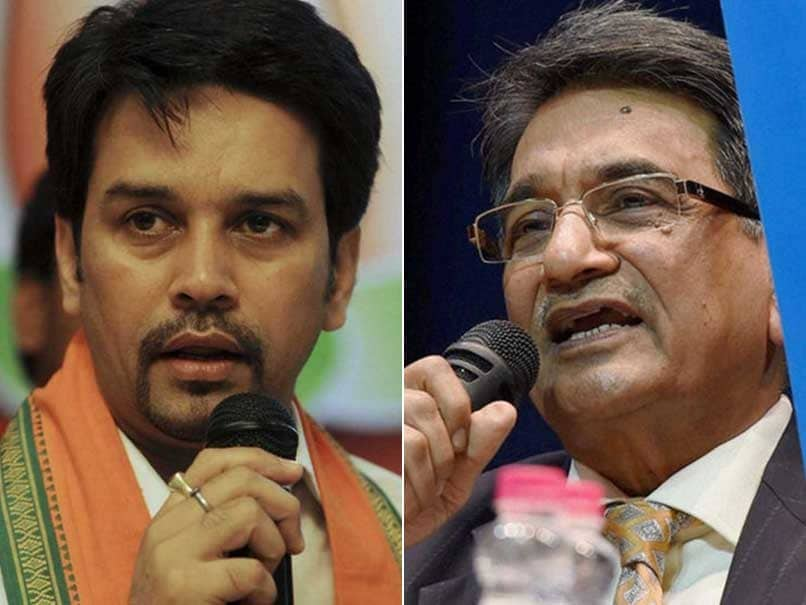
  • Lodha Panel v/s BCCI – What’s the fate of India/ NZ series going to be?

    I was quite happy to know that India regained its No. 1 spot in the Test Ranking after beating New Zealand by 178 runs in the second Test at Eden Gardens when I heard this news – BCCI is so frust with the Justice Lodha committee’s decisions that it might just cancel the ongoing series against New Zealand. 

    The risk of losing out on a good old test cricket spectacle was unbearable and so I decided to dig out this Lodha vs BCCI topic for you guys!

    source

    NOTE: CD has done an amazing job on writing a backgrounder to the Lodha Committeeso much so that when I typed “What is Lodha Committee” in google – the civilsdaily link was bang on the first search (Try Karo!)


    Confusion Level 1: If I remember correctly, Lodha Committee was set up by the SC because they wanted to look into the Indian Premier League spot-fixing and betting scandal of 2013 + Some governance related issues. How severe were Lodha committee recommendations?

    [Jan 2015] SC basically had issue with the way BCCI was structured and governed. They possibly realised that the root cause of all evil (betting and fixing etc) lies in well.. the root = governance structure. Hence, after punishing the spot fixers, do this –

    – Propose changes to the current structure with a view on preventing sporting frauds, conflict of interests, streamlining the working

    – Make it more responsive to the expectations of the public at large

    [Jan 2016] Lodha Sir comes back with big bang reforms. Massive shakeups recommended. Massive overhauling recommended. Obviously BCCI (a private body) went nuts reading it.


    Confusion Level 2: BCCI is a private body? The body which selects the Indian Cricket team is a private body!!! What sorcery is this?

    Yes 🙂

    The BCCI is an autonomous body registered under the Societies Registration Act. Recognition has not been granted by the government. However, given that the ICC recognises the BCCI as the apex national federation responsible for promotion of cricket in India, a team selected by BCCI is considered as the Indian team. The ministry only grants the BCCI permission to participate in international events and for holding international matches in India at no cost to the government. This is subject to clearances from the ministry of external affairs from a political angle and the ministry of home affairs from the security one.

    Many of us didn’t know this for sure! Apne ko kya hai – cricket khelna hai bass. 


    Confusion Level 3: Okay, so what were the badass reforms suggested by the Lodha Committee?

    I will give the laundry list of accepted reforms (by SC) at the bottom of the post but just to give you the idea of how ruthless Sir Lodha was on BCCI, here are the 3 suggested reforms which even SC rejected- 

    – Bringing the BCCI under the RTI Act

    – Imposing restrictions on television advertisements during the broadcast of matches

    – Legalising betting in India

    Ah, okay – so were BCCI folks pleased then? Naah. Far from it!

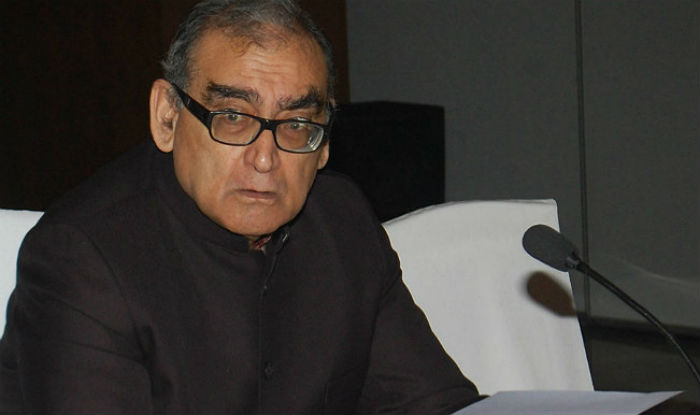
    They went to another former Supreme Court judge, Justice Markandey Katju to advice them on how to respond to the SC verdict on Lodha Committee.

    Katju recommended that BCCI should file a review petition before a larger bench of the Supreme Court and ensure that Lodha panel be pronounced “null and void”.

    source

    Confusion Level 4: Woaah! That’s a fight in making right? What happened next?

    BCCI files a review petition – Lodha panel got fumed and asked SC to just go ahead and sack the BCCI’s top functionaries. And this is where SC steps in “like a boss” and asks BCCI to fall in line.

    Justice Thakur said, “BCCI thinks it is law unto itself. We know how to get our orders implemented. BCCI thinks it is the lord. You better fall in line or we will make you fall in line.”

    [September 30, 2016] BCCI eventually relented and accepted most of the recommendations except the major recommendations like one-state-one-vote policy, the 70-year age cap and the maximum tenure of nine years with cooling-off periods in between.

    Confusion Level 5: Ah! So here we are. Here’s where Lodha panel allegedly asked the banks to freeze BCCI’s accounts and the whole issue on calling off the ongoing India-NZ series

    Hope you get the drift of the whole case. There might be still a lot of updates on this issue and CD’s Newscards will keep you updated on the same and I would love to hear your opinions on the ongoing debate – 5 Oct 2016 | DEBATE: Lodha Committee freezes BCCI accounts 


    Confusion Level 6: What were the recommendations by Lodha Panel? 

    source

    Do away with the rotational system of appointing the BCCI president, by which every zone (north, east, south, west and central) gets its turn to nominate its candidate.

    One-state-one-vote: This will affect some states that have multiple associations, such as Maharashtra, which has three – Mumbai, Maharashtra and Vidarbha. Associations without any territorial definitions, such as Railways and Services, will not get a vote.

    There should be only five elected office-bearers: president, secretary, vice-president, treasurer and joint secretary, as against the earlier system where there were as many as five vice-presidents itself. 

    These five elected members will serve a maximum of three terms of a total of nine years across positions. They will not be allowed to serve two consecutive terms. Each term should be separated by a “cooling-off” period

    The BCCI president cannot have an additional vote in meetings, and will not be involved in team selection. The tenure of the president cannot be longer than three years.

    Ministers and bureaucrats will not be allowed to hold positions in the BCCI or the state cricket associations. Office bearers also cannot be above 70 years of age

    All of the BCCI’s selection committees (senior, junior and women) should have only three members, as against the current five. The senior selection committee should only have former Test players, with the most capped one being the chairman.

    State cricket associations should also have only former players, and the board should implement a proper stadium rotation policy so that all venues get to host matches.

    The BCCI’s highest decision-making body, the Working Committee, should be replaced with a nine-member Apex Council. This council will include representatives from the players’ community, including a woman, and a nominee of the Comptroller and Auditor General.

    An independent auditor should verify how the full member state associations have used the grants given to them by the BCCI.

    The BCCI has to share details of its balance sheet, expenditures, meetings, reports, rules and regulations, and orders of authorities on its website.

    The legislature should consider bringing the BCCI under the Right to Information Act.


    Questions from Target Mains

    #1. Do you think it is prudent on part of the Supreme Court to intervene and direct bodies such as BCCI to accept certain committee’s recommendations to change their way of functioning? Substantiate.

    #2. Do you think the Lodha Committee’s report on the administration of the Board of Control for Cricket in India (BCCI) is an intrusion into affairs of otherwise well governed sport in India? Critically examine.

    #3. Discuss the recommendations of the Lodha committee on cricket administration in India. Do you think corruption will decline if these recommendations are implemented fully? Critically analyse.


    I hoped you liked reading this and it helped you get a grip at the narrative of the whole issue. Comment and let me know of missing angles and larger ethical, political/ governance related debates this may give rise to.

    Also, thank you for showing your love on the Agricultural Economics For IAS Mains series that I started over here – I will keep updating the lectures in due time and keep things interesting for you 🙂

  • Flagship Students – Get ready for the Geo Test on 11th

    Flagship students,


    – “Salient features of world’s physical geography”

    – “Distribution of key natural resources across the world (including South Asia and the Indian sub-continent); factors responsible for the location of primary, secondary, and tertiary sector industries in various parts of the world (including India)”

    – “Important Geophysical phenomena such as earthquakes, Tsunami, Volcanic activity, cyclone etc., geographical features and their location- changes in critical geographical features (including water-bodies and ice-caps) and in flora and fauna and the effects of such changes.”

    Above we have reproduced the exact geography syllabus for UPSC civil services mains exam. It is also very relevant for prelims. Geography prelims questions can be roughly categorized as follows –

    1. Maps – this includes questions like arranging the given mountain ranges in a north-south order. How do you prepare for this? The ATLAS! Specifically the Orient Blackswan School Atlas is recommended for studying maps. Take 30 mins every day to see various physical features, look up the countries which appear in the news in the atlas and you should reach proficiency in this section. If you don’t then you can lose out on some pretty easy questions.
    2. Indian geography – what kind of climate, soils, vegetation etc are present in India? Essentially you must know the geography of India.
    3. World geography – what are the characteristics of Mediterranean climate? Not just India, UPSC also likes to give questions on world geography.
    4. Physical geography – what is the composition of atmosphere? What are ocean currents? How are cyclones formed?

    There is no need to write down the detailed syllabus, you simply need to cover your 6th to 12th NCERT’s well. All topics given in these NCERT’s must be understood and remembered. As you read these NCERT’s you may find that many topics are mentioned again and again. You may want to compile notes, on lets say the types of vegetation in India, from multiple NCERT’s in one place. That way you could avoid confusion and save time in revision.

    Now I am sure we’ll get mails like “sir, TS5 on geography is going live in a few days, what are the important topics?” – well the answer is that all topics in geography are important. UPSC can and does change its pattern every year, so don’t go by this years paper and ignore certain topics. Furthermore, it’s a very important subject from the point of view of mains also.

    Are you having trouble understanding any geography concepts? Let us know in the comments.

    Here’s a sample question with explanation from the upcoming test

    Q. Which of the following are left bank tributaries of Ganga?

    1. Gomati
    2. Ghaghara
    3. Son
    4. Kosi

    Select the correct code

    a) 1, 2 and 3

    b) 2, 3 and 4

    c) 1, 2 and 4

    d) 1, 2, 3 and 4

    Ans (c)

    Explanation:

    – The Son is its major right bank tributary.

    – The important left bank tributaries are the Ramganga, the Gomati, the Ghaghara, the Gandak, the Kosi and the Mahananda.

    [Source: Chapter 3, Page 25 India Physical Environment Class XI]

  • 5 Oct | Explainer: All that you need to know about BRICS

    The 2016 BRICS summit will be the eighth annual BRICS summit, an international relations conference attended by the heads of state or heads of government of the five member states Brazil, Russia, India, China and South Africa. The summit will be held in Panaji, Goa in India, from 15th to 16th October 2016. India will hold the chair of the BRICS from February 2016 to December 2016.


    Brazil, Russia, India, China and South Africa (BRICS) are leading emerging economies and political powers at the regional and international level.

    When? 2008. They had their first official meeting in 2009

    Origin:

    The acronym, BRIC, was coined by Jim O’Neill of Goldman Sachs way back in 2001

    He predicted that by year 2050, Brazil, Russia, India and China would become bigger than the 6 most industrialized nations in dollar terms and would completely change the power dynamics of the last 300 years

    It was pointed out that high growth rates, economic potential and demographic development were going to put BRICS further in a lead position

    Why is BRICS suddenly so important?

    The idea of development bank (NDB) and Contingency Reserve Arrangement (CRA) has strengthen BRICS as a grouping

    Both of these concepts were formalised over in 2015 (@BRICS summit at Fortaleza and Brasilia) and this was seen as a strong signal to the challenge of western dominated discourses in some forums (IMF, WB)

    We will get to these details in a short while but since these developments happened in 2015, the IAS aspirants from 2016 onwards are required to sweat blood in order to be on top of this theme (kidding!)

    What prompted the need for emergence of BRICS? 

    Most multilateral institutions were designed in the era when the West dominated the world. The US and Europe are over-represented in the IMF and the World Bank. Together with Japan, they control most regional development banks as well! That’s a big bad bully in making, right?

    The main reason for co-operation to start among the BRICs nation was the financial crises of 2008

    The crises raised scepticism on the dollar dominated monetary system and the need for participation by non-G7 countries became evident. If you don’t know about G7, click this wiki page to know the countries involved

    What reform did BRICS want out of the multilateral institutions?

    Since their inception in 1944, the Bretton Woods institutions (IMF and World Bank) had not reformed their governance structure, to give more voting and voice to emerging economies. Both dominated by USA and developed countries. Both were out of sync with the new dynamics of world economy

    The BRICs called for the “the reform of multilateral institutions in order that they reflect the structural changes in the world economy and the increasingly central role that emerging markets now play

    BRICS managed to push for institutional reform which led to International Monetary Fund (IMF) quota reform in 2010 (although, it met with limited success as United States Congress did not ratify)!

    Three new terms? Bretton Woods, Quota reforms, 2008 financial crisis. We will get to them later.

    So, essentially, BRICS opened up a possibility for countries of the global South to challenge the global North. When the quota reforms were quashed in 2010, BRICS moved towards enlarging their spheres of cooperation. We will talk about the BRICS bank at a later stage.

    Advantage India?

    Now that NAM (Non-alignment) is almost defunct and very little wealth is left in the Commonwealth, BRICS provide a great alternate for India to build its global profile.

    But don’t we have a G 20 group to further India’s interest in the global arena? Yes, that’s another big one (besides UN).

    G 20 is a bloc of developing nations established on 20 August 2003. The G-20 accounts for – 60% of the world’s population, 70% of its farmers and 26% of world’s agricultural exports.

    India has tried to use BRICS as a forum to engage China as the latter has become the largest market for the fast-industrializing countries of East Asia. India wants to resolve the age-old mis trust and complicated relationship between the two countries since the 1962 war between them.

    What are the factors that will bolster co-operation among BRICS members?

    Firstly, the common need among developing countries to construct economic order that reflects current situation will drive the BRICS’ efforts. In this matter, the idea of NDB and CRA are defining and will have a huge geo-economic and geopolitical impact

    Secondly, the BRICS alternative idea in the landscape of global governance will attract support from other countries. There have been suggestions by political analysts that BRICS may expand its member quota

    Thirdly, the expansion of BRICS interaction to other sector will make it more strong partnership

    Lastly, Chinese support to BRICS will make sure that group remains a force to reckon with in the future

    Chinese support – interesting point. Some would say that a lot depends on how China carries its might behind BRICS for the time to come.

    Some concerns regarding the future of BRICS

    Competition within themselves – The BRICS countries aspire to be regional powers and hence at some point will compete with each other

    Different forms of governance – They have different political systems with Brazil, India and South Africa being democracies while Russia and China having authoritarian characteristics. It would be interesting to see how policy consensus is brought about!

    Trade conflicts, maybe? Brazil and Russia are commodity exporting countries and thus benefit from high commodity prices while India and China are commodity importers that benefit from low commodity prices

    Territorial Issues – China and India have outstanding territorial issues to resolve and India looks askance to any institution that has Chinese domination. Russia looks suspiciously at China’s interest in its sparsely populated far eastern of Siberia

    The big daddy China – China spearheads three other major initiatives in this region – One Belt One Road (OBOR), Asian Infrastructure Investment Bank (AIIB) and SCO. You should know that the 7th BRICS summit was held as a joint summit with SCO. BRICS has to find a reckoning space among them to keep china’s interests alive!

    Parting words on BRICS (more mirch masala)

    All that UPSC want from an IAS aspirant is: Analysis, analysis, analysis. These are some of the fodder points that you can use in any answer involving BRICS and world arena.

    Engaging China has been one of the important components of India’s foreign policy in recent years, considering that co-operation and negotiations with China is imperative to clearing the mistrust between the two countries.

    Geostrategically, BRICS are now represented on all continents of the global south. In bilateral and regional agreements, the BRICS emphasize south-south solidarity and horizontal cooperation in contrast to western dominance.

    Yet, in global fora such as G20, UN Security Council or World Climate Conferences, BRICS claim to speak on behalf of the developing world (whether they actually do represent these countries is disputable) and gradually challenge western supremacy in international politics.


    Want to read more?


    UPSC ke sawaal

    #1. With reference to a grouping of countries known as BRICS, consider the following statements: (IAS Prelims 2014)

    1. The First Summit of BRICS was held in Rio de Janeiro in 2009.
    2. South Africa was the last to join the BRICS grouping.

    Which of the statements given above is / are correct?

    (a) 1 only
    (b) 2 only
    (c) Both 1 and 2
    (d) Neither 1 nor 2

    #2. The ‘Fortaleza Declaration’, recently in the news, is related to the affairs of ((IAS Prelims 2015)
    (a) ASEAN
    (b) BRICS
    (c) OECD
    (d) WTO

    #3. With reference to BRIC countries, consider the following statements (IAS Prelims 2010)
    1. At present, China’s GDP is more than the combined GDP of all the three other countries.
    2. China’s population is more than the combined population of any two other countries.
    Which of the statements given above is/are correct?

    (a) 1 only
    (b) 2 only
    (c) Both 1 and 2
    (d) Neither 1 nor 2
     

  • I am planning to take kalinga ias online classes for economics optional.

    I am planning to take kalinga ias online classes for economics optional. Anybody willing to share money ??? if u want then please email to saipraveen1995@gmail.com

More posts