💥Mains Ready By December. Smash Mains & Smash PYQ Admissions Open

Search results for: “”

  • हिंदी संपादकीय और विचार: नया स्तम्भ

    साथियों,
    हिंदी की गाड़ी गति पकड़ रही है. आप यूं ही हौंसला बढ़ाते रहिये! कुछ बातें आप पोस्ट कीजिये कुछ हम करेंगे!
    आज से हम क्रमशः विभिन्न हिंदी अख़बारों, पीआइबी एवं अन्य स्रोतों के संपादकीय, विचार एवं अन्य आवश्यक पठनीय सामग्री के लिंक आपको उपलब्ध कराने हम प्रयास करेंगे. आज के लिए-

    1. राजकोषीय जिम्मेदारी का कैसे हो निर्वहन?

    लिंक- http://hindi.business-standard.com/storypage.php?autono=117277

    (बिज़नेस स्टैण्डर्ड का यह आलेख अर्थव्यवस्था वाले भाग के लिए पढ़ा जाना चाहिए. आप जानेंगे कि सरकार को राजकोषीय उत्तरदायित्व के बेहतर प्रबंधन के लिए किन बिन्दुओं पर काम करने की ज़रूरत है.)

    2. नवीनतम प्रौद्योगिकी अपनाकर और जल का दक्षता से उपयोग करके जलवायु परिवर्तन की चुनौती से निपटा जा सकता है

    लिंक- http://pib.nic.in/newsite/hindirelease.aspx

    (4 मार्च को पीआइबी पर प्रकाशित यह विज्ञप्ति बताती है कि अनियमित मानसून, असमय बारिश तथा सूखे और बाढ़ की घटनाओं से निपटने के लिए केंद्रीय वन, पर्यावरण एवं जवायु परिवर्तन मंत्रालय ने क्या क़दम उठाए हैं. ‘जलवायु परिवर्तन’ को ध्यान में रखकर यह पढ़ा जाए तो निश्चित ही उत्तर लेखन में यह सहायक होगा.)

    3. ई-कचरे की समस्या

    लिंक- http://hindi.business-standard.com/storypage.php?autono=117097

    (बिज़नेस स्टैण्डर्ड का यह संपादकीय कुछ दिन पुराना ज़रूर है लेकिन ‘विज्ञानं एवं प्रौद्योगिकी’ वाले भाग के लिए पढ़ने योग्य है. इसमें आप जानेंगे कि इलेक्ट्रॉनिक कचरे या ई-वेस्ट के निपटान के लिए सरकार ने कौन से नये नियम अधिसूचित किये हैं)

  • हेल्प, नीरांचल और पूंजीगत वस्तु नीति: विस्तृत आलेख श्रृंखला(भाग-2)

    मित्रों,
    एक्स्प्लेनर्स के अगले भाग में आज आप पढ़ेंगे- एचईएलपी, नीरांचल राष्ट्रीय जल संभर परियोजना और नई पूंजीगत वस्तु नीति के विषय में. उम्मीद है पिछले तीन अनुवाद(लीगो, आईपीसी और अवतरण) आपको पसंद आए होंगे. आज के अनुवाद पढ़ने के लिए आपको पिछली बार की तरह ही नीचे दिए गए लिंक पर जाना है और सीडी एक्सप्लेन(CD Explain) पर क्लिक करना है.

    1. तेल एवं प्राकृतिक गैस अन्वेषण के लिए ‘हेल्प’

    लिंक- https://www.civilsdaily.com/story/ministry-of-petroleum-and-natural-gas-important-updates/

    (हाल ही में मंत्रिमंडल ने नई ‘हाइड्रोकार्बन एक्सप्लोरेशन एंड लाईसेंसिंग पॉलिसी(एचइएलपी)’ को मंजूरी दी है जो पुरानी ‘न्यू एक्सप्लोरेशन एंड लाईसेंसिंग पॉलिसी(एनइएलपी)’ की जगह लेगी। अब यह नई नीति तेल एवं गैस क्षेत्र के लिए कहाँ तक सफल साबित हो सकती है, इसके बारे में विस्तृत जानकारी आपको उपरोक्त लिंक पर क्लिक करने पर मिलेगी)

    2. नई पूंजीगत वस्तु नीति: 2016

    लिंक- https://www.civilsdaily.com/story/ministry-of-finance-important-updates/

    (पहली बार देश में पूंजीगत वस्तु क्षेत्र के लिए एक राष्ट्रीय नीति बनायी गयी है. क्या हैं पूंजीगत वस्तुएं, भारतीय अर्थव्यवस्था के लिए क्यों ये जरूरी है, नई नीति में क्या ख़ास है, कैसा होगा इसका भविष्य….इन सबकी जानकारी आपको उपर लिंक पर मिलेगी)

    3. नीरांचल राष्ट्रीय जल संभर परियोजना

    लिंक- https://www.civilsdaily.com/story/irrigation-in-india-issues-developments/

    (यहाँ आप जानेंगे कि जल-संभर क्या होता है, जल-संभरण प्रबंधन क्या होता है, ‘नीरांचल परियोजना’ का क्या महत्व है, इसके क्या लाभ और चुनौतियाँ हैं, साथ ही प्रधानमंत्री कृषि सिंचाई योजना के बारे में संक्षिप्त जानकारी भी आपको इस लिंक पर मिलेगी)

    हमें उम्मीद है कि ये तीनों एक्स्प्लेनर्स न केवल आप पढ़ेंगे बल्कि अपने साथियों संग भी साझा करेंगे. हम प्रत्येक दो-तीन दिनों के अंतराल पर इस श्रृंखला को आगे बढ़ाते रहेंगे.

    इस श्रृंखला का पिछले भाग जिसमें हमने लीगो, आईपीसी और अवतरण के बारे में बताया था, उन्हें पढ़ने के लिए नीचे दिए लिंक पर क्लिक कीजिये.

    भाग-1 https://www.civilsdaily.com/%E0%A4%B2%E0%A5%80%E0%A4%97%E0%A5%8B-%E0%A4%86%E0%A4%88%E0%A4%AA%E0%A5%80%E0%A4%B8%E0%A5%80-%E0%A4%85%E0%A4%B5%E0%A4%A4%E0%A4%B0%E0%A4%A3-%E0%A4%B5%E0%A4%BF%E0%A4%B8%E0%A5%8D%E0%A4%A4%E0%A5%83/

  • Geography classes in Delhi?

    Need help with geography portions of GS – Can you please suggest coaching/ teachers from their experiences? Pros and cons… would be a great help.

    TIA.

  • सेंट्रल लाइब्रेरी भोपाल में आज आयोजित 'सिविल सर्विसेज वर्कशॉप

    सिविल सर्विसेज की तैयारी करने से पहले इस एग्जाम की फिलोसफी को समझना बहुत जरुरी है

    डॉ. विजय अग्रवाल के लेक्चर की प्रमुख बातें

    • क्योंकि दिन-रात पढना, अच्छी कोचिंग जाना या सैकड़ों किताबें पढना इस एग्जाम में सफलता की गारंटी नहीं है
    • सफल व्यक्ति का भाषण ना सुनें – तैयारी करने वाले सबसे बड़ी गलती यह करते हैं कि वे हर सफल व्यक्ति का भाषण बड़े गौर से सुनते हैं और उसे कॉपी करने की कोशिश करते हैं जो बहुत घातक साबित होता है क्योंकि सफल व्यक्ति कभी भी पूरी ईमानदारी से अपनी पढ़ाई का तरीका नहीं बताता
    • वह हर चीज़ को बढ़ा- चढ़ाकर बताता है क्योंकि वह अपने आप को दूसरों से विशेष दिखाना चाहता है
    • हम जो देखते, सुनते और पढ़ते हैं वह हमेशा सही नहीं होता – इसलिए किसी की बात को सुनकर उसपर आँख करके विश्वास मत करो …ना ही उसकी कॉपी करो
    • जो लोग कहते हैं कि उन्होंने 5 साल तक 18-18 घंटे मेहनत की तब IAS बन पाए हैं …उनपर दया करो …क्योंकि मुझे लगता है अगर किसी व्यक्ति को इस एग्जाम को क्लियर करने में इतना समय लगा तो उससे बड़ा गधा इस दुनिया में और कोई नहीं हो सकता
    • जबसे नया पैटर्न आया है यह परीक्षा इतनी आसान हो गई है कि अब 45% अंक लाने पर IAS टॉप कर जाते हैं और 38% मार्क्स आ जाने पर आपका IAS बनना पक्का होता है
    • कभी आपने सोचा कि लोग इस परीक्षा में इतना कम स्कोर क्यों कर पाते हैं …ध्यान रखिये कि सिलेबस बनाने वाले ना तो मूर्ख हैं और ना ही आपके दुश्मन हैं ….अगर आप कम स्कोर कर रहे हैं तो इसका मतलब यह है कि आप इस एग्जाम को समझ ही नहीं पाए हैं
    • ये पक्का है कि UPSC आपकी मदद करने के लिए ही बैठा है … पर सवाल यह है कि आप अपना हाथ आगे बढ़ा पा रहे हैं या नहीं
    • कुछ समय से लगातार यह हौआ बनाया जा रहा है कि सिविल सर्विसेज एक बहुत ही मुश्किल और कठिन एग्जाम है ….और यह हौआ बनाने में मार्केट फोर्सेज का सबसे ज्यादा योगदान हैं ताकि डरकर आप कोचिंग क्लासेज ज्वाइन करो….और सैकड़ों किताबें खरीदो
    • ग्रेजुएट राजा से बड़ा होता है- याद रखिये आप ‘स्नातक’ हैं पर आजकल आप स्नातक की मर्यादा की रक्षा नहीं कर पाते …उपनिषद में एक सन्दर्भ है कि जब किसी स्नातक की सवारी निकलती थी तो राजा अपनी सवारी सड़क के किनारे रोककर स्नातक को रास्ता देते थे
    • यदि आप में स्नातक हैं तो आपको सिविल सर्विसेज की तैयारी के लिए किसी की मदद की जरुरत नहीं है
    • पर आजकल परेशानी यह है कि लोग केवल परीक्षा में अंक लाने के लिए पढ़ते हैं कुछ सीखने के लिए …..मेरा दावा है कि अगर आपको अपनी 12 वीं तक की पूरी पढ़ाई याद है तो कोई भी आपको सिविल सर्विसेज क्वालीफाई करने से नहीं रोक सकता
    • सिविल सर्विसेज के एग्जाम में 12 वीं तक का ज्ञान व एक ग्रेजुएट की विचार क्षमता का परीक्षण किया जाता है
    • इस परीक्षा में आपसे वही पूंछा जाता है जिसकी अपेक्षा एक सामान्य व्यक्ति से की जा सकती है
    • हर काम को करने से पहले अपने आप से यह सवाल पूँछिये कि आप यह काम क्यों कर रहे हैं
    • सिविल सर्विसेज की तैयारी में ‘ध्येय’ महत्वपूर्ण है ना कि वहां पहुँचने का तरीका …इसलिए तैयारी का कोई तरीका सटीक नहीं है …आपकी नज़र ध्येय पर होनी चाहिए रास्ता अपने आप बनता जाता है
    • IAS ज्ञान की परीक्षा नहीं है – सिविल सर्विसेज में आपका ज्ञान नहीं जांचा जाता बल्कि आपमें वह काबिलियत देखि जाती है जो एक सिविल सेवक में होना चाहिए
    • जो पढ़ते हैं वह आगे कभी काम नहीं आता – IAS की तैयारी के लिए आप जो भी विषय पढ़ते हैं चयनित हो जाने के बाद वो कहीं काम नहीं आते …..अगर कुछ काम आता है तो वह है आपकी स्किल्स ….इसीलिये यह परीक्षा आजकल ज्ञान की जगह व्यक्तित्व की परीक्षा बन गई है
    • UPSC के किसी फॉर्म में आपसे ये कभी नहीं पूंछा जाता कि आपने कौन सी किताबें पढी हैं या आप दिन में कितने घंटे पढ़ते थे ……बल्कि यह पूंछा जाता है कि आपकी हाबीज क्या हैं क्योंकि आपकी हाबीज ही आपके व्यक्तित्व की पहचान हैं
    • ज्ञानी व्यक्ति बहुत बुरे प्रशासक होते हैं – जो व्यक्ति बहुत ज्ञानी होते हैं वो सामान्यतः अच्छा प्रशासन अन्हीं चला पाते इसलिए यह परीक्षा सबसे ज्यादा ज्ञानी लोगों की खोज करने के लिए नहीं है
    • ज्ञानी ही चाहिए होते तो यूनिवर्सिटी टॉपर को ही सीधे IAS बना देते – कितना आसान था UPSC के लिए भी …अगर उन्हें देश के सबसे ज्ञानी लोगों को IAS बनाना होता तो वे परीक्षा कराने की वजाय सीधे हर यूनिवर्सिटी के टॉपर को ही IAS बना देते
    • अनपढ़ अकबर देश का सबसे अच्छा प्रशासक था – अकबर तो बिलकुल पढ़ा लिखा नहीं था पर उसके शासन को देश के सबसे बेहतरीन प्रशासन के लिए जाना जाता है …यहाँ तक कि उस समय देश के सबसे बेहतरीन विद्वान् भी उसके नवरत्नों में शामिल थे और अकबर उनके ज्ञान का प्रशासन चलाने में इस्तेमाल करता था ……क्योंकि अकबर में प्रशासनिक क्षमता अच्छी थी
    • कोई अर्थशास्त्री आज तक सफल व्यवसायी नहीं बन पाया – बड़े बड़े अर्थशास्त्री जिन्होंने बिजनेस बढाने की बड़ी बड़ी तरकीबें सुझायीं ….कभी अच्छे व्यवसायी नहीं बन पाए ….क्योंकि उनमें किताबी ज्ञान ज्यादा और व्यवहारिक ज्ञान कम था
    • सिविल सर्विसेज आपके व्यवहारिक ज्ञान की परीक्षा है I व्यवहारिक ज्ञान आपके ऑब्जरवेशन,अनुभव, विश्लेषण और कॉमनसेंस से मिलकर बनता है
    • जो प्रश्न उठाना नहीं जानता व IAS नहीं बन सकता – हर बात जो आप सुनते देखते या देखते हैं उस पर प्रश्न उठाइये…उस पर शक कीजिये …और जब तक पूरी तरह संतुष्ट ना हो जाएँ तब तक उसे ना मानिए
    • सिविल सर्वेन्ट्स में दो सबसे बड़े गुण होते हैं – ओरिजिनालिटी और डिसीजन मेकिंग
    • UPSC आपमें वह रॉ मटेरियल ढूंढती है जिसे आगे चलकर एक बेहतरीन प्रशासक के रूप में ढाला जा सके
    • IAS की तैयारी मतलब आ बैल मुझे मार – सिविल सर्विस में आने का मतलब है अपने सिर पर और जिम्मेदारियां लेना …..यदि आप जिम्मेदारियों से बचना चाहते हैं या अपनी वर्तमान जिम्मेदारियों को ही अच्छे से पूरा नहीं कर पा रहे हैं तो कृपया इस फील्ड में ना आयें
    • देखें ..आप बदलाव के लिए कितने तैयार हैं – सिविल सेवक बनने की चाहत रखने का अर्थ है आप अपनी वर्तमान पहचान बदलकर सिविल सेवक के रूप में पचाने जाना चाहते हो ….याद रखिये कि अगर आप अपनी इमेज बदलना चाहते हैं तो आपको उसके लिए स्वयं में बहुत बदलाव करने की जरुरत है ….क्या आप इन बदलावों के लिए तैयार हैं
    • जो पूंछा जाता है वह किताबों में नहीं है – सिविल सर्विसेज में जो पूंछा जाता है वह किताबों में नहीं होता ….क्योंकि यहाँ वह पूंछा जाता है जो अभी चल रहा है
    • चयन इस आधार पर कि आप नया क्या सोच पाते हैं – सिविल सर्विसेज में आपका चयन इस बात पर निर्भर करता है कि आप किसी भी विषय पर क्या नया सोच पाते हैं ….और कुछ भी नया आप तब सोच पाते हैं जब आप अपना खुद का ऑब्जरवेशन विकसित करते हैं और अपने ऑब्जरवेशन को तार्किक तरीके से लोगों के सामने रख पाते हैं
    • ‘सरल’ सबसे कठिन होता है – IAS में आजकल बहुत आसन प्रश्न पूंछे जाते हैं जिनके उत्तर सबको आते हैं पर सब लिखते अलग अलग हैं ….आपके यही उत्तर आपको दूसरों से अलग दिखाते हैं.

  • Tag stories according to mains GS syllabus, paper wise

    Hi! Please consider categorising stories according to the mains GS papers syllabus, and where they occur in that paper. Because sometimes the phrases used in the UPSC syllabus makes it difficult to gauge which stories to cover under which part or rather phrase mentioned in the syllabus.

  • Agriculture supply chain

    सामान्यतः हम हमेशा कहते हैं की ‘सप्लाई चैन’ में तमाम बिचौलियों की वजह से खाद्य वस्तुओं के दाम आसमान छुते हैं साथ ही इन्हीं दलालों अथवा बिचौलियों द्वारा किसानों का खून भी चूसा जाता है जो काफी हद तक सही भी है। ‘एकोनिमिक सर्वे 2015-16’ में भी इस समस्या से निजाद पाने की वकालत की गई है और निःसंदेह होनी भी चाहिए। लेकिन क्या इस सिक्के के दुसरे पहलू पर भी विचार किया जाना चाहिए? क्योंकि इन्हीं बिचौलियों की वजह से काफी रोजगार उत्पन्न होते होंगे या नहीं होते मुझे नहीं पता, अगर इन बिचौलियों को समाप्त भी कर दिया जाए तो एक भीषण बेरोजगारी का संकट मुझे नजर आता है !!! आप लोगों का क्या विचार है? क्या किसी के पास इससे संबंधित कोई आर्टिकल या केस स्टडी है ? अगर है तो कृपया शेयर करें ।
    and english medium aspirants!, please share your views , हिंदी में पूछा इसका ये मतलब नहीं की आप लोगों से नहीं पूछा गया है । 🙂 बिचौलियों को हटाया जाना चाहिए या नहीं?

  • Biofuel Policy

    India is set to announce a policy on flexible-fuel cars, cars that can run on bio-ethanol and petrol, or a blend of both.

    Biofuel production would help farmers by supporting the diversification of agriculture into energy, power and bio-plastics.

    What are Biofuels?

    Simply put, fuels produced directly/indirectly from organic material i.e. biomass including plant materials and animal waste.

    Biofuels can be solid, liquid or gaseous.

    Primary Biofuels

    Those organic materials which are used in an unprocessed form such as fuel wood, wood chips and pellets, primarily for heating, cooking, electricity production.

    Secondary Biofuels

    Those materials which result from processing of biomass.
    Example: Liquid fuels such as ethanol and biodiesel

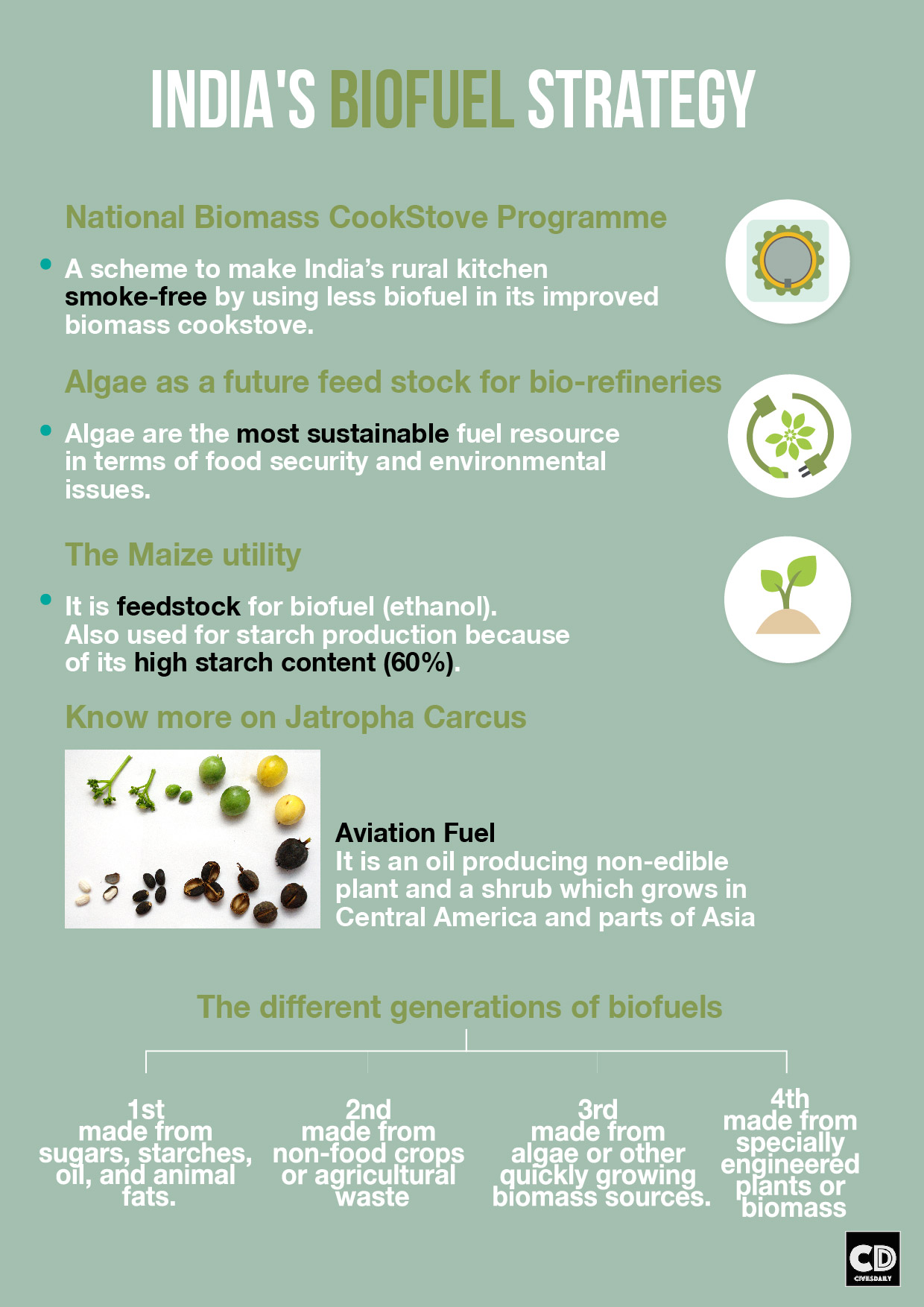
    What are different generations of Biofuels?

    First Generation

    The first generation fuels are conventional biofuels made from sugar, starch or vegetable.
    Issue: They come from a biomass that is also a food source, so it requires a lot of land to grow at a time when there is food shortage in the world.

    Let’s learn about some of the famous examples in this category.

    Ethanol – It is a type of alcohol which can be produced by any feedstock containing significant amount of sugar. It can be blended with petrol or burned in nearly pure form in slightly modified spark-ignition engines.

    1 litre of ethanol produces energy equivalent to two-third of energy produced by 1 litre of petrol.

    Is there any benefit of blending except providing an alternative to sugar industry? Of course, it improves combustion performance and lowers the emissions of Carbon Mono-oxide and Sulfur Di-oxide.

    Biodiesel – It is produced by combining vegetable oil or animal fat with alcohol. It can be blended with traditional diesel fuel or burned in its pure form in compression ignition engines.

    Source – rapeseed, soyabeen, palm, coconut or jatropha oils.

    Energy content is 88-95 % of diesel

    Second Generation

    They come from non-food biomass such as wood, organic waste, food waste, specific biomass crops.
    Issue: The second-generation fuel sources compete with food production for land.

    Third Generation

    They are specifically engineered crops such as algae as the energy source. These algae are grown and harvested to extract oil within them.

    Fourth Generation

    They are aimed at not only producing sustainable energy but also a way of capturing and storing carbon-dioxide. They are carbon-negative i.e. it takes away more carbon-dioxide than it produces.

    National Policy on Biofuels 2015

    The Policy endeavors to facilitate and bring about optimal development and utilization of indigenous biomass feedstocks for production of bio-fuels.

    • It envisages that biofuels will be produced using non-food feedstock on waste lands
    • Encouraged the use of renewable energy resources as alternate fuels to supplement transport fuels
    • Proposed an indicative target of 20% biofuel blending by 2017
    • Major thrust for development of second generation biofuels
    • A Biofuel Steering Committee will be set up to oversee implementation of the Policy

    Criticism – Govt launched National Biodiesel Mission identifying Jatropha as the most suitable tree-borne oilseed for bio-diesel production, which failed miserably. The policy is also criticized for being largely sugarcane centric.

    What is the proposal under flex-fuel policy?

    It aims at decreasing pollution by adopting cleaner alternatives against fossil fuels. It encourages a diversion in the sugar industry’s output away from sugar towards ethanol.

    Sugar industry has an excess supply problem and it helps farmers because of diversification of agriculture into energy, power and bio-plastics.

    What are the challenges to implement this policy?

    • Additional sugarcane cultivation or it can be met by improved farm practices/HYV canes
    • Installing special dispensing units at petrol pumps across the country
    • Automakers need to be given adequate time to comply
    • Oil marketing companies will have to augment storage capacity for ethanol
    • Reforming tax structure so that transport of ethanol across state boundaries is not expensive
    Published with inputs from Pushpendra 
  • Solar Panel Dispute at WTO

    India & US at loggerheads on the Solar Panel dispute

    What is the origin of the dispute?

    In 2010, India launched its national solar programme, which aims at adding 1,00,000 MW of solar power capacity by 2022.

    So, govt. wanted to incentivise the production of solar energy within the country. Therefore, they agreed to enter into long-term power purchase agreements with solar power producers, providing the guarantee for the sale of the energy produced. Thereafter, it would sell such energy through distribution utilities to the ultimate consumer.

    Bone of Contention

    However, there was a clause that a solar power producer, to be eligible to participate under the programme, is required compulsorily to use certain domestically sourced inputs, namely solar cells and modules for certain types of solar projects. In other words, unless a solar power producer satisfies this domestic content requirement, the govt will not ‘guarantee’ the purchase of the energy produced.

    What is India’s argument?

    India principally relied on the ‘govt procurement’ justification, which permitted countries to deviate from their national treatment obligation provided that the measure was related to “the procurement by governmental agencies of products purchased for governmental purposes and not with a view to commercial resale or use in production of goods for commercial sale”.

    India also argued that the measure was justified under the general exceptions since it was necessary to secure compliance with its domestic and international law obligations relating to ecologically sustainable development and climate change.

    What is US’ argument?

    In 2013, the U.S. brought a complaint before the WTO arguing that the domestic content requirement imposed under India’s national solar programme is in violation of the global trading rules.

    It said that India has violated its “national treatment” obligation by unfavourably discriminating against imported solar cells and modules. In other words, India was discriminating between solar cells and modules (which were otherwise identical) on the basis of the national ‘origin’ of the cells and modules, a clear violation of its trade commitment.

    Us has argued that India can achieve its clean energy goals faster and more cost-effectively by allowing solar technologies to be imported from the US and other producers.

    What was the WTO judgment on the issue?

    WTO concluded that India had violated its national treatment obligation, by imposing a mandatory domestic content requirement. The panel found India violated global trade rules by imposing local content requirements for solar cells and solar modules.

    Agreement’s Violated: India violated its commitments under the global trading rules, specifically the General Agreement on Tariffs and Trade (GATT) and the Agreement on Trade Related Investment Measures (TRIMs).

    Explanation: The product being subject to the domestic content requirement was solar cells and modules, but the product that was ultimately procured or purchased by the govt was electricity. Therefore, the domestic content requirement was not an instance of “government procurement”.

    Room for Negotiation

    The verdict was delayed for over 2-3 months, so that India and US can reach an agreement. In this regard, changes were suggested by New Delhi to its solar power programme. India proposed that it would use the domestic content requirement measures for buying solar panels for its own consumption such as by the railways and defence and would not sell the power generated from such subsidized panels for commercial use. However, the US may have rejected India’s offer.

    Why is the ruling being criticized?

    Various environmentalists have criticized the ruling, as it undermines India’s efforts towards promoting the use of clean energy. It threatens the clean energy economy and undermined actions to tackle the climate crisis.

    What is the criticism to India’s stand?

    There appears to be no rational basis for how mandatory local content requirements contribute towards promoting the use of clean energy. If the objective is to produce more clean energy, then solar power producers should be free to choose energy-generation equipment on the basis of price and quality, irrespective of whether they are manufactured locally or not.

    It is also argued that by mandatorily requiring solar power producers to buy locally, the govt is imposing an additional cost for the production of clean energy, which will be ultimately passed on to the ultimate consumer.

    What is alternative in India’s hand?

    Though, the WTO decision may impact the ‘Make in India’ campaign. But, the govt. can give preferential treatment to clean energies in the form of tax rebates for solar power producers, tax breaks, ensuring a strong line of long term credit at low rates, collaborating with global leaders to enhance domestic research and development.

    Future

    The reports indicate that India will prefer an appeal to the appellate body. Simultaneously, India may be exploring the option of filing a counter complaint against the US, as many of its state’s such as Michigan, Texas and California having also reportedly been accused of employing mandatory local content requirements in the renewable energies sector.

    Experts argue that govt should work towards building a business and regulatory environment, which is conducive to manufacturing. The need is for systemic changes in the form of simpler, transparent and consistent laws and effective dispute resolution mechanisms.

    Published with inputs from Pushpendra