[UPSC 2018] In what ways would the ongoing US-Iran Nuclear Pact Controversy affect the national interest of India? How should India respond to this situation?
Linkage: This question explicitly links “escalating tensions between Iran and Israel” to oil prices “spiralling upwards” due to fears of “potential disruption in oil supplies globally”. The article talks about the Iran’s threats to close the Strait of Hormuz as the “primary reason” for rising prices, as this chokepoint is crucial for transporting a significant portion of global petroleum liquids and oil supply from the Persian Gulf to the Arabian Sea.
Mentor’s Comment: Oil prices have jumped sharply due to rising tensions between Iran and Israel, mainly because of fears that the Strait of Hormuz — a key route for global oil supply — could be blocked. Brent crude prices rose by 9%, showing how sensitive global markets are to such conflicts. Although prices eased slightly after news of diplomatic talks through Gulf countries, the threat of disruption still remains. For India, which buys over 80% of its oil from abroad, this is a serious concern. It affects not just fuel availability, but also inflation, economic stability, and business investments, making it a major challenge for India’s economy.
Today’s editorial analyses the impact of tensions between Iran and Israel on crude oil prices. This content would help in GS Paper II (International Relations) and GS Paper III (Indian Economy) in the mains Paper.
_
Let’s learn!
Why in the News?
Recently, oil prices have risen a lot because of increasing tension between Iran and Israel, mainly due to worries that the Strait of Hormuz — a major route for global oil transport — might be closed.
Why is the Strait of Hormuz vital for global oil trade?
Major Oil Transit Chokepoint: The Strait of Hormuz is one of the world’s most important maritime chokepoints, through which nearly 20 million barrels per day (mb/d) of oil passed in 2024 — about one-fifth of global consumption. Eg: The U.S. Energy Information Administration (EIA) reported that the strait handled the world’s largest oil tankers transporting oil from Gulf nations.
Exports from Key Producers: It serves as the primary export route for major oil-producing countries such as Saudi Arabia, Iran, UAE, Kuwait, Iraq, and Qatar. Eg: According to the International Energy Agency (IEA), about one-fourth of the global oil supply exits the Gulf through this strait.
Dependency of Asian Markets: A significant portion of oil transiting the Strait goes to Asian economies, which are heavily dependent on West Asian oil. Eg: In 2024, 84% of crude oil and 83% of liquefied natural gas (LNG) transported via the Strait was destined for countries like India, China, Japan, etc.
What are the economic implications of the Israel-Iran conflict on India’s growth and inflation?
Rising Crude Oil Prices Increases Import Costs: A spike in global oil prices due to the conflict raises India’s import bill, as the country imports over 80% of its crude oil needs. Eg: Brent crude surged to $78.50/barrel in June 2024 amid Israel-Iran tensions, directly increasing India’s energy costs and widening the current account deficit.
Pressure on Inflation and Input Costs: Higher oil prices translate into increased transportation and production costs, leading to inflationary pressure on goods and services. Eg: Experts like Amit Kumar of Grant Thornton noted that global price shocks could affect India Inc’s profitability and raise inflation even though India doesn’t import oil directly from Iran.
Threat to GDP Growth Projections: Prolonged geopolitical instability may lead to delayed private investments and lower industrial output, affecting economic growth. Eg: ICRA’s Chief Economist, Aditi Nayar, warned that a sustained oil price rise could prompt a downward revision of India’s 6.2% GDP growth forecast for FY25.
How has India reduced its vulnerability to oil price shocks amid West Asian tensions?
Diversification of Crude Oil Import Sources: India has expanded its import basket beyond traditional Gulf suppliers to include countries like the U.S., Russia, and Latin American nations. Eg: Union Petroleum Minister Hardeep Singh Puri stated that India is “comfortably placed” due to diversified crude sourcing, reducing overdependence on West Asia.
Strategic Petroleum Reserves (SPR): India has built strategic oil reserves to buffer against short-term supply disruptions or price spikes. Eg: The Indian Strategic Petroleum Reserves Ltd (ISPRL) manages reserves that can support 9–10 days of crude demand, offering resilience during crises.
Promoting Renewable Energy and Domestic Production: India is ramping up solar, wind, and ethanol-blended fuels to lower long-term reliance on imported oil. Eg: Initiatives like PM-KUSUM and National Bio-Energy Mission aim to reduce fossil fuel dependence and enhance energy security.
What are the key drivers of the recent oil price surge?
Geopolitical Tensions Between Iran and Israel: The escalation in Israel-Iran conflict, including threats to close the Strait of Hormuz, triggered fears of significant supply disruptions, sending oil prices sharply upward. Eg: Brent crude shot up nearly 9% on June 13, reaching $75.65 per barrel, after heightened tensions.
Strait of Hormuz Chokepoint Risk: As a critical maritime chokepoint, any threat to close the Strait could drastically affect global oil flow and increase shipping and insurance costs, contributing to higher prices. Eg: Iran’s repeated threats to disrupt transit through the Strait instilled market anxiety, pushing Brent to an intraday high of $78.50 per barrel.
Supply Constraints Due to Sanctions and Regional Export Bottlenecks: U.S. sanctions on Iranian oil exports and potential disruptions to routes via the Suez Canal or Red Sea limit available global supply, exacerbating price volatility.
Who ensures safe oil transit through Hormuz?
United States Navy – Fifth Fleet: The U.S. Navy’s Fifth Fleet, based in Bahrain, regularly patrols the Strait to deter threats like piracy or military aggression, especially from Iran. Eg: In 2019, after Iranian threats, the U.S. deployed additional naval assets to escort commercial tankers through Hormuz.
International Maritime Security Construct (IMSC): A coalition of Western and Gulf nations, including the UK, Saudi Arabia, and Bahrain, established the IMSC to protect freedom of navigation in the Gulf region. Eg: The UK Royal Navy has deployed warships like HMS Montrose to escort oil tankers through Hormuz during periods of heightened tension.
What global actions can reduce related risks? (Way forward)
Strengthening Multilateral Naval Patrols: Enhancing joint maritime security through coalitions like the International Maritime Security Construct (IMSC) can deter potential blockades and ensure safe passage. Eg: The U.S. and UK-led naval missions in 2019 escorted oil tankers after Iran’s threats, maintaining uninterrupted oil flow.
Diversifying Global Oil Supply Routes: Investing in alternative pipelines and trade routes (e.g., via Red Sea or land-based pipelines) reduces overdependence on chokepoints like Hormuz. Eg: The UAE’s Habshan-Fujairah pipeline bypasses the Strait and delivers oil directly to the Arabian Sea, reducing exposure to disruption.
UPSC often asks questions that link global developments with India’s national interests, especially when the issue has environmental, economic, and geopolitical angles. That’s exactly what the 2021 question did — it asked how Arctic and Antarctic melting differently affect weather and human activities. Students tend to miss the layered nature of such topics. Many stop at climate change or just list facts. They skip connecting dots like how the Northern Sea Route (NSR) links to India’s trade policy, or how thawing permafrost in Siberia could affect India’s monsoons. This article helps fill that gap. It combines science with strategy. For example, under “New Shipping Routes & Economic Benefits,” it shows how India must invest in Arctic-ready ships. In “India’s Arctic Partnerships,” it explains why Himadri and IndARC are more than just research outposts — they’re soft power tools. Students often forget this dual role. The article also brings geopolitics to the front — how India must balance ties with Russia and the West (“Security & Cooperation”). The most special part? It doesn’t treat the Arctic as a cold, faraway place. It brings it home to India — from affecting our monsoons to shaping future trade. With examples like Arctic methane thaw and Polar Silk Road, the article builds that critical “connect,” which UPSC always rewards.
This article explores how Arctic developments affect India’s environment, economy, and strategic interests. UPSC often frames such questions by linking global changes with national priorities, as seen in the 2021 question on the Arctic and Antarctic impacts. Many aspirants stop at climate facts and miss the broader picture, such as the Northern Sea Route’s link to India’s trade or how thawing permafrost in Siberia might influence monsoon patterns.
The article fills this gap by combining science with policy insights. It explains why India needs Arctic-ready ships, how Himadri and IndARC serve both research and diplomacy, and why managing ties with Russia and the West is crucial. With examples like methane thaw and the Polar Silk Road, it helps aspirants connect global events to UPSC-relevant themes.
PYQ ANCHORING
GS 2: How does the melting of the Arctic ice and glaciers of the Antarctic differently affect the weather patterns and human activities on the Earth? Explain. [2021]
MICROTHEME: Cryosphere and Himalayan Eco-system
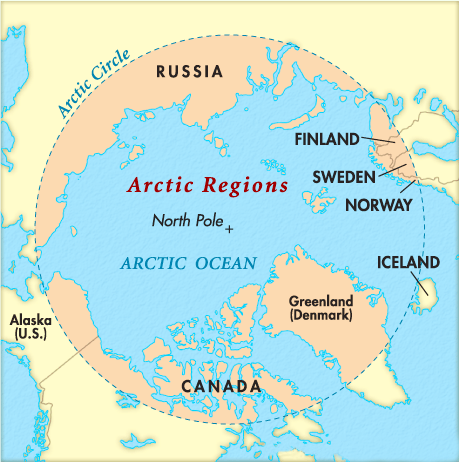
The melting of the Arctic region may be a looming climate disaster, but it also brings a chance for significant geopolitical advantage. As the ice melts and sea levels rise, new trade routes are opening up, which could change the global trade landscape. This opportunity becomes even more important given the trade challenges, like tariffs imposed by the U.S., and the growing partnerships between countries to control supply chains and trade routes. Climate change is also playing a big role in shaping these dynamics. So, it’s essential to take a closer look at how this situation affects India.
Three key questions we need to explore are: How can India position itself to benefit from the new trade routes in the Arctic? What steps should India take to balance its economic interests with the environmental risks in the region? How can India strengthen its partnerships with countries in the Arctic, given the shifting geopolitical landscape?
Arctic: A Geostrategic Pillar for India
The Arctic region is becoming more important for global powers, and India’s involvement there is crucial for a variety of reasons, from economic opportunities to security and global influence. Here’s how the Arctic is shaping up as a key geostrategic asset for India:
New Shipping Routes & Economic Benefits: With the ice in the Arctic melting, new shipping routes like the Northern Sea Route (NSR) are opening up, offering much faster ways to travel between Europe and Asia. For India, this is a big opportunity. By boosting its shipbuilding capacity and investing in specialized Arctic ships, including ice-breakers, India can take full advantage of these new trade routes and strengthen its position in global shipping.
Energy Resources & Strategic Ties: The Arctic is rich in untapped resources like oil and gas. As India’s energy needs grow, securing access to these resources is becoming increasingly important. Working closely with Arctic nations, particularly Russia, allows India to diversify its energy sources. However, India must carefully manage its relationship with Russia, especially considering China’s growing presence in the Arctic with its ambitious Polar Silk Road plans.
Environmental and Security Concerns: The changes happening in the Arctic have global impacts, including on India’s climate, especially its monsoon patterns. India’s research stations and expeditions in the region, like Himadri and IndARC, play a vital role in monitoring climate change and its effects. This scientific involvement strengthens India’s image as a responsible global player and gives it a voice in international environmental discussions.
Geopolitical Influence: The Arctic isn’t just about resources and shipping – it’s also about global power. By actively participating in international forums like the Arctic Council, India can build important diplomatic relationships with other countries, including Japan and South Korea. It also gives India the chance to advocate for a more inclusive approach to Arctic governance, which would enhance its geopolitical influence.
Security & Cooperation: With increasing military activity in the Arctic, India’s security interests are at stake. Balancing relations between Russia and the West is delicate, but India can work with countries that share similar concerns to maintain peace and stability in the region. By getting involved in security discussions, India can strengthen its global role in promoting peace.
In short, the Arctic holds significant opportunities for India. By focusing on sustainable development, forming strategic partnerships, and taking an active role in regional cooperation, India can use its engagement in the Arctic to boost its economic, security, and geopolitical standing on the world stage.
Significance of Arctic region’s melting//MAINS
As the Arctic continues to warm and ice melts at an alarming rate, it’s not just a story of environmental change. The impacts of this transformation ripple across the globe in various ways. From affecting wildlife habitats and weather patterns to opening up new economic opportunities and geopolitical tensions, the Arctic’s changing landscape brings both challenges and opportunities. The table below breaks down how these changes are influencing three key areas:
Aspect
Point
Example
Environmental
1. Loss of Polar Wildlife Habitats
Polar bears and seals rely on sea ice for hunting and breeding. As the ice melts, they face survival challenges.
2. Thawing Permafrost
Thawing permafrost in Siberia releases methane, a greenhouse gas, contributing to global warming.
3. Ocean Acidification
Melting ice leads to more CO2 absorption by the ocean, which harms marine life like coral reefs and shellfish.
4. Disruption of Global Weather Patterns
Arctic warming alters the jet stream, causing unpredictable weather, including heatwaves in Europe and harsh winters in North America.
5. Melting Glaciers and Rising Sea Levels
Melting glaciers in Greenland and Antarctica raise sea levels, threatening coastal communities worldwide.
Economic
1. New Fishing Grounds
As the ice recedes, new fishing areas emerge off the coast of Alaska, potentially boosting global fish supply.
2. Access to Energy Resources
The Arctic holds significant untapped oil and gas reserves, with exploration increasing due to melting ice.
3. Northern Sea Route for Shipping
The opening of the Northern Sea Route reduces travel time between Europe and Asia, cutting down shipping costs and time.
4. Boost to Arctic Tourism
Melting ice makes the Arctic more accessible to tourists, with an increase in cruise ships and wildlife tours.
5. Increased Cost of Infrastructure
Warming in the Arctic requires investment in new infrastructure for shipping and energy extraction, raising costs.
Geopolitical
1. Territorial Disputes Over Resources
Countries like Russia, Canada, and the U.S. are competing for control of oil, gas, and mineral reserves in the Arctic.
2. Military Presence and Strategic Importance
Nations like the U.S. and Russia are increasing military presence in the Arctic to safeguard resources and shipping routes.
3. International Cooperation on Environmental Protection
The Arctic Council promotes cooperation between nations to protect the environment and wildlife.
4. Opening of New Trade Routes
The Northern Sea Route becomes more viable as the ice melts, providing a shorter shipping route between Europe and Asia.
5. Geopolitical Influence through the Arctic
Countries with Arctic territories, like Russia, use their position to increase geopolitical influence over global trade.
India’s Arctic Partnerships in a Changing Geopolitical Landscape
As the Arctic becomes a focal point for global economic and environmental changes, India has a unique opportunity to strengthen its partnerships with countries in the region. Given the shifting geopolitical dynamics, India can adopt several strategies to enhance its position and foster deeper cooperation with Arctic nations:
Engage through Multilateral Platforms: India can leverage platforms like the Arctic Council and the Arctic Circle India Forum to engage with other nations. By actively participating in discussions on climate change, sustainable development, and Arctic governance, India can showcase its commitment to the region’s well-being and strengthen diplomatic ties with countries like Norway, Canada, and Russia.
Focus on Scientific and Environmental Cooperation: India’s role in Arctic research is pivotal, with initiatives like Himadri and IndARC (India’s Arctic Research Centre). By enhancing scientific collaboration on climate monitoring and environmental preservation, India can position itself as a key partner in the region’s sustainable development and climate change mitigation efforts. This will help India build trust with Arctic nations that are highly focused on environmental concerns.
Build Strategic Economic Partnerships: As new shipping routes open up and natural resources become more accessible, India should look to strengthen economic ties with Arctic countries, especially in the fields of energy, shipping, and infrastructure. Collaborations with Russia, for example, could help India secure access to Arctic resources and boost its presence in the global energy market. India can also explore opportunities in Arctic tourism and logistics, areas likely to see growth as the region becomes more accessible.
Enhance Bilateral Ties with Key Arctic Nations: India can deepen its relationships with Arctic powers, particularly Russia, by collaborating on Arctic shipping routes, energy exploration, and scientific research. Simultaneously, India should explore new partnerships with countries like Japan and South Korea, which share similar interests in Arctic governance and resource management.
Promote Peaceful and Inclusive Arctic Governance: India can play a significant role in advocating for a more inclusive and equitable Arctic Council. As the region becomes more geopolitically competitive, India’s support for a multilateral, rules-based approach to Arctic governance could enhance its credibility and influence in the region.
Initiatives of India for Arctic region//PRELIMS
India has been progressively enhancing its engagement in the Arctic region through scientific research, environmental protection, and international cooperation. The key initiatives include:
India’s Arctic Initiatives
Area
Initiative
Details
Research Stations
Himadri
Established in 2008 at Ny-Ålesund, Svalbard, Himadri is India’s first permanent Arctic research station. It focuses on atmospheric studies, glaciology, and marine biology .
IndARC
Deployed in 2014 in Kongsfjorden, Norway, IndARC is India’s first underwater moored observatory in the Arctic, aiming to study climate change impacts and their influence on the monsoon .
Policy Framework
National Arctic Policy
Released in 2022, this policy outlines India’s approach to Arctic engagement, emphasizing scientific research, environmental protection, economic development, and international cooperation .
International Cooperation
Arctic Council Observer
India has been an observer in the Arctic Council since 2013, participating in discussions on sustainable development and environmental protection in the Arctic region .
Scientific Expeditions
Arctic Expeditions
Since 2007, India has conducted 13 Arctic expeditions, focusing on climate studies, glaciology, and marine biology .
Institutional Leadership
National Centre for Polar and Ocean Research (NCPOR)
Based in Goa, NCPOR is the nodal agency for India’s polar research programs, including Arctic studies, and oversees the operation of research stations like Himadri and IndARC .
Strategic Partnerships
Collaboration with Russia
India collaborates with Russia on Arctic research and exploration, including potential joint ventures in energy projects, while being mindful of international sanctions .
Way Forward
Shipbuilding: India should ramp up its shipbuilding capacity, focusing on ships suited for Arctic conditions. Investments in ice-breaking fleets and structural upgrades are essential to compete globally.
Multilateral Engagements: Platforms like the Arctic Circle India Forum should be leveraged to push India’s Arctic policy forward, encouraging stakeholder dialogues and partnerships with an India-Asia focus.
Polar Ambassador: India can appoint a Polar Ambassador to streamline its Arctic efforts, following in the footsteps of nations like the U.S. and Greenland, who have recognized the growing geopolitical importance of the region.
Balancing Russia & USA: India must carefully balance its relations with both Russia and the USA. While Russia offers Arctic expertise, India must avoid aligning too closely with China’s Arctic ambitions. Partnering with like-minded countries like Japan and South Korea can help India shape a more inclusive Arctic governance structure.
The Arctic presents both immense opportunities and risks. India should seize the economic potential while ensuring sustainable development and careful geopolitical navigation to avoid reckless exploitation of Arctic resources.
#BACK2BASICS: INDIA’S ARCTIC POLICY
India’s Arctic Policy is structured around six central pillars and a set of objectives that guide its approach towards the Arctic region. These provisions focus on scientific research, environmental protection, economic development, and enhancing national capabilities to navigate the challenges and opportunities presented by the Arctic’s changing landscape.
Six Central Pillars:
Science and Research: Advancing scientific exploration and research to deepen understanding of the Arctic region, including its climate, ecosystems, and resources.
Environmental Protection: Ensuring the preservation of the Arctic environment and addressing the impacts of climate change on the region.
Economic and Human Development: Promoting economic cooperation and sustainable development opportunities in the Arctic, including maritime trade and resource management.
Transportation and Connectivity: Enhancing transportation links and connectivity between India and Arctic countries, with a focus on emerging trade routes.
Governance and International Cooperation: Strengthening India’s role in global forums such as the Arctic Council and fostering partnerships with Arctic nations for shared governance and resource management.
National Capacity Building: Building the necessary institutional and human resource capacities within India to effectively engage with the Arctic region.
Objectives:
Strengthen National Capabilities: Enhance India’s science and exploration capabilities in the Arctic, focusing on climate and environmental protection, as well as maritime and economic cooperation.
Institutional Capacity Building: Strengthen India’s institutional framework and inter-ministerial coordination, fostering collaboration between government bodies, academic institutions, research organizations, and businesses to advance India’s Arctic interests.
Climate Change and Environmental Impact: Increase understanding of the impact of Arctic climate change on India’s own climate, economy, and energy security, and develop strategies to mitigate these effects.
Analysis and Coordination: Promote better analysis, prediction, and policymaking regarding the consequences of Arctic ice melting on global shipping routes, energy security, and the exploitation of Arctic mineral resources, which are critical to India’s strategic interests.
Linkages with Polar Regions and the Himalayas: Investigate the interconnections between the Arctic and the Himalayas, and foster closer cooperation with Arctic countries through scientific and traditional knowledge exchange.
Arctic Council Participation: Enhance India’s engagement in the Arctic Council and improve understanding of the Arctic’s complex governance structures, international laws, and geopolitical dynamics, ensuring India’s voice is heard in shaping the future of the region.
India’s Arctic Policy emphasizes the importance of multi-dimensional engagement with the region, addressing both the opportunities and risks posed by a rapidly changing Arctic.
MOCK DROP
India’s Arctic Policy reflects the strategic shift from science diplomacy to geopolitics in the polar region. Critically examine the key objectives of India’s Arctic Policy and evaluate its significance in the context of climate change, energy security, and global governance.
The controversy over the 2024 Maharashtra Vidhan Sabha elections and how Election Commissioners are appointed has sparked a major debate about the Constitution and democracy in India.
Why is the ECI appointment process seen as favouring the executive?
Majority Control by the Executive in the Selection Committee: The 2023 Election Commissioners Appointment Act provides a 2:1 majority to the executive in the selection committee — comprising the Prime Minister, the Home Minister, and the Leader of the Opposition. Eg: The Leader of the Opposition can always be outvoted, effectively giving the ruling party full control over appointments.
Exclusion of the Chief Justice of India (CJI): Despite a Supreme Court directive in March 2023 recommending the inclusion of the CJI to ensure neutrality, the Act excluded the judiciary, reducing checks and balances. Eg: The SC judgment established a temporary mechanism including the CJI until Parliament enacted a law, but the law ignored this safeguard.
Conflict of Interest: The executive, being an election contestant, is involved in selecting the very institution that is supposed to referee the elections, raising concerns about institutional bias. Eg: The same political leadership responsible for contesting elections now appoints the “umpires” (Election Commissioners).
Lack of Public Consultation or Parliamentary Debate: The 2023 Act was passed with minimal debate and without bipartisan consensus, reinforcing the perception of executive overreach. Eg: Opposition parties and civil society groups raised concerns about non-consultative law-making affecting the ECI’s independence.
Pending Legal Challenge on Constitutional Grounds: The Act’s constitutionality is under challenge in the Supreme Court, suggesting broader concern that it violates the principles of free and fair elections under Article 324. Eg: Petitions argue that the current process undermines the ECI’s autonomy and may violate the basic structure doctrine.
How does limited access to Form 17C affect poll transparency?
Restricts Independent Verification of Votes: Limited access to Form 17C, which contains vote counts and voter turnout data, prevents candidates and citizensfrom verifying the accuracy of polling results. Eg: Only candidates or their polling agents receive the form, and not all candidates—especially independents or smaller parties—can afford agents at every booth.
Blocks Public Scrutiny and Research: Without public access to Form 17C data from all polling stations, researchers, media, and civil society cannot conduct independent audits or identify discrepancies in vote tallies. Eg: Voters and watchdog groups are unable to cross-check vote counts with final results, undermining transparency.
Raises Suspicion of Electoral Manipulation: The opaque handling of Form 17C can fuel doubts about the integrity of the electoral process, especially in close contests or in regions with a history of irregularities. Eg: In the absence of uniform disclosure, accusations of mismatched vote counts or tampering are harder to disprove, affecting public trust in the Election Commission.
Why is the Supreme Court’s role in ECI appointments significant?
Upheld Democratic Values and Institutional Neutrality: The Supreme Court’s March 2023 judgment ensured a balanced selection committee by including the Chief Justice of India (CJI), reducing the risk of executive control over the Election Commission of India (ECI).
Acted as a Constitutional Corrective in Legislative Vacuum: In the absence of a law under Article 324, the Court stepped in to lay down norms for appointments, reinforcing the judiciary’s role as guardian of the Constitution. Eg: The SC cited Parliament’s inaction despite multiple committee recommendations and exercised its powers to protect the integrity of electoral democracy.
What reforms can enhance transparency in India’s electoral system? (Way forward)
Reform the ECI Appointment Process for Institutional Neutrality: Include the Chief Justice of India (CJI) in the selection committee for appointing the Chief Election Commissioner (CEC) and Election Commissioners, ensuring independence from executive influence. Eg: The Supreme Court’s 2023 judgment proposed a panel of the PM, Leader of Opposition, and CJI, but the 2023 ECI Act excluded the CJI, raising concerns over impartiality.
Ensure Public Access to Form 17C for Vote Transparency: Mandate that Form 17C, which records total votes polled, be made publicly accessible through an official digital portal, enabling citizens and researchers to verify poll data. Eg: Currently, only candidates or polling agents receive Form 17C, and many independent or low-budget candidateslack agents at all booths, limiting access to crucial data.
Introduce Independent Audits of Electoral Rolls and EVMs: Conduct regular third-party audits of voter rolls and Electronic Voting Machines (EVMs) to detect errors, manipulation, or malfunction, and improve public confidence in electoral integrity. Eg: In past elections, reports of missing names or duplicate entries in voter lists have led to allegations of disenfranchisement, especially among marginalised groups.
Mains PYQ:
[UPSC 2018] In the light of recent controversy regarding the use of Electronic Voting Machines (EVM), what are the challenges before the Election Commission of India to ensure the trustworthiness of elections in India?
Linkage: This article explicitly calls for the Election Commission of India (ECI) to “disclose the entire truth that is known only to the Election Commission of India. The 2018 question, by asking about the “challenges before the Election Commission of India to ensure the trustworthiness of elections in India” amidst EVM controversy, directly aligns with the broader call for transparency.
India-U.S. ties, once seen as strong and promising, now face a quiet shift. Recent U.S. actions like engaging Pakistan’s military and economic warnings to India have caused concern in Delhi.
Why does the India-U.S. relationship face a strategic drift despite deep convergence?
Transactional Approach Undermines Long-term Trust: The Trump administration’s focus on short-term, deal-based diplomacy contrasts with India’s strategic and civilisational outlook, causing mistrust. Eg: Trump’s unpredictable style — praising one day, criticising the next — makes it difficult for India to navigate the partnership confidently.
Return of “India-Pakistan Hyphenation”: The revival of outdated strategic equivalence between India and Pakistan has offended Indian diplomatic efforts to de-hyphenate its rise. Eg: Trump’s offer to mediate on Kashmir post-Operation Sindoor and remarks equating both nations reignited diplomatic concerns in New Delhi.
Contradictory Economic and Strategic Signals: Despite promoting Indo-Pacific cooperation, U.S. actions have undermined India’s manufacturing ambitions and H-1B visa interests. Eg: Trump reportedly discouraged Apple from expanding in India, clashing with India’s China-plus-one strategy and investment goals.
What key factors are straining India-U.S. ties under the Trump administration?
Revival of India-Pakistan Equivalence: The U.S. has reverted to “hyphenating” India and Pakistan as strategic concerns, undermining India’s diplomatic efforts to decouple its rise. Eg: Trump’s comments post-Operation Sindoor—offering mediation on Kashmir and warning of nuclear escalation—were seen as diplomatically regressive.
Economic Mixed Signals: The Trump administration sent conflicting signals on India’s role in global supply chains, affecting investor confidence. Eg: Trump reportedly discouraged Apple from expanding manufacturing in India, undermining India’s China-plus-one strategy.
Restrictive Immigration Stance: The H-1B visa policy, critical to U.S.-India tech ties, has become vulnerable to protectionist rhetoric and political posturing. Eg: Curtailing H-1B visas strains the Silicon Valley–India innovation ecosystem, weakening a pillar of bilateral cooperation.
How can India manage uncertainties in its U.S. engagement strategy?
Pursue Calibrated and Persistent Diplomacy: India must avoid overreaction and focus on quiet, sustained engagement to preserve strategic alignment. Eg: Continued cooperation in defence, Quad, and intelligence sharing can reinforce long-term trust despite short-term irritants.
Broaden Strategic Outreach in the U.S: India should strengthen its influence beyond traditional diplomacy by engaging Congress, think tanks, and the Indian-American diaspora. Eg: Leveraging support from Indian-origin U.S. lawmakers helps build bipartisan consensus for stronger ties.
Accelerate Domestic Economic Reforms: India must boost its manufacturing, regulatory clarity, and infrastructure to reinforce its attractiveness as a global partner. Eg: Advancing Make in India and supply chain resilience makes India indispensable to U.S. Indo-Pacific strategy.
Why does the U.S. tilt towards Pakistan concern India’s strategic interests?
Revival of India-Pakistan Diplomatic Parity (Hyphenation): By treating India and Pakistan as strategic equals, the U.S. threatens to undo India’s efforts to decouple its global risefrom the South Asian rivalry. Eg: Trump’s offer to mediate in Kashmir and mention of India and Pakistan in the same context post-Operation Sindoor reflect regressive diplomacy.
What steps must India and the U.S. take to revive their strategic partnership? (Way forward)
Strengthen Institutional and People-to-People Engagement: Both countries must go beyond government-to-government ties and deepen connections through think tanks, academia, diaspora, and legislative forums. Eg: India leveraging the Indian-American diaspora and policy institutions in Washington can build long-term bipartisan support.
Reframe Economic and Immigration Cooperation: Economic reforms in India and predictable immigration policies in the U.S. can boost mutual trust in trade and talent exchange. Eg: Reframing the H-1B visa regime as a tool for mutual innovation rather than political leverage strengthens tech cooperation.
Reinforce Shared Strategic Values and Regional Vision: India and the U.S. must revive the moral and strategic purpose of their partnership — promoting a rules-based, democratic, Indo-Pacific order. Eg: Joint initiatives through the Quad and coordination in maritime security reinforce their shared commitment to a free and open Indo-Pacific.
Mains PYQ:
[UPSC 2019] What introduces friction into the ties between India and the United States is that Washington is still unable to find for India a position in its global strategy, which would satisfy India’s National self-esteem and ambitions” Explain with suitable examples.
Linkage: This article explicitly highlights a “perceptible drift; subtle yet serious” in the relationship, indicating “uncertain times”. It calls for a “reset, not of fundamentals, but of tone, clarity, and mutual commitment”.
Reasi is set to become J&K’s second district after Srinagar to implement the Support for Marginalised Individuals for Livelihood and Enterprise (SMILE) Scheme for marginalised individuals’ dignity and livelihood.
About the SMILE Scheme:
Launch: It was launched in 2022 by the Ministry of Social Justice and Empowerment.
Type: It is a Central Sector Scheme aimed at the rehabilitation of beggars and empowerment of transgender persons.
Core Focus: It promotes rehabilitation, livelihood creation, skill development, and social inclusion for the most marginalised individuals.
Approach: It merges earlier schemes for transgender persons and those engaged in begging to provide a cohesive welfare framework.
Key Features and Components:
Shelter Provision: Uses existing shelter homes run by states/UTs; new homes are set up where needed for secure accommodation.
Livelihood and Skilling: Offers education, identity documentation, vocational training, and economic linkages to ensure self-reliance.
Target Group Size: The scheme aims to benefit approximately 60,000 marginalised individuals, especially transgender persons and urban beggars.
Implementation and Funding:
Pilot Launch: The first phase started in 30 cities and later expanded to 50 more cities under Phase 2.
Survey Mechanism: Local authorities conduct field surveys, with each unit aiming to rehabilitate at least 25 individuals.
Financial Allocation: A total of ₹100 crore was allocated for 2023–26, with ₹14.71 crore spent by December 2024 on rehabilitation efforts.
[UPSC 2016] ‘Rashtriya Garima Abhiyaan’ is a national campaign to:
(a) rehabilitate the homeless and destitute persons and provide them with suitable sources of livelihood*
(b) abolish the Child Labour
(c) salvage the marshy lands and wetlands in the coastal areas and cultivate crops in them
(d) rehabilitate the manual scavengers and provide them with suitable sources of livelihood
The Central Sanctioning and Monitoring Committee (CSMC) has approved construction of 2.35 lakh houses under the Pradhan Mantri Awas Yojana – Urban 2.0 (PMAY-U 2.0).
About Pradhan Mantri Awas Yojana (PMAY):
It is a Centrally sponsored housing scheme launched by the Government of India in 2015 with the aim of providing “Housing for All” by ensuring access to pucca (permanent), all-weather houses with basic amenities to all eligible beneficiaries.
The scheme has two major components:
PMAY-Gramin (PMAY-G) for rural areas, implemented by the Ministry of Rural Development.
PMAY-Urban (PMAY-U) for urban areas, implemented by the Ministry of Housing and Urban Affairs (MoHUA).
PMAY follows a targeted and inclusive approach, prioritizing Economically Weaker Sections (EWS), Low Income Groups (LIG), Middle Income Groups (MIG), and other vulnerable sections like SCs, STs, women, transgenders, and minorities.
About Pradhan Mantri Awas Yojana – Urban 2.0:
PMAY-U 2.0 is the revamped version of PMAY-Urban, launched in 2024, with a renewed target to provide 1 crore additional pucca houses in urban India by 2028.
It builds on the progress made under the original PMAY-U (2015), under which over 93 lakh houses have been constructed.
The scheme supports house construction, purchase, and rental housing for eligible urban families under EWS, LIG, and MIG categories.
The total investment for PMAY-U 2.0 is ₹10 lakh crore, with ₹2.3 lakh crore committed by the Centre as financial assistance or subsidies.
CSMC (Central Sanctioning and Monitoring Committee) oversees approvals, with recent approvals including 2.34 lakh houses for nine states.
Key Features of PMAY-U 2.0:
Four Implementation Verticals:
Beneficiary-Led Construction (BLC): Support for building houses on owned land.
Affordable Housing in Partnership (AHP): Houses built with public/private sector collaboration.
Affordable Rental Housing (ARH): Rental units for migrants, workers, and urban homeless.
Interest Subsidy Scheme (ISS): Interest subsidy on housing loans for EWS, LIG, MIG.
Target Beneficiaries:
Families with annual income up to ₹3 lakh (EWS), ₹3–6 lakh (LIG), and ₹6–9 lakh (MIG).
Must not own a pucca house anywhere in India in the name of any family member.
Adult earning members are treated as separate households.
Central Assistance:
Up to ₹2.5 lakh per housing unit under BLC and AHP.
Up to ₹1.8 lakh interest subsidy under ISS for home loans up to ₹25 lakh.
Technology Innovation:
Support for disaster-resistant, sustainable construction using Technology Innovation Grants (TIG).
Real-time tracking with geo-tagging, BHUVAN platform, and PMAY-U portal.
Inclusive Allocation:
Special allocations for women, SC/ST/OBC, and transgender individuals.
Focus on gender and social equity in housing distribution.
Robust Governance and Monitoring:
Implementation through Urban Local Bodies (ULBs).
Direct Benefit Transfer (DBT) and Management Information System (MIS) for transparency.
Coordination with Smart Cities, AMRUT 2.0, Swachh Bharat, and other schemes.
[UPSC 2015] Pradhan Mantri Jan-Dhan Yojana’ has been launched for:
Options: (a) providing housing loan to poor people at cheaper interest rates (b) promoting women’s Self-Help Groups in backward areas (c) promoting financial inclusion in the country (d) providing financial help to the marginalized communities
The Government of India has mandated the use of Indian Standard Time (IST) across all legal, commercial, digital, and administrative sectors.
About Indian Standard Time (IST):
It is the official time zone of India, set at Coordinated Universal Time (UTC) +5:30 and based on the 82.5° E longitude passing through Mirzapur, Uttar Pradesh.
Neighbouring countries such as Sri Lanka also use the same UTC+5:30 offset.
IST meridian passes through 5 Indian states: Uttar Pradesh, Madhya Pradesh, Chhattisgarh, Odisha, and Andhra Pradesh.
It was established in 1906, replacing older regional time zones like Bombay, Calcutta, and Madras Time.
It is maintained by the National Physical Laboratory (CSIR-NPL) using ultra-precise atomic clocks, which lose only one second in millions of years.
India does NOT observe daylight saving time; IST remainsconstant throughout the year.
Back2Basics:
Greenwich Mean Time (GMT):
GMT is the mean solar time at the Prime Meridian (0° longitude) located at the Royal Observatory in Greenwich, London.
It was established in 1884 during the International Meridian Conference as the world’s time standard.
It is based on astronomical observations, specifically the mean position of the Sun over time.
It does not change with the seasons and does not observe Daylight Saving Time (DST).
Although now largely replaced by UTC in scientific and civil contexts, GMT is still used in some regions (e.g., the UK during winter months).
Coordinated Universal Time (UTC):
UTC is the primary time standard by which the world regulates clocks and time.
It was established in 1960 and is maintained by a network of high-precision atomic clocks worldwide.
UTC is adjusted periodically by leap seconds to compensate for the Earth’s irregular rotation speed.
It is used in aviation, computing, space science, and by international organisations like the UN and ITU.
Unlike GMT, which is purely solar-based, UTC combines atomic time (TAI) with occasional corrections for Earth’s rotation.
IST in Context:
IST = GMT + 5:30
IST = UTC + 5:30
Steps to Implement One Nation, One Time:
[1] Time Dissemination Project:
It is a government initiative to ensure accurate, synchronised, and secure timekeeping across India.
It is led by the Department of Consumer Affairs, in collaboration with CSIR-NPL and ISRO.
Five Regional Reference Standard Laboratories (RRSLs) are being established in Ahmedabad, Bengaluru, Bhubaneswar, Faridabad, and Guwahati.
These labs use atomic clocks and protocols like Network Time Protocol (NTP) and Precision Time Protocol (PTP) to maintain accuracy within microseconds.
Mandatory Use of IST: IST, as maintained by CSIR-NPL, becomes the sole legally recognized time standard in India.
Prohibition of Foreign Time Sources: Use of foreign systems like GPS time will be banned unless specifically approved by the government.
Sync Requirements: All government bodies, financial institutions, power grids, and telecom operators must synchronize their systems with IST.
Audit and Compliance: The system will be monitored through periodic audits and penalties will be imposed for violations.
Special Exemptions: Activities such as scientific research, astronomy, and national security operations may use alternative time sources after government approval.
[UPSC 2025] Consider the following countries:
I. United Kingdom II. Denmark III. New Zealand IV. Australia V. Brazil How many of the above countries have more than four time zones?
(a) All the five (b) Only four * (c) Only three (d) Only two
The TRAI ordered that public Wi-Fi hotspot operators under PM-WANI programme should not be charged more than twice what a residential broadband user paid for setting up a hotspot.
What is the PM WANI Scheme?
Overview: PM Modi launched the Prime Minister Wi-Fi Access Network Interface (PM WANI) in December 2020.
Nodal agency: It is an initiative under the Department of Telecommunications (DoT).
Objective: To democratize internet access, particularly in remote and underserved areas.
Goals: It takes forward the goal of the National Digital Communications Policy, 2018 (NDCP) of creating a robust digital communications infrastructure.
Implementation: Leverages Public Data Offices (PDOs) established in public spaces like railway stations, banks, post offices, and more. Users can access the internet via Wi-Fi at these locations without requiring a SIM card.
PM-WANI ecosystem consists of four parts:
Public Data Office (PDO): It establishes the Wi-Fi Hotspots and provides internet access to users
Public Data Office Aggregator (PDOA): It provides authorisation and accounting services to PDOs.
App Provider: It displays the available hotspots in the phone’s proximity.
Central Registry: This overseen by the Centre for Development of Telematics maintains details of App Providers, PDOs, and PDOAs.
How to Utilize PM WANI?
To access PM WANI services, users must install the Data PM WANI app on their smartphones.
Through the app, users can connect to nearby public Wi-Fi PDOs.
This application facilitates seamless connectivity to PM-WANI-compliant Wi-Fi hotspots, empowering users to access broadband services conveniently.
Role of Public Data Offices (PDOs):
The PM-WANI scheme includes a provision for establishing Public Data Offices (PDOs) by rural entrepreneurs in remote regions.
These PDOs procure internet bandwidth from telecom service providers or ISPs to offer Wi-Fi services at minimal charges.
This model enables individuals to access the internet even in areas with limited or no data connectivity.
[2018] Which of the following is/are the aim/aims of “Digital India” Plan of the Government of India?
Formation of India’s own Internet companies like China did.
Establish a policy framework to encourage overseas multinational corporations that collect Big Data to build their large data centres within our national geographical boundaries.
Connect many of our villages to the Internet and bring Wi-Fi to many of our school, public places and major tourists.
Select the correct answer using the codes given below:
[UPSC 2018] In what ways would the ongoing US-Iran Nuclear Pact Controversy affect the national interest of India? How should India respond to this situation?
Linkage: To answer this question effectively, one would need to understand the strategic objectives (Netanyahu’s “endgame”) of the key players involved, particularly Israel and the U.S., concerning Iran’s nuclear capabilities and regional influence because this question is highly relevant as it directly references the “US-Iran Nuclear Pact Controversy,” which is a central theme of article.
Mentor’s Comment: Israel’s massive air attack on Iran, launched on June 13, has become a major turning point in West Asia’s politics and nuclear tensions. Israel targeted important nuclear sites, military bases, and top Iranian leaders — including the head of Iran’s armed forces — in what is now the most serious direct clash between the two countries. Although Israel says it wants to stop Iran’s nuclear program, much of the damage is limited, and Iran has hit back by firing hundreds of missiles, showing that Israel’s air advantage has its limits. This rising conflict is pushing the region closer to a wider war, with uncertain choices ahead — whether through diplomacy, trying to remove Iran’s government, or involving the U.S. — all of which carry serious global risks.
Today’s editorial analyse the Israel’s massive air attack on Iran. This content would help in GS Paper II (International Relations) in the mains Paper.
_
Let’s learn!
Why in the News?
Israel controls the skies and keeps bombing Iran to stop its nuclear program. But without powerful bombers to destroy protected sites, the attacks are unlikely to end soon.
Why did Israel launch a pre-emptive air war against Iran?
To cripple Iran’s nuclear programme: Israel aimed to destroy key facilities involved in uranium enrichment and nuclear fuel processing. Eg: The air strikes on Natanz and Isfahan Nuclear Technology Centre targeted centrifuge halls, uranium conversion labs, and fuel manufacturing plants.
To eliminate Iran’s military leadership and infrastructure: Israel sought to weaken Iran’s retaliatory capabilities by decapitating its chain of command and targeting missile sites. Eg: The first wave of attacks killed Iran’s top generals, including the chief of the armed forces, and destroyed ballistic missile sites.
To pre-empt diplomacy and assert regional dominance: The strike came just before scheduled U.S.-Iran nuclear talks, indicating Israel’s intent to disrupt any deal that could legitimize Iran’s nuclear capabilities. Eg: The air war began three days before the sixth round of U.S.-Iran nuclear talks, showing that diplomacy was not Israel’s immediate priority.
What impact has Israel’s offensive had on Iran’s nuclear infrastructure and retaliatory capabilities?
Partial damage to nuclear infrastructure: Israel’s strikes caused significant but incomplete destruction of Iran’s nuclear facilities. Eg: The Natanz facility’s above-ground buildings were “completely destroyed”, but the underground centrifuge hall remained mostly intact, as per the IAEA.
Severe but not total disruption of key nuclear functions: Several critical facilities were hit, reducing Iran’s short-term nuclear processing ability. Eg: At Isfahan, Israel destroyed a chemical lab, uranium conversion plant, fuel manufacturing plant, and a uranium metal conversion unit—all essential to nuclear development.
Limited impact on Iran’s missile retaliation capacity: Despite leadership losses and infrastructure damage, Iran responded with strong missile and drone attacks. Eg: Iran launched ~400 missiles, striking targets in Israel like the Haifa oil refinery and a research institute near Tel Aviv, showing its retaliatory capabilities remain intact.
How does the ongoing conflict affect regional security?
Risk of a full-scale regional war: The conflict may escalate beyond Israel and Iran, drawing in regional actors and proxy militias. Eg: Iran’s allies like Hezbollah in Lebanon or Shia militias in Iraq and Syria could retaliate, opening multiple war fronts across West Asia.
Destabilization of already fragile states: Ongoing hostilities may worsen instability in politically volatile countries. Eg: Countries like Iraq, Syria, and Yemen, already dealing with internal conflicts, could become battlefields for Israeli-Iranian proxy warfare.
Undermining regional diplomacy and peace efforts: The conflict derails ongoing peace talks and normalisation efforts between Israel and Arab nations. Eg: Arab countries part of the Abraham Accords, like UAE and Bahrain, are now under pressure to respond, potentially freezing further diplomatic engagement with Israel.
Threat to global energy supplies: The war risks disrupting oil production and shipping through key routes like the Strait of Hormuz. Eg: Iran may target Gulf oil infrastructure or tankers, affecting exports from Saudi Arabia, Kuwait, and UAE, leading to global oil price hikes.
Increased civilian casualties and humanitarian crises: Strikes on civilian infrastructure increase displacement and humanitarian distress. Eg: Bombing of civilian locations in Iran and missile hits on Israeli cities have killed dozens and forced airport shutdowns like at Ben Gurion Airport in Tel Aviv.
What is the role of global powers like the U.S.?
Indirect support and strategic green light to Israel: While officially denying involvement, the U.S. has tacitly approved Israel’s actions. Eg: President Donald Trump publicly claimed neutrality but reportedly gave a “clear green light” to Israel before the June 13 strikes, according to Israeli officials.
Using Israeli strikes as diplomatic leverage: The U.S. is leveraging the conflict to pressure Iran into nuclear negotiations on stricter terms. Eg: Trump indicated openness to a new nuclear deal with Iran, using Israeli aggression as a tool to push Iran back to talks.
Avoiding direct military involvement while containing escalation: The U.S. is trying to prevent the conflict from expanding to American assets or allies. Eg: Trump warned Iran not to target U.S. troops or bases, and Iran has been cautious to avoid direct conflict with U.S. forces despite intense fighting with Israel.
What are the diplomatic and military options available to Israel in its conflict with Iran?
Military escalation for regime change: Israel may continue bombing key infrastructure to weaken or collapse the Iranian regime. Eg: Prime Minister Netanyahu hinted at targeting Iran’s Supreme Leader, Ayatollah Khamenei, and stated that the offensive could lead to regime change in Tehran.
Pause strikes to enable diplomacy: Israel could halt its attacks temporarily to allow diplomatic negotiations between the U.S. and Iran. Eg: Iran reportedly sent feelers through Gulf countries expressing willingness to talk if Israel stops bombing, indicating an opening for peace talks.
Push for direct U.S. military involvement: Israel could seek to draw the U.S. into the conflict to achieve its strategic goals, especially the destruction of fortified nuclear sites. Eg: Israeli officials are pressing Washington to join the war, as U.S. bunker-buster bombs and bombers are necessary to destroy Iran’s Fordow facility.
Way forward:
Pursue an internationally mediated ceasefire and nuclear dialogue: Global powers, especially the U.S., EU, and UN, should mediate a ceasefire to de-escalate hostilities and revive nuclear diplomacy with robust verification mechanisms. Eg: Leveraging backchannel talks through Gulf countries and involving the IAEA can help restore trust and prevent further militarisation.
Prevent regional spillover through coordinated crisis management: Establish a joint crisis response framework involving regional actors (like Saudi Arabia, UAE, and Turkey) to contain proxy escalations and protect civilian infrastructure. Eg: A regional security dialogue could be initiated under the UN or Arab League to address missile threats, avoid airspace violations, and prevent humanitarian crises.
India’s pension landscape is facing a critical juncture, as highlighted in the Economic Survey 2025-26.
What is the current state of India’s pension ecosystem?
Low Pension Assets: Pension assets in India are just 17% of GDP, significantly lower than in developed countries, which range around 80%.
Uneven Coverage: Only 12% of the workforce is covered by formal schemes, mainly in the public and organised private sectors.
Informal Sector Gap: Informal workers, including gig workers, are largely left out—only 5.3% of the total population participates in Atal Pension Yojana and NPS (FY24).
Fragmentation of Schemes: India’s pension system is disjointed, unlike the multi-tiered models in countries like Japan and New Zealand.
Why is pension coverage for the informal sector vital for India’s development goals?
Large Workforce Contribution: Over 85% of India’s workforce is in the informal sector, contributing more than half of the GDP. Ensuring their old-age security is crucial for inclusive economic growth. Eg: Street vendors, gig workers, and farm labourers often lack any retirement support despite their significant economic role.
Rising Old-Age Dependency: By 2050, India’s old-age dependency ratio is expected to reach 30%, increasing the burden on working-age populations. Expanding pension coverage now helps prevent future elderly poverty and reduces pressure on public welfare systems. Eg: Without pension security, aging informal workers may become financially dependent on their families or state welfare.
Achieving Viksit Bharat by 2047: A universal and inclusive pension system is essential to meet the goal of becoming a developed economy by 2047, ensuring that development is sustainable and equitable. Eg: Countries like New Zealand and Japan offer universal pension models that India can adapt to promote long-term social security.
What are the key challenges in India’s current pension system?
Fragmented and Unequal Coverage: India’s pension landscape is divided across multiple parallel schemes, mainly benefitting public and organised private sector workers, while the informal sector remains largely excluded. Eg: Schemes like EPFO or NPS cover only ~12% of the workforce; gig workers must voluntarily opt into the Atal Pension Yojana, limiting reach.
Low Financial Literacy and Awareness: A large section of informal workers lack awareness of available pension options due to limited financial literacyand inadequate grassroots outreach. Eg: Unlike Australia, where superannuation education is part of the school curriculum, India lacks structured sensitisation efforts.
Lack of Sustainability and Liquidity in Funds: Many Indian pension funds face low adequacy and poor returns, threatening long-term sustainability. Eg: According to the Mercer CFA Global Pension Index 2024, India scored just 44%, with a sharp fall in adequacy compared to global benchmarks like Denmark or Netherlands.
How do global pension models ensure inclusivity and sustainability?
Universal or Mandatory Coverage: Many countries adopt universal or compulsory schemes to ensure no worker is left out, regardless of employment type. Eg: Japan has a mandatory flat-rate contributory scheme for all residents aged 20–59, including self-employed, farmers, and employees. New Zealand provides a universal pension to all citizens aged 65+, with a 10-year residency condition.
Automatic Enrolment and Employer Participation: Models promoting auto-enrolment and mandatory employer contributions increase participation, especially among informal or gig workers. Eg: The UK operates an opt-out pension scheme, automatically enrolling workers unless they choose otherwise.
Transparent Communication and Digital Access: Regular disclosures and easy digital access help build trust and improve awareness of pension entitlements. Eg: Netherlands provides annual pension statements to all contributors. Nigeria has invested in digital pension infrastructure to expand access, especially in rural or informal settings.
What are the steps taken by the government?
Launch of Atal Pension Yojana (APY): Introduced in 2015, APY is a voluntary pension scheme aimed at workers in the unorganised sector, offering a guaranteed monthly pension between ₹1,000 and ₹5,000 after age 60. Eg: As of FY24, APY covered over 5.3% of India’s population, helping bring informal workers under a pension net.
Expansion of the National Pension System (NPS): NPS was extended to all citizens on a voluntary basis, including gig workers, self-employed individuals, and informal sector workers, with flexible contributions. Eg: The eNPS portal allows for easy digital enrolment and management, making it accessible to informal workers.
Social Security Code and Aggregator Contribution: Under the Code on Social Security, 2020, the government mandated platform aggregators (like ride-sharing or delivery apps) to contribute towards the social security of gig and platform workers.
Which reforms can integrate informal workers into India’s pension framework? (Way forward)
Harmonise fragmented schemes into a three-tier framework: Tier 1: Mandatory basic pension for all, irrespective of employment type. Tier 2: Employer-linked schemes with auto-enrolment. Tier 3: Voluntary savings with tax benefits and flexible options. Eg: Japan’s mandatory flat-rate pension includes self-employed, farmers, and private/public workers.
Enhance Financial Literacy and Awareness: Launch targeted awareness campaigns on pension benefits, especially in rural and informal sectors, starting at school and college levels. Eg: Australia includes superannuation education in school curricula; UK promotes pensions through opt-out schemes to increase enrolment by default.
Strengthen Digital Pension Infrastructure: Develop user-friendly digital platforms for easy enrolment, contribution tracking, and annual disclosures for informal workers. Eg: Nigeria has invested heavily in digital systems to expand pension access across informal sectors.
Mains PYQ:
[UPSC IAS 2023] Development and welfare schemes for the vulnerable, by its nature, are discriminatory in approach.” Do you agree? Give reasons for your answer.
Linkage: This article explicitly states that “the only protection for the informal sector is voluntary adoption under the National Pension System and Atal Pension Yojana” and that “this only addresses a fraction of the informal sector and adds another parallel scheme to an already complex web”.