A recent study published in Geophysical Research Letters revealed changes in the amount and timing of rainfall using GSMaP Data between 2001-2010 and 2011-2020.
AboutGlobal Satellite Mapping of Precipitation (GSMaP)
GSMaP is a specialized precipitation product developed through collaboration between ISRO (Indian Space Research Organisation) and JAXA (Japan Aerospace Exploration Agency).
It provides high-resolution precipitation data with a 0.1° x 0.1° grid and one-hour temporal resolution, focusing on the Indian subcontinent since March 2000.
The data supports rainfall trend analysis, climate modelling, and water resource management.
Key Findings of the Study:
Rainfall Trends:
West-Central India: Increased daily rainfall (2 mm/day) from 2011-2020 compared to 2001-2010.
Eastern India: A decrease of ~1 mm/day in rainfall during the same period.
Regional Shifts: Northeastern and eastern India saw decreased rainfall, while the Indo-Gangetic Plain and southern India experienced increases.
Vegetation & Soil Moisture:
West-Central India saw an increase in vegetation (NDVI from 0.2 to 0.4) and soil moisture linked to increased rainfall.
Eastern India had decreased soil moisture during the same period.
Shifts in Peak Rainfall Timing:
Indo-Gangetic Plain: Peak rainfall advanced by 2-4 hours.
West-Central India: Peak rainfall delayed by 1-2 hours.
Factors responsible for this Shift:
Higher soil moisture supports rainfall, while reduced moisture, particularly in eastern India, decreases rainfall.
Higher aerosol concentrations in polluted areas like the Indo-Gangetic Plain lead to earlier rainfall peaks.
Changes in atmospheric circulation, topography, and coastal influences also affect rainfall distribution and timing.
[UPSC 2012] Consider the following statements:
1. The duration of the monsoon decreases from southern India to northern India.
2. The amount of annual rainfall in the northern plains of India decreases from east to west.
Which of the statements given above is / are correct?
(a) 1 Only (b) 2 Only (c) Both 1 and 2 (d) Neither 1 nor 2
Researchers from Thiruvananthapuram have developed a cost-effective Real-Time LAMP (rt-LAMP) Assay for early Tuberculosis (TB) diagnosis.
About the rt-LAMP Assay
The rt-LAMP assay (real-time Loop-mediated Isothermal Amplification) is a molecular diagnostic test designed to detect TB DNA with high precision.
It can detect TB DNA at concentrations as low as 10 copy numbers per microlitre, ensuring early detection even with low bacterial loads.
Developed by SCTIMST, Thiruvananthapuram, the rt-LAMP assay uses Syto 16, a fluorescent dye, to monitor DNA amplification in real time, addressing the limitations of traditional LAMP tests.
Working Principle:
It uses six primersfor DNA amplification (compared to two in RT-PCR), enhancing amplification speed.
It operates at a single temperature, unlike RT-PCR, making it simpler and more cost-effective.
It monitors the amplification process continuously, providing faster results.
Advantages Offered:
High Sensitivity and Specificity: Ensures accurate detection of TB DNA due to the use of six primers.
Cost-Effective: Uses affordable fluorescent dyes and primers, reducing diagnostic costs.
Speed: Produces results in just 10-20 minutes, faster than traditional tests.
Ease of Use: Compatible with existing RT-PCR machines, reducing the need for new infrastructure.
High Throughput: Can process 96-384 tests in one run, making it ideal for high-volume settings.
[UPSC 2007] Which of the following types is used by computed tomography employed for visualization of the internal structure of the human body?
(a) X-rays (b) Sound Waves (c) Magnetic Resonance (d) Radioisotopes
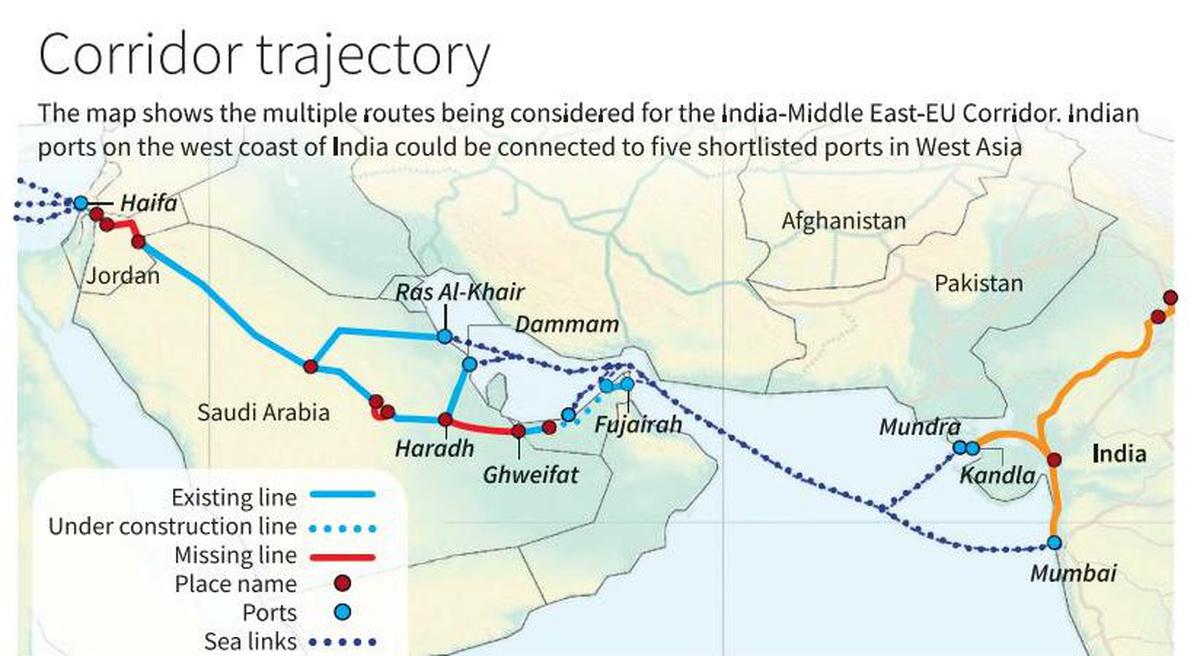
India and Italy have decided to enhance cooperation in trade, defence, clean energy, and high technology while working jointly on the India-Middle-East-Europe-Economic Corridor (IMEEC).
About IMEEC Project:
IMEEC is a key initiative under the Partnership for Global Infrastructure and Investment (PGII), aimed at infrastructure development in developing regions.
It was formally endorsed on September 10, 2023, during the 2023 G20 New Delhi summit.
Signatories include: India, United States, UAE, Saudi Arabia, France, Germany, Italy, and the European Union.
Objective: To integrate Asia, Europe, and the Middle East to boost economic cooperation, trade, and regional connectivity.
IMEEC consists of two main corridors:
East Corridor: Connecting India to the Arabian Gulf.
Northern Corridor: Connecting the Gulf region to Europe.
Key Ports to be Connected:
India: Mundra, Kandla, Jawaharlal Nehru Port Trust (Mumbai).
Middle East: Fujairah (UAE), Jebel Ali (Dubai), Dammam (Saudi Arabia).
Earlier this month, severe weather in the United States, including heavy rainfall, strong winds, and thunderstorms, was caused by an Atmospheric River.
What is an Atmospheric River?
An atmospheric river is a narrow, fast-moving band of moistureand wind that transports large amounts of water vapor across vast distances.
They form when large-scale weather patterns align, creating channels of moisture transport from tropical oceans, guided by low-level jet streams toward the coast.
They typically span 402-606 km in width and can extend over 1600 km in length.
The most powerful atmospheric rivers transport moisture equivalent to the Mississippi River’s flow.
Example: The Pineapple Express, a well-known atmospheric river, transports moisture from Hawaii to the West Coasts of the U.S. and Canada.
The intense rainfall from atmospheric rivers leads to flooding, mudslides, and infrastructure damage, with wind speeds comparable to hurricanes.
Impact and Climate Change:
Rising global temperatures cause more water to evaporate, and warmer air can hold more moisture.
For every 1°C increase, the atmosphere can hold 7% more moisture, leading to stronger storms.
Research indicates such events will likely grow longer and more intense.
[UPSC 2023] With reference to the Earth’s atmosphere, which one of the following statements is correct?
(a) The total amount of insolation received at the equator is roughly about 10 times of that received at the poles.
(b) Infrared waves are largely absorbed by carbon dioxide that is concentrated in the upper atmosphere.
(c) Infrared waves are largely absorbed by water vapour that is concentrated in the lower atmosphere.
(d) Ultraviolet rays are absorbed by the ozone layer lying in the ionosphere.
[UPSC 2019] What are the continued challenges for women in India against time and space?
Linkage: The challenges that women still face are a major concern under the Beijing Platform for Action and are likely to be reviewed in the Beijing India Report. Pointing out these ongoing issues shows how much more needs to be done to reach the goals of the Beijing Declaration.
Mentor’s Comment: It’s been 30 years since the Beijing Declaration set a global plan for gender equality across areas like education, health, and politics. In India, it led to key laws like the Domestic Violence Act and the POSH Act, and encouraged women’s economic empowerment. However, poor implementation still creates a gap between legal rights and the real experiences of women.
Today’s editorial discusses how gender inequality and climate change are interconnected. This topic is relevant for GS Paper 1 (Women’s Issues), GS Paper 2 (Policy Making), and GS Paper 3 (Impact of Climate Change). It highlights the challenges women face due to climate change and the need for better policies to address these issues.
_
Let’s learn!
Why in the News?
The report lacks a strong link between climate and gender, and this needs to be fixed through policy improvements and changes at the grassroots level.
Why does this report lack a strong link between climate and gender?
Limited Focus on Gender-Specific Impacts: The report fails to adequately highlight how climate change specifically affects women, especially in rural areas. Eg: It doesn’t emphasize the extra burden women face in collecting water or gathering fuel during droughts, which worsens due to climate change.
Insufficient Data on Gendered Vulnerabilities: The report lacks comprehensive data on the gendered impacts of climate change, leaving out how women are disproportionately affected by disasters and resource scarcity. Eg: It overlooks how climate-induced migration increases women’s vulnerability to gender-based violence.
Absence of Gender-Responsive Climate Policies: The report doesn’t propose clear actions for integrating gender into climate policies, limiting women’s participation in climate adaptation and decision-making. Eg: There are no specific recommendations for promoting women’s leadership in local climate action plans or agricultural adaptation strategies.
What challenges do rural women face due to gender inequality and climate change?
Challenge
Impact on Rural Women
Example/Evidence
Education Disruption
Climate-induced migration and household burdens force girls to drop out of school.
In Dhanelikanhar village, Chhattisgarh, girls are leaving school due to displacement caused by climate stress and migration.
Unpaid Care Work
Resource scarcity increases women’s burden of water, fuel collection, and caregiving, limiting their economic opportunities.
Arsht-Rock report: Rural Indian women work over 8 hours daily, with 71% of their labor unpaid, deepening gender inequality.
Health Vulnerability
Malnutrition, anaemia, and reproductive health issues rise due to food insecurity and lack of healthcare access.
Over 50% of pregnant women in India are anaemic; food-insecure women are 1.6x more likely to suffer from anaemia.
Livelihood Loss
Extreme weather reduces agricultural output and affects non-farm livelihoods where women are largely employed.
Climate change causes up to 33% income loss in rural areas, with women in non-farm sectors most affected.
Exposure to Violence and Safety Risks
Climate stress and resource conflicts heighten risks of intimate partner violence and general insecurity.
A study shows every 1°C rise in temperature leads to 8% more physical violence and 7.3% more sexual violence against women in India.
Why is a gender-climate lens vital for India’s sustainable future, as per the Beijing India Report 2024?
Inclusive Policy Design: A gender-climate lens ensures that women’s specific vulnerabilities are addressed in climate policies. Eg: Only 6% of climate policies globally mention women, leading to gender-blind strategies in India’s rural development.
Strengthening Resilience: Recognizing women’s roles in natural resource management and agriculture strengthens community resilience to climate shocks. Eg: Rural and tribal women preserve climate-resilient seeds, essential for adaptive farming during droughts and floods.
Reducing Inequality: Targeted climate budgeting and gender audits help close gaps in access to resources, services, and decision-making power. Eg: Women’s unpaid work, like water and fuel collection, could rise to 8.3 hours/day by 2050 without gender-responsive policies.
Boosting Food Security: Closing the gender gap in agricultural resources increases productivity and national food security. Eg: Empowering women farmers can raise farm yields by 20%-30%, feeding up to 150 million more people.
Empowering Local Leadership: Women-led climate initiatives promote local innovation, disaster preparedness, and sustainability. Eg: Women’s self-help groups in climate-vulnerable areas act as first responders during disasters and promote eco-friendly practices.
What are the steps taken by the Indian government?
Inclusion in National Climate Frameworks: The government has integrated gender concerns into major climate policies like the National Action Plan on Climate Change (NAPCC) and State Action Plans (SAPCCs). Eg: Some SAPCCs include women’s role in sustainable agriculture and water management initiatives.
Legislative and Policy Support for Women’s Empowerment: Laws like the Protection of Women from Domestic Violence Act and POSH Act strengthen the overall gender rights framework, which intersects with climate resilience. Eg: These laws provide safety nets that support women’s participation in community and environmental activities.
Promotion of Women-Led Livelihoods in Rural Missions: Schemes like the National Rural Livelihoods Mission (NRLM) support women’s Self-Help Groups (SHGs) to engage in sustainable practices. Eg: Women SHGs in Odisha and Chhattisgarh are trained in climate-resilient farming and forest produce collection.
Where should policies and budgets focus to support gender-responsive climate action? (Way forward)
Gender-Responsive Climate Budgeting: Policies must ensure budgets address the specific climate vulnerabilities of women and prevent greenwashing. Eg: Creating separate budget lines for women’s disaster relief and climate-resilient livelihood schemes in rural areas.
Climate Education and Skill Building: Invest in capacity building for women to participate in climate action and green jobs. Eg: Training rural women in solar panel installation or eco-friendly farming techniques.
Support Hubs and Safety Services: Establish community hubs that offer healthcare, disaster relief, and protection from gender-based violence. Eg: Setting up women-centric climate support centers in flood-prone regions of Assam.
Non-Farm Livelihood Diversification: Promote alternative income sources for women affected by climate-related agricultural losses. Eg: Funding mushroom farming or tailoring units for women in drought-hit Bundelkhand.
Inclusion in Local Governance and Decision-Making: Ensure women’s representation in local climate planning and governance bodies. Eg: Mandating women’s participation in State and District Climate Action Committees in Madhya Pradesh.
The National Education Policy aims to transform India’s separate higher education system by creating large institutions that offer education across multiple fields.
What distinguishes multidisciplinary, cross-disciplinary, and interdisciplinary approaches in higher education?
Approach
Description
Example (Eg)
Multidisciplinary
Involves multiple disciplines working together, but each maintains its own methods and boundaries.
Eg: A team of economists, biologists, and engineers working on a project about climate change, but each discipline works separately within their own domain.
Cross-disciplinary
Encourages collaboration between disciplines but without integrating their knowledge.
Eg: An educationist and an economist working together on a project, but they maintain their individual disciplinary perspectives without merging them.
Interdisciplinary
Integrates concepts, methods, and frameworks from different disciplines to create a unified approach.
Eg: A course titled “Environmental Economics” combining economics, environmental science, and sociology to address climate change through an integrated perspective.
Why must single-stream institutions be phased out under the National Education Policy?
Encouraging Cross-Disciplinary Collaboration: Single-stream institutions focus only on one discipline, limiting students’ exposure to other fields. Phasing them out encourages the integration of various disciplines, fostering collaboration. Eg: A single-stream commerce college could partner with a neighboring arts college, allowing students to explore subjects like economics and sociology alongside their commerce studies.
Expanding Knowledge and Skill Sets: Multidisciplinary institutions allow students to develop a broader skill set by learning from multiple disciplines, enhancing their adaptability and problem-solving abilities. Eg: A student in a multidisciplinary university could take courses in both computer science and environmental studies, enabling them to work on tech-driven solutions for environmental issues.
Meeting Global Educational Standards: Single-stream institutions limit the scope of education, whereas multidisciplinary campuses are more aligned with global trends in higher education that emphasize holistic, well-rounded learning. Eg: In top global universities, students often have the flexibility to take courses from diverse fields, making them more versatile and better prepared for complex, real-world challenges.
How can Indian universities promote cross-disciplinary learning and collaboration?
Encouraging Joint Courses and Programs: Indian universities can create joint courses and programs that combine subjects from different disciplines, allowing students to explore connections between fields and work on collaborative projects. Eg: A course titled “Sustainability in Urban Planning” could combine inputs from urban studies, environmental science, and economics, encouraging students to approach problems from multiple perspectives.
Fostering Collaborative Research Projects: Universities should establish research centers and projects that bring together faculty and students from different disciplines to work on solving real-world challenges, promoting cross-disciplinary collaboration. Eg: A research project focused on public health could involve faculty from medicine, economics, sociology, and environmental science to address issues like the spread of infectious diseases in urban areas.
Who plays a crucial role in fostering interdisciplinary thinking?
Faculty Members: Professors and researchers play a crucial role in fostering interdisciplinary thinking by encouraging students to approach problems from multiple disciplinary angles and by designing courses and projects that integrate knowledge from different fields. Eg: A professor from the economics department might collaborate with faculty from environmental science and sociology to create a course on “Environmental Economics,” encouraging students to consider both economic policies and environmental impacts in solving global challenges.
University Administration: University leaders and administrators can support interdisciplinary thinking by creating structures that promote cross-department collaboration, offering funding for interdisciplinary research, and ensuring that the curriculum encourages interaction across disciplines. Eg: A university may establish an “Interdisciplinary Research Fund” to support projects that involve multiple departments.
What challenges do they face in current academic structures?
Rigid Departmental Boundaries: Traditional departments often have defined areas of focus, making collaboration difficult across disciplines. Eg: A physics department may not easily partner with a social sciences department on a project related to climate change impacts.
Lack of Incentives for Interdisciplinary Work: Faculty members are primarily rewarded for publishing in their specific discipline, not for interdisciplinary research. Eg: A researcher in environmental science might find it hard to get recognition for a joint paper with a computer science expert on climate modeling.
Limited Interdisciplinary Training for Faculty: Many professors are trained and specialize in a single discipline, which hinders their ability to teach or engage in interdisciplinary approaches. Eg: An economics professor may not have the skills to incorporate concepts from sociology or political science into their curriculum.
Way forward:
Integrating Interdisciplinary Curriculum: Universities should design flexible curricula that allow students and faculty to take courses and engage in research across disciplines, breaking traditional academic silos.
Incentivizing Interdisciplinary Research and Collaboration: Establish funding programs and academic recognition for interdisciplinary research to motivate faculty and students to work across departmental boundaries.
Mains PYQ:
[UPSC 2020] National Education Policy 2020 is in conformity with the Sustainable Development Goal-4 (2030). It intends to restructure and reorient education system in India. Critically examine the statement.
Linkage: Multidisciplinary universities need to be established to reach the goal by 2030, aligning with the timeframe of SDG-4. This question directly talk about the NEP 2020’s intent to restructure and reorient the education system, which is central to the idea of shaping the university of the future.
Colossal Biosciences is an American company that combines genetics and conservation in a unique way by bringing back species that have been extinct for thousands of years.
What is the primary goal of Colossal Biosciences’ de-extinction project?
Colossal Biosciences is a biotechnology company specializing in de-extinction projects, aiming to revive extinct species through advanced genetic engineering.
Woolly Mammoth De-Extinction: Colossal is working to resurrect the woolly mammoth by integrating mammoth genes into the Asian elephant genome using CRISPR technology. The goal is to create a cold-resistant elephant with traits characteristic of the woolly mammoth, such as a thick layer of fat and shaggy hair, to inhabit Arctic tundra regions and potentially combat climate change.
Dire Wolf Revival: In a groundbreaking achievement, Colossal announced the birth of three pups—Romulus, Remus, and Khaleesi—genetically engineered to resemble the extinct dire wolf. Using DNA from ancient dire wolf remains, scientists edited the genes of modern gray wolves, resulting in animals that exhibit traits such as larger size and distinctive fur color.
Why do critics question the credibility of reviving extinct species for conservation purposes?
Lack of Scientific Proof: The actual success of reviving extinct species like the woolly mammoth has not yet been proven through rigorous peer review or established results.
Limited Genetic Editing: The extent of genetic editing in revived species often involves only a small number of genes, leading to incomplete or flawed replicas of the original species. Eg: In the case of the dire wolf, only 20 genes were edited, resulting in what critics describe as just a “strange-looking gray wolf” rather than a true de-extinct species.
Ethical Concerns: There are ethical debates over the potential consequences of creating species that may not thrive in the modern environment or might cause unforeseen ecological imbalances. Eg: The introduction of revived species like the woolly mammoth could disrupt current ecosystems in ways that may not be beneficial.
How can bringing back the woolly mammoth help stop global warming?
Restoring Grasslands: The woolly mammoth can help restore Arctic grasslands by grazing on shrubs and plants, which would create open grasslands where permafrost can remain intact. Eg: By grazing, mammoths would prevent the growth of shrubs that trap heat, promoting the return of grasslands that are cooler and better at reflecting sunlight.
Slowing Permafrost Melt: Grasslands absorb less heat than shrub forests, helping to keep the permafrost cool. The return of woolly mammoths could help prevent the thawing of permafrost, which releases methane, a potent greenhouse gas. Eg: Mammoth grazing can keep the ground cooler and slow the thawing of permafrost, thus reducing the release of methane into the atmosphere.
Preventing Methane Emissions: As the permafrost melts, it releases large amounts of methane into the atmosphere. Woolly mammoths could help mitigate this by maintaining ecosystems that slow down the permafrost’s thaw. Eg: With mammoths grazing, the tundra could remain cooler and less prone to releasing methane.
Enhancing Carbon Sequestration: Grasslands are more effective at absorbing carbon than shrubbery or forested areas. By converting tundra back into grasslands, woolly mammoths could enhance carbon sequestration and help store more carbon in the soil. Eg: Woolly mammoths could help re-establish healthy grasslands, which would act as carbon sinks, absorbing more CO2 from the atmosphere.
What is India’s situation in advanced genetic engineering?
Advancements in Agricultural Biotechnology: India has developed a structured regulatory framework for genetically modified organisms (GMOs) under the Environment (Protection) Act, of 1986. Eg: Recently, India initiated trials of CRISPR/Cas9-modified rice varieties in test fields, reflecting a surge in scientific research and innovation in plant genome editing.
Pioneering Genomic Research and Precision Medicine: India’s Genome India Project aims to sequence at least 10,000 Indian genomes to develop predictive diagnostic indicators for various diseases. Eg: Institutions like the Institute of Genomics and Integrative Biology (IGIB) have been instrumental in understanding genetic epidemiology, including the development of the FELUDA COVID-19 test based on CRISPR technology.
Way forward:
Strengthen Ethical and Regulatory Frameworks: India should establish robust regulations and ethical guidelines for genetic engineering, particularly for gene-editing technologies like CRISPR, to ensure safety and sustainability in areas such as agriculture and medicine.
Promote Collaborative Research and Innovation: Encouraging partnerships between academic institutions, the private sector, and the government will help accelerate research and application of advanced genetic technologies, positioning India as a global leader in biotechnology innovation.
Mains PYQ:
[UPSC 2024] What strategies have been developed to prevent such a catastrophe [mass extinction of life]?
Linkage: The article says we should focus more on saving the species that are alive today, rather than trying to bring back extinct ones. The debate about de-extinction raises the question of whether it’s better to spend resources on protecting current species instead.
With recent cuts in USAID funding the South Asian Association for Regional Cooperation (SAARC) Development Fund (SDF), with a capital base of $672 million and $1.5 billion in authorized funds, is gaining attention.
About the SAARC Development Fund (SDF):
The SDF was established in 2010 by SAARC member countries: Afghanistan, Bangladesh, Bhutan, India, Maldives, Nepal, Pakistan, and Sri Lanka.
It focuses on social, economic, and infrastructure development across SAARC countries.
It has evolved from SAARC Fund for Regional Projects (SFRP) and SAARC Regional Fund (SRF) proposed in 1990.
In 2005, the SDF was reconstituted as the umbrella financial mechanism for all SAARC projects.
Finally, it was endorsed in 2006; Charter signed in 2008 during the 15th SAARC Summit in Colombo.
Its permanent Secretariat opened in Thimphu, Bhutan, in 2010.
Funding Mechanism:
The SDF has authorized funds of $1.5 billion, with a capital base of $672 million.
It aims to expand its credit portfolio to $300 million in the coming years.
Member countries contribute to the SDF’s capital, and the funds are allocated for regional projects based on proposals from member states.
It operates on a collaborative funding model, with contributions from both the government and development partners.
[UPSC 2016] The term ‘Regional Comprehensive Economic Partnership’ often appears in the news in the context of the affairs of a group of countries known as:
N4S: India’s big summits often grab headlines, but their real impact lies in shaping global politics. UPSC tests whether aspirants can go beyond buzzwords and understand how diplomacy translates into power shifts. Memorizing summit names isn’t enough—what matters is connecting them to India’s strategic positioning, as seen in questions like India as an alternative to China in GS2 (2024). This article unpacks Summit Diplomacy, looking at events like Howdy Modi, the India-UAE trade deal, and Modi-Xi meetings. Have these truly boosted India’s global influence, or are they just political spectacle? Why didn’t the Wuhan summit stop the Galwan clash? While highlighting successes like India’s G20 leadership, it also examines the risks—over-relying on personal diplomacy and missing long-term follow-through.What makes this piece special? It cuts through the fluff. It shows why strong institutions – like the Ministry of External Affairs and research think tanks – matter more than handshakes and photo ops. If you’ve ever wondered whether these summits actually change anything, this article gives you the answers.
PYQ ANCHORING
The West is fostering India as an alternative to reduce dependence on China’s supply chain and as a strategic ally to counter China’s political and economic dominance.’ Explain this statement with examples. [GS 2, 2024]
When Donald Trump and Kim Jong-un met in Singapore in 2018, the world watched with bated breath. The historic summit promised a breakthrough in U.S.-North Korea relations, with bold commitments and glowing headlines. But within months, the promises fizzled, tensions resurfaced, and the grand spectacle turned into yet another footnote in diplomatic history.
Similarly, India has engaged in high-profile summits like Howdy Modi, Wuhan talks, and G20/SCO meetings, shaping its foreign policy. But the big question remains: Are these summits truly driving India’s global rise, or are they just diplomatic theatre without lasting substance? Is India building a strong institutional framework to sustain its global momentum, or is it overly dependent on the personal rapport of its leaders?
Summit Diplomacy and India: A Critical Analysis
Big diplomatic meetings have helped India build strong partnerships, handle conflicts, and boost its global presence. But they also come with risks—depending too much on flashy events and making deals that don’t always lead to real change.
Benefits for India
Benefit
Impact on India
Example
Stronger Global Relationships
Expanded diplomatic reach through direct leader engagements.
‘Howdy Modi’ (2019) strengthened Indo-U.S. ties.
Economic and Trade Gains
Facilitated FDI, trade agreements, and technology transfers.
India-UAE CEPA (2022) boosted trade relations.
Security and Defense Ties
Strengthened defense cooperation, intelligence sharing, and maritime security.
India-France defense summits led to the Rafale jet deal.
Crisis Management
Helped in conflict resolution and stabilizing border tensions.
Modi-Xi informal summits (2018, 2019) aimed at easing India-China tensions.
Global Leadership
Positioned India as a key player in climate action, global health, and governance.
India’s G20 Presidency (2023) championed Global South issues.
Challenges and Limitations of Summit Diplomacy for India
Challenge
Impact on India
Example
Risk of Superficial Agreements
Lack of follow-up mechanisms leads to poor implementation.
India-China Wuhan & Mamallapuram summits failed to prevent the 2020 Galwan clash.
Over-Reliance on Personal Diplomacy
Leader-driven diplomacy can cause policy shifts with leadership changes.
Modi-Nawaz Sharif ties (2015 Lahore visit) soured after Pulwama (2019).
Global power dynamics often block India’s diplomatic goals.
India’s bid for a permanent UNSC seat remains unresolved despite summit efforts.
Symbolic vs. Substantive Gains
Some summits focus more on optics than real outcomes.
BRICS Summits produce many declarations but limited economic cooperation.
Bridging Gaps in Summit Diplomacy: The Case for Institutionalization
Diplomacy isn’t just about big meetings and handshakes—it needs a solid foundation to create real, lasting impact. When foreign policy is backed by strong institutions, it becomes more stable, accountable, and less dependent on individual leaders. This helps avoid impulsive decisions and ensures that agreements actually lead to meaningful change instead of just being symbolic.
India has been making diplomacy more structured by:
Area
Institutional Mechanism
Impact
Foreign Policy Formulation
Ministry of External Affairs (MEA) with specialized divisions (e.g., Economic Diplomacy, Multilateral Affairs)
Ensures structured policy-making and coordination across global engagements.
Strategic Diplomacy
Think tanks like Institute for Defence Studies and Analyses (IDSA), Observer Research Foundation (ORF), and Research and Information System for Developing Countries (RIS) advising policymakers
Provides research-backed inputs for foreign policy decisions.
Permanent Missions at the United Nations (UN), World Trade Organization (WTO), Group of Twenty (G20) Sherpa Mechanism
Enhances India’s global presence in decision-making forums.
Defense & Security Diplomacy
Strategic dialogues (e.g., 2+2 Dialogue with the United States (U.S.), Japan), Quadrilateral Security Dialogue (QUAD), Indian Ocean Region (IOR) Defense Cooperation
Pravasi Bharatiya Divas (PBD), Indian Council for Cultural Relations (ICCR)
Institutionalized outreach to the Indian diaspora and cultural promotion.
Success Stories of India
India has seen real success in diplomacy when strong systems back summits. This approach ensures that agreements lead to long-term results rather than just talk. Deals like the Indo-US Nuclear Agreement and the International Solar Alliance prove that structured efforts bring lasting impact. Here are some key examples:
Summit
Success Factors (Role of Institutionalization)
Key Outcomes
Indo-US Civil Nuclear Deal (2008)
Strong support from the Ministry of External Affairs (MEA), strategic alignment with the U.S., and bipartisan backing in both nations.
Gave India access to nuclear technology despite not being a Nuclear Non-Proliferation Treaty (NPT) signatory, boosting energy security.
India-Africa Forum Summit (2008, 2011, 2015, 2023)
Regularized engagements, structured financial commitments, and long-term diplomatic partnerships.
Strengthened economic, educational, and strategic ties between India and Africa.
Look East to Act East Policy (Since 1992, Revamped in 2014)
Institutionalized through Association of Southeast Asian Nations (ASEAN) summits, structured trade deals, and consistent engagement.
Deepened trade, defense, and regional security ties with Southeast Asia.
International Solar Alliance (ISA) (2015)
Backed by the MEA and sustained multilateral cooperation.
Positioned India as a global leader in renewable energy with 100+ member countries.
BRICS Summits (Since 2009)
Strengthened cooperation through the New Development Bank (NDB) and structured diplomatic dialogues.
Enhanced India’s role in global economic governance and alternative financial structures.
Way Forward
Summit-to-Strategy Task Force – Create dedicated inter-ministerial teams to convert summit agreements into actionable roadmaps with clear deadlines.
Diplomatic Corps 2.0 – Expand training and decision-making authority for diplomats to reduce dependency on political leadership and ensure continuity in foreign policy.
Fast-Track Diplomacy Portal – Establish a digital platform within the Ministry of External Affairs (MEA) for real-time tracking of agreements, approvals, and execution timelines.
Global Thought Leadership Hub – Set up an international policy research hub to shape global narratives on UN reforms, climate action, and trade policies rather than just reacting to them.
India Connect 2030 – Launch an ambitious global economic outreach program with mega-infrastructure projects, strategic trade pacts, and a counter-narrative to China’s Belt & Road Initiative (BRI).
While India has made significant progress in institutionalizing diplomacy, further improvements are needed in follow-up mechanisms, bureaucratic efficiency, and multilateral leadership. By enhancing institutional processes alongside summit diplomacy, India can ensure sustained global influence and strategic consistency beyond high-profile engagements.
#BACK2BASICS: About Summit-Level Diplomacy
Summit-level diplomacy refers to high-level meetings between heads of state or government, often conducted to address pressing global, regional, or bilateral issues. These summits serve as platforms for direct negotiation, policy coordination, and diplomatic engagement at the highest levels.
– Trump-Kim Jong-un Hanoi Summit (2019) (Failed negotiations, no agreements) – Indo-China Informal Summits (Wuhan, Mamallapuram) (No formal treaties, mostly optics) – SAARC Summits Post-2016 (Minimal progress due to regional tensions)
While summit-level diplomacy results in substantive outcomes, pseudo summit-level diplomacy is often limited to symbolism, diplomatic signaling, or media spectacle, without tangible policy changes.