Reliance on critical mineral imports, especially from China, poses strategic concerns. To address this, the Indian government is advancing its Mineral Diplomacy to enhance security and reduce strategic vulnerabilities.
What is Mineral diplomacy?
Mineral diplomacy refers to a nation’s strategic efforts to secure critical mineral supplies through international partnerships, trade agreements, and resource-sharing initiatives, ensuring economic stability and reducing geopolitical vulnerabilities.
India’s Mineral Diplomacy of 2024
Aim: To coordinate efforts in securing access to critical minerals both domestically and internationally. It focuses on enhancing resource mapping, accelerating exploration activities, and developing resilient supply chains for minerals vital to India’s industrial and green energy targets.
Key Features:
International Partnerships: India is actively engaging with resource-rich countries, particularly in Africa, to secure essential minerals. This includes participation in the Mineral Security Partnership (MSP) and bilateral agreements like the India-Australia Critical Minerals Investment Partnership, which are designed to fortify supply chains and position India as a key player in global mineral diplomacy.
Domestic Reforms: The Mines and Minerals (Development and Regulation) Amendment Bill, 2023 allows private sector participation in exploring critical minerals. This reform is expected to boost domestic supply and reduce reliance on imports, aligning with India’s goal of achieving self-sufficiency.
Geopolitical Context: As global competition for critical minerals intensifies, India’s mineral diplomacy is not just about securing resources but also about establishing itself as a significant player in the clean energy economy.
India is emphasizing responsible mining practices to differentiate itself from competitors like China.
Focus on Recycling: The mission prioritizes recycling critical minerals from electronic waste and used batteries, ensuring resource efficiency and sustainability amidst limited reserves.
Investment in Technology: India plans to leverage advanced technologies such as AI and machine learning for geological mapping to enhance exploration efforts.
What are the strategic objectives of India’s Critical Mineral Mission 2024?
India’s Critical Mineral Mission aims to secure a stable supply of essential minerals for its economic and technological growth. The strategic objectives include:
Reducing Import Dependency: By decreasing reliance on imports, particularly from China, India seeks to enhance its mineral security and mitigate economic risks associated with geopolitical tensions.
Enhancing Domestic Production: The mission focuses on boosting domestic exploration and production capabilities for critical minerals, thereby fostering self-sufficiency.
Facilitating Recycling and Sustainable Practices: Emphasis is placed on recycling critical minerals to ensure a sustainable supply chain while addressing environmental concerns.
How is India leveraging international partnerships to enhance its mineral supply chains?
India is actively engaging in international partnerships to enhance its mineral supply chains through several strategic initiatives:
Bilateral Agreements: India has established partnerships with resource-rich countries like Australia, Argentina, and Kazakhstan to secure supplies of lithium and cobalt. For instance, KABIL signed a memorandum of understanding with Australia for lithium and cobalt projects.
Joint Ventures: The formation of joint ventures, such as IREUK Titanium Limited with Kazakhstan, aims to develop production capabilities within India, thus integrating into the global supply chain.
Multilateral Engagements: India is participating in multilateral initiatives like the Quad and the G-7 to align with global best practices in mineral security and facilitate knowledge sharing.
What challenges does India face in its mineral diplomacy efforts?
Despite the positive outcomes of India’s mineral diplomacy, several challenges hinder its effectiveness:
Lack of Private Sector Participation: The absence of a clear roadmap for private sector involvement in the critical minerals supply chain limits India’s ability to leverage domestic capabilities fully.
Weak Diplomatic Capacity: Insufficient diplomatic resources and expertise in mineral diplomacy pose challenges in forming sustainable international partnerships.
Need for Comprehensive Strategy: A cohesive strategy that integrates private sector roles and addresses supply chain vulnerabilities is essential for enhancing India’s mineral security efforts. The current lack of such a strategy hampers effective engagement with international partners.
Way forward:
Develop a Comprehensive Critical Minerals Policy: Formulate a cohesive strategy integrating private sector participation, incentivizing domestic exploration, and addressing supply chain vulnerabilities.
Strengthen Mineral Diplomacy Capacity: Expand diplomatic resources and expertise in mineral partnerships, focusing on resource-rich nations and multilateral platforms. Establish specialized teams to negotiate sustainable agreements, ensuring secure and diversified supply chains.
Mains PYQ:
Q A number of outside powers have entrenched themselves in Central Asia, which is a zone of interest to India. Discuss the implications, in this context, of India’s joining the Ashgabat Agreement, 2018. (UPSC IAS/2018)
India’s digital revolution, with 1.18 billion mobile connections and 700 million Internet users, faces challenges from rising tech-facilitated gender-based violence. In response, the Ministry of Women and Child Development launched the ‘Ab Koi Bahana Nahi‘ campaign.
The “Ab Koi Bahana Nahi” campaign, launched on November 25, 2024, aims to combat gender-based violence in India. It promotes public accountability and action, coinciding with the global 16 Days of Activism.
How does the digital divide exacerbate existing socioeconomic inequalities?
Urban-Rural Disparities: There is a stark contrast in digital access between urban and rural areas. Urban regions enjoy better connectivity and higher internet speeds, while rural areas lag, limiting their ability to participate in the digital economy and access essential services.
Gender Inequality: The digital gender divide remains pronounced, with fewer women than men having access to digital technologies. This disparity restricts women’s economic and educational opportunities, reinforcing existing societal inequalities.
Economic Inequality: The lack of access to technology disproportionately affects lower-income groups, preventing them from improving their quality of life. Those without digital access are unable to compete in an increasingly online job market, leading to widening economic disparities.
What are the implications of digital inequality for education and unemployment opportunities?
Educational Access: Students in areas with limited digital infrastructure struggle to access educational resources and online learning platforms. This gap has been particularly highlighted during the COVID-19 pandemic when remote learning became essential.
Skill Development: The inability to access technology hampers the development of essential digital skills among students and job seekers. As many jobs now require digital literacy, those lacking these skills face higher unemployment rates.
Impact on Employment: Many job opportunities today require proficiency in technology. The lack of digital skills among a significant portion of the population, especially in rural areas, limits their employability and economic advancement.
Why is ensuring women’s safety online not just a moral obligation, but also a crucial pillar for India’s progress?
Protection of Rights and Dignity: Women’s safety online upholds their fundamental rights, enabling them to participate fully in society without fear of harassment, fostering freedom of expression and access to information.
Economic Growth: Ensuring online safety for women can boost global GDP by $18 billion, encouraging their participation in the digital economy, and leading to greater innovation and economic growth.
Addressing Gender-Based Violence (GBV): Increased cyber-crimes against women, including harassment and image abuse, necessitate stronger legal protections and effective enforcement to combat online gender-based violence (OGBV).
Social Stability and Cohesion: A culture of safety online for women promotes social stability and cohesion by breaking cycles of violence, with men and boys playing a critical role as allies in fostering respectful societies.
What are the steps taken by the Indian government to bridge the digital divide?
BharatNet Project: Launched in 2011, this initiative aims to connect 250,000 panchayats (village councils) through high-speed optical fibre networks, enhancing internet access in rural areas.
National Digital Literacy Mission: Established in 2014, this program aims to make at least one person in every household digitally literate, focusing on basic computer skills and internet usage.
PM Gramin Digital Saksharta Abhiyan: Launched in 2017, this initiative seeks to promote digital literacy among rural households, targeting around 60 million households.
Digital India Programme: Initiated in 2015, this comprehensive program aims to transform India into a digitally empowered society and knowledge economy. It includes objectives such as universal digital literacy and providing broadband connectivity to all gram panchayats.
Internet Saathi Program: A collaboration between Google India and Tata Trusts launched in 2015, this program focuses on empowering rural women with digital skills and knowledge.
DIKSHA Platform: Launched in 2017, this national platform for school education provides digital resources for teachers and students from grades 1 to 12, promoting equitable access to educational content
What strategies can be implemented to bridge the digital divide? (Way forward)
Infrastructure Investment: Expanding broadband infrastructure in rural areas is crucial for ensuring equitable internet access. Government initiatives should focus on enhancing connectivity and making devices affordable.
Digital Literacy Programs: Implementing widespread digital literacy initiatives can empower individuals with the skills needed to navigate online spaces safely and effectively. Targeted programs for women and marginalized groups are essential for inclusivity.
Integrating Technology into Education: Schools should incorporate technology training into their curriculums to equip students with the necessary skills for future employment. Community workshops can also help educate adults about using digital tools effectively.
Public-Private Partnerships: Collaborating with tech companies can enhance resource allocation and implementation efficiencies in bridging the digital divide. This partnership can also lead to the development of user-friendly platforms that promote safe online practices.
Nationwide Awareness Campaigns: Campaigns aimed at changing societal attitudes towards technology use can encourage broader acceptance and participation among all demographics, particularly among women and marginalized communities.
Mains PYQ:
Q Has digital illiteracy, particularly in rural areas, coupled with lack of Information and Communication Technology (ICT) accessibility hindered socio-economic development? Examine with justification. (UPSC IAS/2021)
The inundation of land and human settlements by the rise of water in the channels and its spill-over presents the condition of flooding.
Out of the total geographical area of 329 million hectares (MHA), more than 40 MHA are flood-prone.
Floods affect an average area of around 7.5 million hectares per year.
On average, 75 lakh hectares of land are affected every year, 1600 lives are lost, and the damage caused to crops, houses, and public utilities is Rs.1805 crores.
Regions Prone to Flooding in India:
The Brahmaputra River Region: This region consists of the rivers Brahmaputra and Barak and their tributaries, and covers the states of Assam, Arunachal Pradesh, Meghalaya, Mizoram, Manipur, Tripura, Nagaland, Sikkim and the northern parts of West Bengal.
The Ganga River Region: It covers the states of Uttarakhand, Uttar Pradesh, Jharkhand, Bihar, south and central parts of West Bengal, Punjab, parts of Haryana, Himachal Pradesh, Rajasthan, Madhya Pradesh and Delhi.
The North-West River Region: The main rivers in this region are the Indus, Sutlej, Beas, Ravi, Chenab and Jhelum. This region covers the states of Jammu and Kashmir, Punjab and parts of Himachal Pradesh, Haryana and Rajasthan.
The Central and Deccan India: Important rivers in this region are the Narmada, Tapi, Mahanadi, Godavari, Krishna and Cauvery.
Riverine Floods: Result from overflowing rivers or streams. Example: Ganga-Brahmaputra Delta in East India experiences annual riverine flooding during the monsoon.
Flash Floods: Rapid-onset floods often caused by heavy rainfall or dam breaks. Example: Uttarakhand Flash Floods in 2013, triggered by heavy rains and glacial lake outburst.
Coastal Floods: Occur along coastlines due to storms, cyclones, or high tides. Example: Coastal areas of West Bengal and Bangladesh faced flooding during Cyclone Amphan in 2020.
Pluvial Floods: Caused by excessive rainfall, leading to localized flooding. Example: Urban areas like Chennai and Bangalore face pluvial flooding during heavy rains.
Dam or Levee Break Floods: Result from the failure of dams or levees. Example: The Machu Dam failure in Gujarat in 1979 led to significant flooding.
Criteria to Declare:
The Indian government typically declares a flood based on specific criteria that may vary slightly from state to state. However, some common criteria for declaring a flood in India include:
Rainfall Thresholds: When heavy and sustained rainfall exceeds certain predefined thresholds for a particular region or river basin.
River Water Levels: water levels in rivers or reservoirs rise significantly and pose a threat to communities downstream,
Dam Releases: The release of water to maintain their structural integrity can lead to downstream flooding.
Weather Warnings: Based on weather warnings from meteorological agencies, such as the India Meteorological Department (IMD), which predict heavy rainfall.
Impact Assessment: Assessment of rising water levels on communities, infrastructure, and agriculture done by authorities.
Causes: Floods can also be caused due to a storm surge (in the coastal areas), high intensity rainfall for a considerably longer time period, melting of ice and snow, reduction in the infiltration rate and presence of eroded material in the water due to higher rate of soil erosion.
Mitigation:
Early Warning Systems: India has an extensive network of meteorological and hydrological stations to monitor rainfall and river levels.
River Basin Planning: Regulate water flow, reduce siltation, and control flooding which includes the construction of dams, reservoirs, and embankments.
Floodplain Zoning: Identify and demarcate flood-prone areas, and restrict or regulate construction and development in these zones.
Flood Forecasting and Modeling: Utilize advanced technologies and modeling techniques to predict and analyze floods, enabling more effective response planning.
Embankments and Flood Control Structures: Construct and maintain flood control structures such as embankments, levees, and flood walls to protect vulnerable areas.
Climate Change Adaptation: Consider the potential impacts of climate change on flooding patterns and incorporate adaptive strategies into flood mitigation plans.
International Collaboration: Collaborate with neighboring countries, especially in the case of transboundary rivers, to share data and coordinate flood management efforts.
River Training and Dredging: Undertake River training and dredging projects to improve the flow of rivers and reduce the risk of flooding.
NDMA Guideline:
Battery operated torch
Extra batteries
Battery operated radio
First aid kit and essential medicines
Emergency food (dry items) and water (packed and sealed)
Candles and matches in a waterproof container
Knife
Chlorine tablets or powdered water
Thick ropes and cords
Way Forward:
The entire suite of measures structural and non-structural, an appropriate mix of grey, blue, and green infrastructure needs to be considered for flood management.
Mindsets needing changing flood flows should be seen as a resource to be conserved for subsequent use and water security.
A river basin approach should be adopted for flood management while taking care of the environment.
It is prudent we upgrade the hydro infrastructure in the country now so that the tools to manage increased variabilities are available in time.
UCC is envisioned under Article 44 of the Constitution, which calls for securing a UCC for all citizens throughout India.
Personal law subjects, including marriage, divorce, and inheritance, fall under the Concurrent List.
Hindu personal laws:Also applicable to Sikhs, Jains, and Buddhists as well, were codified by Parliament in 1956, encompassing: The Hindu Marriage Act, 1955 The Hindu Succession Act, 1956 The Hindu Minority and Guardianship Act, 1956 The Hindu Adoption and Maintenance Act, 1956.
Muslim personal matters are governed by the Shariat law of 1937.
The state refrains from interfering, and religious authorities decide based on Quran and Hadith.
UCC measures in India:
Special Marriage Act, 1954: Permits civil marriage for any citizen, regardless of religion, allowing marriage outside religious customs.
Shah Bano Case 1985: Supreme Court ruled in favour of Shah Bano for maintenance under Section 125 of CrPC, advocating for a UCC.
Sarla Mudgal Judgement 1995 and Paulo Coutinho vs Maria Luiza Valentina Pereira case 2019: Supreme Court reiterated the need for implementing the UCC, urging the government to enact it.
What KM Munshi Said on UCC
Support for UCC: During the Constituent Assembly debate on November 23, 1948, KM Munshi advocated for the UCC. He rejected the argument that it would be tyrannical towards minorities.
Counterarguments: Munshi pointed out that advanced Muslim countries did not regard personal law as untouchable and had implemented civil codes.
Equality for Women: He emphasized that without a UCC, women’s rights in personal matters (like inheritance and succession) would remain unequal, particularly in Hindu law, which discriminated against women.
National Unity: Munshi linked UCC with national unity, stating that religion should be restricted to spiritual spheres and that social and civil matters should be regulated uniformly for the progress of the nation.
What Ambedkar Said on UCC
Support for UCC: Dr. B.R. Ambedkar, in the debate, did not delve into the merits or demerits of a UCC but strongly supported Article 35 (which was later renumbered as Article 44 of the Constitution of India), which called for securing a uniform civil code for citizens.
Challenging Religious Personal Laws: He criticized the view that Muslim personal law was immutable and noted that regions like the North-West Frontier Province (pre-independence) followed Hindu law for issues like succession.
State Power and Personal Law: He argued that religion should not govern personal laws and that the State had the right to legislate and reform social systems to address inequities and discriminations in personal laws.
What happened at the end of the Debate?
Passage of Article 35: After discussions, Article 35 was passed by the Constituent Assembly. This article laid down the directive principle that the State shall endeavor to secure a UCC for the citizens of India.
Renumbering to Article 44: Later, this article was renumbered as Article 44 in the Indian Constitution. It continues to remain a Directive Principle of State Policy (DPSP), guiding future policies on personal laws and advocating for uniformity in civil matters across religious communities.
James Webb Space Telescope(JWST) has identified a rare galaxy, Firefly Sparkle, offering a unique look into early galaxy formation.
AboutGalaxy Firefly Sparkle:
Details
Discovered by NASA’s James Webb Space Telescope (JWST), dating back to 600 million yearsafterBig Bang.
It is one of the earliest low-mass galaxies discovered, providing rare insights into early galaxy formation.
It is named so because its star clusters shine brightly, resembling fireflies in JWST’s images.
It is part of a group of galaxies from the early universe, offering clues about how galaxies like the Milky Way may have formed.
Features of the Galaxy
Mass equal to 10 million suns, making it a relatively low-mass galaxy.
Visible portion spans just 1,000 light-years, much smaller than the Milky Way’s 100,000 light-years.
Contains 10 distinct star clusters, each representing different stages of star formation.
Accompanied by 2 smaller galaxies, Firefly-Best Friend and Firefly-New Best Friend.
Elongated raindrop shape, indicating it is still forming.
Observational Studies by JWST
Used gravitational lensing to magnify the galaxy’s light by 16-26 times, providing detailed observations.
JWST observedvaried stages of star formation, with younger stars appearing blue and older stars red.
It is forming piece by piece, with each star cluster representing a phase of formation.
These observations help refine theories on galaxy formation and star cluster dynamics in the young universe.
PYQ:
[2022] Launched on 25th December, 2021, James Webb Space Telescope has been much in the news since then. What are its unique features which make it superior to its predecessor Space Telescopes? What are the key goals of this mission? What potential benefits does it hold for the human race?
[2012] Which of the following is/are cited by the scientists as evidence/evidences for the continued expansion of universe?
Detection of microwaves in space
Observation of redshift phenomenon in space
Movement of asteroids in space
Occurrence of supernova explosions in space
Select the correct answer using the codes given below:
(a) 1 and 2
(b) 2 only
(c) 1, 3 and 4
(d) None of the above can be cited as evidence
Bharatmala Pariyojana is a comprehensive road development project initiated by the Government of India to improve connectivity and reduce logistics costs across the country.
The total length covered under the scheme is 34,800 km, with an estimated cost of Rs. 5.35 lakh crore.
About Bharatmala Pariyojana
Details
Launched to improve road connectivity, enhance freight/passenger movement, and reduce logistics costs.
First-phase launched in 2017, covering 34,800 km of roads, with an estimated cost of Rs. 5.35 lakh crore.
Long-term goals to be completed in phases over several years.
Key Components:
Economic Corridors & Efficiency: Focus on developing 26,000 km of roads and improving the Golden Quadrilateral and North-South/East-West Corridors.
Inter-State & Feeder Routes: 8,000 km of interstate corridors and 7,500 km feeder routes.
Border & International Roads: 2,000 km of roads for trade and security.
Coastal & Port Connectivity: 2,000 km of roads for better port connectivity.
Green-Field Expressways: New expressways to reduce congestion.
Aims and Objectives
50 national corridors to be constructed, reducing freight traffic congestion and facilitating movement on national highways.
550 districts to be connected nationwide, up from the current 300 districts linked with national highways.
Logistic Performance Index (LPI) to be introduced, helping identify trade and logistics challenges and opportunities.
Expected to increase employment opportunities for people.
Funding and Implementation
Central Road and Infrastructure Fund (CRF): Created under the Central Road Fund Act, 2000, this non-lapsable fund is used for building and upgrading national highways and other infrastructure, funded through cess on petrol and diesel.
Monetization of National Highways: The monetization of existing infrastructure assets is used as a source of funding.
Private Sector Investment: Bharatmala invites participation from the private sector for funding and execution of certain projects.
Additional Budgetary Support: Funds from additional budgetary allocations by the central government also support the project.
Do you know?
Sagarmala Programmeapproved in 2015, focuses on port infrastructure development along the 7,516-km coastline through modernisation, mechanisation, and computerisation.
Parvatmala (National Ropeways Development Programme)announced in Union Budget 2022-23 to improve connectivity in hilly areas, under MORTH.
Implemented in PPP mode as an ecologically sustainable alternative to conventional roads in challenging terrains.
Initial regions: Uttarakhand, Himachal Pradesh, Manipur, Jammu & Kashmir, and North Eastern states.
PYQ:
[2017] With reference to ‘National Investment and Infrastructure Fund’, which of the following statements is/are correct?
It is an organ of NITI Aayog.
It has a corpus of Rs 4,00,000 crore at present.
Select the correct answer using the code given below:
(a) 1 only
(b) 2 only
(c) Both 1 and 2
(d) Neither 1 nor 2
A recent study suggests that the Arctic Ocean may experience its firstice-free day—where sea ice falls below one million square kilometres—by 2030, or even sooner.
Key Highlights of the Study
First Ice-Free Day Prediction: The study predicts that the Arctic Ocean could experience its first ice-free day (less than one million square kilometres of sea ice) by 2030, or even sooner, depending on climatic conditions.
Simulations and Models:
11 different climate models were used to run 366 simulations from 2023 to 2100 to assess the future of Arctic sea ice.
Most simulations predict the ice-free day within 7 to 20 years, with some models suggesting it could happen as early as September 2027.
Conditions for Ice-Free Day: The occurrence of an ice-free day will depend on a combination of unusually warm seasons and stormy weather, which accelerates the melting of the sea ice.
Impact on Sea Ice: Once the first ice-free day occurs, it could be followed by an ice-free period lasting between 11 to 53 days, potentially leading to the first ice-free month.
How does the Arctic Tundra store Carbon?
The Arctic tundra stores carbon primarily through a process where plants absorb carbon dioxide (CO2) from the atmosphere via photosynthesis.
This carbon gets trapped in the soil and organic matter (plants and animals) that accumulate over time.
The cold Arctic climate slows the decomposition of plant and animal remains, meaning that organic materials, including carbon, remain locked in the permafrost.
This permafrost acts as a natural storage system, preventing CO2 from being released back into the atmosphere.
Scientists estimate that the Arctic tundra holds about 1.6 trillion metric tonnes of carbon, which is roughly double the amount of carbon in the Earth’s atmosphere.
Why is the Arctic Tundra emitting more carbon than absorbing it?
Rising temperatures in the Arctic are causing the permafrost to thaw at an accelerated rate.
When permafrost thaws, microbes in the soil become active, breaking down the organic material trapped in the frozen ground, which results in the release of carbon dioxide (CO2) and methane (CH4), two potent greenhouse gases.
The Arctic has been warming at a rate four times faster than the global average.
2024 was the second-warmest year on record for the region, contributing significantly to the thawing of the permafrost.
Wildfires in the Arctic have become more frequent and intense, further accelerating the thawing of permafrost. Wildfire smoke also contributes to the release of greenhouse gases.
Between 2001 and 2020, the combination of rising temperatures and increased wildfires led to the Arctic tundra releasing more carbon than it absorbed, marking a significant shift in its role from a carbon sink to a carbon emitter.
Why does it matter?
Climate Change Acceleration: The loss of sea ice will amplify the Albedo effect, causing the Arctic region to absorb more sunlight and heat, which will accelerate global warming and trigger extreme weather events in mid-latitudes.
Rising Sea Levels: The loss of Arctic ice contributes to sea level rise, with potential long-term impacts on coastal populations and ecosystems, particularly if the Greenland ice sheet melts completely, which could raise sea levels by 6 meters.
Ecosystem and Species Impact: The melting of sea ice will threaten species that rely on the ice for habitat, such as polar bears, walruses, and reindeer, disrupting the Arctic food chain.
Human and Infrastructure Threats: Arctic communities and their infrastructure are at risk as the region warms at four times the global average, threatening the livelihoods of people living in these areas.
Back2Basics: Albedo Effect
It refers to the measure of how much sunlight is reflected by a surface.
It is expressed as a percentage; a surface with a high albedo reflects more sunlight, while a surface with a low albedo absorbs more.
Light-colored surfaces like ice and snow have high albedo, reflecting most of the sunlight, whereas dark surfaces like oceans and forests have low albedo, absorbing more heat.
PYQ:
[2022] Discuss global warming and mention its effects on the global climate. Explain the control measures to bring down the level of greenhouse gases which cause global warming, in the light of the Kyoto Protocol, 1997.
[2012] The increasing amount of carbon dioxide in the air is slowly raising the temperature of the atmosphere because it absorbs:
(a) the water vapour of the air and retains its heat
(b) the ultraviolet part of the solar radiation
(c) all the solar radiations
(d) the infrared part of the solar radiation
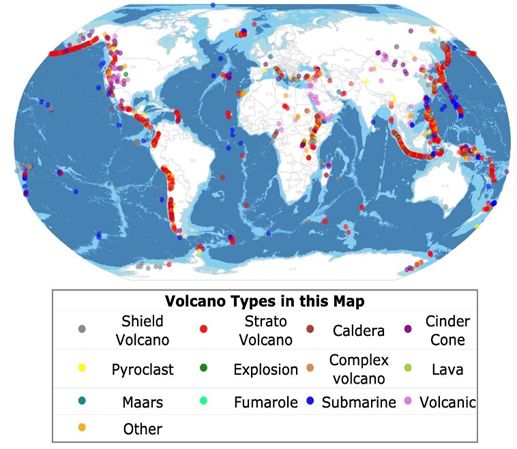
A type of geological event near an opening/vent in the Earth’s surface including volcanic eruptions of lava, ash, hot vapour, gas, and pyroclastic material.
Ash fall
Lahar – Hot or cold mixture of earthen material flowing on the slope of a volcano either during or between volcanic eruptions
Lava Flow
Pyroclastic Flow – Extremely hot gases, ash, and
other materials of more than 1,000 degrees Celsius that rapidly flow down the flank of a volcano (more than 700 km/h) during an eruption.
There are about 1500 potentially active volcanoes worldwide.
Volcanic activities and wildfires affected 6.2 million people and caused nearly 2400 deaths between 1998-2017.
Regions Prone to Volcanic eruptions: Barren island (A&N), Narcondam (Andaman Sea), Deccan trap in Deccan plateau, Baratang (Andaman Island), Dhinodhar hills (Gujarat), Dhosi hills (Aravali mountains), Tosham hills (Haryana).Nodal Ministry: Min. of Earth Sciences (MOES)
Types of Volcanic Eruptions:
Stratovolcanoes: Steep-sided with explosive eruptions. Example: Mount St. Helens.
Shield Volcanoes: Broad and gently sloping with non-explosive eruptions. Example: Mauna Loa.
Cinder Cone Volcanoes: Small, steep-sided with ash and cinder eruptions. Example: Paricutin.
Central or State authorities declare the area as volcanically active based on these parameters:
Volcanic Activity: This includes volcanic eruptions, lava flows, ash emissions, and any other signs of volcanic unrest.
Geological Evidence: The presence of volcanic rocks, craters, calderas, lava domes, or volcanic vents features strong evidence of volcanic origin.
Seismic Activity: Monitoring seismic activity, including volcanic earthquakes and tremors, is crucial.
Gas Emissions: Measuring the composition and quantity of (SO2) or carbon dioxide (CO2), can provide insights into volcanic activity and potential hazards.
Ground Deformation: Detected through techniques like GPS and satellite-based interferometry, can indicate magma movement.
Historical Records: Historical records of past eruptions, including eyewitness accounts, written records, and geological studies, are important for assessing a volcano’s history and potential future behavior.
Remote Sensing: Used to monitor changes in surface temperature, volcanic ash plumes, and ground deformation.
Causes:
Underwater Earthquakes: When tectonic plates at subduction zones converge, they suddenly displace a massive amount of water, generating a tsunami.
Volcanic Eruptions: The expulsion of magma and gas from a volcano can create a sudden and forceful displacement.
Landslides: Landslides from coastal cliffs or mountains, can displace a significant amount of water upon impact, generating a tsunami.
Meteorite Impacts: Although rare, The energy released from such an impact can create powerful waves.
Glacial Calving: When large pieces of ice break off from glaciers and fall into the ocean, they can displace water and generate small tsunamis, known as “glacial tsunamis.”
Fault Zones: Faults that lie beneath the ocean can slip suddenly, displacing seawater and causing a tsunami.
Mitigation:
India had a set of official guidelines primarily related to the Barren Island volcano in the Andaman Sea. These guidelines were primarily managed by the Geological Survey of India (GSI) and the Indian Meteorological Department (IMD).
Monitoring and Early Warning: Continuous monitoring of volcanic activity using seismic instruments, gas analyzers, and satellite technology to detect signs of volcanic unrest.
Hazard Zonation: Establishment of hazard zones based on the type and potential impact.
Evacuation Plans: Development of evacuation plans and routes for nearby communities. Regular drills and training exercises to ensure preparedness.
Public Awareness and Education: Educate local communities about volcanic hazards and safety measures.
Coordination: Coordination between the GSI, IMD, local administration, and disaster management authorities to ensure minimal harm caused.
Emergency Response: Prepositioning of emergency supplies, medical teams, stockpiling food, water, medicines, and setting up emergency shelters.
Tsunamis (Japanese for “harbour wave”), also known as a seismic sea wave, are a series of very large waves with extremely long wavelengths, in the deep ocean, the length from crest to crest may be 100 km and more. When the seafloor abruptly deforms the sudden vertical displacements over large areas disturb the ocean’s surface, displace water, and generate tsunami waves.
Of the nearly 7,500 km long coastline, close to 5,700 km is prone to cyclones and tsunamis.
Andhra Pradesh- Nellore, Prakasam, Guntur. Visakhapatnam, East and West Godavari
Pondicherry
Orissa
Between 1998-2017, tsunamis caused more than 2,50,000 deaths globally, including more than 2,27,000 deaths due to the Indian Ocean tsunami in 2004.
More than 700 million people live in low-lying coastal areas and Small Island Developing States exposed to extreme sea-level events including tsunamis.
Tectonic Tsunamis: Caused by underwater earthquakes, volcanic eruptions, or fault movements along tectonic plate boundaries.
Landslide Tsunamis: Triggered by underwater landslides, which can displace a large volume of water.
Meteorological Tsunamis (Metetsunamis): Generated by atmospheric disturbances such as severe storms, rapid pressure changes, or weather fronts.
Criteria to Declare:
The Indian government, like many other governments around the world, relies on various criteria and systems to detect and declare tsunamis. Key components of the criteria include:
Seismic Activity: A significant earthquake with a magnitude above a certain threshold (usually around 6.5 or higher) can trigger tsunami alerts.
Ocean Buoy Data: Buoy systems are equipped with sensors that can detect changes in sea level. A sudden, abnormal rise in sea level can be indicative of a tsunami wave.
Tide Gauge Readings: Provide real-time data on sea level changes. Unusual, rapid and significant increase in fluctuations in sea level, can be a sign of an approaching tsunami.
Earthquake Location and Depth: Shallow, undersea earthquakes are more likely to cause tsunamis.
Historical Data: Areas with a history of tsunamis are often given higher priority for monitoring and early warning systems.
International Coordination: India is part of the Indian Ocean Tsunami Warning and Mitigation System (IOTWMS), which collaborates with other countries in the region.
Mitigation:
The Ministry of Earth Sciences primarily managed these guidelines through agencies like the Indian National Centre for Ocean Information Services (INCOIS) and the National Disaster Management Authority (NDMA).
Early Warning System: Network of seismometers, tide gauges, and buoy systems helps for the detection of undersea earthquakes and the issuance of timely warnings.
Public Awareness: Educate coastal communities and residents by signage, community drills, and educational materials.
Evacuation Plans: Identify safe evacuation routes and locations for residents in case of a tsunami warning.
Coordination: Ensure coordination amoung NDMA, INCOIS, Indian Meteorological Department (IMD), and local administrations, to ensure a coordinated response in the event of a tsunami.
Building Codes: Enforce building codes and construction standards for more reselience.
Community Preparedness: Encourage community-based disaster management and preparedness initiatives. Local communities should be actively involved in planning and response efforts.
Research and Monitoring: Invest in research to better understand the tsunami hazard in Indian waters.
International Collaboration: Collaborate with neighboring countries and international organizations to share data and expertise related to tsunami warning and response.
It would be best if you continued using a Weather Radio or staying tuned to a Coast Guard emergency frequency station or a local radio or television station for updated emergency information.
Check yourself for injuries and get first aid, if necessary, before helping injured or trapped persons.
Help people who require special assistance—Infants, elderly people,
Use the telephone only for emergency calls. Telephone lines are frequently overwhelmed in disaster situations. They need to be clear for emergency calls to get through.
Wear long pants, a long-sleeved shirt, and sturdy shoes. The most common injury following a disaster is cut feet.
Use battery-powered lanterns or flashlights when examining buildings.
Battery-powered lighting is the safest and easiest to use, and it does not present a fire hazard for the user, occupants, or building. DO NOT USE CANDLES.
Check for gas leaks.
Look for electrical system damage.
Watch for loose plaster, drywall, and ceilings that could fall.
Take pictures of the damage, both of the building and its contents, for insurance claims. Open the windows and doors to help dry the building.
Way Forward
The Indian National Centre for Ocean Information Services (INCOIS) has now developed a system that will be able to predict risk to coastal areas, the height of waves that can hit them, and even pinpoint vulnerable buildings, all in “real-time,” represents a significant improvement in India’s capacity to assess dangers following a tsunami event.
PYQ Relevance: Q) Do you think that Constitution of India does not accept principle of strict separation of powers rather it is based on the principle of ‘checks and balance’? Explain. (UPSC CSE 2019)
Mentor’s Comment: UPSC mains have always focused on major issues like Constitutional Principles (2019) and Basic structure (2014 and 2019) of our Constitution.
The 2024 general elections saw a turnout of approximately 65.79%. While India’s Constitution provides for a strong framework of rights and governance, its effectiveness has been compromised by political interference and corruption. The judiciary’s ability to enforce laws impartially is often challenged by political dynamics, leading to perceptions of selective justice.
Today’s editorial highlights critical concerns regarding recent actions that may undermine the foundational principles enshrined in the Indian Constitution. It talks about the significant in the current political climate, as it addresses issues of governance, civil liberties, and the rule of law. This content can be used to reflect the Constitutional governance issues in India.
_
Let’s learn!
Why in the News?
In the light of a controversial ruling by the Allahabad High Court, debates around Nationalism, Secularism, and Civil liberties are increasingly polarized, which has led to a resurgence of interest in how constitutional principles are being interpreted and applied in contemporary governance.
What are the debates and key issues highlighted recently?
• Freedom of Speech vs. Responsibility: The Allahabad High Court recently upheld a charge against an individual, Owais Khan, for mocking a Hindu deity on social media. ○ The court emphasized that while freedom of speech is a fundamental right in India, it is not absolute. ○ This means that individuals must exercise this freedom with a sense of responsibility, particularly when it comes to respecting the beliefs and sentiments of others.
•Judicial Activism and Accountability: Certain judicial decisions as given below may reflect a departure from constitutional values. 1. Zakia Jafri Case (2022): The Supreme Court dismissed a plea for further investigation into the 2002 Gujarat riots, stating there was no evidence of a larger conspiracy. This ruling was controversial as it was perceived to undermine accountability for state actions during communal violence, raising concerns about the rule of law and justice for victims. 2. Umar Khalid’s Bail Denial: The Delhi High Court denied bail to activist Umar Khalid, citing a prima facie case against him. Critics argue that this decision reflects an overreach of judicial authority and raises questions about the treatment of dissenters in politically sensitive cases.
•Supreme Court on Places of Worship: The Supreme Court recently barred new suits against places of worship, which has implications for ongoing disputes over religious sites.This decision has been viewed as an attempt to maintain communal harmony but also raises concerns about the judiciary’s involvement in sensitive religious matters.
•Controversial Remarks by Judges: Instances like Justice Srishananda’s remarks referring to a Muslim-majority area as “Pakistan” highlight how judicial comments can perpetuate biases and affect public perception of the judiciary’s impartiality. Such statements have prompted calls for clearer guidelines on judicial conduct
•Secularism and Pluralism: The court’s stance on respecting religious sentiments is framed within the broader context of India’s secular fabric. ○ True secularism requires not only tolerance but also an active promotion of fraternity among diverse communities, which seems to be at risk amid rising tensions surrounding religious identities.
•Public Perception and Constitutional Compact: These actions are perceived as mockery of constitutional principles and can erode public confidence in democracy. ○ It calls for a reaffirmation of commitment to the values of justice, liberty, and equality as outlined in the Preamble to the Constitution.
What are the other contemporary challenges facing the Indian Constitution?
Rise of Hindu Nationalism: The ascent of Hindu nationalism poses a significant threat to the secular and pluralistic fabric of India. Policies such as the Citizenship Amendment Act (CAA) and the National Register of Citizens (NRC), have sparked debates about their alignment with constitutional values of equality and secularism.
Erosion of Civil Liberties: There has been rising communal violence, restrictions on freedom of speech, and attacks on media independence, which deviate from the constitutional promise of a democratic society.
Judicial Independence and Institutional Integrity: The independence of the judiciary is under scrutiny as there are fears that political considerations may influence judicial decisions. The weakening of institutional checks and balances threatens the foundational principle of separation of powers, which is crucial for maintaining democratic governance.
Social and Economic Inequalities: The influence of money and muscle power in politics exacerbates persistent social and economic disparities, undermining democratic processes and leading to questions about fair representation. The non-enforceability of Directive Principles of State Policy further complicates efforts to address these disparities effectively.
Federalism and Centralization: Initiatives like “One Nation, One Election” could undermine the autonomy of state governments, affecting local governance and representation. Critics argue that this centralization could dilute regional identities and issues.
What implications do these challenges have for India’s democratic framework?
Erosion of Democratic Norms: As the judiciary grapples with issues like political interference and judicial overreach, there is a risk of eroding democratic norms.
When judicial decisions appear to align with political interests rather than constitutional principles, it undermines the public’s trust in the judiciary as an impartial arbiter of justice.
Threat to Fundamental Rights: Challenges such as restrictions on freedom of speech and assembly can directly impact citizens’ fundamental rights. If the judiciary fails to protect these rights effectively, it may result in a chilling effect on dissent and activism, weakening the democratic fabric that relies on robust public discourse and participation.
Judicial Independence at Risk: The increasing politicization of the judiciary threatens its independence, which is crucial for maintaining checks and balances in governance.
A compromised judiciary may lead to unchecked executive power, resulting in potential abuses and violations of citizens’ rights.
Increased Polarization: The rise of identity politics and communal tensions can exacerbate societal divisions, making it difficult for the judiciary to operate effectively.
When legal interpretations are influenced by political ideologies or communal sentiments, it can lead to verdicts that favor one group over another, undermining the principle of equality before the law.
Impact on Governance and Accountability: Judicial decisions that favor state actions without adequate scrutiny can diminish accountability in governance. This could enable corruption and misuse of power by public officials, further eroding public confidence in democratic institutions.
How has the judiciary responded to perceived threats against constitutional values?
Judicial Review: The Indian judiciary exercises the power of judicial review, allowing it to examine the constitutionality of legislative and executive actions.
This power is enshrined in Articles 13, 32, and 226 of the Constitution, which enable the Supreme Court and High Courts to strike down laws or actions that violate fundamental rights or exceed the authority granted to the legislature or executive.
Minerva Mills v. Union of India (1980): This landmark judgment reaffirmed the supremacy of the Constitution over parliamentary authority, emphasizing that laws infringing on fundamental rights could be invalidated.
Kesavananda Bharati v. State of Kerala (1973): The Supreme Court established the “basic structure” doctrine, asserting that certain fundamental features of the Constitution cannot be altered or destroyed by amendments.
Protection of Fundamental Rights: The judiciary has consistently defended individual rights against state encroachments. The courts have expanded the interpretation of fundamental rights, ensuring they encompass a broader range of protections for citizens.
In cases like Maneka Gandhi v. Union of India (1978), the Supreme Court broadened the scope of Article 21 (right to life and personal liberty), ruling that due process must be followed in any deprivation of life or liberty.
The judiciary has also intervened in cases involving social justice, such as ensuring rights for marginalized communities and addressing issues like sexual harassment through interpretations aligned with international human rights standards.
Upholding Judicial Independence: Judicial independence is seen as crucial for maintaining constitutional integrity. The judiciary has asserted its role as a guardian of the Constitution, often resisting pressures from other branches of government.
Justice Kurian Joseph emphasized that as long as an independent judiciary exists, there is no threat to the Constitution, highlighting the judiciary’s role in safeguarding democratic values and individual rights.
Way Forward:
National Judicial Commission (NJC): Forming an NJC to oversee the appointment of judges can ensure transparency and accountability in judicial appointments, reducing political influence.
Expansion of the e-Courts Project: Enhancing digital infrastructure for courts, including online case filing and AI-assisted case management, can significantly reduce delays and improve access to justice.
Implementing systems like FASTER (Fast and Secured Transmission of Electronic Records) for quick communication of court orders will also expedite processes.
Promoting Legal Literacy: Increasing public awareness about legal rights and judicial processes through educational campaigns can empower citizens to engage more effectively with the legal system.