💥UPSC 2026, 2027, 2028 UAP Mentorship (March Batch) + Access XFactor Notes & Microthemes PDF

Search results for: “”

  • What is Vacation Bench of Supreme Court?

    Chief Justice of India D. Y. Chandrachud said no Vacation Benches will be available in the apex court during the winter break.

    Vacation Bench

    • A Vacation Bench of the Supreme Court is a special bench constituted by the Chief Justice of India.
    • The court takes two long vacations each year, the summer and winter breaks, but is technically not fully closed during these periods.
    • Litigants can still approach the Supreme Court and, if the court decides that the plea is an “urgent matter”, the Vacation Bench hears the case on its merits.
    • While there is no specific definition as to what an “urgent matter” is.
    • During vacations the court generally admits writs related to habeas corpus, certiorari, prohibition and quo warranto matters for enforcement of any fundamental right.

    Do you know?

    The Supreme Court has 193 working days a year for its judicial functioning, while the High Courts function for approximately 210 days, and trial courts for 245 days. High Courts have the power to structure their calendars according to the service rules.

    Legal Provisions for Vacation Bench

    • Under Rule 6 of Order II of The Supreme Court rules, 2013 the CJI has nominates the Division Benches for the hearing of urgent miscellaneous matters and regular hearing matters during the summer vacation for period.
    • The rule reads that CJI may appoint one or more Judges to hear during summer vacation or winter holidays all matters of an urgent nature which under these rules may be heard by a Judge sitting singly.
    • And, whenever necessary, he may likewise appoint a Division Court for the hearing of urgent cases during the vacation which require to be heard by a Bench of Judges.

    Which else can appoint vacation bench?

    • The High Courts and trial courts too have Vacation Benches to hear urgent matters under their jurisdiction.

    Has vacation benches made any historic judgments?

    • Vacation Benches of the Supreme Court have also authored historical decisions.
    • One of the best known is when a Vacation Bench Judge in June 1975, refused PM Indira Gandhi’s plea to stay an Allahabad High Court decision setting aside her election – a decision which triggered the Emergency.
    • A Constitution Bench of the court had heard the triple talaq case during vacation days.

    Issues with court vacations

    • Huge pendency: Extended frequent vacations is not good optics, especially in the light of mounting pendency of cases and the snail’s pace of judicial proceedings.
    • Creating further delays: For an ordinary litigant, the vacation means further unavoidable delays in listing cases.

    Arguments in favour

    • Rejuvenation of judges: Lawyers have often argued that in a profession that demands intellectual rigour and long working hours — both from lawyers and judges — vacations are much needed for rejuvenation.
    • Long working hours: Judges typically work for over 10 hours on a daily basis. Apart from the day’s work in court from 10.30 am to 4 pm, they also spend a few hours preparing for the next day.
    • Preparing for judgments: A frequently-made argument is that judges utilise the vacation to write judgments.
    • Courts not in session: Another argument is that judges do not take leave of absence like other working professionals when the court is in session.
    • Socialization: Family tragedies, health are rare exceptions, but judges rarely take the day off for social engagements.
    • No impact on pendency: Data show that the Supreme Court roughly disposes of the same number of cases as are instituted before it in a calendar year.

    Reforming the vacation clause

    • In 2000, the Justice Malimath Committee, set up to recommend reforms in the criminal justice system, suggested that the period of vacation should be reduced by 21 days.
    • It suggested that the Supreme Court work for 206 days, and High Courts for 231 days every year.
    • In its 230th report, the Law Commission of India headed by Justice A R Lakshmanan in 2009 called for reform in this system.
    • Considering the staggering arrears, vacations in the higher judiciary must be curtailed by at least 10 to 15 days and the court working hours should be extended by at least half an hour, it said.
    • In 2014, when the Supreme Court notified its new Rules, it said that the period of summer vacation shall not exceed seven weeks from the earlier 10-week period.


    Click and get your FREE Copy of CURRENT AFFAIRS Micro Notes

    (Click) FREE 1-to-1 on-call Mentorship by IAS-IPS officers | Discuss doubts, strategy, sources, and more

  • Missile destroyer INS Mormugao commissioned into Indian Navy

    mormugaon

    Indian Naval Ship (INS) Mormugao (Pennant 67), a P15B stealth-guided missile destroyer was commissioned into the Indian Navy.

    INS Mormugao 

    • This was the second ship to be inducted as a part of the four ‘Visakhapatnam’ class destroyers.
    • It is indigenously designed by the Navy’s in-house organisation Warship Design Bureau and constructed by Mazagaon Dock Shipbuilders Limited (MDL) in the country’s financial capital Mumbai.
    • The ship was named after a key port in the Indian state of Goa, it was inducted on the eve of Goa Liberation Day.
    • The ship was first launched in September 2016 and began sea trials last year on December 19 which coincided with the day that Goa was liberated from Portuguese rule six decades earlier with December 18 marking the launch of Operation Vijay by the Indian Armed Forces in 1961.
    • Singh also paid tributed former defence minister, the late Manohar Parrikar who had launched INS Mormugao in 2016.

    Features of INS Mormugao

    • The ship measures 163 metres by 17 metres and has the ability to fight in nuclear, biological, as well as chemical (NBC) warfare due to its total atmospheric control system (TACS).
    • Additionally, with a displacement of 7,400 tonnes, the INS Mormugao is loaded with state-of-the-art weapons.
    • It will be operated by a crew of at least 350 which would include 50 officers and 250 sailors.
    • Over 75 per cent of the ship’s content was manufactured and developed in India, either directly or designed and developed by Indian Original Equipment Manufacturers (OEMs) or through strategic tie-ups.
    • It is capable of achieving speeds of 30 knots (55 km/hour) as it is propelled by four powerful gas turbines in a ‘combined gas and gas’ (COGAG) configuration.

    Combat weaponry

    • INS Mormugao includes weapons like BrahMos surface-to-surface missiles and Barak-8 surface-to-air missiles.
    • It is also fitted with a modern surveillance radar which helps provide target data to the ship’s weapon system.
    • Additionally, the ship’s weaponry also includes indigenously-developed rocket launchers, torpedo launchers and ASW helicopters like Sea King or HAL Dhruv.

    Historic significance of Mormugao Port

    • Even as a port, Mormugao has contributed significantly to the growth of India’s maritime trade.
    • Even today, it is one of the oldest and largest ports in the country and will retain this special place due to the services it provides be it Mormugao fort or Mormugao port.
    • It is landmark since the 17th century Maratha campaign against the Portuguese under Chhatrapati Sambhaji (Ch. Shivaji Maharaj’s son).

    Back2Basics: Project PB15

    • P15B destroyers is a class of four ships built by the country’s MDSL with INS Visakhapatnam (Pennant D66), commissioned last year in November as the year.
    • These ships are set to be more advanced than the Kolkata class under the project named 15A which comprised INS Kolkata, INS Kochi, and INS Chennai.
    • The contract for the ships was signed back in 2011 and under Project 15B they were to be named after four major Indian cities like Visakhapatnam, Mormugao, Imphal, and Surat.
    • A group of ships with similar tonnage, usage, capabilities, and weaponry are referred to as a ship’s ‘class’.
    • P15B destroyers incorporate new design concepts for improved survivability, seakeeping and manoeuvrability.


    Click and get your FREE Copy of CURRENT AFFAIRS Micro Notes

    (Click) FREE 1-to-1 on-call Mentorship by IAS-IPS officers | Discuss doubts, strategy, sources, and more

  • Why banyan, peepal trees live longer?

    banyan

    Researchers at the Indian Institute of Science Education and Research (IISER) Bhopal have found out the carried out whole genome sequencing of banyan and peepal from leaf tissue samples.

    Science behind long life: Multiple Signs of Adaptive-evolution (MSA)

    • Scientists identified 25,016 coding gene sequences in banyan and 23,929 in peepal.
    • Both trees faced a population bottleneck around 0.8 million years ago and evolved genes with multiple signs of adaptive evolution (MSA).
    • In banyan, the MSA genes are mainly involved in root growth, pollen tube and seed development, leaf formation, cell wall synthesis, metabolism and other developmental processes.

    How MSA prolongs the life?

    • Disease resistance and other stress tolerance gene families showed expansion as well as high expression, contributing to the plants’ long lifespan.
    • The MSA genes of peepal are associated with root cell elongation, cell proliferation, seed and pollen tube growth, lateral organ development, controlling flowering time, metabolism and intracellular transport.
    • The team zeroed in on 17 MSA genes in banyan and 19 MSA genes in peepal that are mainly related to well-developed morphology, and tolerance against drought, oxidative stress and pathogens.
    • Genes involved in growth-regulating auxin signalling and plant senescence-regulating pathways also showed evolutionary signatures.
    • Also, 88% and 89% of the MSA genes in banyan and peepal trees, respectively, are associated with tolerance against biotic and abiotic stress responses.
    • This, in turn, helps these plants to survive when faced with environmental challenges.


    Click and get your FREE Copy of CURRENT AFFAIRS Micro Notes

    (Click) FREE 1-to-1 on-call Mentorship by IAS-IPS officers | Discuss doubts, strategy, sources, and more

  • How can mRNA vaccines help fight cancer?

    mrna

    The results of a trial of an experimental cancer vaccine built on the mRNA (messenger ribonucleic acid) platform, made by Moderna and MSD (Merck&Co.), have shown promising results.

    What is mRNA?

    mrna

    • Messenger RNA (mRNA) is a single-stranded RNA (Ribo Nucleic Acid) molecule that is complementary to one of the DNA strands of a gene.
    • The mRNA is an RNA version of the gene that leaves the cell nucleus and moves to the cytoplasm where proteins are made.
    • During protein synthesis, an organelle called a ribosome moves along the mRNA, reads its base sequence, and uses the genetic code to translate each three-base triplet, or codon, into its corresponding amino acid.

    What are mRNA vaccines?

    • mRNA vaccines work by introducing a piece of mRNA that corresponds to a viral protein, usually a small piece of a protein found on the virus’s outer membrane.
    • Individuals who get an mRNA vaccine are not exposed to the virus, nor can they become infected with the virus by the vaccine.
    • As part of a normal immune response, the immune system recognizes that the protein is foreign and produces specialized proteins called antibodies.
    • Antibodies help protect the body against infection by recognizing individual viruses or other pathogens, attaching to them, and marking the pathogens for destruction.
    • Once produced, antibodies remain in the body, even after the body has rid itself of the pathogen, so that the immune system can quickly respond if exposed again.

    How does the vaccine work?

    • The personalized cancer vaccine uses the same messenger-RNA technology that was used to produce the COVID vaccine.
    • It allows the body’s immune system to seek and destroy cancerous cells, in this case melanoma, but with the hope that it could lead to new ways to fight other types of cancers too.

    Why is it a significant feat?

    • The cancer vaccine showed a 44% reduction in the risk of dying of cancer or having the cancer progress.
    • As a personalized cancer vaccine, it is tailor-made for every patient.
    • As a consequence, it is expected to be very expensive to make.
    • But oncologists across the world have welcomed this as an exciting new opportunity in cancer care.


    Click and get your FREE Copy of CURRENT AFFAIRS Micro Notes

    (Click) FREE 1-to-1 on-call Mentorship by IAS-IPS officers | Discuss doubts, strategy, sources, and more

  • Disparities in Climate Change Financial Responsibility

    Financial

    Context

    • Extreme weather events are becoming more prevalent with each passing year and countries are increasingly taking cognizance of this. Yet, there remains a rift between developing and developed countries, largely on account of asymmetries between the incidence of and the financial responsibility assumed for climate change.

    Click and get your FREE Copy of CURRENT AFFAIRS Micro Notes

    Background: Rift between developed and developing countries

    • Historical emission by developed countries: It is estimated that 92 per cent of excess historical emissions are attributable to developed countries.
    • Burden on developing countries: Yet the economic impact of climate change is disproportionately borne by vulnerable developing countries. The 58 vulnerable countries (or V20) account for 5 per cent of global emissions while the costs incurred are significant.
    • UNEP estimates that efforts on climate adaptation would require $160-340 billion by 2030. But, current financial flows are inadequate, with developing countries receiving only a third of what is required.
    • The dual costs of shifting away from fossil fuels and that of climate catastrophes are expected to further chip away at fiscal resilience as developing countries reel under the pressures of slowdown, inflation and excess sovereign debt.

    Financial

    COP27 decisions on accelerating finance

    • Recognized the need of transforming the financial system: In its draft decision, the UN highlighted that to meet the scale of funding will require a transformation of the financial systems, structures and processes. It will require engaging with all financial actors.
    • Recognized discontent of green climate fund: In the past there have been funding facilities such as the Green Climate Fund, which were meant to support adaptation and mitigation. But there is wide discontent with the pace and extent of access to such facilities.
    • Announcement of Loss and Damage (L&D) fund: The announcement of a Loss and Damage (L&D) fund stole the attention. However, reflections from past experiences are essential.

    Challenges on developing inclusive financial structure

    • Visible reluctance to contribute among big economies: The institutional architecture of multilateral funds has been demonstrably slow to deliver. Then there is the visible reluctance to contribute among the big economies. To restore its lost legitimacy, the US made several announcements at COP27 but its lack of support to the L&D fund and financing of the global shield meant to support vulnerable countries to address risks of climate change must be factored in.
    • Mismatch between financial expectations, regulations and society’s requirement: As the demands placed on economies dwarf public finances, it is intuitive to expect private capital to step up. For decades, developing countries have competed to attract private capital leading to frail legal and tax systems. Even as private capital shifts to the green sectors on account of regulatory action, it is reasonable to expect that its pace will be tempered by financial expectations.
    • National carbon tax is rarely discussed: Interestingly, experts are beginning to see climate actions connected with tax policy. This is evident from the revival of the repeatedly shelved Financial Transaction Tax in the EU. Every package announced involves a redistribution of incomes within and across countries. Therefore, a general overhaul of tax architecture is inevitable. Yet, a dedicated national carbon tax is rarely discussed.

    Financial

    Hypocrisy of developed countries and India’s call of Phase down

    • Policy makers discussed the inadequacies of the system: COP27 was a spectacle of distractions. Experts from around the world assembled in the comforts of their echo chambers, reciting the promise of the transition, as policy makers reiterated the inadequacies of the system.
    • Growing pressure on developing countries to abandon access to fossil fuel: There is also growing pressure on developing countries to abandon their access to fossil fuels, overlooking the view that a hastened transition can have adverse consequences for growth.
    • Systematically sidelined India’s Phase down Call: There have been repeated questions as to why India chooses to use the term “phase down” and its slow response. The hypocrisy of the developed countries was stark as countries chose to sideline India’s call to phase down all fossil fuels.

    Way ahead

    • While the release of the long-term low carbon development strategy is a fitting response from India, there needs to be better guidance on the pathway to net zero.
    • With India chairing the G-20 this year, the question of phasing down coal will be asked repeatedly.
    • There is already growing interest in signing a just energy transition partnership with India.

    Conclusion

    • The learnings from COP27 must inform the G-20 presidency. It is also important to remain conscious that dramatic shifts in policy are pursued domestically and not all change is pursued by consensus. The principle of common but differentiated responsibility should not be traded for the promise of finance.

    Mains question

    In the context of COP27, The principle of common but differentiated responsibility should not be traded for the promise of finance. Comment

    (Click) FREE1-to-1 on-call Mentorship by IAS-IPS officers | Discuss doubts, strategy, sources, and more

  • A milestone in fusion energy

    fusion

    Context

    • For more than nine decades scientists have tried to replicate the process that produces energy for the sun and the stars fusion. On Tuesday, researchers at the National Ignition Facility (NIF) in California, USA, announced a milestone in this endeavor.

    Click and get your FREE Copy of CURRENT AFFAIRS Micro Notes

    fusion

    What is the research?

    • Merged two nuclei to produce a heavier nucleus: They merged two nuclei to produce a heavier nucleus. Their reactor produced about 1.5 times more energy than what was used in the process. In all the earlier attempts to harness the power of fusion, the reactors used up more energy than what was produced.
    • It will take at least two decades to be pioneered: But scientists say that it will be at least two decades before the process pioneered in the California laboratory can be scaled up.
    • Still a great leap where the world is in search of green technologies: Even then, in a world desperately searching for technologies that can power the developmental needs of nations without adding to the GHG load, the breakthrough at NIF has generated excitement.

    What is Fusion?

    • Fusion works by pressing hydrogen atoms into each other with such force that they combine into helium, releasing enormous amounts of energy and heat.
    • This process occurs in our Sun and other stars.
    • Creating conditions for fusion on Earth involves generating and sustaining a plasma.
    • Plasmas are gases that are so hot that electrons are freed from atomic nuclei.

    fusion

    What is Fusion Energy?

    • The process releases energy because the total mass of the resulting single nucleus is less than the mass of the two original nuclei.
    • The leftover mass becomes energy.

    Why is it perceived as energy of the future?

    • Carbon free: Fusion Reactions could one day produce nearly limitless, carbon-free energy, displacing fossil fuels and other traditional energy sources.
    • Efficient: Net energy gain has been an elusive goal because fusion happens at such high temperatures and pressures that it is incredibly difficult to control.
    • Clean: Unlike other nuclear reactions, it doesn’t create radioactive waste.

    fusion

    Why it is considered as significant research, though it will take at least two decades to be commercialized?

    • Countries are shifting towards renewable energies: Several countries are shifting to renewable energies to meet their international climate-related commitments. Yet, power generation currently is responsible for 25-30 per cent of global GHG emissions.
    • Unstable nature of renewables: The inherently unstable nature of renewables means that countries find it very difficult to jettison fossil-fuel energy sources.
    • Nuclear energy is relatively cleaner: Conventionally-produced nuclear energy that uses fission technology is relatively cleaner. But accidents at Chernobyl in 1986 and Fukushima in 2011 have raised serious questions over the safety of fission-powered plants. According to the IEA’s best-case scenario, the world’s nuclear energy generation capacity is likely to double by 2050 compared to 2020.

    Conclusion

    • The global body has repeatedly flagged concerns about the efficacy of the nuclear reactors by and large in the US and Europe given that about two-thirds of them have been in operation for more than 30 years. It has also maintained that the realisation of the best-case scenario would require significant investments in innovative nuclear technologies.

    Mains question

    Q. Recently researchers at the National Ignition Facility (NIF) in USA tried to replicate the process that produces energy for the sun and the stars fusion, discuss the significance of this research.

    (Click) FREE1-to-1 on-call Mentorship by IAS-IPS officers | Discuss doubts, strategy, sources, and more

  • How to prepare for MPSC-UPSC 2023 & 2024 from scratch? Get detailed strategy, timetable, and best resources for GS and Current Affairs | By IRS, Soham Mandhare, AIR 267, UPSC 2021

    How to prepare for MPSC-UPSC 2023 & 2024 from scratch? Get detailed strategy, timetable, and best resources for GS and Current Affairs | By IRS, Soham Mandhare, AIR 267, UPSC 2021

    On 17th December, 5:30 PM | Integrated Preparation for UPSC and MPSC 2023 -24 from scratch | Soham sir will share a detailed strategy, timetable, and best resources for GS and Current Affairs

    Post-webinar get PERSONALIZED Current Affairs Strategy + MENTORSHIP CALL for MPSC/UPSC 2023-24. 


    Aspirants, preparing for the Civil Service exam, be it UPSC or Maharashtra State Services (MPSC) take more than just hard work. It is about studying in the right direction.

    Now after the pattern change, the MPSC syllabus is aligned with the UPSC, and aspirants can now shoot two birds with one arrow. But for that, you need a perfect strategy, follow the most relevant resources, avoid things that waste your time/attempts, know where you are making mistakes, and fill those loopholes asap.

    Soham sir will be LIVE for a Webinar on 17th December to help to Strategize for UPSC-MPSC 2023/2024 even if you are starting from scratch. (Details below)


    Table of Content


    Post-webinar get PERSONALIZED Current Affairs Strategy + MENTORSHIP CALL for MPSC/UPSC 2023-24. 


    Details of UPSC/MPSC Webinar:

    Topic: How to prepare from scratch for UPSC and MPSC exam for 2023/2024 in an integrated manner?

    Detailed strategy, timetable, and best resources for GS and Current Affairs for an integrated Preparation for UPSC and MPSC

    Date and Time:

    17th December 2022 (Friday) at 5:30 pm

    FREE and Open to all

    Post-seminar CivilsDaily will share a special Preparatory Package both for UPSC & MPSC candidates.

    You are also entitled to a personalized intensive mentorship session by a senior IAS mentor wherein you can avail of a personalized study plan, schedule, and doubt resolution session.

    Post-webinar get PERSONALIZED Current Affairs Strategy + MENTORSHIP CALL for MPSC/UPSC 2023-24. 


    This is for you if you are:

    1. A UPSC/MPSC beginner – confused about the syllabus, prioritizing subjects, making timetables & targets, or just getting started.
    2. A working professional or college student who will be attempting UPSC 2023 -2024 with a job. Facing a serious time crunch and mismanagement in UPSC preparation.
    3. A veteran or aspirant trying to improve your rank in UPSC 2023-2024 attempt.

    Strategic planning will help you fully uncover your options, set priorities for them, and define the methods to achieve them.

    Post-webinar get PERSONALIZED Current Affairs Strategy + MENTORSHIP CALL for MPSC/UPSC 2023-24. 

    Details of the Webinar topics

    This is going to be an interactive 1-1 session with UPSC Ranker. You will get ample time and opportunity to discuss this with Soham sir. These points will be discussed.

    • Why and how to prepare for UPSC and MPSC? How to formulate an integrated preparation plan. Make a plan for the day. Day-to-day time management.
    • Strategy for absolute beginners for UPSC and MPSC
    • What will be the best minimum source that will cover current affairs topics for both exams?
    • Strategy on how to cover overlapping core areas.  
    • Should an aspirant participate in a study group and prepare?
    • What shall be the macro plan for the next 6 months and 18 months for 2024 attempt?
    • How to memorize facts, data, and huge syllabus? How to make revision Cycle strategy
    • How to make notes for both GS and Current Affairs?
    • How and when to start Answer Writing?

    Post-webinar get PERSONALIZED Current Affairs Strategy + MENTORSHIP CALL for MPSC/UPSC 2023-24. 


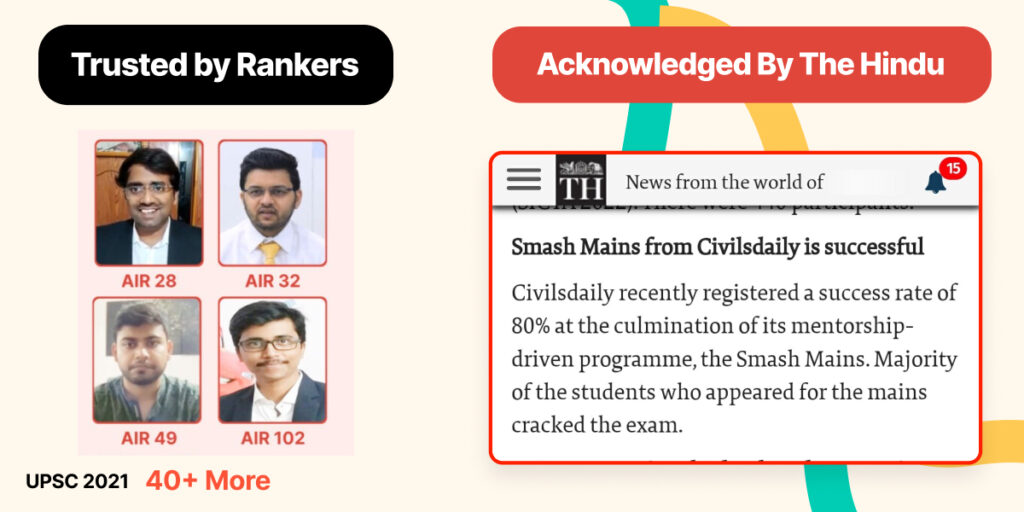
    upsc 2023 exam dateCivilsDaily’s mentorship: Acknowledged by The Hindu

    About Soham Mandhare

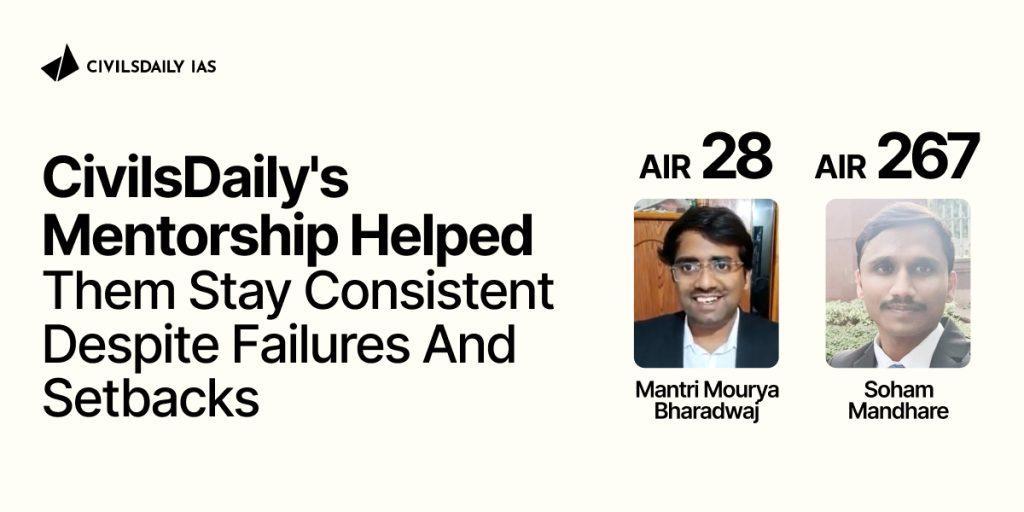
    Soham Mandhare’s story is about grit and determination. It is a story of fortitude. Despite all the hardships he secured an AIR 267 in UPSC 2021. She was a student of our Mentorship programs and was taking mentorship under Sajal sir and Sukanya ma’am.

    Soham’s optional was PSIR and he scored one of the highest marks in UPSC Mains exam. He will be mentoring CivilsDaily students as Super Mentor.


    What you’ll get as a part of the Special Preparatory Package?

    As a part of this:

    1. FREE Mentorship session with Senior IAS Mentor on strategy and approach for UPSC/MPSC 2023.
    2. Samachar Manthan (Marathi) current week’s module and Mains Questions
    3. Prelims Weekly MCQ PDF
    4. Mains 250+ Value notes
    5. Current month’s Monthly Magazine

    Post-webinar get PERSONALIZED Current Affairs Strategy + MENTORSHIP CALL for MPSC/UPSC 2023-24. 

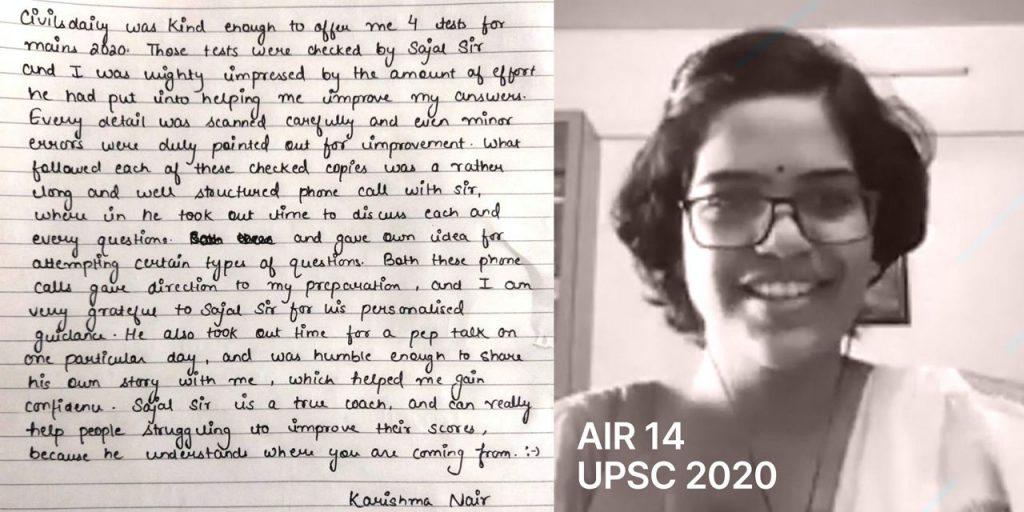
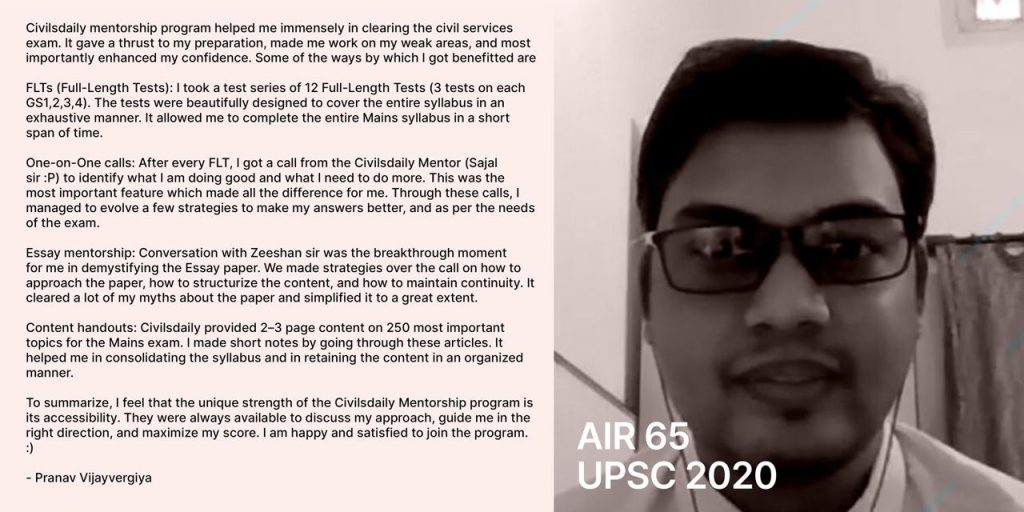
    Karishma Nair, AIR 14 was also CivilsDaily’s mentorship studentAIR 65, and Pranav was a mentorship student for UPSC 2020best coaching for upsc in delhi
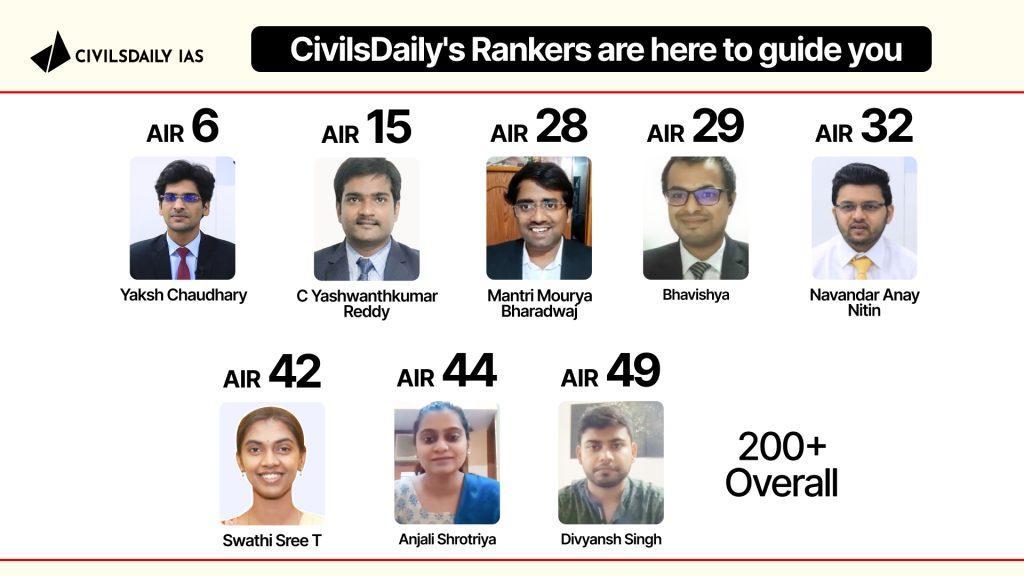
    Some of our Ranker from Maharashtra

    Post-webinar get PERSONALIZED Current Affairs Strategy + MENTORSHIP CALL for MPSC/UPSC 2023-24. 

  • Need to ensure that the digital gateways do not become gatekeepers of services

    digital

    Context

    • The ease of living enabled by digital technologies has turned digital innovations into essential services for the common public. Considered a novelty earlier, the internet has become a necessity for most day-to-day affairs.

    Click and get your FREE Copy of CURRENT AFFAIRS Micro Notes

    Internet access and restrictions

    • To enable access to the internet, various gateways have come up in the last few decades in the form of telecom service providers, personal computers and smartphones, operating systems, etc.
    • However, when these gateways enable and restrict access to other gateways or networks, the openness of the internet is threatened.
    • They then shift roles from being a facilitator to a regulator, from being a gateway to a gatekeeper. Hence, the need for a code of conduct or regulation arises to keep the playing field level and accessible to all.

    digital

    Analysis: Telecoms and Government

    • Telecom service providers: Telecom companies have been instrumental in providing a gateway to essential communication services such as voice calls, internet data, and text messages.
    • Government measures to regulate telecoms: We have seen governments across the world take measures from time to time to regulate these entities to ensure democratic access for the public. If this code of conduct was not enforced on these gateway providers, the internet would not be what it is today. These providers would have turned into gatekeepers, and the internet would have been controlled by them, thwarting innovation and its democratic expansion.
    • Code of conduct cannot catch up the pace of emerging digital tech: With the rate at which digital technologies are evolving, the code of conduct and regulations can’t catch up with the new gateway providers that are emerging. One such example is distribution platforms for smartphone applications.
    • Benchmarks set by bigtechs helps to bring some hygiene in smartphone apps: The two prominent operating systems emerging for smartphones, Google and Apple, enjoy a lion’s share of the app store market. They brought in good practices to ensure basic hygiene for smartphone applications, maintained quality benchmarks for the content on their operating systems, and safeguarded the interests of their users.
    • Lack of full proof regulation would be a slippery slope: Though, without proper regulations to oversee how they decide on what should be weeded and whose interests should be guarded, it’s a slippery slope.

    Policy on Net Neutrality put forwarded by Indian Government 

    • Enforcing a code of conduct on telecoms: Closer home, another example of the enforcement of this code of conduct on providers was when the Indian government came out with the policy on Net Neutrality which, inter-alia, stipulates that telecom networks should be neutral to all the information being transmitted through it.
    • Meaning of Net Neutrality: Networks should treat all communication passing through them equally, independent of their content, application, service, device, sender, or recipient address. Adopting Net Neutrality ensured that we took a democratic stance against Big Tech.

    digital

    Questionable practices of distribution platforms

    • Practices without consent of its users: Various practices range from restrictions on payment gateways, advertising choices, app policies and various other aspects of an application or business that could be considered discriminatory in both principle and practice.
    1. For instance, a case of Goggle’s Update: Recently a report placed before the Competition Commission of India found Google Play Store’s payments policy “unfair and discriminatory”. As per an update in Google’s Play Store billing policy in September 2020, all applications on its platform were mandated to use its payment services for any kind of in-app payments or subscriptions.
    2. Similar case of Apple’s appstore: Similar concerns have been raised for Apple’s App Store, with both platforms said to be charging up to 30 per cent commission on payments processed.
    • Market dominance and unilateral control over smartphone apps by the bigtechs: Google and Apple dominate the global market share of smartphone operating systems (OS). This has enabled them to garner unilateral control over the publishing of smartphone applications on their OS.
    • Developers are forced to bend to the diktats of these bigtech gatekeepers: Bigtechs force developers to make changes to their applications or resort to using their proprietary advertising engines if they wish their applications to see the light of day. As is evident from the overnight change in Google’s billing policy, various smartphone application-dependent businesses and developers continue to remain vulnerable to such internal business policy changes on these platforms.

    European Union’s Digital Markets Act (DMA) sets an example

    • Recognising these concerns: The European Union has recently enacted the Digital Markets Act; it is expected to be implemented by early 2023.
    • Aims to keep digimarket open for competition: The Digital Markets Act regulation aims to keep digital markets innovative and open to competition, through ex-ante regulation.
    • Prohibit anti-competitive practices: The DMA will prohibit the implementation of the most harmful anti-competitive practices by the largest digital platforms.
    • Objective is to maintain balance: The objective is to balance the relationship between these platforms that control access to digital markets and the companies that offer their services there.

    Conclusion

    • The Indian government has taken a huge leap forward in maintaining its sovereignty through the path-breaking and disruptive digital public goods it has created. Aadhaar, UPI, DigiLocker, and CoWIN are just a few names that adorn this list. However, there is still a wide dependence on various digital offerings enabled by multinational Big Tech companies. It is the need of the hour for the government to devise appropriate regulations to ensure a level playing field and not let the innovating gateways turn into tyrannical gatekeepers.

    Mains Question

    Q. India is the largest consumer of wireless internet. Analyze the role of big tech service providers in this and the role of government in ensuring a level playing field for all.

    (Click) FREE1-to-1 on-call Mentorship by IAS-IPS officers | Discuss doubts, strategy, sources, and more

  • [Burning issue] Wildlife (Protection) Amendment Bill, 2022

    wild

    Context

    • Rajya Sabha passed the Wildlife (Protection), Amendment Bill, 2022. The Lok Sabha passed the Bill in the Monsoon Session.
    • The amendment seeks to give effect to India’s obligations under the Convention on International Trade on Endangered Species of Wild Fauna and Flora (‘CITES’), which requires countries to regulate the trade of all listed specimens through permits.
    • In this context, this edition of the burning issue analyses the Wildlife (Protection) Amendment Bill, 2022.

    About the Wildlife Protection Act (WPA), 1972

    • WPA provides for the protection of the country’s wild animals, birds and plant species, in order to ensure environmental and ecological security.
    • It provides for the protection of a listed species of animals, birds and plants, and also for the establishment of a network of ecologically-important protected areas in the country.
    • It provides for various types of protected areas such as Wildlife Sanctuaries, National Parks etc.
    • The object and purpose of the WPA – to protect animals in their natural environment – was lent credence in the 42nd Constitutional Amendment Act,1976, which added the fundamental duty to “protect and improve … wildlife, and to have compassion for living creatures” under Article 51A(G).
    • This Amendment also inserted Article 48A in the Directive Principles of State Policy, which outlined the protection and safeguarding of wildlife as an ideal to be followed in the governance of the country.
    • There are six schedules provided in the WPA for the protection of wildlife species which can be concisely summarized as under:
    Schedule I:These species need rigorous protection and therefore, the harshest penalties for violation of the law are for species under this Schedule.
    Schedule II:Animals under this list are accorded high protection. They cannot be hunted except under threat to human life.
    Schedule III & IV:This list is for species that are not endangered. This includes protected species but the penalty for any violation is less compared to the first two schedules.
    Schedule V:This schedule contains animals which can be hunted.
    Schedule VI:This list contains plants that are forbidden from cultivation.

    About CITES

    • CITES stands for the Convention on International Trade in Endangered Species of Wild Fauna and Flora.
    • It is an international agreement aimed at ensuring “that international trade in specimens of wild animals and plants does not threaten their survival”.
    • It was drafted after a resolution was adopted at a meeting of the members of the International Union for Conservation of Nature (IUCN) in 1963.
    • It entered into force on July 1, 1975, and now has 183 parties.
    • The Convention is legally binding on the Parties in the sense that they are committed to implementing it; however, it does not take the place of national laws.
    • India is a signatory to and has also ratified CITES convention in 1976.

    It has three appendices:

    • Appendix I includes species threatened with extinction. Trade-in specimens of these species are permitted only in exceptional circumstances.
    • Appendix II provides a lower level of protection.
    • Appendix III contains species that are protected in at least one country, which has asked other CITES Parties for assistance in controlling trade.

    Provisions of the Wildlife Protection Amendment Bill, 2022

    • In line with CITES: Insert a new Schedule for specimens listed in the Appendices under CITES.
    • Constitute a Standing Committee: Amendment to Section 6 to constitute Standing Committee to exercise such powers and duties as may be delegated to it by the State Board for Wildlife.
    • Elephant usage: Amendment to Section 43 to permit elephants, a Schedule I animal, to be used for ‘religious or any other purpose’.
    • Management authority for export/import: Insert Section 49E to empower the Central government to designate a Management Authority to grant export or import permits for the trade of specimens. It further requires every person possessing live specimens of scheduled animals to obtain a registration certificate from the Management Authority.
    • Create a scientific authority: Insert Section 49F to empower the Central government to designate a Scientific Authority to advise on aspects related to the impact on the survival of the specimens being traded. These provisions are set to ensure the “sustainable” exploitation of flora and fauna.
    • Better control of sanctuaries: The Bill seeks to regulate the control of sanctuaries. It provides that the Chief Wildlife Warden shall act in accordance with the management plans for the sanctuary, to be prepared as per Central guidelines.
    • Creation of conservation reserve: It also empowers both Central and State governments to declare areas adjacent to national parks and sanctuaries as conservation reserves, for protecting flora and fauna, and their habitat.
    • Managing alien invasive species: The Bill also empowers the Central government to regulate and stop the import, trade or possession of invasive plant or animal alien species.
    • Enhanced penalties: The Bill also enhances the penalties prescribed for violation of provisions of the Act. For ‘General violations’, the maximum fine is increased from Rs 25,000 to Rs. 1 lakh. In the case of Specially protected animals, the minimum fine of Rs. 10,000 has been enhanced to Rs. 25,000.

    Positive aspects of the bill

    • Enhanced Protection of wild animals: Bill seeks to enhance punishment for trade in animal and plant specimens.
    • Locals use of Protected Areas: the bill permits certain activities like grazing of livestock and community use of drinking water by local communities.
    • Ease of elephant ownership: The Bill seeks to amend Section 43 of the principal Act to permit the transfer or transport of a captive elephant for a religious or any other purpose by a person having a valid certificate of ownership.

    Negative aspects of the bill

    • Vague clause in section 43: The Bill seeks to amend Section 43 of the principal Act to permit the transfer or transport of a captive elephant for a religious or any other purpose by a person having a valid certificate of ownership. Many members raised concern about this provision, stating that the phrase “any other purpose” is vague and has the potential of encouraging the commercial trade of elephants, their captivity and brutality.
    • Silent of important issues: The government missed the opportunity to address the issues relating to Human-Wildlife conflict, Eco-sensitive zone rule, etc.
    • The schedule lists not complete: They pointed out that the species listed in all the 3 schedules of the Bill are incomplete as per the report submitted by the Parliamentary Standing Committee and a need was felt for greater inclusion of scientists, botanists, biologists in process of listing all existing species of wildlife.
    • Reduced role of states in wildlife management: Protection of wild animals and birds is a subject under the Concurrent List of the Constitution. the proposed amendment bill renders the State Boards for Wildlife chaired by Chief Ministers defunct and provides for establishing a Standing Committee of Board for Wildlife to be headed by the Forest Minister with a maximum of 10 nominated members. This injures the federal structure of India.
    • Against the fundamental objective of WPA: The new proviso creates a legal pathway to encourage the further commercialization and transfer of elephants through the vague wording of “religious or any other purpose.” This goes against the fundamental object and purpose of the WPA.

    Way forward

    • An additional mechanism may be introduced for acquiring animals for religious institutions.
    • The Management and Scientific Authorities contemplated under the Bill must take into account the strong principles of Federalism and ensure constructive engagement of State governments.
    • Clauses related to human-animal conflicts and eco-sensitive zones should also be added to the law to provide a legal framework to deal with these issues.
    • State’s wildlife bodies should be given due importance in the conservation of wildlife as the subject is a concurrent subject.

    Conclusion

    • The amendment bill tries to bring the WPA law up to date with the CITES mandate and present environment scenario.
    • However, several lacunas have been highlighted by environmental experts which need attention from the government and need to be fixed to bring out the best for the nation’s wildlife.

    Click and get your FREE Copy of CURRENT AFFAIRS Micro Notes

    (Click) FREE 1-to-1 on-call Mentorship by IAS-IPS officers | Discuss doubts, strategy, sources, and more

More posts