💥Join UPSC 2027,2028 Mentorship (July Batch) + XFactor Notes & Microthemes PDF

Subject: Conservation & Mitigation

1. Conservation Progs.
2. Worldwide initiatives
3. Mitigation Strategies
4. Conventions and Protocols

  • Air pollution in India — where does it come from?

    Why in the News?

    Millions of people die early because of dirty air. But where does this air pollution come from?

    Where do the majority of sulphur dioxide (SO2) emissions in India come from?

    • Energy Production: The largest source of sulphur dioxide (SO2) emissions in India is energy production, primarily from coal-fired power plants. Eg, coal contains sulphur impurities that are released when it is burned, contributing significantly to SO2 pollution.
    • Industrial Activities: Industries like cement production, steel manufacturing, and chemical plants also release SO2. Eg, the cement industry, which uses fossil fuels, is a major emitter of this pollutant.

    What are the main sources of nitrogen oxides (NOx) emissions?

    • Transportation: The largest source of nitrogen oxides (NOx) emissions is transportation, particularly from the exhaust of cars and trucks. Eg, diesel-powered vehicles, which burn fuel less efficiently, produce higher NOx emissions.
    • Energy Production: The burning of coal and gas for electricity generation also significantly contributes to NOx emissions. Eg, power plants that burn coal release large amounts of NOx during the combustion process.
    • Industrial Activities: Industrial processes such as manufacturing and chemical production also emit NOx. Eg, refineries and other heavy industries use high-temperature processes that release NOx as a byproduct.

    What sectors are the biggest contributors to methane (CH4) emissions?

    • Agriculture: The largest source of methane emissions, particularly from livestock digestion (enteric fermentation) and rice paddies. Eg, cows and other ruminants produce methane during digestion, and flooded rice fields emit methane as organic matter decomposes anaerobically.
    • Waste Management: Methane is released from organic waste decomposing in landfills under anaerobic conditions. Eg, food waste rotting in landfills produces significant methane emissions.
    • Fossil Fuel Extraction: Methane is emitted during the extraction, transport, and use of fossil fuels, especially natural gas. Eg, methane leaks from oil and gas pipelines, as well as from coal mines, contributing to atmospheric emissions.

    How does agriculture contribute to ammonia (NH3) emissions and their health impacts?

    • Agriculture: The application of nitrogen-based fertilizers is a major source of ammonia emissions. Eg, the use of urea fertilizers in crop fields results in ammonia volatilization when applied to the soil, contributing to air pollution.
    • Livestock Waste: Ammonia is released from animal manure, especially from large-scale livestock farming. Eg, in intensive dairy and poultry farms, ammonia is emitted from urine and feces, leading to air and water pollution.
    • Health Impacts: Ammonia contributes to the formation of fine particulate matter (PM2.5), which can cause respiratory issues, asthma, and premature deaths. Eg, exposure to ammonia-laden air in farming areas has been linked to increased health risks such as lung diseases and cardiovascular problems.

    What are the steps taken by the Indian Government?

    • National Clean Air Programme (NCAP): Launched in 2019, NCAP aims to reduce particulate matter (PM2.5 and PM10) pollution in 102 cities by 20-30% by 2024, with strategies focusing on controlling emissions from key sectors like transport, industries, and construction.
    • Pradhan Mantri Ujjwala Yojana: This initiative aims to replace traditional biomass cooking methods with clean cooking technologies, such as LPG, to reduce black carbon emissions in rural areas.
    • BS-VI Norms for Vehicles: The Indian government has enforced the Bharat Stage VI (BS-VI) emission standards from April 2020, which are aimed at significantly reducing nitrogen oxides (NOx) and particulate emissions from vehicles.
    • Pollution Control Measures in Power Plants: The government has set deadlines for coal-fired power plants to comply with stricter emission norms for sulphur dioxide (SO2), nitrogen oxides (NOx), and particulate matter.
    • Air Quality Monitoring and Data Collection: The government has set up a network of air quality monitoring stations across cities under the Central Pollution Control Board (CPCB) and is working to improve real-time data collection on air quality.

    Way forward: 

    • Shift to Clean Energy: Expand renewable energy use and enforce cleaner technologies in the power and industrial sectors to cut SO₂ and NOₓ emissions.
    • Strengthen Enforcement & Awareness: Ensure strict implementation of air quality norms and raise public awareness on pollution-reducing practices.

    Mains PYQ:

    [UPSC 2022] Discuss in detail the photochemical smog, emphasising its formation, effects and mitigation.

    Linkage: Formation of a significant type of air pollution, photochemical smog, which is formed from primary pollutants like Nitrogen oxides (from transport and industry) reacting in the presence of sunlight [209, external knowledge]. Understanding the formation requires knowing the precursor pollutants and their sources.

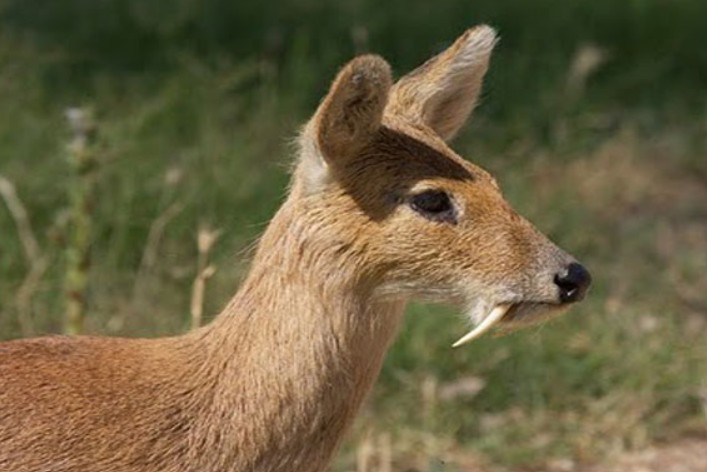
  • Species in news: Musk Deer

    Why in the News?

    A recent report by the Central Zoo Authority (CZA), highlights the absence of any breeding programme for musk deer.

    Species in news: Musk Deer

    About Musk Deer:

    • The Himalayan Musk Deer (Moschus leucogaster) is an endangered species native to the Himalayas, found in India, Nepal, Bhutan, Pakistan, and China.
    • It inhabits altitudes of 2,200 to 4,300 meters, primarily in alpine forests and scrublands.
    • Behaviour: Solitary, nocturnal, and territorial. Males have long, curved canine teeth and a musk gland, which is highly valued and targeted by poachers.
    • It plays a key role in seed dispersal, helping maintain the balance of the alpine ecosystem.
    • Threats: Poaching for their musk glands, habitat loss from deforestation, and genetic issues due to fragmented populations.

    Conservation Initiatives:

    • Protection Status:
      • It is listed as Endangered on the IUCN Red List.
      • It is listed under Schedule I of the Wildlife (Protection) Act, 1972, offering the highest protection under Indian law.
    • Protected Areas:
      • Kedarnath Wildlife Sanctuary: Established in 1972, covering 975 km² in the western Himalayas, crucial for musk deer conservation.
      • Askot Musk Deer Sanctuary: Located in Uttarakhand, dedicated specifically to musk deer conservation.
    • Himalayan Musk Project (1982): Aimed at captive breeding within Kedarnath Sanctuary but faced setbacks due to disease, snake bites, and poor survival rates. The project was shut down in 2006.
    [UPSC 2020] Which of the following are the most likely places to find the musk deer in its natural habitat?

    1. Askot Wildlife Sanctuary

    2. Gangotri National Park

    3. Kishanpur Wildlife Sanctuary

    4. Manas National Park

    Select the correct answer using the code given below:

    Options: (a) 1 and 2 only (b) 2 and 3 only (c) 3 and 4 only (d) 1 and 4 only


  • India to Headquarter the International Big Cat Alliance (IBCA) 

    Why in the News?

    India has signed a Headquarters Agreement with the International Big Cat Alliance (IBCA), officially establishing its headquarters in India.

    About International Big Cat Alliance (IBCA):

    • IBCA is a multi-country, multi-agency group of 96 big cat range and non-range countries focused on conserving 7 big cats and their habitats.
    • It was proposed by PM Modi in 2019, officially launched in April 2023 for Project Tiger’s 50th anniversary.
    • It aims to protect and conserve Tiger, Lion, Leopard, Snow Leopard, Cheetah, Jaguar, and Puma; restore habitats and reduce human-wildlife conflict.
    • Key activities include- Advocacy, knowledge sharing, eco-tourism promotion, and resource mobilization for big cat conservation.
    • Currently, India, Nicaragua, Eswatini, and Somalia are members. Though membership is open to 96 range countries with big cat habitats.
    • Governance: Includes a General Assembly, elected Council, and Secretariat with a Secretary-General.
    • India’s Role:
      • India is home to 5 (tiger, lion, leopard, snow leopard, and cheetah) of the 7 big cats and 70% of the world’s tiger population, playing a leading role in global wildlife protection.
      • ₹150 crore from the Indian government (2023-2028) with additional contributions from global partners.
    [UPSC 2024] Consider the following statements:

    1. Lions do not have a particular breeding season.

    2. Unlike most other big cats, cheetahs do not roar.

    3. Unlike male lions, male leopards do not proclaim their territory by scent marking.

    Which of the statements given above are correct?

    (a) 1 and 2 only * (b) 2 and 3 only (c) 1 and 3 only (d) 1, 2 and 2


  • Particulate Matter Emission Trading Scheme in Gujarat

    Why in the News?

    A new study highlights the success of Surat’s Particulate Matter Emission Trading Scheme (PM-ETS), the world’s first market-based system for trading particulate emissions.

    The scheme has reduced pollution by 20-30%, providing insights into its potential to improve air quality in industrial areas.

    About Particulate Matter Emission Trading Scheme in Gujarat:

    • This PM ETS was launched in Surat, Gujarat in 2019.
    • It is the world’s first pilot project targeting particulate pollution using a market-based emissions trading system.
    • It is India’s first emissions trading initiative for any pollutant.
    • The scheme aims to reduce emissions from industries using solid (coal, lignite) and liquid fuels (diesel) by controlling fine particulate matter (PM).
    • How It Works?
      • Cap-and-Trade: Regulators set a cap on total emissions, and industries are issued permits (1 kg of particulate matter per permit).
      • Permit Allocation: 80% of permits are given for free; 20% are sold via auctions.
      • Market Trading: Permits can be bought or sold to meet emission targets. A ceiling price (Rs 100/kg) and floor price (Rs 5/kg) are set.
      • Compliance: Non-compliant industries face fines double the ceiling price for each excess emission.

    Successes of PM-ETS:

    • Reduction in Emissions: Participating plants cut emissions by 20-30% compared to traditional methods.
    • Improved Compliance: 99% compliance in participating plants.
    • Cost-Effective: The system allowed industries to choose the most cost-effective methods for compliance.

    Limitations of PM-ETS:

    • Over-reliance on Free Permits: Smaller plants may struggle as the number of free permits decreases.
    • Supply Chain Limitations: Tightened caps could increase costs for industries not reducing emissions.
    • Market Manipulation: Concerns over unfair permit trading.
    • Geographical Constraints: Limited to Surat, restricting broader impact.
    [UPSC 2011] Regarding “carbon credits’’, which one of the following statements is not correct?

    (a) The carbon credit system was ratified in conjunction with the Kyoto protocol.

    (b) Carbon credits are awarded to countries or groups that have reduced greenhouse gases below their emission quota.

    (c) The goal of the carbon credit system is to limit the increase of carbon dioxide emission.

    (d) Carbon credits are traded at a price fixed from time to time by the United Nations environment programs. *


  • What is Flue Gas Desulphurisation (FGD)?

    Why in the News?

    The Union Environment Ministry’s 2015 policy mandating the installation of Flue Gas Desulphurisation (FGD) equipment in all of India’s 537 coal-fired plants has been scrutinised by a recent study commissioned by the Office of the Principal Scientific Adviser.

    Flue Gas Desulphurisation (FGD)

    About Flue Gas Desulphurisation (FGD) in Power Plants

    • FGD is used to remove sulfur dioxide (SO) from flue gases in coal-fired power plants.
    • The process involves passing exhaust gases through a scrubbing system using absorbents like ammonia, sodium sulfite, or limestone.
    • Methods:
      • Wet Limestone Scrubbing: Gases pass through a scrubber tower with a slurry of water and limestone.
      • Dry Sorbent Injection: Uses a dry alkaline agent to neutralize SO₂.
      • Sea Water-Based Systems: Utilizes seawater’s natural alkalinity to absorb SO₂.
    • FGD can remove up to 95% of sulfur dioxide, reducing SO emissions significantly.
    • Reduces sulfur emissions, major contributors to acid rain and air pollution.
    • FGD Gypsum, a byproduct, can be used in industries like cement manufacturing.

    Recent Study on FGD in Power Plants

    • A study by NIAS critiques India’s FGD policy, recommending limited FGD installations for plants using imported or high-sulfur coal.
    • 92% of coal in Indian plants has low sulfur content (0.3%-0.5%), meaning FGD may not significantly improve local air quality.
    • Widespread FGD installation could increase power and water consumption, and result in 69 million tonnes of additional CO emissions by 2030.
    • Removing SO (cooling agent) while increasing CO emissions may accelerate climate change.
    • Recommendations: Installing electrostatic precipitators (₹25 lakh per MW) can reduce 99% of particulate matter (PM), offering a more cost-effective and impactful solution.
    [UPSC 2024] According to the Environmental Protection Agency (EPA), which one of the following is the largest source of sulphur dioxide emissions?

    (a) Locomotives using fossil fuels

    (b) Ships using fossil fuels

    (c) Extraction of metals from ores

    (d) Power plants using fossil fuels*


  • How govern-mentality exacerbates the problem of farmers’ stubble burning

    Why in the News?

    A new study by researchers Sujit Raghunathrao Jagadale and Javed M. Shaikh from IIM Amritsar looks at the issue of stubble burning by examining how government policies and market systems are failing to manage the problem effectively.

    Why do farmers continue stubble burning despite its harm to air quality?

    • Cost-Effective Method: Stubble burning is the cheapest way for farmers to clear their fields after harvesting. Eg: Farmers burn stubble to quickly prepare their land for the next crop, especially for wheat, without incurring high labor or machinery costs.
    • Lack of Affordable Alternatives: There are limited affordable and efficient alternatives to stubble burning. Eg: Farmers often do not have access to technology or subsidies for machines that can manage stubble, such as Happy Seeder or bio-decomposers.
    • Government’s Focus on High-Yield Crops: The Minimum Support Price (MSP) policy incentivizes the cultivation of wheat and rice, leading to monocropping. Eg: Farmers are encouraged to grow rice continuously, which results in an abundance of stubble that needs to be disposed of quickly.
    • Debt and Economic Pressure: Many farmers face financial pressures, including debt and low returns on their crops, which makes burning stubble a way to save time and money. Eg: Farmers often sell their crops to middlemen at low prices, leaving them with insufficient income to invest in sustainable farming practices.
    • Lack of Strong Enforcement or Support: Although stubble burning is penalized, enforcement of laws is weak, and farmers often feel the state does not provide adequate support for eco-friendly methods. Eg: Despite penalties, farmers feel little pressure to change practices when there is insufficient governmental support or infrastructure for alternatives.

    How does India’s MSP policy influence stubble burning?

    • Encourages Monocropping: The MSP policy promotes the cultivation of high-yield crops like rice and wheat, leading to monocropping, which results in a large amount of stubble that must be cleared. Eg: Farmers in Punjab often grow rice followed by wheat, creating a cycle where large quantities of rice stubble need to be burned to prepare the soil for the next crop.
    • Limits Crop Diversification: The MSP system prioritizes wheat and rice over other crops, making it economically unfeasible for farmers to switch to more sustainable practices or crops that would reduce stubble burning. Eg: Despite the potential for growing other crops, farmers focus on rice and wheat to benefit from MSP, leaving them with stubble that they have no economically viable option to manage.
    • Financial Constraints: The MSP rates for crops like rice and wheat have remained stagnant, making it harder for farmers to invest in alternatives to stubble burning, such as machinery or composting. Eg: With wheat MSP seeing only minimal increases, farmers struggle to cover costs for labor and inputs, leading them to resort to stubble burning as the most cost-effective option to clear fields.

    What has the government done in this situation?

    • Implemented Subsidies for Machinery: The government has provided subsidies for the purchase of machinery like the Happy Seeder to help farmers manage stubble without burning. Eg: The Punjab government has distributed equipment like straw management machines under the Sub-Mission on Agricultural Mechanization to reduce stubble burning.
    • Awareness Campaigns: The government has conducted awareness programs to educate farmers about the harmful effects of stubble burning and encourage them to adopt alternative practices. Eg: The Ministry of Agriculture and local bodies in states like Punjab and Haryana have launched campaigns to raise awareness about the environmental and health risks of stubble burning.
    • Legal Measures and Penalties: Various state governments, including Punjab, have imposed fines and penalties on farmers found burning stubble, aiming to deter the practice. Eg: The Punjab government introduced a fine for stubble burning, with penalties reaching up to Rs 2,500 for each violation, although enforcement remains challenging.

    Way forward: 

    • Promote Crop Diversification: Encourage farmers to shift from paddy to less water-intensive and non-stubble-generating crops through assured procurement and better MSP for alternative crops. Eg: Incentivize crops like millets and pulses to reduce stubble generation.
    • Strengthen Support and Infrastructure: Scale up access to sustainable stubble management technologies and ensure timely financial and logistic support to small and marginal farmers. Eg: Expand reach of Happy Seeder and bio-decomposer solutions through local cooperatives and custom hiring centers.

    Mains PYQ:

     [UPSC 2015] Mumbai, Delhi and Kolkata are the three Mega cities of the country but the air pollution is much more serious probelm in Delhi as compared to the other two. Why is this so?

    Linkage: Delhi’s severe air pollution, especially at certain times of the year, is caused by a combination of its location in the Indo-Gangetic Plain, nearby states burning crop stubble, and weather conditions that trap pollutants.

  • [pib] Indian researchers introduce ‘Toxicity Standard’ of PM2.5 Pollution

    Why in the News?

    A recent study conducted in Kolkata shows that the toxicity value of PM2.5 experiences a sudden jump when the pollution level reaches around 70 µg/m³.

    About PM2.5

    • PM2.5 refers to fine particulate matter with a diameter of 2.5 micrometers or smaller.
    • It is a major air pollutant linked to respiratory and cardiovascular diseases. Long-term exposure increases the risk of lung cancer, heart disease, asthma, and other health issues.
    • Major sources include vehicle exhaust, industrial emissions, construction dust, biomass burning, and solid waste burning, contributing to both outdoor and indoor pollution.
    • WHO recommends that the annual average PM2.5 concentration should NOT exceed 5 µg/m³, and the 24-hour average should not exceed 15 µg/m³ for more than 3-4 days per year.

    PM2.5 on Govt. Focus: National Clean Air Program (NCAP)

    • Launched in 2019 by the Ministry of Environment, Forest and Climate Change (MoEFCC), the NCAP aims to reduce particulate matter by 40% by 2026 compared to 2017 levels.
    • It targets 131 non-attainment cities across India, focusing on improving air quality and addressing sources of pollution.

    About the Notified Toxicity Standard for PM2.5 

    • A new toxicity standard for PM2.5 in Kolkata sets the critical threshold at 70 µg/m³.
    • Below this level, toxicity remains stable, but it sharply increases once the concentration exceeds 70 µg/m³.
    • It emphasizes reducing pollution sources, particularly biomass and solid waste burning, which contribute significantly to high PM2.5 levels and increased toxicity in Kolkata.
    • Policy Recommendation: To reduce health risks, air quality control measures should aim to keep PM2.5 levels below 70 µg/m³.
    [UPSC 2022] In the context of WHO Air Quality Guidelines, consider the following statements:

    1. The 24-hour mean of PM2.5 should not exceed 15 µg/m3 and annual mean of PM2.5 should not exceed 5 µg/m3.

    2. In a year, the highest levels of ozone pollution occur during the periods of inclement weather.

    3. PM10 can penetrate the lung barrier and enter the bloodstream.

    4. Excessive ozone in the air can trigger asthma.

    Which of the statements given above are correct?

    (a) 1, 3 and 4  (b) 1 and 4 only (c) 2, 3 and 4 (d) 1 and 2 only


  • CPCB revises Classification of Industries

    Why in the News?

    The Central Pollution Control Board (CPCB) has recently updated its classification of industries, introducing a new category known as the ‘Blue Category.’

    Classification of Industries by CPCB:

    • The CPCB classifies industries based on their environmental impact, focusing on air pollution, water pollution, and hazardous waste generation.
    • Industries are classified using the Pollution Index (PI), which is calculated by considering air, water, and waste pollution, with equal weight given to each factor.
    • PI Categories:
      1. White: PI < 25 (least polluting industries)
      2. Green: 25 ≤ PI < 55
      3. Orange: 55 ≤ PI < 80
      4. Red: PI > 80 (most polluting industries)
    • This system helps determine industry locations, inspection norms, and pollution-related health impacts.
    • It is regulated by the Ministry of Environment, Forests, and Climate Change (MoEFCC) to improve environmental standards.
    • Presently 419 industrial sectors are categorized into Red, Orange, Green, White, and Blue.

    About the ‘Blue’ Category (Newly Introduced):

    • The Blue Category was introduced for industries providing Essential Environmental Services (EES) like pollution management and waste control.
    • It recognizes industries involved in critical environmental management, such as waste-to-energy plants, sewage treatment plants, and landfill management.
    • Industries in the Blue category receive a 2-year extension on their consent to operate as an incentive for their role in managing pollution.
    • Scope: Includes industries that manage waste from both domestic and industrial sources, such as:
      • Waste-to-Energy (WTE) Plants: Now in the Blue category despite their high PI, due to their role in waste energy recovery.
      • Compressed Biogas (CBG) Plants: Classified as Blue for their low environmental impact when processing municipal waste and agro residue.
      • Sewage Treatment Plants & Landfills: These facilities manage environmental hazards through controlled waste disposal.
    • Blue category industries must comply with all environmental norms, and their Pollution Index is still calculated as per the standard formula.
    • Industries showing successful management may receive extended operating permits and other incentives.
    [UPSC 2021] With reference to furnace oil, consider the following statements:

    1.It is a product of oil refineries. 2.Some industries use it to generate power. 3.Its use causes sulfur emissions into the environment.

    (a) 1 and 2 only  (b) 2 and 3 only (c) 1 and 3 only (d) 1, 2, and 3


  • Extinct Dire Wolf species returns after 12,500 years

    Why in the News?

    Colossal Biosciences, a biotech firm based in US, has successfully bred the extinct Dire Wolf pups using gene-editing technologies.

    About Dire Wolf (Aenocyon dirus)

    • The dire wolf lived during the Pleistocene Epoch, approximately 6 million to 11,700 years ago, and went extinct around 13,000 years ago.
    • Physical Characteristics and Behaviour:
      • It was larger than the modern gray wolf, standing about 5 feet tall at the shoulder and weighing up to 150 pounds, significantly heavier than the average gray wolf.
      • It had a stockier body, a robust skull, and powerful jaws, adapted for hunting and consuming large prey. It likely had light or white fur, unlike the gray, black, or white coats of modern wolves.
      • As an apex predator, the dire wolf primarily preyed on large mammals like bison and horses.
      • While it did not hunt in packs as effectively due to its size, it was capable of cooperative hunting when needed.
    • Extinction:
      • The species went extinct likely due to a combination of prey depletion, climate change, and the impact of human activities.
      • Fossils have been found across a wide geographical range, from the La Brea Tar Pits in California to the Mississippi River Valley.
    • Genomic Comparison:
      • The gene-edited pups share 99.5% DNA of gray wolves but differ in the remaining 0.5%, which accounts for the dire wolf traits.
      • These pups are not exact clones of the dire wolf but are considered “dire wolves” based on their physical resemblance.

    Extinct Dire Wolf species returns after 12,500 years

    Technologies Used for Resurrection:

    • Ancient DNA Extraction & Analysis: DNA from 13,000 to 72,000-year-old fossils was sequenced to identify key genetic traits.
    • Gene Editing (CRISPR): Scientists used CRISPR to edit gray wolf DNA, introducing features like size, fur color, and muscular traits to resemble the dire wolf.
    • Somatic Cell Nuclear Transfer (SCNT): Edited somatic cells from gray wolves were used to create embryos implanted in dog surrogates. Genetically modified pups were born after 62 days.
    • Embryo Implantation: The gene-edited embryos developed into the first de-extinct dire wolf pups.
    [UPSC 2018] The term “”sixth mass extinction/sixth extinction”” is often mentioned in the news in the context of the discussion of:

    (a) Widespread monoculture practices in agriculture and large-scale commercial farming with indiscriminate use of chemicals in many parts of the world that may result in the loss of good native ecosystems.

    (b) Fears of a possible collision of a meteorite with the Earth in the near future in the manner it happened 65 million years ago that caused the mass extinction of many species including those of dinosaurs.

    (c) Large scale cultivation of genetically modified crops in many parts of the world and promoting their cultivation in other parts of the world which may cause the disappearance of good native crop plants and the loss of food biodiversity.

    (d) Mankind’s over-exploitation/misuse of natural resources, fragmentation/loss of natural habitats, destruction of ecosystems, pollution and global climate change.


  • First photographic record of Woolly Flying Squirrel captured in Himachal

    Why in the News?

    The Himachal Pradesh Forest Department’s wildlife wing has captured the first photographic evidence of the elusive Woolly Flying Squirrel in the Miyar Valley, Lahaul and Spiti district.

    First photographic record of Woolly Flying Squirrel captured in Himachal

    About the Woolly Flying Squirrel:

    • The Woolly Flying Squirrel, scientifically known as Eupetaurus cinereus, is one of the rarest and least known mammals in Asia.
    • It is endemic to the northwestern Himalayas, primarily found in northern Pakistan and northwestern India.
    • It prefers to live in dry conifer woodlands within a fragmented habitat in a thin elevational band.
    • This species was long believed to be extinct until it was rediscovered in 1994, nearly seventy years after its last recorded sighting.
    • It is unique due to its ability to glide, much like other flying squirrels, as it has elastic membranes that connect its fore and hind legs.

    Physical features:

    • Its body is covered with dense, straight, silky hairs, with the dorsal pelage appearing blue-gray, while the underside is pale gray.
    • The squirrel also has creamy white hairs on its throat and ears, and dense black fur on the soles of its feet, with pinkish brown toe pads that are naked.

    Conservation Status:

    • Listed as ‘Endangered’ on the IUCN Red List.
    • NOT explicitly mentioned under the Wildlife (Protection) Act, 1972.

    Significance of the Rediscovery:

    • Its confirmed existence adds to the state’s mammal checklist, offering hope for its continued survival in this remote part of the Himalayas.
    • This discovery is important from a scientific perspective, as it marks the first time the elusive species has been documented in India since its rediscovery in 1994.
    [UPSC 2012] Consider the following:

    1. Black-necked crane 2. Cheetah 3. Flying squirrel 4. Snow leopard

    Which of the above are naturally found in India?

    (a) 1, 2 and 3 only (b) 1, 3 and 4 only (c) 2 and 4 only (d) 1, 2, 3 and 4