đŸ’„Join UPSC 2027,2028 Mentorship (July Batch) + XFactor Notes & Microthemes PDF

Subject: Conservation & Mitigation

1. Conservation Progs.
2. Worldwide initiatives
3. Mitigation Strategies
4. Conventions and Protocols

  • 26 Ramsar sites in India: A comprehensive survey

    First of all, look at the details below. What comes first to mind is- So much of factual data! Why should I read so many facts?

    Let’s explore why?

    #1. Increasing thrust on area of ecology due to combined Prelims of Civil Services and Forest Services

    #2. Factual question trend has increased in Prelims (seen in 2015)

    Proof for utility of this data?

    A direct one


    [Prelims 2015] Which of the following National Parks is unique in being a swamp with floating vegetation that supports a rich biodiversity?
    (a) Bhitarkanika National Park
    (b) Keibul Lamjao National Park
    (c) Keoladeo Ghana National Park
    (d) Sultanpur National Park
    Answer: See description for Loktak Lake (13th entry in details below)

    Indirect


    [Prelims 2015] Which one of the following is the national aquatic animal of India?
    (a) Saltwater crocodile
    (b) Olive ridley turtle
    (c) Gangetic dolphin
    (d) Gharial

    [Prelims 2015] With reference to ‘dugong’, a mammal found in India, which of the following statements is/are correct?
    1. It is a herbivorous marine animal.
    2. It is found along the entire coast of India.
    3. It is given legal protection under Schedule I of the Wildlife (Protection) Act, 1972.
    Select the correct answer using the code given below.
    (a) 1 and 2
    (b) 2 only
    (c) 1 and 3
    (d) 3 only

    Ramsar sites through map:

    source

    Sites in detail:

    #1. Ashtamudi Wetland

    • State: Kerala
    • Designated on: 19 August 2002
    • Area: 614 sq. Km
    • (Note: same format followed in all wetlands below, i.e. State, Designated on, Area)

    Details:

    • A natural backwater in Kollam district
    • River Kallada and Pallichal drain into it
    • It forms an estuary with Sea at Neendakara which is a famous fishing harbour in Kerala
    • National Waterway 3 passes through it
    • Most tastiest backwater fish in Kerala, the Karimeen of kanjiracode Kayal is from Ashtamudi Lake

    #2. Bhitarkanika Mangroves

    • Orissa
    • 19 August 2002
    • 650 sq. Km

    Details:

    • In 1975, an area of 672 km2 was declared the Bhitarkanika Wildlife Sanctuary
    • The core area of the sanctuary, with an area of 145 km2, was declared Bhitarkanika National Park in September 1998
    • Gahirmatha Marine Wildlife Sanctuary, which bounds the Bhitarkanika Wildlife Sanctuary to the east, was created in September 1997, and encompasses Gahirmatha Beach and an adjacent portion of the Bay of Bengal
    • Bhitarkanika Mangroves were designated a Ramsar Wetland of International Importance in 2002
    • It is also famous for its salt water crocodiles and Olive ridley sea turtle

    #3. Bhoj Wetland

    • Madhya Pradesh
    • 19 August 2002
    • 32 sq. Km

    Details:

    • The Bhoj Wetland consists of two lakes located in the city of Bhopal
    • The two lakes are the Bhojtal and the Lower Lake, which lie to the west of the city center
    • It is a manmade reservoir
    • A total of more than 20,000 birds are observed annually
    • The Upper Lake acts as the lifeline of the city supplying 40% of its potable water
    • White storks, black-necked storks, bar-headed geese, spoonbills, etc., that have been rare sightings in the past, have started appearing
    • A recent phenomenon is the gathering of 100-120 sarus cranes in the lake
    • The largest bird of India, the sarus crane (Grus antigone) is known for its size, majestic flight and lifetime pairing

    #4. Chandra Taal

    • Himachal Pradesh
    • 8 November 2005
    • 0.49

    #5. Chilika Lake

    • Orissa
    • 1 October 1981
    • 1165

    Details:

    source
    • Chilka Lake (Chilika Lake) is a brackish water lagoon, spread over the Puri, Khurda and Ganjam districts of Odisha, at the mouth of the Daya River, flowing into the Bay of Bengal, covering an area of over 1,100 km2.
    • It is the largest coastal lagoon in India and the second largest lagoon in the world
    • The lagoon hosts over 160 species of birds in the peak migratory season
    • Birds from as far as the Caspian Sea, Lake Baikal, Aral Sea and other remote parts of Russia, Kirghiz steppes of Mongolia, Central and southeast Asia, Ladakh and Himalayas come here
    • These birds travel great distances; migratory birds probably follow much longer routes than the straight lines, possibly up to 12,000 km, to reach Chilika Lake
    • In 1981, Chilika Lake was designated the first Indian wetland of international importance under the Ramsar Convention
    • In November 2002, the Ramsar Wetland Conservation Award was presented to the Chilika Development Authority for outstanding achievements in the field of restoration and wise use of wetlands and effective participation of local communities in these activities
    • White bellied sea eagles, greylag geese, purple moorhen, jacana, flamingos, egrets, gray and purple herons, Indian roller, storks, white ibis, spoonbills, brahminy ducks, shovellers, pintails, and more
    • Nalbana Island is the core area of the Ramsar designated wetlands of Chilika Lake
    • Nalbana was notified in 1987 and declared a bird sanctuary in 1973 under the Wildlife Protection Act
    • The Irrawaddy dolphin (Orcaella brevirostris) is the flagship species of Chilika lake
    • Chilka is home to the only known population of Irrawaddy dolphins in India and one of only two lagoons in the world that are home to this species
    • It is classified as critically endangered, in five of the six other places it is known to live

    #6. Deepor Beel

    • Assam
    • 19 August 2002
    • 40

    #7. East Calcutta Wetlands

    • West Bengal
    • 19 August 2002
    • 125

    Details:

    • World-renowned as a model of a multiple use wetland
    • The site’s resource recovery systems, developed by local people through the ages, have saved the city of Calcutta from the costs of constructing and maintaining waste water treatment plants
    • The wetland forms an urban facility for treating the city’s waste water and utilizing the treated water for pisciculture and agriculture, through the recovery of nutrients in an efficient manner- the water flows through fish ponds covering about 4,000 ha, and the ponds act as solar reactors and complete most of their bio-chemical reactions with the help of solar energy
    • Thus the system is described as one of the rare examples of environmental protection and development management where a complex ecological process has been adopted by the local farmers for mastering the resource recovery activities
    • The wetland provides about 150 tons of fresh vegetables daily, as well as some 10,500 tons of table fish per year, the latter providing livelihoods for about 50,000 people directly and as many again indirectly
    • The fish ponds are mostly operated by worker cooperatives, in some cases in legal associations and in others in cooperative groups whose tenurial rights are under legal challenge
    • A potential threat is seen in recent unauthorized use of the waste water outfall channels by industries which add metals to the canal sludge and threaten the edible quality of the fish and vegetables

    #8. Harike Wetland

    • Punjab
    • 23 March 1990
    • 41

    Details:

    • A shallow water reservoir with thirteen islands, at the confluence of two rivers
    • Dense floating vegetation covers 70% of the lake
    • An important site for breeding, wintering and staging birds, supporting over 200,000 Anatidae (ducks, geese, swans, etc.) during migration
    • The entire lake is leased on an annual basis to commercial fishery organizations

    #9. Hokera Wetland

    • Jammu and Kashmir
    • 8 November 2005
    • 13.75

    Details:

    • Located in the northwest Himalayan biogeographic province of Kashmir, back of the snow-draped Pir Panchal, Hokera wetland is only 10 km from scenic paradise of Srinagar
    • A natural perennial wetland contiguous to the Jhelum basin, it is the only site with remaining reedbeds of Kashmir and pathway of 68 waterfowl species like Large Egret, Great Crested Grebe, Little Cormorant, Common Shelduck, Tufted Duck and endangered White-eyed Pochard, coming from Siberia, China, Central Asia, and Northern Europe
    • It is an important source of food, spawning ground and nursery for fishes, besides offering feeding and breeding ground to a variety of water birds
    • Typical marshy vegetation complexes inhabit like Typha, Phragmites, Eleocharis, Trapa, and Nymphoides species ranging from shallow water to open water aquatic flora
    • Sustainable exploitation of fish, fodder and fuel is significant, despite water withdrawals since 1999
    • Potential threats include recent housing facilities, littered garbage, and demand for increasing tourist facilities

    #10. Kanjli Wetland

    • Punjab
    • 22 January 2002
    • 1.83

    Details:

    • A permanent stream, the Kali Bein, converted by construction of a small barrage in 1870 into a water storage area for irrigation purposes
    • The site fulfils Criteria 3 because of its importance in supporting a considerable diversity of aquatic, mesophytic, and terrestrial flora and fauna in the biogeographical region
    • Acts also as a key regulator of groundwater discharge and recharge with the seasons
    • By this means and by direct abstraction of water for irrigation by the local population, the site plays a crucial role in the agriculture which predominates on the surrounding fertile plain, with fewer pressures upon water supplies than elsewhere in the Punjab
    • The invasive water hyacinth is present and must be removed from time to time; increasing pollution levels, deforestation in the catchment area, and excessive grazing are seen as potential threats
    • The stream is considered to be the most significant in the state from the religious point of view, as it is associated with the first guru of the Sikhs, Shri Guru Nanak Dev Ji
    • The stream itself and surrounding marsh is under provincial ownership and surrounding areas privately owned.
    • The site is a center for environmental tourism and picnicking

    #11. Keoladeo National Park

    • Rajasthan
    • 1 October 1981
    • 28.73

    Details:

    • A complex of ten artificial, seasonal lagoons, varying in size, situated in a densely populated region
    • Vegetation is a mosaic of scrub and open grassland that provides habitat for breeding, wintering and staging migratory birds
    • Also supported are five species of ungulates, four species of cats, and two species of primates, as well as diverse plants, fish and reptiles
    • The canal provides water for agriculture and domestic consumption
    • Cattle and water buffalo graze on the site
    • A field research station exists
    • Placed on the Montreux Record in 1990 due to ‘water shortage and an unbalanced grazing regime’
    • Additionally, the invasive growth of the grass Paspalum distichum has changed the ecological character of large areas of the site, reducing its suitability for certain waterbird species, notably the Siberian crane

    #12. Kolleru Lake

    • Andhra Pradesh
    • 19 August 2002
    • 901
    • It is a bird sanctuary

    #13. Loktak Lake

    • Manipur
    • 23 March 1990
    • 266

    source

    Details:

    • Loktak Lake is the largest freshwater lake in the north-eastern region of the country
    • It is famous for the phumdis (heterogeneous mass of vegetation, soil, and organic matters at various stages of decomposition) floating over it
    • Keibul Lamjao, the only floating national park in the world floats over it
    • It is located near Moirang, Bishnupur district in Manipur
    • The etymology of Loktak is Lok = stream and tak = the end
    • The Keibugl Lamjao National Park, which is the last natural refuge of the endangered ‘Sangai’ or Manipur brow-antlered deer (‘Cervus eldi eldi’), one of three subspecies of Eld’s deer, covering an area of 40 km2 (15 sq mi), is situated in the southeastern shores of this lake and is the largest of all the phumdis in the lake
    • This place is a global tourist destination
    • ‘Sendra tourist hub’ (a small hillock) is located at Moirang, around 58 km from the heart of the city

    #14. Nalsarovar Bird Sanctuary

    • Gujarat
    • 24 September 2012
    • 123

    Details:

    • A natural freshwater lake (a relict sea) that is the largest natural wetland in the Thar Desert Biogeographic Province
    • Represents a dynamic environment with salinity and depth varying depending on rainfall
    • The area is home to 210 species of birds, with an average 174,128 individuals recorded there during the winter and 50,000 in the summer
    • It is an important stopover site within the Central Asia Flyway, with globally threatened species such as the critically endangered Sociable Lapwing (Vanellus gregarius) and the vulnerable Marbled Teal (Marmaronetta angustirostris) stopping over at the site during migration, while the vulnerable Sarus Crane (Grus antigone) takes refuge there during summer when other water bodies are dry
    • The wetland is also a lifeline for a satellite population of the endangered Indian Wild Ass (Equus hemionus khur) which uses this area in the dry season
    • Local communities heavily rely on the lake as it provides them with a source of drinking water and water for irrigation, as well as an important source of income from fishing for Catla fish (Catla Catla) and Rohu (Labeo rohita)
    • An average of 75,000 tourists visit the wetland annually

    #15. Point Calimere Wildlife and Bird Sanctuary

    • Tamil Nadu
    • 19 August 2002
    • 385

    Details:

    • One of the last remnants of Dry Evergreen Forests
    • Habitat: Dry Evergreen Forests, Mangrove & Wetlands
    • Winter Migrants : Spoon Billed Sandpiper, Greater Flamingos
    • Threats: Agricultural & Shrimp farm runoff =>High concentration of DDT & HCH in their tissue

    #16. Pong Dam Lake

    • Himachal Pradesh
    • 19 August 2002
    • 156.62

    Details:

    • A water storage reservoir created in 1975 on the Beas River in the low foothills of the Himalaya on the northern edge of the Indo-Gangetic plain
    • The RIS notes that at a time when wetlands in northern India are getting reduced due to extensive drainage and reclamation, the avian habitats formed by the creation of the Pong Dam assume a great significance
    • Given the site’s location on the trans-Himalayan flyway, more than 220 bird species have been identified, with 54 species of waterfowl
    • Hydrological values include monsoon-season flood prevention, both in the surroundings and downstream due to water regulation, groundwater recharge, silt trapping and prevention of soil erosion; electricity is generated for this and neighboring states, and irrigation water is being channeled to fertile areas of the Punjab and Rajasthan deserts.
    • Low-yield subsistence fishing existed prior to impoundment, but since, a lucrative fishery has grown up, with 27 fish species and a yield increasing markedly each year- some 1800 fishermen now have direct employment and 1000 families benefit indirectly
    • A nature conservation education centre is found on the island of Ransar or Ramsar
    • Recent management strategies have shifted away from law enforcement and use restrictions towards more participatory approaches and community awareness, and the site is well suited to ‘community-based ecotourism’

    #17. Renuka Lake

    • Himachal Pradesh
    • 8 November 2005
    • 0.2

    Details:

    • A natural wetland with freshwater springs and inland subterranean karst formations, fed by a small stream flowing from the lower Himalayan out to the Giri river
    • The lake is home to at least 443 species of fauna and 19 species of ichthyofauna representative of lacustrine ecosystems like Puntius, Labeo, Rasbora, Channa
    • Prominent vegetation ranges from dry deciduous like Shorea Robusta, Terminalia tomentosa, Dalbergia sissoo to hydrophytes
    • There are 103 species of birds of which 66 are residents, e.g. Crimson-breasted barbet, Mayna, Bulbul, Pheasants, Egrets, Herons, Mallards and Lapwing
    • Among ungulates Sambhar, Barking deer and Ghorals are also abundant in the area
    • The lake has high religious significance and is named after the mother of Hindu sage Parshuram, and is thus visited by thousands of pilgrims and tourists
    • Conservation measures so far include community awareness, and prevention of silt influx from eroded slopes and 50 ha. of massive plantation in the catchment
    • The site is managed by the Shimla Forest Department, Himachal Pradesh

    #18. Ropar Wetland

    • Punjab
    • 22 January 2002
    • 13.65

    Details:

    • A manmade wetland of lake and river formed by the 1952 construction of a barrage for diversion of water from the Sutlej River for drinking and irrigation supplies
    • The site is an important breeding place for the nationally protected Smooth Indian Otter, Hog Deer, Sambar, and several reptiles, and the endangered Indian Pangolin (Manis crassicaudata) is thought to be present
    • Some 35 species of fish play an important role in the food chain, and about 150 species of local and migratory birds are supported
    • Local fisheries are economically significant, and wheat, rice, sugar cane, and sorghum are cultivated in the surrounding area
    • Deforested local hills leading to siltation, and increasing industrialization causing an inflow of pollutants, are potential threats, and invasive weeds are a further cause for concern
    • Nature lovers, birdwatchers, swimmers and boaters visit the site in considerable numbers

    #19. Rudrasagar Lake

    • Tripura
    • 8 November 2005
    • 2.4

    #20. Sambhar Lake

    • Rajasthan
    • 23 March 1990
    • 240

    Details:

    • The Sambhar Salt Lake, India’s largest inland salt lake
    • Sambhar has been designated as a Ramsar site (recognized wetland of international importance) because the wetland is a key wintering area for tens of thousands of flamingos and other birds that migrate from northern Asia
    • The specialized algae and bacteria growing in the lake provide striking water colours and support the lake ecology that, in turn, sustains the migrating waterfowl
    • There is other wildlife in the nearby forests, where Nilgai move freely along with deer and foxes

    #21. Sasthamkotta Lake

    • Kerala
    • 19 August 2002
    • 3.73

    Details:

    • It is the largest freshwater lake in Kerala, situated in Kollam district
    • River Kallada had a unique replenishing system through a bar of paddy field which has now disappeared due to indiscriminate sand and clay mining
    • The lake is now depleting due to destruction of replenishing mechanism

    #22. Surinsar-Mansar Lakes

    • Jammu and Kashmir
    • 8 November 2005
    • 3.5

    #23. Tsomoriri

    • Jammu and Kashmir
    • 19 August 2002
    • 120

    Details:

    • A freshwater to brackish lake lying at 4,595m above sea level, with wet meadows and borax-laden wetlands along the shores
    • The site is said to represent the only breeding ground outside of China for one of the most endangered cranes, the Black-necked crane (Grus nigricollis), and the only breeding ground for Bar-headed geese in India
    • The Great Tibetan Sheep or Argali (Ovis ammon hodgsoni) and Tibetan Wild Ass (Equus kiang) are endemic to the Tibetan plateau, of which the Changthang is the westernmost part
    • The barley fields at Korzok have been described as the highest cultivated land in the world
    • With no outflow, evaporation in the arid steppe conditions causes varying levels of salinity
    • Ancient trade routes and now major trekking routes pass the site
    • The 400-year-old Korzok monastery attracts many tourists, and the wetland is considered sacred by local Buddhist communities and the water is not used by them
    • The local community dedicated Tsomoriri as a WWF Sacred Gift for the Living Planet in recognition of WWF-India’s project work there
    • The rapidly growing attraction of the recently opened area to western tourists (currently 2500 per summer) as an ‘unspoilt destination’ with pristine high desert landscapes and lively cultural traditions brings great promise but also potential threats to the ecosystem

    #24. Upper Ganga River (Brijghat to Narora Stretch)

    • Uttar Pradesh
    • 8 November 2005
    • 265.9

    Details:

    • A shallow river stretch of the great Ganges with intermittent small stretches of deep-water pools and reservoirs upstream from barrages
    • The river provides habitat for IUCN Red listed Ganges River Dolphin, Gharial, Crocodile, 6 species of turtles, otters, 82 species of fish and more than hundred species of birds
    • Major plant species, some of which have high medicinal values, include Dalbergia sissoo, Saraca indica, Eucalyptus globulus, Ficus bengalensis, Dendrocalamus strictus, Tectona grandis, Azadirachta indica and aquatic Eichhorina
    • This river stretch has high Hindu religious importance for thousands of pilgrims and is used for cremation and holy baths for spiritual purification
    • Major threats are sewage discharge, agricultural runoff, and intensive fishing
    • Conservation activities carried out are plantation to prevent bank erosion, training on organic farming, and lobbying to ban commercial fishing

    #25. Vembanad-Kol Wetland

    • Kerala
    • 19 August 2002
    • 1512.5

    Details:

    • Largest lake of Kerala, spanning across Alappuzha, Kottayam, and Ernakulam districts
    • Famous tourist locations like Alappuzha and Kumarakom, known for house boats falls here
    • River mouths of Pamba-Achenkovil rivers in Vembanad forms one of the unique wetland topography of Kerala, the Kuttanad
    • It is below sea level and is famous for exotic fish varieties and Paddy fields that are below sea level

    #26. Wular Lake

    • Jammu and Kashmir
    • 23 March 1990
    • 189

    Details:

    • The largest freshwater lake in India with extensive marshes of emergent and floating vegetation, particularly water chestnut, that provide an important source of revenue for the State Government and fodder for domestic livestock
    • The lake supports an important fishing industry and is a valuable source of water for irrigation and domestic use
    • The area is important for wintering, staging and breeding birds
    • Human activities include rice cultivation and tree farming

    Tasks for you:

    1. Find out the details about wetlands which have no description and put them in comments

    2. Discuss the importance & threats faced by major wetlands in India and measures needed to deal with these threats


    Published with inputs from Swapnil
  • Everything that you need to know: Wetlands, Ramsar Convention, Montreux Record

    What is a wetland?

    • In simple words: Wetlands are areas where water is the primary factor controlling the environment and the associated plant and animal life
    • Where? They occur where the water table is at or near the surface of the land, or where the land is covered by water
    • Most widespread definition: Lands transitional between terrestrial and aquatic eco-systems where the water table is usually at or near the surface or the land is covered by shallow water
    • Ramsar Convention on Wetlands: Wetlands are areas of marsh, fen, peatland or water, whether natural or artificial, permanent or temporary, with water that is static or flowing, fresh, brackish or salt, including areas of marine water, the depth of which at low tide does not exceed six metres


    Significance:

    • Wetlands, natural and manmade, freshwater or brackish, provide numerous ecological services
    • Earlier: Treated as transitional habitats or seral stages in succession from open water to land
    • Now: Considered to be distinct ecosystems with specific ecological characteristics, functions and values

    Here, this comic might help you understand their importance more clearly…


    Health:

    • The density of birds, in particular, is an accurate indication of the ecological health of a particular wetland
    • However, unsustainable use of wetland without reckoning of their assimilative capacity constitutes major threat to their conservation and management

    Ramsar Convention on Wetland

    • The Ramsar Convention on Wetlands was signed in Ramsar, Iran, in 1971
    • Ramsar is a city on the shores of Caspian sea
    • It is an intergovernmental treaty which provides the framework for national action and international cooperation for the conservation and wise use of wetlands and their resources
    • There are presently 158 Contracting Parties to the Convention, with 1758 wetland sites, totaling 161 million hectares, designated for inclusion in the Ramsar List of Wetlands of International Importance
    • Ramsar Convention is the only global environment treaty dealing with a particular ecosystem

    Need:

    • The Ramsar Convention on Wetlands was developed as a means to call international attention to the rate at which wetland habitats were disappearing
    • This was in part due to a lack of understanding of their important functions, values, goods and services
    • Governments that join the Convention are expressing their willingness to make a commitment to helping to reverse that history of wetland loss and degradation
    • In addition, many wetlands are international systems lying across the boundaries of two or more countries, or are part of river basins that include more than one country
    • The health of these and other wetlands is dependent upon the quality and quantity of the transboundary water supply from rivers, streams, lakes, or underground aquifers
    • This requires framework for international discussion and cooperation toward mutual benefits

    Major obligations under the Convention:

    • Designate wetlands for inclusion in the List of Wetlands of International Importance
    • Promote, as far as possible, the wise use of wetlands in their territory
    • Promote international cooperation especially with regard to transboundary wetlands, shared water systems, and shared species
    • Create wetland reserves

    Montreux Record:

    • It is a register of wetland sites on Ramsar List where changes in ecological character have occurred, are occurring, or are likely to occur as a result of technological developments, pollution or other human interference
    • It is maintained as part of the Ramsar List
    • It was determined that the Montreux Record should be employed to identify priority sites for positive national and international conservation attention
    • Sites may be added to and removed from the Record only with the approval of the Contracting Parties in which they lie

    World Wetland Day:

    • It is celebrated each year on 2 February, marks the date of the adoption of the Ramsar Convention on Wetlands on 2 February 1971
    • It was celebrated for the first time on February 2, 1997, on the 16th anniversary of the Ramsar Convention
    • Each year since 1997, government agencies, non-governmental organizations, and groups of citizens at all levels of the community have taken advantage of the opportunity to undertake actions aimed at raising public awareness of wetland values and benefits in general and the Ramsar Convention in particular

    National Wetland Conservation Programme (NWCP)

    • Government of India opertionalized NWCP in closed collaboration with concerned State Government during the year 1985-86
    • Under the programme, 115 wetlands have been identified till now by the Ministry which requires urgent conservation and management initiatives

    Aim: Conservation and wise use of wetlands in the country so as to prevent their further degradation

    Objectives:

    • To lay down policy guidelines for conservation and management of wetlands in the country
    • To undertake intensive conservation measures in priority wetlands
    • To monitor implementation of the programme
    • To prepare an inventory of Indian wetlands

    Funding pattern:

    • Financial assistance under NWCP is provided for two components i.e.
    • Management Action Plan (MAP) and Research Projects
    • Under the Scheme, 100% assistance is provided for activities
    • Conservation and management of wetlands is primarily vested with the State/UTs, who are in physical possession of the area

    MAP:

    • After identification of wetlands under the Scheme, the State/UTs are to submit long-term comprehensive Management Action Plans (MAPs) for a period of 3-5 years, preferably 5 years, coinciding with the Plan period
    • The State Governments are advised to define objectives taking into consideration factors responsible for degradation of the wetland
    • The MAP should also have short-term objectives to cater to immediate problems confronting wetlands and to go in for immediate rectification measures
    • The comprehensive MAP should be based on integrated and multi-disciplinary approach
    • These are scrutinized and approved by the Central Government with certain necessary changes
    • After the approval of MAP, funds are released annually to the State/UTs as per Annual Plan of Operation (APOs) submitted to the Central Government

    Research:

    Under the Scheme, Ministry also sponsor multidisciplinary research projects by academic/ managerial/ research institutions on various aspects of wetland conservation to supplement execution of MAP in more realistic manner


    Some questions for you:

    1. What are the major threats wetlands around the world face? Evaluate the role of Ramsar convention in addressing the issue of threat to wetlands

    2. Discuss the importance of conservation of wetlands, open space and flood plains for sustainable urban growth

    Published with inputs from Swapnil
  • [E&B special] 6 Animal Welfare Organisations of Importance in India

    If you have been keeping up with news, then you would know that very recently, PETA issued a statement that government has banned the use of animals in tests for soaps and detergents. This welcome news opens us up to do a quick recap of some of the well known animal welfare organisations in India working for this worthy cause.

    #1. Bombay Natural History Society (BNHS)

    • Founded on 15 September 1883, is one of the largest non-governmental organisations in India engaged in conservation and biodiversity research
    • Headquarters: Hornbill House, Mumbai
    • The BNHS logo is the great hornbill, inspired by a great hornbill named William, who lived on the premises of the Society from 1894 until 1920

    Trivia:

    #2. Hoollongapar Gibbon Sanctuary

    A golden-capped Langur
    A golden-capped Langur. Photo: WikimediaCommons
    • An isolated protected area of evergreen forest located in Assam, India. The sanctuary was officially constituted and renamed in 1997
    • The Hoollongapar Gibbon Sanctuary contains India’s only gibbons – the hoolock gibbons, and Northeastern India’s only nocturnal primate – the Bengal slow loris

    Trivia:

    While the western hoolock gibbon is listed as an endangered species by the International Union for Conservation of Nature (IUCN), the establishment of the Gibbon Conservation Centre in 2004 has made a difference, leading to a considerable increase in its numbers.

    #3. Madras Crocodile Bank Trust

    • A reptile zoo and herpetology research station
    • What’s herpetology? The branch of zoology concerned with the study of amphibians (including frogs, toads, salamanders, newts, and caecilians (gymnophiona) and reptiles
    • The bank is the first crocodile breeding centre in Asia and comes under the purview of the Central Zoo Authority, Ministry of Environment and Forests

    The core purpose of MCBT was saving 3 Indian endangered species of crocodile—the marsh or mugger crocodile, the saltwater crocodile, and the gharial.

    #4. PETA India

    • PETA India, based in Mumbai, was launched in January 2000
    • PETA India operates under the simple principle that animals are not ours to eat, wear, experiment on or use for entertainment
    • The group has launched investigations of jallikattu events, circuses that use animals in performances, and filthy horse stables in Mumbai, among others

    Trivia:

    Aside from the recent news, PETA India has in past also uncovered gruesome abuse, including the live scalding, starvation and mutilation of birds, and conditions that could lead to potential health hazards, including E. coli, salmonella and bird flu.

    #5. Wildlife Protection Society of India

    • WPSI is one of the most respected and effective wildlife conservation organisations in India
    • Has no direct links to the government
    • Primary focus has been curbing the illegal poaching of tigers and helping GoI with investigation and crime data regarding that

    WPSI is different from theWildlife Institute of India (WII), which is an autonomous institution under the Ministry of Environment Forest and Climate change, Government of India.

    #6. [Bonus] WWF-India

    • Parent organisation: World Wide Fund for Nature (WWF), which is an international non-governmental organization founded on April 29, 1961
    • The group’s mission is “to stop the degradation of the planet’s natural environment and to build a future in which humans live in harmony with nature.”
    • WWF’s giant panda logo originated from a panda named Chi Chi that had been transferred from Beijing Zoo to London Zoo in 1958!
    • Publications: WWF publishes the Living Planet Index in collaboration with the Zoological Society of London.
  • School Nursery Yojana


    Key facts:

    • Aim: To bring school students closer to nature by involving them in raising of saplings in school nurseries
    • Objective: To create an everlasting bond between the young school students and plants, trees
    • It also seeks to provide an opportunity to the students to learn about nature
    • It will develop an organic linkage and positive emotions for the environment among the school students and in turn keep the schools and the neighbourhood green

    Activities:

    • Schools will distribute saplings to students to plant in their homes and surroundings through School Nursery
    • The school nursery will be in small space of a minimum of 100 sq meters in premises of school which will provide essential facilities for raising saplings
    • In this nursery students will prepare beds for raising saplings and use it for other nursery-related activities such as preparing mixture of soil, good earth and manure and storage of seeds
    • Other activities: The schools also take up other activities like composting, rain water harvesting and water recycling
    • Thus, the scheme will seek to inculcate best environmental awareness practices in young minds

    Published with inputs from Swapnil | Image: Source
  • Wetland Conservation

    Sustainable farming systems receive global recognition

    Four traditional farming systems in Bangladesh and Japan have been designated today by FAO as “Globally Important Agricultural Heritage Systems” for innovation, sustainability and adaptability. Let’s know it in brief.

    Let’s take a glance on 4 traditional farming systems

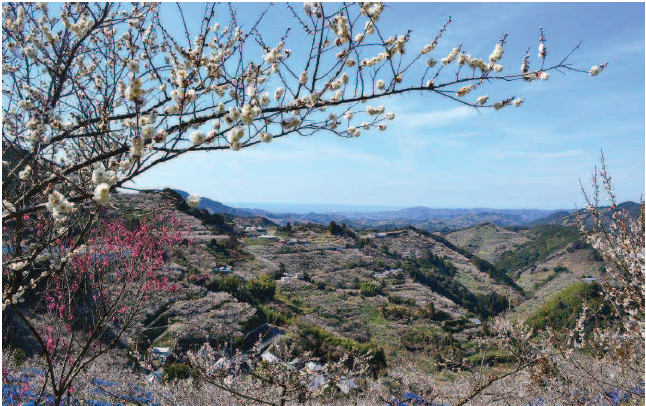
    Bangladesh’s floating gardens, a unique hydroponics production system constructed with natural grasses and plants, which have been developed in flood areas.

    A trio of sites in Japan: the sustainable river fisheries utilizing Sato-kawa system in Gifu, the Minabe-Tanabe Ume approach to growing apricots on nutrient-poor slopes in Wakayama.

    The Takachihogo-Shiibayama mountainous agriculture and forestry system in Miyazaki which allows agricultural and forestry production in a steep mountainous area.

    These new designations bring the number of Globally Important Agricultural Heritage Systems (GIAHS) systems to a total of 36 sites located in 15 countries in Africa, Latin America, Near East and Asia.

    But first, Let’s know about Globally Important Agricultural Heritage Systems (GIAHS)?

    • It was launched by UN’s Food and Agriculture Organisation (FAO) in 2002 during the World Summit on Sustainable Development in Johannesburg, South Africa.
    • The GIAHS Initiative promotes public understanding, awareness, national and international recognition of Agricultural Heritage systems.
    • The initiative fosters an integrated approach combining sustainable agriculture and rural development.
    • The GIAHS initiative has project interventions in Algeria, Azerbaijan, Bangladesh, Chile, China, Ethiopia, India, Indonesia, Iran (Islamic Republic), Japan, Kenya etc.
    • In these countries, adaptive management approaches will be developed and implemented, to assist national and local stakeholders in the dynamic conservation of their agricultural heritage systems.

    Now, back to main topic of ‘new GIAHS sites’?

    The new GIAHS sites include three in Japan and one in Bangladesh –

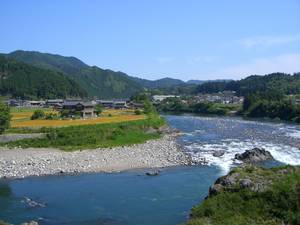
    Japan – Ayu of the Nagara River System

    Ayu of the Nagara River System Japan


    • The Nagara River is one of the cleanest rivers in Japan that provides a number of ecosystem services.
    • Various components of the system such as river, forests and farmlands are closely linked to each other.
    • The sustainable inland fisheries of a specific type of fish (Ayu) benefit from clean waters of the Nagara River which are maintained through upstream forest management.
    • Local communities have lived within this linked ecosystems and have developed their livelihoods and cultural practices.

    Japan – Minabe-Tanabe Ume System

    Minabe-Tanabe Ume System Japan


    • Minabe-Tanabe Ume System allows for the production of high-quality Ume (Japanese apricots) and various kinds of fruits on nutrient-poor slopes.
    • Local communities have created a thriving Ume fruit production environment by maintaining upper coppice forests for landslide prevention and maintenance of water, and Japanese honeybee for pollinators.
    • By permitting the production of a diverse range of products, the system ensures stable livelihoods and makes communities more resilient to disasters.

    Japan – Takachihogo-Shiibayama Mountainous Agriculture and Forestry System

    TakachihoShiibayama Mosaic view of forests


    • This site is located in a steep mountainous area where flat land is extremely scarce.
    • In this severe environment, local people have established a sustainable system of agriculture and forestry which balances timber production with diverse farming activities.
    • Such as terraced rice growing, shiitake mushroom cultivation, beef cattle raising, or tea cultivation.
    • The forest is maintained as a “mosaic” of conifers and broadleaf trees using traditional practices.

    Bangladesh – Floating garden Agricultural Practices

    Floatingagri


    • Farmers in some parts of Bangladesh where flood waters can remain for a prolonged period of time have developed a unique hydroponics system in which plants can be grown on the water on floating organic bed of water hyacinth, algae and other plant residues.
    • This environmentally friendly traditional cultivation technique utilizes the natural resources of wetlands to grow vegetables and other crops almost all year round.
    • Providing numerous social, economic, agricultural and ecological benefits to the local population.

    If you would like to watch GIAHS 2013 video, it provides an introduction to GIAHS and takes you on a journey through some of the GIAHS sites around the world.


    Source - FAO features | Pic - Floating Gardens
  • Air Pollution

    On the morning of 29 November, Beijing woke up to air pollution levels not seen in over a year. The city’s government immediately issued an alert and ordered factories to stop or reduce production.


    The same morning, Delhi woke up to pollution levels much higher than Beijing’s.

    And it hosted the Delhi half marathon.

    In the name of health awareness, the runners breathed air laced with pollutants exponentially beyond safe levels. And they inhaled 10-20 times as much air as a sedentary person does.

    In sharp contrast, the embassies of Norway and the United States have taken urgent steps to safeguard their personnel. While Norwegian officials are set to get “hardship pay” for working in New Delhi, the US embassy’s school has cancelled outdoor activities for its students.

    The stark difference in attitudes, perhaps, is because most Delhiites know little about how exactly the city’s air is killing them. Slowly. Daily.

    The government has largely failed to make people aware of how the pollution affects them, what the main pollutants are, what precautions they should take, the types of masks they should wear, and suchlike.

    It only dumps air pollution data on a rather glib website, on a page full of numbers and technical terms befitting a chemistry textbook.

    There is no air warning system in Delhi that could alert citizens, shut down schools and prohibit outdoor activity when pollution reaches hazardous levels.

    Most of all, though, the residents should know what exactly makes Delhi’s air so toxic. Even if you know what it is – the toxin is called PM 2.5 – there is no easy way to know how harmful it is.

    So, here’s a primer.

    Why are we talking about PM2.5?

    Delhi’s air is not polluted as much with poisonous gases as it’s with really tiny particles known as PM2.5. And its levels are consistently 16-20 times higher than the prescribed standard. At the time of the half marathon, it was 48 times the limit.

    Greenpeace recently found that even inside Delhi’s classrooms, PM2.5 levels were 11 times the limit.

    What is PM2.5?

    PM stands for particulate matter, while the number refers to the size of the particles. So, PM2.5 is like extremely fine dust whose particles are just 2.5 microns wide — that’s thirty times smaller than the width of a human hair.
    The tiny size makes it harder to prevent PM2.5 from getting into the body, making it deadlier.

    What exactly is PM2.5 made up of?

    There is no easy answer to this since the toxin is identified more by its size than what it contains. It could be a variety of solid or liquid chemicals.

    According to the United States’ Environment Protection Agency, a PM2.5 particle, depending on where it’s emitted from, could contain compounds of any of these four materials:

    Carbon – from cars, trucks, waste burning
    Nitrate – from cars, trucks, thermal power generation
    Sulphate – from thermal power generation
    Crustal – suspended soil and metals
    While individual particles obviously can’t be seen without special equipment, large amounts are visible as haze or smog.

    Why is PM2.5 bad?

    1. Being tiny, these particles easily reach the lungs. From there, they can travel through the bloodstream and reach the heart.
    2. Long exposure to PM2.5 can worsen asthma and heart conditions. They also cause runny nose, sneezing and coughing.
    3. 5 coming from diesel vehicles contains carbon and is a carcinogenic.
    4. It can also cause other heart and lung diseases, or make them worse.
    5. It slow down development of lungs in children and can leave them with reduced lung function for the rest of their lives, according to the WHO.
    6. Illnesses caused by PM2.5 kill at least 3.1 million people a year across the world.
    7. The WHO estimates that exposure to PM2.5 reduces a person’s life expectancy by an average of 8.6 months.

    How much of PM2.5 is safe?

    The WHO says there is no safe level, PM2.5 is harmful in any amount. Still, there are standards on how much PM2.5 is too much.
    As per the WHO’s own standards, the average PM2.5 levels should not exceed 10 mg per cubic metre in one year.
    In one day, it should be under 25. Indian safety limits, however, are more relaxed – at 60.
    WHO says PM2.5 level mustn’t exceed 25 mg/cubic metre. Yet, India has relaxed the limit to 60

    What’s the best protection from PM2.5?

    1. Protecting yourself from PM2.5 doesn’t require gas masks, but cotton masks that can block very fine particles.
    2. It is recommended to use an N-95 mask, the same one used to protect against the H1N1 virus.
    3. Unfortunately, planting more trees does nothing to solve the problem.
    4. Since PM2.5 are particles and not gases, they can’t be processed by the leaves.
    5. In fact, a high tree density can make the exposure worse because the extra moisture in the air would trap the particles instead of letting them fly away with the wind.
    6. The only way to cut down PM2.5 levels is to stop it at the source – cars, factories, waste burning, thermal power plants. Until then, strap on the N-95s.

    Only way to reduce PM2.5 is to stop it at source – cars, factories, waste burning, thermal plants


    Source - CatchNews | Pic - Vox-cdn

    Everything that you want to know on Delhi’s Odd-Even Policy

    Delhi Government releases blueprint for Odd-Even formula December 25, 2015. In an attempt to curb alarming levels of pollution in the Indian capital, Delhi, authorities have announced that private cars with even and odd number plates will be allowed only on alternate days. Let’s see it in brief!


    How will odd-even policy work out?

    • The Odd-Even formula plan seeks to curb the number of vehicles plying in the national capital by limiting 4-wheelers on alternate days.
    • Under it cars with licence plates ending in an odd number will ply on odd dates and those ending with an even number can run on even dates.
    • This will be on a trial basis from 1 to 15 January, 2015.
    • During this implementation, public transport including buses and the Metro will be run at high frequency.
    • The government plans to run 6,000 more buses to accommodate those who can’t drive their cars.

    Then, Who is exempted?

    • The list of 20-plus exemptions from the restrictions include emergency vehicles, fire engines, ambulances, hospitals, hearses, prisons, VIPs, enforcement vehicles and defence ministry vehicles.
    • Among VIPs, leaders of the opposition in the Lok Sabha and Rajya Sabha, Chief Ministers of states, Judges of the Supreme Court and high court and Lokayukta are exempt. <CM of Delhi is not exempted>
    • CNG and electric vehicles are also exempt.
    • Two-wheelers and vehicles driven by or occupied by handicapped persons and female drivers are also exempt.

    So, Will it really help clean the Delhi air?

    • The Centre for Science and Environment (CSE), has welcomed the “emergency action to reduce vehicle numbers on the road” but questioned the absurdity of exempting 2-wheelers, which account for more than 30% of air pollutants generated by the transport sector in Delhi, and women drivers.
    • According to the scientists of the Delhi Pollution Control Committee (DPCC), 80 per cent of PM 2.5 air pollution is caused by vehicular traffic and reduction in its levels, even in outer areas of Delhi shows that reduction of four wheeled vehicles on roads.
    • The latest set of ambient air data collected at 18 locations across Delhi through mobile dust samplers shows a consistent trend of declining levels of PM 2.5 air pollution levels.
    • If we take 250-300 as an average, then there is a drop of 100 points in PM 2.5 levels. This means there is a drop in pollution by about 25 percent. [ Isn’t it great! ]


    But, Where did the odd-even idea come from?

    Car rationing has been tried in many countries around the world.

    • Rationalisation of the movement of private vehicles has been adopted in many countries, starting with Sweden (Stockholm) and extending to other European countries.
    • China (Beijing), Mexico and Colombia (Bogota) have also implemented such measures.

    Let’s glance over some international experiments?

    Beijing

    • The city initiated the alternate day car driving restrictions just ahead of the 2008 Olympic Games and saw pollution levels drop by almost 20%.
    • Currently, Beijing imposes this rule periodically, on days with high air pollution.
    • The city has also restricted its car sales since 2011 to 20,000 car plates every month.
    • However, they have made tremendous efforts to increase public transport such as bus connectivity and metro services. [ Lesson for Delhi ]

    Paris, France

    • The city has been imposing the odd-even number plate rule during periods of high air pollution. On such days, public transport is free.
    • The rule was last implemented in March 2015 when a smog alert was issued.

    Mexico

    • The “Hoy No Circula” was introduced in Mexico around 1989 to combat air pollution.
    • It called for citywide bans, one day per week, based on last digit of the number plates.
    • For example, plates ending in 5 and 6 were not allowed to drive on Mondays while 7 and 8 were not allowed to drive on Tuesdays and so on.
    • This measure was highly successful in bringing carbon monoxide (CO) levels down by almost 11%.
    • However, in the long run, people eventually started buying more cars, rendering the ban inefficient. Therefore, it actually ended in a rise in CO levels in the long run by almost 13%.

    Oh! Are these measures short-term?

    • Yes, these examples show that the system has better potential as a short-term measure.
    • It show that temporary restrictions on vehicles may not reduce air pollution in the long term.
    • Drivers inevitably buy more cheap and inefficient cars with different number plates to get around the rules.
    • Hence, such an initiative must be complemented by other measures to ensure that we have a stable system in the long run.

    So, Are there any long-term measures available?

    Centre for Science and Environment (CSE) has suggested some long-term measures –

    • There is a need to impose restrictions on diesel vehicles to promote electric and alternative fuel vehicles.
    • The electric vehicles should be exempted from any such alternate number plate restriction.
    • The number plate measure needs to be combined with high parking charges and intensified public transport strategy. <This should be the strategy for the entire period of poor air quality as well as a long-term measure>

    International Example

    • Paris has set an example by deciding to phase out diesel cars completely by 2020.
    • London is also planning to ban diesel cars despite having a fuel quality as high as Euro 6.
    • China has already banned diesel cars on roads.India, on the other hand, is still juggling between BS-III and BS-IV norms. <With accepted ground reality, we can not directly implement BS-V/BS-VI in one go>

    What Delhi can do more?

    Immediately link and scale up metro, bus, autos, taxis-walk and cycle –

    • This is needed immediately to connect doorsteps of people with their destinations for effortless movement without the car.
    • Connect each and every neighbourhood with efficient and reliable public transport service.

    Provide safe and barrier free walking and cycling infrastructure –

    • Redesign roads and road network to give safe and priority infrastructure to walkers, cyclists and public transport users.

    Adopt parking policy and taxation measures to restrain car usage –

    • Currently, parking charges in Delhi are one of the lowest in the world.
    • Limit legal parking areas across the city and demarcate them on the ground. Impose high penalty for illegal parking on public space.
    • Impose higher taxes on cars for their congestion and pollution impacts. Use the revenue to build public transport.<Congestion tax can be a good case in this regard>

    How will it affect automobile industry sector?

    • Delhi’s odd-even decision will upset powerful automobile lobbies.
    • The stakes for the car industry are too high in the capital, which is India’s biggest car market.
    • The city has the largest population of registered motorised vehicles in the country, about 89 lakh as on March 31, 2015.
    • Of them, 26 lakh are cars, 28 lakh motorcycles and 27 lakh scooters.
    • In comparison, the number of commercial vehicles like taxis, buses and three-wheelers is about 3.5 lakh.
    • The national capital region (NCR) accounts for 12% of car sales in India and is the biggest car market in the country.
    • The temporary ban, according to reported estimates, will prevent 12,000 new diesel cars from coming on the Delhi roads.

    So, the Odd-Even vehicle formula restriction is a good initiative, it is only a start. To control congestion, reduce pollution and improve liveability, there must be a comprehensive strategy in Delhi.

    At national level, how odd-even policy will affect Make in India programme? Critically analyse.


  • Bharat Emission Standards

    Bharat Emission Standards – Everything that you want to know


    Recently, govt. has decided to implement Bharat Standards VI norms on April 1, 2020. This comes in the wake of pressure from the Supreme Court to implement clean vehicular fuel norms soon amid concerns about rising air pollution, especially in Delhi.

    This policy is in line with our commitments at the Paris Climate Change Conference as well as public sentiments against rising air pollution in the cities, especially metros.

    These are norms instituted by the Govt of India to regulate the output of air pollutants from internal combustion engine equipment, including motor vehicles.

    • The standards and the timeline for implementation are set by the Central Pollution Control Board under the Ministry of Environment & Forests and Climate Change.
    • The standards are based on European regulations and were first introduced in 2000.

    What is the current status of emission norms?

    Currently, BS IV norms are applicable in 33 cities in which the required grade of fuel is available.

    In rest of India, we are still following BS III standards.


    Let’s see a little background of its implementation

    1991– India introduced the emission norms for the first time.

    1996– The norms saw some tightening as govt. asked most vehicle manufacturers to incorporate catalytic converters to cut exhaust emissions.
    Govt. also notified fuel specifications based on environmental considerations, which were to be implemented by 2000.

    2000– Govt. notified BS-I and BS-II standards, which were equivalent to Euro I and Euro II respectively. <BS-II was for the NCR and BS-I for the rest of India>

    2005BS-III and BS-II fuel quality norms came to be implemented. <BS-III for 13 major cities and BS-II for the rest of India>

    2010 BS-IV and BS-III fuel quality norms were introduced. <BS-IV for 13 major cities and BS-III for the rest of India>

    It works on a two-pronged strategy to control the air pollutant output.

    1. Reducing the Sulphur content in the fuel.
    2. At engine level, it augments some equipment which reduces emissions.

    What does Auto Fuel Policy have to say?

    Auto Fuel Policy 2003

    • It aims at addressing issues of vehicular emissions and vehicular technologies by applying fuel quality standards.
    • It encouraged the use of CNG/LPG fuel in cities affected by higher pollution levels.
    • It gives the timeline for adopting the Bharat Standards across the country:
      BS IV- 2017
      BS V- 2020
      BS VI- 2024

    Recently, govt had constituted an Expert Committee under the Chairmanship of Shri Soumitra Choudhuri, to draft Auto Fuel Vision and Policy 2025.

    Recommendations of Soumitra Choudhuri committee:

    It presents the road map for auto fuel quality till 2025 for the country,taking into account the achievement under the last Auto Fuel Policy, emission reduction of in use vehicles, growth of vehicles and the supply and availability of fuels.

    • It recommended nationwide fuel standards to be BS-IV. It has proposed to move to BS V from 2020 and BS VI from 2024.
    • To upgrade refineries to produce BS-V petrol and diesel will need Rs.80,000 crore.
    • It recommended Special Fuel Upgradation Cess of 75 paise/litre on fuel to meet the cost.

    Let’s analyse Bharat Standards vis-a-vis Euro Standards

    BS-VI is equivalent to Euro VI. However, many western countries have already graduated to Euro VI.

    But, India is following European emission norms with a time lag of  5 years.

    What are the challenges in implementing BS VI norms?

    Engine

    Engine development firms have cited a technological challenge in implementing the changes.

    They have cited that jumping directly to BS-VI norms would give them little time to design changes in their vehicles.

    Why is it challenging for auto firms to implement it?

    There are two critical components which needs a fitment in the engine. They would have to be adapted to India’s peculiar conditions, where running speeds are much lower than EU or US. Industry estimates of required investment to upgrade from BS-IV to BS-V are to the tune of Rs. 50000 crore.

    1. Diesel Particulate Filter– Its function is to remove particulate matter from diesel exhaust.
      Challenge: Problem is small cars with limited bonnet space would need major redesign to accommodate DPF. Temperature of 600 degrees Celsius is required to burn the soot in DPF, which is difficult to achieve in India due to low driving speeds.
    2. Selective Catalytic Reduction Module– It reduces oxides of Nitrogen.
      Challenge: It needs injection of Aqueous solution into the system, for which separate infrastructure is needed for countrywide supply.

    Fuel

    There are questions about the ability of the oil marketing companies to quickly upgrade fuel quality from BS-III and BS-IV standards to BS-VI.

    The objective of upgradation to higher emission norms is defeated, if the uniform fuel is not available across the country.<This has been seen in reduced efficacy of engines of BS-IV vehicles, while taking inter-state travel>


    Published with inputs from Pushpendra