💥Join UPSC 2027,2028 Mentorship (July Batch) + XFactor Notes & Microthemes PDF

Subject: Economics

  • Sanchar Saathi: Empowering Citizens

    Central Idea

    • Recent reforms in the Indian telecom sector target cybercrime and financial fraud prevention.
    • The reforms focus on revising bulk SIM card procurement norms and registering final points of sale (PoS).
    • The objective is to bolster the effectiveness of the citizen-centric portal Sanchar Saathi, initiated earlier for the same purpose.

    Sanchar Saathi: Empowering Citizens

    • Sanchar Saathi empowers citizens to manage mobile connections and prevent misuse.
    • Users can verify their registered connections, block stolen or lost phones, report suspicious connections, and verify device authenticity using IMEI.
    • The system employs Central Equipment Identity Register (CEIR) and Telecom Analytics for Fraud Management and Consumer Protection (TAFCOP) modules.
    • Sanchar Saathi has already analyzed 114 crore active mobile connections, identified 66 lakh suspicious connections, and disconnected 52 lakh connections.
    • Additional achievements include blocking 66,000 WhatsApp accounts and freezing 8 lakh bank/wallet accounts linked to fraud.
    • Over 300 FIRs have been filed against more than 1,700 dealers under the initiative.

    Point of Sale (PoS) Reforms

    • Reforms mandate registration of SIM card franchisees, agents, and distributors (PoS) with telecom operators.
    • Operators are accountable for robust PoS verification, including mandatory police verification.
    • Written agreements between PoS and licensees for SIM card sales are now obligatory.
    • Existing SIM card providers are given a year to comply with the new registration process.
    • Non-compliance results in termination, a 3-year blacklist, and a Rs 10 lakh penalty.

    Addressing Bulk SIM Card Misuse

    • The new approach replaces ‘bulk procurement’ with ‘business’ connections.
    • Businesses can procure numerous connections, but each end-user must undergo KYC.
    • KYC involves end-user verification, activating the SIM card only after successful KYC and address verification.
    • To prevent misuse of printed Aadhaar, demographic details must be captured by scanning the QR code.
    • Subscribers require full KYC for SIM replacement; outgoing and incoming SMS services are suspended for 24 hours during this process.
    • Biometric authentication options, including thumb impression, iris, and facial recognition, are introduced.
    • Disconnected mobile numbers cannot be assigned to other customers for 90 days.

    Challenges and Considerations

    • Effective enforcement at the local level for smaller stores needs examination.
    • Concerns arise regarding infrastructure and safeguards for handling sensitive data.
    • Clarity on agent requirements for data acquisition, processing, and retention is necessary.
    • Despite Aadhaar-based KYC, persisting issues in fraud prevention need attention.
    • Data acquisition should strictly align with its intended purpose.

    Conclusion

    • The telecom reforms aim to strengthen cybersecurity and financial safety.
    • Balancing effective data collection and privacy is essential.
    • Continuous vigilance and adaptation are vital to a robust cybersecurity framework.
  • Understanding curbs on rice exports

    What’s the news?

    • The Indian Government Implements Rice Export Restrictions to Stabilize Domestic Prices

    Central Idea

    • In a bid to control domestic rice prices and safeguard the country’s food security, the Indian government has implemented a series of measures that impact rice exports and production. These steps include prohibiting the export of white rice, imposing a 20% export duty on par-boiled rice and allowing the export of Basmati rice only for contracts valued at $1,200 per tonne or higher.

    What is the rice production estimate?

    • Rabi season: According to the third Advanced Estimate of the Department of Agriculture and Farmers Welfare, during the Rabi season 2022-2023, rice production was 13.8% less, at 158.95 lakh tonnes tons, compared to 184.71 lakh tonnes during Rabi 2021-2022.
    • Kharif season: Kharif sowing data show that rice is sown on 384.05 lakh hectares this year as on August 25 compared with 367.83 lakh hectares during the same period last year.
    • Shortfall in the south-west monsoon: In states such as Tamil Nadu, where the Samba crop sowing usually starts in August in the Cauvery delta area, now it will be delayed due to a shortfall in the south-west monsoon.
    • El Niño effects: Trade and rice millers say that new-season crop arrivals will start after the first week of September, and that El Niño effects are likely to impact arrivals to some extent. According to M. Sivanandan, secretary of the Tamil Nadu Rice Millers Association, paddy prices that were ₹27 a kg last year this month is at ₹33 a kg now.

    Rice Exports Overview

    • India’s Global Leadership: India boasts the position of being the world’s largest rice exporter, holding a significant 45% share in the global rice market.
    • Export Growth in 2023: During the months of April and May in 2023, rice exports surged significantly by 21.1% compared to the same period in the preceding fiscal year.
    • Basmati Rice Export Surge: Notably, the month of May saw a remarkable growth of 10.86% in Basmati rice exports as opposed to May 2022.
    • Non-Basmati Exports Rise: Despite the introduction of a 20% export duty on white rice and the prohibition of broken rice exports in September, non-Basmati rice shipments saw a noteworthy increase of 7.5% in exports.

    Trends and Data

    • Steady Non-Basmati Exports: The trend of rising non-Basmati rice exports has remained consistent over the past three years.
    • Basmati Exports Performance: Data from the All-India Rice Exporters’ Association indicates that exports of Basmati rice for the 2022-2023 period surpassed the figures from the previous year.
    • August 17 Exports: Up until August 17, 2023, the total rice exports (excluding broken rice) reached 7.3 million tonnes, showcasing a substantial 15% increase in comparison to the 6.3 million tonnes recorded during the corresponding period in the preceding year.

    Global Challenges and Impact

    • Challenges in Other Nations: Beyond India, several countries are grappling with challenges in rice production and exports.
      • Thailand anticipates a nearly 25% decrease in production in the upcoming year.
      • Myanmar has halted raw rice exports.
      • Adverse crop conditions are reported in Iraq and Iran, affecting their rice crops.

    How Will These Measures Help India?

    • Food Security Assurance: Banning rice exports ensures a steady supply of rice within the country.
    • Price Stability: By restricting rice exports, the government can prevent abrupt spikes in domestic rice prices.
    • Supporting Vulnerable Populations: The ban on exports helps maintain affordable prices for rice.
    • Managing Supply Chain Resilience: Export bans mitigate disruptions in the rice supply chain. This ensures that even in the face of challenges such as adverse weather conditions or logistical issues, the availability of rice in the domestic market remains consistent.
    • Strengthening Local Procurement: By redirecting rice to local markets, the government can enhance its efforts to procure grains for public distribution programs.

    Concerns Raised

    • Export Revenue Impact: Exporters might experience reduced revenue due to limited access to international markets. This can affect their financial viability and potentially lead to job losses within the export sector.
    • Trade Relations: Imposing export bans could strain trade relationships with countries that rely on India as a rice supplier. Diplomatic efforts might be required to manage any potential tensions arising from these restrictions.
    • Long-Term Export Effects: Prolonged export restrictions could result in a loss of market share over time. Competing rice-exporting countries might seize the opportunity to strengthen their presence in international markets, impacting India’s export potential once the ban is lifted.
    • Global Food Price Influence: Reduced rice supply from a major exporter like India could contribute to global food price volatility, affecting the food security of other nations.
    • Efficiency Concerns: In some cases, export bans might lead to inefficiencies in resource allocation. If farmers have surplus produce that cannot be exported, it could result in wastage or inadequate storage facilities.

    What can Indian farmers expect?

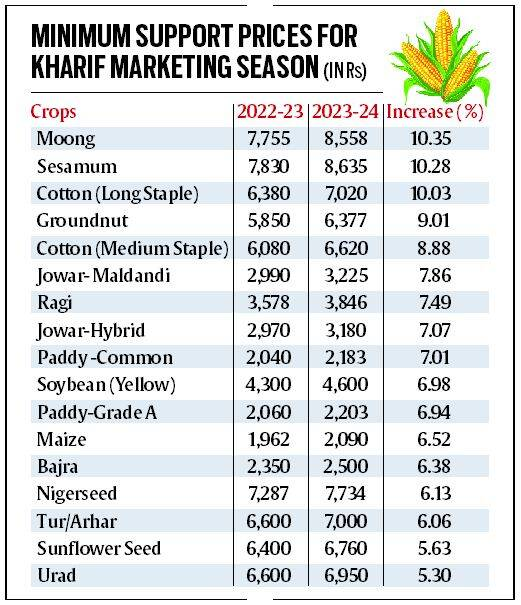
    • Minimum Support Price (MSP) Increase: The government has raised the Minimum Support Price (MSP) for rice, indicating that farmers can anticipate better returns for their crops. This ensures that the paddy purchased by rice millers will be priced higher than the MSP, providing farmers with improved income.
    • Price Stability for Farmers: Rice prices are not expected to decline for farmers due to the increased MSP and other measures. This stability in prices can contribute to more consistent and predictable incomes for agricultural producers.
    • Controlled Rice Price Climbs: The restrictions on rice exports are designed to prevent steep price increases in the domestic market. Farmers can expect that the government’s efforts to stabilize rice prices will positively impact their ability to fetch reasonable rates for their produce.
    • Better Income Prospects: With a higher benchmark price established by the government, farmers are likely to benefit from improved earnings. This elevation in benchmark prices is expected to translate into better market rates for their rice.
    • Secured Long-Term Availability: While there may be a minor current increase in rice prices for domestic consumers, the long-term availability of rice is secured. Farmers can anticipate a steady demand for their produce without fear of drastic price fluctuations.

    Suggestions provided by exporters

    • Reclassification for Export Decisions: Exporters suggest that the government should classify rice as either common rice or specialty rice for export policy decisions, rather than solely categorizing it as Basmati and non-Basmati. This approach aims to tailor policies to different rice varieties.
    • Geographical Indication Recognition: Trade policy consultant S. Chandrasekaran proposes that rice varieties with Geographical Indication (GI) recognition should be shielded from general market interventions. This measure aims to preserve the unique qualities of these specific rice types.
    • Basmati Rice Export Policy: A Basmati rice exporter, Mohit Gupta, recommends that the government should have allowed Basmati rice exports to continue or set a minimum value for exports, such as $900 per tonne. Gupta argues that such restrictions could impact both exporters and farmers, as demand influences paddy purchases.

    Conclusion

    • The Indian government’s recent measures to control rice exports and stabilize the domestic market exhibit a multifaceted approach. As stakeholders await further developments and clarifications on government policies, the long-term impact on Indian agriculture and rice exports remains an evolving narrative.
  • Magic Rice ‘Chokuwa Saul’ gets GI Tag

    chokuwa

    Central Idea

    • Chokuwa rice, the unique possession of Assam’s Ahom dynasty, recently earned a GI (Geographical Indication) tag.

    Chokuwa Saul

    • Chokuwa rice, a semi-glutinous winter rice type known as Sali rice, carries the legacy of the past.
    • The rice variety is classified into Bora and Chokuwa based on amylose concentration, which affects stickiness.
    • The Chokuwa variant, low in amylose, yields soft rice, referred to as Komal Chaul.
    • This whole grain can be consumed after a preliminary soaking process.
    • Its versatility extends to its application in traditional Assamese delicacies like Pithe and various local dishes.
    • It is primarily cultivated in the Brahmaputra region and various parts of Assam, including Tinsukia, Dhemaji, Dibrugarh, Lakhimpur, Sivasagar, Jorhat, Golaghat, Nagaon, and Morigaon.

    Back2Basics: Geographical Indication (GI)

    • A GI is a sign used on products that have a specific geographical origin and possess qualities or a reputation that are due to that origin.
    • Nodal Agency: Department for Promotion of Industry and Internal Trade (DPIIT), Ministry of Commerce and Industry
    • India, as a member of the World Trade Organization (WTO), enacted the Geographical Indications of Goods (Registration and Protection) Act, 1999 w.e.f. September 2003.
    • GIs have been defined under Article 22 (1) of the WTO Agreement on Trade-Related Aspects of Intellectual Property Rights (TRIPS) Agreement.
    • The tag stands valid for 10 years.
  • Gig Workers Bill: reading between the lines

    What’s the news?

    • The Rajasthan government introduced the Rajasthan Platform-Based Gig Workers (Registration and Welfare) Bill, 2023, aiming to ensure social security for gig workers.

    Central idea

    • While the Rajasthan Platform-Based Gig Workers (Registration and Welfare) Bill, 2023, demonstrates commendable intentions and includes noteworthy provisions, critical concerns arise that might undermine its effectiveness. There are four major issues that could potentially limit the scope and impact of the bill.

    Key Features of the Bill

    • Applicability: The bill covers both aggregators and primary employers engaging platform-based workers.
    • Formation of a Welfare Board: A Welfare Board will be established, chaired by the Labor Department’s minister, to oversee welfare measures for gig workers.
    • Registration and Unique ID: Gig workers and aggregators will be registered, and gig workers will receive a unique ID for streamlined welfare access.
    • Social Security and Welfare Fund: A dedicated fund will offer social security benefits to registered gig workers.
    • Welfare Fee Deduction: Aggregators will contribute through a welfare fee deducted from transactions.
    • Access to Benefits: Gig workers will gain access to state-formulated social security benefits, including insurance.
    • Grievance Redressal: A mechanism for addressing worker grievances will be in place.
    • Representation: Gig workers will have representation on the Welfare Board for decision-making.
    • Compliance and Fines: Aggregators must comply, with fines for non-compliance.

    Four major issues that could potentially limit the scope and impact of the bill

    1: Definitional Ambiguity

    • Definitions from the Bill and their Implications:
    • The Rajasthan Platform-Based Gig Workers (Registration and Welfare) Bill, 2023, introduces definitions for gig worker and aggregator derived from the Code on Social Security, 2020.
    • The definitions are intended to clarify the roles and relationships of gig workers and aggregators within the gig economy.
    • Definitions of gig worker and aggregator:
    • The bill defines a gig worker as an individual engaged in work outside the traditional employee-employer paradigm, earning from such activities, and operating under a predetermined payment rate contract.
    • An aggregator is described as a digital intermediary that facilitates collaborations between aggregators, enabling service provision.
    • Ambiguity in Determining the Aggregator’s Status:
    • The definitions’ lack of precision in categorizing aggregators as employers creates uncertainty.
    • The absence of explicit language binding aggregators to the role of employers leads to interpretational ambiguity.
    • Implications of Definitional Vagueness:
    • The vagueness could potentially result in gig workers being seen as self-employed or independent contractors rather than employees by aggregators.
    • This vagueness contrasts with global best practices and sets the stage for the subsequent issue.
    • Global Context and Significance:
    • The debate over classifying gig workers and aggregators as employees or employers has global implications.
    • The ABC Test in California’s labor code highlights the importance of clear classification, while the UK Supreme Court’s ruling in 2021 regarding Uber drivers further highlights the significance of accurate classification, underscoring that they are workers, not self-employed.
    • Contrast with global practices:
    • The Rajasthan Bill’s vague definitions deviate from global best practices, raising concerns about the subsequent challenges.

    2: Integration with Labor Laws and Workplace Entitlements

    • Classification of Gig Workers and Impact on Labor Laws:
    • The Rajasthan Platform-Based Gig Workers (Registration and Welfare) Bill, 2023, does not classify gig workers as employees.
    • The absence of employee classification poses challenges in integrating the bill with established labor law frameworks.
    • Challenges in Compliance and Workplace Rights:
    • Non-classification could allow aggregators to bypass labor law mandates, potentially undermining gig workers’ workplace rights.
    • Gig workers might be denied rights granted to employees, such as minimum wages and fair working conditions.
    • Exclusion from entitlements and Fairwork India ratings:
    • The bill’s provisions may unintentionally exclude gig workers from essential entitlements, potentially impacting their well-being.
    • Fairwork India ratings in 2022 highlighted poor worker welfare practices among prominent platforms.
    • Accountability for workplace accidents
    • The question arises: If gig workers are not designated as employees, to what extent can aggregators be held accountable for workplace accident expenses?
    • Some Indian platforms have addressed this issue, but relying on aggregators’ goodwill risks converting entitlements into benevolence.
    • Contrast with Australia and New Zealand’s Approach:
    • Australia and New Zealand’s focus on a person conducting a business or undertaking (PCBU) and worker well-being highlights an alternative approach to workplace rights.

    3: Duration of the Database and Implications for Gig Workers

    • Database Creation and Durational Concerns:
    • The bill’s third issue concerns the creation of a gig worker database transferred to the gig workers’ welfare board.
    • A concern arises from the registration’s perpetual validity, irrespective of workers’ ongoing engagement with app-based platforms.
    • Obstacle to Perpetual Registration:
    • The well-intended perpetual registration concept could inadvertently hinder gig workers’ flexibility.
    • Gig workers often work with multiple aggregators in a single day, leading to concerns about registration’s impact on choices.
    • Potential influence on choices and mechanisms:
    • Mandatory registration might enable aggregators to learn about workers’ engagements with various platforms, possibly influencing their choices.
    • The bill lacks preventive mechanisms to address this potential influence.

    4: Deficiencies in Social Security Provisions

    • Social Security and Welfare Board Establishment:
    • The bill’s fourth issue revolves around its core goal of providing social security to platform-based gig workers through a welfare board and fund.
    • Eight aggregators are brought under the bill’s jurisdiction, but it lacks explicit definitions of social security and welfare measures.
    • Discretionary Nature of Social Security Provisions:
    • The bill delegated the responsibility of defining social security measures to the welfare board’s discretion.
    • This lack of specificity raises concerns about the comprehensiveness and effectiveness of the proposed social security provisions.
    • Lack of explicit definitions and ambiguity:
    • The absence of clear definitions for social security leaves room for interpretation and may affect the welfare board’s decision-making process.
    • Influence dynamics within the Welfare Board:
    • While the welfare board includes gig worker representatives, the dominance of powerful representatives from platforms, bureaucracy, and the government raises questions about the extent of worker influence.

    Way forward

    • Refine Definitions: Clarify gig worker and aggregator definitions based on global standards to prevent ambiguity in their roles.
    • Employee Classification: Clearly categorize gig workers as employees to grant them labor protections and rights.
    • Database Management: Implement a periodic registration renewal system to accommodate gig workers’ changing engagements.
    • Preventive Measures: Introduce safeguards to prevent aggregators from exploiting registration data to influence gig workers’ choices.
    • Social Security Definition: Define the scope of social security and outline welfare measures to ensure comprehensive coverage.
    • Enhanced Worker Representation: Strengthen the influence of gig worker representatives on the welfare board.
    • Stakeholder Consultation: Collaborate with gig workers, aggregators, experts, and labor organizations for a well-rounded regulatory framework.

    Conclusion

    • In conclusion, while the Rajasthan Platform-Based Gig Workers (Registration and Welfare) Bill, 2023, demonstrates a commendable commitment to gig workers’ welfare, it is beset with critical flaws. Addressing the issues and aligning with global best practices will be crucial for the Bill to achieve its intended objectives and provide genuine social security to platform-based gig workers.

    Also read:

    What does India’s first gig workers’ rights Bill stipulate?

  • The cost of meals rose by 65% in five years, wages by just 37%

    What’s the news?

    • The growing chasm between wages or salaries and the cost of living has given rise to a distressing scenario: the affordability of vital food commodities is under threat.

    Central idea

    • In Mumbai, the cost of a vegetarian thali surged 65% in five years, while income for laborers and salaried workers in urban Maharashtra increased only 37% and 28%, respectively. This discrepancy is making essential food items unaffordable, leading to compromised meals.

    What is Thalinomics?

    • Thalinomics is a term coined by an Indian economist and former Chief Economic Adviser to the Government of India, Arvind Subramanian.
    • It refers to a concept that involves analyzing changes in the cost of a vegetarian thali (a meal consisting of a variety of dishes served on a single plate) to gain insights into the trends and dynamics of food inflation and affordability.
    • It involves tracking the prices of key ingredients that constitute a thali, such as cereals, pulses, vegetables, and other essential items.
    • This concept is particularly relevant in countries like India, where food affordability and inflation are significant concerns for a large population.

    Key insights: A case study of Mumbai and urban Maharashtra

    • Rising Cost of Thali: The cost of preparing a home-cooked vegetarian thali in Mumbai has increased significantly by 65% over the past five years. This increase is attributed to rising prices of essential ingredients like rice, dal, vegetables, and other items that constitute a thali.
    • Income Growth: Over the same five-year period, the average wage earned by casual laborers in urban Maharashtra increased by 37%, while the average salary of regular salaried workers increased by 28%. These income growth rates reflect the changes in earnings for these two categories of workers.
    • Disparity Between Costs and Income: While the cost of a thali increased by 65%, income growth for casual laborers and salaried workers was significantly lower, at 37% and 28%, respectively.
    • Affordability Challenge: The disparity between rising costs and income growth has resulted in essential food items becoming increasingly unaffordable for households. This affordability challenge can lead to reduced portion sizes or a compromise in the variety and nutritional quality of meals.
    • Impact on Budget Share: The study also analyzes the portion of monthly wages or salaries required to afford two thalis every day for a month. This share increased from 22.5% of a casual laborer’s monthly earnings in 2018 to 27.2% in 2023. For salaried employees, it increased from 9.9% to 12.8% over the same period.
    • Incomplete Data: Data limitations, particularly regarding the absence of certain ingredients like spices and ghee in the analysis, This suggests that the actual cost of making a thali could be even higher than the calculated figures.

    Key aspects of the relationship between thali prices and inflation

    • Inflation and Ingredient Prices: The prices of ingredients like rice, dal, vegetables, and oil can be affected by inflation. If the prices of these essential ingredients rise due to inflationary pressures, the overall cost of preparing a thali would increase.
    • Food Inflation: The cost of a thali, which is composed of various food items, is directly influenced by food inflation. If there’s high food inflation, it can significantly impact the affordability of thalis and other meals.
    • Supply and Demand Dynamics: Inflation can be driven by supply and demand imbalances. If there’s a shortage of certain ingredients due to supply disruptions (e.g., poor harvests or transportation issues), prices can rise. Similarly, changes in consumer demand patterns can affect the prices of specific ingredients, further impacting thali costs.
    • Monetary Policy: Central banks often use monetary policy tools to control inflation. Interest rate adjustments, money supply regulation, and other measures can impact inflation rates. High inflation rates can lead to increased production costs for farmers and manufacturers, which may trickle down to the prices of thali ingredients.
    • Income Effects: Inflation can impact consumers’ purchasing power. When inflation outpaces income growth, households might need to allocate a larger portion of their income to cover basic expenses like food. This can particularly affect lower-income households, leading to affordability challenges for items like thalis.
    • Regional Variation: Inflation rates can vary regionally and even locally. Different regions might experience different rates of inflation due to factors like supply chain disruptions, local economic conditions, and government policies.
    • Government Policies: Government policies such as subsidies, import/export regulations, and agricultural policies can influence ingredient prices and, consequently, the cost of preparing a thali. These policies can impact the supply and availability of key ingredients.

    Implications of the higher cost of a thali

    • Nutritional Impact: The rising cost of thali ingredients can lead to compromised nutritional intake as households might cut back on certain items to manage expenses. This can result in inadequate diets and potential health implications.
    • Affordability Strain: As thali prices escalate, households may face financial strain by allocating a larger portion of their income to food expenses. This can limit their ability to save, invest, and engage in non-essential expenditures.
    • Dietary Diversity: Increased thali costs can potentially lead to reduced dietary diversity as households might opt for cheaper, less nutritious alternatives, affecting overall dietary quality.
    • Balanced Meals: Higher thali costs might lead to smaller portions or fewer items in the thali, disrupting the balance of a typical meal and potentially impacting satiety and nutritional completeness.
    • Quality of Life: Reduced dietary quality due to affordability challenges can have broader implications for individuals’ quality of life, health, and overall well-being.
    • Economic Struggles: For households with limited disposable income, the burden of increased thali costs can exacerbate economic struggles and hinder progress.

    Way forward

    • Policy Interventions: Implement policies to address the widening gap between thali costs and income growth, ensuring that essential food remains affordable.
    • Income Enhancement: Focus on raising wages for casual laborers and salaried workers to match the rising cost of thalis.
    • Affordability Measures: Establish measures to mitigate the impact of expensive thalis on households, considering subsidies or targeted assistance.
    • Nutrition Awareness: Launch campaigns to educate households about maintaining nutritious diets even when faced with affordability challenges.
    • Gender-Inclusive Approach: Address gender disparities by formulating policies that empower women economically.
    • Data-Driven Approach: Base policies on accurate and up-to-date data on food prices, wages, and consumption patterns.
    • Food Security Initiatives: Strengthen food security programs to ensure access to nutritious food despite thali cost increases.
    • Policy Evaluation: Continuously assess the effectiveness of policies in addressing thali affordability and overall well-being.

    Conclusion

    • The shifting dynamics between escalating costs and relatively stagnant income pose a serious challenge to maintaining a nutritionally balanced diet. As prices continue to rise, a more comprehensive approach is crucial to ensuring that affordable nutrition remains within reach for all strata of society.


  • SEBI’s Amendments to boost REITs and InvITs

    Central Idea

    • The Securities and Exchange Board of India (SEBI) has recently approved crucial changes to the regulations governing real estate investment trusts (REITs) and infrastructure investment trusts (InvITs), aimed at enhancing their appeal to investors.
    • These investment vehicles function similarly to mutual funds, pooling capital to invest in real estate or infrastructure projects.

    What are REITs and InvITs?

    Real Estate Investment Trusts (REITs) Infrastructure Investment Trusts (InvITs)
    Structure Investment trusts owning real estate properties Investment trusts owning revenue-generating infrastructure projects
    Regulation Regulated by SEBI Regulated by SEBI
    Assets Commercial real estate properties (no residential) Operational infrastructure projects
    Units Units issued to investors, traded on stock exchanges Units issued to investors, traded on stock exchanges
    Distribution Mandatory distribution of a significant portion of income as dividends Mandatory distribution of a certain percentage of cash flows as dividends
    Tax Benefits (Dividends) Dividend distribution exempt from DDT Dividend distribution exempt from DDT
    Taxation (Investor’s Dividends) Taxable as per investor’s income tax slab Taxable as per investor’s income tax slab
    Asset Focus Commercial properties: office buildings, malls, etc. Operational infrastructure projects
    Purpose Income generation and capital appreciation Income generation and capital appreciation
    Project Type Income-generating properties Operational brownfield projects
    Examples in India Embassy Office Parks REIT, Mindspace Business Parks REIT IndiGrid Trust, IRB InvIT Fund, Sterlite Power Grid Ventures InvIT


    Importance of REITs and InvITs

    • Investment Pooling: REITs and InvITs operate as investment pooling vehicles, allowing sponsors to invest in real estate or infrastructure projects.
    • Affordable Ownership: REITs offer retail investors access to income-generating real estate properties that would otherwise be unaffordable.
    • Direct Investment: InvITs enable both individual and institutional investors to directly invest in infrastructure projects, spanning transport, energy, and communication sectors.

    Performance of REITs and InvITs

    • Growing Popularity: Since their launch in 2019, REITs have gained traction, demonstrating resilience during challenges such as the pandemic.
    • Rising Interest: InvITs have a broader scope, with multiple listings, including IRB InvIT Fund and Embassy Office Parks Reit.
    • Assets Under Management: As of the beginning of 2023, REITs and InvITs registered with Sebi managed assets exceeding ₹3.5 trillion.

    Sebi’s Amendments Explained

    • Unit Holder Nomination Rights: Sebi has granted board nomination rights to unit holders of InvITs and REITs, allowing them greater influence.
    • Minimum Unit Holding Change: The minimum unit holding requirement for sponsors has been revised, enhancing flexibility.
    • “Self-Sponsored Investment Managers”: Sebi introduced the concept of self-sponsored investment managers, enabling them to assume Reit sponsor responsibilities.

    Importance of the Changes

    • Enhanced Corporate Governance: These amendments are designed to bolster corporate governance and streamline the functioning of InvITs and REITs.
    • Retail Unit Holder Rights: The changes empower retail unit holders by giving them a voice and ensuring accountability through the Stewardship Code.
    • Sponsor Commitment: Sponsors are now required to maintain a minimum number of units throughout the lifespan of the Reit or InvIT.
    • Self-Sponsored Investment Managers: This concept provides flexibility for Reit sponsors and potential exit options.
  • Progress track: PM Jan Dhan Yojana’s Milestones

    jan dhan

    Central Idea

    • As the PM Jan Dhan Yojana (PMJDY) completes 9 years, its remarkable journey is marked by over 50 crore bank accounts and deposits exceeding ₹2 lakh crore.
    • The scheme’s success lies in its commitment to financial inclusion, creating avenues for underprivileged segments to access banking services and government schemes.

    What is PM Jan Dhan Yojana (PMJDY)?

    • The PMJDY is a financial inclusion program launched by the Indian government in 2014.
    • It is National Mission for Financial Inclusion to ensure access to financial services, namely, a basic savings & deposit accounts, remittance, credit, insurance, pension in an affordable manner.
    • Under the scheme, a basic savings bank deposit (BSBD) account can be opened in any bank branch or Business Correspondent (Bank Mitra) outlet, by persons not having any other account.

    Benefits under PMJDY

    • One basic savings bank account is opened for unbanked person.
    • There is no requirement to maintain any minimum balance in PMJDY accounts.
    • Interest is earned on the deposit in PMJDY accounts.
    • Rupay Debit card is provided to the account holder.
    • Accident Insurance Cover of Rs.1 lakh (enhanced to Rs. 2 lakh to new PMJDY accounts opened after 28.8.2018) is available with RuPay card issued to the PMJDY account holders.
    • An overdraft (OD) facility up to Rs. 10,000 to eligible account holders is available.

    Is PMJDY a success?

    • Dormancy of accounts: The PMJDY scheme has led to an increase in the number of bank accounts in rural areas. The percentage of zero-balance accounts has significantly decreased from 58% in March 2015 to a mere 8%, indicating a more active engagement with banking services.
    • Low or no transactions: Insurance coverage for the account holder is linked to their transaction history, and many accounts remain frozen due to lack of transactions, taking several weeks or months to reactivate.
    • False promise of overdraft: The promised overdraft facility of Rs 5000 for new account holders has not been provided as promised, leading to scepticism about the scheme’s success.
    • Payments bottleneck: The lack of proper connectivity, electricity, internet, and ATM facilities in rural areas has hindered the activation of RuPay cards and PIN numbers, which should have been considered before implementing such a large-scale program.

    Future prospects

    • Voluntary Participation: The government aims to persuade PMJDY account holders to opt for voluntary micro-insurance schemes like PMJJBY and Pradhan Mantri Suraksha Bima Yojana.
    • Persuasion over Compulsion: The focus is on financial literacy campaigns, special drives, and awareness programs conducted by banks to help account holders make informed choices.
    • Multi-Level Coordination: Collaboration with line ministries, including Anganwadi and Asha workers, enhances awareness campaigns and ensures wider coverage.
    • Leveraging Databases: Utilization of databases like the E-Shram portal for labour-related information aids in identifying potential beneficiaries.
  • India and the Northern Sea Route

    Northern Sea Route

    Central Idea

    • Murmansk, the gateway to the Arctic and the starting point of the Northern Sea Route (NSR), is witnessing a growing Indian presence in cargo traffic.

    Why discuss this?

    • India accounts for 35% of the cargo handled by the Murmansk port in the first seven months of 2023.
    • This surge in Indian engagement in the Arctic holds significant implications for India’s economic and water security.

    About Northern Sea Route

    • The Northern Sea Route (NSR) is a maritime shipping route that runs along the northern coast of Russia, connecting the Atlantic Ocean to the Pacific Ocean.
      • The North Sea lies between Great Britain, Denmark, Norway, Germany, the Netherlands, Belgium and France.
    • It traverses the Arctic Ocean and Siberian coastline, providing a shorter route between Europe and Asia compared to the traditional routes through the Suez Canal or the Panama Canal.
    • NSR stretches from the Barents Sea, near the Arctic archipelago of Novaya Zemlya, to the Bering Strait, separating Russia from Alaska

    Significance of the Arctic for India

    • Climate Impact: The Arctic’s susceptibility to climate change holds potential consequences for India, impacting economic and water security.
    • Resource Prospects: The Arctic region harbors substantial untapped hydrocarbon reserves, including oil, gas, coal, zinc, and silver, making it an enticing prospect for India’s energy needs.
    • Sustainable Approach: India’s Arctic Policy of 2022 underscores adherence to UN Sustainable Development Goals in the region’s economic development.

    India’s Arctic Journey

    • Historical Engagement: India’s connection with the Arctic dates back to the signing of the Svalbard Treaty in 1920.
    • Scientific Endeavors: India has undertaken various scientific studies and research initiatives in the Arctic, including atmospheric, marine, and glaciological studies.
    • Observations and Research: Notably, India’s research station “Himadri” in Ny-Alesund and its multi-sensor moored observatory and atmospheric laboratory demonstrate its commitment to Arctic research.

    Reviving the NSR

    • NSR Overview: The NSR is the shortest shipping route connecting Europe and Asia-Pacific countries, traversing the Arctic Ocean.
    • Distance Advantage: The NSR boasts potential distance savings of up to 50% compared to traditional routes via Suez or Panama, gaining prominence after the 2021 Suez Canal blockage.
    • Russia’s Role: Russia, equipped with a nuclear-powered icebreaker fleet, ensures safe navigation by breaking ice along the NSR.

    Drivers for India’s NSR Engagement

    • Cargo Traffic Growth: India’s involvement is fueled by the consistent rise in cargo traffic along the NSR, coupled with a 73% growth rate between 2018-2022.
    • Energy Imports: As India increasingly imports energy resources from Russia, the NSR offers a reliable and secure transportation avenue.
    • Strategic Transit: The Chennai-Vladivostok Maritime Corridor (CVMC) project aligns with India’s geographical position, enabling efficient transit routes and shorter transport times.

    Conclusion

    • India’s burgeoning involvement in the Arctic, underscored by its significant role in the Northern Sea Route’s cargo traffic, exemplifies its strategic pursuit of diversified energy resources and enhanced trade corridors.
    • As India forges partnerships with Russia and navigates the challenges of a changing Arctic landscape, it’s poised to play a pivotal role in shaping the future of Arctic trade and sustainable development.
  • Crisis Gripping Surat’s Diamond Industry

    diamond

    Central Idea

    • Surat, acclaimed as India’s diamond city, is grappling with a distressing upheaval in its diamond industry. Job losses and tragic suicides have plagued the once-thriving sector.
    • This article delves into the origins of the crisis and its complex implications.

    Surat’s Diamond Dominance

    • Economic Hub: Surat, located in Gujarat, is renowned for processing 90% of the world’s diamonds, with over 6,000 units cutting and polishing rough gems sourced globally.
    • Employment Powerhouse: Employing more than a million craftsmen and workers, the diamond industry contributes significantly to India’s economy, generating an estimated annual revenue of Rs1.6 trillion or more.
    • Exports Significance: Cut and polished diamonds constitute 65% of India’s gem and jewellery exports, amounting to Rs1.76 trillion in 2022-23.

    Dark Clouds over Surat

    • Tragedy Strikes: Amidst the turmoil, nine individuals tied to the diamond industry have tragically taken their own lives. Over 20,000 workers have lost their jobs as the sector grapples with a multifaceted crisis.
    • Diminished Earnings: Many workers have experienced wage reductions of up to 30% due to shortened working hours, fewer workdays, and unpaid leaves during the summer, extending up to a month for some.
    • Gone Bonuses: The customary lavish Diwali bonuses, once a source of joy for diamond industry workers, have become a distant memory.

    Unraveling the Factors

    • Sluggish Demand: Global consumer spending cuts due to high interest rates in the US and Europe and a slowing Chinese economy have contributed to a demand downturn.
    • Offtake Plunge: Despite exports totalling Rs1.76 trillion in 2022-23 (marginally lower than the previous year), global diamond demand plummeted by almost 30% within three months.
    • Geopolitical Impacts: With Russia being a significant source of rough diamonds (around 35% of supply), political tensions such as the Ukraine conflict have led to restrictions on Russian diamonds. Sanctions on major diamond miner Alrosa have disrupted the supply chain.
    • Lab-Grown Rivalry: The emergence of lab-grown diamonds, replicated under lab conditions and cheaper than natural counterparts, poses a significant challenge. These synthetic gems are becoming more popular and are 20% cheaper than natural diamonds of the same size.

    Conclusion

    • Surat’s diamond industry, once a beacon of prosperity, finds itself at a crossroads.
    • The convergence of economic shifts, geopolitical dynamics, and technological advancements has disrupted its foundation.
    • As Surat navigates this tumultuous terrain, a resilient and adaptable strategy is essential to ensure the industry’s longevity and viability in a changing world of diamonds.
  • Unlocking Bharat NCAP: How safe is your Car?

    bharat ncap bncap

    Central Idea

    • India is set to launch its own Bharat New Car Assessment Programme (NCAP) for four-wheelers starting from 1 October, with the aim of making cars safer and improving consumer awareness.

    What is Bharat NCAP?

    • Definition: BNCAP is a safety assessment program for passenger vehicles weighing less than 3.5 tonnes and capable of seating up to eight people.
    • Global Alignment: It brings India in line with other regions around the world, including the US, Europe, Japan, Australia, and Latin America, which have their own NCAPs.
    • Goal: The program aims to promote transparency, create consumer awareness, and assist buyers in making informed decisions based on safety credentials.

    Implementation Details

    • Applicability: It will apply to type-approved motor vehicles of category M1 with a gross vehicle weight less than 3.5 tonnes, manufactured or imported in India.
    • Category M1: Category M1 motor vehicles are designed for the carriage of passengers, comprising eight seats, in addition to the driver’s seat.
    • Voluntary Nature: Bharat NCAP will be voluntary for car manufacturers. Cars will only be tested upon the request of the makers.

    Crash Testing Methodology

    bncap ncap

    • Types of Tests: The testing will include 3 types of crash tests: frontal, side, and pole-side impact tests.
    • Speed and Scoring: Frontal tests will be conducted at 64 kmph, while side and pole-side tests will be conducted at 50 kmph and 29 kmph, respectively. Scoring will be based on adult safety for front passengers and child safety at the rear.
    • Star Ratings: A car must score at least 27 out of 32 points for adult safety to achieve a 5-star rating, while a minimum score of 41 out of 49 points will earn a 5-star rating for child safety. Additional points will be awarded for restraint systems like ISOFIX anchorages.

    Significance of Bharat NCAP

    • Consumer Awareness: BNCAP ratings will provide consumers with an indication of the level of protection offered to occupants, covering areas such as adult occupant protection, child occupant protection, and safety assist technologies.
    • Promoting Safer Cars: It will serve as a consumer-centric platform, allowing customers to choose safer cars based on their Star Ratings, and encouraging manufacturers to produce safer vehicles.
    • Enhanced Safety and Export Potential: Bharat NCAP aims to ensure structural and passenger safety in cars while increasing the exportworthiness of Indian automobiles.
    • Aatmanirbhar Initiative: It aligns with the goal of making the Indian automobile industry self-reliant.

    Importance of Crash-Testing Vehicles in India

    • Road Crash Burden: Despite having only 1% of the world’s vehicles, India accounts for 11% of global road crash fatalities.
    • Existing Testing Standards: While India’s Central Motor Vehicle Rules (CMVR) mandate safety and performance assessments, including basic conformity crash tests, they do not provide crash test ratings. This has led to international automakers selling vehicles in India with lower safety ratings to reduce costs.
    • Changing Purchase Criteria: Safety is increasingly becoming a significant factor influencing car purchases in India.

    Expected Performance of Indian Cars

    • Progress in Crash Testing: Global NCAP has been crash-testing Indian cars since 2014, with notable progress in recent years.
    • Star Ratings Achieved: Out of the 62 crash tests conducted so far, older cars scored poorly, with 20 cars receiving 0 stars. However, eight cars, all less than three years old, achieved 5-star ratings for adult safety.
    • Easier and Cost-Effective Testing: With testing centers in Pune, Manesar, and Indore now equipped to conduct these tests, it will become easier and more cost-effective for manufacturers to have their cars tested in India.
    • Leveraging Star Ratings: The implementation of Bharat NCAP is expected to encourage more car manufacturers to seek star ratings for their vehicles, leveraging these ratings to enhance their market position.

    Conclusion

    • Enhancing Safety Standards: Bharat NCAP aims to encourage more automakers to voluntarily undergo safety assessments and build vehicles that meet global standards.
    • Congruence with Global NCAP: The government aims to align Bharat NCAP with Global NCAP standards, resembling the global gold standard.
    • Boosting Export Potential: The implementation of Bharat NCAP is expected to enhance the export-worthiness of Indian automobiles.