💥Join UPSC 2027,2028 Mentorship (July Batch) + XFactor Notes & Microthemes PDF

Subject: Economics

  • India needs thoughtful legislation on digital currency

    Context

    The dramatic changes in technology have created new challenges for the law, lawmakers, courts and lawyers to confront.

    Challenges posed by technological transformation

    • Technology has outpaced the law, and lawmakers are being challenged by how quickly “we the people” have embraced technological transformations.
    • Challenges of regulation: Challenges include regulation of digital media platforms, censorship of Over The Top (OTT) streaming services, fixing accountability for procuring and deploying spyware like Pegasus, dealing with the bias within artificial intelligence etc.
    • Regulation of cryptocurrencies: In probably no other area are lawmakers required to appreciate science and technology than in cryptocurrency.
    • With 10 crore users of cryptocurrency and crypto assets in India, this ever-expanding market is almost entirely unregulated.

    Practices or legislative models that have been adopted the other countries for regulation of cryptocurrencies

    • KYC, AML and CFT: Countries where cryptocurrencies and crypto-assets are legal have frameworks that mandate KYC (know your customer), AML (Anti-Money Laundering) mechanisms and demand adherence to CFT (Combating Financing of Terrorism) requirements.

    [1] How Singapore regulates crypto-currencies?

    • Singapore adopted the approach which favours strong regulation rather than ban.
    • Common law to regulate traditional and cryptocurrencies: Singapore has the Payments Services Act, 2020 that has streamlined both traditional and cryptocurrencies under one law.
    • Provision for licences: The law also provides a framework to obtain licences to operate crypto businesses.

    [2] How Switzerland regulates cryptocurrencies?

    • Switzerland has also favoured the strong regulation model overseen by an already established financial regulator.
    • Provision for licences: The Swiss Financial Market Supervisory Authority (FINMA) that oversees the country’s financial markets mandates that all virtual asset service providers, including cryptocurrency exchanges must be licenced.
    • KYC, AML and CFT procedures must be strictly complied with. These are the checks on the use of cryptocurrencies and crypto assets that could facilitate criminal enterprise.

    [3] Approach adopted by the US

    • Crypto exchanges to be transmitters: The US does not consider cryptocurrency to be legal tender but defines cryptocurrency exchanges to be money transmitters.
    • Cryptocurrencies as property: The Internal Revenue Service (IRS) treats cryptocurrency as property for US federal taxation purposes.
    • Exchanges must obtain requisite licences from the Financial Crimes Enforcement Network and implement the standard AML and CFT requirements that have become the norm in most jurisdictions that regulate cryptocurrencies.
    • Revenue potential: One of the most important lessons to absorb from the US is the revenue potential of cryptocurrencies and crypto assets.

    Conclusion

    In India, the need of the times is thoughtful legislation and rigorous regulation of cryptocurrencies and crypto-assets that are already here and being used.

    UPSC 2022 countdown has begun! Get your personal guidance plan now! (Click here)
  • What is Tokenization of Debit and Credit Cards?

    The Reserve Bank of India (RBI) has decided to defer the implementation of tokenization of debit and credit cards for online transactions by a further six months following representations from stakeholders.

    RBI decision

    • RBI has also extended tokenization of Card-on-File (CoF) transactions where card details are saved by merchants — and directed the merchants not to store card details in their systems from January 1, 2022.
    • A CoF transaction is one in which a cardholder has authorized a merchant to store his or her Mastercard or Visa payment details, and to bill the stored account.
    • E-commerce companies and airlines and supermarket chains often store card details.

    What is Tokenisation?

    • Tokenisation refers to the replacement of credit and debit card details with an alternative code called a ‘token’.
    • This token is unique for a combination of card, token requestor (the entity that accepts a request from the customer for tokenisation of a card and passes it on to the card network to issue a token) and the device.

    Benefits of Tokenization

    • Transaction safety: Tokenization reduces the chances of fraud arising from sharing card details.
    • Easy payments: The token is used to perform contactless card transactions at point-of-sale (PoS) terminals and QR code payments.
    • Data storage: Only card networks and card-issuing banks will have access to and can store any card data.

    How are the transactions currently processed?

    • There are many players involved in processing one card transaction today:
    1. Merchant
    2. Payment aggregator
    3. Issuing bank
    4. Card network
    • When a transaction happens on a merchant platform, the data is sent to the payment aggregator (PA).
    • The PA next sends the details to either the issuing bank or the card network.
    • Then issuing bank sends an OTP and the transaction flows back.

    Which companies dominate card transactions in India?

    Is the industry ready to implement this?

    • Not fully, that is why the RBI had to extend the deadline.
    • The industry currently can convert CoF into a tokenized number. However, the readiness to process the token is negligible.
    • About 90% of banks are ready with provisioning of token on Visa. Only 25-30% banks are ready on Mastercard.

    Impact on businesses

    If the industry isn’t ready, several business models would be impacted.

    • E-mandates (recurring payments) will stand ineffective from 1 July.
    • Card EMIs account for 25% of online e-commerce sales. That option will no longer be available.
    • Cashbacks/discount offers by banks will be impacted, too.
    • A user may not be able to use Mastercard saved cards on a merchant platform to make a transaction and will have to enter the card details every time a transaction is made.
    • This could be the same for some Visa cards.

    Way forward

    • The new system is a much bigger disruption to the way digital payments will henceforth be processed.
    • Integration of systems and the ability to process is one part.
    • The industry also needs to test the performance and success rate of the tokenization solution.


    UPSC 2022 countdown has begun! Get your personal guidance plan now! (Click here)
  • RBI proposes new norms for Capital Requirement for Banks

    The Reserve Bank of India (RBI) has proposed to replace existing approaches for measuring minimum operational risk capital requirements of banks with a new Basel-III standardized approach.

    What are Capital Requirements of a Bank?

    • Capital requirements are standardized regulations in place for banks and other depository institutions that determine how much liquid capital must be held of a certain level of their assets.
    • They are set to ensure that banks and depository institutions’ holdings are not dominated by investments that increase the risk of default.
    • They also ensure that banks and depository institutions have enough capital to sustain operating losses (OL) while still honoring withdrawals.

    Why need such a requirement?

    • An angry public and uneasy investment climate usually prove to be the catalysts for capital requirements provisions.
    • This is essential when irresponsible financial behavior by large institutions is seen as the culprit behind a financial crisis, market crash, or recession.

    What are the risks for a Bank?

    There are many types of risks that banks face.

    • Credit risk
    • Market risk
    • Operational risk
    • Liquidity risk
    • Business risk
    • Reputational risk
    • Systemic risk
    • Moral hazard

     What is Operational Risk?

    • ‘Operational risk’ refers to the risk of loss resulting from inadequate or failed internal processes, people and systems or from external events.
    • This has been defined by the Basel Committee on Banking Supervision I as the risk of loss resulting from inadequate or failed internal processes, people and systems or from external events.
    • This definition includes legal risk, but excludes strategic and reputational risk.

    Pros of Capital Requirements

    • Ensure banks stay solvent, avoid default
    • Ensure depositors have access to funds
    • Set industry standards
    • Provide way to compare, evaluate institutions

    Unwanted consequences of such move

    • Raise costs for banks and eventually consumers
    • Inhibit banks’ ability to invest
    • Reduce availability of credit, loans

    Back2Basics: Basel Accords

    • They refer to the banking supervision Accords (recommendations on banking regulations)—Basel I, Basel II and Basel III—issued by the Basel Committee on Banking Supervision (BCBS).
    • They are called the Basel Accords as the BCBS maintains its secretariat at the Bank for International Settlements in Basel, Switzerland and the committee normally meets there.
    • These are a set of recommendations for regulations in the banking industry.
    • India has accepted Basel accords for the banking system.

    Let’s revise them:

    [1] Basel I

    • In 1988, BCBS introduced capital measurement system called Basel capital accord, also called as Basel 1.
    • It focused almost entirely on credit risk. It defined capital and structure of risk weights for banks.
    • The minimum capital requirement was fixed at 8% of risk-weighted assets (RWA).
    • RWA means assets with different risk profiles.
    • For example, an asset backed by collateral would carry lesser risks as compared to personal loans, which have no collateral. India adopted Basel 1 guidelines in 1999.

    [2] Basel II

    • In June ’04, Basel II guidelines were published by BCBS, which were considered to be the refined and reformed versions of Basel I accord.
    • The guidelines were based on three parameters, which the committee calls it as pillars:
    • Capital Adequacy Requirements: Banks should maintain a minimum capital adequacy requirement of 8% of risk assets.
    • Supervisory Review: According to this, banks were needed to develop and use better risk management techniques in monitoring and managing all the three types of risks that a bank faces, viz. credit, market and operational risks.
    • Market Discipline: This need increased disclosure requirements. Banks need to mandatorily disclose their CAR, risk exposure, etc to the central bank. Basel II norms in India and overseas are yet to be fully implemented.

    [3] Basel III

    • In 2010, Basel III guidelines were released. These guidelines were introduced in response to the financial crisis of 2008.
    • A need was felt to further strengthen the system as banks in the developed economies were under-capitalized, over-leveraged and had a greater reliance on short-term funding.
    • Also the quantity and quality of capital under Basel II were deemed insufficient to contain any further risk.
    • Basel III norms aim at making most banking activities such as their trading book activities more capital-intensive.
    • The guidelines aim to promote a more resilient banking system by focusing on four vital banking parameters viz. capital, leverage, funding and liquidity.


    UPSC 2022 countdown has begun! Get your personal guidance plan now! (Click here)
  • What rising inequality means

    Context

    In the aftermath of Covid-19 pandemic, evaluating the state of inequality serves as an eye-opener on the income/wealth divides prevailing across regions.

    Income and wealth inequality in the world

    • The top 10% of the global population share 52% of the total income, while the bottom half survives with a mere 8.5% of it.
    • This leaves the 40% in the middle with 40% of the income.
    • This distribution shows the tendency of a rising middle class with lower disparity in income, but it also shows that the status of the poor is worsening day by day.
    • Inequality of wealth: In terms of wealth, the top 10% of the global population own 76% of the total wealth, while the bottom 50% share a mere 2%.
    • Some additional features of this exposition of inequality also relate to imbalance of women’s share in income as well as the ecological inequities indicated by the differential carbon emission levels.

    Factors responsible for rising inequality

    [1]  Absence of effective measures of redistribution

    • Inequality varies across regions. It is moderate in Europe and sharp in Africa.
    •  The top 10% have an income share of 36% in Europe vis-à-vis the top 10% with a share of 58% of the total income in West Asia and North Africa.
    • Measures for redistribution: This disparity shows that worsening inequalities are avoidable with appropriate measures in place.

    [2] The absence of measures discouraging undue accumulation

    • Kuznet’s curve not follower everywhere: While there is an argument in literature that inequalities are a manifestation of the average level of income, as explained by the Kuznets’ theory, the prevailing pattern across countries does not follow the same.
    • Average income level is poor predictor of inequality: The average income levels seem to be poor predictors of the levels of inequality, with high-income countries such as the U.S. having higher levels of inequality as against countries such as Sweden, which have moderate levels of inequality.
    • Similar contradictions are also seen when we contrast middle-income nations such as Brazil, India and China as against Malaysia and Uruguay.
    • Hence, emerging inequalities are not necessarily an outcome of rising levels of income in the post-liberalisation era, but a depiction of poor redistributive policies towards discouragement of accumulation by governments with due sensitivity towards inequalities.

    How inequality hurts government finances

    • This prevailing pattern of wealth concentration and differential levels of income around the world has also resulted in rich nations having poor governments.
    • Such a situation has two underpinnings: one, governments have a limited capacity to act on inequality aversion measures and two, private interests overshadow the distributional fairness of wealth. 

    Way forward

    • Focus also needs to be placed on reducing disparities in capability domains like education and differential endowments (tangible and intangible) that have the potential to sustain inequalities.

    Consider the question “How rising income and wealth inequality could harm us in various ways? What are the factors responsible for the rising inequality? Suggest the way forward.”

    Conclusion

    The rising levels of income and wealth need to be addresses by policy measures and reducing disparity in capacity domains.

    UPSC 2022 countdown has begun! Get your personal guidance plan now! (Click here)

  • How the new Warehousing Policy will transform India’s logistics

    In order to reduce transportation and logistic cost, the union government along with the National Highway Authority of India (NHAI) is working on warehouse policy.

    What are Warehouses?

    • A warehouse is a building for storing goods.
    • Warehouses are used by manufacturers, importers, exporters, wholesalers, transport businesses, customs, etc.
    • They are usually large plain buildings in industrial parks on the outskirts of cities, towns, or villages.

    Objectives of the New Warehousing Policy

    • Logistics boost: The new policy is aimed at improving logistics throughout the country.
    • Supply chain management: The modern warehouses will house cold-storage chains and will be able to store all kinds of cargo—wet and dry.
    • De-congesting cities: These facilities are expected to come up outside city centres so that large trucks carrying the cargo do not need to enter the city to unload their goods.
    • Fuel efficiency: This will also help boost bulk carrying capacity and save fuel.
    • Curbing air pollution: The idea is to minimize pollution and traffic congestion in major cities.

    Who will frame and implement the policy?

    • NHAI: The policy will be framed by the National Highways Authority of India (NHAI). It will also be the implementing agency.

    How?

    • Through Land Banks: There are land banks along the highways and expressways of the country with the NHAI.
    • PPP mode: Tenders will be floated for such land parcels, inviting private players to develop warehousing zones in PPP mode on a revenue-sharing basis or for a fixed fee.

    What will be the impact on logistic costs?

    • Logistics cost-saving: Warehousing zones will help cut India’s logistics cost, which is 14%-16% of gross domestic product (GDP), compared to 8%-10% of GDP in China and 12%-13% in the US.
    • Establishment of MMLPs: The warehousing zones and multi-modal logistics parks (MMLPs) are being set up by the NHAI.
    • FMCG sector boost: This will help Fast-moving consumer goods (FMCG) firms,  steel and cement makers stock inventory near major hubs.

    How will MMLPs aid warehousing policies?

    • Integration of multi-modal transport includes the development of 35 MMLPs.
    • The MMLPs are aimed at fostering inter-modal connectivity through dedicated railway lines and access from highways to provide connectivity to an airport or a seaport or an inland waterway terminal.
    • The aim is to:
    1. Remove deficiencies related to logistics
    2. Draw the associated costs down, and
    3. Strategically integrate highway projects and other connectivity initiatives

    Why such move?

    Ans. E-commerce boom

    • The e-commerce sector has been driving the demand for logistics and warehousing across global markets.
    • It has emerged as the most prominent driver of Indian warehousing market volumes along with the third party logistics sector.
    • This sector’s share in transactions has grown from 18% in FY17 to 31% in FY21.
    • The Indian market is on the verge of its next phase of growth with domestic groups such as Tatas and Reliance entering the business.
    • Thus far, Amazon.com Inc. and Walmart Inc. have driven the market.


    UPSC 2022 countdown has begun! Get your personal guidance plan now! (Click here)

  • UDAN scheme

    PM launched the UDAN scheme nearly five years back with the aim to take flying to the masses. However, many routes have launched by airlines have been discontinued.

    UDAN Scheme

    • The Ude Desh Ka Aam Nagrik (UDAN) scheme is a low-cost flying scheme launched with the aim of taking flying to the masses.
    • The first flight under UDAN was launched by the PM in April 2017.
    • It is also known as the regional connectivity scheme (RCS) as it seeks to improve air connectivity to tier-2 and tier-3 cities through revival of unused and underused airports.

    Working of the Scheme

    • Airlines are awarded routes under the programme through a bidding process and are required to offer airfares at the rate of ₹2,500 per hour of flight.
    • At least 50% of the total seats on an aircraft have to be offered at cheaper rates.
    • In order to enable airlines to offer affordable fares they are given a subsidy from the govt. for a period of three years.

    Present status of working

    • A total of nine rounds of bidding have taken place since January 2017.
    • The Ministry of Civil Aviation has set a target of operationalizing as many as 100 unserved and underserved airports and starting at least 1,000 RCS routes by 2024.
    • So far, the Airports Authority of India (AAI) has awarded 948 routes under UDAN, of which 403 routes have taken off that connect 65 airports.
    • Out of the total 28 seaplane routes connecting 14 water aerodromes, only two have commenced.

    Issues with the working

    • Discontinuance: In reality, some of the routes launched have been discontinued as most of the routes awarded under UDAN are not active.
    • On-paper Ambitions: UDAN was expanded to provide improved connectivity to hilly regions and islands through helicopters and seaplanes. However, they mostly remain on paper.
    • The reasons include:
    1. Failure to set up airports or heliports due to lack of availability of land
    2. Airlines unable to start flights on routes awarded to them or finding the routes difficult to sustain
    3. Adverse impact of the COVID-19 pandemic

    Various challenges

    • Lack of funds: Many small airlines await infusion of funds, to be able to undertake maintenance of aircraft, pay rentals to lessors, give salaries to its staff, etc.
    • Maintenance issue: Many players don’t have more than one or two planes and they are often poorly maintained. New planes are too expensive for these smaller players.
    • Availability of pilots: Often, they also have problems with the availability of pilots and are forced to hire foreign pilots which costs them a lot of money and makes the business unviable.
    • Competition: Only those routes that have been bagged by bigger domestic players such as IndiGo and SpiceJet have seen a better success rate.

    Way forward

    • The govt offers subsidies for a route for a period of three years and expects the airline to develop the route during this time so that it becomes self-sufficient.
    • Airlines need an extension of the subsidy period for their operational continuity.
    • Due to the rise in COVID cases, travel restrictions and passenger safety too needs to be taken into consideration in the loss-making of such airlines.


    UPSC 2022 countdown has begun! Get your personal guidance plan now! (Click here)

  • [pib] Seed Village Programme (Beej Gram Yojana)

    The govt is implementing Seed Village Programme (Beej Gram Yojana) since 2014-15 to upgrade the quality of farmers’ saved seeds.

    What do you mean by Seed Village?

    • It is a village, wherein a trained group of farmers are involved in the production of seeds of various crops and cater to their needs themselves.

    Seed Village Programme

    • This program aims at upgrading the quality of farm-saved seeds.
    • Under this, financial assistance is available for up to one acre per farmer for distribution of foundation/certified seeds at:
    1. 50% of seed cost for cereal crops
    2. 60% for pulses, oilseeds, fodder, and green manure crops

    Objectives of the program

    • Increasing the seed production
    • Increasing the seed replacement rate
    • Organizing seed production in cluster (or) compact area replacing existing local varieties with new high yielding varieties
    • Self-sufficiency and self-reliance of the village

    Implementation

    The present program of seed village scheme is having two phases:

    • Seed production of different crops: The area which is suitable for raising a particular crop will be selected, and raised with a single variety of a kind.
    • Establishing seed processing unit: If the seeds are not processed and handled properly, all the past efforts in production may be lost. Thus seed processing and packaging is a very important aspect of seed production.

    Benefits offered

    • Seed is available at the doorsteps of farms at an appropriate time.
    • Seeds are available at affordable costs even lesser than the market price.
    • It has increased the confidence among the farmers about the quality because of known sources of production.
    • It facilitates the fast spread of new cultivars of different kinds.

    Back2Basics: Seed Replacement Rate

    • It is the percentage of area sown out of the total area of the crop planted in the season by using certified/quality seeds other than the farm-saved seed.
    • In simple terms, it is a measure of the cropped area covered with quality seed.

    UPSC 2022 countdown has begun! Get your personal guidance plan now! (Click here)

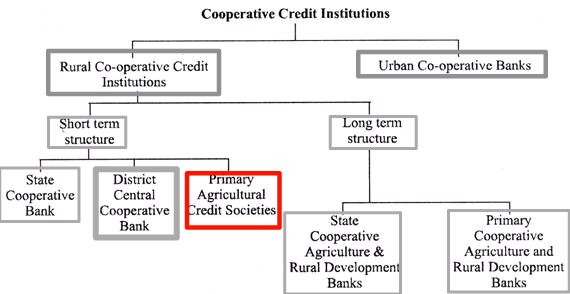
  • Amendment to the Multi-State Cooperatives Act, 2002

    The Union Home and Cooperation Minister has announced the decision to amend the Multi-State Cooperative Societies (MSCS) Act, 2002 to plug the loopholes in the Act.

    What is MSCS Act?

    • Cooperatives are a state subject, but there are many societies such as those for sugar and milk, banks, milk unions etc whose members and areas of operation are spread across more than one state.
    • The MSCS Act was passed to govern such cooperatives.
    • For example, most sugar mills along the districts on the Karnataka-Maharashtra border procure cane from both states.

    What are Multi-State Cooperatives?

    • They draw their membership from two or more states, and they are thus registered under the MSCS Act.
    • Their board of directors has representation from all states they operate in.
    • Administrative and financial control of these societies is with the central registrar, with the law making it clear that no state government official can wield any control on them.

    Why does the government plan to amend the Act?

    (1) Issues with Central Registrar

    • The exclusive control of the central registrar, who is also the Central Cooperative Commissioner, was meant to allow smooth functioning of these societies.
    • The central Act cushions them from the interference of state authorities so that these societies are able to function in multiple states.
    • What was supposed to facilitate smooth functioning, however, has created obstacles.
    • For state-registered societies, financial and administrative control rests with state registrars who exercise it through district- and tehsil-level officers.

    (2) Multiple checks and balances

    • Thus if a sugar mill wishes to buy new machinery or go for expansion, they would first have to take permission from the sugar commissioner for both.
    • Post this, the proposal would go to the state-level committee that would float tenders and carry out the process.
    • While the system for state-registered societies includes checks and balances at multiple layers to ensure transparency in the process, these layers do not exist in the case of multistate societies.
    • Instead, the board of directors has control of all finances and administration.

    (3) Lack of govt control

    • There is an apparent lack of day-to-day government control on such societies.
    • Unlike state cooperatives, which have to submit multiple reports to the state registrar, multistate cooperatives need not.
    • The central registrar can only allow inspection of the societies under special conditions — a written request by one-third of the members of the board.
    • Inspections can happen only after prior intimation to societies.

    (4) Lack of infrastructure

    • The on-ground infrastructure for central registrar is thin — there are no officers or offices at state level, with most work being carried out either online or through correspondence.
    • For members of the societies, the only office where they can seek justice is in Delhi, with state authorities expressing their inability to do anything.

    (5) Ponzi schemes functioning as MCS

    • There have been instances across the country when credit societies have launched ponzi schemes taking advantage of these loopholes.
    • Such schemes mostly target small and medium holders with the lure of high returns.
    • Fly-by-night operators get people to invest and, after a few instalments, wind up their operations.

    What kind of amendments can be expected?

    • The Centre is holding extensive consultations with experts from various fields: bankers, sugar commissioners, cooperative commissioners, housing societies federations etc.
    • The centre might increase their manpower, first in Delhi and then in the states, to ensure better governance of the societies.
    • Also, technology will be used to bring in transparency.


    UPSC 2022 countdown has begun! Get your personal guidance plan now! (Click here)

  • SEBI suspends Futures Trading in key farm crops

    Market regulator Securities & Exchange Board of India (SEBI) has issued an order suspending futures trading in paddy (non-basmati), wheat, Bengal gram (chana dal), mustard seeds and its derivatives, soyabean and its derivatives, crude palm oil and green gram (moong dal) for a year.

    What are Derivatives?

    • A derivative is a contract between two parties which derives its value/price from an underlying asset.
    • The value of the underlying asset is bound to change as the value of the underlying assets keep changing continuously.
    • Generally, stocks, bonds, currency, commodities and interest rates form the underlying asset.

    Types of Derivatives

    The most common types of derivatives are futures, options, forwards and swaps:

    (1) Futures

    • Futures are standardized contracts that allow the holder to buy/sell the asset at an agreed price at the specified date.
    • The parties to the futures contract are under an obligation to perform the contract. These contracts are traded on the stock exchange.
    • The value of future contracts is marked to market every day.
    • It means that the contract value is adjusted according to market movements till the expiration date.

     (2) Options

    • Options are derivative contracts that give the buyer a right to buy/sell the underlying asset at the specified price during a certain period of time.
    • The buyer is not under any obligation to exercise the option.
    • The option seller is known as the option writer. The specified price is known as the strike price.

    (3) Forwards

    • Forwards are like futures contracts wherein the holder is under an obligation to perform the contract.
    • But forwards are unstandardized and not traded on stock exchanges.
    • These are available over-the-counter and are not marked-to-market.
    • These can be customized to suit the requirements of the parties to the contract.

    (4) Swaps

    • Swaps are derivative contracts wherein two parties exchange their financial obligations.
    • The cash flows are based on a notional principal amount agreed between both parties without the exchange of principal.
    • The amount of cash flows is based on a rate of interest.
    • One cash flow is generally fixed and the other changes on the basis of a benchmark interest rate.
    • Swaps are not traded on stock exchanges and are over-the-counter contracts between businesses or financial institutions.

    What are Agri-Futures?

    Like equity, currency or interest rate futures, they allows to buy or sell an underlier at a preset price on a future date. All agri contracts end in compulsory delivery.

    • Agri products available for trade include wheat, sugar, chana, soyabean, castor, chilli , jeera futures, etc. Edible oil seeds and oils, spices and items like guar are among the more liquid contracts.
    • An objective of futures trading is gains reaching farmers, by establishing an efficient price-discovery platform.
    • This has been achieved to a large extent on NCDEX, in products such as castor, chana, soy complex, mustard, guar, cumin, etc.

    National Commodity & Derivatives Exchange Limited (NCDEX) is an Indian online commodity and derivative exchange. It is under the ownership of Ministry of Finance.

    What are the reasons for this ban?

    (1) To cool off Food Inflation

    • India’s retail inflation rose to a three-month high of 4.91 % in November from 4.48 % in the previous month primarily because of a rise in food inflation to 1.87 % from 0.85 % over this period.

    (2) Double Digits WPI

    • Wholesale Price Index-based inflation has remained in double digits for eight consecutive months beginning in April, mainly because of the surging prices of food items.
    • In November, the wholesale price-based inflation surged to a record high of 14.23 % amid the hardening of prices of mineral oils, basic metals, crude petroleum, and natural gas.

    (3) To insulate future Price Shock

    • In view of Rabi Output that might be affected morbidly because of fertilizer shortage faced in many parts of the country.
    • By banning future’s trade, the government is trying to insulate any price shock the market might feel in the days to come in case the production is not up to par.

    What will be the impact?

    (1) The imports in such commodities, especially edible oils, would reduce in the short term as traders will not have a hedging platform.

    • Hedging, which is speculative in nature, has been made difficult.
    • This will lead to the release of blocked local produce supplies into the market, which should cool the prices.
    • Imports of commodities for speculative gains will be discouraged.

    (2) It is believed that speculators have a role in jacking up prices and this needed to be discouraged to curb inflation and support growth as the economy is recovering from the COVID-19 impact.

    (3) India is the world’s biggest importer of vegetable oil and this measure will make it difficult for edible oil importers and traders to transact business since they use Indian exchanges to hedge their risk.

    (4) Agri-futures, driven mainly by NCDEX, have a checkered history with bans often pushing NCDEX back.

    • Such frequent bans are not a good development for the market as it affects confidence levels.
    • Often, a contract that is banned may not return to the table, which were very effective in price-discovery.
    • Even when the contracts are restored, traders hesitate because of the fear of bans.
    • As it involves losses for market participants with open positions as they must square off contracts before maturity.

    What are the other steps taken?

    • Supply-side interventions by the Government had limited the fallout of continuing high international edible oil prices on domestic prices.
    • The Union Government substantially reduced taxes on imports of palm, soy and sunflower oil.
    • Union and State Governments had also recently reduced excise duty and VAT on petrol and diesel, aimed at bringing down inflation.
    • It has both direct effects as well as indirect effects operating through fuel and transportation costs.

    Way Forward

    • The ban is expected to be lifted by March when the next mustard crop starts hitting the market and prices cool down.
      • If the weather remains benign in the coming weeks, India is on course to harvest a bumper 11 million tonnes of mustard in 2021-22, up from 8.5 million tonnes in 2020-21.
    • The way out is not to ban any contract, but make sure to correct any serious aberration through a combination of higher margins so that if at all the price is getting distorted due to market manipulation, the correction takes place immediately.
    • Further, talking to potential wrongdoers is another way out, provided trading patterns noticed by the exchange reveal such tendencies.
      • Position limits can be changed to ensure undue influence is not exerted by any set of traders.


    UPSC 2022 countdown has begun! Get your personal guidance plan now! (Click here)

  • Can India become a technology leader?

    Context

    Every time a technology giant chooses an India-born techie as its leader, there is a justifiable swelling of pride in the country, but also some disappointment.

    Why is India still not a major player in technology?

    • Inability to use opportunities: The popular narrative is that India’s failures are linked to its inability to make use of market-driven growth opportunities.
    • Brain drain: Indeed, as of 2019, there were 2.7 million Indian immigrants in the U.S.
    • They are among the most educated and professionally accomplished communities in that country.

    Role of the state

    • Example of the US: An invisible hand of the US government has been there to prop up each of the so-called triumphs of enterprise and the free market in the US.
    • Introduction of new generation technologies: Research by Mariana Mazzucato shows that the state has been crucial to the introduction of the new generation of technologies, including the computers, the Internet, and the nanotech industry.
    • Public funding: Public sector funding developed the algorithm that eventually led to Google’s success and helped discover the molecular antibodies that provided the foundation for biotechnology.
    • The role of the government has been even more prominent in shaping the economic growth of China, which is racing with the U.S. for supremacy in technology.
    • Even while being hailed as the ‘factory of the world’, China had been stuck at the low value-adding segments of the global production networks, earning only a fraction of the price of the goods it manufactured.
    • However, as part of a 2011 government plan, it has made successful forays into ‘new strategic industries’ such as alternative fuel cars and renewable energy.
    • China’s achievements came not because it turned ‘capitalist’, but instead by combining the strengths of the public sector, markets and globalisation.
    • China’s state-owned enterprises (SOEs) were seen as inefficient and bureaucratic.
    • However, rather than privatising them or letting them weaken with neglect, the Chinese state restructured the SOEs.
    • On the other, SOEs strengthened their presence in strategically important sectors such as petrochemicals and telecommunication as well as in technologically dynamic industries such as electronics and machinery.

    What went wrong in India’s case?

    • When India inaugurated planning and industrialisation in the early 1950s.
    • Public sector funding of the latest technologies of the time including space and atomic research and the establishment of institutions such as the Indian Institutes of Technology (IITs) were among the hallmarks of that effort.
    • Many of these institutions have over the years attained world-class standards.
    • The growth of information technology and pharmaceutical industries has been the fastest in Bengaluru and Hyderabad.
    • Poor education: However, the roadblocks to progress have been many, including India’s poor achievements in school education.
    • Missed opportunity to strengthen technological capabilities: In 1991, when India embraced markets and globalisation, it should have redoubled efforts to strengthen its technological capabilities.
    • Low spending on research and development: Instead, the spending on research and development as a proportion of GDP declined in India from 0.85% in 1990-91 to 0.65% in 2018.
    • In contrast, this proportion increased over the years in China and South Korea to reach 2.1% and 4.5%, respectively, by 2018.

    Positives for India

    • Higher enrollment for tertiary education: The number of persons enrolled for tertiary education in India (35.2 million in 2019) is way ahead of the corresponding numbers in all other countries except China.
    • More graduates from STEM: Further, graduates from STEM (Science, Technology, Engineering and Mathematics) programmes as a proportion of all graduates was 32.2% for India in 2019, one of the highest among all countries (UNESCO data).

    Way forward

    • Increase spending on education: India needs to sharply increase its public spending to improve the quality of and access to higher education.
    • An overwhelming proportion of tertiary students in India are enrolled in private institutions: it was 60% for those enrolled for a bachelor’s degree in 2017, while the average for G20 countries was 33%, according to OECD.
    • Improve technological capabilities: The ‘Make in India’ initiative will have to go beyond increasing the ‘ease of business’ for private industry.
    • Indian industry needs to deepen and broaden its technological capabilities.
    • India — which will soon have twice the number of Internet users as in the U.S. — is a large market for all kinds of new technologies.
    • While this presents a huge opportunity, the domestic industry has not yet managed to derive the benefits.
    • This will happen only if universities and public institutions in the country are strengthened and emboldened to enter areas of technology development for which the private sector may have neither the resources nor the patience.
    • Strengthen the public sector: PSUs should be valued for their potential long-term contributions to economic growth, the technologies they can create, and the strategic and knowledge assets they can build.
    • A strengthened public sector will create more opportunities for private businesses and widen the entrepreneurial base. Small and medium entrepreneurs will flourish when there are mechanisms for the diffusion of publicly created technologies, along with greater availability of bank credit and other forms of assistance.

    Conclusion

    The next big story about Indian prowess does not have to be from the U.S., but could come from thousands of such entrepreneurs in far-flung corners of the country.

    UPSC 2022 countdown has begun! Get your personal guidance plan now! (Click here)