💥Join UPSC 2027,2028 Mentorship (July Batch) + XFactor Notes & Microthemes PDF

Subject: Environment

  • On the right to a healthy environment

    Why in the News

    Severe winter smog in Delhi-NCR, repeated resort to emergency measures such as work-from-home and school closures, and judicial monitoring of pollution control have once again exposed the limits of India’s environmental governance framework. Despite decades of environmental legislation and court-led expansion of Article 21, air pollution continues to cause large-scale morbidity and mortality through diseases such as stroke, heart ailments, and lung disorders. 

    Introduction

    Environmental protection in India was not originally embedded as an enforceable constitutional right. However, through judicial interpretation, particularly under Article 21, the Supreme Court has progressively recognised a healthy environment as integral to the right to life.

    How serious is India’s air pollution crisis?

    1. Urban air quality: Causes chronic exposure to particulate matter, especially PM2.5, leading to cardiovascular and respiratory diseases.
    2. Particulate matter dominance: PM2.5 identified as the most hazardous pollutant due to deep lung penetration and long-term health impact.
    3. Children’s vulnerability: Sub-category ultrafine particles disproportionately affect children.
    4. Policy response: Commission for Air Quality Management (CAQM) mandated closures and activity restrictions under different GRAP phases.
    5. Governance gap: Emergency responses substitute for long-term structural correction.

    What are the major sources of environmental degradation discussed?

    1. Fossil fuel combustion: Transport and industrial emissions identified as primary contributors.
    2. Industrial processes: Release of harmful particulates and toxic waste.
    3. Waste management failures: Open burning and improper disposal.
    4. Construction and demolition: Dust generation contributing to PM load.
    5. Agricultural practices: Crop residue burning aggravating seasonal pollution.

    How has the Constitution been interpreted to protect the environment?

    1. Judicial interpretation: Environment read into Article 21 through purposive interpretation.
    2. Key precedent: Maneka Gandhi v. Union of India (1978) expanded the meaning of life and personal liberty.
    3. Explicit linkage: Subhash Kumar v. State of Bihar (1991) recognised the right to pollution-free water and air as part of Article 21.
    4. Directive Principles: Articles 48A and 51A(g) impose duties on the State and citizens.
    5. Limitation: Absence of an explicit Fundamental Right creates enforcement ambiguity.

    What environmental protection principles guide Indian jurisprudence?

    1. Strict liability: Accountability for environmental harm irrespective of intent.
    2. Precautionary principle: Preventive action justified even in absence of scientific certainty.
    3. Polluter pays principle: Costs of pollution borne by the polluter, including prevention and remediation.
    4. Sustainable development: Rejection of development-ecology trade-off.
    5. Judicial endorsement: Principles recognised in Vellore Citizens’ Welfare Forum v. Union of India (1996).

    What is the public trust doctrine and why is it important?

    1. State as trustee: Natural resources held by the State for public benefit.
    2. Ownership structure: Citizens are beneficiaries, not owners.
    3. Judicial recognition: M.C. Mehta v. Kamal Nath affirmed State’s fiduciary duty.
    4. Governance implication: Restricts arbitrary commercial exploitation.
    5. Constitutional basis: Draws support from Directive Principles.

    Why is current protection considered inadequate?

    1. Reactive governance: Reliance on emergency measures rather than prevention.
    2. Judicial overreach risk: Courts stepping into regulatory roles due to executive inaction.
    3. Weak enforcement: Persistent pollution despite decades of litigation.
    4. Policy fragmentation: Overlapping authorities with limited coordination.
    5. Constitutional silence: Lack of explicit environmental right reduces accountability.

    Should the right to a healthy environment be explicitly constitutionalised?

    1. Clarity of obligation: Defines enforceable State responsibility
    2. Justiciability: Strengthens citizen access to remedies.
    3. Governance discipline: Limits ad-hoc executive responses.
    4. Comparative practice: Many constitutions explicitly recognise environmental rights.
    5. Democratic accountability: Aligns rights with duties of the State.

    Conclusion

    The judicial recognition of a clean and healthy environment as an integral part of the right to life reflects the constitutional dynamism of Indian environmental jurisprudence. However, persistent pollution, reliance on emergency measures, and weak enforcement mechanisms reveal the limits of court-led constitutionalisation, underscoring the need for explicit constitutional recognition and stronger executive accountability to translate environmental rights into lived realities.

    PYQ Relevance

    [UPSC 2022] The most significant achievement of modern law in India is the constitutionalisation of environmental problems by the Supreme Court.” Discuss with relevant case laws.

    Linkage: This question is directly relevant to GS Paper II as it examines the judicial expansion of Article 21 to include the right to a clean and healthy environment through constitutional interpretation.

  • Southern Ocean  

    Why in the News?

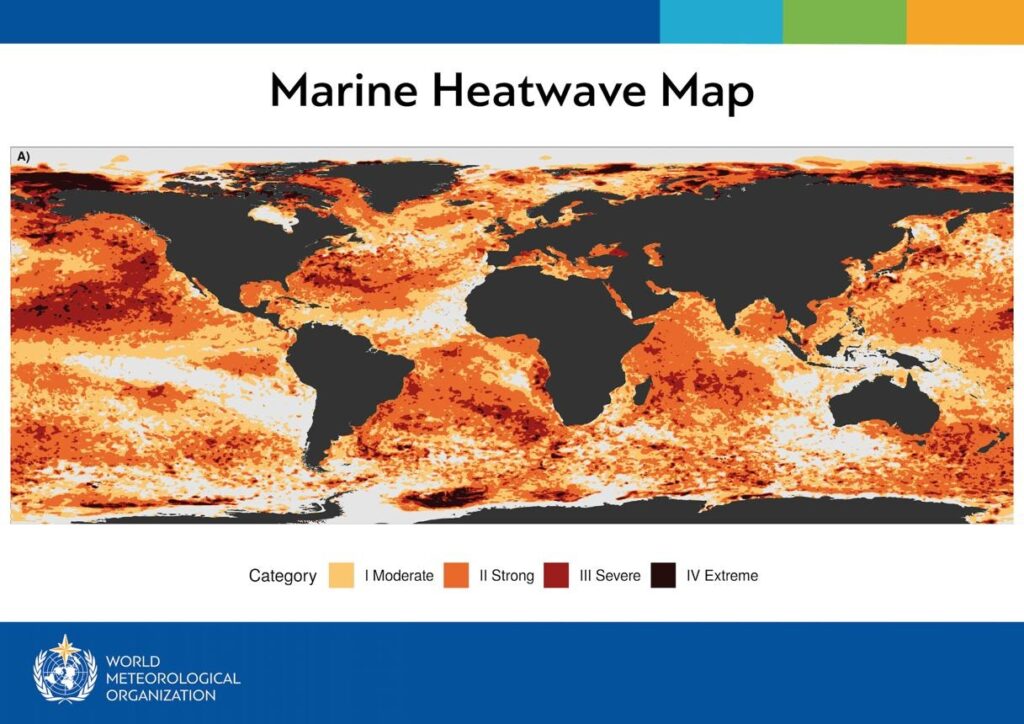
    Scientists have found that the Southern Ocean mitigates global surface warming by absorbing a large share of carbon released by human activities.

    About the Southern Ocean

    • Also known as the Antarctic Ocean
    • Fourth largest ocean by surface area
    • Described by the International Hydrographic Organisation as the southernmost part of the World Ocean

    Formation and Geological History

    • Formed around 34 million years ago
    • Resulted from the separation of Antarctica and South America
    • Opening of the Drake Passage allowed free circumpolar water flow
    • This isolation contributed to Antarctic cooling and ice sheet formation

    Role of the Southern Ocean

    Climate Regulation

    • Absorbs large amounts of atmospheric carbon dioxide
    • Takes up excess heat generated by global warming
    • Acts as a major carbon sink

    Global Ocean Circulation

    • Drives large scale circulation of ocean waters
    • Influences heat and nutrient distribution worldwide
    • Plays a role in deep water formation

    Sea Ice Dynamics

    • Seasonal expansion and retreat of sea ice affects albedo
    • Influences global climate feedback mechanisms

    Prelims Pointers

    • Southern Ocean surrounds Antarctica completely
    • Antarctic Circumpolar Current has no continental barrier
    • Drake Passage is key to global ocean circulation
    • Southern Ocean absorbs both heat and carbon dioxide
    • Crucial for long term climate stability
    [2011] Westerlies in the southern hemisphere are stronger and persistent than in the northern hemisphere. Why? 

    1. Southern hemisphere has less landmass as compared to northern hemisphere. 

    2. Coriolis force is higher in southern hemisphere as compared to northern hemisphere. 

    Which of the statements given above is/are correct? 

    (a) 1 only (b) 2 only (c) Both 1 and 2 (d) Neither 1 nor 2

  • White Spot Disease

    Why in the News?

    • The Minister of Fisheries, Animal Husbandry and Dairying informed the Rajya Sabha about White Spot Disease

    About White Spot Disease

    • Highly contagious viral disease
    • Affects crustaceans such as prawns, yabbies, and crabs
    • Causes mass mortality in shrimp aquaculture

    Causative Agent

    • White Spot Syndrome Virus (WSSV)
    • Double stranded DNA virus
    • Genus: Whispovirus
    • Family: Nimaviridae

    Host Range

    • All decapod crustaceans belonging to order Decapoda
    • Includes prawns, shrimps, lobsters, and crabs
    • Occurs in marine, brackish, and freshwater environments

    Mode of Transmission

    • Vertical transmission
    From infected brood stock to post larvae
    • Horizontal transmission
    Through carrier animals
    By cannibalism of infected organisms

    Geographical Distribution

    • Reported from Bangladesh and eastward from India

    Among the following organisms, which one does not belong to the class of other three? (2014)

    (a) Crab 

    (b) Mite 

    (c) Scorpion 

    (d) Spider

  • Kheoni Wildlife Sanctuary

    Why in the News?

    • Forest Department officially recorded sightings of two Wild Dogs (Dholes) in Kheoni Wildlife Sanctuary

    About Kheoni Wildlife Sanctuary

    • Location: Madhya Pradesh
    • Connectivity: Linked through corridors with Ratapani Tiger Reserve
    • Vegetation Type: Dry deciduous forests

    Dhole (Asiatic Wild Dog)

    Basic Facts
    • Wild canid carnivorous species
    • Known for pack hunting behaviour

    Other Names
    • Indian wild dog, Whistling dog, Red wolf, Red dog and Mountain wolf

    Habitat
    • Dense forests, Scrub forests, Steppes, Mountains and Pine forests

    Distribution
    • Central Asia
    • Eastern Asia
    • Southeast Asia
    • In India, stronghold in Western Ghats and Eastern Ghats

    Conservation Status
    • IUCN Red List: Endangered
    • CITES: Appendix II
    • Wildlife Protection Act, 1972: Schedule II

    Recently there was a proposal to translocate some of the lions from their natural habitat in Gujarat to which one of the following sites? (2017)

    (a) Corbett National Park 

    (b) Kuno Palpur Wildlife Sanctuary 

    (c) Mudumalai Wildlife Sanctuary 

    (d) Sariska National Park

  • Freshwater Sponge

    Why in the News?

    • Scientists from Bose Institute studied freshwater sponges from the Sundarban delta
    • Identified their potential role as bioindicators of toxic metal pollution

    About Freshwater Sponges

    • Among the earliest multicellular eukaryotes
    • Play a key role in maintaining aquatic ecosystem health
    • Found in clean streams, lakes, rivers, and estuarine systems
    • Grow on sturdy submerged objects
    • Are filter feeders, filtering large volumes of water
    • Obtain food from water flow through the body and symbiotic algae

    Physical Features

    • Often appear green in colour
    • Green colour due to symbiotic algae living within sponge tissues

    Reproduction

    • Sexual reproduction
    • Asexual reproduction by fragmentation
    • Formation of gemmules
    Tiny, resistant reproductive bodies
    Can survive unfavourable conditions
    Germinate later to form new sponges

    Ecological Role and Significance

    • Act as bioindicators of water quality
    • Absorb toxic heavy metals such as arsenic, lead, and cadmium
    • Useful in monitoring pollution levels in freshwater and estuarine ecosystems
    • Show potential for bioremediation of polluted water bodies

    Which one of the following is a filter feeder? (2021)

    (a) Catfish 

    (b) Octopus 

    (c) Oyster 

    (d) Pelican

  • How is the Aravalli range to be protected

    Introduction

    The Aravalli range, among the world’s oldest mountain systems, functions as a critical ecological barrier preventing desertification of the Indo-Gangetic plains. Stretching over 650 km from Gujarat to Delhi, the range plays a central role in climate moderation, groundwater recharge, and biodiversity conservation. However, decades of inconsistent definitions, regulatory violations, and mining pressures have degraded large tracts, necessitating renewed judicial intervention.

    Why in the News

    The Supreme Court, in a recent order, settled on a uniform definition of the Aravalli hills and ranges, paused the grant of fresh mining leases, and directed preparation of a Sustainable Mining Management Plan (SMMP). This marks a decisive shift from fragmented state-level interpretations that previously enabled unregulated mining. The intervention is significant as it directly addresses regulatory dilution, illegal extraction, and ecological degradation across Delhi-NCR, Haryana, Rajasthan, and Gujarat.

    Ecological and Strategic Significance of the Aravalli Range

    1. Ecological Barrier: Prevents eastward expansion of the Thar Desert into Haryana, Rajasthan, and western Uttar Pradesh.
    2. Climate Regulation: Supports regional climate stability and moderates extreme temperatures.
    3. Groundwater Recharge: Functions as a major recharge system for aquifers supplying urban and rural settlements.
    4. River Systems Support: Acts as a source region for rivers such as Chambal, Sabarmati, and Luni.
    5. Biodiversity Reservoir: Hosts diverse flora and fauna across forested and semi-arid ecosystems.
    6. Mineral Endowment: Contains limestone, marble, granite, zinc, copper, gold, and tungsten-driving extraction pressures.

    Historical Mining Pressure and Regulatory Failure

    1. Mining Legacy: Stone and sand mining persisted for decades due to mineral richness.
    2. Environmental Degradation: Caused air pollution, groundwater depletion, and ecosystem fragmentation.
    3. Legal Non-Compliance: Mining frequently operated without valid environmental clearances.
    4. International Commitments: Violates India’s obligations under the UN Convention to Combat Desertification.
    5. Judicial Trigger: Supreme Court intervention followed systemic regulatory failure at state levels.

    Early Executive and Judicial Interventions

    1. MoEF Restrictions (1990s): Issued mining restrictions across the Aravallis.
    2. Persistent Violations: State-level enforcement failures undermined restrictions.
    3. Supreme Court Ban (2009): Imposed a blanket ban on mining in Faridabad, Gurgaon, and Mewat.
    4. Fresh Mining Leases: Prohibited new leases and renewals pending comprehensive assessment.
    5. CEC Mandate: Central Empowered Committee tasked with examining mining impacts.

    Central Empowered Committee Findings and Recommendations

    1. Landscape-Level Assessment: Recommended macro-level environmental impact assessment.
    2. Mining Prohibition Zones: Advised bans in ecologically sensitive areas.
    3. Water Protection: Highlighted risks to recharge zones and water bodies.
    4. Strict Regulation: Suggested prohibition of mining until proper mapping and impact studies.
    5. Implementation Timeline: Recommendations placed before the Court after delayed compliance.

    Need for a Uniform Definition of the Aravallis

    1. State Inconsistencies: Different criteria used by states to identify Aravalli land.
    2. FSI Criteria (2010):
      1. Slope ≥ 3°
      2. Hill Height ≥ 100 m
      3. Valley Width ≥ 500 m
      4. Enclosed Area Criteria
    3. Regulatory Loopholes: Narrow definitions enabled mining below 100 m height.
    4. Scientific Objections: CEC flagged exclusion of slopes and foothills as ecologically flawed.
    5. Judicial Resolution: Supreme Court approved a nationally consistent definition.

    Supreme Court Directions on Mining Governance

    1. Sustainable Mining Management Plan: Directed preparation of SMMP for Aravalli-NCR.
    2. Absolute Prohibition: Banned mining in highly sensitive zones.
    3. Conditional Permissions: Allowed limited mining under strict regulatory oversight.
    4. Carrying Capacity Assessment: Mandated ecological thresholds before approvals.
    5. Restoration Measures: Required rehabilitation and restoration planning.

    Green Wall Project and Landscape Restoration

    1. Project Launch (June 2025): Centre initiated the Aravalli “Green Wall”.
    2. Geographic Scope: 5-km buffer across 29 districts in Gujarat, Rajasthan, Haryana, and Delhi.
    3. Restoration Target: 26 million hectares of degraded land by 2030.
    4. Climate Co-Benefits: Enhances carbon sequestration and desertification control.
    5. Policy Integration: Aligns with land degradation neutrality goals.

    Why Mining Has Not Been Completely Banned

    1. Past Experience: Total bans encouraged illegal syndicates and violent extraction.
    2. Regulatory Vacuum: Blanket prohibitions weakened oversight mechanisms.
    3. Calibrated Approach:
      1. Existing legal mines regulated stringently.
      2. Ecologically sensitive zones declared no-go areas.
    4. Governance Focus: Emphasis on enforceable regulation rather than prohibition.

    Conclusion:

    Protecting the Aravalli range is essential not only for conserving an ancient geomorphic system but also for safeguarding north India from accelerating desertification, groundwater decline, and ecological instability. The Supreme Court’s insistence on a uniform definition, regulated mining, and landscape restoration marks a shift from fragmented governance to science-based environmental stewardship.

    PYQ Relevance

    [UPSC 2020] The process of desertification does not have climatic boundaries. Justify with examples.

    Linkage: The question examines the role of physiographic features and human interventions in driving desertification beyond climatic boundaries under GS-1. The Aravalli range functions as a natural barrier against desert spread, and its degradation demonstrates how desertification can advance into non-arid regions.

  • Channa bhoi

    Why in the News?

    Scientists have discovered a new species of snakehead fish named Channa bhoi from the state of Meghalaya, adding to India’s freshwater biodiversity.

    About Channa Bhoi

    • Newly identified species of snakehead fish
    • Discovered from a small mountain stream near Iewmawlong village
    • Location: Ri Bhoi district, Meghalaya
    • Named after the Bhoi people, an indigenous group of the Khasi tribe inhabiting the region

    Taxonomic and Ecological Details

    • Belongs to the Gachua group of snakehead fishes
    • The Gachua group is known for high species diversity in the Eastern Himalayan region
    • Phylogenetic analysis shows it is a sister species to Channa bipuli, found in Northeast India

    Distinctive Physical Features

    • Bluish grey body colour
    • Each scale has minute black spots
    • Spots form eight to nine horizontal rows of broken lines along the body
    • Distinctive banding patterns on the pectoral fins
    • Unique colour pattern differentiates it from closely related species

    Significance of the Discovery

    • Highlights the rich freshwater biodiversity of Northeast India
    • Emphasises the importance of mountain stream ecosystems
    • Reflects ongoing discoveries in the Eastern Himalayan biodiversity hotspot

    Key Prelims Fact

    • With this discovery, the total number of Channa species recorded in India has increased to 26

    In a particular region in India, the local people train the roots of living trees into robust bridges across the streams. As the time passes, these bridges become stronger. These unique ‘living root bridges’ are found in (2015)

    (a) Meghalaya 

    (b) Himachal Pradesh 

    (c) Jharkhand 

    (d) Tamil Nadu

  • Climate change, deforestation worsened impact of SE Asia cyclones

    Introduction

    Rising global temperatures, deforestation, and rapid urbanisation have significantly intensified the flood impacts of tropical cyclones across Sri Lanka, Malaysia, Indonesia, and Thailand. Recent cyclones such as Dithawru and Senyar produced rainfall and flooding far exceeding historical norms, marking a shift from cyclical monsoon flooding to extreme, compound climate disasters.

    Why in the News

    A new attribution study by the World Weather Attribution (WWA) group establishes that climate change, land-use change, and urban expansion together amplified cyclone-induced floods in Southeast Asia to unprecedented levels. Cyclone Senyar made landfall in Indonesia and Malaysia on November 26-27, while Dithawru struck Sri Lanka earlier in November, causing extensive damage and over 1,600 deaths. The study highlights rainfall intensities rising up to 160% in Sri Lanka and 50% in Malaysia compared to pre-industrial baselines, underscoring a structural climate shift rather than isolated weather anomalies.

    Escalating Cyclone Rainfall in a Warming Climate

    1. Global Temperature Rise: Increases atmospheric moisture-holding capacity as temperatures have risen by 1.3°C since the mid-1800s.
    2. Moisture Amplification: Each 1°C rise enables the atmosphere to hold 7% more moisture, intensifying rainfall.
    3. Cyclone Energy Supply: Elevated sea surface temperatures in the North Indian Ocean provided additional latent heat for cyclone formation.
    4. Rainfall Extremes: Five-day rainfall events in Sri Lanka intensified by 160%, while extreme rainfall in Malaysia increased by 50%.

    Sea Surface Temperature Anomalies and Storm Intensification

    1. Above-Normal SSTs: Sea surface temperatures during Cyclone Senyar were 0.2°C higher than the 1991-2020 average.
    2. Storm Development: Warmer oceans increased evaporation rates, strengthening storm systems and prolonging rainfall duration.
    3. Frequency Shift: The study identifies a rise in extreme rainfall frequency rather than mere intensity spikes.

    Deforestation as a Flood Multiplier

    1. Forest Cover Decline: Sri Lanka lost 90% of forest cover between 1900 and 2020.
    2. Hydrological Impact: Reduced infiltration and increased surface runoff amplified landslides and flash floods.
    3. Human Impact: Rainfall-induced landslides in Sri Lanka caused over 600 deaths.
    4. Indonesia Case: Nearly 25% of old-growth forests on palm oil plantations were cleared between 1991 and 2020, reducing natural flood buffers.

    Rapid Urbanisation and Exposure Expansion

    1. Population Exposure: Rising numbers of people reside in high-intensity flood-risk zones across Sri Lanka and Indonesia.
    2. Infrastructure Stress: Roads, railways, and cropland expansion increased surface sealing and runoff velocity.
    3. Flood Pathways: Inadequate drainage and altered land gradients intensified urban flooding during Cyclone Senyar.

    Flood Impacts Beyond Rainfall

    1. Economic Losses: Sustained economic losses estimated between $6-7 billion, equivalent to 3-5% of GDP in affected regions.
    2. Agricultural Damage: More than 137,000 acres of agricultural land damaged due to floods and infrastructure failures.
    3. Secondary Hazards: Flooding triggered dam breaches, canal destruction, and landslides, compounding disaster severity.

    Attribution Science and Policy Significance

    1. Event Attribution: Confirms climate change as a decisive factor in amplifying rainfall and flood impacts.
    2. Shift in Disaster Pattern: Floods no longer limited to monsoon cycles but increasingly driven by short-duration extreme events.
    3. Policy Gap: Highlights inadequate land-use planning and ecosystem protection in climate adaptation strategies.

    Conclusion

    The study establishes that cyclone disasters in Southeast Asia are no longer episodic weather events but outcomes of sustained climate warming, ecological degradation, and unplanned urban growth. Addressing future flood risks requires integrating climate mitigation, forest conservation, and land-use planning into disaster governance frameworks.

    PYQ Relevance

    [UPSC 2023] The Intergovernmental Panel on Climate Change (IPCC) has predicted a global sea level rise of about one metre by AD 2100. What would be its impact in India and the other countries in the Indian Ocean region? 

    Linkage: The article reinforces IPCC projections by showing how warming oceans and climate change amplify coastal flooding risks in the Indian Ocean region. Sea-level rise acts as a risk multiplier, intensifying cyclone impacts, floods, and ecosystem loss in India and neighbouring countries.

  • Kerala’s Butterfly Diversity 

    Why in the News?

    A new monograph published in ENTOMON journal affirms that Kerala hosts the highest butterfly diversity among Indian States along the Western Ghats.

    Source of Study

    • Title: The Butterflies (Lepidoptera, Rhopalocera) of Kerala: Status and Distribution
    • Journal: ENTOMON, open access quarterly journal
    • Published by: Association for Advancement of Entomology
    • Lead researcher: Kalesh Sadasivan

    Key Findings

    • Kerala records 328 butterfly species.
    • Includes 41 species endemic to the Western Ghats.
    • Western Ghats as a whole support 337 butterfly species, most of which are found in Kerala.

    Butterfly Families in Kerala

    Nymphalidae: 97 species, Lycaenidae: 96 species, Hesperiidae: 82 species and Other families: Papilionidae, Pieridae, Riodinidae

    Migratory Species

    36 migratory butterfly species documented. Highlights Kerala as a key migratory corridor for seasonal butterfly movement.

    • Conservation Status
    • 22 species from Kerala listed in the IUCN Red List.
    • Most are Least Concern.
    • 2 species classified as Near Threatened.

    Legal Protection in India

    • 70 butterfly species protected under the Wildlife Protection Act, 1972. 
    • 4 species under Schedule I. Majority under Schedule II.

    Larval Host Plant Diversity

    • Over 1,800 larval feeding records documented.
    • Includes 350 plus new field observations.
    • Covers nearly 800 plant species.
    • One of the largest region specific host plant compilations in India.
    Due to some reasons, if there is a huge fall in the population of species of butterflies, what could be its likely consequence/consequences? (2017)

    1. Pollination of some plants could be adversely affected. 

    2. There could be a drastic increase in the fungal infections of some cultivated plants. 

    3. It could lead to a fall in the population of some species of wasps, spiders and birds. 

    Select the correct answer using the code given below: 

    (a) 1 only (b) 2 and 3 only (c) 1 and 3 only (d) 1, 2 and 3

  • Wildlife Smuggling at Kempegowda International Airport (KIA)

    Why in the News?

    Customs officials at Kempegowda International Airport, Bengaluru, intercepted a wildlife smuggling attempt involving endangered primates brought from Bangkok.

    Key Details

    • Two red shanked douc monkeys were recovered from a passenger arriving on flight TG 325 from Bangkok.
    • The animals were concealed inside check in baggage.
    • The passenger was arrested under provisions of the Wildlife Protection Act, 1972 and the Customs Act, 1962.
    • The rescued primates were handed over to animal welfare authorities for rehabilitation.
    • Further investigation is ongoing.

    About Red Shanked Douc Monkey

    • Scientific name: Pygathrix nemaeus
    • Habitat: Tropical forests of Vietnam, Laos and Cambodia
    • IUCN Status: Critically Endangered
    • Listed under CITES Appendix I
    • Known for distinctive red lower limbs and colourful facial markings

    Legal and International Framework

    • Wildlife Protection Act, 1972 provides legal protection to endangered species in India.
    • CITES regulates international trade in endangered species of wild fauna and flora.
    • Appendix I species face the strictest trade restrictions.

    Prelims Pointers

    • Airports are major transit points for wildlife trafficking.
    • Smuggling of CITES listed species is a serious international offence.
    • India is a signatory to CITES and enforces it through domestic laws.
    • Wildlife trafficking is among the top illegal trades globally after drugs and arms.
    In India, if a species of tortoise is declared protected under Schedule I of the Wildlife (Protection) Act, 1972, what does it imply? (2017)

    (a) It enjoys the same level of protection as the tiger. 

    (b) It no longer exists in the wild, a few individuals are under captive protection; and how it is impossible to prevent its extinction. 

    (c) It is endemic to a particular region of India. 

    (d) Both (b) and (c) stated above are correct in this context.