💥Join UPSC 2027,2028 Mentorship (July Batch) + XFactor Notes & Microthemes PDF

Subject: Environment

  • [4th December 2024] The Hindu Op-ed: Reflections on Baku’s ‘NCQG outcome’

    PYQ Relevance:
    Q)  Describe the major outcomes of the 26th session of the Conference of the Parties (COP) to the United Nations Framework Convention on Climate Change (UNFCCC). What are India’s commitments at this conference? (UPSC CSE 2021)

    Mentor’s Comment:  UPSC Mains have focused on India’s changing policy towards climate change (2022) and COP26 (2021).

    The recent UN Climate Change Conference (COP29) held in Baku, Azerbaijan, concluded with significant yet contentious outcomes, particularly regarding the New Collective Quantified Goal (NCQG) for climate finance. This editorial reflects on the implications of the NCQG and the broader context of climate negotiations.

    This editorial content can be used to present the significance of ‘Climate finance for developping countries’ and the challenges associated at Global stage.

    _

    Let’s learn!

    Why in the News?

    COP29 dubbed the “Finance COP,” was expected to deliver an ambitious outcome on the NCQG (New Collective Quantified Goal on Climate Finance). However, it fell short by neglecting equitable burden-sharing and climate justice, overlooking the financial needs of the Global South.

    Why do the Developing countries need Finance for climate change? 

    • Upfront Costs of Clean Technologies: Renewable energy technologies often have high upfront costs, which require government support to make them affordable to consumers, especially in developing countries.
    • Long-term Benefits but High Initial Investment: While renewable technologies have lower long-term operational and fuel costs, the high initial investment remains a significant barrier.
    • Financial Gaps and Urgency: Developing countries need urgent upscaling of finance to meet transformational goals. The pressure on government resources is compounded by the need for fiscal prioritization toward development activities.
    • Debt Issues and Risk: High debt burdens in developing countries prevent them from accessing affordable capital, making it difficult to incentivize private investment in green technologies.
    • High Cost of Capital: Developing countries face much higher lending rates, limiting their ability to access financial markets at favourable rates for climate action.
    • International Support Needed: Finance from developed countries, particularly in the form of public grants instead of loans, is essential to support the transition to green energy in developing nations.

    What are the roles of the NCQG (New Collective Quantified Goal on Climate Finance)?

    • Origins and Rationale: The NCQG was designed to address the shortcomings of previous climate finance pledges, including the $100 billion annual commitment made at Cancun in 2010. The NCQG aims to establish clearer, more accountable climate finance goals.
      • NCQG aims to establish a new financial target post-2025 to support developing countries, succeeding the $100 billion annual commitment from developed nations.
    • Addressing Climate Finance Gaps: NCQG seeks to bridge climate finance gaps by ensuring both the quantity and quality of financial instruments meet developing nations’ needs.
      • By setting a collective goal, NCQG promotes trust and cooperation among nations to effectively implement the Paris Agreement.
    • Catalyzing Private Investment: NCQG encourages private sector investment by signalling stability and commitment to climate finance.
    • Supporting Climate Resilience: The goal help developing countries adapt to climate impacts and transition to low-carbon economies with necessary funding.
    • Upholding Principles of Equity: NCQG is grounded in Common but Differentiated Responsibilities (CBDR), ensuring tailored support for developing countries based on their specific needs and capacities.

    What are the challenges?

    • Financial Needs of Developing Countries: The UNFCCC’s Second Needs Determination Report estimated that $5 trillion to $7 trillion would be required by 2030 to meet the needs of 98 developing countries. Developing nations have requested $1.3 trillion annually by 2030.
    • Disappointing Outcome at COP29: Developed countries agreed to a $300 billion annual commitment by 2035, which is seen as insufficient compared to the needs of the developing world. This amount does not represent a significant shift in financial flows and falls short of transformative action.
    • Lack of Commitment to Climate Justice: The NCQG falls short in terms of equitable burden-sharing, failing to adequately recognize the financial needs of the global south and climate justice.

    Way forward: 

    • Increase Financial Commitments: Developed countries must significantly enhance their financial commitments, moving beyond the $300 billion annually agreed at COP29, and align with the $1.3 trillion requested by developing nations to meet urgent climate goals.
    • Ensure Equitable Burden-Sharing: Future climate finance discussions must prioritize climate justice, adhering to the principles of Common but Differentiated Responsibilities and Respective Capabilities (CBDR-RC), ensuring that developed countries take on a larger share of the financial burden.
    • Focus on Grants over Loans: Developed countries should provide more finance in the form of public grants rather than loans, addressing the debt burdens of developing countries and enabling them to invest in green technologies without further exacerbating fiscal constraints.

    https://www.thehindu.com/opinion/lead/schooling-in-india-in-times-of-poor-air-quality/article68918906.ece

  • How land degradation is threatening Earth’s capacity to sustain humanity?

    Why in the News?

    The UNCCD, a treaty addressing desertification and drought, partnered with Germany’s Potsdam Institute for Climate Impact Research to release an analysis ahead of COP16’s launch in Riyadh, Saudi Arabia.

    What is Land Degradation?

    Land degradation is defined by the United Nations Convention to Combat Desertification (UNCCD) as the “reduction or loss of the biological or economic productivity and complexity of rainfed cropland, irrigated cropland, or range, pasture, forest and woodlands” due to various pressures, including land use and management practices. This phenomenon results in diminished soil quality and productivity, affecting both ecosystems and human livelihoods.

    Why is it a Matter of Concern?

    Land degradation poses significant risks to both humans and ecosystems:

    • Water Insecurity: Land degradation exacerbates water scarcity and reduces access to safe water, leading to a higher incidence of water- and food-borne diseases.
      • The World Health Organization (WHO) reports that unsafe drinking water and inadequate sanitation lead to approximately 829,000 deaths per year from diarrheal diseases alone.
    • Food Security: It reduces the quality and quantity of food production, increasing malnutrition risks.
    • Health Risks: Degraded lands contribute to the spread of water- and food-borne diseases due to poor hygiene and lack of clean water. Respiratory issues can arise from soil erosion and dust.
    • Environmental Impact: Eroded soil carries fertilizers and pesticides into water bodies, harming aquatic life and communities dependent on these resources.
    • Climate Change: Healthy soils act as carbon sinks. Degradation leads to the release of stored carbon and nitrous oxide, exacerbating global warming. The report indicates that land ecosystems’ capacity to absorb human-caused carbon dioxide has decreased by 20% over the last decade.

    What is Causing Land Degradation?

    • Chemical Overuse: Excessive fertilisers and pesticides degrade soil; 50% of agricultural land suffers from nutrient depletion, salinisation, and waterlogging affecting 30% of irrigated lands globally.
    • Soil Erosion: Unsustainable farming practices lead to the loss of 24 billion tons of fertile soil annually, reducing crop yields by up to 50% in some regions.
    • Climate Change: Extreme weather events reduce global crop yields by 10%-50% by 2050; 12.6% of drylands were degraded between 1982-2015, affecting 213 million people.
    • Urbanization: Rapid urban growth of 1 million hectares per year destroys habitats, reduces farmland, and increases runoff, exacerbating soil erosion and biodiversity loss.
    • Deforestation and Overgrazing: 420 million hectares of forest lost since 1990; overgrazing degrades 34% of the global degraded area, weakening soil health and ecosystems.

    Which Areas are the Worst Affected?

    • Dry Regions: Areas such as South Asia, northern China, California (USA), and the Mediterranean are particularly vulnerable.
    • Global Context: Approximately 15 million square kilometers of land are already degraded an area larger than Antarctica with an additional million square kilometers degrading each year. A third of humanity lives in drylands, which encompass three-quarters of Africa.

    Way forward: 

    • Sustainable Land Management Practices: Promote eco-friendly agricultural methods, reforestation, and efficient irrigation to restore soil health, combat erosion, and improve water retention in degraded lands.
    • Global Collaboration and Policy Implementation: Strengthen international frameworks like the UNCCD, allocate resources for affected regions, and adopt policies that integrate land restoration with climate resilience and biodiversity conservation.

    Mains PYQ:

    Q  The process of desertification does not have climate boundaries. Justify with examples. (UPSC IAS/2020)

  • World Wildlife Conservation Day

    Why in the News?

    • World Wildlife Conservation Day (December 4) reminds us to focus on preserving and protecting the critically endangered species in India and globally.
      • The theme for this year is “Connecting People and Planet: Exploring Digital Innovation in Wildlife Conservation”.

    World Wildlife Conservation Day: Key Facts

    • Observed annually on December 4th.
    • Purpose: Raise awareness about the importance of wildlife conservation and the protection of endangered species and their habitats.
    • It was established in 2012 by the UN, coinciding with the anniversary of the 1948 signing of CITES (Convention on International Trade in Endangered Species).
    • It supports global efforts for wildlife conservation, aligns with SDG 15 (life on land) and SDG 14 (life below water).

    Aims for India’s Critically Endangered Species

    • As of 2022, 73 species in India are classified as critically endangered, meaning they are at highest risk of extinction in the wild.
      • The number of critically endangered species has risen from 47 in 2011, partly due to better data availability and monitoring.
    • India has 9 critically endangered mammal species, out of which 8 are endemic (found only in specific regions within India).
      • These include: Kashmir Stag (Hangul), Malabar Large-spotted Civet, Andaman Shrew, Jenkin’s Shrew, Nicobar Shrew, Namdapha Flying Squirrel, Large Rock Rat, and Leafletted Leaf-nosed Bat.
    • Though these animals receive significant attention for tourism purposes, they are only three of the critically endangered species in India.
      • Lions: Asiatic lions in the Gir Forest are critically endangered.
      • Tigers: Bengal tigers are also listed as critically endangered.
      • Cheetahs: They are also part of India’s endangered wildlife.
    • Great Indian Bustard is a bird facing significant threats due to power lines in Rajasthan.

    PYQ:

    [2014] The most important strategy for the conservation of biodiversity together with traditional human life is the establishment of:

    (a) biosphere reserves

    (b) botanical gardens

    (c) national parks

    (d) wildlife sanctuaries

  • Environment Ministry’s Lok Sabha reply shows 33.6% of India’s coastline is threatened by erosion

    Why in the News?

    During the ongoing Winter Session of Parliament, the Union Environment Ministry presented data shedding light on the critical issue of coastal erosion in India.

    What are the key findings of the report?

    • Extent of Coastal Erosion Nationwide:
      • 33.6% of India’s coastline has been affected by erosion over the past three decades.
      • 26.9% of the coastline has shown growth (accretion), while 39.6% remains stable.
    • Regional Variations in Karnataka:
      • Dakshina Kannada: The most severely affected district in Karnataka, with 48.4% of its 36.66 km coastline eroded (17.74 km).
      • Udupi: Reported 34.7% erosion of its 100.71 km coastline (34.96 km).
      • Uttara Kannada: Reported the lowest erosion, at 12.3% of its 175.65 km coastline (21.64 km).
    • Data and Methodology: The study, conducted by the National Centre for Coastal Research (NCCR), utilized satellite imagery and field surveys to monitor shoreline changes from 1990 to 2018.
    • Risk Identification and Mapping: The Indian National Centre for Ocean Information and Services (INCOIS) has prepared Multi-Hazard Vulnerability Maps (MHVM), incorporating data on extreme water levels, sea level rise, and shoreline changes to highlight areas prone to disasters like tsunamis and storm surges.

    What are the causes of coastal erosion in India?

    • Rising Sea Levels: Climate change has led to increased sea levels, which amplify storm surges and coastal flooding, significantly contributing to erosion.
    • Sand Mining and Infrastructure Projects: Unregulated sand extraction and construction activities, such as ports and seawalls, disrupt natural sediment flow, exacerbating erosion in vulnerable areas.
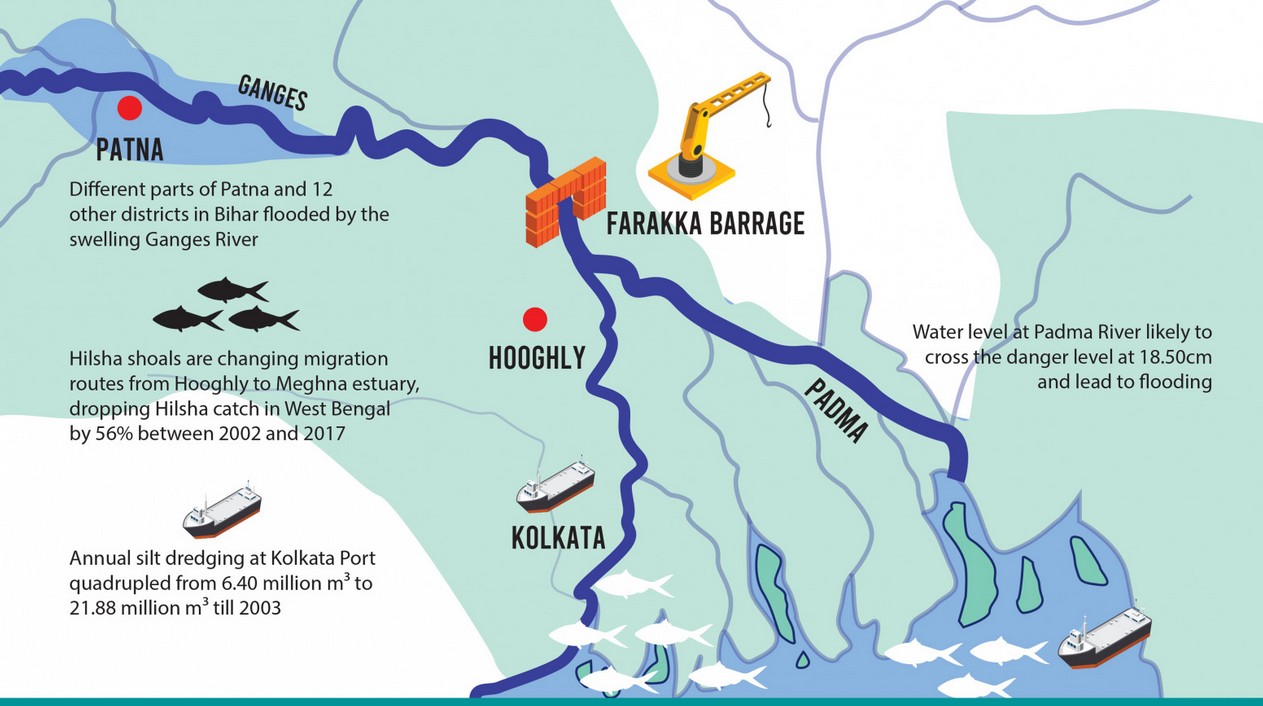
      • For example, illegal sand mining along the Bhagirathi-Hooghly River has reduced river channel width by up to 55%, significantly increasing erosion risks along the banks.
    • Mangrove Depletion: The loss of mangroves, which act as natural barriers against wave action, leaves coastlines more exposed to erosion. For instance, after Cyclone Gaja in 2019, Muthupet mangroves in Tamil Nadu lost nearly three square kilometres of coverage due to uprooted trees.
    • Cyclonic Activity: An increase in cyclonic events has destabilised coastal systems, further intensifying erosion. As per the  National Disaster Management Authority (NDMA) reported that 75% of the Indian coastline is susceptible to cyclones and related hazards.

    CASE STUDY: Mitigation Efforts in Karnataka

    • Shoreline Management Plan: The Karnataka government has developed this plan under the Coastal Regulation Zone (CRZ) Notification of 2019 to address coastal erosion effectively.
    • Karnataka Strengthening Coastal Resilience and Economy (K-SHORE) Project: Funded by the World Bank, this initiative aims to enhance coastal protection, improve community livelihoods, and tackle marine plastic pollution along Karnataka’s coast.
    • Multi-Hazard Vulnerability Maps (MHVM): Created by the Indian National Centre for Ocean Information and Services (INCOIS), these maps identify areas at risk from disasters like tsunamis and storm surges using data on shoreline changes and sea level rise.
    • Community-Driven Conservation Programs: Experts advocate for community involvement in conservation efforts, along with real-time monitoring of erosion using artificial intelligence for sustainable solutions.

    Why there is a need for a paradigm shift?

    • Ineffectiveness of Traditional Methods: Long-standing strategies like constructing concrete sea walls have proven ineffective over the past 30 years in preventing coastal erosion.
    • Recommendations Against Human Habitation: Engineers recommend restricting habitation in vulnerable areas to mitigate risks associated with coastal erosion; however, political interests often overshadow these warnings.
    • Investment in Sustainable Solutions: Environmental activists argue that funds currently allocated for traditional coastal structures would be better spent on creating safe townships away from vulnerable coastlines, ensuring community safety during extreme weather events.
    • Holistic Approaches Needed: A multi-faceted strategy involving ecosystem restoration (e.g., mangrove replantation), stricter regulation of sand mining, and innovative solutions like artificial reefs is essential for effective long-term management of coastal erosion issues.

    Way forward: 

    • Adopt Integrated Coastal Zone Management (ICZM): Implement holistic strategies combining ecosystem restoration, stricter regulations on sand mining, and innovative measures like artificial reefs and eco-friendly breakwaters to ensure long-term coastal resilience.
    • Promote Managed Retreat and Community Awareness: Relocate vulnerable communities to safer areas away from high-risk zones while fostering community-driven conservation efforts and leveraging real-time monitoring technologies like AI to mitigate erosion impacts effectively.

    Mains PYQ:

    Q  Explain the causes and effects of coastal erosion in India. What are the available coastal management techniques for combating the hazard? (UPSC IAS/2022)

  • International Centre for Integrated Mountain Development (ICIMOD)

    Why in the News?

    The ICIMOD has launched Air Quality Dashboard for Indo-Gangetic Plain.

    ICIMOD Air Quality Dashboard: Important Features

    • The dashboard provides real-time and forecasted air quality data for the region.
    • It uses a combination of ground sensor data and satellite imagery to give a comprehensive view of air pollution across local, sub-regional, and regional scales.
    • A dynamic timelapse powered by the Weather Research and Forecasting model with Chemistry (WRF-Chem) tracks the spread of PM2.5 across the region.
    • This model highlights the spread of pollution from hotspots like Lahore, New Delhi, and Kolkata.
    • It provides two-day forecasts, allowing communities, policymakers, and researchers to anticipate air quality conditions and take proactive measures.

    About the International Centre for Integrated Mountain Development (ICIMOD):

    Details
    • A regional intergovernmental learning and knowledge-sharing centre founded in 1981.
      • Idea of creating ICIMOD was first discussed at the International Workshop in December 1974.
    • 8 regional member countries of the Hindu Kush Himalaya (HKH) region: Afghanistan, Bangladesh, Bhutan, China, India, Myanmar, Nepal, and Pakistan.
      • HKH region encompasses mountain ranges, including the Hindu Kush, Himalayas, and Tibetan Plateau, extending from northern Afghanistan to Myanmar.
    Structural Mandate
    • Headquartered in Khumaltar, Lalitpur, and Kathmandu Valley, Nepal.
    • ICIMOD also has a Knowledge Park in Godavari, Lalitpur exhibiting ICIMOD’s research and field applications.
    • Country offices in Afghanistan and Pakistan.
    Functions and Powers
    • Collaborates with national and international scientific institutions, government agencies, donor agencies, and the private sector, both within the region and globally.
    • Key Role: Promotes partnerships among regional member countries to secure a better future for the people and environment of the HKH region.


    PYQ:

    [2012] When you travel in Himalayas, you will see the following:

    1. Deep gorges
    2. U-turn river courses
    3. Parallel mountain ranges
    4. Steep gradients causing land sliding

    Which of the above can be said to be the evidence for Himalayas being young fold mountains?

    (a) 1 and 2 only
    (b) 1, 2 and 4 only
    (c) 3 and 4 only
    (d) 1, 2, 3 and 4

  • Gandhamardan Hills, Odisha

    Why in the News?

    The Odisha government has clarified that it will not allow bauxite mining in the Gandhamardan hills after concerns arose when the Adani Group’s subsidiary acquired 112 acres of land near the hills.

    Gandhamardan Hills, Odisha

    About Gandhamardan Hills:

    Geographical Features
    • Situated in the western part of Odisha, spread across the Bargarh and Bolangir districts.
    • Covers an area of 190 square kilometers.
    • Dense forests and hill slopes.
    • Plays a crucial role in sustaining the livelihoods of local communities.
    Mines and Minerals Found
    • Bauxite: Primary ore of aluminum.
    • Graphite: Used in industrial applications.
    • Manganese: Important for steel manufacturing.
    Significance Cultural Sites:

    1. Nrusinghanath Temple: A major pilgrimage site dedicated to Lord Nrusingha, a half-lion, half-human incarnation of Lord Vishnu.
    2. Harishankar Temple: Dedicated to Lord Shiva and Vishnu, set amidst picturesque surroundings.

    Hiuen Tsang described the hill shrine as a Buddhist heritage site named Parimalagiri in his chronicles.

    Flora: Rich in medicinal plants.
    Fauna: Rich biodiversity, including diverse wildlife species.

    Dasycarpa and spider peucetia harishankarensis are endemic to this hill.

    Declared as a Biodiversity Heritage Site (BHS) by the Odisha government in March 2023 (making 37th BHS in India).


    PYQ:

    [2015] Consider the following pairs :

    Place of Pilgrimage: Location

    1. Srisailam : Nallamala Hills

    2. Omkareshwar : Satmala Hills

    3. Pushkar: Mahadeo Hills

    Which of the pairs given above is/are correctly matched?

    (a) 1 only

    (b) 2 and 3 only

    (c) 1 and 3 only

    (d) 1, 2 and 3

  • New study: more than 1.5 million die each year from wild/bush fire pollution

    Why in the News?

    A study published in The Lancet revealed that pollution from landscape fires, including agricultural burning in northern India during winters, may have caused over 1.2 lakh deaths annually in India between 2000 and 2019.

    What is Wildfire and Its Types?

    • Wildfires are uncontrolled fires that burn in natural landscapes, including forests, grasslands, and savannas. They can occur due to natural causes, such as lightning strikes, or human activities, including agricultural burning and land clearing.
    • Types of Wildfires
      • Forest Fires: These occur in wooded areas and can spread rapidly due to dry conditions and strong winds.
      • Grassland Fires: Also known as prairie fires, these occur in grasslands and can be beneficial for ecosystem regeneration but are destructive if uncontrolled.
      • Vegetation Fires: These include fires that burn through shrublands and other types of vegetation, often exacerbated by drought conditions.
      • Agricultural Burning: A common practice in many regions, particularly in northern India during winters, where farmers burn crop stubble to clear fields for new planting. This practice significantly contributes to air pollution.

    What are the Global and Local Impacts of Landscape Fire Pollution?

    Global Impact:

    • Death Toll: A recent study published in The Lancet estimates that globally, landscape fires are responsible for over 1.53 million deaths annually due to air pollution, with the majority occurring in low- and middle-income countries.
    • Health Risks: The study highlights that approximately 450,000 deaths each year are linked to cardiovascular diseases and 220,000 to respiratory diseases caused by fine particulate matter (PM2.5) released from these fires.
    • Geographical Disparities: The highest mortality rates from fire-related air pollution are found in countries like China, the Democratic Republic of Congo, India, Indonesia, and Nigeria.

    Local Impact (India):

    • Annual Deaths: In India alone, it is estimated that landscape fires contributed to about 2.55 million deaths from respiratory and cardiovascular diseases between 2000 and 2019, averaging over 120,000 deaths per year.
    • Seasonal Pollution: During winter months (October to December), northern India experiences severe air quality issues due to agricultural burning combined with cooler temperatures that trap pollutants close to the ground.
    • Socio-Economic Factors: The study indicates that deaths caused by wildfires are four times higher in low-income countries compared to high-income nations. Lower socio-economic regions face greater health risks from fire-related air pollution.

    What are the steps taken by the Government to the wildfire?

    • Forest Protection Division: Headed by the DIG of Forests, this division oversees forest fire management at the central level.
    • Community Involvement: The government encourages active participation in forest fire management through mechanisms like Joint Forest Management Committees (JFMCs) and Eco-Development Committees (EDCs).
    • National Action Plan for Forest Fires (NAPFF): Introduced in 2018, the plan focuses on reducing forest fires by fostering collaboration between forest communities and state forest departments.
    • Forest Fire Prevention and Management Scheme (FPM): A government-sponsored initiative aimed at assisting states in effectively managing and preventing forest fires.

    Way forward: 

    • Strengthen Community-Based Management: Enhance capacity building, training, and incentivization for local communities through Joint Forest Management Committees (JFMCs) and Eco-Development Committees (EDCs) to actively prevent and manage wildfires.
    • Leverage Technology and Research: Implement advanced monitoring systems like satellite-based fire detection and promote research on fire-resistant vegetation to mitigate the impact of wildfires and associated air pollution.
  • Arittapatti Biodiversity Heritage Site

    Why in the News?

    The Tamil Nadu CM has requested the Prime Minister to cancel the tungsten mining rights in Madurai, citing concerns for the Arittapatti biodiversity heritage site.

    About Arittapatti Biodiversity Heritage Site:

    Details First BHS in Tamil Nadu.
    • Notified for its ecological and historical significance.
    Geological Features • Surrounded by a chain of seven hillocks (inselbergs) which act as a watershed.
    • Watershed feeds 72 lakes, 200 natural springs, and 3 check dams.
    • Historic Anaikondan tank built during the Pandiyan kings in the 16th century.
    Flora and Fauna • Home to 250 species of birds, including Laggar Falcon, Shaheen Falcon, and Bonelli’s Eagle.
    • Hosts species like Indian Pangolin, Slender Loris, and pythons.
    Cultural Significance • Presence of megalithic structures, rock-cut temples, Tamil Brahmi inscriptions, and Jain beds.
    • These features highlight the site’s historical and cultural heritage.


    Arittapatti Biodiversity Heritage Site

    Back2Basics: Biodiversity Heritage Site (BHS)

    • A BHS is a well-defined, ecologically sensitive area that is recognized for its high biological diversity.
    • Key Features:
      • High Biodiversity: These sites host a variety of wild and domesticated species, including rare, threatened, and keystone species.
      • Ecological Fragility: BHS areas are considered ecologically fragile and are crucial for maintaining local ecosystems.
      • Community Involvement: BHS areas are managed by local communities and society to conserve biodiversity.
    • BHS are declared under Section 37(1) of the Biological Diversity Act, 2002, and the State Government can notify such areas in consultation with local bodies.
    • The Nallur Tamarind Grove in Bengaluru, Karnataka, was the first Biodiversity Heritage Site in India, declared in 2007.
    • Protection Measures:
      • The creation of a BHS does not necessarily restrict activities but aims to conserve and manage the biodiversity within these areas for long-term sustainability.


    PYQ:

    [2020] With reference to India’s biodiversity, Ceylon frogmouth, Coppersmith barbet, Gray-chinned minivet and White-throated redstart are:

    (a) Birds
    (b) Primates
    (c) Reptiles
    (d) Amphibians

  • Stigma of HIV and the birth of biomedical waste regulations

    Why in the News?

    The stigma surrounding HIV/AIDS impacts not only those living with the virus but also affects healthcare practices as a whole. India needs policies that address both the medical treatment of HIV and the social issues that prevent effective healthcare.

    Background:

    • In 1983, Luc Montagnier and Robert Gallo identified the AIDS-causing virus. By the mid-1980s, HIV/AIDS symbolized fear, targeting immune cells and posing immense medical challenges without effective treatments.
    • In August 1987, the U.S. beaches saw a disturbing “Syringe Tide,” with used syringes and medical waste washing ashore, alarming the public and creating a national outcry over health concerns.
    • In 1986, India passed the Environmental Protection Act, marking its first major step towards environmental protection. It also identified the first HIV case at Madras Medical College.
    • Despite this progress, biomedical waste was not recognized as ‘hazardous waste’, and the 1989 Hazardous Waste Rules did not include biomedical waste, leaving its disposal to local bodies.

    Why did the USA pass the Medical Waste Tracking Act, of 1988?

    • Public Health Crisis: The syringe tide incident, where used syringes and medical waste washed ashore, raised severe public health concerns, especially given the context of the HIV/AIDS epidemic. Many syringes found were reportedly HIV-positive, amplifying fears about contamination and disease transmission.
    • Economic Impact: The tourism industry suffered significant losses, estimated at over $1 billion due to beach closures and public fear of contaminated shorelines. This economic fallout prompted a swift governmental response to restore public confidence and safety.
    • Regulatory Framework: The Medical Waste Tracking Act of 1988 established a clear framework for monitoring and managing medical waste from its generation to disposal. This legislation recognized medical waste as a distinct category requiring specific handling procedures to prevent similar incidents in the future.

    What are the new Biomedical Waste Regulations in India?

    • Biomedical Waste (Management and Handling) Rules, introduced in 1998: It marked a significant step by formally recognizing hospital waste as hazardous. This legislation empowered Pollution Control Boards to oversee waste management practices.
    • Biomedical Waste Management Rules (BMWM Rules)), 2016: It represents a comprehensive regulatory framework aimed at managing biomedical waste effectively.
      • Initially, biomedical waste was categorized into ten different types. This was later simplified to four color-coded categories in the 2016 amendments, which aimed to streamline the segregation process
    • Segregation and Treatment: Current regulations mandate that biomedical waste be segregated at the point of generation into specific categories (e.g., infectious, non-infectious) and treated accordingly before disposal.
      • Yellow Bags: For human anatomical waste, soiled waste, expired medicines, and chemical waste. This waste is typically treated through incineration.
      • Red Bags: For recyclable contaminated waste such as tubing and syringes (without needles), which undergo autoclaving before recycling.
      • White Containers: For sharps like needles and blades, which are sterilized before disposal.
      • Blue Boxes: For glassware that is disinfected or autoclaved.

    How do these regulations aim to address environmental concerns?

    • The regulations aim to prevent environmental contamination by ensuring that biomedical waste is not mixed with general waste streams, thus reducing the risk of hazardous materials entering landfills or water bodies.
    • By regulating how medical waste is handled and disposed of, these laws protect public health and the occupational safety of healthcare workers who may be exposed to hazardous materials during their work.

    What challenges exist in implementing these biomedical waste regulations?

    • Compliance Gaps: Despite established regulations, many healthcare facilities, particularly in rural areas, struggle with compliance due to a lack of resources, training, or awareness about proper waste management practices.
    • Occupational Hazards: Healthcare professionals continue to face risks from improperly managed biomedical waste, which can lead to exposure to infectious materials and other hazardous substances.
    • Infrastructure Limitations: Inadequate infrastructure for waste segregation and treatment remains a significant challenge in many regions of India, hindering the effective implementation of existing regulations.

    Way forward: 

    • Strengthen Infrastructure and Training: Invest in modern waste treatment facilities and ensure regular training programs for healthcare workers, particularly in rural areas, to enhance compliance with biomedical waste regulations.
    • Enforce Strict Monitoring and Penalties: Implement robust monitoring systems and impose penalties for non-compliance to ensure accountability and adherence to waste management standards across all healthcare facilities.

    Mains PYQ:

    Q What are the impediments in disposing of the huge quantities of discarded solid wastes which are continuously being generated? How do we remove safely the toxic wastes that have been accumulating in our habitable environment? (UPSC IAS/2018)

  • [28th November 2024] The Hindu Op-ed: Schooling in India in times of poor air quality

    PYQ Relevance:

    Q) Mumbai, Delhi, and Kolkata are the three Megacities of the country but air pollution is a much more serious problem in Delhi as compared to the other two. Why is this so? (UPSC CSE 2015)

    Mentor’s Comment: UPSC Mains have previously ‘constitutionalization of environmental problems’ (in 2022), and ‘pollution control and management’ (in 2013).

    Delhi’s air quality has reached alarming levels, with PM 2.5 concentrations soaring far above safe limits.  The Supreme Court of India has mandated that schools in Delhi-NCR shift to online classes due to hazardous air quality levels.

    Today’s editorial underscores the urgent need for effective policies to address both air pollution and its impact on education. This content can be used for recommending ‘Sustainable solutions’ while ensuring ‘Quality education’.

    _

    Let’s learn!

    Why in the News?

    The ongoing crisis of severe air pollution is affecting schools in Delhi and the National Capital Region (NCR). Recent developments highlight the challenges faced by students and the educational system amid deteriorating air quality.

    What are the health impacts of poor air quality on students and educators?

    • Respiratory Health Issues: Children exposed to pollutants such as particulate matter (PM), nitrogen dioxide (NO2), and volatile organic compounds (VOCs) can exacerbate asthma symptoms and trigger allergic reactions.
      • Studies show that children exposed to high pollution levels are at a greater risk of developing these conditions than adults.
    • Cognitive Impairment: Research indicates that students in poorly ventilated classrooms perform worse on standardized tests compared to those in environments with better air quality. The cognitive deficits associated with air pollution can hinder problem-solving abilities and overall learning outcomes.
    • Increased Absenteeism: Students suffering from health issues related to air pollution are more likely to miss school, which disrupts their learning process. Increased absenteeism not only affects individual academic progress but can also impact overall classroom dynamics.
    • Psychological Effects: Concerns about health risks associated with poor air quality can lead to heightened stress and anxiety among students and educators. This psychological burden can further detract from the learning environment, making it less engaging and supportive

    How has the Indian education system adapted to ongoing air quality challenges?

    • Shift to Hybrid Learning Models: In response to deteriorating air quality, schools in Delhi and surrounding NCR cities have transitioned to hybrid learning models.
      • This approach combines online and physical classes, allowing students to attend lessons remotely when air quality is deemed hazardous.
    • Implementation Challenges: Despite the shift, schools face significant challenges in implementing hybrid models effectively. For instance, some principals have expressed concerns about the effectiveness of hybrid learning, citing past experiences where it did not meet educational standards. Logistical issues such as access to technology and internet connectivity remain barriers for many students, particularly those from lower socio-economic backgrounds.
    • Government Initiatives and Policies: Initiatives such as the National Clean Air Programme aim to reduce particulate matter levels across major cities, although implementation has been inconsistent.
      • Educational frameworks are being updated to incorporate environmental education more robustly, addressing issues like climate change and pollution as part of the curriculum.
    • Long-term Educational Strategies: The National Curriculum Framework encourages teaching about environmental issues, including pollution and climate change, which can help raise awareness among students about air quality challenges and their implications for health and society. 

    What long-term implications does poor air quality have on cognitive performance?

    • General Impact on Cognitive Function: Research indicates that long-term exposure to air pollutants, particularly fine particulate matter (PM2.5) and nitrogen dioxide (NO2), is associated with a decline in cognitive function.
      • A study involving over 25,000 participants found that higher levels of air pollution correlated with decreased performance in verbal and mathematical tests, particularly as individuals age. 
      • The negative effects were notably pronounced in older men with lower education levels, suggesting that chronic exposure can exacerbate existing vulnerabilities related to cognitive decline
    • Specific Cognitive Domains Affected: Different studies have shown that exposure to PM2.5 can lead to slower response times and lower throughput in cognitive tasks, with effects worsening with increased pollution levels.
      • Semantic fluency tests have demonstrated significant declines in performance linked to air quality, reflecting broader implications for language processing and executive functions.
    • Neurodevelopmental Effects: Research has shown that even “safe” levels of air pollution can alter developmental patterns in young brains, potentially leading to long-term cognitive deficits. This is concerning as it suggests that early exposure may set the stage for lifelong cognitive challenges.
    • Increased Risk of Dementia and Cognitive Impairment: One study reported a hazard ratio indicating a 19% increased risk for mild cognitive impairment (MCI) among those exposed to the highest levels of pollutants compared to those with lower exposure.
      • This suggests that the cumulative effects of poor air quality not only impair immediate cognitive performance but also contribute to serious long-term health issues.

    Way Forward: As India grapples with severe air quality issues, it is crucial for policymakers to ensure that all students have equitable access to education while safeguarding their health. The situation calls for a collaborative approach involving government agencies, educational institutions, and communities to develop sustainable solutions that can withstand future environmental crises.

    https://www.thehindu.com/opinion/lead/schooling-in-india-in-times-of-poor-air-quality/article68918906.ece