The significant upheaval caused by the increasing interdependence of European and Asian theatres is accompanied by the rise of influential middle powers. India can seize this opportunity to enhance its national power.
Complex and Deepening Interconnections between European and Asian Security:
Asia’s Active Role in European Geopolitics: Unlike the colonial era, Asian states now actively influence the balance of power in Europe. Both Russia and Western Europe are engaging Asia to shape the narrative on the Ukraine war.
Asian Arms Supply to Europe: Asia has emerged as a major supplier of arms in European conflicts, with North Korea supplying ammunition to Russia and South Korean arms flowing to Ukraine.
Asian Agency in Great Power Dynamics: Putin’s visit to North Korea and Vietnam highlights the increased agency of Asian states in leveraging great power rivalries for their own strategic benefits.
Impact on Western Alliances: The increasing agency of Asian countries like North Korea and South Korea affects the dynamics of Western alliances, with the US seeking stronger ties with South Korea and Japan in response to Russia’s actions.
Scope for a Strategic Window:
Increased Asian Maneuverability: Countries like Vietnam are skillfully balancing their relationships with China, the US, and Russia, enhancing their strategic autonomy and influence in the region.
Western Dilemmas: The US is facing challenges in balancing its strategic focus between Europe and Asia, with debates on whether to prioritize the Ukraine conflict or the challenge posed by China.
Europe’s Defence Responsibilities: Both Biden and Trump agree on the need for Europe to take greater responsibility for its own defense, urging Eurasian nations to balance Russia and China.
Opportunities for Middle Powers: Middle powers like India have a unique opportunity to enhance their national power and military capabilities through strategic partnerships with the US and its allies. This includes modernizing India’s defense industrial base and expanding arms production, crucial for achieving strategic autonomy.
Way forward:
Engage with Key Allies: India should Deepen strategic partnerships with the US, Japan, Australia, and South Korea to enhance security cooperation and joint defense initiatives.
These partnerships can provide India with access to advanced military technology and training, as well as opportunities for joint exercises and intelligence sharing.
Leverage International Platforms: India must actively participate in international platforms like the Quad and the Coalition for Disaster Resilient Infrastructure (CDRI) to strengthen India’s role in regional security and disaster resilience efforts.
Mains question for practice:
Q Discuss the complex and deepening interconnections between European and Asian security in the current geopolitical landscape. How can India leverage these dynamics to enhance its national power? 15M
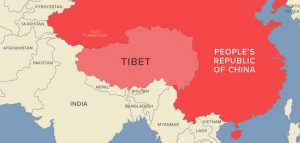
A U.S. lawmaker delegation’s visit to Dharamshala closely followed the passage of the ‘Promoting a Resolution to the Tibet-China Dispute Act’ in Congress, awaiting Biden’s approval.
About the delegation on ‘Promoting a Resolution to the Tibet-China Dispute Act’
Legislative Background: The U.S. Congress passed the ‘Promoting a Resolution to the Tibet-China Dispute Act,’ emphasizing support for Tibetan autonomy and human rights.
The delegation’s visit to Dharamshala, India, followed this legislative action to underscore U.S. commitment to Tibetan freedom.
Delegation Composition and Purpose: The delegation included bipartisan U.S. lawmakers who were co-authors of the Act, invited by the Central Tibetan Administration.
Their visit aimed to advocate for restarting dialogue between the Dalai Lama’s representatives and Beijing, stalled since 2010.
India’s Diplomatic Calculus: Hosting the U.S. delegation amidst ongoing tensions with China signals India’s nuanced diplomacy in managing its relations with both nations.
It reflects India’s stance on Tibet as sensitive, balancing its traditional policy of non-interference with growing international scrutiny.
Geopolitical Implications: The delegation’s visit raises geopolitical questions about India’s sovereignty and diplomatic independence in the face of U.S.-China strategic competition.
It underscores India’s role in regional stability and global human rights discourse, impacting its strategic partnerships and international standing.
Challenges and weaknesses involved
Diplomatic Sensitivities: India faces challenges in balancing its historical support for Tibetan refugees with its current diplomatic relations with China, a crucial economic and strategic partner.
Hosting U.S. lawmakers advocating for Tibetan autonomy could strain India-China relations, given Beijing’s sensitivity to international interference on Tibet-related issues.
Domestic Perception and Political Messaging: Allowing U.S. lawmakers to publicly advocate for Tibetan independence in India could be perceived domestically as compromising India’s stance on sovereignty and non-interference in internal matters.
There is a risk of domestic backlash or political opposition questioning the government’s handling of sensitive foreign policy issues, particularly regarding Tibet and China.
Impact on Bilateral Relations: The visit and the Act may lead to diplomatic friction between India and China, potentially affecting bilateral cooperation in various domains, including trade, defense, and regional stability.
China’s response to perceived foreign interference on Tibet could escalate tensions, impacting broader regional dynamics and India’s strategic autonomy.
Future Scope (Way forward):
International Advocacy and Diplomatic Engagement: The U.S. delegation’s visit and advocacy for the Tibet-China Dispute Act highlight ongoing international interest and support for Tibetan autonomy.
The future scope involves continued diplomatic engagement by global stakeholders to advocate for human rights and autonomy for Tibetans, potentially influencing China’s policies.
India’s Strategic Positioning: India may explore a nuanced approach to balance its historical support for Tibetan refugees with its current diplomatic relations with China.
Future scope includes India asserting its stance on Tibet in international forums while managing bilateral relations with China to avoid escalation and maintain regional stability.
Mains question for practice:
Q The recent visit of a delegation of U.S. lawmakers to Dharamshala, closely following the passage of the ‘Promoting a Resolution to the Tibet-China Dispute Act’ in the U.S. Congress, has brought forth significant diplomatic challenges and implications for India.15M
Mains PYQ:
Q “The USA is facing an existential threat in the form of China, that is much more challenging than the erstwhile Soviet Union.” Explain. (UPSC IAS/2021)
Q How will I2U2 (India, Israel, UAE and USA) grouping transform India’s position in global politics? (UPSC IAS/2022)
Q Indian and USA are two large democracies. Examine the basic tenets on which the two political systems are based.(UPSC IAS/2018)
Mentors’ comment: Over the past eight decades, the relationship between the United States and the Kingdom of Saudi Arabia has seen numerous highs and lows, from the 1973 oil embargo to the 2018 assassination of Jamal Khashoggi. Nonetheless, two iconic moments stand out in this history: the first is the meeting between U.S. President Franklin D. Roosevelt and Saudi King Abdul Aziz Al-Saud on Valentine’s Day 1945 aboard a U.S. cruiser, marking the start of seven decades of a steadfast bilateral relationship, grounded in a crucial “oil-for-security” arrangement. The second is the fist-bump on July 15, 2022, in Riyadh between U.S. President Joe Biden and Saudi Crown Prince Mohammed bin Salman (MbS), symbolizing a more balanced and largely transactional partnership.
Let’s Learn!
Why in the News?
Riyadh and Washington are approaching a new and enhanced phase in their relationship, provisionally named the Strategic Alliance Agreement (SAA).
Strategic Alliance Agreement (SAA): A move towards Reconciliation
Rumoured Agreement: Rumors suggest a new and enhanced U.S.-Saudi relationship is on the horizon, tentatively called the Strategic Alliance Agreement (SAA).
Objectives: This agreement aims to align MBS’s domestic and regional ambitions with the White House’s goal of securing a significant diplomatic achievement for President Biden’s re-election campaign.
Components of the SAA
Bilateral Component: The SAA is expected to formalize the current alliance into a strategic defense pact, similar to the U.S.-Japan treaty, and include advanced military support such as F-35 fighters and nuclear technology for peaceful purposes.
Regional Component: Regionally, Saudi Arabia seeks a ceasefire in Gaza and progress towards a two-state solution to the Israel-Palestine conflict. In return, the U.S. wants Saudi Arabia to recognize Israel and limit its ties with Beijing and Moscow.
Global Component: The global aspect would likely involve cooperation on international security and economic initiatives.
Economic Underpinnings
Economic Significance: While the U.S. is no longer reliant on Saudi oil, the economic aspects of the SAA are expected to be substantial.
Aligning with MBS’s Vision: The agreement would likely ensure significant participation of American companies in Saudi projects under MBS’s Vision 2030.
Strategic Motivations
Countering Chinese Influence: China’s increasing influence in Saudi Arabia, marked by President Xi Jinping’s 2022 visit, has prompted the U.S. to strengthen its ties with Riyadh.
Saudi Arabia’s Importance: Despite the changing dynamics, Saudi Arabia remains crucial due to its religious significance, economic strength, and MBS’s leadership.
Challenges to the SAA
Mistrust and Policy Inconsistencies: A decade of growing mistrust between the U.S. and Saudi Arabia, exacerbated by perceived U.S. inaction and policy inconsistencies, poses a significant challenge.
Gaza Conflict: The ongoing Gaza conflict makes it politically challenging for Saudi Arabia to reconcile with Israel, a key condition for U.S. Senate approval of the SAA.
Regional Dynamics
Recent Events: Recent regional events, including the Hamas attack on Israel and Saudi Arabia’s diplomatic moves, can be viewed through the SAA lens.
Potential Outcomes: The quest for the SAA is a race against time, with potential outcomes ranging from a full agreement reinforcing U.S. influence to a region remaining in turmoil.
India’s Perspective
Significant Stakes: India has significant stakes in the region and needs to monitor the emerging SAA closely.
Enhancing Stability: A successful SAA could enhance regional stability, create economic opportunities, and support India’s strategic interests, including the India-Middle East-Europe Economic Corridor.
Independent Policy: India should continue to pursue its “Act West” policy independently of the developments in the U.S.-Saudi relationship.
Conclusion: The potential Strategic Alliance Agreement (SAA) between the U.S. and Saudi Arabia represents a significant shift in international relations, reflecting evolving geopolitical dynamics and mutual strategic interests. This agreement could solidify a more transactional and pragmatic partnership, balancing regional stability and global security concerns.However, significant challenges remain, including deep-seated mistrust and the complex geopolitical landscape shaped by ongoing conflicts and rivalries.
PM Modi was placed at centre stage for a group photograph at the G-7 Outreach Summit held in Italy.
This marks India’s 11th participation in the G7 Summit and PM Modi’s fifth consecutive attendance.
About G-7 (Group of Seven)
The G7 is an informal bloc of industrialized democracies comprising the United States, Canada, France, Germany, Italy, Japan, and the United Kingdom (UK).
It convenes annually to address global economic governance, international security, and more recently, issues related to artificial intelligence (AI).
Formation and Expansion:
Originally formed as the Group of Six in 1975 by the United States, France, Italy, Japan, the UK, and West Germany, with Canada joining in 1976.
It was formed as a result of the oil crisis to stabilize global economic policies and international relations.
The group’s formation coincided with the challenges of the Cold War era, aiming to address economic concerns such as inflation and recession exacerbated by the OPEC oil embargo.
Key statistics about G7 countries:
Wealth: They control 60% of the global net wealth.
Growth: They drive 46% of the global GDP.
Population: They represent 10% of the world’s population.
Russia’s Joining and Suspension
Russia joined in 1998, transforming it into the G8, aimed at enhancing its international prestige and fostering closer ties with Western nations.
Russia was suspended in 2014 following its annexation of Crimea, leading to ongoing tensions and challenges with both Russia and increasingly, China.
Functioning of the G7
Unlike formal institutions like the United Nations or NATO, the G7 lacks a charter and secretariat.
Its presidency rotates annually (Canada in 2025), responsible for setting the agenda and logistical arrangements for the summit.
Policy initiatives are crafted by ministers and envoys known as Sherpas, who prepare discussions and agreements before the annual gathering.
Non-member countries are occasionally invited to participate in G7 meetings.
Why G7 needs India?
Economic Significance and Democratic Stability: India’s regular participation in G7 meetings highlights its economic importance and stable democratic framework.
Rising Economic Power: With India poised to become the world’s fourth-largest economy, its involvement in global issues is increasingly crucial.
Leadership in the Global South: Modi’s initiatives, such as the Voice of the Global South Summit, have bolstered India’s global standing.
G20 Presidency: India’s recent presidency of the G20 demonstrated its ability to build consensus on contentious global issues.
Neutrality and Strategic Partnerships: India’s neutral stance on Western concerns over China’s actions in the South China Sea and its economic policies enhances its partnership with G7 nations.
Balancing with Russia and the West: As the West confronts Russia over Ukraine, India’s neutral stance positions it as a key ally while maintaining diplomatic balance.
Divergence within G7
Geopolitical Tensions: The G7 nations often face disagreements and tensions over geopolitical matters, such as responses to Russian aggression, conflicts in regions like Ukraine, and strategic alliances with emerging economies.
Economic Policies: Economic policies and trade relations are frequent topics of debate within the G7. Issues include trade tariffs, market regulations, financial stability, and economic cooperation in the face of global economic challenges.
Climate Change: Addressing climate change and achieving environmental sustainability are critical concerns for the G7. Discussions typically focus on climate action commitments, renewable energy investments, and international cooperation on climate policies.
Security and Defense: Security and defence cooperation, including responses to global terrorism, cybersecurity threats, and military alliances, are important agenda items for the G7.
Technology and Innovation: Managing technological advancements, including AI regulation, digital governance, cybersecurity standards, and technological innovation policies, is another area of focus.
Social Issues: Social issues such as gender equality, human rights, immigration policies, and global development aid are also part of the G7 agenda, reflecting broader societal concerns and international commitments.
PYQ:
[2020] In which one of the following groups are all four countries members of G20?
On May 21, 2024, ITLOS issued an advisory opinion for COSIS, clarifying UNCLOS obligations for climate change mitigation and marine pollution control.”
About International Tribunal for the Law of the Sea (ITLOS)
The International Tribunal for the Law of the Sea (ITLOS) is an independent judicial body established by the United Nations Convention on the Law of the Sea (UNCLOS) to adjudicate disputes arising out of the interpretation and application of the Convention.
Commission of Small Island States on Climate Change and International Law (COSIS)
It was established in 2021. COSIS was formed as an association of small island states, which are particularly vulnerable to the impacts of climate change. COSIS aims to address and mitigate the unique challenges that small island states face due to climate change.
It seeks to leverage international law to advocate for stronger climate action and protection measures.
New Elements in the ITLOS Advisory Opinion on Climate Change
Broad Interpretation of Obligations: The ITLOS extended its interpretation of obligations under UNCLOS to include not just parties to the COSIS Agreement but all states, emphasizing that climate change mitigation responsibilities apply universally.
Recognition of GHG Emissions as Marine Pollution: The Tribunal explicitly recognized anthropogenic greenhouse gas emissions, especially carbon dioxide, as a form of marine pollution under Article 194(1) of UNCLOS, necessitating measures to prevent, reduce, and control these emissions.
Adoption of the 1.5°C Temperature Goal: The Opinion aligned necessary climate actions with the more ambitious 1.5°C global temperature goal, reflecting the latest scientific consensus and international climate commitments, thus raising the standard for state obligations under UNCLOS.
Legal Significance
Principle of Prevention and Collective Interest: The Opinion embraces the principle of prevention, typically applied bilaterally, in a collective context for addressing climate change.
Stringent Due Diligence Obligation: The ITLOS describes the obligation to take necessary measures to mitigate climate change as a due diligence obligation. However, the standard of conduct is stringent due to the high risks of serious and irreversible harm to the marine environment from GHG emissions.
General Obligation to Mitigate Climate Change: While the Opinion outlines a general obligation under Article 194(1) of the UNCLOS, it is somewhat general in nature, allowing for measures that gradually reduce GHG emissions over time. This underscores that states do not have unrestricted discretion in their climate actions.
Equity and State Capabilities: The Opinion incorporates the principle of equity, recognizing that the necessary measures for GHG reduction are subject to states’ means and capabilities. This acknowledges differences in states’ capacities to address climate change and ensures that obligations are realistic and fair.
Political Influence Despite Lack of Legal Force: Although the advisory opinion lacks binding legal force, it holds substantial political influence as an authoritative judicial pronouncement. This can guide future legal interpretations and state actions in international climate change law.
Conclusion: ITLOS plays a critical role in the interpretation and application of the law of the sea, providing a judicial forum for resolving maritime disputes and offering authoritative guidance on emerging global issues like climate change. The recent advisory opinion underscores the Tribunal’s capacity to address complex and pressing environmental challenges, contributing to the evolving landscape of international environmental law.
Mains PYQ:
Q Describe the major outcomes of the 26th session of the Conference of the Parties (COP) to the United Nations Framework Convention on Climate Change (UNFCCC). What are the commitments made by India in this conference? (UPSC IAS/2021)
India joined a meeting of foreign ministers from the BRICS group, which was held in Russia. This meeting was the first one after BRICS expanded in 2023 to include Egypt, Ethiopia, Iran, Saudi Arabia, and the UAE became as full-time members.
What is BRICS?
Details
Members
BRICS (Brazil, Russia, India, China, South Africa)
Origin
Coined by economist Jim O’Neill in 2001 as BRIC, formalized as BRICS in 2010
Formation
First meeting of BRIC Foreign Ministers in 2006
South Africa’s Inclusion
Invited to join BRIC in December 2010
Global share of BRICS
Population: 41%
GDP: 24%
Global trade: 16%
Chairmanship
Rotated annually among members, following sequence B-R-I-C-S
India’s Hosting
Hosted the 2021 BRICS Summit
Key Initiatives
New Development Bank (NDB) established in 2014: Approved 70 infrastructure and sustainable development projects
Contingent Reserve Arrangement signed in 2014: Aims to forestall short-term balance of payments pressures and strengthen financial stability
Customs agreements signed for trade facilitation
BRICS Remote Sensing Satellite Constellation initiated in 2021: Involves six existing satellites developed by members
Objective of BRICS
The primary objectives of BRICS (Brazil, Russia, India, China, and South Africa) are to promote economic cooperation, development, and influence in world affairs.
Key goals include fostering economic growth and cooperation among member nations, creating institutions for development financing, and strengthening political coordination and dialogue on international issues.
BRICS-11 Expansion
BRICS celebrated its 15th summit by adding six new members, growing from five to eleven countries. This move aims to boost its global influence.
New members include Egypt, Iran, Saudi Arabia, UAE, Ethiopia, and Argentina, expanding BRICS’ reach across different regions.
These countries full membership commenced on January 1, 2024.
Challenges within BRICS
No Unified Vision: BRICS lacks a clear and unified vision for addressing global issues, hindering coordinated action.
Bilateral Conflicts: Tensions between member countries, such as China-India border disputes and Russia’s conflicts, undermine cohesion and collaboration within BRICS.
Economic Disparities: Economic inequality among member nations, with China dominating the group economically, poses challenges to equitable decision-making and cooperation.
Trade Imbalances: Trade imbalances among member states hinder intra-BRICS trade and economic integration efforts.
Heterogeneity: Cultural, linguistic, and political diversity among member nations limit the development of common strategies and objectives.
Limited Institutional Framework: BRICS lacks robust institutional mechanisms for effective coordination and implementation of collective initiatives.
PYQ:
[2014] With reference to a grouping of countries known as BRICS, consider the following statements:
The First Summit of BRICS was held in Rio de Janeiro in 2009.
South Africa was the last to join the BRICS grouping.
Which of the statements given above is/are correct?
In March, India and the U.S. settled their last lingering WTO poultry dispute, marking the end of seven trade disputes resolved since Prime Minister Modi’s U.S. visit.
What is ‘Litigotiation’?
‘Litigotiation’ is a blend of “litigation” and “negotiation,” referring to a strategic process where legal disputes are managed through a combination of courtroom litigation and settlement negotiations.
This approach recognizes that most legal disputes do not end with a court verdict but rather with a negotiated settlement reached during the litigation process.
Trade dispute on poultry products between India and USA at the WTO
Indian Scenario: India had prohibited the import of various agricultural products from the US because of concerns related to Avian Influenza.
U.S. argued: The U.S. challenged India’s import restrictions on poultry products, which were imposed due to concerns about avian influenza (bird flu) potentially transmitting to humans.
It argued that India deviated from internationally recognized standards that were set by the World Organization for Animal Health (formerly OIE) and failed to provide scientific justifications for its measures, violating the WTO’s Sanitary and Phytosanitary (SPS) Agreement.
The dispute was initiated by the U.S. in 2012 and remained unresolved for over a decade, making it the oldest of the seven trade disputes between India and the U.S. In 2015, India lost a long-pending dispute over poultry imports from the US at the WTO.
The recent settlement allowed India to avoid a yearly $450 million claim.
In exchange, India agreed to reduce tariffs on select U.S. products such as cranberries, blueberries, frozen turkey, and premium frozen duck meat, marking a significant diplomatic breakthrough.
What are the standards set by the World Organization for Animal Health?
The Terrestrial Animal Health Code
First published in 1968, provides standards for the improvement of terrestrial animal health and welfare and veterinary public health worldwide.
These standards should be used by Veterinary Services to set up measures for the early detection, reporting, and control of pathogenic agents, including zoonotic agents, and preventing their spread.
The Aquatic Animal Health Code
Introduced in 1995, provides standards for the improvement of aquatic animal health and welfare worldwide.
These standards should be used by Aquatic Animal Health Services to set up measures for the prevention, early detection, reporting, and control of pathogenic agents in aquatic animals (amphibians, crustaceans, fish, and mollusks).
Implementation of the recommendations in the Aquatic Code ensures the safety of international trade in aquatic animals and aquatic animal products.
About WTO:
The World Trade Organization (WTO) is an intergovernmental organization that regulates and facilitates international trade among its member nations. It was established in 1995 and has 164 member countries, representing over 98% of global trade and global GDP.
Conclusion: The India-U.S. settlement underscores the power of diplomatic negotiations in resolving complex trade disputes, fostering stronger bilateral ties, and promoting a more stable and cooperative international trade environment.
Mains PYQ:
Q WTO is an important international institution where decisions taken affect countries in a profound manner. What is the mandate of WTO and how binding are their decisions? Critically analyse India’s stand on the latest round of talks on Food security. (UPSC IAS/2014)
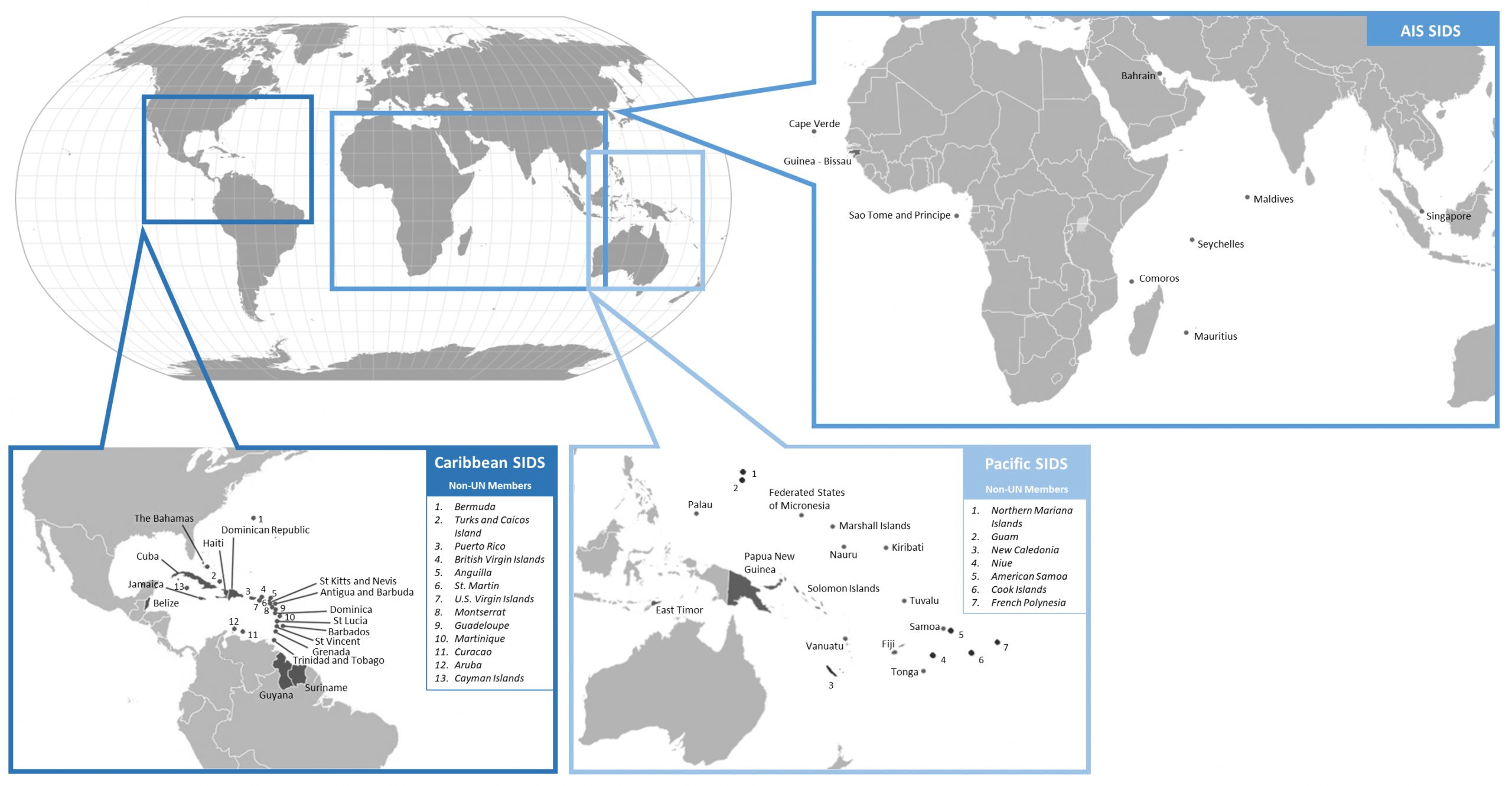
The 4th International Conference on Small Island Developing States (SIDS-4) is underway in Antigua and Barbuda.
What are Small Island Developing States (SIDS)?
SIDS encompass 39 States and 18 Associate Members of United Nations regional commissions, facing unique social, economic, and environmental vulnerabilities.
SIDS are situated across three regions:
the Caribbean,
the Pacific
the Atlantic, Indian Ocean, and South China Sea (AIS).
Their distinctive challenges were acknowledged at the 1992 United Nations Conference on Environment and Development in Rio de Janeiro, Brazil.
SDGs supporting SIDS
Small island development states are mentioned in several of the Sustainable Development Goals.
For example, Target 7 of Sustainable Development Goal 14 (“Life below Water“) states-
“By 2030, increase the economic benefits to Small Island developing States and least developed countries from the sustainable use of marine resources, including through sustainable management of fisheries, aquaculture and tourism”.
Challenges Faced by SIDS:
Remote geography and reliance on external markets due to narrow resource bases contribute to high import/export costs.
Exclusive Economic Zone (EEZ), substantially larger than landmasses, provides vital resources but poses challenges like high transportation costs and vulnerability to economic shocks.
Biodiversity and Economic Significance:
Biodiversity sustains key industries like tourism and fisheries, often constituting over half of SIDS’ GDP.
Beyond economic benefits, biodiversity holds aesthetic and spiritual value, providing essential services like food supply, erosion prevention, and protection from natural disasters.
UN Programmes Supporting SIDS:
The Barbados Programme of Action (1994), Mauritius Strategy (2005), and Small Island Developing States Accelerated Modalities of Action (SAMOA) Pathway (2014) outline specific actions to achieve sustainable development and address gaps in implementation.
Barbados Programme of Action (1994): It prescribed actions enabling SIDS to achieve sustainable development.
Mauritius Strategy (2005): It addressed remaining gaps in implementing the Barbados Programme of Action.
SAMOA Pathway (2014): It emphasises challenges like climate change and biodiversity loss, outlining priorities for sustainable development.
These programmes underscore the ongoing commitment to supporting SIDS’ development and resilience.
Human Health and Social Development: Enhance food security, and water/sanitation, reduce non-communicable diseases, and promote gender equity.
Partnerships: Foster collaborations among SIDS, UN Agencies, development partners, and stakeholders to achieve sustainable development goals.
PYQ:
[2021] Describe the major outcomes of the 26th session of the Conference of the Parties (COP) to the United Nations Framework Convention on Climate Change (UNFCCC). What are the commitments made by India in this conference?
Q) With growing energy needs should India keep on expanding its nuclear energy programme? Discuss the facts and fears associated with nuclear energy. (250 Words, 15 Marks) (UPSC CSE 2018) Q) In what ways would the ongoing US-Iran Nuclear Pact Controversy affect the national interest of India? How should India respond to its situation? (250 Words, 15 Marks) (UPSC CSE 2018)
Prelims Consider the following countries (UPSC CSE 2015) 1) China 2) France 3) India 4) Israel 5) Pakistan Which among the countries given above are Nuclear Weapons States as recognized by the Treaty on the Nonproliferation of Nuclear Weapons, commonly known as the Nuclear Non-Proliferation Treaty (NPT)? (a) 1 and 2 only. (b) 1, 3, 4 and 5 only (c) 2, 4 and 5 only (d) 1, 2, 3, 4 and 5
Note4Students:
Prelims: Global Issues; Nuclear Non-Proliferation Treaty (NPT);
Mains: Global Security Issues; Nuclear Policies;
Mentor comment: When each country pursues its security without regard for others, we create global insecurity that threatens us all. Almost eight decades after the incineration of Hiroshima and Nagasaki, nuclear weapons still represent a clear danger to global peace and security, growing in power, range, and stealth. States possessing them are absent from the negotiating table, and some statements have raised the prospect of unleashing nuclear hell — “threats that we must all denounce with clarity and force.” Moreover, emerging technologies such as artificial intelligence and cyber and outer space domains have created new risks. We must find a way back to the negotiating table to fully implement the New Measures for the Further Reduction and Limitation of Strategic Offensive Arms or START Treaty.
Let’s learn.
–
Why in the News?
The leaders of France and Russia have raised alarm bells globally with tensions rising between major powers and the threat of nuclear weapons being used.
Background:
French President Macron has warned of an “apocalyptic vision” and the danger of nuclear “annihilation” due to Russia’s invasion of Ukraine. He plans to raise the nuclear aspect at an upcoming European meeting.
Russian President Putin has stated that Russia’s nuclear forces are always on alert and that Moscow will not tolerate Western threats. Russia has also revoked its ratification of the Comprehensive Nuclear Test Ban Treaty.
These statements reflect rising nuclear tensions between Russia and the West over the war in Ukraine. The international community has expressed concern over Russia’s nuclear posturing.
How does the specter of Nuclear conflict raise a Global concern?
Firstly, the absence of influential global leaders on the brink of a potential nuclear threat of war.
Russia is “ready for nuclear war” and would use such weapons if its sovereignty is threatened.
China has recently completed sea trials for an aircraft carrier fitted with electromagnetic catapults and is well on its way to building a fourth carrier.
Secondly, the prevailing economic turmoil across many regions in the world has exacerbated the situation, making the prospect of nuclear war more alarming.
The potential consequences of a nuclear war are catastrophic and far-reaching:
Immediate Effects
Incinerate cities: Intense heat and radiation would incinerate cities within the blast radius leaving millions would suffer fatal burns, blindness, internal injuries, and radiation poisoning.
Burden on Healthcare services: Hospitals and emergency services would be overwhelmed and unable to respond to the massive number of casualties.
Long-Term Effects
Economic Collapse: Radioactive fallout would expose survivors to dangerous radiation levels. Electromagnetic pulses could cripple electrical grids and modern technology.
Potential human extinction: Nuclear winter caused by soot and debris in the atmosphere could lead to global famine, killing billions of people.
Environmental Devastation: Large parts of the Earth could become uninhabitable due to radiation and climate changes. Contaminated Oceans and the extinction of much of Earth’s biological life are some of the long-lasting consequences.
BACK2BASICS
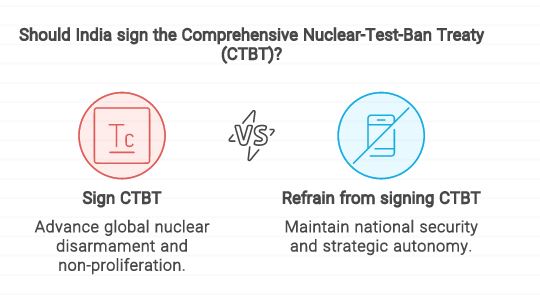
About the Comprehensive Nuclear-Test-Ban Treaty (CTBT):
TheCTBT is a multilateral treaty aimed at prohibiting all nuclear explosions, whether for civilian or military purposes, in all environments. It was adopted by the United Nations General Assembly in 1996 but has not yet entered into force.
The treaty requires ratification by eight key nations, including China, India, Pakistan, North Korea, Israel, Iran, Egypt, Russia, and the United States, which still need to ratify it for it to become effective.
India avoids the signing of CTBT as it would undermine its National security and Strategic Autonomy, as it would constrain its ability to conduct nuclear tests.
The CTBT establishes a global monitoring system to verify compliance and allows for on-site inspections of suspicious events to ensure adherence to its provisions.The treaty’s primary goal is to end nuclear weapon test explosions and promote nuclear disarmament and non-proliferation efforts globally.
The Recent Discussion at the Hoover Institution:
The discussion focused on the U.S.-India civil nuclear deal (2005-08) and its impact on bilateral relations, despite the current nuclear tensions in Europe.
The deal brought a fundamental change in U.S.-India relations, with relevance to resolving current disputes.
India and the U.S. made significant concessions to negotiate the deal:
India agreed to separate its nuclear program and accept safeguards, export controls, and a testing moratorium.
The U.S. amended laws, obtained NSG approval, and helped India get an IAEA safeguards agreement.
The deal lifted roadblocks preventing India from joining the global nuclear regime, giving it a status similar to a nuclear weapon state under the NPT.
Conclusion: The discussions at the Hoover Institution seemed to be that the deal had even more significance than merely an arrangement about revising India’s nuclear status. From India’s standpoint, the India-U.S. nuclear deal originated from India’s desire to obtain high-grade uranium from outside to complement its energy requirements, the deal confirms that nuclear energy could be a major resource for peaceful purposes.
An official stated on Tuesday that India opposes a China-led proposal on investment facilitation at the WTO, arguing that it is a ‘non-trade’ issue beyond the global trade body’s mandate.
About Plurilateral Agreement/Pact:
A plurilateral agreement is a trade agreement between more than two countries, but not necessarily encompass all members of a larger organization such as the World Trade Organization (WTO).
These agreements are binding only on the signatories and not on the entire membership of the organization under annexure-4 of the WTO.
They allow for deeper integration among interested parties without requiring full consensus, which can be difficult to achieve in larger multilateral frameworks.
What is the China-led Investment Facilitation for Development Agreement (IFD)?
The IIFD Agreement is a proposed pact by China, with support from other countries, to streamline and facilitate foreign investment.
The main objectives of the IFD Agreement include:
Enhancing transparency of investment measures.
Streamlining and speeding up investment-related authorization procedures.
Promoting international cooperation, information sharing, and exchange of best practices.
Encouraging sustainable investment practices.
The proponents of the IFD argue that it would bring benefits to all WTO members, especially developing and least-developed countries, by creating a more predictable and transparent investment climate.
India’s Strong Stand against the IFD at WTO MC13
India has taken a firm stance against the inclusion of the IFD Agreement in the WTO framework for several reasons:
Investment is Not a Trade Issue: India argues that investment does not fall within the traditional purview of the WTO, which primarily focuses on trade issues. It points out that past Ministerial decisions have explicitly kept investment outside the WTO’s scope.
Sovereignty Concerns: A significant concern for India is the potential impact on its policy space. The IFD Agreement includes provisions that would require the government to consult with investors on policy matters, which India fears could undermine its ability to make sovereign decisions.
Lack of Consensus: India, along with South Africa, has highlighted the absence of a unanimous consensus among WTO members regarding the inclusion of the IFD as a plurilateral agreement. They argue that without exclusive consensus, it should not be brought onto the formal agenda.
Policy Autonomy: India is wary that the IFD Agreement’s requirements could constrain its autonomy in regulating investments to align with national development priorities and strategies.
Procedural Concerns: India contends that the issue should not have been part of the MC13 agenda and instead, should be discussed at the General Council, given the divisive nature of the proposal among WTO members.
Conclusion: India’s opposition to the IFD Agreement at the WTO stems from a combination of concerns about preserving national sovereignty, adhering to established WTO boundaries regarding trade versus investment issues, and ensuring that any significant changes in the WTO framework are backed by broad-based consensus.
Mains PYQ:
Q The broader aims and objectives of WTO are to manage and promote international trade in the era of globalisation. But the Doha round of negotiations seems doomed due to differences between the developed and the developing countries.” Discuss in the Indian perspective. (UPSC IAS/2016)
![[27 May 2024] The Hindu Op-ed: The spectre of nuclear conflict, once again](https://www.civilsdaily.com/wp-content/uploads/2024/05/27-may1-1568x882.jpg)