The Arab League called for UN peacekeeping forces in the Palestinian territories during a summit in Bahrain’s Manama. The “Manama Declaration” issued by the league sought UNPKF in the occupied Palestinian territories” until a two-state solution is implemented.
Back2Basics: United Nations Peacekeeping
UN Peacekeeping is a collective effort by the international community, led by the United Nations, to maintain peace and security in regions affected by conflict.
UN peacekeepers are often referred to as Blue Berets or Blue Helmets because of their light blue berets or helmets) can include soldiers, police officers, and civilian personnel.
History:
The concept of UN peacekeeping emerged in the aftermath of World War II, with the establishment of the United Nations in 1945.
The first UN peacekeeping mission was established in 1948, following the Arab-Israeli War, to monitor the ceasefire between Israel and its Arab neighbours.
This mission, known as the United Nations Truce Supervision Organization (UNTSO), set the precedent for future peacekeeping operations.
Since then, the scope and complexity of UN peacekeeping have evolved significantly, with operations conducted across the globe in regions affected by conflict, civil war, and humanitarian crises.
Operations:
UN Peacekeeping is guided by three basic principles:
Consent of the parties
Impartiality
Non-use of force except in self-defence and defence of the mandate
UN peacekeeping operations are deployed with the consent of the main parties to the conflict. It can be deployed at the request of the partiesinvolved in a conflict or with the authorisation of the UN Security Council.
The objectives may vary depending on the specific context but often include monitoring ceasefires, disarming combatants, facilitating the delivery of humanitarian aid, promoting human rights, and supporting the establishment of democratic governance structures.
UN peacekeeping operations operate under the principles of impartiality, consent of the parties, and non-use of force except in self-defence and defence of the mandate.
India’s Role:
India has been one of the largest contributors to UN peacekeeping operations since their inception.
India has contributed nearly 195,000 troops, the largest number from any country, and participated in more than 49 missions and 168 supreme sacrifices while serving in UN missions.
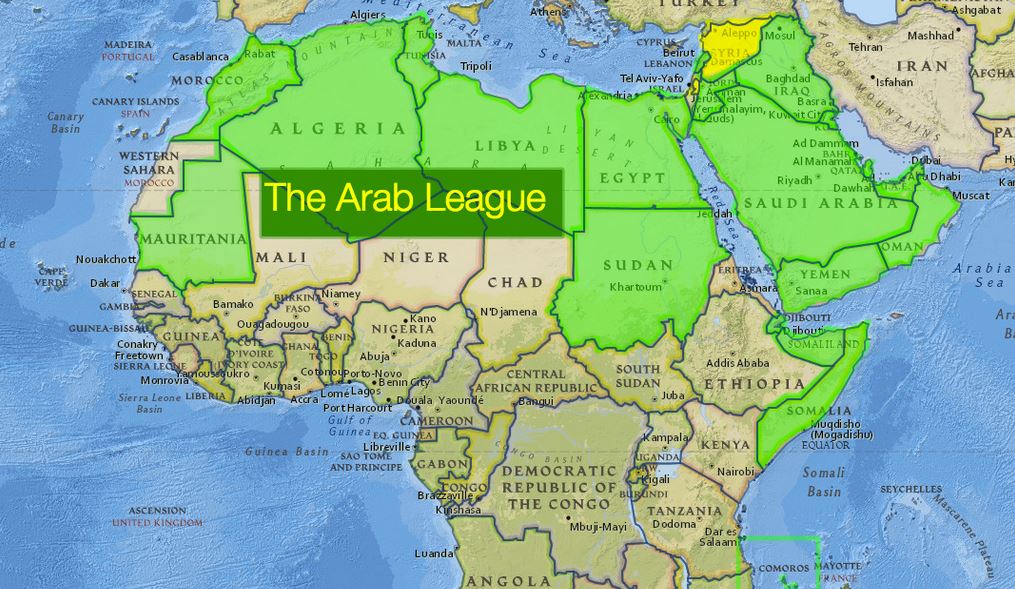
About Arab League
Details
Establishment
Founded on March 22, 1945, in Cairo, Egypt.
Founding Members
Egypt, Iraq, Jordan, Lebanon, Saudi Arabia, Syria.
Objective
Promote economic, cultural, political, and military cooperation among member states. Safeguard independence and sovereignty.
Functions
Operates on consensus among member states. Decisions are made through consultations and discussions.
Regular meetings among Arab leaders to address regional issues, formulate policies, and coordinate actions.
Specialised committees and councils address specific areas of cooperation, such as economic affairs, social affairs, and defence.
Member States
Egypt, Iraq, Jordan, Lebanon, Saudi Arabia, Syria, Libya, Tunisia, Algeria, Bahrain, Comoros, Djibouti, Kuwait, Mauritania, Morocco, Oman, Palestine, Qatar, Somalia, Sudan, United Arab Emirates, and Yemen.
Observer Nations
Non-Arab countries with observer status include Brazil, Eritrea, India, Venezuela, and others.
No voting rights are accorded to Observer nations.
Important Achievements
Proposal of the Arab Peace Initiative in 2002.
Coordination of military efforts in various conflicts.
Promotion of economic cooperation through initiatives such as the Arab Free Trade Area.
Facilitation of cultural and educational exchange programs among member states.
Challenges
Internal divisions, Differences of opinion over the Palestinian-Israeli conflict etc.
PYQ:
[2014] Recently, a series of uprisings of people referred to as ‘Arab Spring’ originally started from
Q) The China Pakistan Economic Corridor (CPEC) is viewed as a cardinal subset of China’s larger ‘One Belt One Road’ initiative. Give a brief description of CPEC and enumerate the reasons why India has distanced itself from the same. (150 Words, 10 Marks). (UPSC CSE 2018)
Q) What introduces friction into the ties between India and the United States is that Washington is still unable to find for India a position in its global strategy, which would satisfy India’s National self-esteem. (UPSC CSE 2019)
Prelims:
‘Belt and Road Initiative’ is sometimes mentioned in the news in the context of the affairs of (UPSC CSE 2016) (a) African Union (b) Brazil (c) European Union (d)China
Note4Students:
Prelims: Global Issues; West Asia; East-Europe Economic Corridor (IMEC);
Mains: Global Security Issues; West Asia; Trades;
Mentor comment: In a world of shifting geopolitical landscapes, India embarked on a grand vision to reshape its economic and strategic ties with the world. At the heart of this vision lay the India-Middle East-Europe Economic Corridor (IMEC), a path-breaking initiative that promised to transform the way India engaged with its partners across the Eurasian landmass. The story began in September 2023, when India, along with the European Union, France, Germany, Italy, Saudi Arabia, the United Arab Emirates (UAE), and the United States, signed an agreement to bring IMEC to life. This ambitious project, designed under the Partnership for Global Infrastructure and Investment (PGII), aimed to stimulate economic development through enhanced connectivity and integration between Asia, the Arabian Gulf, and Europe. For India, IMEC represented a strategic opportunity to assert its presence on the global stage and counter the growing influence of its rival, China.
Let’s learn.
–
Why in the News?
After India signed a landmark 10-year bilateral contract with Iran (Chabahar Port), the U.S. State Department has warned of potential sanctions for any entity considering business deals with Iran.
In the past, American sanctions had delayed the project, which was conceived in 2003.
Practically, the signing of a long-term agreementmarks a significant milestone in India’s infrastructure and trade partnership with Iran.
However, considering US sanctions, India also needs to focus on the next upcoming IMEC Project which is stalled due to West Asian tensions.
How IMEC is countering the Belt and Road Initiative (BRI)?:
IMEC has two corridors – the East corridor (India to Arabian Gulf) and the North corridor (Arabian Gulf to Europe).
1.The East Corridor connects the Indian ports of Kandla, Mumbai, and Mundra to UAE’s ports like Fujairah, Jebel Ali, and Abu Dhabi by sea. 2. The North Corridor link is the Railroad link through Saudi Arabia, and Jordan to European regions like Haifa, Marseille, Messina, and Piraeus.The Railway network for cross-border ship-to-rail transit is based on electricity, digital connectivity, and clean hydrogen export infrastructure.
Significance of IMEC over BRI: It secures regional supply chains by overcoming Pakistan’s obstacle to overland access.
It increases Trade Accessibility and Facilitation which will be effective in countering China’s Belt and Road Initiative (BRI) as it will reduce time by 40% and cost by 30% of transporting goods from India to Europe. Hence, the U.S. is also a major stakeholder.
What is the impact of the recent Gaza War on IMEC? (Challenges faced)
War in Gaza led to project stall; in fact, Iran is threatening to close the Strait of Hormuz.
For example, Adani Group’s plans for Haifa port expansion halted.
The present Gulf region is facing trade and security issues due to ‘Houthis’ blocking Red Sea access for Israel and its allies.
Due to increased shipping time and insurance costs (due to unsafe routes), the trade barriers and eventually inflation have also being increased.
The Role of Oman and Egypt in Strengthening IMEC: (Way Forward)
Oman as an Alternative: Oman’s ports in the Arabian Sea, away from Iranian influence which is the closest and most direct link to Indian ports.Secondly, Oman also has good relations with all its stakeholders
Extending to Egypt: Egypt can act as an alternate spur through Egypt to Mediterranean ports in Europe. This will provide a safe and direct sea route to Europe. Secondly, Egypt’s inclusion balances regional dynamics and has good relations with Israel, Europe, and the U.S.
Conclusion: Today, as the world watches with bated breath, IMEC stands as a testament to India’s vision and determination. It is a story of how a nation, once constrained by geography and politics, found a way to break free and forge its path in the global arena. And as the story continues to unfold, one thing is certain: IMEC will forever change the way India engages with the world, and the world engages with India.
On 20 May 2024, the Prosecutor of the International Criminal Court (ICC) requested arrest warrants against leaders of Hamas and Prime Minister Benjamin Netanyahu of Israel about the events of October 7, 2023, and the conflict in Palestine.
What is the International Criminal Court?
The International Criminal Court formed in 2002, is an Intergovernmental Organization and International Tribunal seated in the Hague, Netherlands.
It deals with the most serious crimes of concern to the international community, including genocide, crimes against humanity, war crimes, and crimes of aggression.
Unlike the international tribunals, the International Criminal Court is a permanent body.
Against whom has the Prosecutor requested warrants of arrest?
Specifically, warrants have been sought for senior Hamas leaders Yahya Sinwar, Mohammed Deif, and Ismail Haniyeh, along with Netanyahu and Israel’s Minister of Defence Yoav Gallant.
The process of ICC decision-making and the scope of the present case:
ICC decisions are binding, but they rely on the cooperation of member states for support.
A panel of judges at the ICC must decide on the Prosecutor’s application for arrest warrants.
If approved, all State Parties are obligated to cooperate, including arresting and extraditing the accused individuals to The Hague.
This could restrict international travel for Netanyahu and Gallant, affecting visits to countries that are State Parties to the Rome Statute.
Israel is not a Party to the Rome Statute. However, the ICC does have jurisdiction over crimes committed by nationals of both State Parties (such as Palestine) and Non-state Parties (such as Israel) on the territory of a State Party (such as Palestine).
International Criminal Court (ICC) Vs. International Court of Justice (ICJ)
ICC
ICJ
Relationship with the UN
ICC is an independent organization not part of the United Nations
ICJ is an integral part of the UN and acts as its primary judicial branch
Members
ICC has around 105 members, focusing on prosecuting individuals for crimes.
ICJ has all 193 UN member countries as its members, primarily resolving disputes between states
Derivation of Authority
ICC derives its authority from the Rome Statute, focusing on prosecuting individuals for crimes against humanity, war crimes, genocide, and crimes of aggression.
ICJ derives its authority from the Charter of the United Nations, settling disputes between countries based on international law
Funding
It mainly functions on contributions made by state parties to the Rome Statute and voluntary contributions
Its funding sources differ based on its status as an organ of the United Nations
Way forward:
Need Enhanced Cooperation: Encouraging greater cooperation between the ICC and the UN to strengthen their effectiveness in addressing international crimes.
Need Wider Membership: Advocating for more countries to become State Parties to the Rome Statute to broaden the ICC’s jurisdiction and reach.
Mains PYQ:
Q India’s relations with Israel have, of late, acquired a depth and diversity, which cannot be rolled back.” Discuss. (UPSC IAS/2018)
An Indian inter-ministerial delegation visited the UAE to discuss the operational aspects of the India-Middle East-Europe Economic Corridor (IMEC), marking a significant step forward since the signing of the agreement.
About IMEC Project
IMEC is part of the broader Partnership for Global Infrastructure and Investment (PGII), which focuses on infrastructure development in economically developing regions.
The MoU for IMEC was formally endorsed on September 10, 2023, during the 2023 G20 New Delhi summit.
Signatories to this agreement: India, United States, United Arab Emirates, Saudi Arabia, France, Germany, Italy, and the European Union.
Aim: To integrate Asia, Europe, and the Middle East, enhancing economic cooperation across these regions.
Objectives:
Improve transportation efficiency, lower costs, and promote economic cohesion among participating nations.
Generate employment opportunities and reduce Greenhouse Gas (GHG) emissions.
Facilitate trade and connectivity, thereby reshaping regional integration among Asia, Europe, and the Middle East.
Corridor Configuration:
IMEC comprises two primary corridors:
East Corridor: Linking India to the Arabian Gulf.
Northern Corridor: Connecting the Gulf region to Europe.
Key ports integral to the project’s success include:
India: Mundra, Kandla, and Jawaharlal Nehru Port Trust (Mumbai).
Middle East: Fujairah (UAE), Jebel Ali (Dubai, UAE), Abu Dhabi (UAE), Dammam (Saudi Arabia), and Ras Al Khair (Saudi Arabia).
Israel: Haifa port.
Europe: Piraeus (Greece), Messina (Italy), and Marseille (France).
Additionally, it encompasses various infrastructure components such as railway networks, ship-to-rail connections, road transport routes, electricity cables, hydrogen pipelines, and high-speed data cables.
Significance:
IMEC, upon completion, will establish a dependable and cost-efficient cross-border ship-to-rail transit network, complementing existing maritime and road transport networks.
The IMEC Project holds significant promise in redefining regional trade dynamics and fostering sustainable economic growth and cooperation among the involved countries.
PYQ:
[2018] The China-Pakistan Economic Corridor (CPEC) is viewed as a cardinal subset of China’s larger ‘One Belt One Road’ initiative. Give a brief description of CPEC and enumerate the reasons why India has distanced itself from the same. (150 Words, 10 Marks)
[2016] ‘Belt and Road Initiative’ is sometimes mentioned in the news in the context of the affairs of:
(a) African Union
(b) Brazil
(c) European Union
(d) China
Back2Basics: Partnership for Global Infrastructure Investment (PGII)
The PGII was first announced in June 2021 during the G7 (or Group of Seven) summit in the UK.
The G7 countries include the United Kingdom, the United States, Canada, France, Germany, Italy, Japan, and the European Union (EU).
US President Joe Biden had called it the Build Back Better World (B3W) framework. However, it did not register much progress.
In 2022, during the G7 summit in Germany, the PGII was officially launched as a joint initiative to help fund infrastructure projects in developing countries through public and private investments.
Objective: To mobilise nearly $600 billion from the G7 by 2027 to invest in critical infrastructure.
It is essentially in response to the infrastructure projects being undertaken and funded by China under the Belt and Road Initiative (BRI) at a global level.
Present Maritime Routes between India and Europe
Trade Route
Route
Issues
Advantages
Suez Canal Route
Indian Ocean -> Arabian Sea -> Red Sea -> Suez Canal -> Mediterranean Sea -> Europe
High traffic causing congestion.
Potential for piracy, especially near the Horn of Africa.
Most efficient and shortest maritime route.
Well-established with advanced port facilities.
Cape of Good Hope Route
Indian Ocean -> Arabian Sea -> Indian Ocean (southern tip of Africa) -> Atlantic Ocean -> Europe
Longer transit time compared to the Suez Canal.
Higher fuel costs and longer journey duration.
Avoids congestion and security risks of the Suez Canal.
Suitable for large vessels unable to transit the Suez Canal.
It is widely believed that renewing the Generalised System of Preferences (GSP) program would pave the way for comprehensive U.S.-India trade negotiations, potentially elevating the bilateral trade relationship to new heights.
What is the ‘Generalised System of Preferences (GSP)’ Program about?
The Generalised System of Preferences (GSP) is a trade initiative by developed countries to aid developing countries.
Nearly all developed countries have their versions of the GSP, tailored to their economic and policy goals.
It involves reducing tariffs on imports from these countries, aiming to stimulate their economic development. (It is not formally part of the World Trade Organization).
Origin and its Evolution:
During the 1960s: The idea of the GSP emerged during the 1960s as part of broader efforts within the United Nations Conference on Trade and Development (UNCTAD) to help developing countries gain better access to markets in developed countries.
During 1968: UNCTAD proposed the GSP as a mechanism to offer non-reciprocal, non-discriminatory tariff preferences to developing countries, aiming to promote their economic growth and industrialization.
During 1974: The US officially established its GSP program under the Trade Act of 1974. This act authorized the U.S. to provide duty-free treatment for selected products imported from designated beneficiary developing countries (BDCs).
The Significance of Renewing the GSP:
US Factor: The GSP program is unique because it requires periodic reauthorization by Congress. This program of the U.S. expired in 2020 and has not yet been renewed, despite bipartisan support.
For Stability in the Market: Renewal is challenging in a polarized political environment but is crucial for maintaining stable market access for developing countries.
For Diversification: The GSP supports small businesses and women-owned enterprises, encouraging economic empowerment and diversification away from Chinese imports.
To bring Reform: It will promote labor and environmental reforms and reduce tariff costs for American businesses, particularly small and medium-sized enterprises.
Significance of US – India Trade Relationship:
Broader the Trade agreement: The U.S. and India have a significant trade relationship, with bilateral trade worth around $200 billion. Renewing the GSP could facilitate further negotiations and potentially lead to a broader trade agreement.
Need for GSP renewal: Before the GSP expired, the U.S. and India were close to a trade deal covering various sectors including medical devices, agriculture, ethanol, and IT products.
Despite ongoing trade dialogues, the U.S. is currently not negotiating new Free Trade Agreements (FTAs), making GSP renewal a key tool for enhancing trade relations.
A renewed GSP could cover multiple areas such as labour rights, environmental laws, and regulatory practices, fostering a more robust and ambitious trade partnership.
Strategic Importance:
In the Indo-Pacific region.
It can significantly boost trade and economic cooperation between the two countries.
It would signal a mutual commitment to deepening their trade relationship and addressing broader economic and regulatory issues.
Way forward:
Utilize GSP as a Negotiation Tool: Leverage GSP renewal as a platform to initiate broader trade negotiations between the U.S. and India, potentially leading to a more comprehensive trade agreement.
Focus on Strategic Sectors: Identify and prioritize sectors such as technology, pharmaceuticals, and agriculture where both countries have mutual interests and complementary strengths.
Mains PYQ:
Q “What introduces friction into the ties between India and the United States is that Washington is still unable to find for India a position in its global strategy, which would satisfy India’s National self-esteem (UPSC IAS/2019)
India has voted in favour of a UN General Assembly resolution recommending Palestine’s admissionas a full member of the United Nations.
Arab push for Palestine’s Membership
The emergency special session was convened by the Arab Group, with the UAE presenting the resolution in support of Palestine’s full membership.
The resolution calls for the Security Council to “reconsider” Palestine’s membership favourably, based on its determination that Palestine is qualified for UN membership.
The resolution received overwhelming support, with 143 votes in favour, including India’s, nine against, and 25 abstentions.
As an observer state, Palestine currently lacks voting rights in the General Assembly and cannot nominate candidates to UN organs.
India’s Stanceon Palestine:
In 1988, India recognized the State of Palestine.
In 1996, India opened its Representative Office to the Palestine Authority in Gaza, later relocating it to Ramallah in 2003.
About United Nations
Details
Background
Resulted from the devastation of World War I and II
Highlighted the need for a more effective international body to maintain peace and prevent future conflicts.
Predecessor
The League of Nations, created in 1919 after World War I, aimed at peacekeeping but failed during World War II.
The Atlantic Charter
Issued in August 1941 by President Franklin D. Roosevelt (USA) and Prime Minister Winston Churchill (UK), this document outlined principles for a post-war world and set the stage for the UN’s creation.
Naming
The term “United Nations” was coined by President Roosevelt in 1941 to describe the allied nations opposed to the Axis powers.
Declaration by United Nations
On January 1, 1942, representatives from 26 Allied nations, including India under British colonial rule, signed this declaration in Washington DC, formalizing their alliance and war objectives.
Official Formation
UN was officially established on October 24, 1945, when its Charter was ratified by 51 member countries
It included 5 permanent Security Council members: France, Republic of China, Soviet Union, UK, and US.
First General Assembly
The inaugural meeting of the UN General Assembly took place on January 10, 1946.
Core Goals
To maintain international peace and security.
To foster friendly relations among nations.
To cooperate in solving international problems and in promoting respect for human rights.
To be a centre for harmonizing the actions of nations in attaining these common ends.
India’s Role
India was a founding member of the United Nations, having signed the initial Declaration alongside 25 other Allied nations during World War II.
Rights and Privileges:
The rights and privileges of member states in the United Nations are designed to ensure that all members can effectively participate in the organization’s activities and benefit from its resources.
PYQ:
[2022] With reference to the “United Nations Credentials Committee”, consider the following statements:
It is a committee set up by the UN Security Council and works under its supervision.
It traditionally meets in March, June and September every year
It assesses the credentials of all UN members before submitting a report to the General Assembly for approval.
Which of the statements given above is/are correct?
India’s Elected Women Representatives (EWRs) are participating in the Commission on Population and Development (CPD57) 57th session at the United Nations Headquarters in New York.
AboutCommission on Population and Development (CPD)
Details
Establishment
Established by United Nations Economic and Social Council (ECOSOC) resolution 18(IV) in 1946 to advise on population and development issues.
Mandate
Provides guidance and recommendations on population and development policies to ECOSOC and the UN General Assembly.
Membership
Comprises 47 member states elected by ECOSOC for 4-year terms, based on geographic representation and expertise.
Meetings
Holds annual sessions at the United Nations Headquarters in New York, typically in April.
Themes
Focuses each session on specific population and development themes, such as youth empowerment and gender equality.
Reports and Resolutions
Prepares reports and adopts resolutions containing recommendations for action by ECOSOC and the UN General Assembly.
Linkage to SDGs
Closely aligned with the Sustainable Development Goals (SDGs), particularly Goal 3, 5, 10, and 17.
Regional Collaboration
Collaborates with regional commissions and expert groups to analyze population trends and develop strategies at regional and national levels.
PYQ:
[2017] What are the main functions of the United Nations Economic and Social Council (ECOSOC)? Explain different functional commissions attached to it.
[2017] With reference to the role of UN-Habitat in the United Nations programme working towards a better urban future, which of the statements is/are correct?
1. UN-Habitat has been mandated by the United Nations General Assembly to promote socially and environmentally sustainable towns and cities to provide adequate shelter for all.
2. Its partners are either governments or local urban authorities only.
3. UN-Habitat contributes to the overall objective of the United Nations system to reduce poverty and to promote access to safe drinking water and basic sanitation.
Select the correct answer using the code given below:
Mains: Q) What are the maritime security challenges in India? Discuss the organisational, technical and procedural initiatives taken to improve maritime security. (UPSC IAS/2022)
Prelims:
Q) Which of the following have coral reefs?
(1). Andaman and Nicobar Islands (2). Gulf of Kachchh (3). Gulf of Mannar (4). SunderbansSelect the correct answer using the code given below.
a) 1, 2 and 3 only b) 2 and 4 only c) 1 and 3 only d) 1, 2, 3 and 4
Note4Students:
Prelims: ‘Human Rights at Sea’ Initiative by India;
Mains: The vulnerabilities of Indian seafarers;
Mentor comments: India submitted three papers to the 111th Session of the International Maritime Organization’s (IMO) Legal Committee (LEG), which is from April 22 to 26, 2024. These submissions address crucial issues such as seafarers’ security, contract terms, and broader maritime security challenges. India has stressed the need for a comprehensive approach to maritime security and advocated improved contractual conditions for seafarers. While acknowledging the IMO’s efforts to combat maritime fraud, India has called for broader international cooperation to tackle various maritime threats, including piracy, armed robbery, extremist attacks, regional conflicts, and emerging risks such as drone attacks and the use of maritime weapons.
Let’s learn.
—
Why in the News?
Amid rising safety concerns among Indian seafarers following the recent attacks on commercial ships in sensitive geographical areas such as the Red Sea and the Strait of Hormuz.
Who is Seafarers?
Seafarer as literally being someone who is employed to serve aboard any type of marine vessel.
Key facts about the Indian seafares:
With around 2,50,000 Indian seafarers serving on specialised cargo vessels worldwide
India, with 9.35% of global seafarers and ranking third globally
The vulnerabilities of Indian seafarers:
Lack of Legal Representation: A majority of Indian seafarers lack legal representation, leaving them vulnerable in legal disputes or incidents at sea.
Feeling of Unfair Treatment: Many Indian seafarers feel unfairly treated, indicating potential issues with employment conditions, treatment by employers, or legal protection.
Unawareness of Rights: The survey reveals that a significant portion of Indian seafarers are unaware of their rights.
Increasing kidnappings in the Gulf of Guinea: The Maritime Union of India highlighted a 40% increase in kidnappings in the Gulf of Guinea, with 134 cases of assault, injury, and threats reported. Incidents such as the kidnapping of 20 Indian nationals from the MT Duke (off the western coast of Africa) and the ship owners paying hefty ransoms highlight the dangers faced by seafarers.
Impact of Recent Incidents: Recent events such as the seizure of MSC Aries and detention of MT Heroic Idun at Nigeria highlight the immediate threats and challenges faced by Indian seafarers, amplifying their vulnerabilities.
Exploitation Concerns: Reports suggest that Iranian shipping companies, in collaboration with international recruiters, exploit Indian seafarers by luring them with false promises of high salaries and opportunities in the Middle East.
‘Human Rights at Sea’ Initiative by India:
The Indian government and the National Human Rights Commission (NHRC) launched the ‘human rights at sea’ initiative to address abuses against Indian seafarers, including cases of illegal detentions and stranded seafarers in foreign waters.
Measures to resolve these challenges
Accountability Mechanisms for Ship Owners: Strengthening mechanisms to hold ship owners accountable for violations against Indian seafarers, particularly those operating under foreign registrations to evade taxes, through proactive cooperation among stakeholders and regulatory bodies.
Call for International Cooperation: India emphasizes the need for enhanced international cooperation to safeguard seafarers’ rights and security, indicating that the issue extends beyond national borders and requires collective action
Combatting Exploitation by Shipping Companies: Regulatory measures to combat exploitation by shipping companies, particularly those collaborating with international recruiters to lure Indian seafarers with false promises, such as strict enforcement of labor laws, increased oversight of recruitment practices, and penalties for companies found guilty of exploitation.
Support and Recognition for Seafarers: Providing support and recognition for Indian seafarers’ resilience and professionalism, particularly in times of crisis such as the COVID-19 pandemic and heightened security concerns due to recent attacks on commercial ships.
Government Support: Enhanced government support for Indian seafarers, including measures to address security concerns, provision of resources for training and education, and advocacy for their rights at international forums such as the IMO.
Conclusion:
Implementation of comprehensive piracy prevention measures, including enhanced surveillance, collaboration with international maritime security forces, and possibly exploring the deployment of private guards on merchant navy ships.
India’s Centralised Public Grievance Redress and Monitoring System (CPGRAMS) received global recognition during the 3rd Biennial Pan-Commonwealth Heads in London.
What is CPGRAMS?
The primary objective of CPGRAMS is to provide citizens with a user-friendly mechanism to register complaints or grievances related to various government departments and agencies.
It is an online platform available to the citizens 24×7 to lodge their grievances to the public authorities on any subject related to service delivery.
It was created in June 2007 by the Department of Administrative Reforms & Public Grievances.
It has been designed in-house by the National Informatics Centre team.
Prime Minister is the supreme head of the CPGRAMS.
Key functions of CPGRAMS include:
Grievance Lodging and Tracking: Citizens can lodge grievances online and track their progress using a unique registration number generated by the system.
Role-Based Access: Every Ministry and state have role-based access to this system, ensuring that grievances are forwarded to the concerned Ministries or Government Departments.
Appeal Facility: CPGRAMS provides an appeal facility to the citizens if they are not satisfied with the resolution by the Grievance Officer.
Feedback Mechanism: After the closure of grievance, if the complainant is not satisfied with the resolution, they can provide feedback. If the rating is ‘Poor’, the option to file an appeal is enabled. The status of the Appeal can also be tracked by the petitioner with the grievance registration number.
Issues that are NOT taken up under CPGRAMS:
Subjudice cases or any matter concerning judgment given by any court.
Personal and Family disputes.
Right to Information (RTI) Queries.
Anything that impacts upon territorial integrity of the country or friendly relations with other countries.
Grievances of Government employees concerning their service matters including disciplinary proceedings etc because there is already a mechanism for addressing these issues.
What is the Commonwealth of Nations?
The Commonwealth of Nations is an intergovernmental organization of 53 member states that are mostly former territories of the British Empire.
It dates back to the first half of the 20th century with the decolonization of the British Empire through increased self-governance of its territories.
It was originally created as the British Commonwealth of Nations through the Balfour Declaration at the 1926 Imperial Conference.
It was formalized by the UK through the Statute of Westminster in 1931.
The symbol of this free association is Queen Elizabeth II, who is the Head of the Commonwealth.
Membership: Based on free and equal voluntary cooperation.
History of its creation
The Commonwealth was created in the early 1900s when nations that were formerly a part of the British Empire began to secede.
India is one of the founding members of the modern Commonwealth.
India’s first Prime Minister, Jawaharlal Nehru, played a key role in the creation of the modern Commonwealth in 1949, Indian policy-makers over the years have considered it as a relic of empire and steeped in colonial legacy.
Working of Commonwealth
Commonwealth members have no legal obligations to one another.
Instead, they are united by language, history, culture and their shared values of democracy, human rights and the rule of law.
Actual functioning: Commonwealth Heads of Government Meeting (CHOGM)
CHOGM which takes place every two years is a platform for all Commonwealth leaders to meet and discuss issues about the Commonwealth.
The motto behind the meeting is to reaffirm common values, address the shared global challenges and agree on how to work to create a better future.
PYQ:
[2012] With reference to consumers rights/privileges under the provisions of law in India, which of the following statements is/are correct?
1. Consumers are empowered to take samples for food testing.
2. When a consumer files a complaint in any consumer forum, no fee is required to be paid.
3. In case of death of a consumer, his/her legal heir can file a complaint in the consumer forum on his/her behalf.
Select the correct answer using the codes given below:
(a) 1 only
(b) 2 and 3 only
(c) 1 and 3 only
(d) 1, 2 and 3
[2016] The plan of Sir Stafford Cripps envisaged that after the Second World War,
(a) India should be granted complete independence
(b) India should be partitioned into two before granting independence
(c) India should be made a republic with the condition that it will join the Commonwealth
A panel discussion on “Future Growth Opportunities for Long Duration Energy Storage” was held at the World Future Energy Summit 2024 in Abu Dhabi.
About World Future Energy Summit (WFES)
The WFES is an annual event held in Abu Dhabi; hosted in the United Arab Emirates, aiming to advance future energy, energy efficiency, and clean technologies.
It began in 2008, held under the patronage of Sheikh Mohammed Bin Zayed Al Nahyan, Crown Prince of Abu Dhabi.
Public relations firm Edelman helped set it up to “burnish the UEA’s green credentials“.
It was established as a platform to address the growing need for renewable energy solutions and sustainable development in response to global energy challenges.
Key Initiative: Young Future Energy Leaders
The Young Future Energy Leaders (YFEL) is an element of the annual World Future Energy Summit (WFES).
A program of the Masdar Institute, it is committed to raising awareness and engaging students and young professionals in the fields of renewable energy and sustainability.
PYQ:
[2014] Which of the following organizations brings out the publication known as ‘World Economic Outlook’?
![[25 May 2024] The Hindu Op-ed: The missing links in IMEC, as shown by the Gaza war](https://www.civilsdaily.com/wp-content/uploads/2024/05/25-may-1568x882.jpg)

