đŸ’„Join UPSC 2027,2028 Mentorship (July Batch) + XFactor Notes & Microthemes PDF

Subject: Governance

Important aspects of Society

  • Health Care Equity in Urban India

    The report on ‘Health Care Equity in Urban India’ exploring health vulnerabilities and inequalities in cities in India was recently released.

    About the report

    • The report is released recently by Azim Premji University in collaboration with 17 regional NGOs across India.
    • It notes that a third of India’s people now live in urban areas, with this segment seeing rapid growth from about 18% (1960) to 28.53% (2001) to 34% (in 2019).
    • The study draws insights from data collected through detailed interactions with civil society organizations in major cities and towns.
    • This also included an analysis of the National Family and Health Surveys (NHFS), the Census of India, and inputs from State-level health officials on the provision of health care.
    • It also looks at the availability, accessibility, and cost of healthcare facilities, and possibilities in future-proofing services in the next decade.

    Key highlights of the report

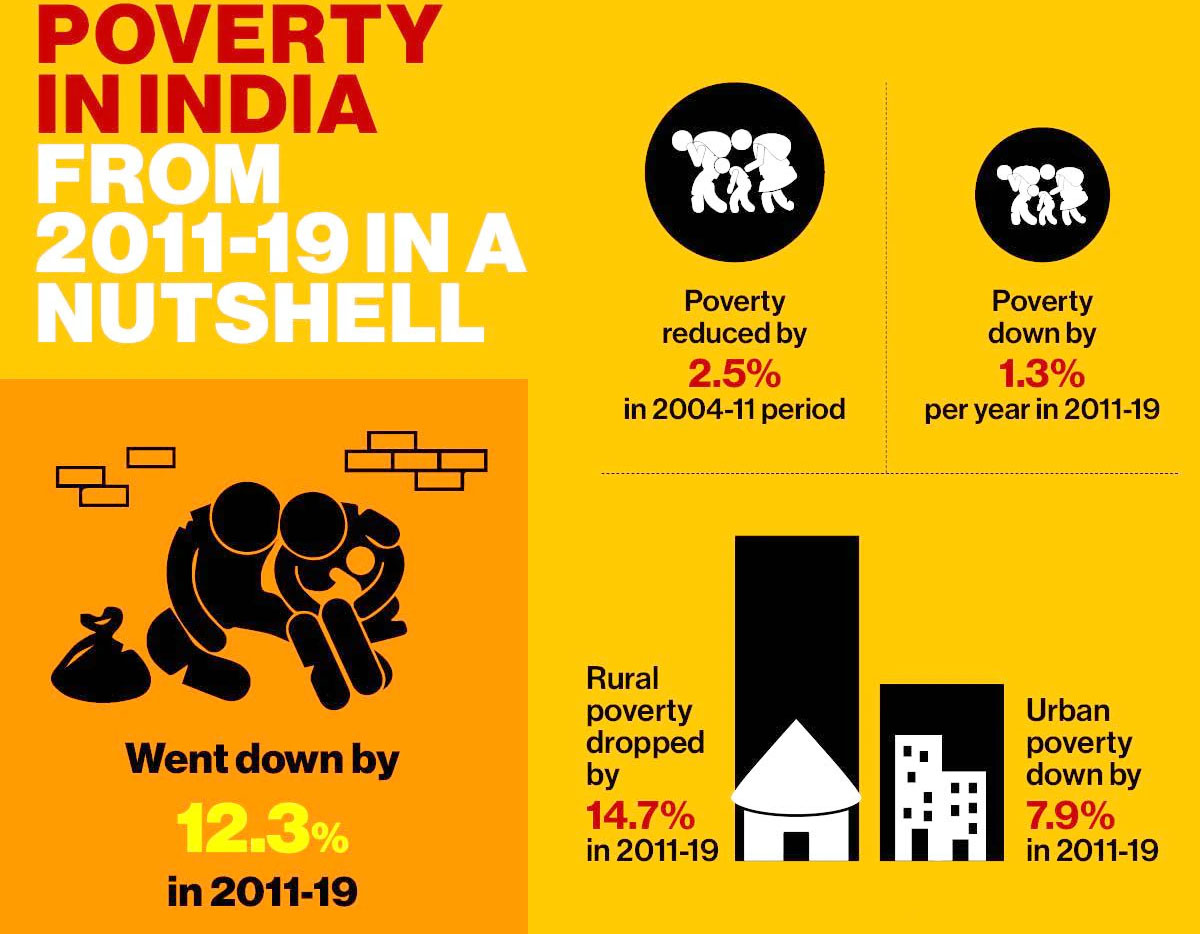
    • Urban poverty on rise: Close to 30% of people living in urban areas are poor.
    • Declining life expectancy: Life expectancy among the poorest is lower by 9.1 years and 6.2 years among men and women, respectively, compared to the richest in urban areas.
    • Chaotic health governance: The report, besides finding disproportionate disease burden on the poor, also pointed to a chaotic urban health governance.
    • Multiplicity and non-coordination: The multiplicity of healthcare providers both within and outside the government without coordination challenges to urban health governance.
    • Lack of political attention: Urban healthcare has received relatively less research and policy attention.

    Major recommendations

    The report calls for:

    • Strengthening community participation and governance
    • Building a comprehensive and dynamic database on the health and nutrition status, including co-morbidities of the diverse, vulnerable populations
    • Strengthening healthcare provisioning through the National Urban Health Mission, especially for primary healthcare services
    • Putting in place policy measures to reduce the financial burden of the poor
    • A better mechanism for coordinated public healthcare services and better governed private healthcare institutions

    Conclusion

    • As urbanization is happening rapidly, the number of the urban poor is only expected to increase.
    • A well-functioning, better coordinated, and governed health care system is crucial at this point.
    • The pandemic has brought to attention the need for a robust and resourced healthcare system.
    • Addressing this will benefit the most vulnerable and offer critical services to city dwellers across income groups.


    UPSC 2022 countdown has begun! Get your personal guidance plan now! (Click here)
  • More a private sector primer than health-care pathway

    Context

    NITI Aayog recently published a road map document entitled “Health Insurance for India’s Missing Middle”.

    About missing middle and provision in the NITI Aayog report

    • The Ayushman Bharat-Pradhan Mantri Jan Arogya Yojana (AB-PMJAY), aims to extend hospitalisation cover of up to â‚č5 lakh per family per annum to a poor and vulnerable population of nearly 50 crore people.
    • Left out segment: Covering the left out segment of the population, commonly termed the ‘missing middle’ sandwiched between the poor and the affluent, has been discussed by the Government recently.
    • Towards this, NITI Aayog recently published a road map document entitled “Health Insurance for India’s Missing Middle”.
    • Primary role for private commercial health insurer: The report proposes voluntary, contributory health insurance dispensed mainly by private commercial health insurers as the prime instrument for extending health insurance to the ‘missing middle’.

    Issues with the provision in the NITI Aayog report

    • Narrow coverage: Government subsidies, if any at all, will be reserved for the very poor within the ‘missing middle’ and only at a later stage of development of voluntary contributory insurance.
    • This is a major swerve from the vision espoused by the high-level expert group on UHC a decade ago, which was sceptical about such a health insurance model.
    • No country has ever achieved UHC by relying predominantly on private sources of financing health care.
    • Contributory insurance not best way: Evidence shows that in developing countries such as India, with a gargantuan informal sector, contributory health insurance is not the best way forward and can be replete with problems.
    • Issues with low premium model: For hospitalisation insurance, the report proposes a model similar to the Arogya Sanjeevani scheme, albeit with lower projected premiums of around â‚č4,000-â‚č6,000 per family per annum.
    • This model is a little different from commercial private insurance, except for somewhat lower premiums.
    • Low premiums are achieved by reducing administrative costs of insurers through an array of measures, including private use of government infrastructure.
    • This model is vulnerable to nearly every vice that characterises conventional private insurance.
    • Insufficient measures to deal with adverse selection: The report suggests enrolment in groups as a means to counter adverse selection.
    • The prevailing per capita expenditure on hospital care is used to reflect affordability of hospital insurance, and thereby, a possible willingness to pay for insurance.
    • Both these notions are likely to be far-fetched in practice, and the model is likely to be characterised by widespread adverse selection notwithstanding.
    • OPD insurance on a subscription basis: The report proposes an OPD insurance with an insured sum of â‚č5,000 per family per annum, and again uses average per capita OPD spending to justify the ability to pay.
    • However, the OPD insurance is envisaged on a subscription basis, which means that insured families would need to pay nearly the entire insured sum in advance to obtain the benefits.
    • Clearly, this route is unlikely to result in any significant reduction of out-of-pocket expenditure on OPD care.
    • Role of government:The NITI report defies the universally accepted logic that UHC invariably entails a strong and overarching role for the Government in health care, particularly in developing countries.

    Consider the question “What are the challenges in achieving universal health coverage? What are the issues with private sources  financing health care to achieve UHC?”

    Conclusion

    The National Health Policy 2017 envisaged increasing public health spending to 2.5% of GDP by 2025. Let us not contradict ourselves so early and at this crucial juncture of an unprecedented pandemic.

  • Issues with ordinance that extend the tenure of the Director of the CBI

    Context

    The Central government’s decision to give a five-year tenure to heads of the Central Bureau of Investigation (CBI) and the Enforcement Directorate (ED) has drawn a lot of flak.

    Background

    • Apex court’s directive giving a mandatory two-year tenure to the Director of the CBI was a fallout of the Hawala scandal.
    • Prior to that, the government was arbitrary and capricious in choosing the Director.
    • It was not rare to see temporary appointments given to favour some individuals.
    • Seniority was often ignored in appointments and Directors were removed frequently.

    Why tenure matters

    • Short tenure: A two-year tenure for a CBI head is too short for any officer to make an impact on the organisation.
    • Longer provides the much-needed continuity that a Director needs in an outfit charged with the task of conducting highly sensitive investigations, which sometimes impinge on the longevity and stability of a democratically elected government.
    • The Federal Bureau of Investigation chief in the U.S. gets a 10-year term.

    Suggestions

    • Need to avoid government interference: Any blatantly dishonest interference in the working of the organisation is bound to raise the hackles of those who believe in and carry out straightforward investigations.
    • The government will therefore have to show enormous restraint in its interactions with the head of the CBI.
    • Balancing accountability with autonomy: Of course, as a measure of accountability, the Director will have to keep the government informed of all major administrative decisions.
    • He or she should inform the executive but not take orders from it.
    • Need for CBI Act: Successive chiefs have suggested the drafting of a CBI Act to ensure that the organisation is not dependent on the State governments, many of which have withdrawn consent for the CBI to function in that State.
    • Eight States — West Bengal, Maharashtra, Kerala, Punjab, Rajasthan, Jharkhand, Chhattisgarh, and Mizoram — have withdrawn the general consent.
    • The CBI should be made to derive its authority for launching investigations from its own statute instead of depending on the Criminal Procedure Code, which makes the CBI a police organisation.

    Issue with ordinance

    • The only problem with the latest ordinance is that, at the end of the mandatory two-year tenure, the government will have to issue orders granting one-year extensions at a time. 
    • The rule about three annual extensions can be misused by a tendentious government.
    • It may be construed as a reward for ‘good behaviour’, which is a euphemism for an obliging Director.

    Consider the question “What are the challenges facing Central Bureau of Investigation? Suggest the measures to make the organisation more effective.” 

    Conclusion

    We will have to wait for a few years to gauge the impact of the change in tenure rules. It is preposterous to probe the intentions of this major move.

    UPSC 2022 countdown has begun! Get your personal guidance plan now! (Click here)


    Back2Basics: General Consent

    • A “general consent” is normally given by states to help the CBI in seamless investigation of cases of corruption against central government employees in their states.
    • Almost all states have traditionally given such consent, in the absence of which the CBI would have to apply to the state government in every case, and before taking even small actions.
    • Section 6 of The DSPE Act (“Consent of State Government to exercise of powers and jurisdiction”) says: “Nothing contained in section 5 (“Extension of powers and jurisdiction of special police establishment to other areas”) shall be deemed to enable any member of the Delhi Special Police Establishment to exercise powers and jurisdiction in any area in a State, not being a Union territory or railway area, without the consent of the Government of that State.”
  • Back in news: Central Bureau of Investigation (CBI)

    The Centre has told the Supreme Court that the CBI was an “autonomous body” and it had no “control” over the investigative agency.

    Background

    • The submission in the top court comes two days after the promulgation of an ordinance extending the tenures of the CBI Director and the Enforcement Directorate chief.
    • Attorney-General K was objecting to a suit filed by the West Bengal Government over the use of CBI.

    West Bengal vs. CBI

    • West Bengal has challenged the CBI’s jurisdiction to register FIRs and conduct investigations in the State in some cases.
    • The State had withdrawn its “general consent” to the CBI way back in 2018.

    About CBI

    • The Bureau of Investigation traces its origins to the Delhi Special Police Establishment, a Central Government Police force, which was set up in 1941 by the Government of India.
    • It then aimed to investigate bribery and corruption in transactions with the War and Supply Department of India.
    • It then had its headquarters in Lahore.
    • After the end of the war, there was a continued need for a central governmental agency to investigate bribery and corruption by central-government employees.
    • The DSPE acquired its popular current name, Central Bureau of Investigation (CBI), through a Home Ministry resolution dated in 1963.

    Mandate of the CBI

    • The CBI is the main investigating agency of the GoI.
    • It is not a statutory body; it derives its powers from the Delhi Special Police Establishment Act, 1946.
    • Its important role is to prevent corruption and maintain integrity in administration.
    • It works under the supervision of the CVC (Central Vigilance Commission) in matters pertaining to the Prevention of Corruption Act, 1988.
    • The CBI is also India’s official representative with the INTERPOL.

    Cases to investigate

    • Cases connected to infringement of economic and fiscal laws
    • Crimes of a serious nature that have national and international ramifications
    • Coordination with the activities of the various state police forces and anti-corruption agencies.
    • It can also take up any case of public importance and investigate it
    • Maintaining crime statistics and disseminating criminal information.

    Issues with CBI

    • Caged parrot: The Supreme Court has criticised the CBI by calling it a “caged parrot speaking in its master’s voice”.
    • Political interference: It has often been used by the government of the day to cover up wrongdoing, keep coalition allies in line and political opponents at bay.
    • Investigation delay: It has been accused of enormous delays in concluding investigations due to political inertia.
    • Loss of Credibility: CBI has been criticised for its mismanagement of several cases involving prominent politicians and mishandling of several sensitive cases like Bofors scandal, Bhopal gas tragedy.
    • Lack of Accountability: CBI is exempted from the provisions of the Right to Information Act, thus, lacking public accountability.
    • Acute shortage of personnel: A major cause of the shortfall is the government’s sheer mismanagement of CBI’s workforce.
    • Limited Powers: The powers and jurisdiction of members of the CBI for investigation are subject to the consent of the State Govt., thus limiting the extent of investigation by CBI.
    • Restricted Access: Prior approval of Central Government to conduct inquiry or investigation on the employees of the Central Government is a big obstacle in combating corruption at higher levels of bureaucracy.

    Way Forward

    • Need for autonomy:   As long as the government of the day has the power to transfer and post officials of its choice in the CBI, the investigating agency will not enjoy autonomy and will be unable to investigate cases freely.
    • A new CBI Act should be promulgated that ensures the autonomy of CBI while at the same time improving the quality of supervision.
    • Selection of director/ Officers: To ensure that the CBI is a robust, independent and credible investigation agency, there is an urgent need to work out a much more transparent mechanism for selection and induction of officers on deputation.
    • Lokpal scrutiny: The Lokpal Act already calls for a three-member committee made up of the PM, the leader of the opposition and the CJI to select the director.
    • Bifurcation of Cadre: CBI should be bifurcated into an Anti-Corruption Body and a National Crime Bureau.
    • Develop own cadre: One of the demands that have been before Supreme Court, and in line with international best practices, is for the CBI to develop its own dedicated cadre of officers.
    • Annual social audit should be carried out by ten reputed, knowledgeable persons with background of law, justice, public affairs and administration and the audit report should be placed before the parliament.


    UPSC 2022 countdown has begun! Get your personal guidance plan now! (Click here)

  • Duare Ration Scheme in West Bengal

    West Bengal CM has launched an ambitious “Duare Ration” Scheme.

    Duare Ration Scheme

    • The Scheme aims for providing food grains under the public distribution system (PDS) at the doorstep for the entire population of the State.
    • It aims to unload the person carrying huge chunk of food grains manually.
    • Vehicles will carry ration in a particular street or lane and employees of ration dealers will make the food grains available to the people near their residence.

    Key arrangements

    • The state govt would provide around 21,000 ration dealers with the financial assistance of â‚č1 lakh each to purchase vehicles for delivering ration to people in this manner.
    • It also announced financial assistance to ration dealers to hire additional staff to make the scheme a success.

    Back2Basics: Public Distribution System

    • The PDS is an Indian food Security System established under the Ministry of Consumer Affairs, Food, and Public Distribution.
    • PDS evolved as a system of management of scarcity through the distribution of food grains at affordable prices.
    • PDS is operated under the joint responsibility of the Central and State Governments.
    • The Central Government, through the Food Corporation of India (FCI), has assumed the responsibility for procurement, storage, transportation, and bulk allocation of food grains to the State Governments.
    • The operational responsibilities including allocation within the State, identification of eligible families, issue of Ration Cards and supervision of the functioning of Fair Price Shops (FPSs) etc., rest with the State Governments.
    • Under the PDS, presently the commodities namely wheat, rice, sugar and kerosene are being allocated to the States/UTs for distribution. Some States/UTs also distribute additional items of mass consumption through the PDS outlets such as pulses, edible oils, iodized salt, spices, etc.

    UPSC 2022 countdown has begun! Get your personal guidance plan now! (Click here)

  • [pib] Digital India Land Record Modernization Program

    Union Minister for Rural Development and Panchayati Raj has recently held a workshop on Digital India Land Record Modernization Programme (DILRMP).

    About DILRMP

    • The DILRMP was previously known as the National Land Record Modernization Programme (NLRMP).
    • It was launched in 2008 with the purpose to digitize and modernizing land records and developing a centralized land record management system.
    • The DILRMP is the amalgamation of two projects:
    1. Computerization of Land Records (CLR)
    2. Strengthening of Revenue Administration and Updating of Land Records (SRA & ULR)
    • The district will be taken as the unit of implementation, where all activities under the programme will converge.

    Components of DILRMP

    The DILRMP has 3 major components

    1. Computerization of land record
    2. Survey/re-survey
    3. Computerization of Registration

    Key features: Unique Land Parcel Identification Numbers

    • It is just like the Aadhar Number of land parcels.
    • A unique ID based on Geo-coordinates of the parcels is generated and assigned to the plots.
    • This has been introduced to share the computerized digital land record data among different States/Sectors and a uniform system of assigning a unique ID to the land parcel across the country.

    Benefits offered

    The citizen is expected to benefit from DILRMP in one or more of the following ways;

    • Real-time land ownership records will be available to the citizen
    • Property owners will have free access to their records without any compromise in regard to the confidentiality of the information
    • Abolition of stamp papers and payment of stamp duty and registration fees through banks, etc. will also reduce interface with the Registration machinery
    • These records will be tamper-proof
    • This method will permit e-linkages to credit facilities


    UPSC 2022 countdown has begun! Get your personal guidance plan now! (Click here)

  • Assessing the digital gap and learning losses

    A recent survey released seeks to analyze the COVID-impact on digital connectivity in the context of healthcare, education, and work.

    About the Survey

    • LIRNEasia, an Asia Pacific think tank focussed on digital policy, tied up with the Indian Council for Research on International Economic Relations (ICRIER).
    • They took part in a global study funded by the Canada’s International Development Centre to assess the socio-economic impacts of COVID-19 .
    • They sought to analyse access to services, with a focus on digital technologies in healthcare, education and work.

    Highlights of the Survey:

    [A] Internet Access and Use

    (1) Internet users

    • The survey found that 47% of the population are Internet users, a significant jump from the 19% who were identified as Internet users in late 2017.
    • At least 5 crores have already become new Internet users in 2021.

    (2) Gender and internet

    • Men still use the Internet more than women.
    • There is a 37% gender gap among users, although this is half of the 57% gap present four years ago.

    (3) Rural-urban Gap

    • The rural-urban gap has dropped from 48% in 2017 to just 20% now as more rural residents come online.

    (4) Education

    • Among those with college education, 89% are Internet users, compared to 60% of those who completed secondary school.
    • Only 23% of those who dropped out of school after Class 8, and 9% of those without any education, are able to use the Internet.

    Major inferences drawn

    • Among non-users, lack of awareness is still the biggest hurdle.
    • The percentage of non-users who said they do not know what the Internet is dropped from 82% to 49% over the last four years.
    • Increasingly, lack of access to devices and lack of skills are the reason why people do not go online.

    Loopholes in Remote Education

    • 80% of school-age children in the country had no access to remote education at all during the 18 months of lockdown.
    • This happened even though 64% of households actually had Internet
    • Situation was worse for those homes without Internet connections, where only 8% of children received any sort of remote education.

    [B] Internet connectivity

    • Apart from not having any devices, poor 3G/4G signal and high data cost were listed as the biggest hurdles.
    • Even among the 20% who received education, only half had access to live online classes which required a good Internet connection and exclusive use of a device.
    • Most depended on recorded lessons and WhatsApp messages which could be sent to a parent’s phone and downloaded at leisure.
    • Others were able to have more direct contact with teachers via phone calls or physical visits.

    Worst consequences: Dropouts

    • Nationwide, 38% of households said at least one child had dropped out of school completely due to COVID-19.
    • The situation was significantly worse among those from lower socio-economic classes, or where the head of the household had lower education levels.

    [C] Internet access and healthcare

    • About 15% required healthcare access for non-COVID related purposes during the most severe national and State lockdown.
    • Of the 14% who required ongoing treatment for chronic conditions, over a third missed at least one appointment due to the lockdown.
    • Telemedicine and online doctor consultations surged during these times, but only 38% said they were able to access such services.
    • With regard to COVID-19, about 40% of respondents depended on television channels for advice as their most trusted source.


    UPSC 2022 countdown has begun! Get your personal guidance plan now! (Click here)

  • Dalit capitalism and Dalit entrepreneurship

    Context

    In a departure from the fixation on traditional parameters for the study of Dalit rights and empowerment, there is now a focus on how market forces can be expanded to address social exclusion.

    How Dalit entrepreneurship can help in Dalit entrepreneurship

    • While entrepreneurship alone isn’t the panacea to caste-based exclusion or marginalisation, Dalit entrepreneurship is the new narrative changing the discourse of Dalit empowerment.
    • Entrepreneurship can shape access to rights and push against entrenched social hierarchies.
    • The circulation of material benefits and the relative autonomy that comes with entrepreneurship are added advantages.
    • As per the reports by the MSME ministry, Dalit-owned ventures are still minimal in terms of numbers as well as revenue.
    • To overcome hindrances to the establishment of networks across various social groups, Dalit entrepreneurs take recourse to their internal ties and use them to sustain their economic gains.
    • It is increasingly becoming clear that supporting Dalits entrepreneurs is integral to the nation’s inclusive development and this is why institutional aid is required in this regard.

    Steps taken so far

    • The District Industries Centre (DIC) stipulates that to nurture entrepreneurs, the government must increase the share of goods produced by Dalits in its procurement.
    • State financial corporations have also been instructed to increase financial support to Scheduled Caste entrepreneurs.
    • The Andhra Pradesh Industrial Infrastructure Corporation has allocated 16.2 per cent of plots to SC entrepreneurs, while the Small Industries Development Bank of India offers an additional subsidy to them.
    • One of the focussed financial interventions for SC/ST entrepreneurs is the Stand Up India initiative, guaranteeing credit up to Rs 1 crore.

    Challenges

    • Stand Up India initiative failed to deliver the expected results due to the unavailability of so-called eligible SC/ST entrepreneurship, with most of the fund lying unutilised.
    • This was primarily due to the apathy of loaning branches and officials towards proposals by Dalit entrepreneurs.
    • It is evident that despite the existence of government schemes and policies to support such initiatives, the actual benefit could never reach the beneficiaries due to the artificial inaccessibility created by inherent social and caste biases.

    Way forward

    • There is a need for Dalit-focussed alternate investment finance (AIF) and private equity (PE) funds to create a vibrant and inclusive MSME ecosystem.
    • It is evident that despite the existence of government schemes and policies to support such initiatives, the actual benefit could never reach the beneficiaries due to the artificial inaccessibility created by inherent social and caste biases.
    • There is a need to formulate multiple credit guarantee trusts by raising contributions from MNCs, FDIs, portfolio investors, corporates, etc.
    • A social vulnerability index also needs to be introduced, addressed and assessed.

    Conclusion

    Dalit entrepreneurship today holds the promise of an exciting and uncharted future for social transformation.

    UPSC 2022 countdown has begun! Get your personal guidance plan now! (Click here)

  • First National Achievement Survey (NAS) held

    The first National Achievement Survey (NAS) in four years was conducted, in a bid to assess the competencies of children in Class 3, 5 and 8.

    National Achievement Survey (NAS)

    • NAS is a nationally representative large-scale survey of students’ learning undertaken by the Ministry of Education.
    • It is implemented on a sample size aiming to assess students of 3rd, 5th, 8th and 10th
    • It gives a system level reflection on effectiveness of school education.
    • The NCERT has developed the Assessment Framework for gauging the competencies attained by the student’s vis-a-vis learning outcomes.

    Features of the Survey

    • The Survey goes beyond the scorecard and includes the background variables to correlate student’s performance in different learning outcomes vis-a-vis contextual variables.
    • The Survey was conducted in a monitored environment in the sampled schools.
    • Selection of sampled schools was based on UDISE+ (Unified District Information System for Education) 2019-20 data.

    Significance of NAS

    • NAS findings would help diagnose learning gaps of students and determine interventions required in education policies, teaching practices and learning.
    • Through its diagnostic report cards, NAS findings help in capacity building for teachers, officials involved in the delivery of education.
    • This will help to assess the learning interruptions and new learnings during the COVID pandemic and help to take remedial measures.


    UPSC 2022 countdown has begun! Get your personal guidance plan now! (Click here)

  • FCRA

    The Supreme Court has reserved its judgment on petitions challenging the validity of amendments introduced in 2020 to the Foreign Contribution (Regulation) Act, 2010, aimed at tightening the curbs on NGOs allowed to receive foreign funds.

    About FCRA

    • The FCRA regulates foreign donations and ensures that such contributions do not adversely affect internal security.
    • First enacted in 1976, it was amended in 2010 when a slew of new measures was adopted to regulate foreign donations.
    • The FCRA is applicable to all associations, groups and NGOs which intend to receive foreign donations.
    • It is mandatory for all such NGOs to register themselves under the FCRA.
    • The registration is initially valid for five years and it can be renewed subsequently if they comply with all norms.

    Why was FCRA enacted?

    • The FCRA sought to consolidate the acceptance and utilisation of foreign contribution or foreign hospitality by individuals, associations or companies.
    • It sought to prohibit such contributions from being used for activities detrimental to national interest.

    What was the recent Amendment?

    • The FCRA was amended in September 2020 to introduce some new restrictions.
    • The Government says it did so because it found that many recipients were wanting in compliance with provisions relating to filing of annual returns and maintenance of accounts.
    • Many did not utilise the funds received for the intended objectives.
    • It claimed that the annual inflow as foreign contributions almost doubled between 2010 and 2019.
    • The FCRA registration of 19,000 organisations was cancelled and, in some cases, prosecution was also initiated.

    How has the law changed?

    There are at least three major changes that NGOs find too restrictive.

    • Prohibition of fund transfer: An amendment to Section 7 of the Act completely prohibits the transfer of foreign funds received by an organisation to any other individual or association.
    • Directed and single bank account: Another amendment mandates that every person (or association) granted a certificate or prior permission to receive overseas funds must open an FCRA bank account in a designated branch of the SBI in New Delhi.
    • Utilization of funds: Fund All foreign funds should be received only in this account and none other. However, the recipients are allowed to open another FCRA bank account in any scheduled bank for utilisation.
    • Shared information: The designated bank will inform authorities about any foreign remittance with details about its source and the manner in which it was received.
    • Aadhaar mandate: In addition, the Government is also authorised to take the Aadhaar numbers of all the key functionaries of any organisation that applies for FCRA registration or for prior approval for receiving foreign funds.
    • Cap on administrative expenditure: Another change is that the portion of the receipts allowed as administrative expenditure has been reduced from 50% to 20%.

    What is the criticism against these changes?

    • Arbitrary restrictions: NGOs questioning the law consider the prohibition on transfer arbitrary and too heavy a restriction.
    • Non-sharing of funds: One of its consequences is that recipients cannot fund other organisations. When foreign help is received as material, it becomes impossible to share the aid.
    • Irrationality of designated bank accounts: There is no rational link between designating a particular branch of a bank with the objective of preserving national interest.
    • Un-ease of operation: Due to Delhi based bank account, it is also inconvenient as the NGOS might be operating elsewhere.
    • Illogical narrative: ‘National security’ cannot be cited as a reason without adequate justification as observed by the Supreme Court in Pegasus Case.

    What does the Government say?

    • Zero tolerance against intervention: The amendments were necessary to prevent foreign state and non-state actors from interfering with the country’s polity and internal matters.
    • Diversion of foreign funds: The changes are also needed to prevent malpractices by NGOs and diversion of foreign funds.
    • Fund flow monitoring: The provision of having one designated bank for receiving foreign funds is aimed at making it easier to monitor the flow of funds.
    • Ease of operation: The Government clarified that there was no need for anyone to come to Delhi to open the account as it can be done remotely.


    UPSC 2022 countdown has begun! Get your personal guidance plan now! (Click here)