💥Join UPSC 2027,2028 Mentorship (July Batch) + XFactor Notes & Microthemes PDF

Subject: History

  • Person in news: Anna Bhau Sathe

    anna bhau sathe

    Central Idea

    • Telangana CM has expressed a desire to see social reformer, writer, and folk poet Anna Bhau Sathe honoured with the prestigious Bharat Ratna award.

    Who was Anna Bhau Sathe?

    • Anna Bhau Sathe, born Tukaram Bhaurao Sathe on August 1, 1920, in Maharashtra’s Wategaon village, emerged as a prominent figure in the field of literature, poetry, and social activism.
    • His journey from humble beginnings in a Dalit family to becoming a prolific writer and folk poet is a testament to his indomitable spirit and commitment to social reform.

    Early Life and Struggles

    • Mumbai Sojourn: In 1930, Sathe’s family moved to Mumbai, where he worked as a porter, hawker, and cotton mill helper, enduring the hardships of working-class life.
    • Labour Activism: His participation in the 1934 workers’ strike, led by the Lal Bawta Mill Workers Union, marked the beginning of his engagement in labor and social issues.
    • Learning to Read and Write: Denied schooling due to his Dalit identity, Sathe joined labor study circles where he learned to read and write.

    Evolution as a Writer

    • Early Poetry: His first poem, focusing on the menace of mosquitoes in the labour camp, laid the foundation for his future creative endeavours.
    • Cultural Group: Sathe formed the Dalit Yuvak Sangh, a cultural group that composed poems reflecting workers’ protests and agitations.
    • Influence of Progressive Writers: The Progressive Writers Association’s national formation, with writers like Premchand and Faiz Ahmad Faiz, exposed him to translated Russian works, inspiring him to write plays, stories, and novels.

    Wide-ranging Impact of His Work

    • Spreading Awareness: Together with his group, Sathe travelled across Mumbai, raising awareness about workers’ rights and social issues.
    • Prolific Output: Over 49 years, he authored 32 novels, 13 collections of short stories, four plays, a travelogue, and 11 ballads (povadas).
    • Cinematic and International Recognition: Several of his works were adapted into films, and some were translated into other languages, including Russian. His “Bangalchi Hak” was presented at London’s Royal Theatre.
    • Depiction of Social Realities: Sathe’s literature delved into the caste and class realities of Indian society during his time.

    Left-leaning Ideology and Russian Connection

    • Influence of Marxism: While influenced by Marxism, he also depicted the harsh realities of the caste system in his work.
    • The Lal Bawta Kala Pathak: In 1943, Sathe founded this group, which toured Maharashtra, performing programs on caste atrocities, class conflict, and workers’ rights.
    • Dedication to Dr. Ambedkar: His most famous novel, “Fakira,” was dedicated to Dr. B.R. Ambedkar, reflecting his commitment to the Dalit cause.

    Russian Inspiration

    • Maxim Gorky’s Influence: Often referred to as the “Maxim Gorky of Maharashtra,” Sathe drew inspiration from Gorky’s work “The Mother” and the Russian Revolution, evident in his writings.
    • Visit to Russia: In 1961, Sathe travelled to Russia with a group of other Indians, fostering his connection with Russian culture.
  • Festivals in news: Muharram and Ashura

    muharram ashura

    Central Idea

    • For the first time in over three decades, the Jammu and Kashmir government permitted a Muharram procession in Srinagar, drawing thousands of Shia mourners on the 8th of Muharram.
    • The decision has been widely hailed.

    What is Muharram?

    • Muharram is the first month of the Islamic lunar calendar, and it holds significant religious and historical importance for Muslims worldwide.
    • The word “Muharram” itself means “forbidden” in Arabic, signifying the sacred nature of this month.
    • It is considered one of the four sacred months in Islam, during which warfare and conflicts are traditionally prohibited.
    • It is observed by both Sunni and Shia Muslims (and even Hindus), though it holds different historical and religious significance for each group.

    Celebration of Ashura

    Ashura is the tenth day of Muharram and is the most significant day within the month.

    • Shia Muslims: They commemorate the martyrdom of Prophet Mohammed’s grandson, Imam Hussain, who was killed in the Battle of Karbala in 680 AD. The prophet’s son-in-law, Ali, and Ali’s elder son, Hassan, are also remembered during this period as having suffered and died.  On Ashura, Shia Muslims observe unique mourning rituals, including self-flagellation, chest-beating, and in some cases, forehead cutting using sharpened knives and chains with attached blades. ‘Taziya’, a tableaux procession is also held by the Shia Community.
    • Sunni Muslims: Ashura marks the day when Prophet Moses and the Children of Israel were saved from Pharaoh’s tyranny by crossing the Red Sea.
    • Hindu community: Some Hindus also observe Muharram by getting themselves painted in tiger stripes, visiting households and performing “huli kunita” as part of their “harake” (vow).

    Ashura Celebration in Kashmir

    • Ban under Dogra Rulers: During the reign of Dogra rulers, Muharram processions were either prohibited or allowed only at night, citing tensions between Shia and Sunni communities.
    • 1920s: In the 1920s, despite the Dogra order for morning processions, mourners marched during the day, with both Shias and Sunnis joining the procession. This became associated with the Muslim freedom struggle in Kashmir.
    • Selective Permits: Later, certain individuals and families were issued permits to take out processions, but the main Muharram procession was banned when militancy began.

    Significance of allowing processions

    • The permission for the Muharram procession in Srinagar after a long ban is a significant milestone, signifying progress towards religious freedom in the region.
    • It emphasizes the need to respect the religious sentiments of the people and uphold the values of inclusivity and unity among different communities in the valley.
  • Meri Maati Mera Desh Initiative

    meri maati

    Central Idea

    • The Union government has launched the ‘Meri Maati Mera Desh’ campaign as a grand culmination of the ‘Azadi Ka Amrit Mahotsav,’ celebrating 75 years of Indian Independence.

    Meri Maati Mera Desh

    • This initiative aims to honor and commemorate the sacrifices of martyrs.
    • It includes freedom fighters, defense personnel, and members of the Central Armed Police Forces (CAPF) and State Police, who laid down their lives in the line of duty.

    Five-Point Agenda

    1. Shilaphalakam Installation: Memorials will be erected, adorned with the names of those who made the supreme sacrifice for the nation. The veers (bravehearts) will be remembered and respected for their immense contribution to the country’s freedom, unity, and integrity.
    2. Pledge of Commitment: A solemn pledge will be taken by people at the memorial sites, reaffirming their unwavering commitment to the nation and its values.
    3. Vasudha Vandhan: Every gram panchayat or village will participate in ‘Vasudha Vandhan’ by planting 75 saplings of indigenous species, rejuvenating Mother Earth, and developing Amrit Vatikas (Eternal Gardens).
    4. Veeron Ka Vandan: Freedom fighters and the families of deceased freedom fighters will be honored and felicitated. Retired defense personnel, CAPF, and State Police personnel, along with the families of those who lost their lives in the line of duty, will also receive recognition for their invaluable service to the nation.
    5. National Flag Hoisting: The National Flag will be proudly hoisted, and the National Anthem will resonate in unison, filling the air with patriotism and pride.

    Implementation and Events

    • Events will be organized at various levels, from panchayat and village to block, urban local bodies, state, and national levels.
    • Soil from every panchayat/village will be collected by young volunteers and brought to the block, from where ‘Mitti Kalash’ (pots of soil) will be ceremoniously transported to Delhi.
    • The collected soil will be utilized to create a unique garden, the Amrit Vatika, at the Kartavya Path in Delhi, honoring the heroes of Indian freedom struggle and national integrity.
  • In news: Opium Wars

    opium war

    Central Idea

    • The Opium Wars, waged by European colonial powers on China, exemplify how opium, as an inanimate object, became a powerful historical agent under specific social and political circumstances.

    Possible mains question:

    Q. Discuss the historical significance of opium as a powerful agent in shaping world history, with a focus on its role in the Opium Wars and its impact on colonialism and Chinese society.

    Story of Opium and Tea

    opium

    • Tea’s Introduction to Europe: Tea, originating in China over 2,000 years ago, became popular among the British elite in the mid-17th century and transcended class barriers to become the quintessential British beverage.
    • Trade Deficit with China: However, the British East India Company faced a trade deficit with China due to the import of tea.
    • Opium as a Solution: In 1763, the British acquired a monopoly on opium production and trade, which was already in demand in China. Selling opium to China from their rapidly growing colony in India helped offset the trade deficit caused by tea imports.

    Opium Cultivation in India

    • Rapid Growth: Under the British Opium Department, opium production in India saw a massive increase, rising almost 800% within a century. India’s total opium exports to China increased a hundred-fold between 1780 and 1880.
    • Selective Selling: Interestingly, while India grew all the opium, the British avoided selling it in their own colony, choosing instead to push it into Chinese society.

    China’s Addiction and Socio-economic Crises

    • Addiction Spreads: The highly addictive and debilitating drug led to widespread addiction among China’s upper classes and literati, causing socio-economic crises.
    • Decline of Qing Dynasty: The ruling Qing dynasty’s inability to curb opium trade eroded the machinery of the state and legitimacy of China’s governance.

    The Opium Wars

    • Discovery of Opium: In 1839, after discovering his son’s opium use, the Qing Emperor launched a crackdown, leading to tensions with British opium traders in Canton.
    • First Opium War (1839-42): British forces arrived in China to protect “free trade,” leading to a series of defeats for China. The Treaty of Nanking forced China to compensate British opium traders, cede Hong Kong, and open more ports for European trade.
    • Second Opium War (1856-60): Triggered by a conflict between a Chinese official and British traders, the war further expanded European presence in China and legalized opium trade.

    Opium as a Historical Agent

    • Colonialism and Opium: The Opium Wars epitomized colonialism in Asia, generating immense profits for colonialists at the expense of Indian labor and Chinese sobriety.
    • Continued Impact: Opioid crises worldwide show opium’s capacity to transcend social classes, making it a historical force with tragic consequences.
  • Gyanvapi’s scientific survey by ASI begins

    gyanvapi

    Central Idea

    • The Archaeological Survey of India (ASI) has commenced a scientific survey of the Gyanvapi mosque complex in Varanasi, Uttar Pradesh.
    • It aims to ascertain whether the mosque was constructed atop a pre-existing Hindu temple, a matter that has been a subject of contention.
    • The mosque is not an ASI-protected site, and the ASI has no role in its maintenance or upkeep.

    Updates till date

    (A) Varanasi Court’s Order

    • Discovery during Previous Survey: During a court-mandated survey in May 2022, a structure claimed to be a “Shivling” by the Hindu side and a “fountain” by the Muslim side was found in a sealed section, which remained inaccessible since a previous Supreme Court order.
    • Exclusion from Survey: The court directed the ASI to exclude the sealed section from the survey while emphasizing the necessity of a scientific investigation to establish the historical facts.

    (B) Supreme Court’s Ruling

    • Protection Order: Earlier, the Supreme Court ordered the protection of the area around the claimed “Shivling” discovered during a video survey of the complex.
    • Mosque Management’s Argument: The mosque management contended that the structure in question is part of the water fountain mechanism at the ‘wazukhana’, the reservoir where devotees perform ablutions before offering namaz.
    • Legal Implications: Lawyers representing the mosque cited the Place of Worship (Special Provisions) Act, 1991, which prohibits altering the character of any place of worship from its status on August 15, 1947. However, this Act does not apply to the Ram Janmabhoomi-Babri Masjid legal dispute.

    History of the Gyanvapi Mosque

    • Construction: The Gyanvapi Mosque was constructed in 1669 during the reign of Mughal Emperor Aurangzeb, who ordered the demolition of the existing Vishweshwar temple and its replacement with a mosque.
    • Temple Elements Incorporated: The plinth of the original temple was left intact, serving as the mosque’s courtyard, while one wall was spared and turned into the qibla wall, facing Mecca. Evidence of the temple’s materials can still be seen in the mosque’s construction.
    • Name Origin: The mosque’s name is derived from an adjoining well known as the Gyanvapi or Well of Knowledge.
    • Current Temple: The present Kashi Vishwanath Temple was built in the 18th century, adjacent to the Gyanvapi Mosque, becoming a significant Hindu religious centre over the years.

    Longstanding Claims and Legal Framework

    • Claims of Hindu Worship: Many Hindus believe that the original deity of the Vishweshwar temple was hidden inside the Gyanvapi well during Aurangzeb’s raid. This belief has fueled the desire to perform puja and rituals at the site.
    • Places of Worship Act: The Places of Worship (Special Provisions) Act, 1991, stipulates that the nature of all places of worship, except for the one in Ayodhya, should be maintained as it was on August 15, 1947. It aims to preserve the character of religious sites and prevents legal challenges to pre-existing structures.
    • Conflicting Claims: The case involved arguments from both sides, with the temple worshipers claiming that the mosque was built on the site of an older temple, while another side pleaded that it was built on Wakf premises.

    Issue in the Limelight

    • Archaeological Survey: In April 2021, a Fast Track Court Civil Judge ordered the Archaeological Survey of India (ASI) to conduct a comprehensive physical survey of the complex. The survey aimed to determine the structural relationship between the two religious structures.
    • Critique of the Cut-off Date: Worshippers argue that the cut-off date of August 15, 1947, prohibiting claims to religious sites, is arbitrary and denies Hindus, Jains, Buddhists, and Sikhs the right to “reclaim” their places of worship.
    • Opposition to the Law: Some groups have opposed the Places of Worship Act since its introduction, contending that the Centre lacks the authority to legislate on pilgrimage or burial grounds, which fall under the state list.
  • Who was Nawab Wajid Ali Shah (1822-1887)?

    nawab

    Central Idea

    • An exhibition, heritage walk, and talk will be held in Kolkata to commemorate the bicentenary year of Nawab Wajid Ali Shah, the last king of Awadh.

    Nawab Wajid Ali Shah

    • Mirza Wajid Ali Shah (30 July 1822 – 1 September 1887) was the eleventh and final King of Awadh, reigning from 13 February 1847 to 11 February 1856.
    • He is remembered as a poet, playwright, dancer, and patron of the arts who made significant contributions during his rule.

    Reign and fall

    • Ascension to the Throne: Wajid Ali Shah became the King of Awadh in February 1847, assuming the position during a period of decline for the kingdom.
    • British Annexation: The British East India Company annexed Awadh on 11 February 1856, just two days before the ninth anniversary of Wajid Ali Shah’s coronation. He was subsequently exiled to Garden Reach in Metiabruz, near Kolkata, living on a pension.

    Patron of the Arts

    • Contributions to Music: Wajid Ali Shah was a generous patron of music and a talented composer. He nurtured the Lucknow Gharana of Kathak dance and enriched the light classical form of thumri. He composed ghazals and introduced new ragas, leaving a lasting impact on Hindustani music.
    • Kathak Dance: Wajid Ali Shah’s patronage elevated Kathak dance in Lucknow. He emphasized artistic expression, incorporating drama, emotion, and literature. The king popularized Kathak as a court dance and made it accessible to the common people.
    • Hindustani Theatre: The king established the Jogia Jashan, a grand pageant, and staged Rahas (dance-dramas) filled with poetry, lyrical compositions, and Kathak performances. His contributions laid the foundation for the development of Hindustani theatre.

    Literary Pursuits

    • Prose and Poetry: Wajid Ali Shah was a prolific writer in both Persian and Urdu. His works covered various subjects, including history, literature, and personal reflections. Notable works include “Huzn-i-Akhtar,” an autobiographical piece, and “Bani,” a treatise on music and dance.
    • Patronage of Writers: The king patronized numerous poets and writers in his court, including Mirza Ghalib. He granted pensions to renowned literary figures and encouraged the production of works that reflected the culture and life of the era.

    Exile Years and Legacy (1856-1887)

    • Exile in Metiabruz: After losing his kingdom, Wajid Ali Shah settled in Metiabruz near Kolkata. He created a miniature version of Lucknow and maintained his lavish lifestyle. Matiya Burj, a magnificent complex, served as a reminder of his beloved city.
    • Enduring Impact: Wajid Ali Shah’s compositions, including his famous thumri “Babul Mora Naihar Chhooto Jaay,” remain influential and have been performed by various artists. His contributions to music, dance, literature, and theatre continue to shape the cultural landscape, preserving his legacy.

    Conclusion

    • Mirza Wajid Ali Shah, the last King of Awadh, reigned from 1847 to 1856 before being exiled.
    • His patronage of the arts, including music, dance, theatre, and literature, left an indelible mark on the cultural heritage of Awadh.
    • Despite the challenges he faced and the loss of his kingdom, Wajid Ali Shah’s artistic endeavors and enduring legacy continue to inspire and enrich the region’s cultural identity.
  • What is Bastille Day?

    bastille

    Central idea

    • The National Day of France, also known as Bastille Day, is celebrated on July 14 every year.
    • Known as La Fete Nationale or Le 14 Juillet in French, the day is celebrated with fireworks and a parade.
    • One of the most important days in the history of France, it marks the fall of the Bastille, a military fortress and political prison, then considered a symbol of the monarchy and armoury.

    French Revolution: A quick recap

    • The French Revolution, which occurred between 1789 and 1799, was a significant period of social and political upheaval in France.
    • The revolution was characterized by a period of radical social and political change, which saw the-
    1. Overthrow of the French monarchy
    2. Establishment of a republic, and
    3. Execution (Guillotine) of thousands of people, including King Louis XVI and Queen Marie Antoinette

    Fall of the Bastille

    • Symbolism and Discontent: The Bastille, located in Paris, represented the autocratic rule and abuse of power by the monarchy.
    • Rising Unrest: Dissatisfaction with King Louis XVI’s leadership grew, and on July 14, 1789, Parisians gathered at the Bastille.
    • Demands and Confrontation: The crowd demanded the release of political prisoners and access to the fortress’s weapons. The Governor refused, leading to a violent clash.
    • Storming of the Bastille: After hours of fighting, the fortress fell as the people of Paris overwhelmed its defenders.


    Do you know?

    During the French Revolution, Queen Marie Antoinette reportedly said, “Let them eat cake” when told that the French people were starving and had no bread to eat.

    The remark was seen as a symbol of the queen’s aloofness and disregard for the plight of the common people, and it helped fuel resentment towards the monarchy.

    This statement alone sparked fury among the French masses leading to the mighty French Revolution.

    Significance of the Event

    • Symbol of Triumph: The fall of the Bastille symbolized the people’s victory over the monarchy and the end of the oppressive old regime.
    • Catalyst for Change: This event sparked a period of intense violence and upheaval, paving the way for the revolutionaries to seize power and establish a new order.
    • Socio-political Transformations: The French Revolution led to the abolition of feudalism, the Declaration of the Rights of Man and Citizen, and the establishment of the First French Republic.
    • Ideological Influence: The revolutionary principles of liberty, equality, and fraternity have left a lasting impact on global political and social movements.

    Global Importance of the Event

    • Inspiring Other Nations: The fall of the Bastille became an inspiration for other nations to fight for their own rights and freedom.
    • Spreading Revolutionary Ideals: The French Revolution’s principles resonated globally, influencing subsequent revolutionary movements throughout history.
    • Rise of Democracy: The revolution’s emphasis on individual rights, democratic governance, and social equality has significantly shaped the political and social landscape worldwide.

    Try this question from CS Mains 2019:

    Explain how the foundation of the modern world was laid by the American and French Revolutions.

    [wpdiscuz-feedback id=”0185jr83wu” question=”Please leave a feedback on this” opened=”1″]Post your answers here.[/wpdiscuz-feedback]


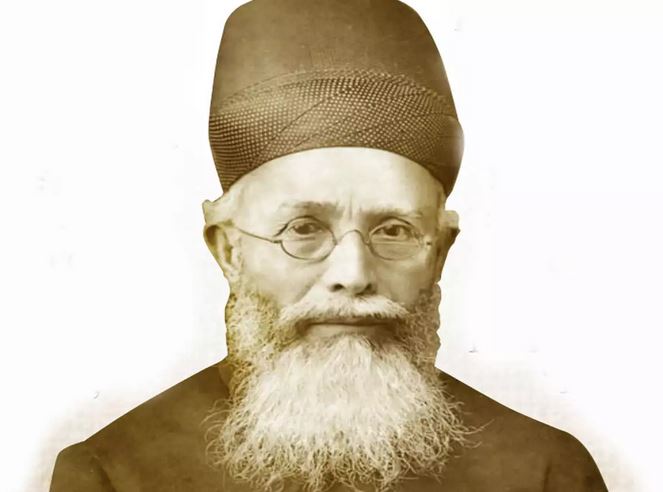
  • In news: Dadabhai Naoroji (1825-1917)

    dadabhai

    Central Idea

    • Dadabhai Naoroji, the first Indian member of the British Parliament, played a significant role in India’s anti-colonial struggle.
    • His scholarly work exposed the economic exploitation of India under British rule, emphasizing the drain theory.

    Who was Dadabhai Naoroji?

    • Early Life: Naoroji was born in Navsari, Gujarat, into a Parsi Zoroastrian family. He received his education at the Elphinstone Institute School.
    • Social Reforms: He founded the Rahnumai Mazdayasan Sabha and the Rast Goftar newspaper to promote Parsi social reforms and clarify Zoroastrian concepts.
    • Political Activism: Naoroji co-founded the London Indian Society and the East India Association, advocating for Indian political rights and countering negative stereotypes.
    • Indian National Congress: He played a crucial role in the Indian National Congress and served as its President on three occasions.
    • British Parliament: Naoroji became the first Indian MP in the British House of Commons, representing Finsbury Central from 1892 to 1895.
    • Economic Critique: His book “Poverty and Un-British Rule in India” exposed the drain of wealth from India to Britain and its impact on India’s development.

    His proposition of Drain Theory and Poverty

    • Naoroji’s Drain Theory: He identified six factors contributing to the wealth drain, including foreign governance, lack of immigration, and unequal employment opportunities.
    • Impact of Drain: Naoroji estimated a drain of 200-300 million pounds from India to Britain, which hindered India’s economic progress.
    • Railways and Tribute: Naoroji argued that India paid for services like railways, but the profits were drained out of the country, leading to economic imbalances.
    • Exploitative Trade: British workers in India were encouraged to repatriate their earnings, and Indian goods were undervalued, allowing for economic exploitation.

    Major works

    • Started the Rast Goftar Anglo-Gujarati Newspaper in 1854.
    • The manners and customs of the Parsees (Bombay, 1864)
    • The European and Asiatic races (London, 1866)
    • Admission of educated natives into the Indian Civil Service (London, 1868)
    • The wants and means of India (London, 1876)
    • Condition of India (Madras, 1882)

    Legacy and Views

    • Naoroji’s Significance: He is considered a crucial figure in India’s independence movement, advocating for responsible government and Indian autonomy.
    • Influence on Gandhi: Mahatma Gandhi was influenced by Naoroji’s writings and recognized him as a father figure for the Indian people.
    • Admirations: Bal Gangadhar Tilak praised Naoroji’s leadership and stated that Indians would unanimously elect him if given the chance.
    • Recognition: Naoroji’s contributions are honoured through various roads, streets, and awards named after him.
  • Kanwar Yatra: What is it?

    kanwar yatra

    Central Idea: The Kanwar Yatra, a significant annual pilgrimage, commenced on July 4 and will continue until July 15.

    What is Kanwar Yatra?

    • This pilgrimage sees millions of devotees, known as Kanwariyas or Kriyas, undertaking a journey to collect water from the Ganga River and offer it to Lord Shiva.
    • The Kanwar Yatra symbolizes the unbreakable bond between devotees and Lord Shiva and is considered an act of faith and devotion.

    Mythological Origins of Kanwar Yatra

    • Samudra Manthan: Kanwar Yatra is believed to have originated from the mythological story of Samudra Manthan, where Lord Shiva consumed poison to save the world. To alleviate the effects of the poison, all the gods poured water from the Ganga River on Lord Shiva.
    • King Rama’s Offering: Another version suggests that the ritual of Kanwar Yatra began when King Ram offered water from the Ganga to a statue of Lord Shiva (shivalinga) in an earthen pot.

    Customs and Rituals Performed

    • Collection of Ganga Water: Devotees, dressed in saffron attire, embark on foot to collect water from the Ganga River at Haridwar, Gomukh, and Gangotri. They carry two earthen pots filled with water, hung on a decorated bamboo stick, which they balance on their shoulders.
    • Significance of Purity: Devotees consider it essential to keep the pots from touching the ground or getting contaminated by dust, as it may impure the sacred water.
    • Challenging Journey: Kanwariyas undertake the yatra barefoot, covering long distances in challenging terrains and extreme weather conditions.
  • Who was Alluri Sitarama Raju?

    raju

    Central Idea

    • The President of India, Draupadi Murmu, honoured the freedom fighter Alluri Sitarama Raju during the closing ceremony of his 125th birth anniversary celebrations in Hyderabad.
    • The President highlighted the significance of Alluri Seetharama Raju’s struggle against injustice and exploitation in India’s freedom struggle.

    About Alluri Sitarama Raju

    • Raju was believed to be born in 1897 or 1898 in Andhra Pradesh.
    • He became a sanyasi (ascetic) at the age of 18 and gained a mystical aura among the hill and tribal people due to his austerity, knowledge of astrology and medicine, and his ability to tame wild animals.

    Revolutionary Activities of Alluri Sitarama Raju

    • Raju channelled the discontent of the hill people in Ganjam, Visakhapatnam, and Godavari into effective guerrilla resistance against the British.
    • The Forest Act of 1882 and other colonial policies threatened the tribals’ traditional podu cultivation and forced them into labor.
    • The tribals and muttadars (village headmen) who were affected by the curtailment of their powers by the British government joined together in armed resistance against colonial rule in August 1922.

    Contribution to the Freedom Struggle

    • Raju’s guerrilla war, known as the Rampa or Manyam Rebellion, continued until May 1924.
    • The rebellion coincided with Mahatma Gandhi’s Non-Cooperation Movement.
    • Raju admired Gandhi and promoted his ideas of wearing khadi (homespun cloth) and giving up alcohol.
    • However, Raju believed that India could only be liberated through the use of force, contrary to Gandhi’s principle of non-violence.

    Capture and Execution of Alluri Sitarama Raju

    • Raju’s resistance came to an end when he was captured by the British in May 1924.
    • He was executed for his involvement in the rebellion.
    • Raju became known as the ‘Manyam Veerudu’ or Hero of the Jungle, and his efforts are remembered as a significant contribution to India’s freedom struggle.

    Conclusion

    • Overall, Alluri Seetharama Raju played a crucial role in leading a guerrilla resistance against British colonial rule, fighting for the rights of tribal communities, and advocating for India’s independence through forceful means.