💥Join UPSC 2027,2028 Mentorship (July Batch) + XFactor Notes & Microthemes PDF

Subject: Indian Society

  • Death by suicide of a 16-year-old queer person: Why don’t you care when we are bullied?

    Being LGBT in India: Some home truths | Mint

    Central idea 

    Bullying is the lived reality of thousands of queer kids in this country and yet, we have no regimen in place to deal with it, both in schools and at an institutional level.

    Key Highlights:

    • Personal Experience: The author shares personal experiences of facing bullying for being effeminate during school.
    • Recent Tragedy: The article addresses the recent suicide of Pranshu, a sixteen-year-old queer teen, due to online bullying.
    • Nature of Bullying: Bullying of queer kids includes name-calling, physical violence, and sexual violence, impacting mental health.
    • Global Impact: Global data shows LGBTQ+ youth face higher health and suicide risks.
    • Systemic Deficiency: Lack of a comprehensive system to address bullying and support LGBTQ+ students.
    • Challenges in Communication: Efforts to address homophobia through communication with school management faced obstacles.
    • Initiative Opposition: The NCERT’s teacher-training manual for helping queer children faced opposition and was taken down.
    • NCPCR Critique: The National Commission for Protection of Child Rights (NCPCR) is criticized for not protecting queer kids.
    • Media Disparity: Limited media coverage and attention to the suicides of queer individuals compared to other LGBTQ+ issues.

    Key Challenges:

    • Bullying Complexity: Widespread bullying of queer kids in schools, including name-calling, violence, and sexual harassment.
    • Systemic Deficiency: Lack of a comprehensive system to address bullying and support LGBTQ+ students.
    • Initiative Challenges: Opposition and challenges faced by initiatives, like the NCERT’s teacher-training manual, aimed at helping queer children.
    • Media Disparity: Limited media coverage and attention to the suicides of queer individuals compared to other LGBTQ+ issues.

    Key Terms:

    • Queer
    • Bullying
    • Homophobia
    • LGBTQ+
    • NCERT
    • NCPCR
    • Suicide
    • Online Bullying

    Key Phrases:

    • “Mass online bullying”
    • “Name-calling, physical, and sexual violence”
    • “Systematic approach to address bullying”
    • “Teacher-training manual”
    • “National Commission for Protection of Child Rights”
    • “Media coverage for queer deaths”

    Key Examples and References:

    • Personal experiences of the author facing bullying.
    • Suicide of Pranshu, a sixteen-year-old queer teen.
    • NCERT’s teacher-training manual for queer children.
    • National Commission for Protection of Child Rights (NCPCR).

    Key Facts:

    • Global data indicates higher health and suicide risks for LGBTQ+ youth.
    • Lack of media coverage for deaths of queer individuals compared to other LGBTQ+ issues.
    • Initiatives, like the NCERT’s manual, face opposition and challenges.

    Key Data:

    • Specific data on the prevalence of bullying or suicide rates among queer youth is not provided.

    Critical Analysis:

    • The article highlights the urgent need for a comprehensive system to address bullying and support queer kids.
    • Criticizes the NCPCR for its perceived failure to protect queer children.
    • Raises questions about media coverage and societal attention to the suicides of queer individuals.
    • Emphasizes the importance of teacher training and institutional measures to combat homophobia.

    Way Forward:

    • Model anti-bullying programs after successful initiatives in countries like Canada and Sweden.
    • Allocate funds for the development and implementation of anti-bullying programs in collaboration with NGOs.
    • Adopt the approach taken by the United Kingdom, where teacher training includes LGBTQ+ inclusive education.
    • Introduce mandatory LGBTQ+ sensitivity training for teachers through national education boards.
    • Follow the success of LGBTQ+ awareness campaigns in cities like San Francisco. Sponsor and promote community workshops with the involvement of local leaders and LGBTQ+ activists.
  • Why are the Marathas mobilising now?

    The Marathas' Demand for Reservation: A Litigation History [2014-21] -  Supreme Court Observer

    Central Idea:

    • The Maratha community’s demand for reservation in education and employment stems from a crisis of dominance, influenced by urban and rural challenges.

    Urban Crisis:

    • Well-paid jobs in urban areas, historically held by Marathas, have rapidly disappeared since the late 1990s.
    • Large-scale manufacturing industries and establishments providing such jobs have closed or downsized, leading to increased competition for fewer opportunities.
    • Marathas, historically socially superior, used their dominant caste position to secure a significant share of jobs, particularly in the public sector.
    • Economic liberalization and the shrinkage of public sector jobs have intensified competition among Marathas for limited opportunities.

    Rural Crisis:

    • Closure of factories has led to the return of workers to villages, disrupting the pattern of workers retiring in villages and their offspring working in cities.
    • Rural youth face challenges migrating to urban areas for better-paying jobs, impacting the financial support they traditionally provided to family members in villages.
    • Informal sector jobs become the primary option for rural Maratha youth, diminishing their social standing and pride in rural settings.
    • The focus on secure public sector jobs, which have also decreased, becomes crucial for rural Maratha youth.

    Maratha quota agitation | OBC leaders warn Shinde govt. of trying to grab  their reservation - The Hindu

    Education Challenges:

    • Increased aspirations for higher education among Marathas face a decline in government institutions and a rise in private unaided colleges with exorbitant fees.
    • Marathas, with limited financial resources, compete for a limited number of open-category seats in public institutions.
    • Decrease in government-run educational institutions exacerbates the challenges faced by Maratha aspirants.

    Crisis of Dominance:

    • The combination of urban and rural crises contributes to a crisis of dominance for the Marathas.
    • Disturbance of caste hierarchy norms due to Dalit mobility and OBC economic and political assertion adds to Marathas’ anxiety.
    • The demand for reservation reflects the need for increased formal sector jobs and the expansion of public educational institutions to address the crisis.

    Key Highlights:

    • Maratha community demands reservation in education and public employment, intensifying since 2016.
    • Historically, Marathas dominated well-paid jobs, but recent urban and rural crises have led to increased competition and challenges.
    • Closure of manufacturing industries, decreasing public sector jobs, and rural youth’s struggles contribute to the crisis.
    • Educational aspirations face challenges with a decline in government institutions and increased private college fees.

    Key Challenges:

    • Disappearance of well-paid urban jobs, increased competition, and shrinking public sector employment.
    • Rural crisis disrupts the traditional pattern of workers retiring in villages and offspring working in cities.
    • Decline in government-run educational institutions, limited open-category seats, and rising private college fees.

    Key Terms and Phrases:

    • Urban crisis, rural crisis, crisis of dominance, economic liberalization, formal sector jobs.
    • Reservation, Maratha mobilization, well-paid jobs, private unaided colleges, public sector employment.

    Key Examples and References:

    • Maratha protests since 2016, closure of manufacturing industries, decreased public sector jobs.
    • Disturbance in traditional caste hierarchies due to Dalit mobility and OBC economic and political assertion.

    Key Facts and Data:

    • Marathas historically occupied over 29% of open-category jobs in government.
    • Jobs in the private formal sector increased from 2% to 3.5%.
    • Contractual government jobs increased from 0.7 million to 15.9 million in 2017-18.
    • Only 22.2% of colleges are managed by the government as of 2019.

    Critical Analysis:

    • Maratha crisis stems from economic shifts, urban-rural dynamics, and disturbance in caste hierarchies.
    • Limited opportunities, competition, and declining public sector jobs contribute to the community’s mobilization.
    • Educational challenges add to the complexity, demanding a comprehensive solution.

    Way Forward:

    • Address urban and rural crises by creating more formal sector jobs.
    • Expand public educational institutions and implement large-scale scholarship programs.
    • Focus on inclusive policies to reduce competition and restore traditional patterns of employment.

    Conclusion:

    • The Maratha mobilization for reservation is rooted in the challenges posed by the disappearance of well-paid jobs, urban-rural dynamics, and the disruption of traditional caste hierarchies. Addressing these challenges requires a focus on creating more opportunities in the formal sector and expanding accessible public education.
  • VT Rajshekar: Journalist, anti-caste legend who spoke his mind

    V T Rajshekar - Alchetron, The Free Social Encyclopedia

    Central idea

    Vontibettu Thimmappa Rajshekar Shetty (VTR) authored 30 books centering on caste, nation and religion

    Key Highlights:

    • Vontibettu Thimmappa Rajshekar Shetty (VTR) is a renowned figure in the Ambedkarite, anti-caste movement, known for his fearless journalism.
    • Born in 1932, VTR played a significant role in shaping the intellectual discourse of the anti-caste sphere since the 1970s.
    • Founder of the world-famous periodical Dalit Voice in 1981, VTR advocated for Dalit rights and challenged the Brahminical state order.

    Challenges:

    • Faced opposition and legal challenges, including being booked under India’s Terrorism and Anti-Disruptive Activities Act.
    • Dalit Voice was forced to shut down due to assault by the BJP, rechristened as Brahmana Jaati Party.

    Key Phrases:

    • “Triumph of Ambedkarism”: VTR envisioned the 21st century as a period of triumph for Ambedkarism.
    • “Caste as a nation within the nation”: VTR viewed caste as a separate entity rather than a subsidiary of the nation-state.

    Critical Analysis:

    • VTR’s journalism focused on exposing Brahminical hypocrisies and advocating for the rights of the oppressed.
    • Fearless critiques of the caste system and Brahminical state order marked his intellectual contributions.
    • VTR’s alignment with international radical movements showcased a commitment to broader social justice issues.
    • Alliances with African-American movements and international solidarity reflected a global perspective on caste-based discrimination.
    • Booking under India’s Terrorism and Anti-Disruptive Activities Act highlighted the resistance faced by VTR for his outspoken journalism.
    • Dalit Voice’s closure due to opposition from the BJP underscores the challenges anti-caste voices encounter in political landscapes.
    • Despite significant contributions, VTR and many anti-caste legends are often inadequately honored and celebrated.
    • The proposed establishment of a national award for fearless journalists in V T Rajshekar’s name aims to recognize and honor his impactful work.

    Key Examples and References:

    • Founded Dalit Voice in 1981 and authored 30 books, including “Dalit: The Black Untouchables of India.”
    • Inspired solidarity between Dalits and contemporary African-American activists.

    Key Data:

    • Born on July 17, 1932.
    • Founded Dalit Voice in 1981.

    Key Facts:

    • VTR faced legal challenges, including being booked under India’s Terrorism and Anti-Disruptive Activities Act.
    • Dalit Voice shut down due to opposition from the BJP.

    Key Terms:

    • Ambedkarism,
    • Brahminical state order,
    • Dalit Voice,
    • Caste-based violence,
    • Internationalism,
    • Brahmana Jaati Party.

    Way Forward:

    • Recognition and celebration of VTR’s contributions to anti-caste journalism and social justice.
    • Proposed establishment of a national award for fearless journalists in the name of V T Rajshekar to honor his legacy.
  • How the armed forces can be prepared for transgender personnel

    US seeks to learn from allies' experience about transgender troops | LGBTQ+ rights | The Guardian

    Central idea

    The central idea revolves around advocating for the gradual and thoughtful inclusion of transgender individuals in the armed forces. By drawing parallels with successful women integration, proposing protected roles initially, and emphasizing social awareness, the approach aims for a balanced, transparent, and inclusive transformation within the military, recognizing and addressing historical discrimination.

    Key Highlights:

    • Growing Acceptance: People are becoming more accepting of transgender folks, which is a positive change. Society is starting to understand the importance of including everyone, regardless of their gender identity.
    • Recognizing Challenges: We’re acknowledging that transgender individuals have faced a tough time with discrimination, stigma, and fewer opportunities. This recognition is crucial in addressing historical disadvantages.
    • Legal Steps in India: India has taken legal steps, like the Transgender Persons (Protection of Rights) Act in 2019, to protect transgender rights. This shows a commitment to making things better since a significant judgment in 2014.
    • Armed Forces Proposal: There’s a suggestion to include transgender individuals in the armed forces. This proposal comes from the realization that they’ve been at a disadvantage and need proactive help to be part of every aspect of life.
    • Stepwise Integration Approach: The idea is to include transgender individuals gradually, just like how women’s roles in the armed forces expanded step by step. This way, we can be sure that we’re ready and set up for their inclusion.
    • Learning from Women’s Inclusion: We’re learning from how women were included in the armed forces. By doing this, we hope to avoid problems and make the integration process smooth and successful.
    • Roles for Transgender Personnel: Transgender individuals might start with roles in medical services and staff positions. Initially, these roles will be more protected to ensure they feel comfortable and respected.
    • Social Awareness Emphasis: There’s a suggestion to make the armed forces more aware of societal justice and the discrimination faced by transgender individuals. This change in mindset is vital for a successful integration.

    Key Challenges:

    • Societal Prejudices: A challenge is dealing with society’s biases within the armed forces. Overcoming these biases is crucial for creating an inclusive environment.
    • Balancing Inclusion with Discipline: We need to be careful about how inclusion might affect the strong discipline and camaraderie in the armed forces. Balancing inclusion with maintaining teamwork is a tricky but necessary challenge.
    • Infrastructure Support: Developing the needed support for transgender individuals is important. This includes making sure the armed forces are ready and equipped for their inclusion.
    • Dignity Concerns: We’re aware of concerns about respecting the dignity and self-respect of transgender individuals. To address this, there’s a proposal for more protected roles initially.

    Key Terms and Phrases:

    • Camaraderie and Discipline: The armed forces have strong bonds based on trust and teamwork. Keeping these bonds intact while embracing diversity is a challenge.
    • Sensitization Road Map: We’re planning a roadmap to sensitize the armed forces at all levels. This means we want everyone to understand and accept the realities of discrimination.
    • Competence and Capabilities: Transgender individuals should be accepted based on their skills and abilities. Competency and capability are what matter most.
    • Sheltered Appointments: Initially, there’s a proposal for more protected roles to make sure transgender individuals feel secure and respected.
    • Aide-de-Camp: Imagining a capable transgender officer in a prestigious role shows the positive impact they can have on perceptions and acceptance.
    • Gradual Integration: Just like how women were gradually included, we’re looking at a step-by-step approach for transgender integration.

    Key Facts and Data:

    • NALSA Judgment as a Legal Milestone: In 2014, there was a significant decision recognizing and protecting transgender rights. This decision set the stage for later legal measures.
    • Transgender Persons (Protection of Rights) Act (2019): In 2019, India took legislative steps to protect transgender rights. These measures show a commitment to making things better.
    • Success of Women in Armed Forces: We’re looking at the achievements of women in the armed forces as a guide for including transgender individuals. Learning from past successes helps us avoid problems.

    Critical Analysis:

    • Acknowledging Historical Discrimination: We’re recognizing that a big change is needed in the armed forces’ way of thinking. This acknowledgment sets the stage for real change.
    • Calibrated Approach to Integration: We’re emphasizing the importance of careful planning and a step-by-step approach. This ensures that inclusion happens smoothly.
    • Learning from Women’s Inclusion: We’re learning from how women were included in the armed forces. This shows a readiness to apply lessons from one integration process to another.
    • Impact on Discipline and Camaraderie: We’re considering how inclusion might affect the unique bonds within the armed forces. This balance is crucial for a successful integration.
    • Recognizing Importance of Social Awareness: We’re identifying the need for the armed forces to understand societal justice. This change in mindset is vital for true and lasting change.

    Way Forward:

    • Advocating Wider Discussions: We’re suggesting more discussions and debates within the armed forces. This ensures that everyone’s perspective is considered.
    • Gradual Expansion of Roles: We’re advocating for more roles based on abilities and merit. This ensures that everyone gets opportunities based on their skills.
    • Involvement of Transgender Community: We’re suggesting that the transgender community should be part of decision-making. This makes sure their views are central to the integration process.
    • Establishing Social Awareness Strategy: We’re emphasizing the need for a strategy to make the armed forces more aware. This ensures that everyone understands and accepts the need for change.
    • Transparent and Just Process: We’re highlighting the importance of openness and fairness in the integration process. This ensures that the process is respectful and just for everyone involved.
  • India’s Global Talent Competitiveness Ranking falls to 103

    Central Idea

    • India’s ranking in the Global Talent Competitiveness Index (GTCI) has significantly declined from 83 a decade ago to 103 in the latest report released this month.
    • India now finds itself positioned between Algeria (ranked 102) and Guatemala (ranked 104), all classified as lower-middle-income countries.

    About Global Talent Competitiveness Index (GTCI)

    • The GTCI ranks 134 countries based on their ability to grow, attract, and retain talent.
    • It is released by INSEAD, a partner and sponsor of the United Nation’s Sustainable Development Goals (SDGs)Davos, Switzerland recently.
    • INSEAD is one of the world’s leading and largest graduate business schools with locations all over the world and alliances with top institutions.
    • The report ranks countries based on 6 pillars:
    1. enable
    2. attract
    3. grow
    4. retain talent
    5. vocation and technical skills
    6. global knowledge skills

    India’s Ranking and Comparisons

    • Rank 103: India’s current rank is well below the median score of the countries assessed in the GTCI.
    • BRICS Nations: India’s performance in the GTCI is the weakest among the BRICS countries. China leads the group at rank 40, followed by Russia at 52, South Africa at 68, and Brazil at 69.
    • Top Three Countries: These are Singapore, Switzerland, and the United States.
    • Skills Mismatch: India faces an increased skills mismatch and difficulties in finding skilled employees, resulting in its low rankings in the ‘Employability’ and ‘Vocational and Technical Skills’ categories.
    • Best-Performing Area: India’s best-performing area in the GTCI is “Global Knowledge Skills,” driven by innovation and software development, contributing to its 69th position in the “Talent Impact” sub-pillar.
  • Why the tribal factor may hurt the BJP in Madhya Pradesh

    Election 2023: मध्य प्रदेश में 15 आदिवासी सीटों पर अधिक मतदान भाजपा ने माना  संजीवनी - Election 2023 More voting in 15 tribal seats in Madhya Pradesh  BJP considered it a lifeline

    Central idea

    The article explores the significant role of tribal votes in the 2023 Madhya Pradesh assembly election, focusing on the competition between Congress and BJP for tribal support. It traces the historical evolution of tribal politics in the region, highlighting key factors influencing tribal voting patterns. The central theme revolves around the ongoing battle for tribal empowerment, with promises and challenges shaping the political landscape in Madhya Pradesh.

    Key Highlights:

    • Tribal Electoral Battleground: The 2023 Madhya Pradesh assembly election is marked by a fierce struggle between Congress and BJP for the pivotal tribal vote, constituting 21% of the state’s population.
    • Political Activism: Over decades, tribal communities have become politically active, influencing electoral outcomes and reshaping the state’s political dynamics.
    • Historical Contestation: The political contest for tribal support intensified in the 1990s, with Congress historically dominant but facing challenges as the BJP strategically entered tribal areas.
    • Fluid Voting Patterns: Tribal voting, historically with Congress, has witnessed shifts, creating a dynamic landscape for both major parties.

    Challenges:

    • Shifting Political Alliances: Historical Congress dominance faces challenges, with BJP making strategic inroads, making the tribal vote a pivotal factor.
    • Unresolved Policy Demands: Tribals express concerns about autonomy, job creation, forest conservation, and access to government welfare schemes, posing challenges for effective electoral strategies.
    • Dynamic Tribal Voting: The fluid nature of tribal voting patterns adds complexity to electoral strategies, requiring adaptable and responsive political approaches.
    • Competing Electoral Narratives: The battle for tribal votes involves competing promises and narratives, with Congress emphasizing empowerment through policies like the Sixth Schedule and PESA, while BJP highlights welfare initiatives and cultural ties.

    Key Phrases:

    • Empowerment Pledges: Congress commits to implementing the Sixth Schedule, enacting PESA, and raising tendu patta rates. BJP emphasizes welfare initiatives and cultural connections.
    • Political Mobilization: Grassroots efforts by Vanvasi Kalyan Parishad and RSS play a pivotal role in BJP’s success in tribal areas.
    • Party Dynamics: The rise and decline of smaller parties like GGP and the emergence of JAYS signify the evolving political landscape in tribal-dominated regions.
    • Historical Turnovers: Post-Independence, Congress dominance in tribal areas faced challenges, with a bi-polar contest emerging in the 2003 elections and subsequent turnovers.

    Analysis:

    • Political Dynamics: The historical shift from Congress to BJP dominance in tribal areas reflects evolving political strategies and grassroots mobilization.
    • Voter Behavior: Grievances against the Shivraj Singh Chouhan-led BJP government and demands for autonomy, job creation, and forest rights significantly influenced tribal voting patterns in the 2018 elections.
    • Historical Voting Trends: The 2003 elections marked the beginning of a bi-polar contest, with Congress gaining ground in 2008 and 2018, showcasing the dynamic nature of tribal votes.
    • Influence of Grassroots Movements: The sustained efforts of organizations like Vanvasi Kalyan Parishad and RSS contributed to BJP’s success in entering tribal areas.

    Key Data:

    • Tribal Population Impact: Constitutes 21% of Madhya Pradesh, with 48 out of 230 assembly seats reserved for tribal communities.
    • Voter Turnout Surge: Tribal voter turnout rises significantly, reaching 76.39% in the 2018 assembly elections, indicating increased political consciousness.
    • Party Strength: Congress relies on tribal leaders like Umang Singhar, Bala Bachchan, and Kantilal Bhuria for securing seats in tribal-dominated areas.
    • BJP Initiatives: BJP highlights the appointment of Droupadi Murmu as the first tribal woman president and announces a Rs 24,000 crore welfare program for tribal communities.

    Key Facts:

    • Prominent Figures: Congress relies on tribal leaders like Umang Singhar, Bala Bachchan, and Kantilal Bhuria to secure seats in tribal-dominated areas.
    • BJP Initiatives: BJP highlights the appointment of Droupadi Murmu as the first tribal woman president and announces a Rs 24,000 crore welfare program for tribal communities.
    • Shift in Voting Patterns: The 2018 elections witnessed a reversal, with Congress obtaining 32 seats and BJP 16, reflecting changing voter sentiments.
    • Role of Grassroots Movements: Organizations like Vanvasi Kalyan Parishad and RSS played a crucial role in BJP’s success in entering tribal areas.

    Way Forward:

    • Inclusive Policies: Future success hinges on inclusive policies addressing tribal demands for autonomy, job opportunities, and access to welfare schemes.
    • Collaborative Governance: A collaborative approach between mainstream parties and tribal communities is crucial to ensure effective representation and address long-standing grievances.
    • Responsive Electoral Strategies: Adaptable and responsive political approaches are essential to navigate the dynamic nature of tribal voting patterns.
    • Effective Policy Implementation: Resolving policy demands related to autonomy, job creation, forest conservation, and welfare schemes becomes pivotal in securing tribal votes.
  • What can a domestic violence survivor do when the justice system lets her down?

    What Is Domestic Abuse? | United Nations

    Central idea

    The article talks about how women facing domestic violence in India struggle to get justice due to biases in the legal system. It mentions challenges like police not taking complaints seriously and judges making unfair comments. To make things better, it suggests that judges should be fair, and the media should report responsibly to help women get the justice they deserve.

    Key Highlights:

    • Systemic Flaws in Legal Process: The study of 4 lakh FIRs in Haryana exposes inherent biases against women, revealing flaws from the filing of complaints to the conviction process.
    • NGO’s Testimony on Domestic Violence: Majlis, an NGO in Mumbai, provides a firsthand account of the grave domestic violence faced by women, spanning physical, economic, verbal, emotional, and sexual abuse.
    • Alarming Crime Rates: India witnesses rising crimes against women, with 21 daily dowry-related deaths and 4 lakh cases under Section 498A of the IPC in 2019, emphasizing the urgent need for systemic change.

    Challenges:

    • Reluctance to File FIRs: Police reluctance persists despite legal provisions, steering victims towards counseling instead of criminal complaints, hindering justice for domestic violence victims.
    • Patriarchal Mindset Impact: The police’s apathy is rooted in a patriarchal mindset, exacerbated by demeaning comments from the judiciary, contributing to the perception that women misuse legal provisions.
    • Impact on Victim Hope: Women turned away by police often lose hope, leading to dire consequences, such as suicide or murder, highlighting the severity of the challenges in obtaining justice.

    Analysis:

    • Stereotype Reinforcement: Demeaning comments, accusing women of misusing Section 498A, perpetuate stereotypes and contribute to the reluctance of police in handling domestic violence cases.
    • Judiciary’s Role in Victim Perception: Judicial comments play a significant role in shaping public perception, impacting the willingness of women to seek justice for domestic violence.
    • Need for Judicial Sensitivity: Recognizing the need for sensitivity in judicial language and approach to avoid further victimization of women seeking legal recourse.

    Key Data for mains value addition:

    • Dowry-Related Deaths: NCRB reports highlight disturbing statistics, indicating 21 daily dowry-related deaths and 4 lakh cases under Section 498A in 2019, underscoring the urgency for intervention.
    • Prevalence of Domestic Violence: National Family Health Survey 5 (2019-20) data reveals that 30% of women (over 20 crore) experience physical violence, emphasizing the widespread nature of the issue.
    • Need for Data-Driven Interventions: Utilizing crime statistics to inform targeted interventions and policy measures is crucial for addressing the increasing rates of crimes against women.

    Way Forward:

    • Sensitization Programs: Implementing sensitization programs to eliminate the patriarchal mindset within the police force, fostering a more empathetic and proactive approach.
    • Legal Procedure Adherence: Ensuring strict adherence to legal procedures in handling domestic violence cases to prevent police reluctance and promote efficient and unbiased investigations.
    • Continuous Training: Continuous training programs for law enforcement officers to enhance their understanding of the complexities surrounding domestic violence cases.
    • Unbiased Judgment Enforcement: Establishing mechanisms to hold the judiciary accountable for unbiased judgments, discouraging sweeping generalizations and ensuring fair treatment of domestic violence cases.
    • Judicial Education Initiatives: Advocating for ongoing judicial education on domestic violence issues to keep judges informed and sensitive to the unique challenges faced by victims.

    Conclusion:

    The multifaceted challenges women face in obtaining justice for domestic violence necessitate a holistic approach involving legal reforms, sensitization programs for law enforcement, and responsible media reporting. Addressing systemic biases, legal loopholes, and societal perceptions is essential for meaningful change and ensuring justice for victims of domestic violence.

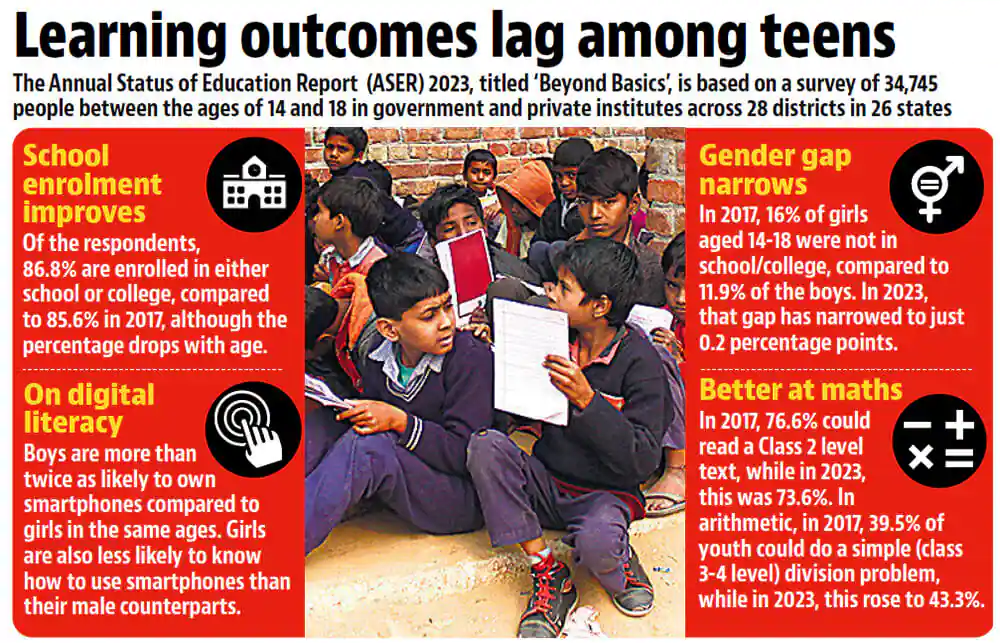
  • Debate over Appropriate Age of Admission to Class 1

    age

    Central Idea

    • The age at which children should begin formal education has been a topic of debate and discussion, with variations in policies and practices among different states and countries.
    • Understanding the rationale behind these age criteria is crucial for shaping educational policies that align with the needs and development of young learners.

    NEP 2020 and Minimum Age for Class 1

    • National Education Policy (NEP) 2020: NEP 2020 introduces a “5+3+3+4” structure for formal schooling, emphasizing early childhood education for ages 3 to 5 years.
    • Minimum Age for Class 1: According to NEP 2020, a child should be 6 years old to enroll in Class 1, following three years of early childhood education.

    Recent News and Policy Implementation

    • Union Education Ministry’s Efforts: The Union Education Ministry has urged states to align their Class 1 admission age with NEP 2020’s recommendation.
    • Kendriya Vidyalayas Case: Last year, Kendriya Vidyalayas increased the admission age to align with NEP 2020, leading to a legal challenge that was ultimately dismissed.
    • Delhi Government’s Decision: This year, the Delhi government decided to maintain its existing guidelines, permitting Class 1 admission below the age of 6.

    Right to Education (RTE) Act, 2009

    • RTE Act’s Age Provision: RTE Act guarantees education from ages 6 to 14, implying that elementary education (Class 1) should begin at age 6.
    • Historical Perspective: The age of 6 was chosen based on global practices and historical references, including Mahatma Gandhi’s basic education principles.

    Research on Entry Age for Formal Education

    • David Whitebread’s Research: Studies comparing early literacy lessons starting at ages 5 and 7 in New Zealand showed no significant advantage for early introduction to formal learning.
    • Reading Achievement Study: A study across 55 countries found no significant association between reading achievement and school entry age.

    Global Practices in Starting Formal Education

    • Standard Age of 6: Many East Asian and European countries start formal education at age 6, with younger children often attending preschool.
    • Scandinavian Approach: Scandinavian countries typically begin formal education at age 7, supported by universal child care for younger children.
    • US and UK Variation: The USA and UK stand out as countries where children generally start school at age 5, with varying childcare provisions.

    Conclusion

    • The debate over the appropriate age for starting formal education encompasses a range of factors, including developmental readiness, educational goals, and cultural norms.
    • Understanding the diverse approaches and research findings can inform policymakers as they strive to create educational systems that best serve the needs of young learners.
  • Reviving Adultery as a Criminal Offense

    Adultery

    Central Idea

    • The Parliamentary Committee on Home Affairs has proposed the reintroduction of adultery as a criminal offense in the Bharatiya Nyaya Sanhita (BNS), 2023, a law designed to replace the Indian Penal Code (IPC), 1860.
    • The committee’s recommendations have sparked a debate on the legal position of adultery and its implications on constitutional rights and gender equality.

    Adultery De-Criminalization in India

    • Adultery in IPC (1860): Until 2018, Section 497 of the IPC defined adultery as a criminal offense, penalizing only men for engaging in adulterous relationships.
    • Supreme Court’s Verdict (Joseph Shine vs. Union of India, 2018): The Supreme Court unanimously struck down Section 497, citing discrimination and violations of fundamental rights.

    Parliamentary Committee’s Recommendations

    • Gender-Neutral Adultery: The Committee suggests reinstating adultery as a criminal offense but making it gender-neutral, applicable to both men and women.
    • Safeguarding Marriage Sanctity: The Committee argues that safeguarding the sanctity of marriage is crucial and justifies criminalizing adultery.

    Legal and Constitutional Implications

    • Discrimination and Violation of Fundamental Rights: The Supreme Court’s verdict in Joseph Shine case highlighted the discriminatory nature of Section 497 and its violation of Articles 14, 15, and 21 of the Constitution.
    • Autonomy of Women: The judgment emphasized women’s autonomy and dignity, asserting that husbands do not possess legal sovereignty over their wives.
    • Privacy and Matrimonial Sphere: Adultery as a criminal offense intrudes into the privacy of the matrimonial sphere, which is better left as a ground for divorce.
    • Relic of Victorian Morality: The Court deemed Section 497 as a relic of Victorian morality that treats women as chattels and property of their husbands.

    Can the Supreme Court’s Decision Be Overturned?

    • Parliament’s Authority: While Parliament cannot directly overturn a Supreme Court ruling, it can pass legislation that addresses the basis of the court’s judgment.
    • Validating Legislation: Parliament can enact validating legislation that changes the circumstances under which the court’s judgment was rendered, effectively altering the legal landscape.

    Conclusion

    • The debate surrounding the reintroduction of adultery as a criminal offence is fraught with legal, constitutional, and societal implications.
    • It calls for a nuanced examination of individual rights, gender equality, and the sanctity of marriage within the framework of Indian law and society.
  • A former Police Commissioner writes: How the criminal justice system can serve women better

    Dr. Meeran Chadha Borwankar: IPS, Lawyer | India | Official Site

    Central idea

    The article highlights gender-based challenges in India’s criminal justice system, citing delays and discrimination against women complainants. Despite increased representation and specialized stations, the study in Haryana indicates persistent issues. The central idea emphasizes the need for reforms, gender sensitivity, and equal treatment within the justice system.

    Key Highlights:

    • Justice System Accessibility: Citizens face challenges accessing the criminal justice system in India due to police station unapproachability, court delays, and outdated forensic equipment.
    • Gender Disparities: The study reveals “multi-dimensional discrimination” against women in the justice system, with differential treatment at all stages and levels.
    • All-Women Police Stations: Despite efforts, the study, focused on Haryana, suggests that women face delays, dismissals, and lower conviction rates in cases where they are complainants.
    • Limited Representation: While more women are joining the justice system, the study emphasizes the need for increased sensitivity and recruitment drives for female officers.

    Challenges:

    • Police Station Atmosphere: Unfriendly police stations, especially for women, contribute to delays and hinder justice delivery.
    • Legal System Inefficiencies: Overworked prosecutors, court delays, and overcrowded prisons impact the overall efficiency of the justice system.
    • Gender Bias: Discrimination against women at various stages, including delayed investigations and dismissals, poses a significant challenge.
    • Recruitment Delays: Achieving the 33% reservation target for women in police stations may take another decade, delaying the improvement of gender sensitivity.

    India's Criminal Justice System is Failing Victims of Sexual Violence —  Global Issues

    Key Phrases:

    • Multi-dimensional Discrimination: The study identifies pervasive gender-based discrimination throughout the justice system.
    • All-Women Police Stations: Initially created to address women’s concerns, the study questions the effectiveness of this approach.
    • Delayed Investigations: Cases with women complainants experience longer waiting times and fewer registrations.
    • Lower Conviction Rates: Women complainants have a lower chance of seeing the accused being sent to prison.

    Analysis:

    • Insufficient Gender Sensitivity: Despite efforts to increase women’s representation, the study suggests that sensitivity and fair treatment are lacking in investigations and trials.
    • Systemic Inequalities: The research highlights systemic issues leading to dismissals, delays, and lower conviction rates for cases with women complainants.
    • Need for Effective Monitoring: Effective monitoring systems are essential to ensure equal treatment for all genders throughout the justice process.
    • Research Limitations: While the study raises crucial issues, the lack of validation from police or judicial officers in Haryana raises questions about the data’s accuracy.

    Key Data for answer enrichment:

    • Representation: Women constitute only around 12% of the police force, emphasizing the need for increased recruitment.
    • Conviction Rate: India struggles with less than a 60% conviction rate, reflecting inefficiencies in the justice system.
    • Reservation Target: Achieving the 33% reservation target for women in police stations may take another decade.
    • Haryana Sample: The study focuses on Haryana, providing insights into the state-specific challenges faced by women in the justice system.

    Way Forward:

    • Increased Recruitment: Urgent recruitment drives are needed to enhance gender diversity in police stations and improve sensitivity.
    • Efficient Justice System: Addressing inefficiencies, overhauling procedures, and providing adequate resources are essential for an accessible and fair justice system.
    • Effective Monitoring: Implementing robust monitoring systems ensures consistent and unbiased treatment for all genders.
    • Research Validation: Future research should involve direct interactions with police and judicial officers for accurate data validation and a comprehensive understanding of the issues.